
Interview with Alex Goodman
We are honored to do an interview with Alex
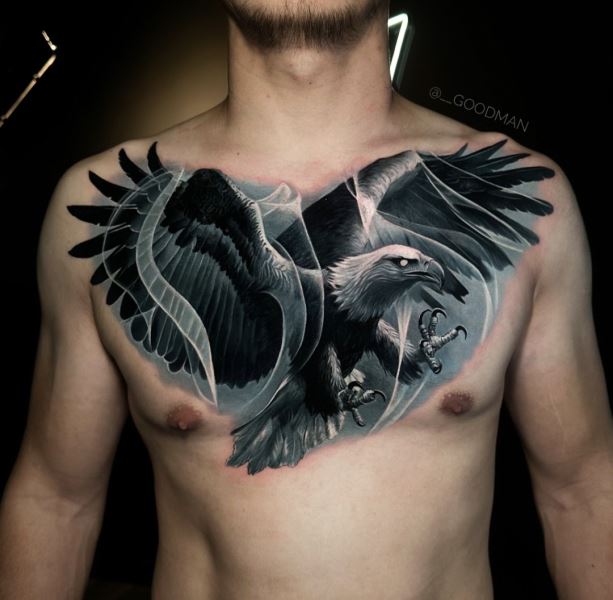
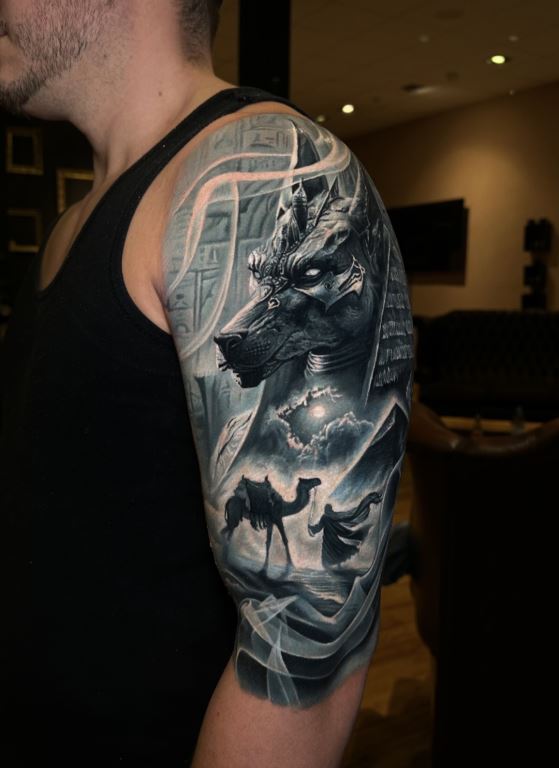
Goodman, a Kazakhstan-born tattoo artist whose mastery of
hyper-realism and surrealist composition has earned him a place
among the global elite. Currently a resident artist at Eden Body Art
Studio and a member of prestigious pro teams like Xtreme Tattoo Ink,
Hi Tattoo Cartridges and Ink Soul Supply, Alex’s work transcends
traditional boundaries. Having traveled extensively across Europe
and Asia, Alex brings a unique, multicultural perspective to his
craft, blending intricate detail with cinematic lighting and bold,
evocative themes.
Q: Looking back at your beginnings in Kazakhstan, what were
the initial challenges of establishing yourself in a region with a
developing tattoo culture?
A: In the beginning, it was quite difficult because tattoo culture
in Kazakhstan was still in its early stages of development. People
viewed tattoos very differently back then, many did not see them as
an art form or a serious profession. There was a lack of quality
equipment, good materials, educational resources, and a strong
community that could motivate and help artists grow. One of the
biggest challenges was gaining people’s trust and showing that
tattooing could be something much deeper than just a drawing on the
skin. I had to learn mostly on my own, constantly practicing on
artificial skin and even bananas, while searching for inspiration
outside of my country. At that time, there was very little truly
useful information online or on YouTube for beginner tattoo artists,
so a lot of things had to be learned through trial and error. But
those difficulties made me stronger. When you start almost from
zero, it builds character, discipline, and a strong desire to reach
an international level.
Q: How did your early environment
influence the technical precision and large-scale compositions we
see in your work today?
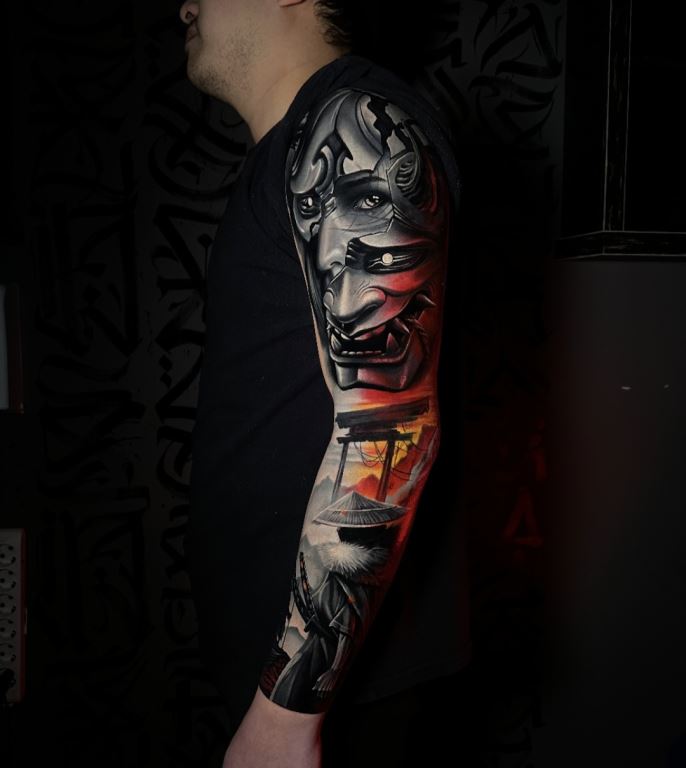
A: My early environment had a strong impact on my style. Due to the
lack of education and resources, I had to focus on technical
precision from the very beginning. I studied international artists
on my own, which helped me understand how to build large and complex
compositions. These limitations ultimately shaped my approach to
large-scale realistic tattoo work.
Q: Your work often features a seamless blend of
hyper-realism and surrealism; what sparked your interest in this
specific stylistic direction?
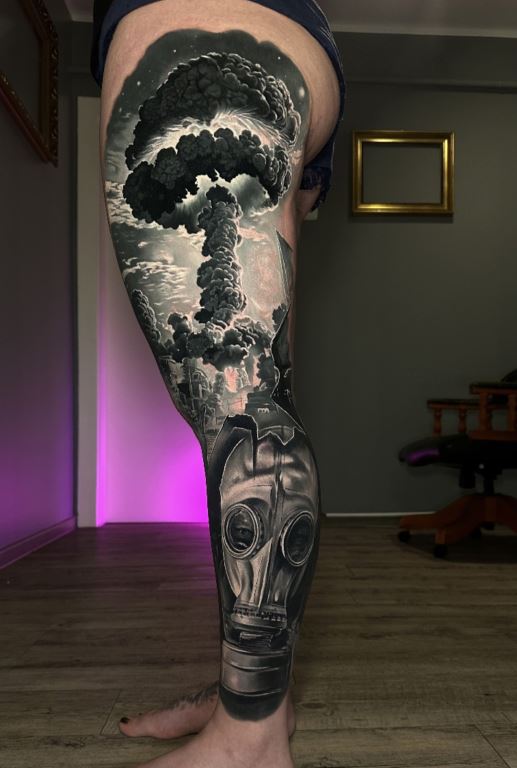
A: I’ve always been drawn to combining reality and imagination.
Hyper-realism gives structure and precision, while surrealism adds
freedom and emotion. Over time, I realized that this balance creates
the most powerful and expressive work.
Q: Can you walk us through the evolution of your technical
process from basic shading to the complex, multi-layered color work
you are now known for?
A: Of course! It all started with basic shading a simple
understanding of light and shadow. Over time, by experimenting and
making mistakes, I moved into color, layering, and depth. Today, my
technique is multi-layered: I focus on every tone, building volume
so that each piece feels vivid and alive.
Q: How does your background as a digital creator influence
how you conceptualize the visual storytelling in your tattoos?
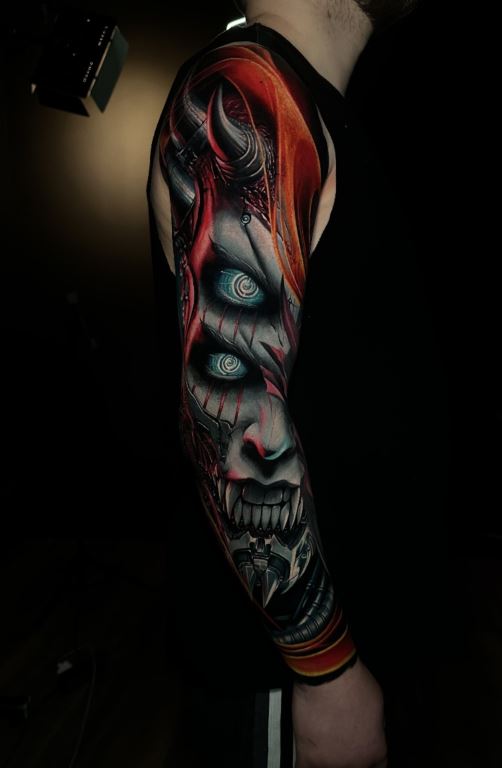
A: My digital background taught me to think in layers, contrast, and
movement. That’s why in tattooing I always aim to create not just an
image, but a story with depth and mood.
Q: You are a sponsored artist for major
brands like Xtreme Tattoo Ink; how has being on a "Pro Team"
impacted your professional standards and artistic growth?
A: Being part of a pro team raised my standards in terms of quality
and discipline. It gave me access to top materials, opportunities to
exchange ideas with skilled artists, and a higher level of
responsibility for every piece. All of this significantly
contributed to my growth as an artist.
Q: What do you consider the "defining moment" of your career
so far the point where you realized your work was reaching a global
audience?
A: A defining moment in my career was when I was offered a job in
Turkey. At that point, I realized my work was reaching beyond a
local level, and I had the chance to grow internationally,
collaborating with new artists and working in different studios.
Q: Throughout your travels, you have participated in
numerous collaborations; what is your philosophy on working with
other artists on a single piece of "living art"?
A: For me, a collaboration is an exchange of energy and experience.
It’s about mutual respect for each other’s style and a shared idea
that we build together. I never aim to compete, but rather to
complement another artist’s work.
Q: How do you feel these high-level
collaborations have pushed your artistic boundaries compared to
working solo?
A: Collaborations always push me out of my comfort zone. Working
with strong artists helps me learn faster, see the process
differently, and find new solutions. It significantly expands my
boundaries as an artist.
Q: Which international project or guest spot do you feel
most accurately reflects your peak artistic capabilities to date?
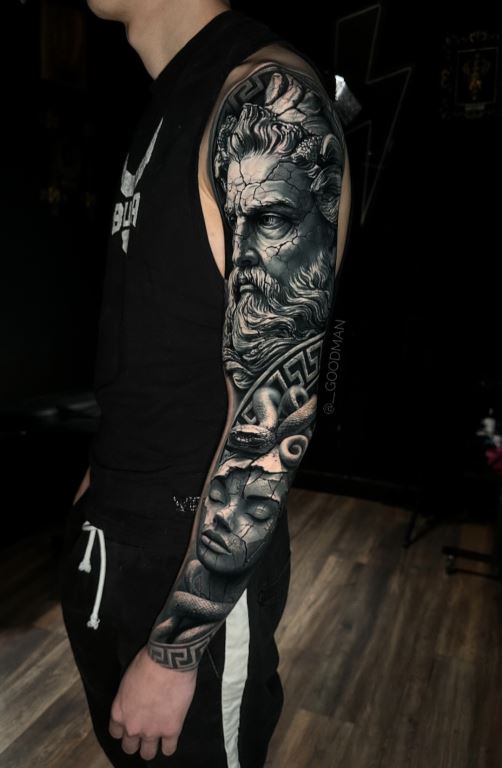
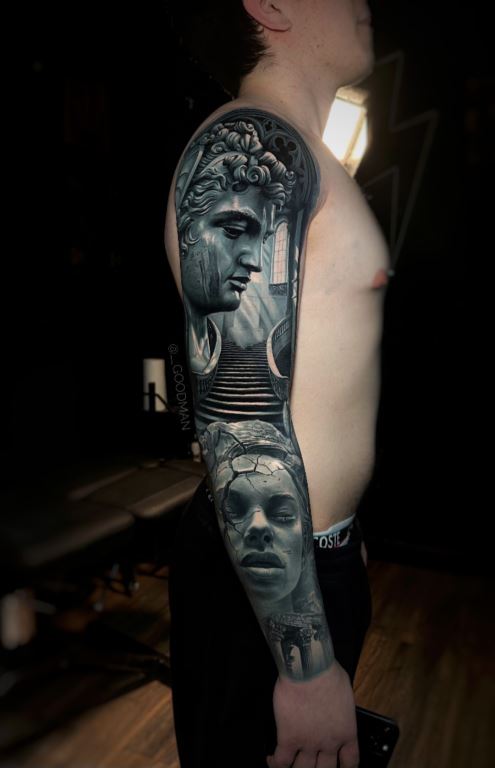
A: It’s hard to single out one project, but the most significant for
me was a guest spot in Frankfurt, Germany, at Skull Tattoo Studio.
There, over three days, I worked on a large-scale piece on an outer
arm, and it remains one of my most recognizable works to date.
Q: Having worked in Spain, Germany, and beyond, what are the
most striking differences you've observed in the global tattoo
community?
A: The main difference is in work culture and attention to detail.
Germany is more structured, disciplined, and technically precise,
while Spain has a more relaxed atmosphere and creative freedom. But
everywhere, you still find the same core value a deep respect for
tattoo art.
Q: How do you adapt your artistic approach
when working with different cultures and skin types across various
continents?
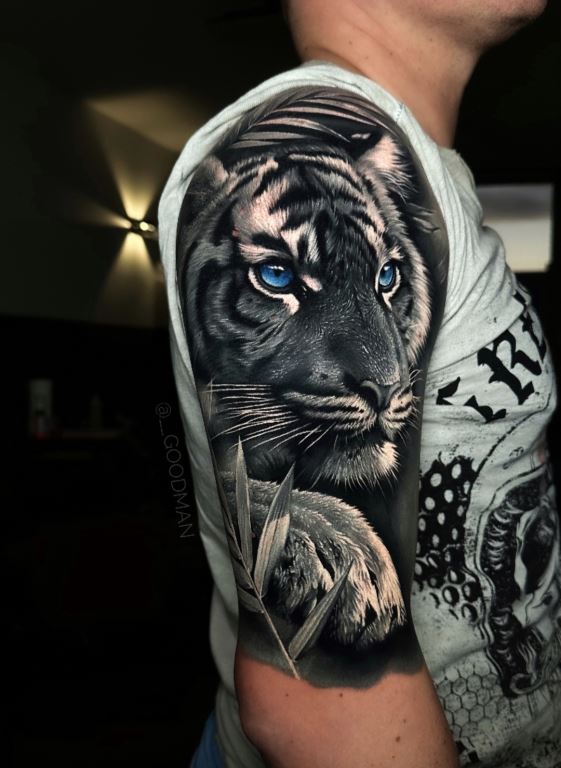
A: I always adapt my approach to skin type, climate, and cultural
context. Technically, it’s about adjusting depth, contrast, and
color work. But I still keep my own style, just adapted to the
specific conditions.
Q: You have a significant presence at major events like
"Gods of Ink"; how do conventions serve as a catalyst for innovation
in your work?
A: Conventions are a strong catalyst for growth. They bring together
top artists, new techniques, and an incredible amount of live
energy. In that environment, you evolve quickly, get inspired, and
find new ideas for your work.
Q: In your view, what role do international tattoo
conventions play in elevating the industry from a craft to a
respected fine art form?
A: Conventions show that tattooing is no longer just a craft, but a
true fine art form. They bring together top artists, set higher
quality standards, and help the industry grow and gain mainstream
respect.
Q: How do you handle the pressure of
performing live at these high-stakes global events?
A: I see it as part of the process, not as pressure. Preparation and
experience give me confidence, and during the session, I fully focus
on the work and block out external distractions.
Q: In today’s digital age, how do you balance the need for a
strong online presence with the physical, tactile demands of being a
tattoo artist?
A: I try to separate the two processes. In the studio, it’s all
about the work and focusing on the client; online time is dedicated
to content and communication. For me, a digital presence is a tool
that supports real-world work, not something that replaces it.
Q: What is your definition of "success" for a tattoo artist
in 2026?
A: For me, success is consistent growth, a recognizable style, and
the ability to work with top artists worldwide while staying true to
my own identity.
Q: How important is it for an artist of your caliber to
mentor or inspire the next generation through digital platforms?
A: It’s highly important because information is more accessible than
ever. Through digital platforms, you can share your experience,
motivate others, and show the real process, not just the final
result.
Q: What advice would you give to artists
in Kazakhstan who look up to your international career as a
blueprint for their own?
A: I would advise them not to compare themselves to others, but to
focus entirely on their own practice and discipline. It’s important
to keep learning, not be afraid of mistakes, and develop a unique
style. International success comes from consistent work, not quick
results.
Q: Why is the United States the next logical step for the
evolution of your career and style?
A: The United States is one of the main hubs of the tattoo industry,
featuring top-level artists and fierce competition. For me, it’s an
opportunity to reach a new level, exchange experience, and evolve my
style in a highly dynamic environment.
Q: What unique elements do you feel your "Kazakhstan-born,
globally-refined" style will bring to the American tattoo scene?
A: My style is a combination of the foundational experience I gained
in Kazakhstan and my international practice. It is based on deep
detailing, multi-layer techniques, and a strong focus on realistic
composition, which can bring a new visual language to the US scene.
Q: How do you plan to expand your brand
and artistic influence once you are established in the US market?
A: I plan to grow my brand through collaborations with top artists,
participation in major conventions, and by building a recognizable
visual identity that can scale through international projects and
digital platforms.
Q: Are there specific American artists or studios you are
eager to collaborate with to further bridge the gap between Eastern
European and Western tattoo styles?
A: Yes, I’m highly interested in working with strong American and
international artists such as Deanna James,
Walter Montero,
Arlo DiCristina, and Daria
Pirojenko, as well as studios like Monna Lisa in LA and Inked NYC.
For me, it’s not just about the names, but about the level of
craftsmanship, technique, and a shared philosophy where a real
exchange and artistic growth can happen.
Q: Looking at your journey from Shymkent
to the global stage, what is the most important lesson you've
learned about yourself as an artist?
A: The most important lesson is patience and consistency. Growth
doesn’t happen quickly it’s built through constant work, mistakes,
and discipline. I learned that the key is staying true to your style
and your process.
Q: What is the legacy you hope to leave behind in the world
of permanent art?
A: I want my legacy to be associated with high-level realism,
extreme attention to detail, and the evolution of tattooing as a
true art form. I also hope my journey inspires new artists to pursue
an international level without fear
Date: 15/05/2026
Interview: Fredrik Lindström


