
Interview with Alican Gorgu
Alican Gorgu, thank you for taking the time to
correspond with us for this editorial piece. In an industry often
defined by high-detail realism, your work stands out for its
profound simplicity. By stripping personal photographs down to their
most essential silhouettes, you’ve created the 'Retro Minimal'
style, ink that feels like a cherished memory caught in a single
line. We’ve put together these questions to better understand the
vision behind your unique approach and your journey within the
global tattoo community.
Q: Your work is inseparable from the medium of photography.
What was it about old family snapshots that first inspired you to
translate them into tattoos?
A: It goes back to 2015. I was spending a lot of time thinking
about one question: What can I offer to people who want something
deeply personal but aren't ready to commit to a large tattoo? I
wanted to create something small and understated, yet meaningful. At
the time, I was working with film posters and iconic cinematic
scenes, creating ready-made designs and sharing them. Then, a client
came to me after seeing that work and asked if I could do something
with a photo of her parents, as minimal and as simple as possible.
That single request changed everything. The moment I made that first
translation from photograph to skin, I realized the photo was
already carrying its own story. My job was simply to make that story
permanent. The film work continued and many of those pieces were
realized too, but over time, everything naturally gravitated toward
family photography. It felt less like a choice I made and more like
the work was pulling me in that direction.
Q: When you first started developing this
minimalist style, what was the biggest technical challenge in moving
from a flat photograph to the curves of the human body?
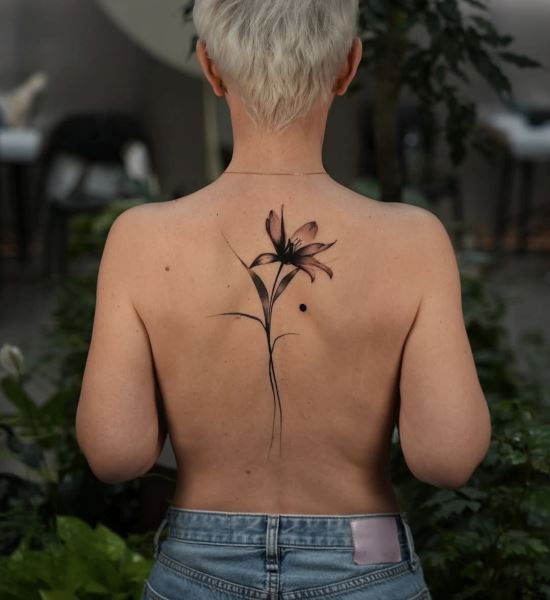
A: Translating a flat image onto a curved surface is the core
challenge. No line is placed in a single pass. I start by laying
down the rough structure without applying too much pressure into the
skin. Those lines are then built up in layers, sometimes in two or
three passes, and occasionally five or six. For difficult areas, I
position the client as comfortably as possible and then do one final
pass to unify the lines. The hardest area to work on is the rib
cage. The thinner the line, the more unforgiving that surface
becomes. Because of this, I’m selective about what I agree to place
there; I either adapt the design to suit that area or I guide the
client toward a more suitable placement.
Q: You have built a career that seems very nomadic, working
in different studios and countries. How has this constant movement
between different cultures and cities influenced the way you "see"
and interpret the memories people bring to you?
A: These photographs changed not just how I interpret my tattoo
work, but how I see life. The first thing I truly understood was
that we are all the same people, just speaking different languages.
The world is a much smaller place than I once thought.
In older photographs, the clothes change, shaped by culture or
religion but the activities people engage in and that particular
light of happiness in their eyes is identical across every culture.
Q: Your work is a masterclass in
reduction. How do you decide which single line is 'essential' to a
memory and which details can be left out?
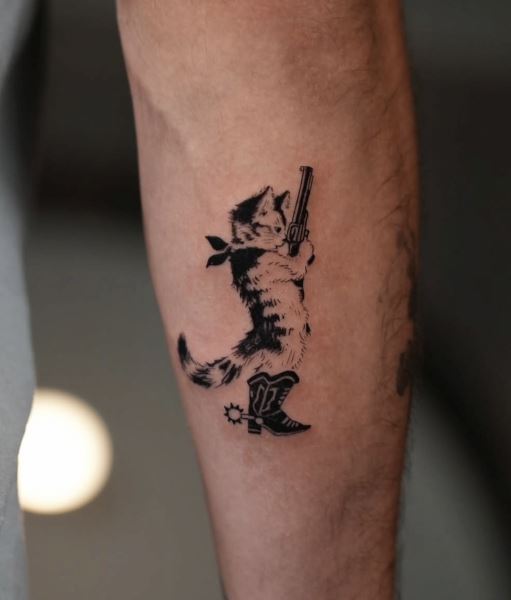
A: Sometimes clients are very direct about what they want; they
tell me exactly what they'd like to see. Other times, I choose
symbolic elements that I feel will bring life to the image. If the
client hasn't specifically asked for something very minimal, I
prefer to use nature-related elements that can complete the
composition. When the style was still new, I really struggled with
the design process. My early work had no detail at all, flat
clothing and surfaces without folds or movement. It evolved over
time. Now, I try to add more detail, but expressing everything with
just a few lines is incredibly difficult. Because when you follow
the photograph reference exactly and then remove the photo layer, a
strange anatomy often appears underneath. Take the hand as an
example: if I draw the hand and fingers exactly as they appear in
the photo, the design often looks completely wrong. I need to convey
that movement and emotion independently from the photograph itself.
To achieve this, I work with multiple versions of a design and
eliminate them until I reach the final version, deciding which one
holds up best on its own.
Q: You often omit facial features, yet the
subjects remain instantly recognizable. How much do you rely on body
language and posture to convey a person's identity?
A: The thing I pay most attention to is body language. I need to
convey the entire posture and emotion of the person. I spend hours
with a photograph during the design process. I draw certain parts,
step back, overlay the photo and remove it again, and weigh what I
see. There have been many designs I finished, only to come back the
next day and change them completely. Even without facial features, a
person remains recognizable because certain key anatomical
characteristics carry their identity. Sometimes it’s the shape of
the hair, sometimes the posture, and sometimes something as symbolic
as a mustache.
Q: Fine-line tattooing requires immense
precision. What are the technical secrets to ensuring these delicate
designs remain clear as the skin ages?
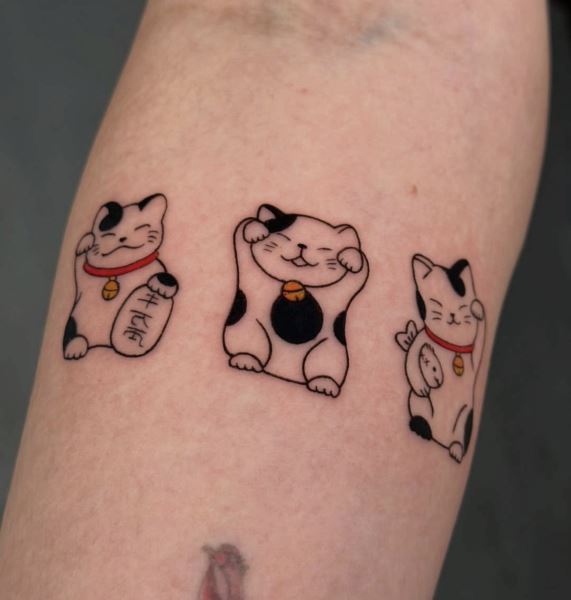
A: The reality is that we cannot promise hair-thin lines will
survive unchanged for many years. This has nothing to do with
technical skill or the tools we use. We are living beings, aging a
little more every day. Skin deforms over time, inevitably. The
reason we see that deformation so clearly on tattooed skin is
because we have injected a contrasting pigment into it. It’s an
incredibly delicate balance. If the ink is pushed too deep, it
spreads and loses definition over the years. If it doesn't reach
where it needs to go, it fades. Our goal is for the tattoo to last
as long as possible, right up until the body reaches its final stage
of natural deformation. I don't think we as an industry explain this
well enough. I always warn my clients about placement. In certain
areas, working fine or bold can produce very different long-term
results. I tell them, "Please make this decision with that in mind;
your tattoo will hold much longer here than there." This is
something every tattoo artist should be communicating.
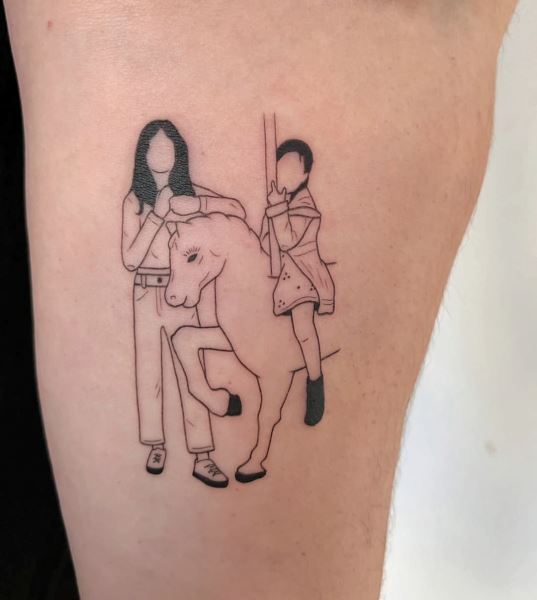
Q: Is there such a thing as a photograph
that is too simple to be turned into one of your tattoos?
A: I’ve come across this many times. If the photograph is a
close-up selfie of one or two people, or if the subjects are turned
away and photographed from close range, there’s very little
composition to work with. Since I don’t draw facial details,
close-up selfies end up as little more than an oval shape. In those
cases, I ask the client to look for an alternative photograph.
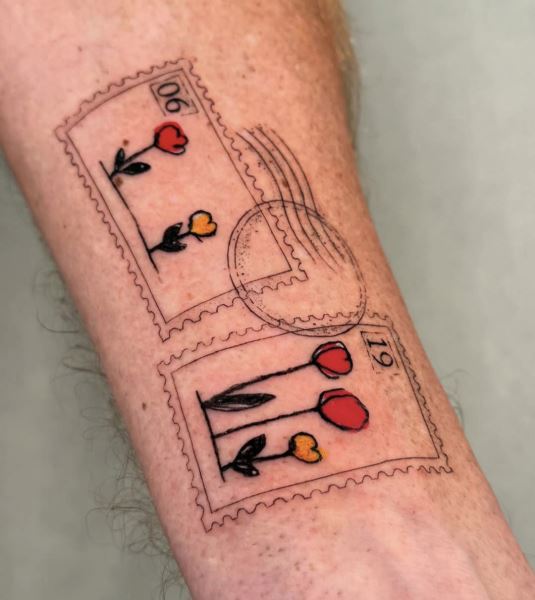
Q: How would you describe your artistic
philosophy to someone who has never seen your work?
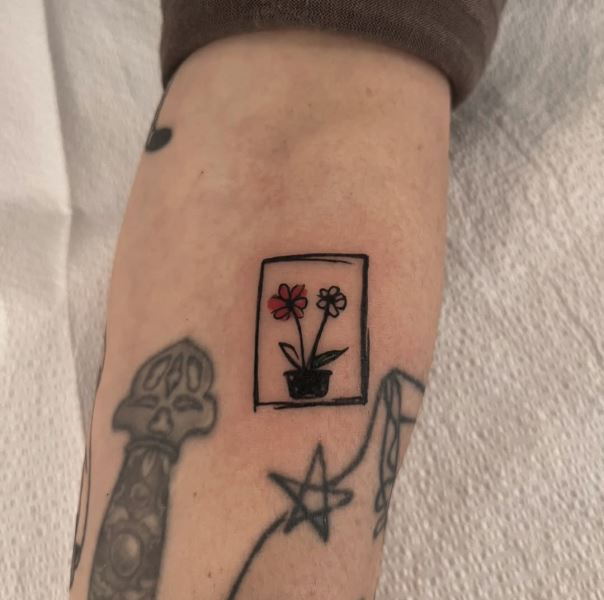
A: I approach tattooing as a balance between control and freedom.
My work is rooted in fine-line precision, and more personal,
understated pieces like family portraits are part of that same
approach. However, I intentionally allow certain elements to break
structure like color that moves beyond its boundaries or lines that
feel deliberately imperfect. This is the essence of "Flow-A," a new
style I have been developing. That contrast is what gives the piece
life. I’m not interested in copying reality or following trends.
Every design starts with the idea of flow on the body: how it moves,
how it sits, and how it ages. The goal is to create something that
feels natural on the skin, not just visually appealing on a screen.
Q: Since you began this journey, how has your style
evolved?
A: The style was never static; each piece shaped the next. In the
beginning, everything was very bare. Over time, different styles and
techniques found their way into the work. Now I operate across a
much wider range, but I also recognize much faster what needs to be
stripped away. Staying in the same style eventually starts to bore
even the people watching. Even though I have no love for the "age of
consumption," I’ve come to understand that I need to draw something
positive even from that and keep pushing myself forward. That
tension keeps me excited.
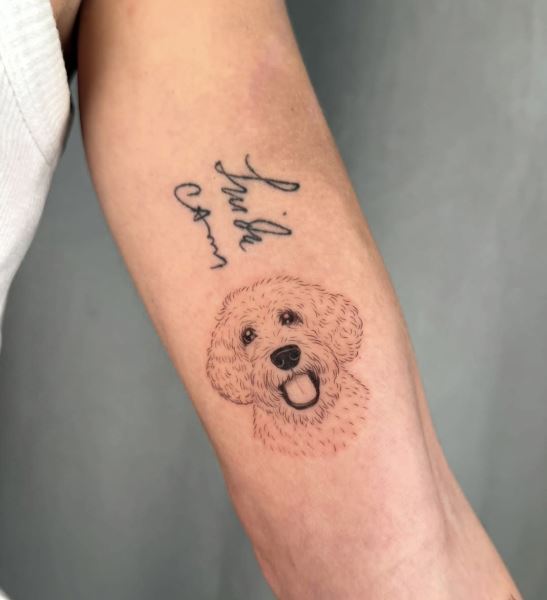
Q: Do you think the current global trend
toward minimalism in tattooing is here to stay, or is it a specific
moment in time?
A: The work being made is always shaped by how people and times
change. But minimalism will always have its audience, just as
traditional and realism styles always have. Beyond trends, tattooing
is personal. People reflect who they are through what they put on
their skin. The world’s population keeps growing, and new influences
and tastes keep entering the culture. Every style shifts and evolves
over time, but none of them truly die.
Q: Now that you are working in the US (in cities like NYC
and Denver), what have you noticed about the American "collector"
mentality compared to your international clients?
A: American collectors know this culture well and they’re
experienced. They know what they want just as clearly as they know
what they don’t. They’re composed, open to ideas and interpretations
from the artist, and they express their own preferences
thoughtfully. They respect the artist, and that respect is one of
the most meaningful things in this work. It’s what makes you say,
"I’m so glad I do this." A collector, by definition, is someone who
has followed something closely for a long time, developed knowledge
around it, and carefully chosen the right people to work with. In
tattooing, that collection doesn't sit on a shelf; it lives on the
body, in experience. In America, you encounter these people
constantly. That's what makes working here different.
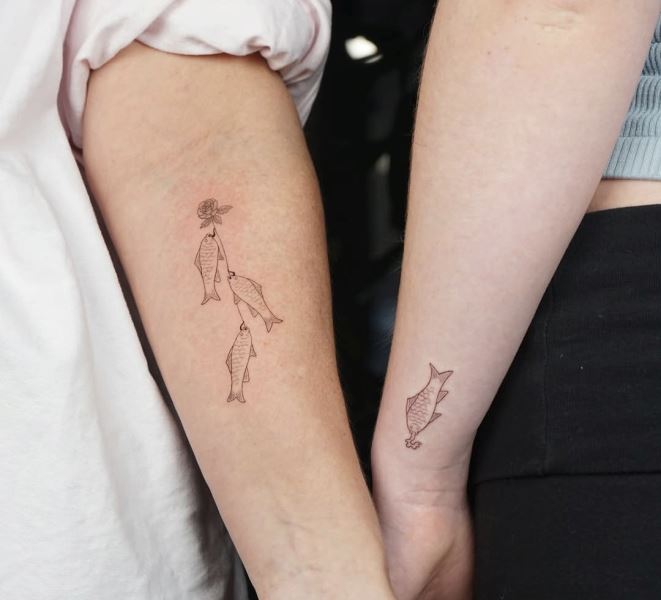
Q: As a traveling artist, how does the
energy of different guest spots at famous studios influence your
daily creative output?
A: Honestly, it's incredibly exciting. When we announce which
states we're heading to, the emails that come in bring a particular
kind of joy. Whether it’s requests that align with the styles we
already work in or something outside of that, every message from
people makes me feel valued. The people I meet at the studios I
visit the studio owners, fellow artists, the visual feast of it all
it’s an invaluable experience. Sometimes you finally get to meet
people you've only known through social media for years, spend time
with them, and watch them work. These things matter deeply. At the
end of it all, what every one of these trips reminds me of is the
same thing: I need to keep growing.
Q: What is the most important piece of
advice you could give to an artist trying to find their own niche or
'unusual' style?
A: This is something I've thought about a lot. Early on, I was
working across very general styles, but I was always looking for a
clear identity of my own. I experimented extensively, and most of
those attempts didn't gain attention. Not because they were wrong,
but because they didn't reach the right audience at the right time.
The reason Retro Minimal became strongly associated with my work
was largely due to an article on Bored Panda. Before that, I had
already been producing film scenes and photo-based pieces for
months. The article simply amplified what was already there. It
reached platforms and audiences I couldn't have accessed on my own,
and that visibility made the direction clearer. For me, it comes
down to three things: production, timing, and audience. If a project
doesn't take off, it doesn't mean it's wrong; it usually means the
timing or exposure isn't there yet. The important part is to keep
building in the direction you believe in.
Q: Beyond the tattoo machine, are there any other art forms
or creative projects you are currently exploring?
A: As an extension of my tattoo practice, I've been focusing on my
Flow-A project. I really enjoy working in that style and spend a lot
of time drawing on Procreate. At the same time, I'm constantly
developing new designs, collecting visual references, and
experimenting by combining different styles to create something new.
Beyond that, I'm also working on coding and AI. I try to keep up
with the developments that emerge every day, and I approach it as an
additional hobby, learning as I go. I'm fully focused on exploring
what I might be able to do in different fields in the future.
Date: 16/04/2026
Interview: Fredrik Lindström


