
Interview with Allan Mandi
Hello Allan Mandi! Thank you for
joining us for this interview; we truly appreciate you taking the
time. To begin, please share a bit about yourself and your
background. What inspired you to pursue art as your calling? Also,
were there any influential people in your life who sparked your
interest in drawing or the arts? My name is Allan Mandi,
and I’m a professional tattoo artist specializing in realism both in
black & grey and color. Art has always been a deep part of who I am.
Ever since I was young, drawing was my way of expressing emotion and
imagination, and tattooing caught my eye at a very early age. What
truly inspired me to pursue art as a career was the way it connects
people. Seeing someone emotionally moved by something I created,
that moment of connection showed me the true power of visual
storytelling. That’s what I aim for in every piece I do. I grew up
in a small town in the Philippines. While I can’t say artistry ran
in our family, I was incredibly fortunate to have a father who
believed in me from the very beginning. He was my biggest supporter.
I remember him negotiating with local construction workers and
tricycle drivers, offering to pay their daily wages just so they
could take the day off and let me practice tattooing on them. That
kind of unwavering support made a huge impact on my journey and
fueled my determination. One of the most defining milestones in my
career was being granted an O-1 visa to the United States - a visa
reserved for individuals with extraordinary ability. Receiving it
was both humbling and deeply motivating. It validated the years of
dedication, sacrifice, and relentless work I’ve poured into my
craft. To maintain this status, I continue to push myself, competing
in conventions, getting published in tattoo magazines, and
constantly evolving as an artist. For me, it’s not just about
staying in the country, it’s about honoring the recognition, growing
in the industry, and proving every day that I belong among the best.
Q: When did you first pick up a tattoo machine, and how
challenging was it to master the fundamentals?
A: I started tattooing when I was just 12 years old. Back in 1992, I
built my first tattoo machine using dynamo motor from one of my RC
toy trains. No one knew I was doing it at the time. It was a
challenge, especially at that age, but I was determined. I didn’t
have anyone to teach me, so I relied on tattoo magazines for
inspiration and studied them closely. I’ve always been a very
technical person, I don’t just copy what I see, I break things down
and dive deep until I understand how to make it work the right way.
That’s how it all began for me.
Q: What kind of mentorship did you receive when you were
learning? Was it a formal apprenticeship or did you have a different
kind of guidance?
A: At that time, formal apprenticeships didn’t exist in my country,
so I had no choice but to teach myself. Everything I learned was
through personal trial and error, observation, and deep curiosity. I
developed my skills independently, driven by passion and a strong
desire to understand the craft from the inside out.
Q: Who was your most significant source of support, and what
fueled your motivation?
A: I’m proud to say that my biggest supporter has always been my
father. His encouragement and belief in me played a huge role in
shaping the artist I’ve become today. As I've mentioned earlier, my
father would be negotiating with local construction workers and
tricycle drivers, offering to pay their daily wages just so they
could take the day off and let me practice tattooing on them, which
I'll tell you, even though I was pretty proud of myself during those
times, but the tattoos I was doing weren't that good, remeber I was
a child that time. lol!
Q: How long did it take you to transition from tattooing as
a hobby to working professionally in a studio? What was that
transition like, and did you encounter any pressure or challenges
along the way?
A: What started as a hobby back in 1992 when I was still in
elementary school, slowly evolved into a serious pursuit. After
nearly nine years of dedication and self-learning, I opened my first
tattoo studio in 2001 during my final year at university. It was a
huge challenge, juggling my studies while running a business for the
first time. On top of that, finding clients wasn't easy. In the
Philippines at that time, tattoos were still heavily stigmatized.
Many people associated them with prison or gang culture, which made
it even harder to break through as a professional artist. But I’ve
always believed in the art form and in proving that tattoos can be
meaningful, skillful, and respected.

Q: In what ways has your style transformed or matured since
you began tattooing?
A: Since I began tattooing, my style has gone through a significant
transformation. In the beginning, my focus was on learning the
fundamentals, lining, shading, and mastering the machine I built
myself. I experimented with different styles based on what I saw in
magazines and what clients requested, but everything was very raw
and driven by curiosity. There was also a phase in my career where I
would focus on one specific style until I master it then I would
jump on to the next style. I wanted to be very good on every style
so I can do any request that clients ask. As the years went on, I
began to refine my technique and discover my own artistic identity.
I shifted from simply executing tattoos to creating meaningful,
custom artwork tailored to each client. I developed a deep
appreciation for realism and black & grey, and over time, my work
became more detailed, balanced, and expressive. I started paying
more attention to composition, flow on the body, and storytelling
within each piece. Today, my style is a fusion of realism, emotion,
and technical precision. I focus on creating designs that not only
look good on the skin but also carry lasting meaning for the person
wearing them. I would say my maturity as an artist is reflected not
just in how I tattoo, but in how I connect with each client and
approach every project with purpose and care.
Q: What drew you to realism tattooing, and what aspect of
this style do you find most captivating?
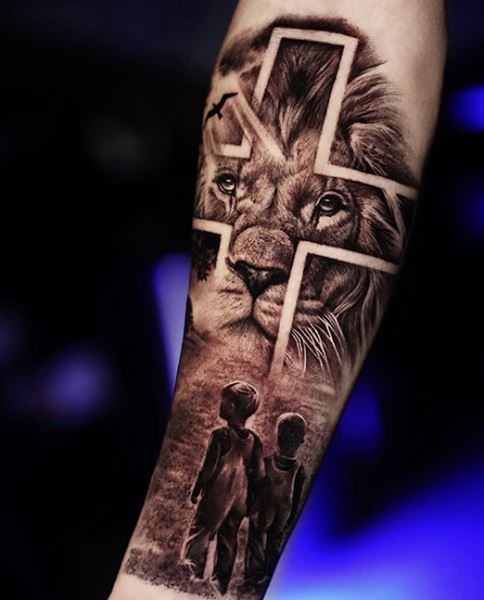
A: What drew me to realism was the challenge and depth it offers.
From the beginning, I was fascinated by how a flat surface like skin
could be transformed into something that looks alive, something that
tells a story through detail, light, and shadow. Realism pushes you
to be precise, patient, and deeply observant, and that challenge
motivated me to keep improving. What I find most captivating about
this style is its emotional impact. A well-executed realistic tattoo
can bring a portrait, a memory, or even an idea to life in a
powerful and timeless way. Whether it’s a tribute to a loved one or
a symbolic piece with personal meaning, realism has the ability to
connect deeply with people and that’s what inspires me to keep doing
it.
Q: Since you work with both color and black and gray, which
technique do you prefer or find more expressive?
A: I would say both color and black & gray are equally powerful they
just express emotion and energy in different ways. Black & gray
allows for a softer, more dramatic flow. It’s perfect for creating
depth, mood, and contrast, especially in portraits or storytelling
pieces. On the other hand, color brings a bold vibrancy and impact
that can make a design truly stand out when done right. Each
technique has its own rhythm and style of execution, and I enjoy the
creative challenge of working with both. For me, it’s not about
which is better, it’s about choosing the right approach to bring
each client’s vision to life in the most meaningful and visually
striking way.
Q: If you could envision the ultimate tattoo project,
unbound by any practical limitations, what would that concept be and
why does it hold such a special place in your artistic aspirations?
Is there a particular vision or story you're yearning to bring to
life on skin?
A: If I could envision the ultimate tattoo project without any
limitations, time, skin space, or budget, it would be a full-body
narrative piece that tells a complete story from head to toe. Not
just a collage of images, but a seamless visual journey that blends
mythology, emotion, and surrealism, something that speaks to the
human experience on a deep, symbolic level. One concept I’ve always
wanted to bring to life is a visual story of transformation
something that starts with chaos and destruction on one end of the
body and evolves into rebirth, hope, and ascension on the other. It
would incorporate elements of fire, water, space, and time… like a
living canvas that captures the soul’s journey through darkness into
light. This idea holds a special place in my heart because it
mirrors not just my own story, but the stories of so many people who
sit on my chair, survivors, dreamers, fighters. It’s the kind of
project where every inch of skin has meaning, and every detail is
intentional. That, to me, is the purest form of tattooing where art
and life become one.
Q: Capturing the essence of a person in a tattoo, especially
in portraiture, seems like a delicate dance with permanence. What
are the elements within a portrait tattoo that demand the most
meticulous attention and where even the slightest deviation can have
the most significant impact on the final likeness?
A: Absolutely, portrait tattooing is all about precision and
balance, and even the smallest deviation can change the entire
likeness. The most critical elements are the eyes, nose, eyebrows,
and lips. These features hold the expression and identity of the
person. If you capture them accurately, the shape, proportion, and
subtle shadows, you’ve already laid the foundation for a successful
portrait. The eyes, especially, carry the emotion and connection in
a portrait. If they’re even slightly off, the whole tattoo can feel
lifeless or unrecognizable. Once those key features are locked in,
the rest like the hair, jawline, or background can flow more
naturally. It’s a delicate process, but with careful observation and
attention to detail, you can create something truly powerful and
lasting.
Q: Given that each tattoo appears deeply personal, could you
offer us a glimpse into your creative process, from initial client
consultation to the final execution of these narrative-rich designs?
How do you collaborate with clients to translate their stories and
visions into such compelling visual realities?
A: My creative process always begins with connection. During the
initial consultation, I ask the client to share the story behind
their tattoo idea. I don’t just focus on the surface concept, I dive
deeper into the meaning behind each element they want included.
Understanding the emotion and intention behind the tattoo allows me
to visualize it more clearly and with purpose. From there, I start
mapping out the design in a way that flows with the body and
reflects the energy of the story. I take time to explain the
direction I’m going with the composition, and I make sure the client
feels involved and understood throughout the process. I believe one
of my strengths is having a strong perspective, being able to take a
client’s vision and elevate it into something visually powerful and
timeless. For me, every tattoo isn’t just about the art, it’s about
honoring the story behind it and turning that into something they’ll
be proud to carry for life.
Q: Any favorite tattoo you did recently?
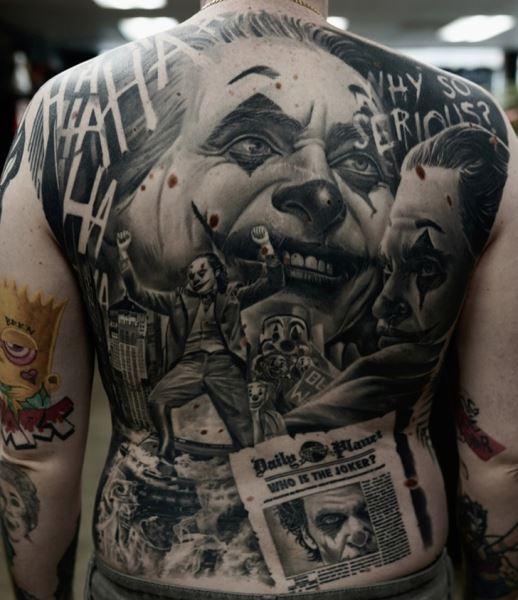
A: One of my favorite recent pieces is a Joker-themed back piece I
created for a fellow artist and close friend here. It was a special
project, not just because of the scale and detail involved, but
because of the trust and creative freedom he gave me. The Joker is
such a complex character, and I wanted to capture both his chaos and
charisma. I poured a lot of energy into the textures, expressions,
and flow of the entire composition. It became more than just a
tattoo, it was a collaboration between two artists who respect each
other’s craft. That piece really reminded me why I love what I do.
Q: In addition to your personalized designs, do you keep a
library of preliminary sketches or design ideas that clients might
find helpful in visualizing their tattoo concepts?
A: Yes, absolutely. I use Procreate as my main tool for sketching
and developing tattoo concepts. During consultations, I gather all
the references, ideas, and inspirations that the client connects
with. From there, I start building a custom design within the app,
layering different elements and adjusting the composition until it
feels just right. While I don’t keep a traditional flash library, I
do have a personal archive of sketches and unfinished concepts that
clients can look through. It often helps them visualize different
styles or spark new ideas. But in the end, every piece I create is
tailored specifically to the individual, it’s a collaborative
process from the ground up, with Procreate allowing me to bring
those visions to life in a flexible and professional way.
Q: When clients are unsure about their design, color
palette, or body placement, how do you guide them toward a decision?
How flexible are you in negotiating these elements?
A: When clients are unsure about their design, color palette, or
placement, I always take a thoughtful and collaborative approach.
First, I assess their skin tone to determine if color will hold
well. If I see that color might not heal as vibrantly, especially on
darker skin, I explain the possible outcomes honestly and recommend
black and grey as a better option. However, if they still prefer
color, I make sure they fully understand the limitations and how the
tones may settle over time. As for the design, I always tell my
clients that once I present the artwork, I’m completely open to
feedback. I want them to be just as happy with the design as I am. I
encourage open communication and make revisions if needed until we
reach something they truly love. It’s important to me that the final
piece feels right for them, not just artistically, but personally as
well.
Q: Which clients are the most interesting to spend some time
in the studio, especially during those long sessions while working
on a big tattoo such as full sleeves or a beautiful back piece?
A: The most interesting clients to spend time with during long
sessions are the ones who bring good energy, great stories, and a
genuine appreciation for the art. When you’re working on something
big, like a full sleeve or a back piece, you end up spending a lot
of hours together, so it really helps when the client is relaxed,
open-minded, and passionate about the process. I enjoy working with
people who are curious about tattooing, who ask questions, or even
share their own creative experiences. Sometimes we dive into deep
conversations, and other times we just laugh and vibe through the
music. It becomes more than just a tattoo session, it feels like a
collaboration between two people who both respect the journey. Those
are the sessions that not only produce amazing results but also
leave lasting memories.
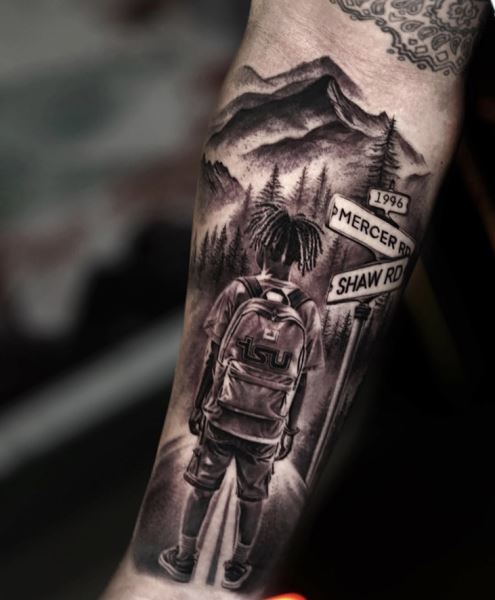
Q: Working on large-scale tattoos with another artist, like
the impressive piece you created with Basilio, sounds fascinating.
How creatively and technically challenging are these collaborative
projects?
A: Collaborating with Basilio is both creatively fulfilling and
technically challenging. From a creative standpoint, it's about
blending two distinct styles into one seamless composition without
losing the integrity of either artist's voice. That requires a lot
of communication, trust, and mutual respect. Basilio’s style is
truly one of a kind, which is why we decided to stick with it as the
foundation. There aren’t many artists who can do what he does and
execute it as well as he does. Merging my own style with his was
definitely a challenge. I went through several revisions to find the
right balance, and honestly, my wife’s brutal and
straight-to-the-point feedback played a huge role. She helped me
catch things I might’ve overlooked and sometimes, having a fresh
pair of eyes, even if they’re not an artist, makes a big difference
in getting the design just right. Technically, we had to coordinate
everything from stencil placement and shading direction to needle
depth and technique to ensure the final piece looked cohesive, not
like two separate tattoos stitched together. It’s a balancing act,
but when it works, the result is something truly unique, something
no single artist could’ve achieved alone. And of course, a huge
shoutout to our model Noah for enduring the pain like a champ, and
to our incredibly supportive wives for taking care of him throughout
the session. They did everything they could to make sure Noah was
comfortable and able to withstand three intense days of tattooing.
We couldn’t have done it without that kind of support.
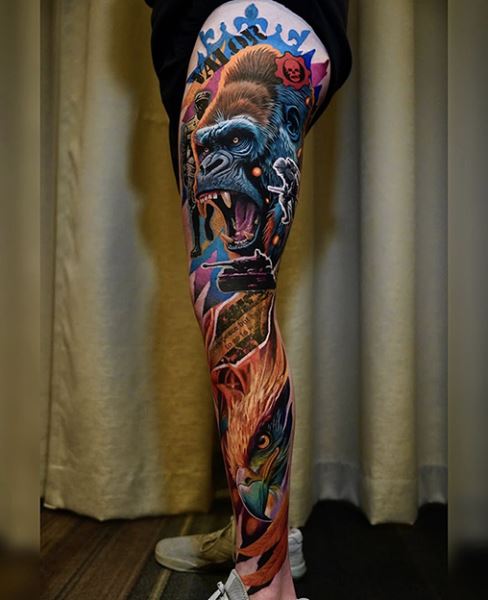
Q: Are you planning any new collaborative tattoo projects,
and if so, with whom? What elements do you believe make for a truly
successful collaborative tattooing endeavor?
A: Yes, I’m definitely open to new collaborative tattoo projects, I
have no specific person in mind but I'd be glad to collaborate with
anyone especially with artists who share a strong passion for
storytelling and creativity. I’ve had the opportunity to work
alongside some incredibly talented peers, and those experiences have
shown me how powerful collaboration can be when it’s rooted in
mutual respect and aligned vision. For a collaboration to be truly
successful, I believe it takes three key elements: clear
communication, creative chemistry, and a shared commitment to
quality. Each artist should bring their own strengths to the table,
but also be open to blending styles, ideas, and techniques. It’s not
about competing, it’s about elevating the work together. When both
artists trust the process and each other, the final piece becomes
something far greater than what either could have done alone.
Q: Tell us about your personal tattoo collection. When did
you get your first tattoo, and how long have you been building on
that collection?
A: I got my first tattoo when I was still very young, around the
same time I started tattooing myself. It was a small, simple piece,
but it marked the beginning of a lifelong journey. Since then, I’ve
been gradually building my collection over the years, each piece
holding a personal story or representing a milestone in my life and
career. Some of my tattoos were done by close friends and fellow
artists, which makes them even more meaningful. Others were
self-inflicted during my early learning stages, a reminder of where
it all began. My collection isn’t just about aesthetics, it’s a
visual timeline of growth, experiences, and passion. For me, every
tattoo I have carries weight, memory, and purpose, just like the
ones I create for others.
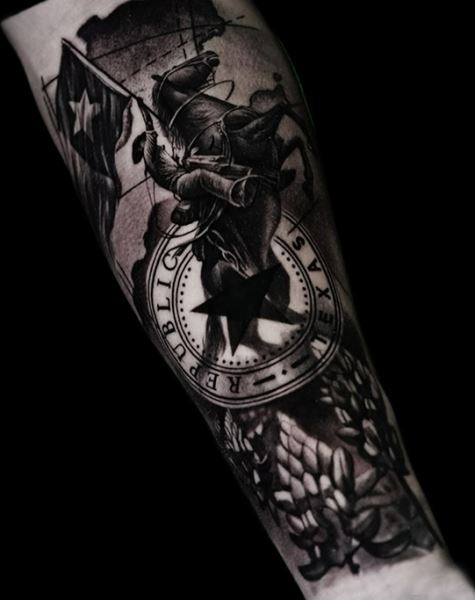
Q: Do you believe a tattoo artist needs to have impressive,
well-executed tattoos themselves to be considered more knowledgeable
in this art form?
A: That’s a great question and honestly, I believe it’s not about
how many tattoos an artist has, but about the quality of their work,
their mindset, and their dedication to the craft. Having
well-executed tattoos on yourself can definitely show appreciation
for the art and give you personal insight into the experience from
the client’s perspective, which is valuable. But I don’t think it
should define your skill or knowledge as a tattoo artist. What truly
matters is your ability to translate a vision into something
powerful on someone else’s skin, your technique, your creativity,
and how well you connect with clients. Tattoos on your own body can
be part of your story, but they’re not the measure of your talent or
professionalism. The real proof is in the work you create for
others.
Q: You've been in the USA for a while now. How has this
change of location impacted your career as a tattoo artist, and in
what ways do you feel it benefited you the most?
A: Moving to the USA has had a major impact on my career as a tattoo
artist. The exposure to a much broader and more diverse tattoo
culture has pushed me to grow not only in skill but also in
perspective. Here, the level of professionalism, competition, and
opportunity is on a different scale and being surrounded by so many
talented artists has motivated me to constantly elevate my work. One
of the biggest benefits has been the ability to participate in major
tattoo conventions, collaborate with artists from different
backgrounds, and connect with clients who truly value custom,
high-quality tattoos. It also gave me the chance to showcase my work
to a wider audience and build a reputation in an international
market. Overall, the move helped me step out of my comfort zone,
take my art to the next level, and continue evolving both personally
and professionally.
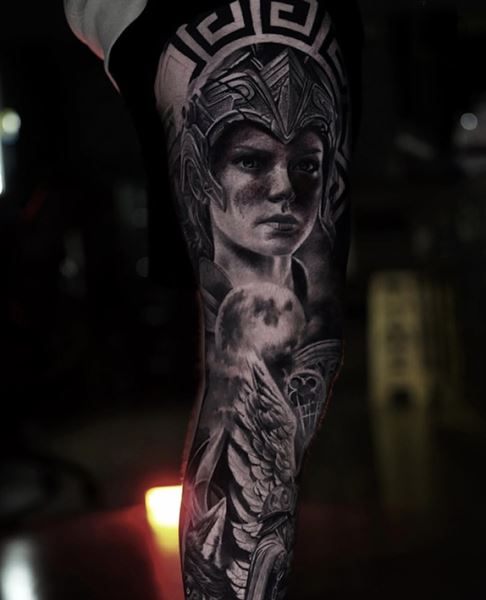
Q: Please write down your studio location and website/social
media links. Also, let us know if you are available for bookings.
Studio Location:
Alter Ego Tattoo & Piercing
7013 Kingston Pike
Knoxville, Tennessee 37919
USA
Instagram:@allanmanditattoos
Facebook: https://www.facebook.com/allanmanditattoos
Booking & Inquiries: You can message me directly through Instagram
or visit the shop for a free consultation.
Availability:
Yes, I’m currently accepting bookings! I offer custom-made designs
tailored to each client. Free consultations are available every
Tuesday to Saturday from 1 PM to 8 PM. Walk-ins are welcome for
consultations, but I recommend messaging ahead so I can plan
accordingly.
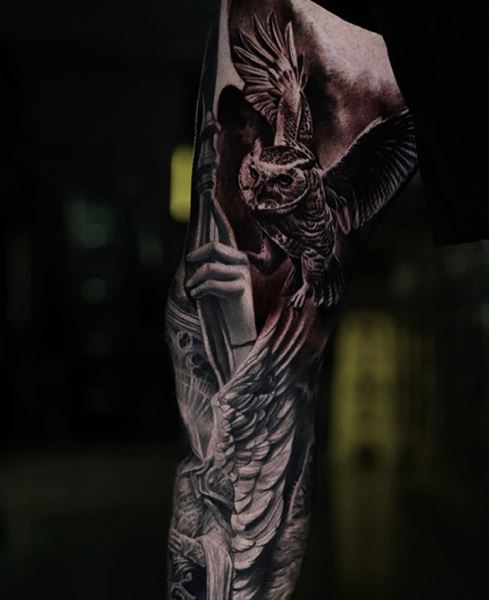
Q: What are your thoughts on the American tattoo scene
compared to the global tattoo scene? Do you believe we, as a
collective, are moving in the right direction within the industry?
A: The American tattoo scene is incredibly dynamic and influential,
it’s one of the most progressive and fast-evolving parts of the
global tattoo industry. What stands out here is the high level of
professionalism, the access to cutting-edge equipment, and the
openness to creative experimentation. There’s a strong emphasis on
individuality, storytelling, and technical excellence, which really
pushes artists to keep growing. Compared to the global scene,
especially where I started, the U.S. offers more freedom and support
for tattoo artists to express their style, attend conventions, and
build a personal brand. At the same time, I’ve seen amazing work
coming from artists all over the world, each bringing their own
cultural flavor and artistic tradition. As a collective, I do
believe we’re moving in the right direction. There’s more
collaboration, education, and respect within the industry now.
Tattooing is being taken seriously as a true art form, and artists
are being recognized on a much broader level. The more we continue
to share knowledge, support each other, and raise the standards, the
stronger and more united the global tattoo community will become.
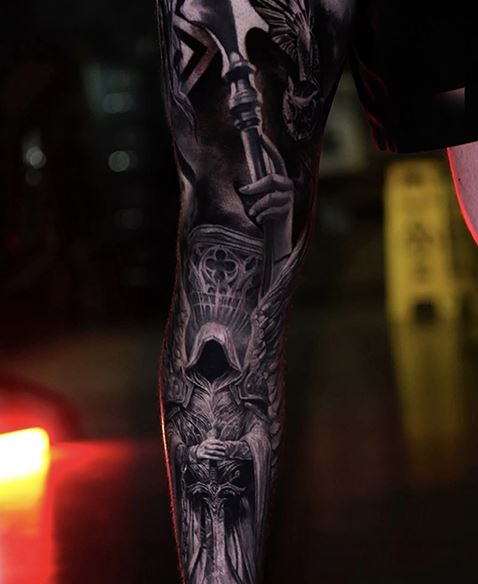
Q: Do you participate in tattoo conventions local or
international? What's your experience?
A: Yes, I actively participate in both local and international
tattoo conventions, and each experience has been incredibly
rewarding in different ways. Conventions are more than just a
platform to showcase your work, they’re opportunities to grow,
connect, and be inspired. Locally, they allow me to meet clients
face-to-face, take on unique pieces, and network with other talented
artists in the U.S. Internationally, the energy is on another level,
it pushes you to represent your culture, your style, and your skills
on a global stage. It’s an honor to be part of events where
creativity and technique come together in one place. Every
convention I’ve joined has taught me something, whether it’s a new
technique, a different approach to design, or simply how to stay
sharp under pressure. It’s also a great way to get feedback, build
your name, and even win awards that validate your hard work. For me,
conventions are a key part of staying inspired and staying connected
to the heart of the tattoo community. Tattoo conventions have played
a big role in my journey as an artist. Whether I’m attending as a
guest or working as a featured artist, I always see conventions as
an incredible opportunity, not just to showcase my work, but to
grow, connect, and be inspired. Working at conventions allows me to
reach a wider audience, meet potential clients, and introduce my
style to new markets. It’s also a great space to exchange ideas and
techniques with fellow artists from around the world. There’s so
much to learn just by observing others work and having real
conversations about the craft we all love. Beyond the work itself, I
see conventions as a way to stay connected to the tattoo community.
It’s a place where you can maintain relationships with artists you
admire, meet industry leaders, and even find future collaborators.
One of my proudest moments as an artist was winning 1st Place Best
of Show at both the Alabama Tattoo Convention and the Knoxville
Tattoo Convention. In addition to those, I’ve been honored with over
20 awards in various Black & Grey categories, which is a style I’m
deeply passionate about. Most recently, I took home 1st Place Best
of Day at the Nashville Tattoo Arts Festival- a huge moment for me
this year. These recognitions mean so much more than trophies,
they’re a reflection of the hard work, dedication, and love I put
into my craft. Being seen and appreciated among so many talented
artists continues to fuel my drive to keep evolving and raising the
standard with every piece I do. Overall, conventions are more than
just events to me, they’re milestones that represent growth,
passion, and the shared love for the art of tattooing.
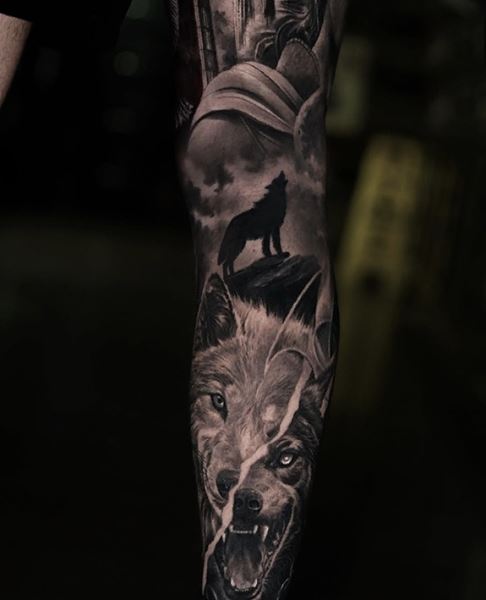
Q: What's your perspective on working as a guest artist? Do
you see it as a significant opportunity for professional growth?
A: Absolutely, I see working as a guest artist as a major
opportunity for both artistic and professional growth. Every time I
guest at a studio, it pushes me to step out of my comfort zone,
adapt to a new environment, and connect with different types of
clients and artists. It’s a chance to share my work with a new
audience, build my network, and learn from the unique techniques and
approaches of others in the industry. Guest spots also help keep
things fresh creativey. Being in a new space with new energy often
inspires new ideas and perspectives. And beyond the tattooing
itself, it’s a great way to develop relationships with other
studios, collaborate, and even open doors for future projects,
conventions, or partnerships. For me, guesting isn’t just about
traveling or exposure, it’s about growth, community, and continuing
to evolve as an artist.
Q: What's next?
A: What’s next for me is to keep pushing boundaries, both creatively
and professionally. I want to continue evolving my style, exploring
more complex concepts, and working on large-scale projects that
challenge and inspire me. I’m also aiming to participate in more
national and international tattoo conventions, not only to showcase
my work but to connect with other artists and stay immersed in the
global tattoo community. Another goal is to build more recognition
for my work through publications, features, and collaborations that
reflect my story and artistic vision. I also plan to continue doing
guest spots in other states and possibly even abroad, to expand my
reach and grow my client base. Ultimately, my focus remains the
same: to create meaningful, high-quality tattoos, build lasting
relationships with clients, and keep representing where I came from,
while proving that passion, discipline, and resilience can take you
anywhere.
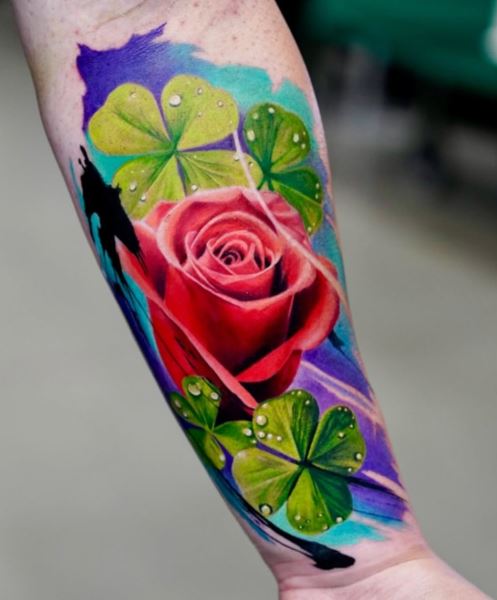
Q: What impact do you aspire to have on the tattoo
community?
A: I want my journey to show that passion, persistence, and staying
true to your craft can lead to something powerful, no matter where
you come from or how you started. I hope to inspire other artists,
especially those who are self-taught or come from places where
tattooing isn’t widely accepted, to believe in their potential and
never stop pushing forward. In the tattoo community, I aim to be a
reminder that growth comes from both struggle and dedication. I want
to contribute not just with my work, but by sharing knowledge,
collaborating with others, and helping lift the next generation of
artists. Whether it’s through mentorship, conventions, or just
day-to-day interactions, I hope my presence brings positivity,
inspiration, and a standard of excellence that motivates others to
give their best. At the end of the day, I want to be remembered not
just for the tattoos I’ve done, but for the respect, integrity, and
passion I brought to the craft.
Q: If you could go back and give your younger self advice
about pursuing tattooing, what would it be?
A: I wouldn’t give him advice - I’d thank him. I’d tell him how
proud I am of the work and dedication he put in, even when no one
was watching and nothing was guaranteed. I’d look him in the eyes
and say, “We made it, kiddo. We somehow made it. I’m proud of you.”


