
Interview with Animal Tattooer
To mark the eighteen anniversary of Skin Artists
Tattoo Magazine, we are spotlighting the creators who have redefined
the boundaries of what is possible on the human canvas. Animal
Tattooer has been chosen for this milestone celebration as a
legendary figure in the international community, widely recognized
for pioneering a signature language of hyper-vibrant realism.
Her work is a stunning collision of intense photographic detail and
abstract graphic energy. By commanding an extraordinary palette and
high-contrast depth, she has pushed the color realism genre into a
saturated, cinematic territory that is instantly recognizable. Her
portfolio serves as a masterclass in artistic leadership, proving
that technical perfection and bold creative rebellion can coexist in
a single piece.
The following interview is dedicated to exploring the future of
tattooing. As the industry moves toward a single global aesthetic,
we discuss the importance of maintaining a distinct artistic
identity and her vision for the evolution of luxury destination
collectives. This conversation offers a unique look into the
philosophy of an artist who continues to shape the visual landscape
of modern skin art.
Q: In 2026, the internet has effectively erased regional
styles. Do you believe we are heading toward a “Single Global
Aesthetic,” or will local cultural identities, like the Baltic,
Asian, or American schools, find a way to rebel and stay distinct?
A: I’m absolutely open to the global blending of styles. I find it
incredibly impressive. Anything that brings joy to the soul and
gives the artist a source of inspiration, cannot be harmful. Of
course, history is deeply valuable, and we have come a long way to
reach this saturated and liberating moment in the tattoo world. At
last, this ancient art is able to gather influences from all corners
of the world into one community, giving us the freedom to combine
traditions and explore new creative possibilities. Luckily we don’t
have to fight for our uniqueness and artistic freedom as the
painters from past did. We are living in a good time for creativity.
So let’s enjoy. I think everyone will choose the style that speaks
to them most, whether it is a classical style or a mix of different
influences. As people see more art and develop their visual taste,
their interest in different styles will grow naturally.
Q: We are seeing the death of the “Street
Shop” in favor of elite, high luxury destination collectives. In 10
years, will the “neighborhood tattoo shop” even exist, or will
tattooing become an exclusively high art, luxury experience?
A: I believe there will always be people who will do the
“walk-in’s”. People who are far from art and simply want a name, an
infinity sign, or something they once saw on a favorite singer. And
there will always be tattoo craftsmen ready to offer that service.
At the same time, I have a very clear idea of how the studio I work
in should feel. I want to give the client a level of service that I
can proudly stand behind. A working station and a sofa are not
enough. It should be a genuinely comfortable place for both the
artist and the client, especially when they spend an entire day
together. A place where you are: not distracted by others, not out
of space when you’re moving the bed, not desperately searching for
supplies because someone took them from your station. In my view,
studios are divided into two types, business salons and artistic
spaces. A business space is focused on profit, it limits the
tattoers, agrees to do everything, and rarely guides the client
toward something creative or more thoughtful. It becomes a service,
like going to a beauty appointment. Positive- good income for the
owner. Negative - not a perspective place to grow. Then there are
artistic studios, where the owners treat the space like a living art
space, with soul, warmth, and a sense of purpose. They surround
themselves with inspiring people they can grow with, learn from, and
strive alongside. Definitely this space requires big expenses and
it’s barely bringing a real business income. The more people see
examples of truly good tattooing, the more obvious their choice of
studio and result will become. Many people simply do not know how
much tattoo culture has evolved.
Q: You travel the world constantly. Is the
“Visionary” of the future a nomad by necessity, and how does this
constant movement between cultures change the “energy” you put into
your designs?
A: This profession gives us the opportunity to live and travel
anywhere in the world, and that is beautiful. In 2022, I spent
almost the entire year traveling. During that time, I realized that
guest spots are not really for me. My efficiency drops noticeably in
that environment. During sessions at guest spots, where everything
is new and works differently, I found myself spending one or two
extra hours just on preparation, simply because everything around me
was unfamiliar. For me, that is a serious drain of energy and a
source of stress. I am easily distracted in those conditions, and of
course there is also the desire to talk, observe other artists, and
experience the whole surrounding. In the end, I understood that the
quality of the session and the level of service are extremely
important to me, and with every project I want to give my maximum.
That is why I chose to stay based in one studio with familiar
preparation, and I feel very lucky with both the place and the team
at NBK. We have artists with very different styles, and sometimes
guest artists come to work with us. For me, this is the ideal
balance, because I do not have to change my own working place, and
at the same time I can still observe, communicate, and stay
inspired. Over time, I have also noticed that my colleagues and I
sometimes take little details in designs from each other, even
though our styles are different. It becomes a part of the
creative exchange, and I think that is something very special.
Q: If we can see a “Masterpiece” being
created live on a 4K stream from halfway across the world, what is
the futuristic purpose of the physical Tattoo Convention? Is it
still about the art, or has it become a social ritual?
A: For me, as an artist, a convention is first of all about live
communication with other artists, almost like a meetup-club built
around a shared passion. From my own perspective, conventions have
started to feel more and more like a space for insiders, and I meet
fewer visitors who are not already part of the tattoo world. But I
am still certain that conventions are about art. A convention is a
show. It is a place where you can create something exceptional,
demonstrate your strengths, collaborate with another artist, and
keep yourself visible. Offline conventions are wonderful, almost
like a huge summer camp for us. A 4K stream is also valuable, but it
can never replace real human interaction. I have had experience
judging online conventions, and it was interesting, but completely
different. Work seen in real life carries another level of presence
and inspiration. It helped me in my path and I wish it will help
others.
Q: Your work defies the traditional limits of skin. As
pigment science evolves toward 2030, do you see a future where we
can achieve “Neon” effects that remain stable for 50 years?
A: I would love to see progress, both in pigment production and in
everything connected to skin preparation and aftercare. Maybe in the
future there will even be ways to influence the skin itself, making
it easier for tattoo pigment to show at its full potential. On my
opinion a part of the issue lies in the lack of client education,
and in how often aftercare recommendations are ignored. Artist
education matters just as much, especially when it comes to working
with different skin tones and planning the color palette of a
project with those skin tones in mind. What matters most to me is
safety. If real progress can happen without harmful consequences for
the body, then of course I would be very happy to see it.
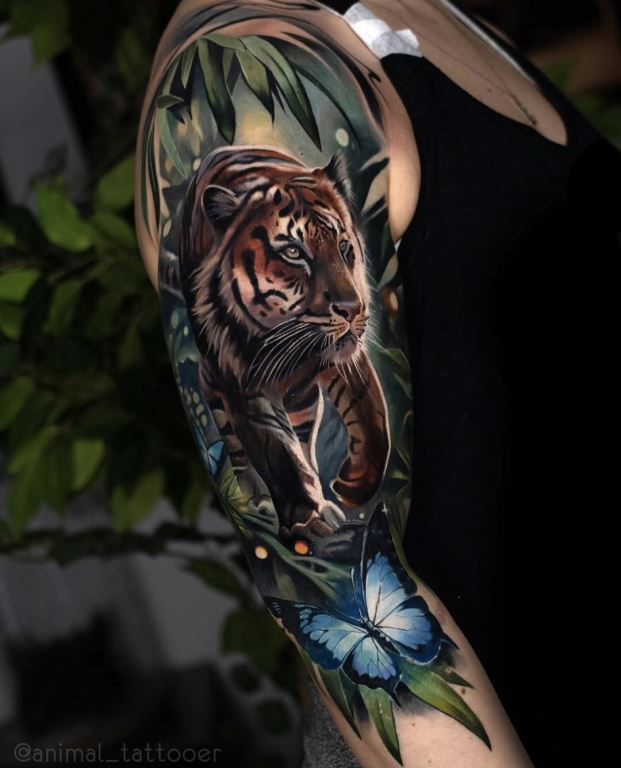
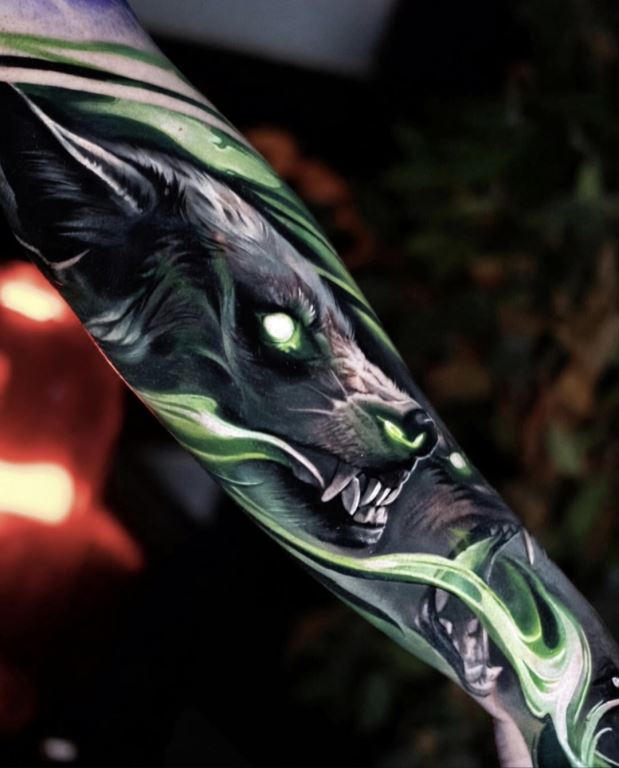
Q: You have a specific way of rendering
the “spark” in a predator’s eye. Is this a technical trick of white
ink placement, or do you believe there is a psychological connection
required to make the eye look like it is actually tracking the
viewer?
A: I think it is about emotion. I truly want to bring the animal in
my project to life. In my mind, it is never just an image. I want to
convey emotion, and emotion is always about soul, intention, and
inner meaning. That is what catches attention, because the viewer
begins to imagine a story for this character. Why is the gaze
melancholic, why is it inspired, why does it feel alive. For me,
that is what makes the eyes work.
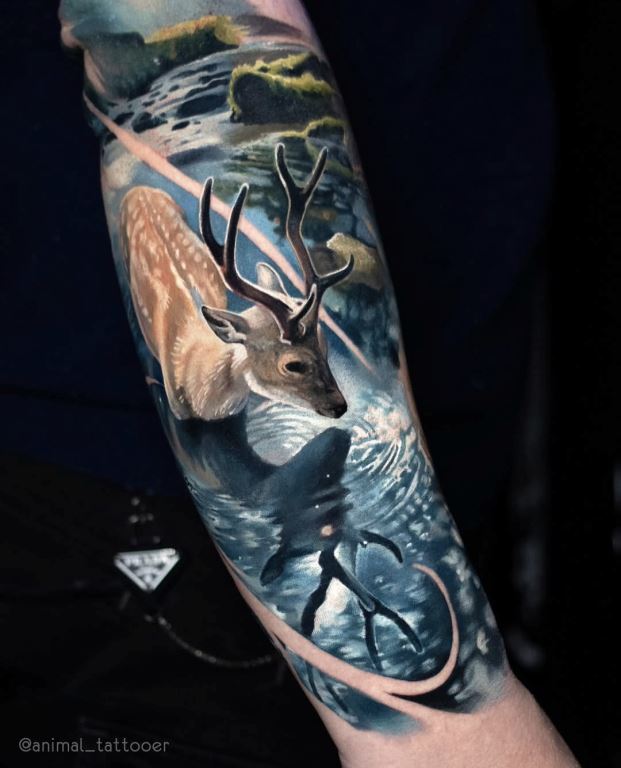
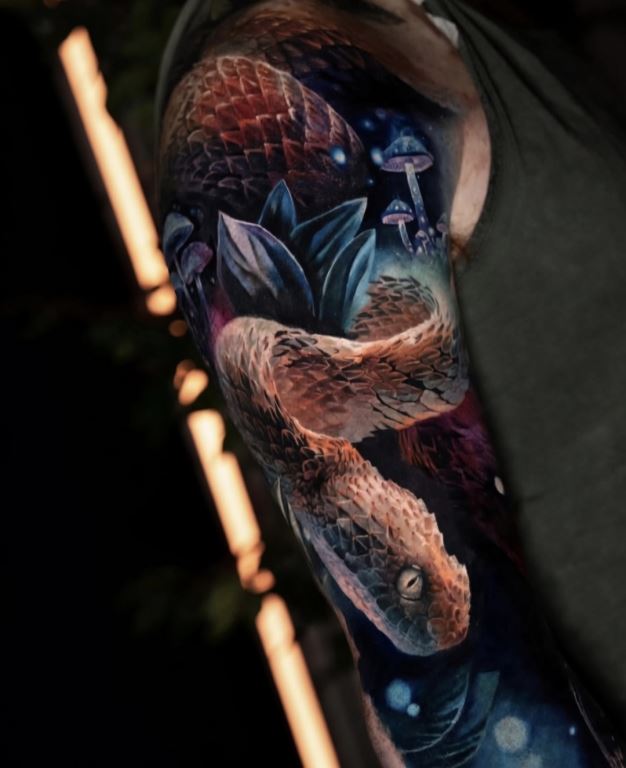
Q: From the “wetness” of a black bear’s nose to the
“softness” of an owl’s feather, how do you adjust your physical
technique to differentiate between these natural textures for the
next generation?
A: I would say, you have to think carefully during the process and
work step by step. And try to imagine what is actually under the
fur. It is not just a flat surface, it is a skull, a rounded shape,
sometimes a more angular form. In that sense, everything is very
close to academic drawing. It helps to break every object into
simple forms, because then it becomes easier to understand where
shadow begins, where the light falls, where the highlight should
appear. After that, I think about the surface itself, do I want to
show something glossy and wet, or soft and smooth. What helps me a
lot is the awareness that I am the creator, and I want people to see
a certain object in a certain way. Then I ask myself, what exactly
do I need in order to show this texture convincingly. Observation is
also essential. If I feel I do not fully understand the texture, I
look at references and ask myself questions, what makes this object
look smooth, what makes it look hard, what makes it feel soft, and
how can I translate that visually. I think questions and self
reflection are a very good path in our profession. Before simply
copying a reference, it is important to pause, think, and not rush.
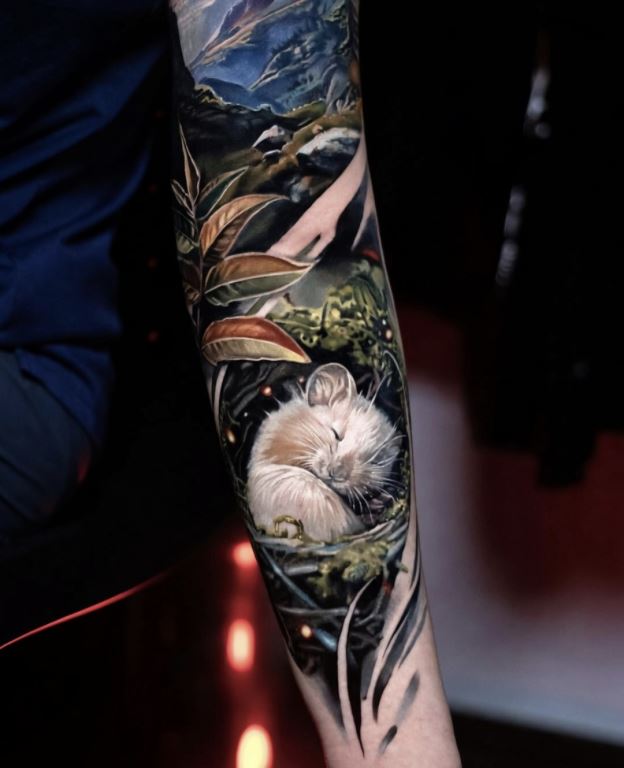
Q: In a future where “micro realism” and
small, “sticker style” tattoos are trending, why is it vital for the
global community to protect the “large scale, bold blend” movement?
A: Each artist chooses their own direction. I respect those trends,
and they can be very beautiful. But when it comes to my own work, I
am very strict about scale and placement. Therefore, If someone asks
me to make something too small, I simply do not feel right. It is a
big responsibility, because in my understanding placement and size
are just as important as the subject itself. I cannot enjoy the work
if I know it is not in the right place. Later, I will only feel that
I harmed the person. Maybe artists who specialize in miniature work
can do that very elegantly. I do not judge others by my own
standards. For me personally, the best small tattoo is either one of
many sticker style tattoos, because then it can work as part of a
bigger visual language, or a miniature that is powerful enough to
exist as a complete independent piece, with nothing around it
distracting from its presence. I can only judge my own choices and
my own work strictly. I think all directions have their place, and
that is part of the beauty of art, its diversity. But it is also
important to give the client a full understanding of the
possibilities, to explain that tattooing can also be seen through
anatomy, placement, and balance. Very often people understand this
only after they already have small tattoo. Many clients come for
cover ups because they feel a visual imbalance between the placement
and the image. I think artists need to show more examples and
explain these things more clearly.
Q: How do we, as a global community,
protect the “Master” status from being diluted by “Viral” fame? In
2026, is a “Visionary” defined by their followers or their
fundamental craft?
A: I honestly do not have a complete answer to this question. Social
media has changed its path dramatically. For me, it was always a
portfolio page, a place where someone could see something intimate
that I was ready to share with the world. Now social media often
pushes us to show everything. There is too much information, too
many empty words, too many random frames, or on the other hand,
things that used to feel precious when shared in real life are now
being devalued online. There is simply too much of everything, and
in that noise it becomes very easy to miss something truly
meaningful. In my own case, I do not feel sincere when I imagine
myself constantly performing for the camera. It does not interest
me. I want to share what is truly precious to me, and there is not
that much of it. At the same time, I also understand that those who
refuse to adapt at all may disappear. Without content, without
attention grabbing headlines, without drama and intriguing stories,
your pictures alone may no longer be enough for people to notice
you. So I think the real challenge is balance, to move with the time
without losing yourself, and to show what you genuinely find
valuable instead of chasing every trend. I think sincerity has
enormous power.
Q: We see more artists working on the same
piece simultaneously. Do you think the future of the “Masterpiece”
is a solo journey, or is it a “Collective Mind” where two or three
masters merge their styles?
A: If we look at the history of painting, collaborations have always
existed. Some names were louder than others and overshadowed the
rest, even when the work itself was powerful in every detail.
Collaborations help with shared visibility, but they also teach
artists how to work as a team, how to go beyond themselves, how to
aim higher, how to grow, how to observe colleagues and learn from
them. It is definitely an essential part of our creative world. The
merging of styles can look incredibly interesting. For example, one
artist may beautifully adapt the realism of another artist into the
anatomy of the body. Very different styles can create a striking
effect together, because contrast can be visually powerful. For me,
the best collaborations are the ones where both styles remain in
balance, where they feel like one whole, where neither one
overpowers the other, where you can still recognize the hand of each
artist, and at the same time everything works in harmony with the
body.
Q: Global ink bans have forced us to
change our palettes. Do you think these shared struggles have
actually brought the global community closer together through shared
problem solving?
A: A ban without clear evidences and proper justifications is a real
solution to the problem. And what is the problem btw? Before asking
the global community to accept restrictions on tattoo pigments, it
would make more sense to first look at substances like alcohol and
tobacco, whose harmful effects on health, including their connection
to cancer, have long been proven. Only after that does it seem
reasonable to speak seriously about evidence, and about clearly
documented cases of these pigments causing direct harm to human
health
Q: You have transitioned from an artist to a “Destination.”
What is the one truth about the “Master” status that young artists
entering the global scene are not ready to hear?
A: These are very big words for me, and honestly I do not see myself
that way. There is a lot I need to achieve before I could carry such
a status with honor. I think it also depends on the goals of young
artists. When I started, I only wanted to jump above my own head
every single time. I just wanted to create something incredible and
show it to the world. I never expected that one day, if I worked
hard enough, there would come a moment when I could relax. In my
opinion if you want to stay relevant, you must continue searching,
continue experimenting, continue surprising. You need to look for
new paths, to be the one driving the train, not simply the
passenger.
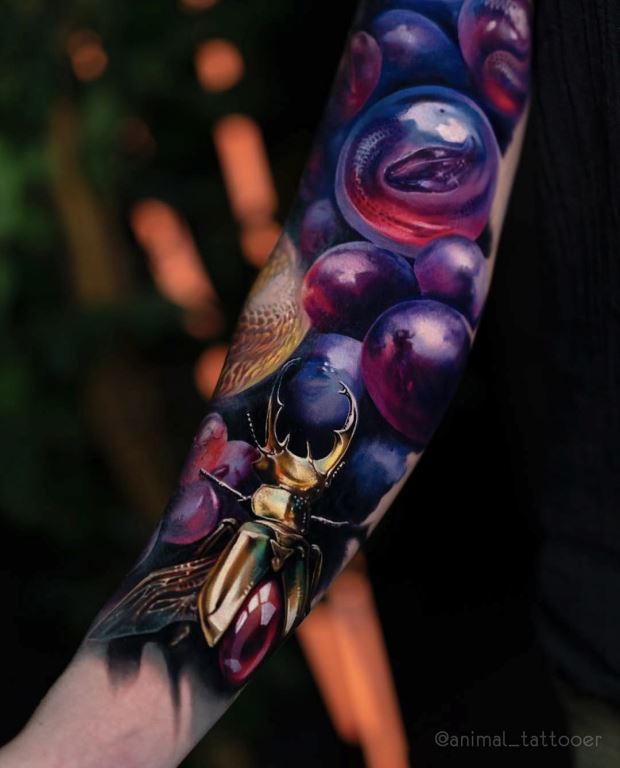
Q: Social media allows artists to hide
behind filters and high contrast editing. For a student trying to
achieve your “Animal” saturation, what is the one brutal, physical
reality of the skin that a digital screen will never show them?
A: This is a very important topic, and again it brings us back to
social media. What catches attention while scrolling through a feed,
a high quality photos with carefully directed light, or a poor image
taken with no understanding of presentation. We have to be honest,
on social media we are selling a photo, from its composition to its
lighting and background choices. There is no escaping that. What
catches the eye survives in surroundings full of noise. I can
compare it to oil painting in galleries. Under the wrong frontal
light, many paintings look flat, black tones get swallowed by the
light, and all the magic disappears. But if you change the angle,
place the work higher or lower, suddenly the painting comes alive
again, exactly the way it should be seen.
So what is the point of showing a work from the worst angle and
under the worst lighting. At the same time, I have also experienced
the other side. Sometimes after the first session a project looked
rich and saturated, and I was excited to continue it, but when I saw
it again six months later, those noble tones I had mixed so
carefully had turned into dull brown and muted green shades.
Sometimes it is about skin tone and the way skin behaves. Sometimes
it is poor aftercare, especially in the sun. Sometimes it is my own
mistake in choosing certain shades. Some skin simply does not allow
for a wide spectrum of colors, while other skin accepts them and
holds them beautifully. So I think the real answer is balance. It is
important to be able to show work both in beautiful directed light
and in its healed, everyday form, so a person can understand how it
may actually look in real life.
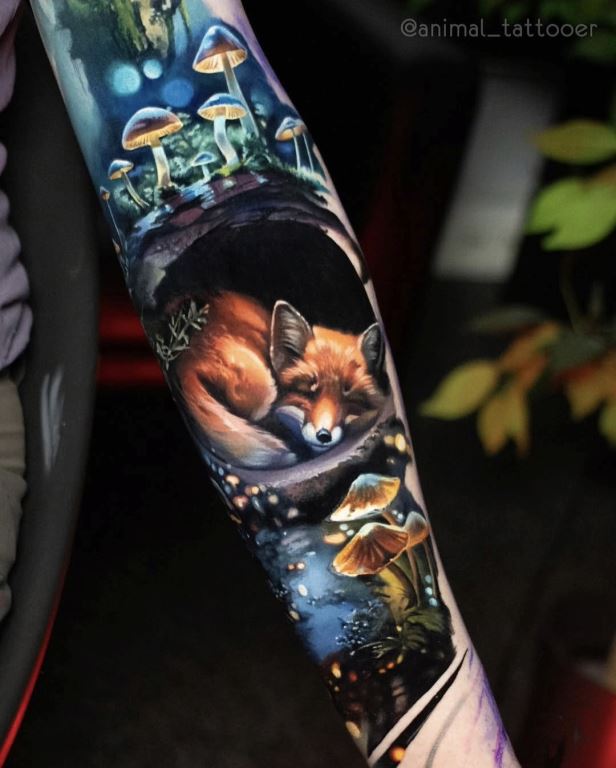
Q: You have reached a stage where you can
say “no” to projects that do not challenge you. How has gatekeeping
your own portfolio actually been the most important business
decision for your global brand?
A: To be honest, I have started making tattoos only as a hobby, by
choosing the ideas I really wanted to try. From the very first
works, tattooing was something I did with pleasure, only for joy.
Every project felt like a challenge. I did not even think about
tattooing as something that could bring income. For me, it was like
drawing, like a competition with myself. I was doing it in my free
time, alongside my studies and my main job, so I always wanted to
dedicate that time to what sparked something in my heart. A few
times I accepted projects (for my friends) that I did not like from
the very beginning, and that gave me an important lesson. I
understood how bad I feel when I do something I do not understand,
something that does not feel right or beautiful to me, something
into which I cannot put my soul. So my “no” to certain projects does
not come from arrogance or from being difficult. It comes from the
feeling that I will not be able to reveal that idea the way another
artist perhaps could. If I do not feel that it is mine and cannot
give it all my love. I want to devote myself fully to what I do,
otherwise I simply feel lost.
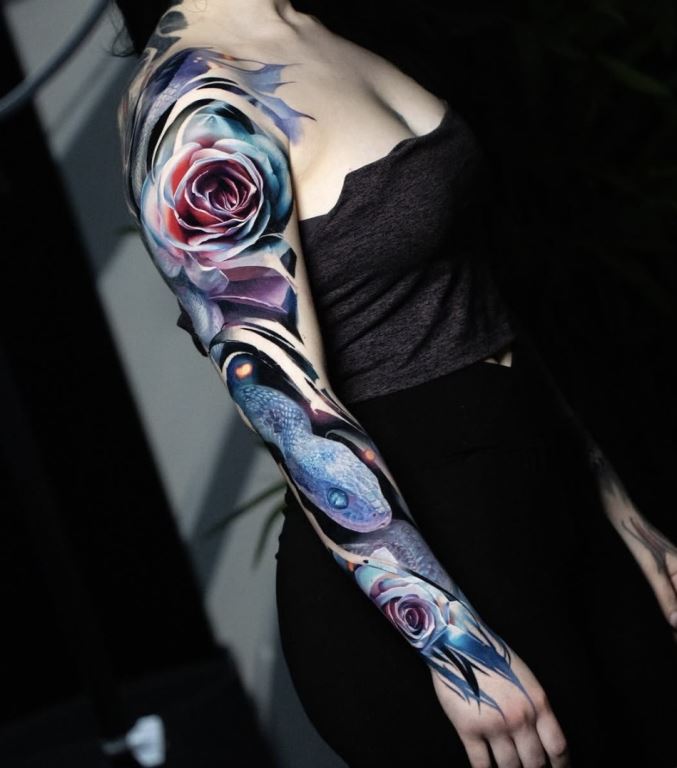
Q: We are moving toward a “self taught”
generation. In 2026, can an artist truly find the “soul” of the
craft through a screen, or is the physical presence of a mentor
still a non negotiable requirement?
A: I learned tattooing from the internet. If you want something
strongly enough and truly strive for it, a great deal becomes
possible. Ten years ago I had serious difficulties with social
communication. I could not connect with people the way I can now.
Because of that, I learned almost everything from the internet, from
forums, from videos on YouTube, on my own. I had no money for the
tattoo schools, and my parents used to say that tattoos were for
prisoners and that I needed to focus on a normal job. I was at the
tattoo conventions and watch artists work. I recorded their hand
movements on video, and later at home I learned and analyzed those
videos at the beginning of my tattoo sessions. With more practice
came more questions, and at some point I stepped over my
psychological difficulties and began to socialize more. So yes,
online learning can give a lot. I think the most important skill is
self reflection, the ability to ask yourself, what do I need to do
differently for the result to become better. This question is
fundamental, and it helped me in many beginnings. At the same time,
I still believe that observing the process offline gives a much
fuller understanding.
Q: When “perfect realism” is the baseline for everyone, what
is the one specific “human signature” you intentionally leave in
your work to ensure it is recognized as yours?
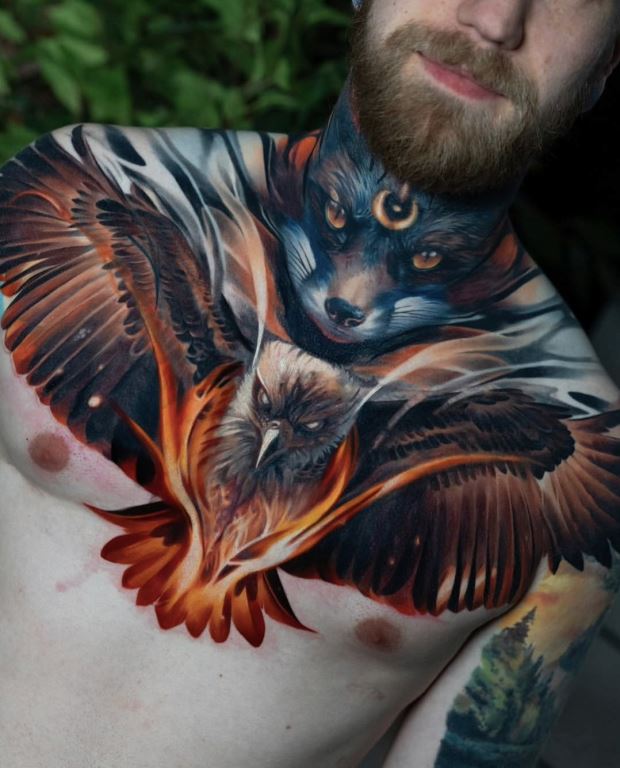
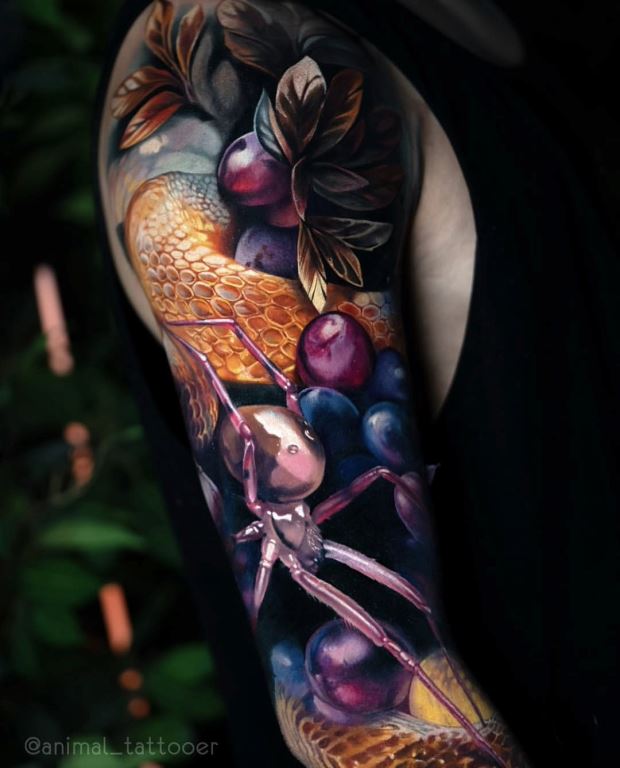
A: At my seminars I often speak about the search for style, how it
forms, what examples can teach us, and what makes other artists
recognizable. In my own work, I often use the example of feminine
imagery. I try to humanize the emotions of my animals. Behind them
there are often beautiful, melancholic female portraits. I also work
with stories, stories that clients give me as the foundation for the
design concept. I try to think through the atmosphere and meaning of
a project, so that it is not just an empty portrait, but something
with depth, something that contains hidden details inside it, where
the composition and every object in it move together like one dance.
Q: If you could delete one toxic tradition
from the global tattoo community to make it healthier for the next
generation, what would it be?
A: Our industry feels relatively free right now in comparison to the
world problems. Yes, of course it has its imperfections and its
toxicity. But I would rather give it more air than restrict it, and
I would not want to reform it too heavily. For art, too much control
is harmful. We already see where that can lead in other areas.
Q: Every masterpiece you create is essentially on a timer,
destined to disappear with the wearer. In a digital world obsessed
with archiving everything forever, how does the “expiration date” of
a tattoo change the value you place on the work while you are
creating it?
A: The thought how temporary my art is pushes me toward painting as
well. There are fewer limits in terms of time and color
combinations. But in tattooing - perhaps because it is finite, the
value of the process becomes even stronger for me while I am
creating it.
Q: If you could send a warning to the artists of the future,
what is the one human element of tattooing you fear we are currently
in danger of losing to technology?
A: Client education. This is one of the things we are lacking now,
and something that may affect the future in a serious way. Real
appreciation appears through visual culture and through learning. It
would be wonderful to speak more often with clients through social
media about better placement, about the importance of the overall
idea, about the value of contrast and composition. These are
fundamental artistic principles that can help avoid unnecessary
corrections and additional elements. I believe that with this kind
of visual understanding, the value of human work, and the value of
the artist, will remain high.
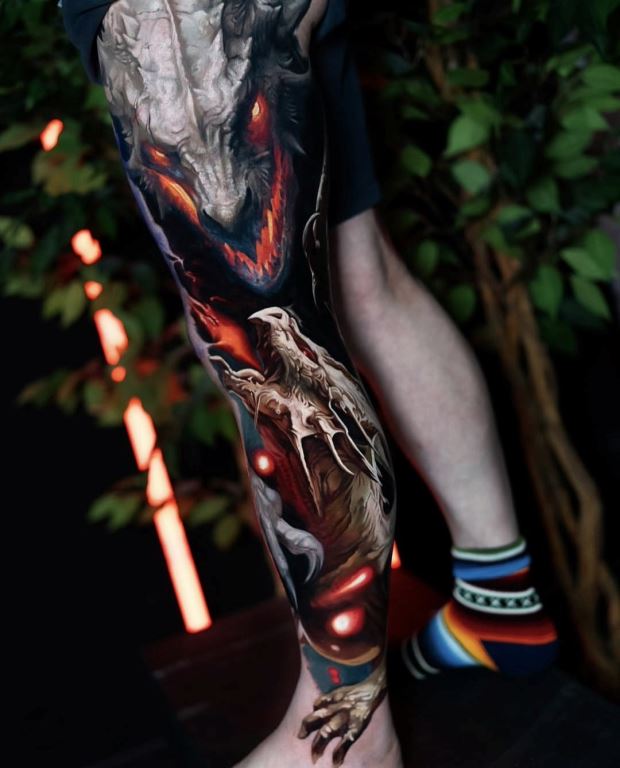
Q: If you were told you could only tattoo
one more animal to represent your entire career and philosophy,
which animal would it be, and why does it represent your final
statement as a visionary?
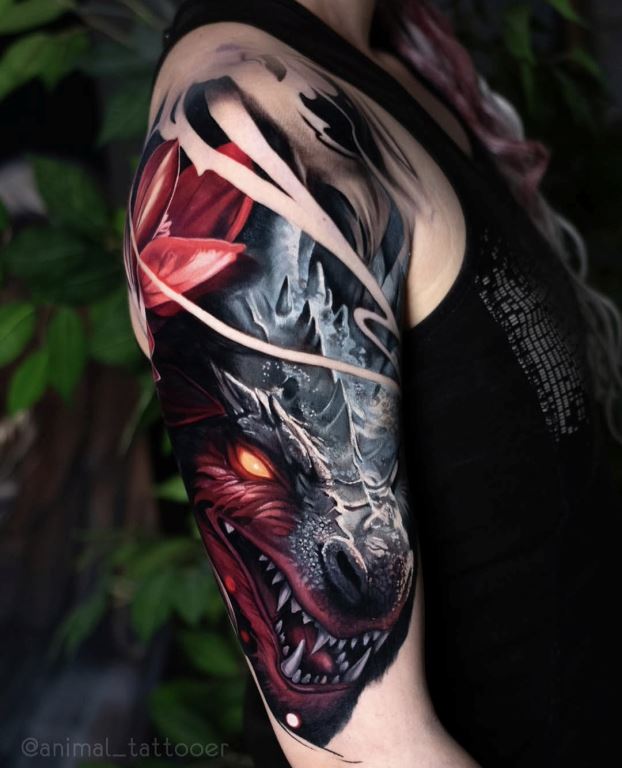
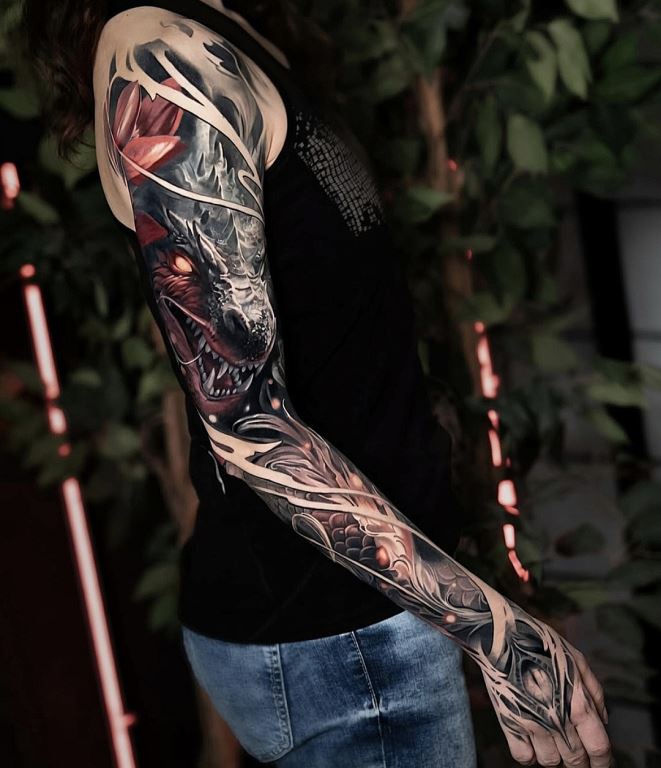
A: What I love most about my direction is the variety of textures I
can play with, and also the emotional range it gives me. So let it
be a dragon. It can be built in a way that feels anatomical and
dynamic on the body. It can have both glossy scales and soft fur. It
is a very powerful visual character, and at the same time it can
carry many different emotions, with a little bit of magic as well.


