
Interview with Anna Rose Kosarewska
For this feature, Skin Artists Tattoo Magazine
delves into the vibrant, surreal world of Anna Rose Kosarewska, a
Ukrainian-born tattoo artist and fine artist permanently making her
mark across Australia. Operating between creative hubs like Hobart,
Melbourne, and Sydney, Anna has carved out a unique space in the
contemporary tattoo scene with an unmistakably rich visual language.
Her custom large-scale color work beautifully bridges the gap
between classic European art traditions and modern body art,
seamlessly weaving elements of Art Nouveau, dark fantasy, and gothic
elegance with striking color realism.
Beyond the studio, her captivating style commands attention at major
tattoo conventions and transcends the skin through a highly
sought-after fine art print collection. In this exclusive interview,
we explore her artistic roots, her experience navigating the
Australian industry, the technical thrill of high-energy
collaborative live-tattooing, and the profound philosophy behind her
storytelling on skin.
Q: Your background is deeply rooted in traditional fine art
and heavily inspired by European art and culture. How did your early
formal art education shape your perspective on tattooing when you
first picked up a machine?
A: My formal art education gave me a foundation that extends far
beyond technical skill. It taught me to think critically about
visual language, symbolism, composition, and the emotional weight an
image can carry. Growing up in Europe, surrounded by centuries of
artistic tradition from the Renaissance to Symbolism and Art Nouveau
inevitably shaped the way I see and create art. As Ernst Gombrich
argued, every artist works in conversation with those who came
before, and I still feel that dialogue in my own practice. When I
first picked up a tattoo machine, I never saw tattooing as separate
from fine art. I saw it as another medium, one with a unique
responsibility. Unlike a painting that hangs on a wall, a tattoo
becomes part of a living person. It moves, ages, and carries
memories, identity, and emotion alongside its wearer. My art
training taught me to respect anatomy, movement, balance, and
composition, and those principles remain at the core of every tattoo
I create.
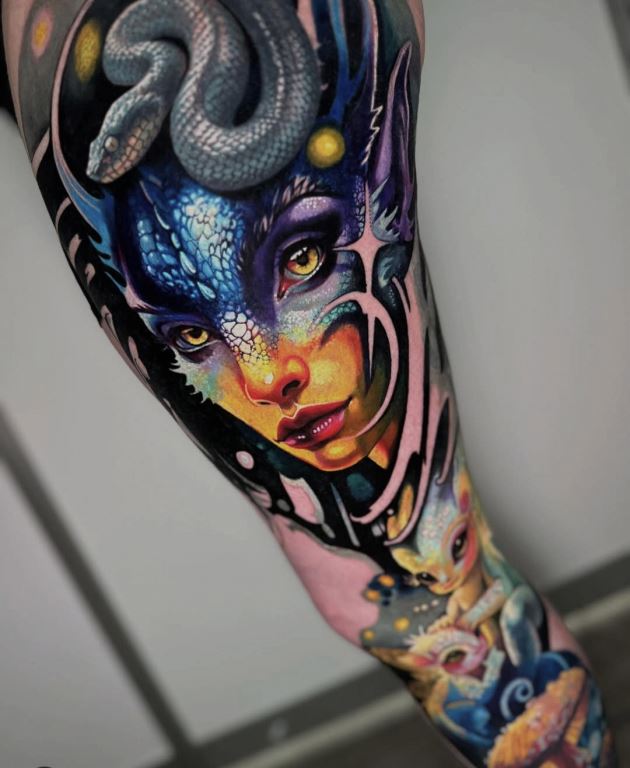
Q: Coming from Ukraine, what specific cultural or artistic
elements from your homeland do you feel still subconsciously
influence the way you approach your artwork today?
A: You won't necessarily find obvious Ukrainian folk motifs in my
tattoos, but the way I approach art has been deeply shaped by where
I grew up.
Ukraine has a long tradition of resilience and respect for making
things by hand. Art was part of everyday life, history, and
identity. Perhaps the strongest influence, though, is an
appreciation for emotion. Eastern European art often isn't afraid of
melancholy, drama, or symbolism. I grew up in Ukraine during the
collapse of the Soviet Union and the turbulent 1990s. It was a time
of enormous uncertainty, rapid change, and resilience. Looking back,
I realise those experiences shaped my character in profound ways.
They taught me to adapt quickly, stay calm under pressure, and keep
moving forward regardless of the circumstances. That mindset has
become invaluable in tattooing. Conventions, constant travel,
working in unfamiliar studios, and creating under intense time
pressure. One quality I deeply associate with Ukraine is
perseverance. There is an unspoken mentality of simply continuing,
no matter how difficult things are. You don't wait for perfect
conditions you find a way to push forward. That resilience has
shaped not only my work ethic but also my creative practice.
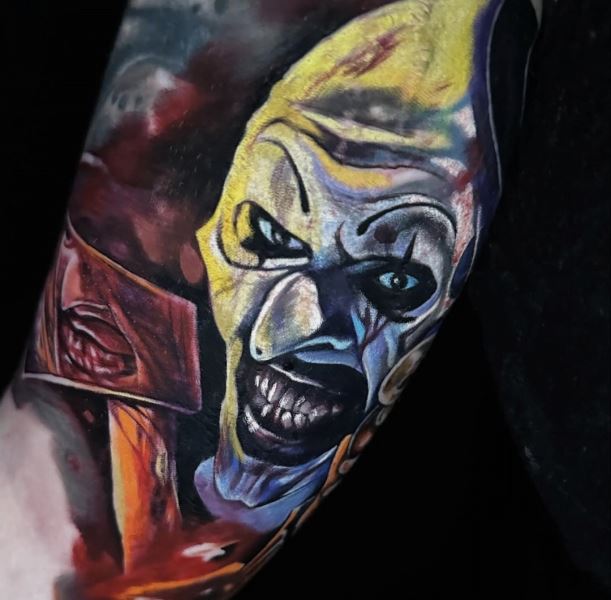
Q: Transitioning from traditional mediums to the human
canvas can be daunting. What were some of the biggest technical
challenges you faced during your early days as an apprentice or
junior artist?
A: One of the biggest lessons I learned early on was that being able
to draw doesn't automatically make you a good tattoo artist. Fine
art gave me a strong visual foundation, but tattooing is an entirely
different discipline with its own rules, techniques, and
responsibilities. You have to understand machines, speed, how to
control needle depth, skin anatomy, composition for different body
parts, how different areas of the body behave, the healing process,
colour theory specifically for skin, and, of course, strict hygiene
and cross-contamination protocols. Those are things no traditional
art school can teach you. Perhaps the biggest challenge was learning
to think beyond how a tattoo looks on the day it's finished. You're
designing for years into the future. Skin changes, pigments settle,
lines soften, and every person's body heals differently. It takes a
great deal of experience to predict how colours will age, how a
composition will flow with the body, and how to create something
that remains beautiful over time. That was probably the most
humbling part of my apprenticeship. It taught me that tattooing
isn't simply painting on skin, it's a craft in its own right, one
that demands technical precision, patience, and lifelong learning.
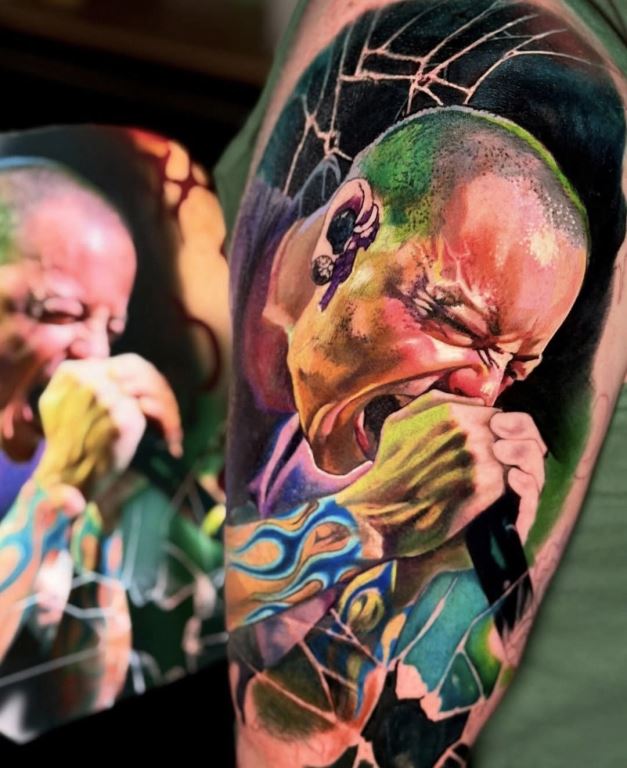
Q: As seen across your portfolio, your signature
semi-realistic style uniquely blends dark fantasy, gothic elegance,
Art Nouveau, and illustration. How did you manage to fuse such
distinct, diverse genres into a cohesive, recognizable aesthetic?
A: I don't think I ever sat down and decided, "This is going to be
my style." It evolved naturally through years of studying the things
that genuinely fascinate me. Studying fine art gave me an
appreciation for classical composition, anatomy, and visual
storytelling, while I've always been drawn to darker aesthetics,
gothic literature, mythology, fantasy, horror etc. I also grew up
surrounded by illustration, comics, animation, cinema, and digital
art, so those influences naturally became part of my visual
vocabulary. What probably defines my work most, though, is that I
never stop learning. I'm constantly consuming visual culture,
visiting galleries and museums, studying art history, reading
philosophy, analysing films, fashion, architecture, design, and
contemporary illustration. I believe inspiration doesn't come from
waiting for ideas to appear; it comes from exposing yourself to
extraordinary work across different disciplines and asking why it
resonates. Art historian Ernst Gombrich wrote that there is no such
thing as Art, only artists. I find that idea incredibly liberating
because every artist contributes another voice to an ongoing
cultural conversation. We're all influenced by what came before us,
but our role is to reinterpret those ideas through our own
experiences. Rather than trying to imitate a particular tattoo
style, I focused on understanding the principles behind the artists
and movements that inspired me. Over time those influences stopped
feeling separate and began to merge into something that felt
authentically my own. I also love John Berger's idea that "the way
we see things is affected by what we know and what we believe." I
think that's true not only for the viewer but for the artist as
well. Every book I read, every exhibition I visit, every film I
watch, and every conversation I have subtly changes the way I
create. For me, style isn't something you invent, it's something
that gradually emerges from years of curiosity. My tattoos are
really a reflection of everything that has shaped my way of seeing
the world: beauty with a touch of darkness, elegance balanced by
strength, and fantasy grounded in believable form. If people
recognise one of my tattoos before they recognise my name, I
consider that one of the greatest compliments an artist can receive.
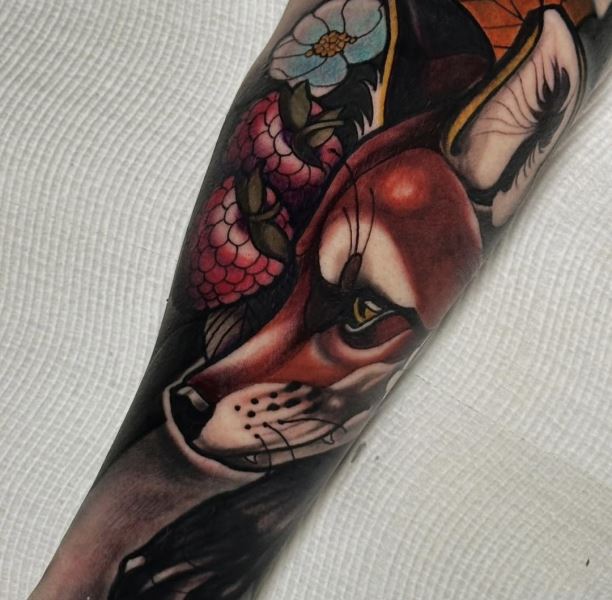
Q: Mythological themes, transformation, emotion, and
femininity are central pillars of your work. What draws you so
strongly to these motifs, and how do you use color realism to
elevate the storytelling aspect of these themes?
I think those themes found me before I consciously chose them.
Looking back, I realise my work has always been drawn to
transformation, resilience, mythology, and femininity because they
reflect questions I've explored in my own life. Like many people,
I've experienced periods of profound change and what psychologists
describe as post-traumatic growth idea that adversity can become a
catalyst for personal transformation rather than simply something to
survive. That experience changed the way I see both art and
tattooing. I became less interested in creating images that were
simply beautiful and more interested in creating images that carry
meaning. Carl Jung believed that mythological figures are archetypes
that live within all of us, representing universal patterns of fear,
courage, loss, transformation, and rebirth. The tattoo becomes a
language for experiences that are sometimes difficult to express in
words. I think that's one of the reasons people are drawn to
tattooing in the first place. Very few people get tattooed simply to
decorate their bodies. More often, they're marking a transition,
honouring someone they love, reclaiming their identity, celebrating
survival, or embracing a new chapter in life. A tattoo becomes both
a memory and a declaration: this happened, this changed me, and this
is who I am now. Ultimately, I don't see tattooing as decorating the
body. I see it as creating modern mythology. Every tattoo is a
collaboration between the client's lived experience and my visual
language. Together, we transform a personal story into an image that
becomes part of their identity, something they carry with them every
day.
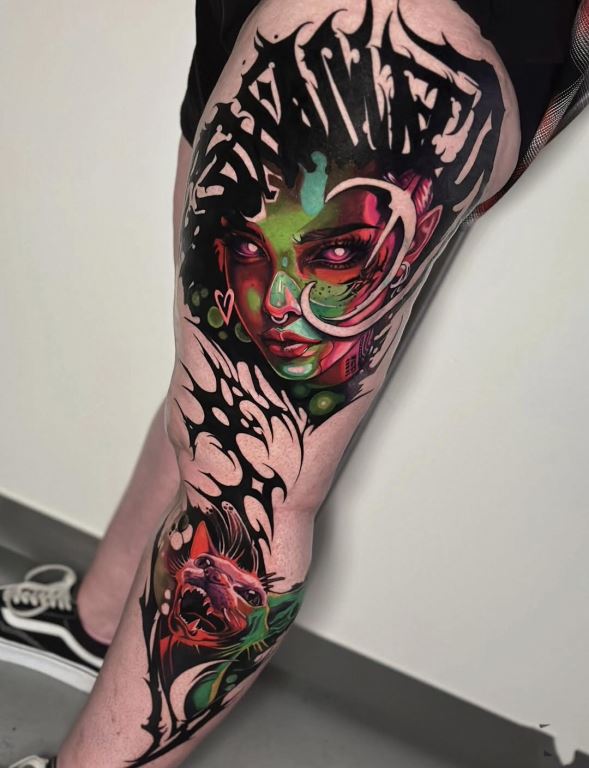
Q: Your work relies heavily on highly detailed, large-scale
custom color pieces. When designing for the body, how do you balance
the intricate details of your illustration style with the longevity
needed for color tattoos to age beautifully?
A: For me, longevity is never an afterthought it's the foundation of
the design. There's no point creating a technically impressive
tattoo if it only looks its best for the first six months. Every
decision I make is based on how that piece will heal, settle, and
read years down the track. When I design large-scale colour work, I
build the tattoo around strong composition and readability first. I
establish the primary focal points, control the flow across the
anatomy, and make sure the value structure works before I even think
about rendering. Detail is there to support the composition, not
overwhelm it. One of the biggest lessons tattooing teaches you is
restraint. It's tempting to render every square centimetre,
especially coming from a fine art background, but skin has limits.
Ink spreads, pigments soften, and the body is constantly changing.
Knowing where to simplify, where to leave breathing room, and where
to push contrast is what allows a tattoo to age gracefully. Color is
another consideration entirely. I think constantly about pigment
saturation, temperature relationships, transitions, and how
different colours will behave once they're healed. Different skin
tones absorb and reflect colour differently, so there isn't a
one-size-fits-all approach. Every palette has to be adapted to the
individual client. At the end of the day, I don't see longevity and
detail as opposing ideas. Good tattooing is knowing how to balance
both. When the fundamentals are solid, composition, contrast, colour
theory, anatomy, and technical application, you can create highly
detailed work that still remains clean, readable, and beautiful for
decades.
Q: You are now permanently based in Australia, traveling and
working between major cities like Hobart, Melbourne, and Sydney. How
would you describe the tattoo culture in Australia compared to
Europe, and how has relocating impacted your growth as an artist?
A: My plan for 2026 is to work between Europe and Australia. In
Europe, tattoo culture feels more closely tied to fine art
traditions, with a strong focus on symbolism, composition, and
narrative. Clients often approach tattoos with a very defined idea,
and the design process tends to be more reflective and deliberate.
In Australia tattoo culture has a strong tradition of Australian
tattooing, which has developed over generations of tattooers
preserving the craft. Relocating also made me more adaptable.
Working across conventions, guest spots, and different studios
requires constant adjustment, not just technically, but in
communication and workflow. I am envisioning myself working in the
USA, Europe and Australia regularly starting next year.
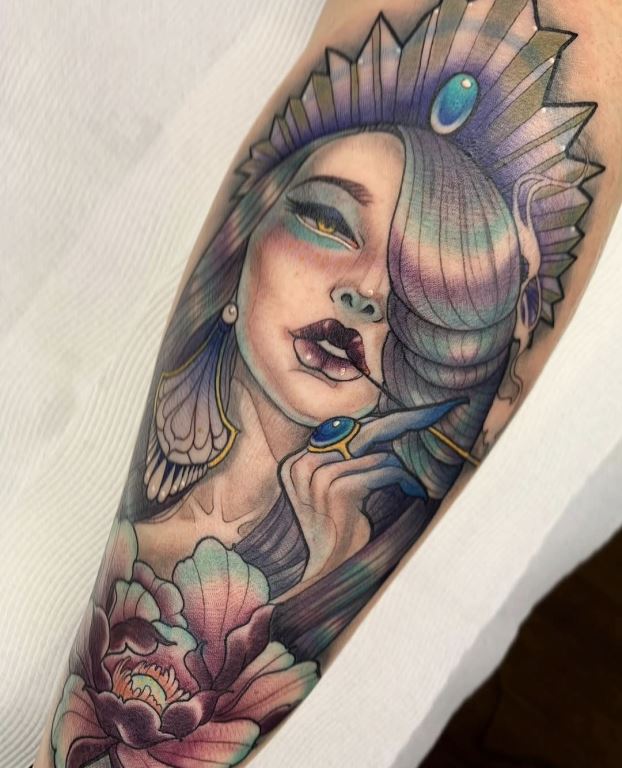
Q: Moving between different cities means adapting to
different clienteles and creative environments. How do you maintain
your artistic identity while catering to the diverse crowds of
Melbourne, Sydney, and Tasmania?
A: For me, maintaining my artistic identity doesn't mean creating
the same tattoo over and over again. It means approaching every
project through the same artistic principles while allowing each
client's story to shape the final result. The most important part of
my process is listening. Every large-scale project begins with an
in-depth consultation where I try to understand not only what the
client wants visually, but why they want it. As the philosopher
Martin Buber suggested, genuine creation begins with genuine
dialogue. I believe the best tattoos emerge from that conversation
between artist and client. Clients come from very different
backgrounds in Melbourne, Sydney, and Tasmania, but they all want to
feel seen and understood. Once I understand their story, I translate
it through my own visual language, through composition, colour,
symbolism, and the flow of the body. My style remains recognisable,
but every tattoo is unique because every person is unique. John
Dewey wrote in Art as Experience that art is not simply an object
but an experience created through interaction. I think tattooing
embodies that idea perfectly. Every piece is shaped by both the
client's lived experience and my artistic interpretation.
Interestingly, many clients come to me specifically because they
trust my style and want to give me creative freedom. I see tattooing
as a collaboration rather than a commission. It's their story told
through my visual language, and I believe that's where the most
meaningful work is created.
Q: Cover-ups require an entirely different level of
problem-solving and spatial awareness. How has mastering
high-saturation color cover-ups pushed your skills in color theory
and composition?
A: Cover-ups have taught me to think like both an artist and a
problem solver. You're not working on a blank canvas you're working
with an existing image, existing pigment, scar tissue, and the
unique characteristics of the client's skin. It's not simply about
choosing beautiful colours; it's about understanding opacity, value,
contrast, pigment behaviour, and how colours interact once they're
healed. Sometimes the solution isn't to completely hide the old
tattoo, but to intelligently redirect the eye through strong
composition and carefully controlled color. Many high-saturation
colour cover-ups also require a staged approach. Rather than trying
to achieve everything in a single session, I often build colour in
layers over multiple appointments, allowing the skin to heal between
sessions. That process requires patience, technical discipline, and,
most importantly, trust from the client. The best long-term results
come when we respect the biology of the skin rather than trying to
rush it. Cover-ups have also strengthened my approach to
composition. Instead of fighting the existing tattoo, I look for
ways to use it as part of the underlying structure, creating
stronger focal points, movement, and balance around it. In many
ways, the limitations become part of the creative process.
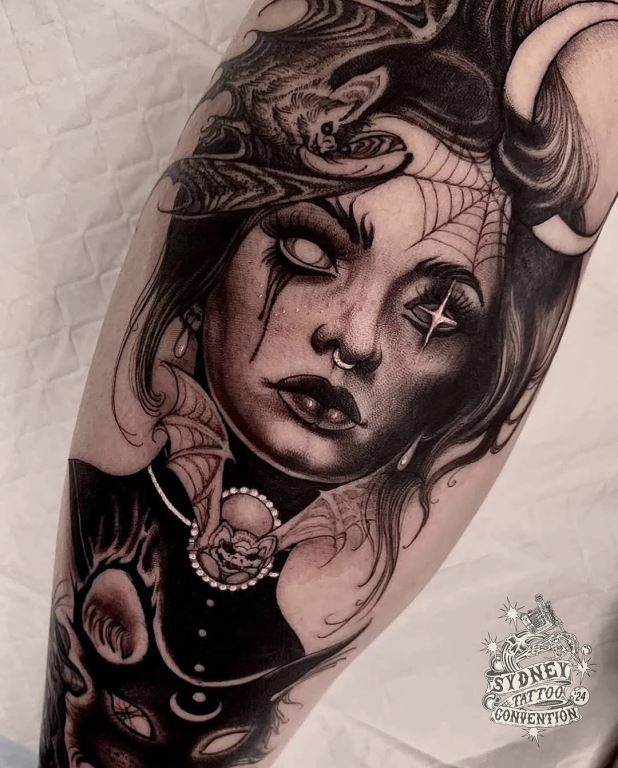
Q: You frequently participate in major events, such as the
upcoming South East Queensland Tattoo and Arts Exhibition and the
Australian Tattoo Expo. What do you enjoy most about the convention
environment, and how does it fuel your creative energy?
A: Yes, I’ve been fortunate to take part in major events like the
Australian Tattoo Expo in Sydney, where I was honoured to receive
Best of Show 2026 and Best Collaboration for a piece created with
Noah Green-Burden from Melbourne. I’m currently preparing for the
South East Queensland Tattoo and Arts Exhibition, where I’ll be
working on another collaboration piece. What I enjoy most about the
convention environment is the energy. It’s intense, fast-paced, and
creatively charged in a way that’s very different from studio work.
You’re surrounded by highly skilled artists from all over the world,
and that naturally pushes you to stay sharp and open-minded. For me,
conventions are first and foremost about community. It’s a space
where you meet people, share ideas, build friendships, and create
connections that often extend far beyond the event itself. That
sense of exchange is incredibly valuable. At the same time,
conventions are one of the fastest ways to grow as an artist. You
see different approaches to technique, composition, and workflow in
real time, and that constant exposure challenges you to refine your
own practice. There’s a healthy pressure in that environment it
keeps you evolving.
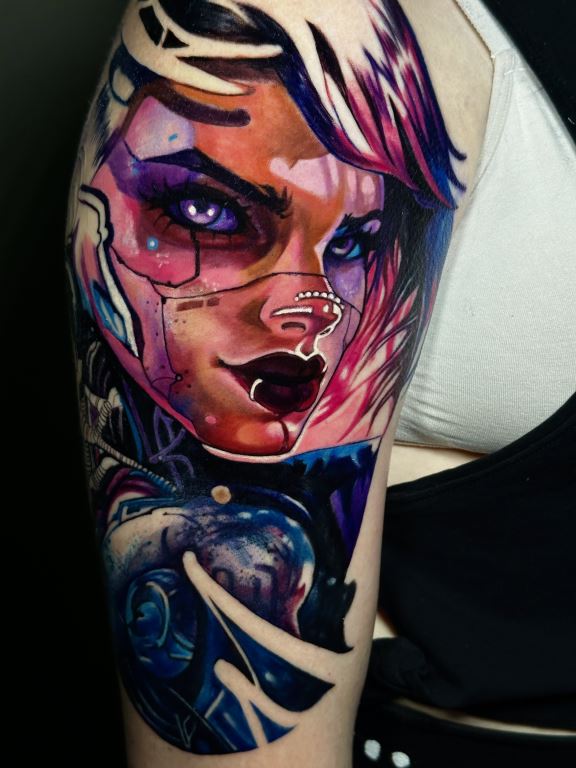
Q: At the Sydney Tattoo Expo, you are stepping into a
high-octane live collaboration with Noah Green-Burden, pitting
large-scale color work against high-detail black and grey realism.
What is the dynamic like when two completely clashing styles meet on
the skin in real-time, and what does it take to execute a seamless
live collaboration?
A: We’ve already completed the collaboration at the Sydney Tattoo
Expo, and I’m very proud to say the piece received Best of Show
2026, as well as Best Collaboration together with Noah Green-Burden.
For me, the most interesting part of live collaboration isn’t the
contrast between styles it’s how two visual languages can be brought
into a single, coherent composition under pressure. Large-scale
colour realism and high-detail black and grey can feel like
different worlds, but on skin they have to function as one unified
work. That process is built on trust, preparation, and a shared
understanding of structure before the machine even starts. In a live
setting there’s no space for ego, only clarity, communication, and
respect for each other’s decisions in real time. As Pablo Picasso
famously said, “It took me four years to paint like Raphael, but a
lifetime to paint like a child.” I think collaboration brings you
back to that openness where you’re not defending a style, but
responding to the work as it unfolds. It also reflects John Donne’s
idea that “No man is an island.” In tattooing, especially in
collaborations, you realise that even the most individual style
becomes stronger when it’s part of a dialogue. Ultimately, a
successful collaboration isn’t about two styles competing on the
skin, but about creating a unified piece where both visual languages
elevate each other. When that balance works, it creates something
neither artist could achieve alone.
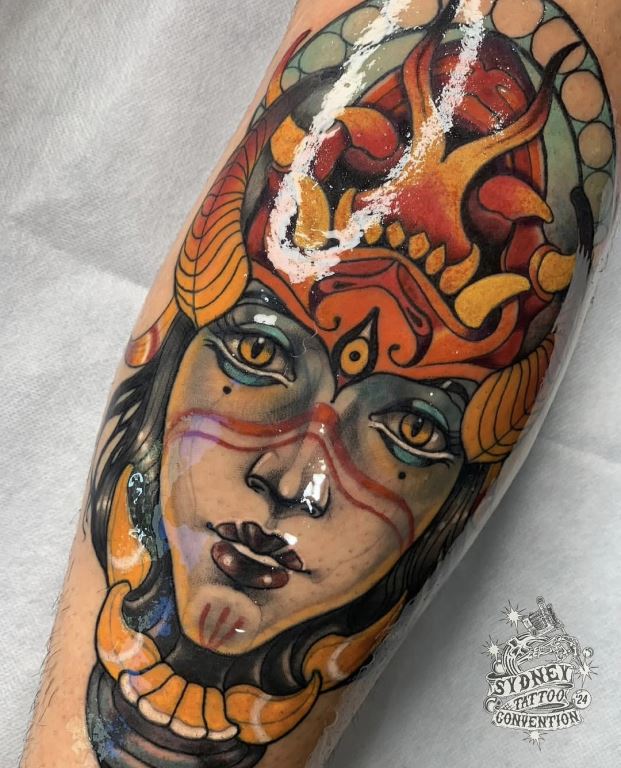
Q: Looking back at your career highlights so far from
domestic expos to international presence like the Brussels Tattoo
Convention, is there a specific moment or milestone that made you
step back and realize how far your art has taken you?
A: Yes one of the most significant moments for me was receiving my
first major awards at the Sydney Tattoo Convention at Town Hall,
including Best Collaboration and Runner-up Best of Show. It’s the
oldest and one of the most respected tattoo expos in Australia, so
standing on that stage meant a lot. It was a very personal moment of
reflection. I first came to Sydney about ten years ago as a young
tattooist with very basic equipment, no clientele, and limited
experience, but with a strong drive to build something for myself. I
was simply dreaming big at the time, without really knowing how the
path would unfold. Receiving those awards in the same city, on that
same stage, made me realise how much has changed. It wasn’t just
about recognition it was a moment of awareness of the distance
travelled, the skills developed, and the life I had built through
years of consistency and work. At that moment, I understood that the
shift had already happened.
Q: Aside from tattooing, you have a thriving fine art side
to your career, including highly demanded prints like your "Green
Lady" collection. How does your creative process differ when you are
painting for a gallery or print collection versus designing custom
body art?
A: My approach to fine art and tattooing comes from the same
foundation, but the process behind them is quite different. When I
work on tattoos, the process is highly collaborative and grounded in
problem-solving. It begins with a client’s story, anatomy,
placement, and long-term durability. Every decision is made with the
body in mind, movement, healing, aging, and how the image will live
and transform over time. Tattooing is always relational, it exists
in dialogue with a living surface. With fine art, such as my prints
or pieces like the Green Lady collection, the process becomes more
internal and expansive. I’m no longer responding to physical
constraints in the same way. Instead, I can begin from a conceptual
or emotional impulse and allow the image to evolve more freely
through atmosphere, symbolism, and composition. I’m often drawn to
the idea suggested by Deleuze and Guattari that art is not a fixed
object, but a process of “becoming.” In that sense, both tattooing
and painting are not static outcomes, but transformations only their
conditions are different. One unfolds through skin and time, the
other through image and imagination. At the same time, I see echoes
of Aby Warburg’s idea that images carry emotional memory across
time, that motifs and gestures persist, reappear, and evolve across
cultures and histories. In tattooing, that becomes very tangible,
because an image is literally carried on a body, continuing its life
beyond the studio. In that way, tattooing is more architectural and
responsive, while fine art is more expansive and reflective. One
demands precision within lived constraints, the other allows for
conceptual exploration without limitation. But they continuously
inform each other. My fine art deepens my sense of composition and
atmosphere, while tattooing keeps my painting grounded in structure,
clarity, and readability. I don’t see them as separate practices,
but as two ways of thinking through the same visual language one
lived on skin, the other existing as an image.
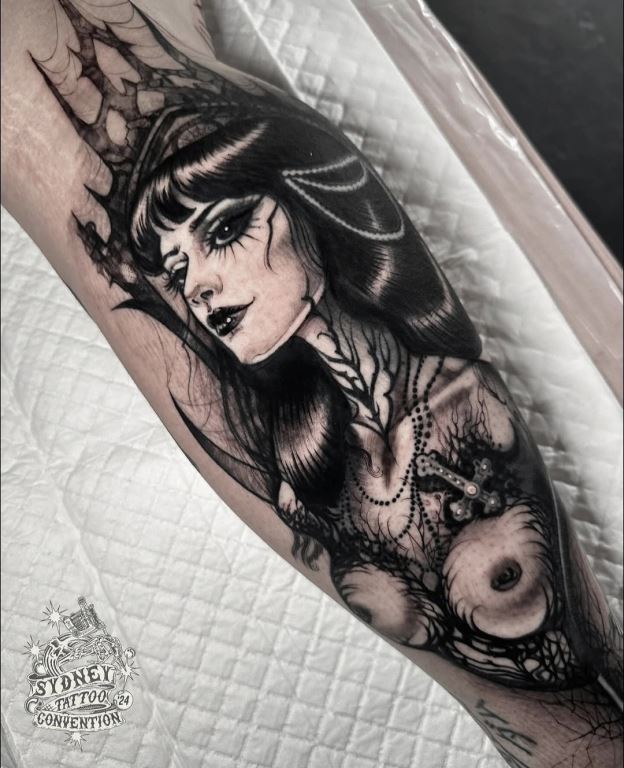
Q: Does your work in fine art serve as a playground to
experiment with concepts that you eventually bring into your tattoo
portfolio, or do you try to keep those two creative worlds separate?
A: I don’t see fine art and tattooing as separate worlds, but I also
don’t treat them as identical processes. They exist in constant
dialogue with each other, but each has its own rules and
responsibilities. Fine art does function, to some extent, as a space
for exploration. It allows me to test atmosphere, symbolism, colour
relationships, and compositional ideas without the constraints of
skin, placement, or longevity. In that sense, it gives me freedom to
push concepts further and see what emerges without immediate
practical limitations. However, I don’t approach it as a “sketchbook
for tattoos.” It has its own integrity and purpose. Sometimes ideas
flow from fine art into tattooing, but just as often it works in
reverse tattooing refines my understanding of clarity, structure,
and readability, which then influences my paintings. I often think
of Gilles Deleuze’s idea that art is not a system of fixed
categories, but a continuous process of becoming. In that sense,
both practices are part of the same evolving visual language rather
than separate compartments. So rather than keeping them strictly
divided or using one as a tool for the other, I see them as two
parallel modes of thinking, one grounded in the body and time, the
other in image and reflection. Together, they keep my practice both
disciplined and open-ended.
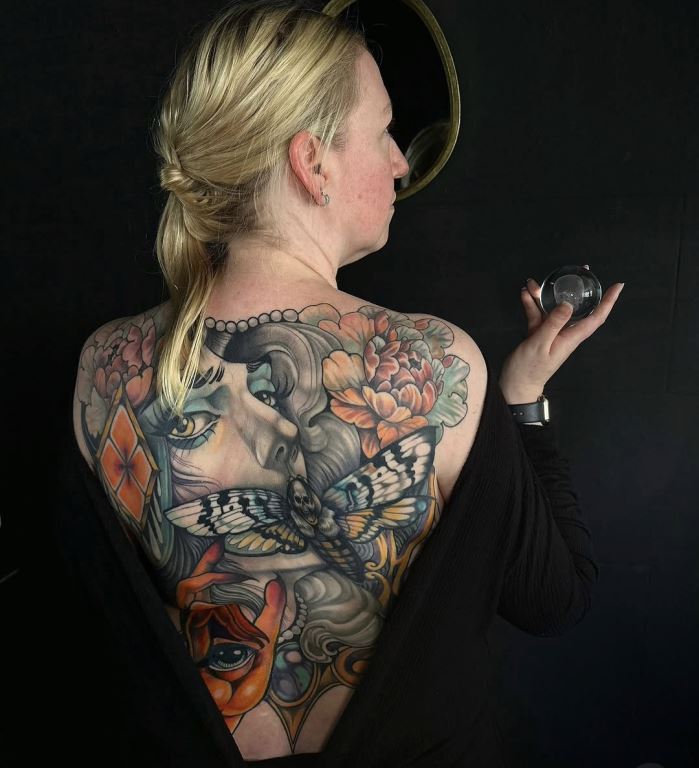
Q: Tattooing is an art form inherently tied to human
mortality, the artwork disappears with the canvas. Fine art, on the
other hand, can exist for centuries. How do you navigate the
contrast between the impermanence of your tattoos and the permanence
of your physical paintings?
A: I don’t see tattooing as “less permanent” than fine art, it
exists in a different register of permanence. From a psychological
perspective, tattoos are embedded in lived experience. They are not
only images on skin, but memories tied to identity, change,
relationships, and specific moments in a person’s life. In that
sense, they are constantly being reinforced through daily
interaction, touch, and self-perception. They become part of
autobiographical memory rather than external observation. Fine art,
by contrast, exists outside of us. It can survive for centuries, but
it is experienced at a distance. It is preserved materially, but not
necessarily lived. Tattooing is the opposite, it may physically fade
or evolve over time, but it is continuously “activated” through the
body and the mind of the person carrying it. Philosophically, I
often think about the idea that nothing is truly permanent in a
fixed sense, everything is in a state of transformation. Even
paintings change over time through light, decay, and context.
Tattooing just makes that process visible and intimate. There is
also something meaningful about accepting impermanence rather than
resisting it. In a way, tattoos acknowledge that life is
transitional, and yet we still choose to mark it. That tension is
what gives tattooing its emotional weight. So rather than seeing it
as a contrast between permanence and disappearance, I see it as two
different ways of holding meaning: one through preservation of the
object, and the other through integration into a human life.
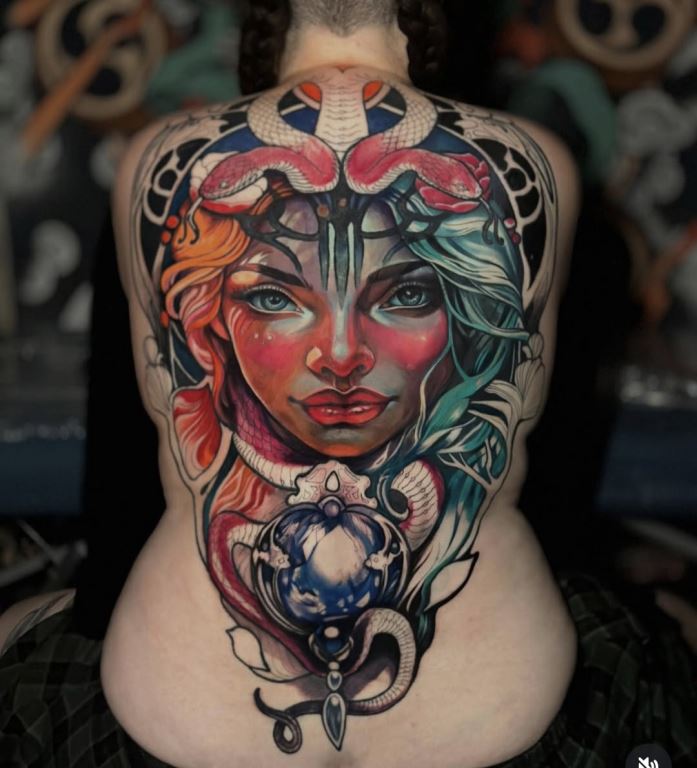
Q: With the continuous evolution of digital design tools,
AI, and changing industry trends, what do you think is the most
critical element an artist must possess to ensure their work remains
genuinely "human" and emotionally resonant?
A: I don’t see digital tools or AI as a threat to artistic
authenticity. They are simply extensions of image-making, and like
any tool, their value depends entirely on the intention behind them.
What cannot be replaced is emotional intelligence the ability to
understand, translate, and feel human experience. Technical skill
can be learned, and tools will continue to evolve, but empathy is
what gives an image psychological depth and resonance. From a fine
art perspective, I’ve always believed that the most compelling work
is not defined by how it is made, but by why it exists. The artist’s
internal world their sensitivity to emotion, memory, tension,
beauty, and vulnerability is what ultimately shapes the work.
Without that, an image can be visually impressive but still feel
empty. I often think about art as a form of translation rather than
invention. We are translating lived experience into visual language.
That requires attention, presence, and an ability to observe people
and the world beyond surface level. No algorithm can replicate that
kind of perception, because it comes from embodiment and lived
experience. So for me, the most critical element an artist must
preserve is empathy the capacity to feel with people, not just
depict them. As long as that remains at the core, the work will stay
human, regardless of the tools used to create it.
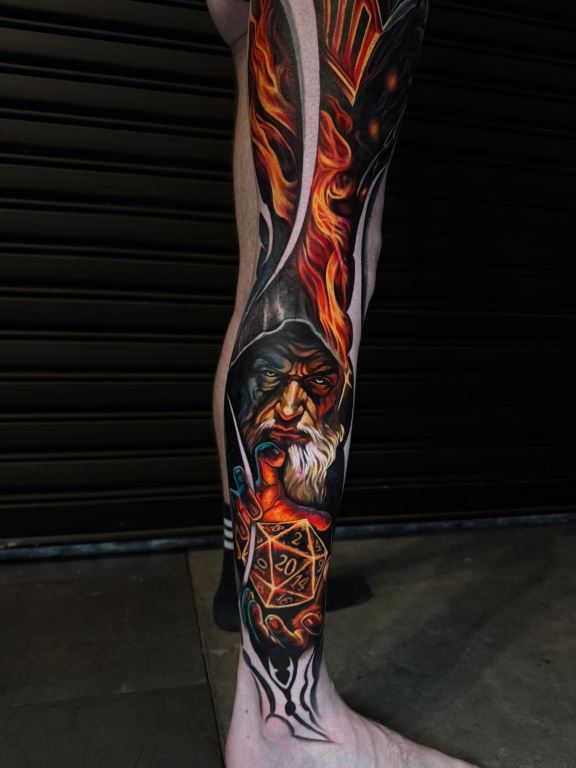
Q: Your style deals heavily with dark fantasy and gothic
aesthetics, yet it is full of vibrant, luminous color realism. Why
do you think humans are so deeply attracted to finding beauty within
darker, surreal, or melancholic themes?
A: I think humans are naturally drawn to darker or surreal imagery
not because they are fascinated by darkness itself, but because of
fear, transformation, grief, desire, and change. From a
psychological perspective, I’ve always found Jung’s idea of the
“shadow” compelling the notion that we all carry aspects of
ourselves that exist outside of conscious identity. There is also
something deeply human about the concept of the sublime in art the
idea that beauty can coexist with intensity, tension, and
discomfort. In that space, emotion becomes heightened rather than
simplified. Postmodern thinkers like Jean-François Lyotard suggested
that we live in a condition of “incredulity toward grand
narratives.” In that sense, contemporary visual culture no longer
relies on single, fixed meanings. Instead, meaning is fragmented,
personal, and constantly reinterpreted. I think tattooing sits very
naturally within that condition, each image becomes a personal
mythology rather than a universal symbol. Similarly, Jean
Baudrillard’s idea of the “simulacrum” speaks to how images no
longer simply represent reality, but generate their own layered
realities. In tattooing, especially in fantasy or mythological work,
the image becomes something more than representation it becomes
lived identity, carried on the body. For me, I don’t see darker
themes as being separate from beauty. I see them as emotionally
complete. Light and shadow exist together in nature, and I think
visual language should reflect that same complexity. Ultimately, I
think people are drawn to these images because they recognise
something fragmented but true in them.
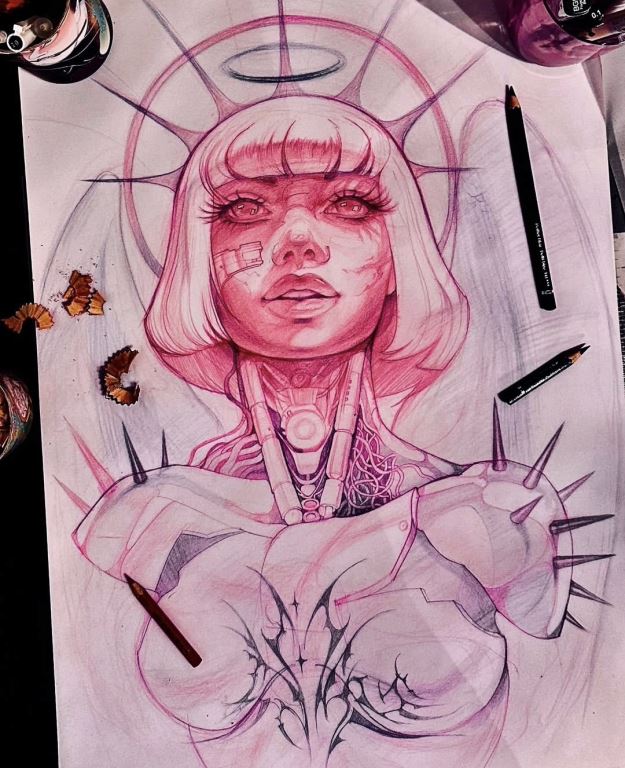
Q: If you could go back in time to the very beginning of
your journey and give a single piece of advice to the younger
version of yourself first stepping into the tattoo industry, what
would it be?
A: If I could go back to the beginning of my journey, I would tell
myself not to rush the process and not to confuse technical progress
with artistic development. In the early stages, it’s easy to think
success is about speed about building a portfolio, getting booked,
or proving yourself quickly. But tattooing is a craft that only
reveals itself over time, through repetition, failure, and
observation. There are no shortcuts to understanding skin,
composition, or long-term healing. I would also remind myself that
discomfort is part of growth. Every difficult stages, mistakes, the
uncertainty, the slow periods was necessary. Looking back, those
moments shaped my technical discipline and my relationship with the
work far more than the successes did. From a more philosophical
perspective, I think I would say this: stay curious, stay patient,
and let your work evolve rather than trying to force it into
something predefined. As Heidegger suggested, “the essence of art is
to set truth into work.” That process takes time, and it cannot be
rushed.
Q: What is the biggest lesson your clients have taught you
over the years about the relationship between an artist and the
person wearing the art?
A: The biggest lesson my clients have taught me is that tattooing is
never a one-way process. It’s not simply about an artist applying an
idea onto someone, it’s a shared construction of meaning between two
people. Over the years, I’ve realised that clients are not passive
recipients of art. They bring lived experience, emotional depth,
memory, and intention into every project. Often, what they are
asking for visually is only a surface expression of something much
deeper, something personal, transformative, or symbolic. That’s why
trust becomes such an essential part of the relationship. When a
client allows you to interpret their story through your visual
language, they are essentially giving you access to something very
intimate. And in return, you have a responsibility not just to
create something aesthetically strong, but something that feels true
to them. I’ve also learned that tattoos continue to evolve in
meaning long after they are healed. What starts as one intention can
become something slightly different over time, as the person grows
and changes. In that sense, the relationship between artist and
client doesn’t end when the tattoo is finished, it continues through
how the work is lived and experienced. I think the most important
realisation is that tattooing is not about ownership of an image.
It’s about collaboration, translation, and trust. The most
successful pieces are always the ones where both sides are fully
engaged in that process.
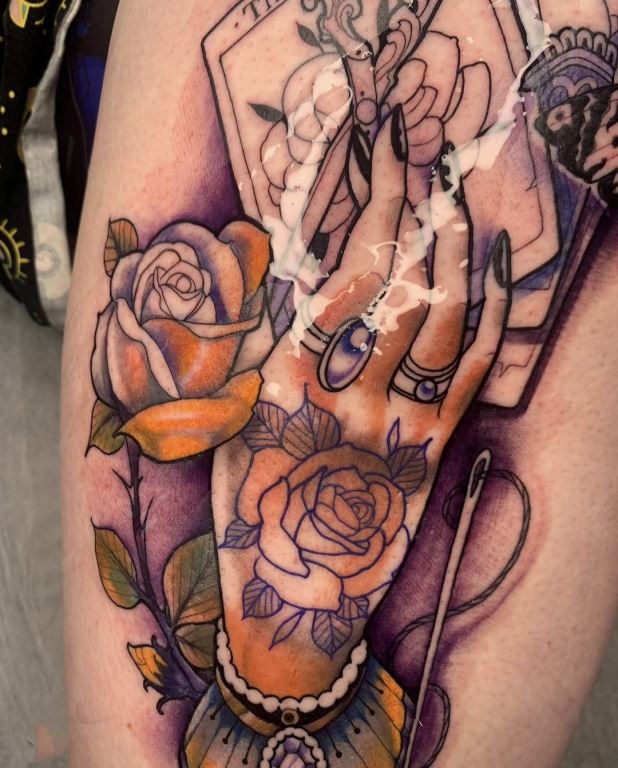
Q: With 2026 booking up and your art expanding across
multiple mediums, what is the next big frontier or creative boundary
you are eager to push?
A: At this point in my career, my focus is very clear: to continue
developing both tattooing and painting at a high level, and to push
them further into the same visual language of dark fantasy realism
and symbolism. Tattooing will always remain my main foundation,
especially through large-scale color realism and custom work that I
create for clients across different cities and conventions. I want
to continue growing within the international tattoo scene, showing
my work at major expos and collaborating with other strong artists
in the field. At the same time, I’m expanding my painting practice,
both oil and digital into more developed narrative and
fantasy-driven work. I see painting as a space where I can deepen
ideas that also influence my tattooing: atmosphere, symbolism,
composition, and emotional storytelling, but without the physical
constraints of skin. Ultimately, I don’t separate these paths as
much as I used to. I see them as two sides of the same practice. My
goal is to continue refining that visual language so that my
paintings can exist confidently in gallery spaces, while my tattoos
continue to evolve within the international tattoo community. For
me, the next step is not changing direction, but expanding depth,
pushing both mediums further into a coherent world of dark fantasy
realism.
Date: 07/07/ 2026
Interview: Fredrik Lindström


