
Interview with Asena Ozer
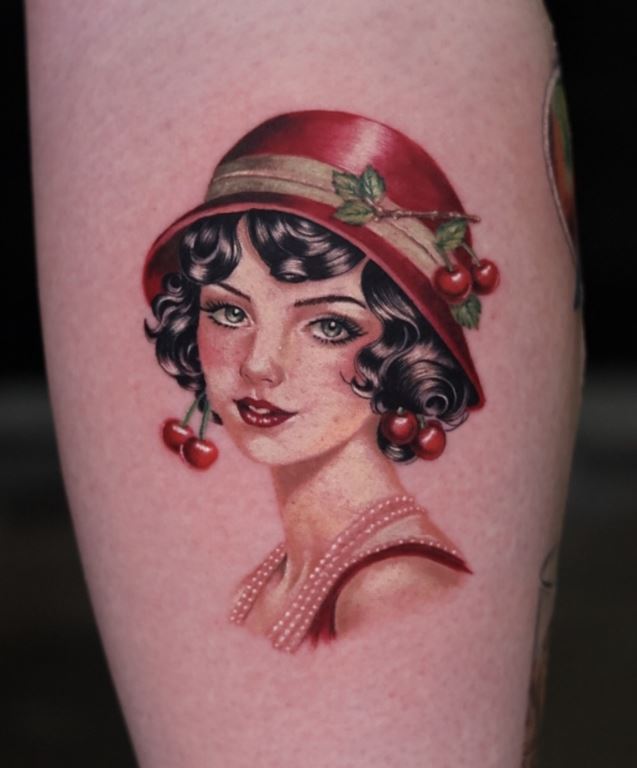
Today, we are sitting down with Asena Ozer, a
Denver-based tattoo artist whose work is redefining the boundaries
of color microrealism. From flawless miniature portraits to surreal,
pop-culture-infused optical illusions, Asena's portfolio strikes a
rare balance between breathtaking technical precision and playful,
imaginative storytelling. In an industry that demands constant
evolution, her vibrant, sticker-smooth style stands out completely.
We dive into her artistic background, the philosophy behind her
surreal designs, and how she navigates the rapidly changing
landscape of modern tattooing.
Q: Every artist has a defining moment when they realize skin
is their chosen canvas. What first drew you into the world of
tattooing, and how did your journey bring you to Denver?
A: I have always been passionate about art. Before becoming a tattoo
artist, I studied cello at a conservatory, which taught me
discipline, patience, and attention to detail. Over time, I realized
I wanted to express my creativity in a more personal and lasting
way, and that is what drew me to tattooing. I love the idea of
turning someone’s memories, emotions, or ideas into something they
will carry with them for life.
My journey brought me from Turkey to the United States. After
growing both personally and professionally in Chicago, I eventually
moved to Denver for a fresh start, new inspiration, and the
opportunity to keep evolving as an artist.
Q: Looking at your early work versus your current portfolio,
how long did it take you to find your footing in color microrealism?
A: It definitely did not happen overnight. Like many artists, I
explored different styles in the beginning because I believe that is
an important part of finding your own voice. Over time, I realized
that color microrealism allowed me to combine everything I love:
precision, vibrant colors, and storytelling. Once I found that
direction, I dedicated myself to refining it every single day. Even
now, I still see myself as a student. Every tattoo teaches me
something new, and I think that is what keeps the passion alive.
Q: Microrealism requires intense technical
precision. Did you have a formal background in traditional fine arts
or illustration that prepared you for this level of detail?
A: I do not have a formal education in fine arts or illustration,
but I do have a background in music. Studying music taught me that
creativity and discipline go hand in hand. Music gives you the
freedom to express yourself, but it also demands precision,
structure, and countless hours of practice. I carried that mindset
into tattooing. I developed my artistic skills through continuous
learning, observation, and experience, and I believe that discipline
has been just as important as talent in shaping my work.
Q: Who or what were your biggest artistic influences when
you were first developing your creative voice?
A: In the beginning, I found inspiration in many different places
rather than from one specific artist. Movies, music, nature,
fashion, and everyday life all influenced the way I started seeing
art. I have always been curious, and I enjoy combining ideas that do
not normally belong together. Over time, I realized that my biggest
inspiration comes from creating something that feels unexpected
while still being visually balanced. That is how I gradually
developed my own artistic voice.
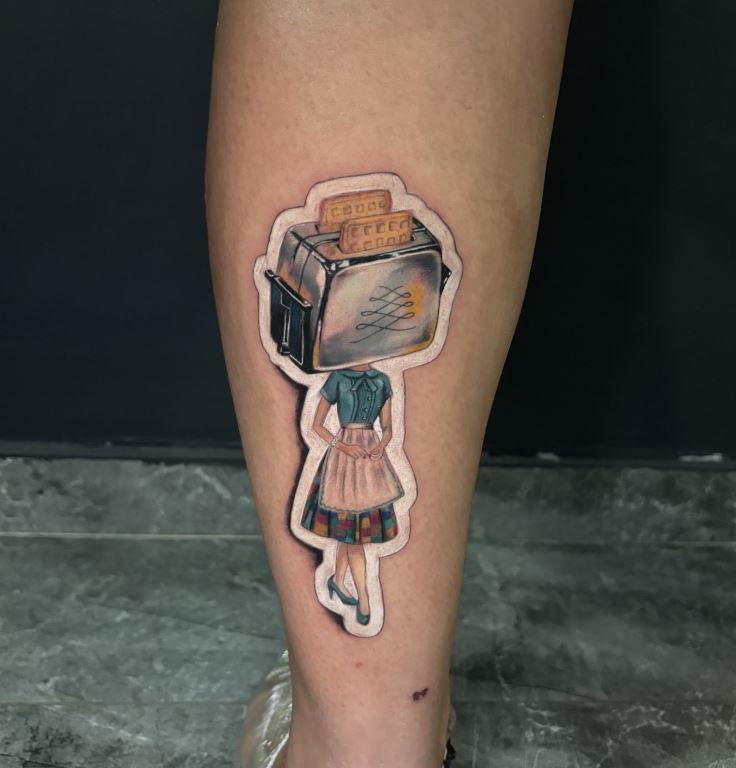
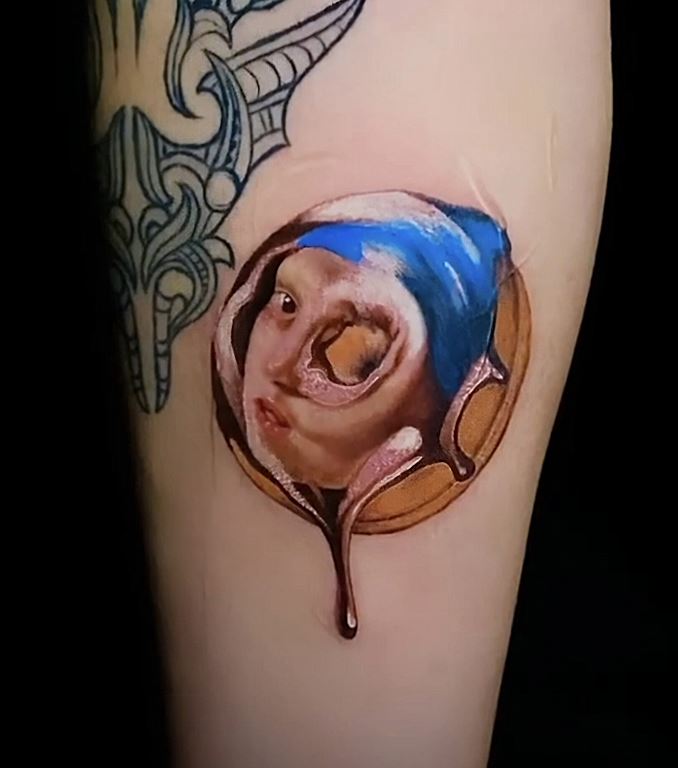
Q: Your style brilliantly blends microrealism with
surrealism, such as your piece featuring a woman with a vintage
toaster for a head, or the melting Mona Lisa. What inspires you to
inject these surreal, dreamlike elements into realistic renders?
A: I have never been interested in recreating reality exactly as it
is. What excites me is taking something familiar and transforming it
into something unexpected. Surrealism allows me to challenge
perception and invite people to look beyond the obvious. I think the
most memorable art leaves room for interpretation, and that is what
I try to create in my work.
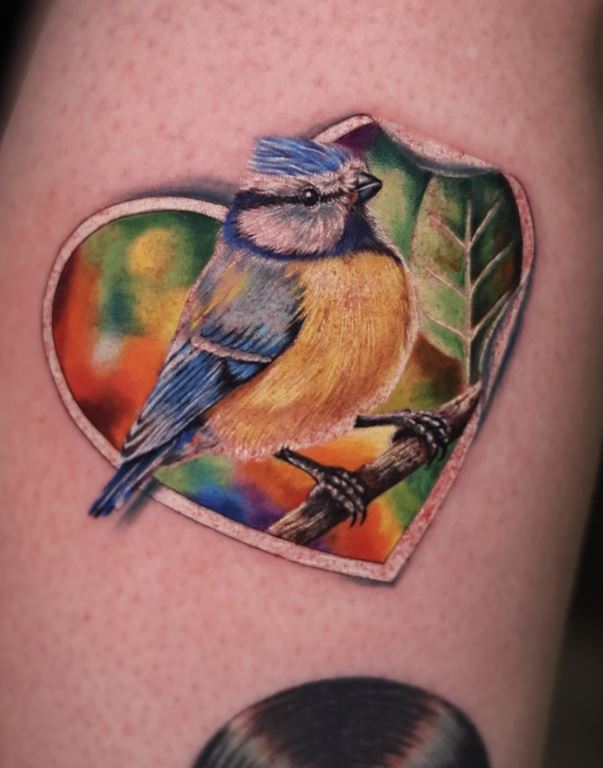
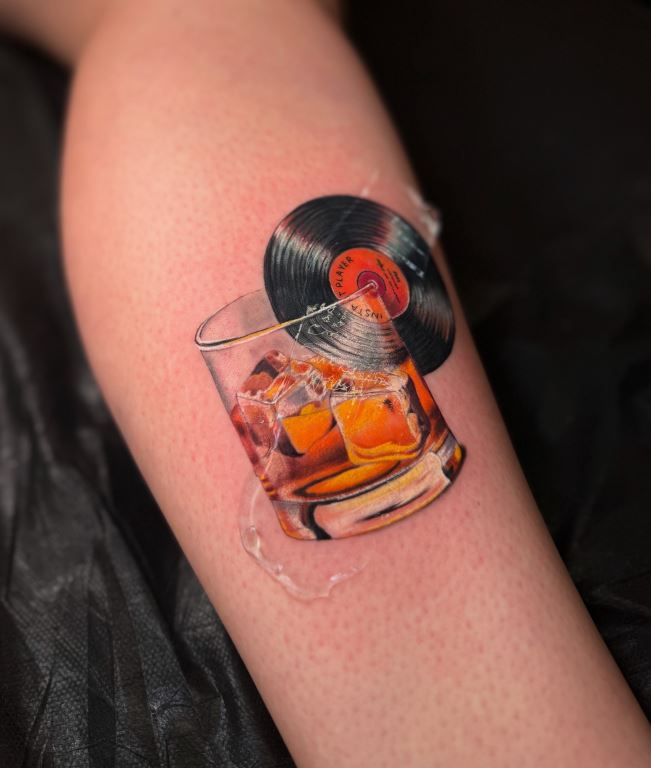
Q: Color saturation in your work is
incredibly vibrant, almost resembling perfectly placed stickers on
the skin. What is your philosophy when it comes to color theory and
ensuring these bright tones hold their depth?
A: For me, color is all about contrast. I do not choose colors
simply because they are bright; I choose them based on how they
interact with each other and how they create depth, balance, and
focus within the composition. Strong contrast helps every element
stand out while keeping the tattoo visually clear. I also think
about how the tattoo will age. My goal is not just to make it look
vibrant on the day it is finished, but to create something that will
still have clarity and impact years later. That is why I pay close
attention to color placement, skin tone, and overall composition.
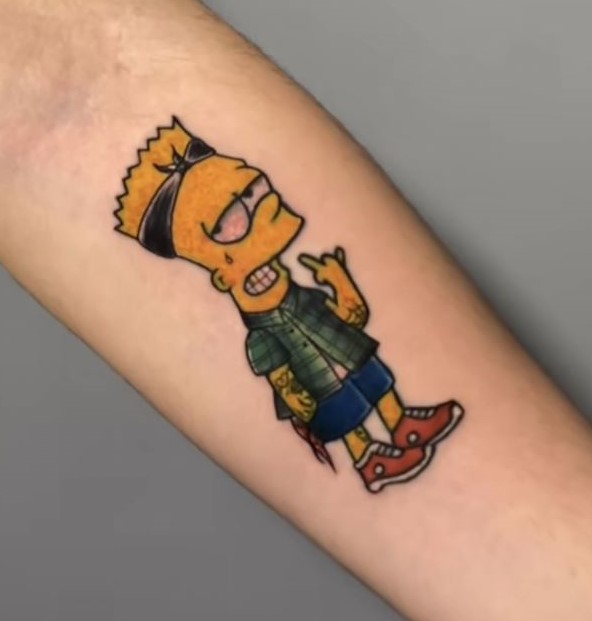
Q: You frequently tackle pop-culture icons, from The
Simpsons to Mr. Bean and Alice in Wonderland, but always with a
twist. How do you balance nostalgic pop culture with your own
distinct artistic thumbprint?
A: I think everyone has characters they connected with as a child.
My goal is never to simply recreate them, but to explore how we can
make them even more unique and meaningful. I love combining those
familiar characters with the emotions, memories, and personal
stories they evoke for my clients. In the end, the tattoo becomes a
true collaboration where their story meets my artistic
interpretation, creating something that feels both nostalgic and
completely original.
Q: When a client comes to you with an idea, how much of the
final design is born from their prompt versus your own creative
world-building?
A: I always see it as a collaboration. The client brings the story,
the emotion, or the idea, and I bring my artistic vision and
experience. I never want someone to feel like I am taking over their
concept, but I also believe they are coming to me because they trust
my style. My goal is to create something that reflects who they are
while still carrying my artistic signature.
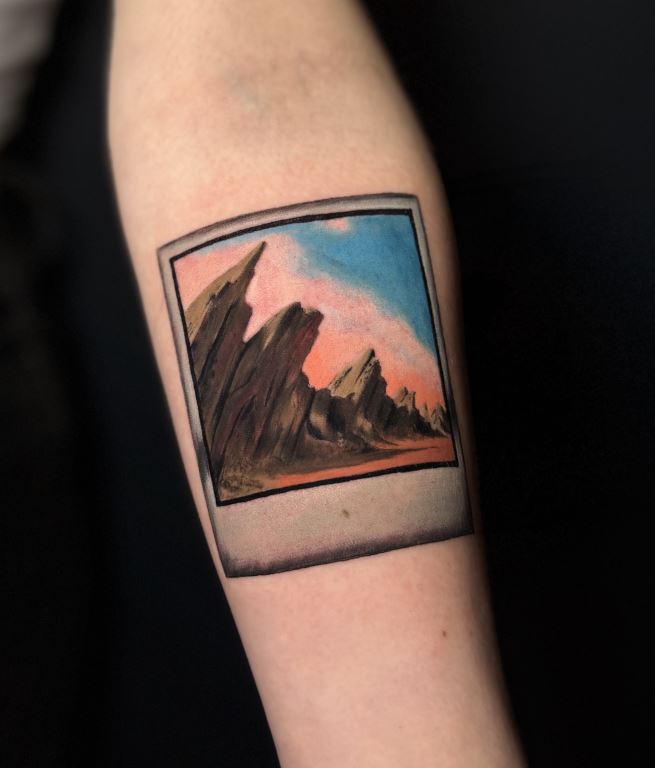
Q: In microrealism, the margin for error
is virtually zero. What goes through your mind when you are planning
the composition of a highly detailed piece on a canvas that moves
and curves?
A: Working on a living, constantly moving canvas is something every
tattoo artist learns over time, and it definitely took me time as
well. After all, we are not tattooing an inanimate object. It is a
procedure that can be painful, so making sure my client feels
comfortable is always a priority. Once everything is set and they
are comfortable, I usually work with music in the background because
it helps me stay focused and fully immersed in the process.
Q: The tattoo industry is more saturated than ever, yet your
work is instantly recognizable. How intentional was your drive to
cultivate a style that stands completely apart from the rest?
A: Honestly, I do not see the growth of the tattoo industry as a
negative thing at all. I am happy that tattooing has become more
appreciated and interesting to people than it used to be. It makes
me even happier to see more and more women entering the industry and
finding their place as artists. When it comes to developing my own
style, one of the biggest influences has been studying artists I
admire. Microrealism is an incredibly deep field, filled with
hundreds of exceptionally talented artists. Seeing different
approaches constantly inspires me and reminds me that there is
always something new to learn and improve. I also think tattooing
sits at a very interesting point in the long-standing question: Is
art for people, or is art for art’s sake? Tattooing might be where
those two ideas meet. It is deeply personal because it lives on
someone’s body, but at the same time, it is still a form of artistic
expression. For me, that is what makes tattooing so unique.
Q: For you, why is it vital not to blend in? What do you
think an artist loses when they follow mainstream styles rather than
forging their own?
A: I do not think there is anything wrong with being inspired by
other artists. In fact, I think it is an important part of growing.
I have also been inspired by artists whose work I admire. The
important thing is to learn from them while continuing to develop
your own perspective and style. For me, it is about finding a
balance. Inspiration helps you grow, but over time, people should
also be able to recognize your work because it reflects who you are
as an artist. I think that is what creates a lasting connection with
people.
Q: Have you ever felt pressure from the
industry or social media trends to compromise your unique style, and
how did you resist it?
A: Honestly, like every artist, I am aware of the influence that
social media and trends have. They can be inspiring, and they also
help you understand what people are interested in at a certain
moment. But I do not see them as pressure. Trends are always
changing. For me, what is more important is continuing to grow and
develop a style that genuinely feels like my own. Trends come and
go, but an artist’s identity is what truly sets them apart in the
long run.
Q: The technical and sanitary requirements of the modern
tattoo industry are exceptionally high. How do you manage the
rigorous balance between the rigid, clinical side of the job and the
fluid, creative side?
A: I do not really see them as two separate things. For me, hygiene
and safety are never optional; they are simply the foundation of my
work. Once I know that foundation is in place, I can focus
completely on the creative process. In a way, discipline actually
gives me more freedom to be creative. A client’s trust is just as
important as the design itself, so maintaining high technical and
hygiene standards does not limit my creativity, it supports it. I
believe the best artistic work can only happen when that foundation
is solid.
Q: Social media is a massive part of a modern artist's
career, and your Instagram beautifully highlights your portfolio.
How do you navigate the demands of content creation without letting
it drain your creative energy?
A: For me, the work itself will always come first. I know social
media is important because it helps people discover my art, but I
never want to create something just for the sake of posting it. If I
am genuinely proud of a piece, I will naturally want to share it.
That is why I see social media as a tool, not the goal. It is a way
to connect my work with people, rather than something that defines
it. Looking at it this way helps me enjoy creating without feeling
like social media is draining my creativity.
Q: What are your thoughts on the rapid evolution of tattoo
machinery, needles, and inks? How have advancements in technology
changed the way you approach microrealism?
A: I think it is fantastic. The evolution of tattoo machines,
needles, and inks has given artists so much more precision and
control than ever before. Especially in microrealism, where every
tiny detail matters, those advancements have made a real difference
in what is possible. That being said, I also have a lot of respect
for artists who still choose to work with traditional coil machines.
Everyone has their own process and tools that they connect with, and
I think that is part of what makes tattooing such a diverse art
form. For me, technology is a tool that supports my work, not
something that replaces skill or creativity. Even the best equipment
is only as good as the artist using it. At the end of the day, it is
the artist’s vision, experience, and technique that truly make the
difference.
Q: If you could change or challenge one
standard practice or mindset in the modern tattooing community
today, what would it be?
A: If I could change one thing, I think I would encourage more
openness within the tattoo community. I would love to see artists
view each other less as competitors and more as people we can learn
from. Every artist has a different style, background, and
perspective, and I believe that is what makes this industry so
interesting. Healthy competition is a good thing because it pushes
us to grow, but I do not think it should come at the expense of
respect or sharing knowledge. At the end of the day, we are all
contributing to the evolution of tattooing in our own way.
Q: You recently highlighted "Con. Chi '26" on your profile.
What is your relationship with tattoo conventions? Do you view them
as spaces for competition, networking, or pure creative refueling?
A: For me, it is a combination of all three. Competitions are a
great opportunity to challenge yourself and receive feedback on your
work, but what I value most is being surrounded by artists from all
over the world. Seeing different styles, techniques, and creative
approaches is incredibly inspiring. The Chicago Tattoo Convention
was an amazing experience for me. I saw some absolutely incredible
work, pieces that really pushed the boundaries of what is possible
in tattooing. I also had the honor of placing second in my category,
which made the experience even more meaningful and motivated me to
keep growing as an artist. That is why I do not see tattoo
conventions as just competitions. I see them as places where I can
learn, connect with other artists, and come back feeling inspired to
create even better work.
Q: With the boom of tattooing seminars and online education,
do you feel the industry is becoming more collaborative, or is it
getting harder to protect unique styles from being replicated?
A: I actually think both are true. I believe sharing knowledge is
incredibly valuable because that is how we grow as artists. I have
learned a lot from other artists throughout my own journey, and I am
grateful for that. At the same time, the internet has definitely
made it easier for people to copy styles. But I believe what truly
makes an artist unique is not just the designs they create; it is
the way they think, their perspective, and their creative vision.
You can copy a tattoo, but you cannot really copy the artist behind
it. That is why I think the benefits of education and knowledge
sharing far outweigh the downsides. When artists learn from each
other while continuing to develop their own voice, the entire
industry becomes stronger.
Q: We see a lot of micro-trends pass
through the tattoo world quickly. How do you distinguish between a
passing trend worth ignoring and an evolving style shift that you
might want to adapt to your own work?
A: I usually do not judge a trend by how popular it is; I judge it
by whether it genuinely inspires me. If it is just a short-lived
trend that does not naturally fit my work, I do not feel the need to
follow it. But if it is something that truly interests me and helps
me grow as an artist, I am always happy to explore it and make it my
own. There is a saying: “Trends come and go, but style is forever.”
I think there is a lot of truth in that. For me, it is never about
copying a trend; it is about taking inspiration from it and
interpreting it through my own artistic perspective.
Q: Looking ahead, what are your biggest goals and
aspirations? Are there specific themes, massive projects, or new
mediums you want to conquer next?
A: Looking ahead, my biggest goal is to reach a point where people
can recognize my work without even seeing my name. If someone looks
at a tattoo and immediately thinks, “I know who made that,” I think
that is one of the greatest achievements an artist can have. Ever
since I was a child, my biggest dream has been to become an artist
and build a life around art. The fact that I get to do that today is
something I am incredibly grateful for, and I want to keep growing
from here. I would also love to work in different countries,
participate in more tattoo conventions, and collaborate with artists
from different backgrounds. More than anything, I want to keep
evolving. For me, continuing to learn is even more important than
success itself, because I believe the day an artist stops learning
is the day they stop growing.
Q: If you could go back to the very beginning of your career
and give the younger version of yourself one piece of advice,
knowing everything you know now, what would it be?
A: I think I would tell my younger self, “Just be patient.” At the
beginning of my career, I felt like I had to achieve everything as
quickly as possible, and I spent too much time comparing myself to
other artists. Now I realize that every artist has their own
journey. No one becomes an expert overnight. Success is not about
getting somewhere faster than everyone else; it is about becoming a
little better every single day. Most of all, I would tell her how
proud I am of her. I would tell her that I am proud of every
difficult day and every happy day, because each one taught me
something and helped shape the artist I am today. So if I could give
my younger self one piece of advice, it would simply be: be patient,
trust the process, and do not give up on yourself. Everything else
will fall into place with time.
Q: When people look at an Asena Ozer
tattoo, whether it's on a client walking down the street or in a
gallery, what is the lasting impression or feeling you hope to leave
behind?
A: I hope people feel something before they simply admire the
tattoo. Of course I want my work to be beautiful, but more
importantly, I want it to create an emotional connection. To me, a
tattoo is more than ink on skin. It is a piece of art that becomes
part of someone’s life and stays with them forever. I want every
piece to tell a story or remind its owner of something meaningful
every time they look at it. If someone sees one of my tattoos and
thinks, “That looks like Asena’s work,” while also feeling something
at the same time, I think that is the most meaningful legacy I could
leave as an artist.


