
Interview with Bruno Felipe
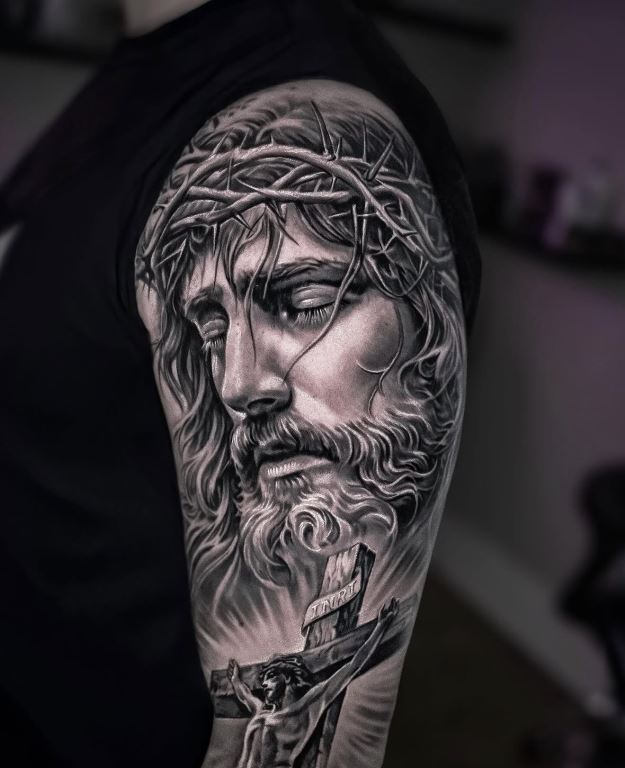
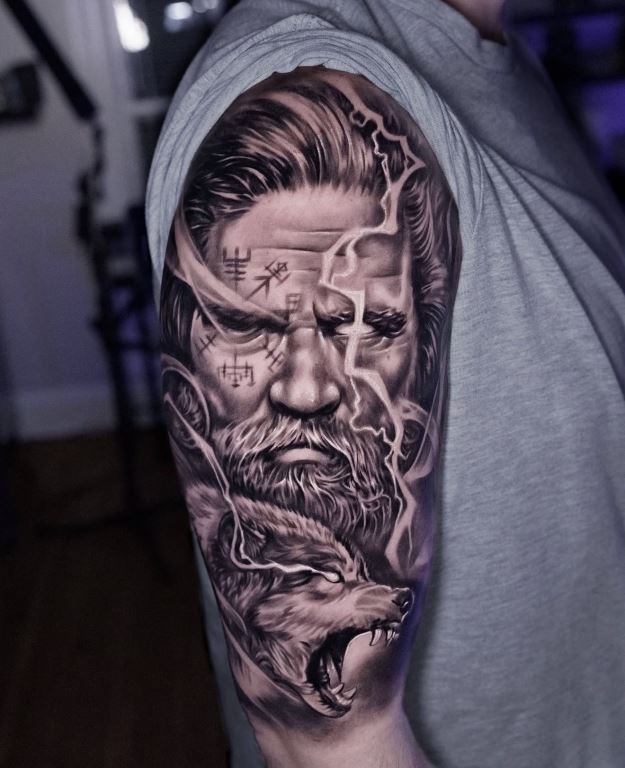
In the world of Black and Grey Realism, there is a
fine line between a technical recreation and a soulful masterpiece.
Bruno Felipe, the creative force behind Brunodalfito Tattoo, walks
that line with surgical precision. Based in Charlotte, NC, with deep
Brazilian roots, Bruno has cultivated a portfolio that feels both
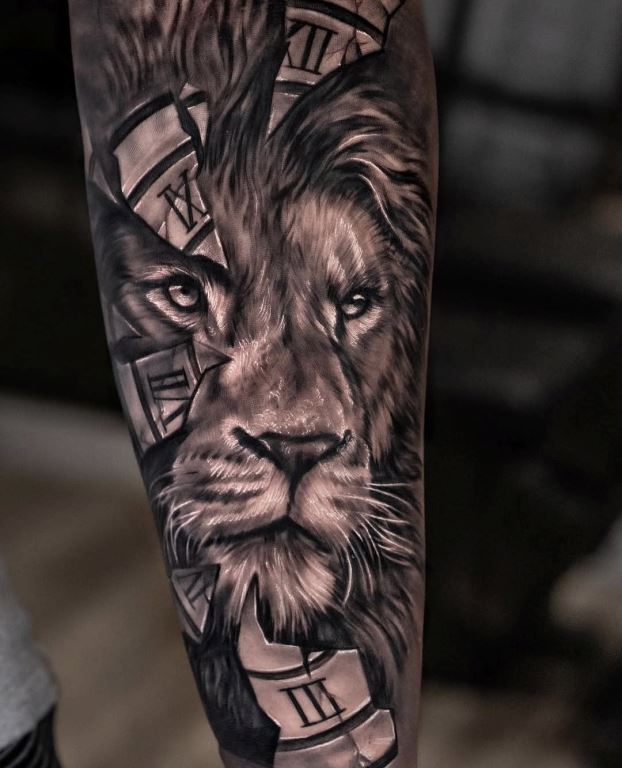
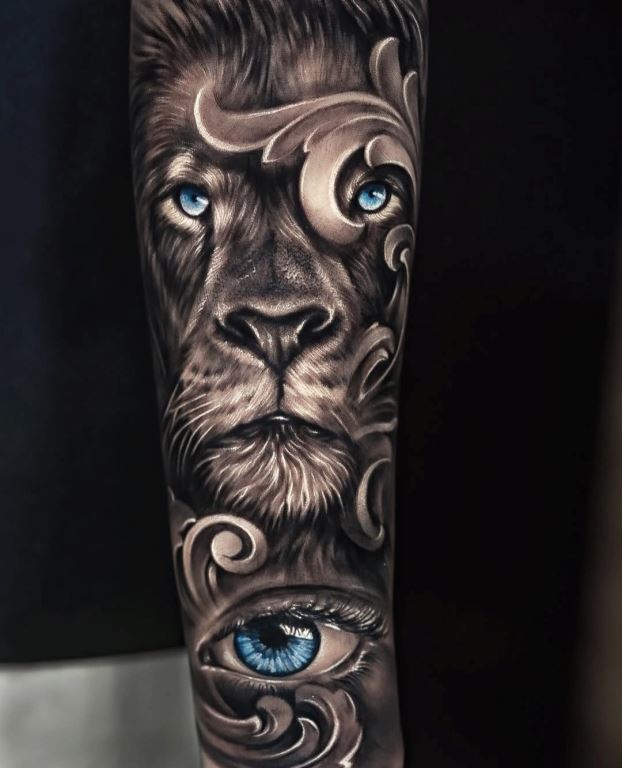
monumental and intimate. From the piercing gaze of his signature
lions to the fluid, dream-like compositions of his surrealist
sleeves, his work is a masterclass in contrast and longevity. Today,
we sit down with Bruno to discuss his journey from South America to
the forefront of the American tattoo scene, his obsession with
detail, and what it takes to provide a premium experience for the
modern collector.
Q: Brazil has a reputation for producing some of the world’s
best realism artists. What was the artistic atmosphere like when you
were coming up, and how did that high standard influence you early
in your career?
A: Growing up in Brazil, especially within the realism scene, you’re
constantly surrounded by incredibly talented artists. That
environment pushed me from an early age to study harder, improve my
technique, and pay attention not only to detail, but also to
longevity and composition.
Q: When you moved to Charlotte, North
Carolina, did you feel the need to adapt your artistic identity to
the American market, or did you stay true to the style you developed
in Brazil?
A: Moving to the United States didn’t change my artistic identity. I
stayed true to the style I developed in Brazil, but I naturally
adapted my communication and the overall client experience to fit
the American market. Clients here value the experience just as much
as the tattoo itself, so I focused on creating something more
personal and premium from start to finish.
Q: Every artist has that one tattoo that feels like a
turning point in their career. Do you remember the first tattoo you
finished and thought, “This is my style”?
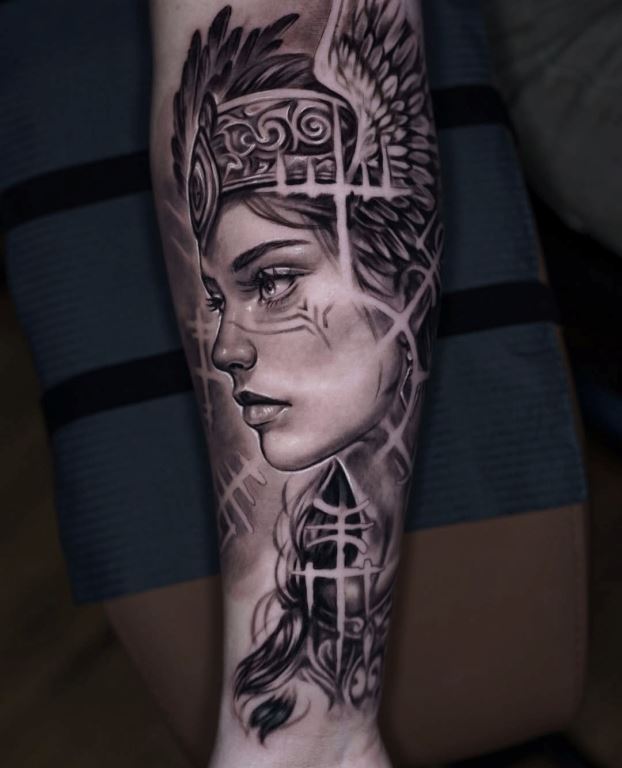
A: I think every artist reaches a point where the work stops being
purely technical and starts becoming something more personal. For
me, that happened when I stopped trying to replicate references
exactly and began creating compositions with more emotion, contrast,
and flow. That’s when I felt my work starting to develop its own
identity.
Q: Before you ever picked up a tattoo
machine, were you working with graphite, charcoal, or paint? How
does that experience influence the way you handle light and shadow
on skin today?
A: Before tattooing, I spent a lot of time drawing with graphite and
studying light and shadow. That foundation still influences my work
today. Realism isn’t just about copying an image it’s about
understanding depth, contrast, texture, and how light behaves on
skin.
Q: If you could go back and give your apprentice-self one
piece of advice, what would it be?
A: I’d probably tell myself to be more patient and trust the
process. Early in my career, I was extremely hard on myself and
constantly chasing perfection. That mindset helped me grow, but
learning to enjoy the journey is just as important.
Q: Your work is known for its incredible contrast. How do
you balance solid blacks for longevity while maintaining soft,
realistic gradients?
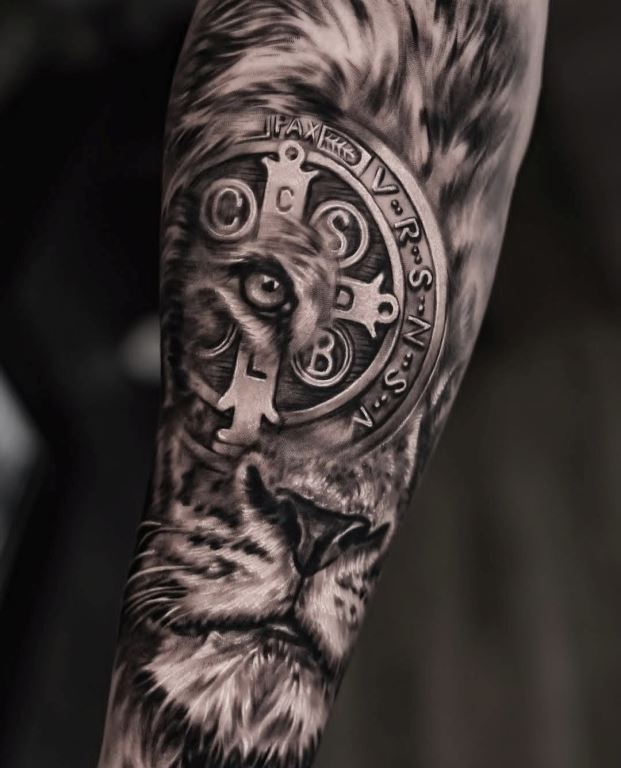
A: Contrast is one of the most important elements of black and grey
realism. I like using strong blacks to ensure longevity while
keeping smooth transitions around them. That balance creates depth
and keeps the tattoo readable for years to come.
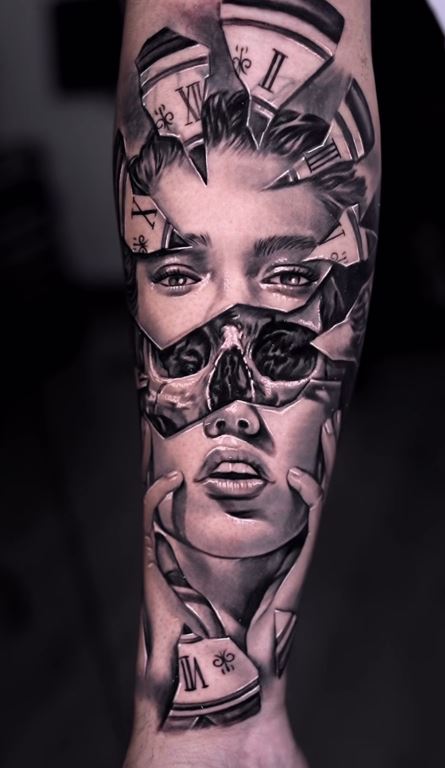
Q: You often blend realistic portraits
with surreal elements. How do you decide which elements will “break”
reality within a composition?
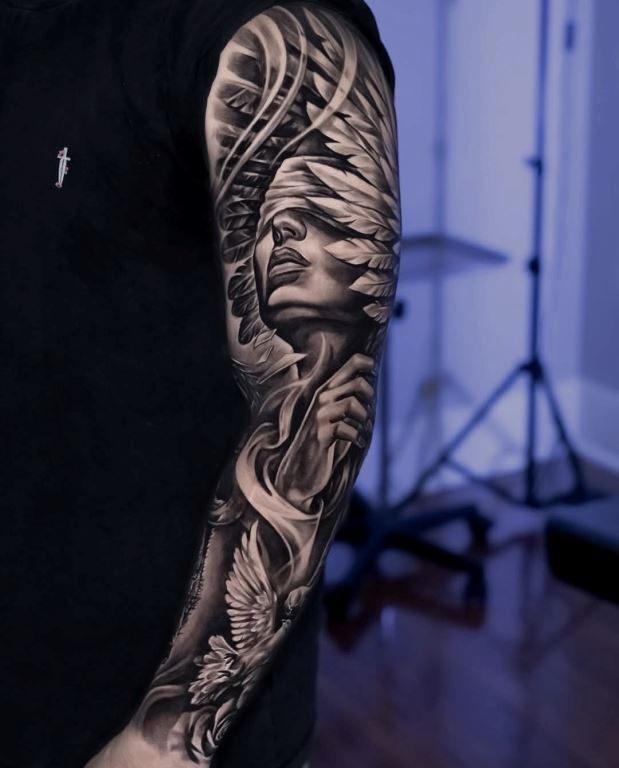
A: I enjoy mixing realism with surreal elements because it gives the
tattoo a more artistic and personal identity. Most of the time,
those elements come from the client’s story, their emotions, or the
overall atmosphere we’re trying to create within the composition.
Q: Many artists debate grey wash versus opaque grey. What’s
your philosophy when it comes to ink selection and achieving the
depth your work is known for?
A: Ink selection is extremely important when it comes to the healed
result. Over the years, I’ve developed my own way of balancing
different tones and saturation levels to create depth without
sacrificing softness or readability.
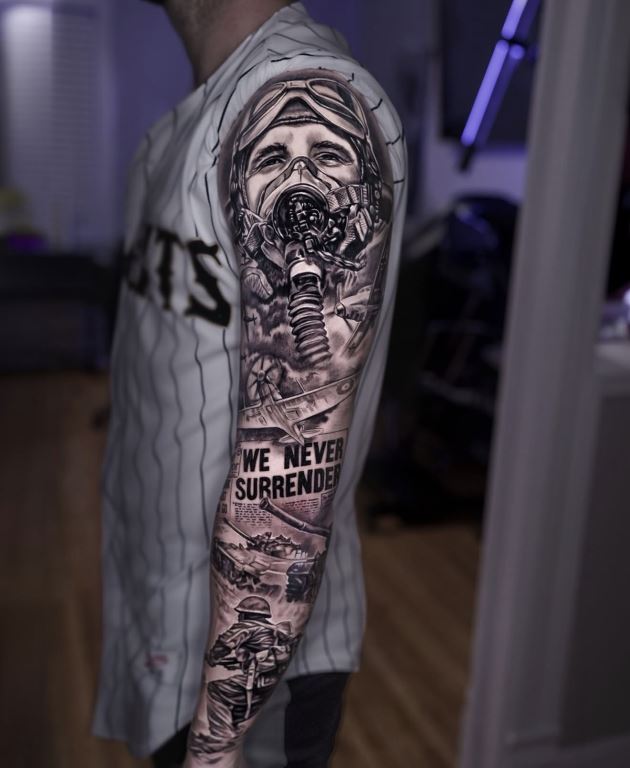
Q: When a client brings you a broad
concept like Greek Mythology, what is your process for creating a
design that flows naturally with the body’s anatomy?
A: When I’m developing large-scale projects not just Greek
mythology, but any large project, I study the anatomy first. Anatomy
is everything. I always focus on the natural flow of the body before
thinking about the details. For example, in Greek mythology pieces,
we use a lot of statues and sculpted faces. I try to place those
elements in areas where muscle movement and body mechanics won’t
interfere with or disrupt the flow and emotion that the statue is
meant to convey.
Q: Photography plays a huge role in showcasing realism
tattoos. How much effort do you put into lighting and presentation
after a session is complete?
A: Photography is a very important part of my work. Good lighting
and presentation help showcase the true contrast and detail of a
tattoo, so I take that process very seriously after every session.
I’ve also been studying photography as a side passion for at least
two years, and I genuinely love the art form.
Q: You’ve built your career between
Brazilian and American tattoo cultures. What’s the biggest
difference you notice in how clients approach large-scale projects?
A: Honestly, I’ve always been fortunate to have amazing clients both
in Brazil and in the United States. I haven’t noticed a major
practical difference between the two groups; they’re both great to
work with. The biggest difference I notice is simply the language
barrier and a few minor aspects of communication.
Q: Since you offer a premium experience, how much of your
work is collaborative versus having complete creative freedom?
A: My process is highly collaborative. I want clients to feel
connected to the project, but at the same time, they come to me
because they trust my artistic direction. The best projects happen
when there is clear communication and mutual trust.
Q: How has the Charlotte tattoo scene responded to your
premium tattoo philosophy?
A: Charlotte has embraced my work in a very positive way. It’s a
growing city with a lot of people who appreciate high-end custom
tattooing, and I’m incredibly grateful for the support I’ve received
here, not just professionally, but because I’ve truly fallen in love
with the city itself.
Q: In the age of Instagram, do you think
regional tattoo styles are disappearing?
A: The internet has made tattooing much more global, but regional
influences definitely still exist. You can still see differences in
style, technique, and artistic mindset depending on where an artist
comes from.
Q: At what point in your career did you feel comfortable
specializing exclusively in black and grey?
A: Around my fourth year as a tattoo artist, I realized that black
and grey realism was the style that allowed me to express myself
most naturally and consistently. That was the moment I decided to
dedicate my career to that specialization.
Q: How do you handle the physical and mental demands of
long, highly detailed tattoo sessions?
A: Long sessions demand a lot from me both physically and mentally,
so taking care of my health, posture, and focus is essential. I also
try to maintain balance outside the studio to avoid burnout, taking
one or two days off each week to recharge.
Q: What role do digital tools like
Photoshop and AI play in your current workflow?
A: Today, digital tools are an important part of my creative
process. Photoshop and AI tools help me organize ideas and
compositions more efficiently, but the artistic eye and creative
decisions still come from experience and a strong foundation in
drawing.
Q: Are there any themes or subject matters you haven’t
explored yet but would love to tackle?
A: There are still many concepts I’d love to explore, especially
projects that combine realism with more surreal or cinematic
elements, allowing for deeper storytelling through the tattoo.
Q: Looking ahead five years, are you more focused on
conventions and travel, or strengthening your presence in Charlotte?
A: I believe it’s a combination of both. I want to continue
attending conventions and traveling because it gives me the
opportunity to meet other artists and exchange experiences, but I
also want to keep building and improving the experience I offer in
my studio here in Charlotte.
Q: What do you hope a client feels when
they look at their tattoo ten years from now?
A: Ten years from now, I want my clients to still feel proud when
they look at their tattoos. Not only because the work has held up
technically, but because it still carries meaningful, personal
significance in their lives.
Q: How do you stay inspired when you feel creative burnout
approaching?
A: When I feel creative burnout creeping in, I usually take a little
time off to study other forms of art, such as film, painting,
photography, or even the work of other tattoo artists. I also enjoy
attending workshops and seeking out new sources of inspiration. That
helps me work through creative blocks and see new possibilities.
Q: How important is the personal
connection between artist and client to the success of a project?
A: The connection between artist and client is extremely important,
especially for large-scale projects. Good energy, trust, and clear
communication always show in the final result. When that connection
exists, the entire process feels much more natural for both sides.
Q: How would you like Bruno Felipe to be remembered in the
tattoo industry?
A: I’d like to be remembered as someone who respected the craft,
stayed consistent, and created tattoos with real impact and
longevity. More than trends or social media, I want my work to speak
for itself over time, and for people to remember the dedication and
respect I’ve always had for the art of tattooing.
Date: 07 June 2026
Interview: Fredrik Lindström


