
Interview with Callum Jenkinson
In the world of high-contrast blackwork, Callum
Jenkinson (Cal Jenx) has established himself as a leading voice in
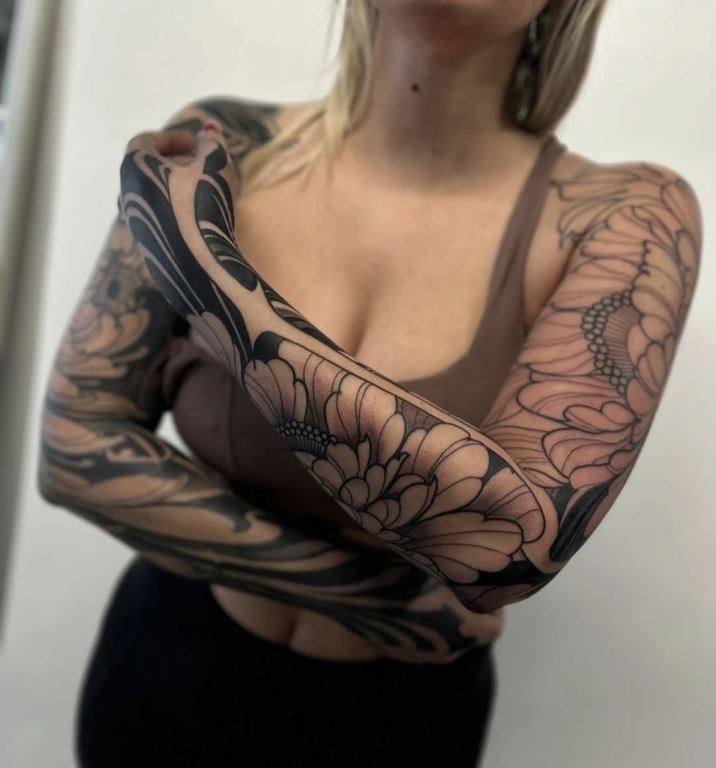
modern British tattooing. Known for his "Dark Floral" compositions
and an uncanny ability to map art to the human form, his work
represents a sophisticated bridge between traditional botanical
illustration and contemporary aesthetic flow. As a frequent guest at
elite studios and international conventions, Callum’s influence is
felt across borders. In this exclusive for Skin-Artists.com, we dive
into the technical mastery and professional philosophy of an artist
currently poised to bring his unique vision to the United States.
Q: Callum, every artist has a "genesis" story. What was the
initial catalyst that drew you away from traditional fine art and
into the specialized world of tattooing?
A: You can refer to me as Cal, only my grandmother called me Callum
and it was usually when she was washing my mouth out with soap.
Tattooing came into my life when I was an early teen who was
fascinated with skateboarding and street art culture. I was always
into drawing but during my teen years I was obsessed with the wild
wacky styles that were in skateboards and murals. Tattooing
naturally comes part and parcel with street art and that sort of
scene generally, so being influenced by all that I naturally found
myself getting tattooed and wanting to design tattoos. Over time I
started seeing tattoo art as a lifestyle as much as a decoration.
Wearing a tattoo felt powerful, rebellious and strong so I was
hooked from the moment I clocked them.
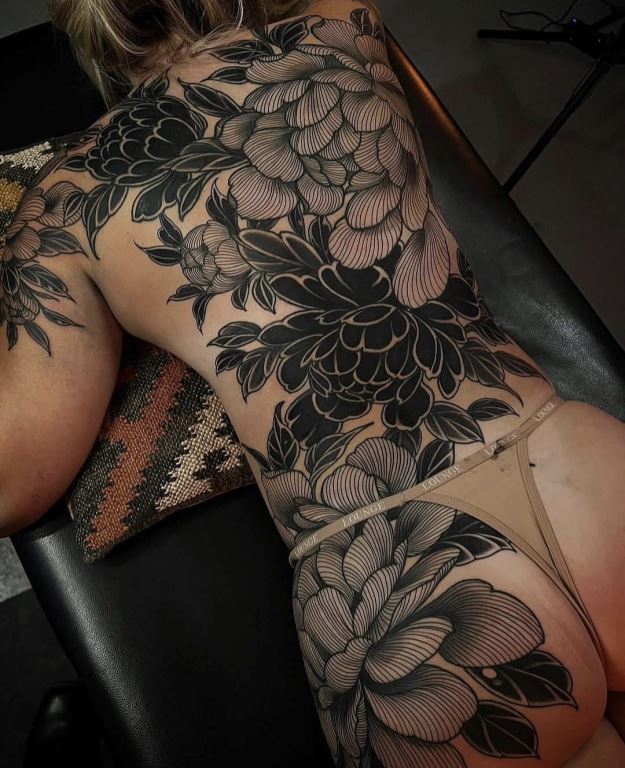
Q: During your initial years in the UK
scene, who were the mentors or studios that most heavily influenced
your disciplined approach to technical application?
A: I started out in a small street shop in my home town call Pro
Ink, it was a walk in shop, at the time it was across from a pub and
all the drunkards would come in and ask to get tattooed, the studio
was limited on artistic skill and knowledge but it was a good place
to learn the basics of shop etiquette and how to wrangle a drunk out
the shop. The guys who ran it were rough dudes and it was like being
sopranos or something with all the drama. After 18 months I left for
a quieter journey and refined what knew by trial and error until I
was good enough to work in better studios. That took me about 4
years in total. I did alot of research on artists whose work I loved
at the time, such as Filip Leu, Thomas Hooper, Jon Dix, Cris
O’donnel etc the classics you know. I would buy books and try and
find any video of them working, to study their process. Then apply
it to my own work.
Q: At what specific point in your early career did you
decide to specialize in the high-contrast, large-scale blackwork
that has become your professional signature?
A: Early on I started focusing heavily on pattern work, bold high
contrast, decorative artworks. I built quite a big social media
following with almost 100k, after years of working like that I hit a
moment just before Covid where my life started falling apart, me and
my daughters mom broke up and I fell into a depression, onto top of
that I was hacked and lost the huge following I’d built and I had to
rebuilt my life. I’d been so lost in being in this relationship I’d
kinda lost who I was, so when I started again I already had the
technical ability, I just needed to find what I was that I loved,
what I was drawn too and how I could bring that into my work. Still
keeping that high contrast and bold structure, just more loose and
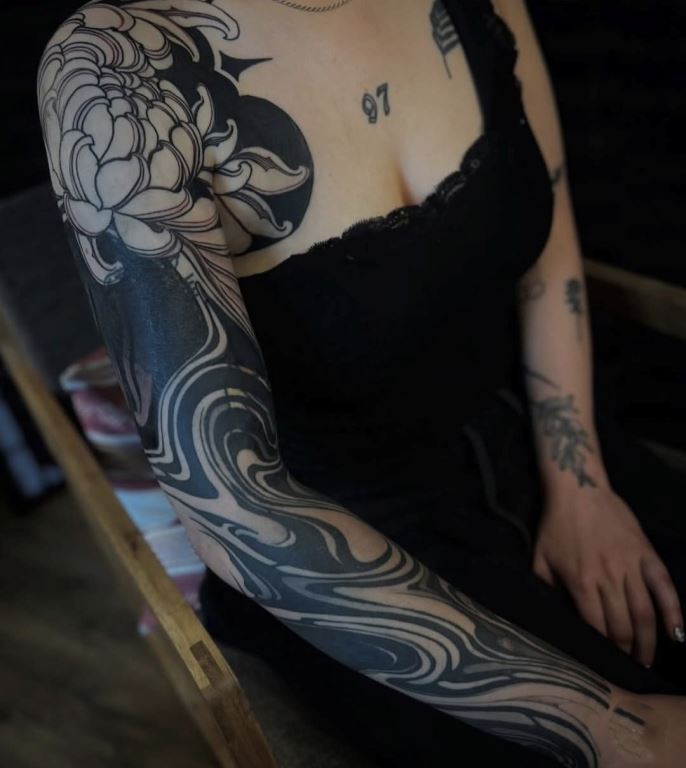
dynamic. I wanted to create tattoos that could blossom and grow
beyond the tattoo, become something that moved with the client and
switch every angle had a different look. Florals and black work were
always a big part of my work and so they naturally transferred into
this new direction, more organic and flowing style.
Q: You’ve become synonymous with a style
often called "Dark Florals." How do you balance the inherent
"heaviness" of saturated black with the delicate, organic nature of
botanical life?
A: I think from day one I understood the importance of breathability
in tattoos, knowing that they age and bleed with time. So it’s
always been a conscious choice in my work to create tattoos that
last.
Q: Your tattoos are known for their "flow." How do you
analyze the human musculature to ensure a design enhances the body’s
movement rather than just sitting on top of it?
A: When you look at artwork there’s always one point that your eyes
are naturally drawn too first, after that there’s the next part,
then next etc until you’ve studied the whole thing and this is the
journey of the piece. Often it’s the lightest element we are drawn
to in a darker piece of work, like a candle light before you look at
the darkness surrounding it. The skin tone standing out from the
darker tones are the points we are drawn too, so for me studying the
form and the movement of the body then creating a path for your eyes
to follow is part of my process.
Q: In blackwork, what the artist doesn't ink is as vital as
what they do. How do you determine the placement of skin-breaks to
ensure long-term legibility?
A: I give myself a 3-4 mm minimum bleed line in my work generally,
if there’s an area like a crease I try to allow a little more. But
sometimes I bend the rule a bit, depending on the piece and the
persons skin.
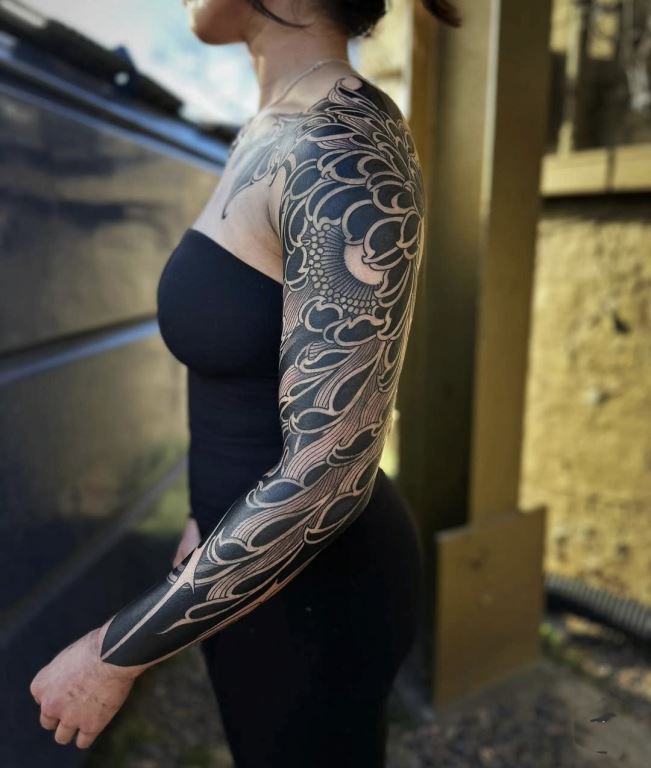
Q: Your portfolio shows incredibly solid,
"void-like" blacks. What technical adjustments (machine speed, hand
movement) have you perfected to achieve this level of consistency?
A: For packing the black work? Honestly the technical skill of full
saturation I learnt from hanumantra and orient art, these guys are
some of the best in the game and getting tattooed by them taught me
all I know. Good black comes from disciplined consistency, never
rushing the process.
Q: How does your design process prioritize the way a tattoo
will age ten or twenty years from now?
A: My focus is to create long lasting quality work, not something
that looks just good for now but for a life time. My long term plan
is to work on body suits, so I want work to look as good in 10 years
as it does today. Otherwise it will all age differently and look
inconsistent.
Q: Why do chrysanthemums and peonies appear so frequently in
your work? What is it about their structure that suits your
technical style?
A: Prior to the style I’m now known for my background with very
decorative and pattern based ornamental. So honestly it’s been in my
work from my day one this floral presence. I believe that doing the
same thing over and over is the path to mastery and I guess there’s
just subjects that come naturally. I still feel so far away from
what I want to achieve with these florals and I’m sure they will
continue to be key elements in my work for many years to come.
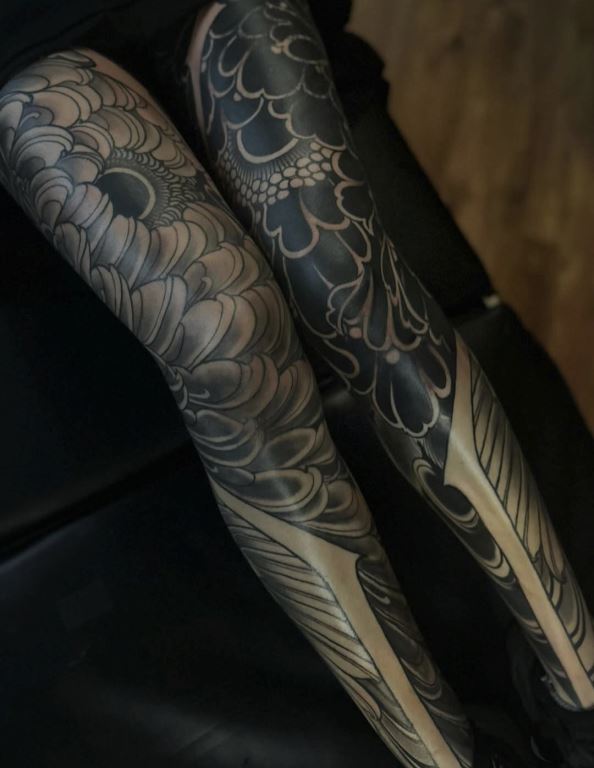
Q: How has your use of digital design
tools evolved your ability to create "full-sleeve" compositions
compared to traditional hand-drawing methods?
A: If you see how I work it’s mostly freehand, so the digital part
is merely to show the possibility of the direction we could take.
For me this has sped up that process and helps clients get a better
visual, I’m all for it but I think when it comes to the process
tattooing is an age old craft and I like to keep it as hand made as
possible.
Q: Completing a full back-piece or body-suit requires
immense stamina. How do you maintain artistic focus and technical
precision over multiple 6+ hour sessions?
A: Honestly, bactine and strong clients. It’s such a journey working
on large projects and it’s of equal responsibility to show up with
the right attitude. If I sense people aren’t committed I say look
are you sure you want to start this process or let’s reschedule a
half day instead but keep the seasons more frequent if it’s taking
it out of them. But we will get it done by any means possible.
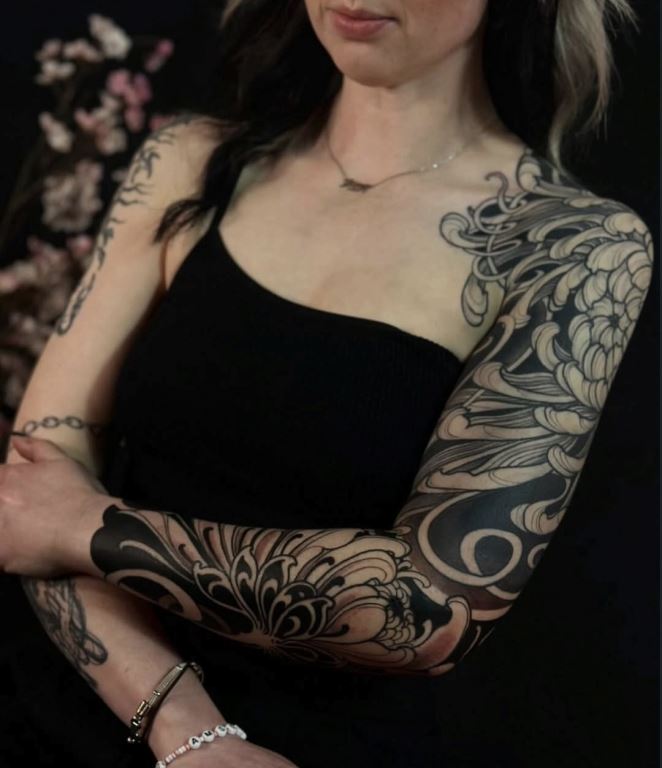
Q: Despite the precision, your work
retains a "painterly" quality. How do you keep your needle-work from
looking mechanical or rigid?
A: Haha I just show up and do my humanly best, sometimes it’s got
that hand made look you know. The wobbly part or the shading that
goes a little over the border, that’s just art man. You want a
sticker tattoo I’m sure with all this Ai you’ll be able to print
yourself any graphic tattoo you want in the next few years. But if
you want a real tattoo and an authentic experience, hit me up.
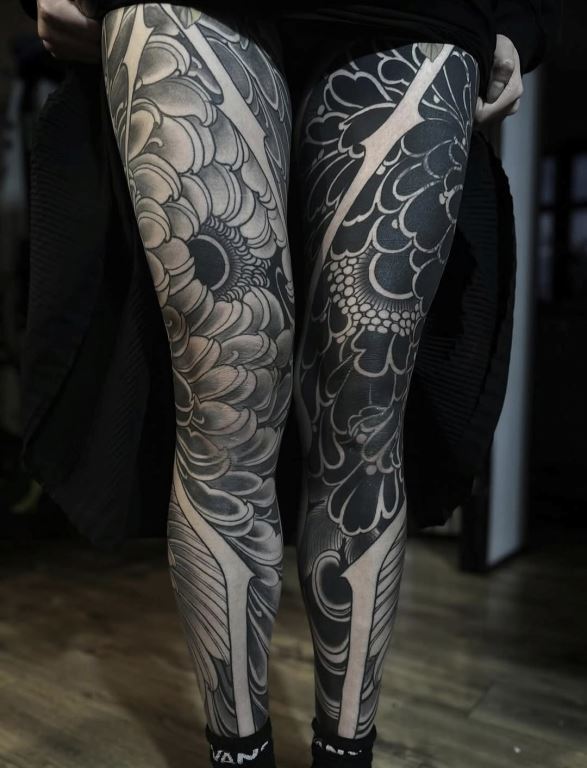
Q: Is there a particular piece in your
portfolio that you consider a "technical breakthrough" one that
changed how you approach all future tattoos?
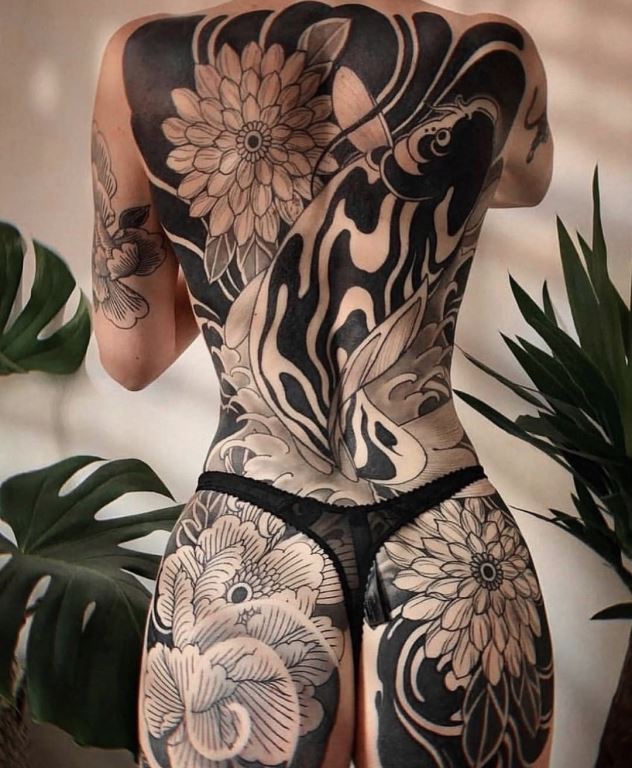
A: Hmm, you know what I think there was this koi back piece I did
many years ago. I was right to keep it quite traditional looking,
but it didn’t turn out anywhere near how I wanted, it was really
simple with a marble texture and waves windbars. I thought I’d
really missed the mark on it.Turns out everyone loves it even years
later and when shit slaps, you just gotta look at what you did and
try to keep doing it.
Q: Many artists experiment with color, but you’ve remained
dedicated to black. Why do you find black-and-grey to be the most
powerful medium for your artistic message?
A: I’m still mastering the basics, in Jiro dreams of sushi it took
his son 10+ years to be good enough to serve an omelet, the most
basic dish in his father’s restaurant. For me adding colours and all
these technical parts are something way beyond my level of
tattooing. I respect those who do it well, for me tho black and grey
is where I’m at in my career and until I am somewhat happy with that
I feel no reason to go running away with myself.
Q: You have a reputation for tattoos that heal exceptionally
well. What advice or techniques do you emphasize to ensure the
technical integrity remains through the healing process?
A: I think communication with your clients goes a long way, I’m very
close with most of my clients and stay in touch outside the session
to ensure I’m there to guide during the healing process. Atleast
just for a few days I’ll check in online.
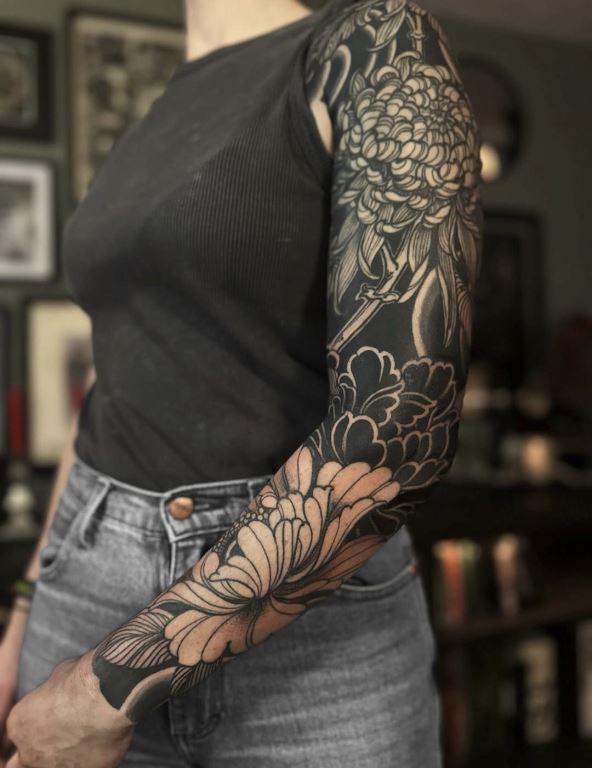
Q: How has your perspective on "fine
detail" changed as you’ve moved into larger, more ambitious
body-coverage projects?
A: Everything has its place. I’ll add fine details with the
understanding in years to come they will set back from the darker
tones and become almost a mid layer.
Q: Your limited-edition prints are highly sought after by
collectors. How do you adapt your "skin-first" aesthetic when
creating work for paper or canvas?
A: Paintings and prints are more like study sheets for me, most of
the time I’m just drawing ideas to promote tattoo detections and
possibilities. But watch this space, I recently began making time
for painting and once I find my feet with it, I’ll be introducing
more of this to my feed.
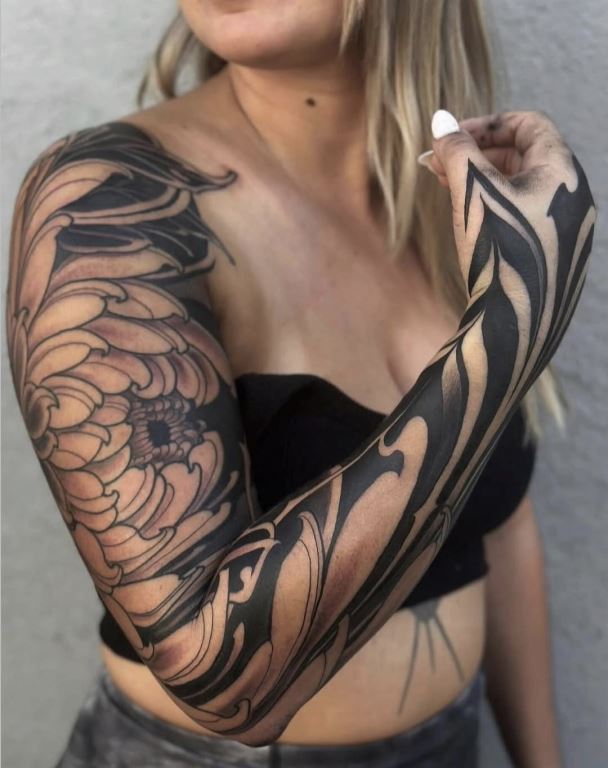
Q: You have worked in several high-profile
studios. How does "guesting" in different environments influence
your perspective on international industry standards?
A: It’s a huge part of my development as an artist, I wouldn’t be
close to where I am today without putting myself in studios with
artists who far exceeded my skills. They all have contributed to
making me technically better and even on a personal level, I have
learnt so many life lessons from people over the years. I’m grateful
for all these people who now I would not only call my mentors but
also my friends.
Q: Having worked at studios like Seven Doors London, how
does being surrounded by other elite artists push your personal
technical boundaries?
A: I think you walk into some studios and you walk out feeling like,
you know nothing about tattooing after seeing the masters at work.
So it’s humbling and also motivating to go work at studios like
Seven Doors where they are producing some of the worlds highest
level of tattooing.
Q: Having seen the industry from a UK
perspective, how do you feel the European style is currently
influencing the global tattoo landscape?
A: I feel like Europe always produced such a high standard of
artists, but in the last ten years I’m blown away by the work that I
see in person when visiting the European conventions. I can’t speak
for places outside the UK as I’m not in those scenes but just from
what I see at the conventions I think black work in Europe has
ignited and has been hitting such a high level of body art.
Q: Why is the US market the ideal next step for your career?
A: I’ve been getting tattooed by my friends in the US and I see how
they work, I see how committed their clients are and I think for me
opening a door to the states to work along side artists like fibs,
orientart, hoodie etc they are the next step in my artistic journey
and its development. I would love to see how far I could take my
tattooing with those guys around me.
Q: What specific gap in the American "blackwork" scene do
you feel your style fills?
A: There’s definitely a lack of European black work style in the
states, it’s got a lot of people doing heavy black, geometric
influences black work but the floral, flowing, high contrast work...
I think you’d struggle to find many people pushing that. I already
have many Americans who fly to the UK to get tattooed by me as they
can’t find people who work in my style like I do in the states. So I
think there’s definitely something I could contribute the US scene
if it’s permitted.
Q: When you look at American tattoo
histor, from Traditional to modern Fine Line, which styles do you
respect the most, and do they influence your current work?
A: Growing up I saw America for its skateboarding, music and classic
car scenes and knew early on they knew how to take things to the
next level, visiting there on holidays later in my life I realized
how much influence America had on my life. It’s always been a place
to me that you can be as big as you want, you just got to work for
it!
Q: Looking back at the international recognition you've
received, what do you consider your most significant contribution to
the tattoo community so far?
A: Without blowing my own trumpet, I think I’ve been open and
sharing my knowledge on tattooing and my techniques. Just in hope
that the next person goes away and does something better, over the
years I have had many people who have taken influence from my work
and I've always been open to helping them develop.
Q: As you look toward your career in America, what are your
primary goals for the next five years in terms of both artistic
growth and industry leadership?
A: I would love to just see my style develop further along with my
artistic development and I hope to help others around me achieve
their goals along the way.
Date: 02 April 2026
Interview: Ivana Kancheska


