
Interview with Camilo Colmenares
Today, we are joined by Camilo Colmenares, a
visionary force in the world of high-contrast realism. From the
vibrant art scene of Bogotá to the elite studios of Europe, Camilo
has spent over a decade redefining the boundaries of black-and-grey
surrealism. His work a hauntingly beautiful fusion of ancient
iconography, wild nature, and futuristic biomechanics has earned him
a reputation as an artist who doesn't just tattoo skin, but archives
the subconscious. As Camilo prepares for a pivotal new chapter in
the United States, we dive deep into the philosophy behind his ink
and the technical evolution of a global career.
Q: Every master has a starting point. Looking back, what was
the specific spark that made you choose skin over any other medium?
A: I chose skin because it is a living canvas. Unlike any other
medium, a tattoo becomes part of a person’s identity. I was always
drawn to the idea of creating something that would stay with someone
for years and carry real meaning. That combination of art,
technique, and human connection is what led me down this path.
Q: In your early years, what were the biggest cultural or
technical challenges you faced while trying to establish a
distinctive style in Colombia?
A: One of the biggest challenges was developing my own artistic
identity. When I started, access to specialized information and
technical resources was much more limited than it is today, so a
large part of my education was self-directed. I also had to learn
how to communicate the value of large-scale and concept-driven
compositions in a market where more traditional approaches were
often the norm. Over time, those challenges ended up strengthening
my work.
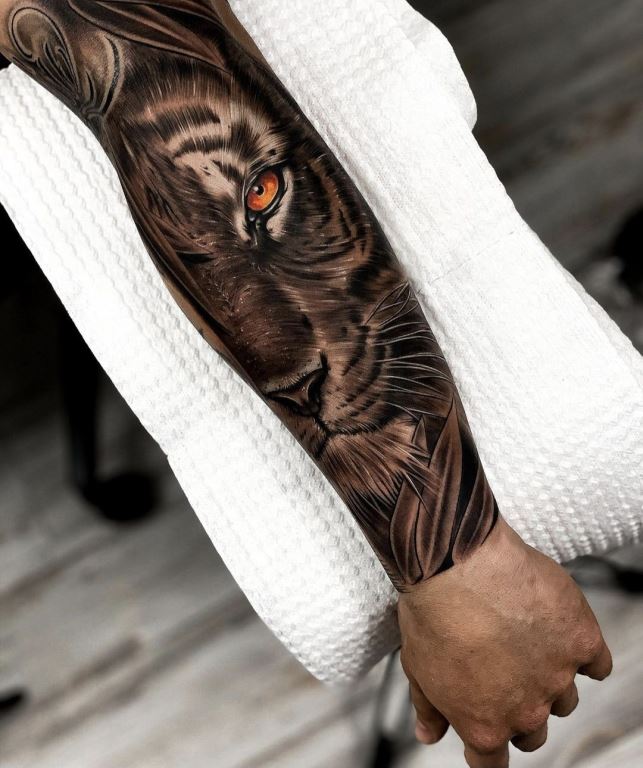
Q: How did your environment in South
America influence the strength and intensity that can be seen in
your work today?
A: I believe my environment had a significant influence. Developing
my career between cities like Medellín and Bogotá exposed me to
strong contrasts, both visually and culturally. That energy,
intensity, and mixture of stories naturally found their way into the
way I build images today.
Q: Your work often feels like a dialogue between the natural
world and the supernatural. How do you decide where realism ends and
surrealism begins in a piece?
A: For me, there is no clear line separating the two. Realism allows
me to build a solid and believable foundation, while surrealism
gives me the freedom to push an image toward a deeper idea or
concept. I enjoy the moment when both worlds meet and work together
within the same composition.
Q: Looking at your large back pieces, there is a strong
sense of visionary art. How do you approach the storytelling aspect
of such large-scale compositions?
A: With projects of that scale, a great deal of the work happens
before the tattooing even begins. I spend a lot of time planning the
composition so that every element has a purpose and flows naturally
with the anatomy of the body. My goal is for the piece to feel like
a single work of art rather than a collection of separate images.
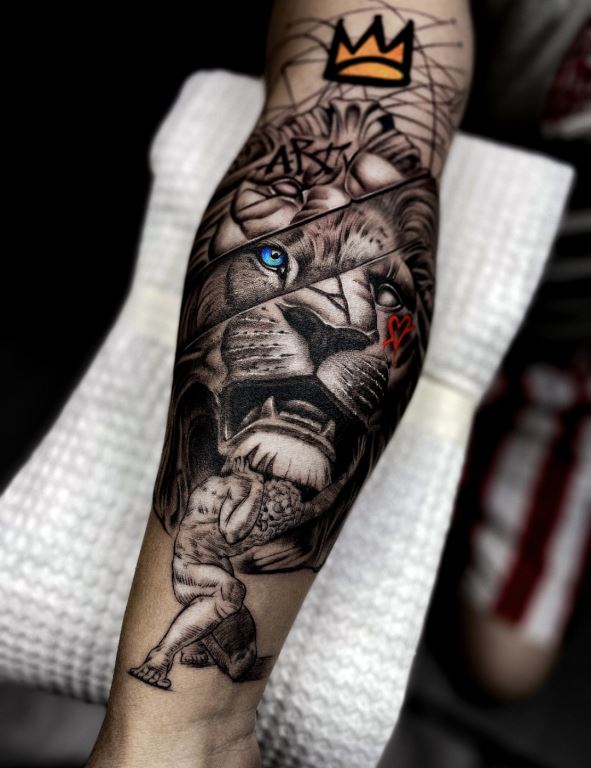
Q: You have mastered deep blacks. Why is
extreme contrast so important to your personal expression?
A: I have always enjoyed working with strong contrasts because they
give an image more presence and depth. I also believe that time
tends to favor compositions built around a clear structure of light
and shadow. Contrast is not only an aesthetic tool; it also
communicates strength and emotion.
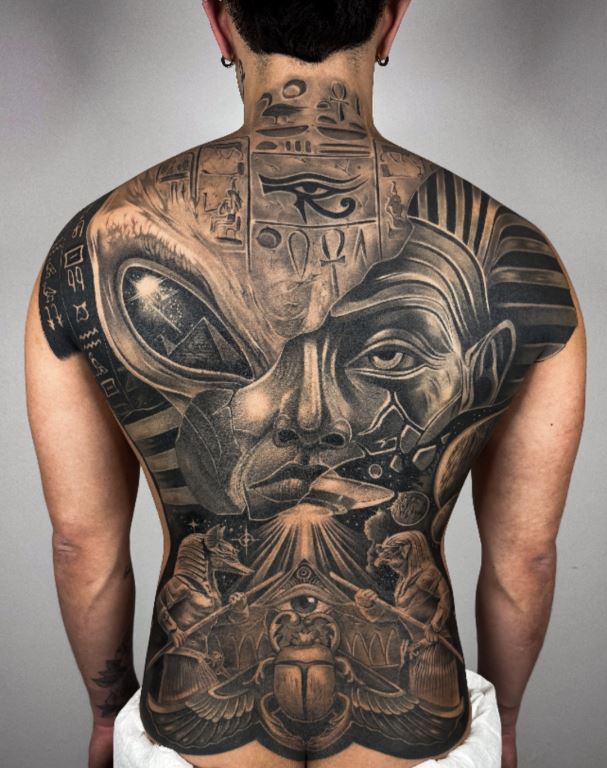
Q: Some of your pieces incorporate Egyptian and ancient
motifs mixed with futuristic elements. What attracts you to this
“ancient future” aesthetic?
A: I am drawn to the idea of connecting two worlds that seem
unrelated at first. Ancient cultures are filled with symbolism and
meaning, while futuristic elements open the door to new
interpretations. When the two are combined, they create an
interesting feeling of something that belongs to both the past and
the future at the same time.
Q: In your opinion, is a tattoo a collaboration with the
client, or is the client a canvas for your specific vision?
A: I believe both sides play an important role. The client brings
their story, their ideas, or what they want to represent. My role is
to interpret those elements and transform them into a strong
composition. To achieve the best possible result, there has to be
trust in the creative process.
Q: How did your visual vocabulary change
through your time working in Europe compared to when you first
started your career?
A: Working in Europe expanded both my artistic perspective and my
level of self-demand. Developing projects in cities such as Madrid,
Ghent, and Paris allowed me to present my work to different
audiences and better understand the value of building a strong
artistic identity. It also reinforced my desire to develop a truly
international career.
Q: Your textures, from stone-like sculptures to soft fur,
feel incredibly tactile. Do you study classical sculpture or
photography to achieve this effect?
A: Yes. I find a great deal of inspiration in both classical
sculpture and photography. I enjoy observing how light interacts
with different surfaces and how small details can completely change
the perception of an image. A large part of my process involves
studying those elements and adapting them to tattooing.
Q: Is there a recurring character or theme in your work that
represents your inner world?
A: More than a specific character, there is a constant fascination
with transformation. Many of my compositions explore ideas such as
evolution, identity, adaptation, and self-improvement. These themes
appear in different ways throughout my work and reflect a personal
curiosity about how far an idea, a person, or even the human body
itself can develop. Although the visual elements may change, that
search has remained constant throughout most of my career.
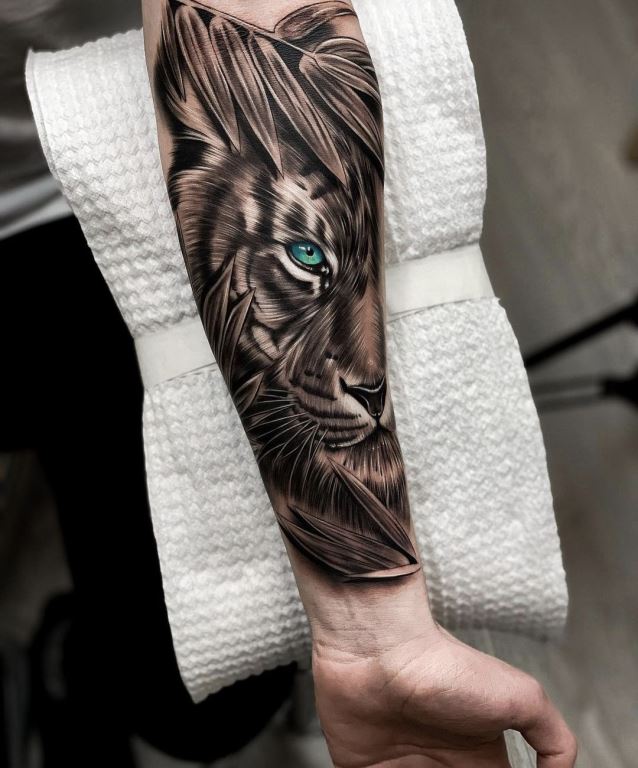
Q: How has your understanding of color or
the absence of it in black and grey evolved to make your greys feel
luminous?
A: Over time, I realized that working in black and grey is not
simply about creating shadows; it is about understanding light. My
approach has evolved toward more precise contrasts and smoother
transitions, allowing certain areas within a composition to breathe.
I believe that relationship between solid blacks, midtones, and
areas of light is what gives greys their sense of luminosity.
Q: How do you maintain creative stamina during intense
multi-day tattoo sessions?
A: I believe it all starts with preparation. When I have a clear
direction for a project before I begin, it becomes much easier to
stay focused through long sessions. Maintaining a disciplined
lifestyle outside the studio also helps, because this profession
requires a great deal of physical and mental energy. When the vision
is clear, creativity tends to keep moving forward.
Q: Was there a project that redefined your creative limits
and transformed your style?
A: Yes. A full Egyptian-themed back piece that I developed over
roughly a year and fifteen sessions. It was one of the most
demanding projects I have ever completed, both technically and
compositionally. It forced me to think about the piece as a complete
work rather than a collection of individual images. That project
changed the way I approach large-scale work and taught me a great
deal about planning, patience, and consistency.
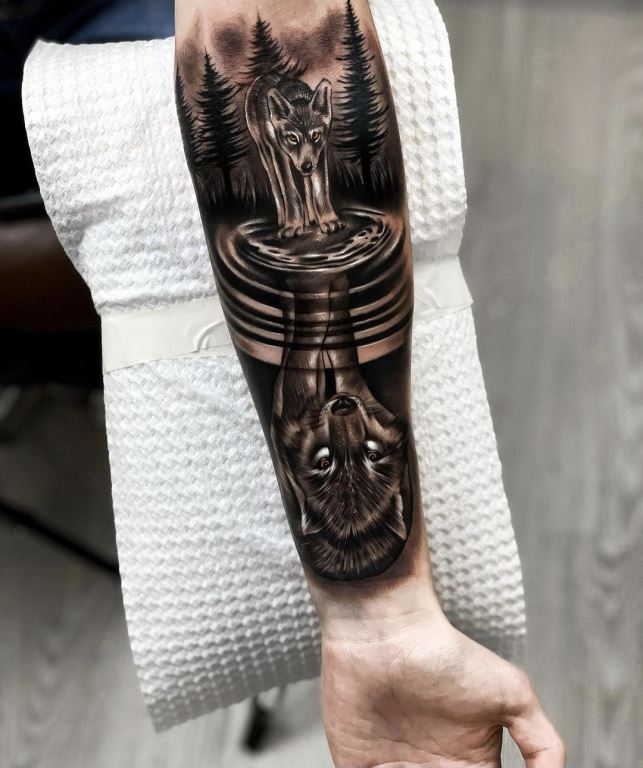
Q: You have worked in Medellín, Bogotá,
and several European cities. What makes the American market the next
major step in your career?
A: The United States is one of the places where the tattoo industry
continues to evolve and push forward. There are incredible studios,
highly skilled artists, and clients who truly value specialized
work. For me, it represents an opportunity to continue growing
within a highly competitive environment and to keep developing
increasingly ambitious projects.
Q: How do you think your hybrid style, influenced by both
South America and Europe, can bring something different to the
American tattoo landscape?
A: I believe my work combines influences that rarely come together
in exactly the same way. On one hand, there is a strong foundation
of composition, symbolism, and narrative built throughout my career.
On the other, there is an ongoing interest in exploring concepts
related to biomechanics, transformation, and adaptation to human
anatomy. I am interested in treating the body not simply as a
surface where an image is placed, but as the starting point from
which it is built. I believe that direction can offer a different
perspective within the American market.
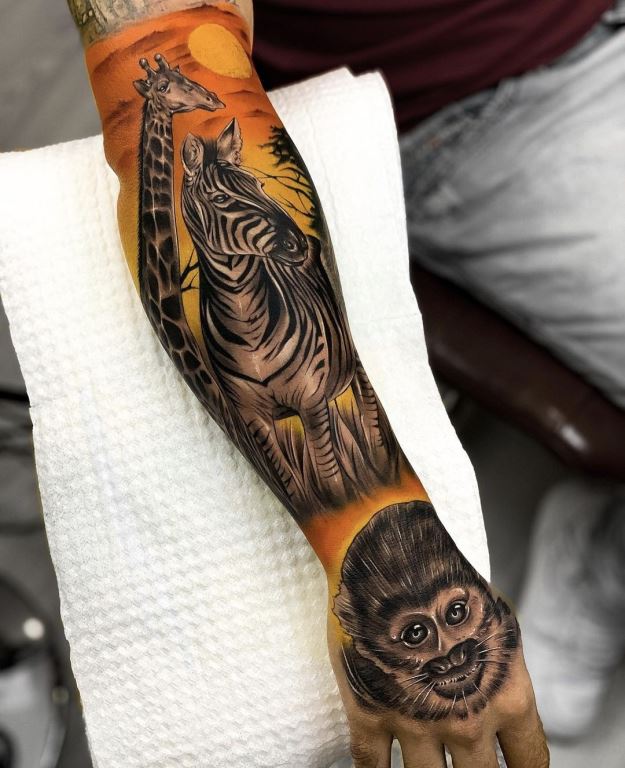
Q: How do you plan to contribute to the
American tattoo community beyond tattooing?
A: Beyond tattooing, I am interested in sharing knowledge and
experience with other artists. Throughout my career, I have
participated in mentoring and educational activities, and I would
like to continue developing that aspect of my work in the future. I
am also interested in collaborating with studios, participating in
industry events, and contributing to the creative exchange that
exists within the international tattoo community.
Q: Why is it important for an artist at your level to be
based in a major hub such as the United States?
A: The most competitive environments are often the ones that
generate the most growth. Being based in the United States means
having access to new opportunities, new challenges, and an industry
that constantly pushes innovation forward. For an artist, being part
of that environment can significantly accelerate both professional
and creative development.
Q: How do you plan to maintain your involvement in the
international tattoo community while being based in the United
States?
A: Tattooing is a global industry, and my intention is to continue
working that way. I want to keep collaborating with international
clients, participating in events, and maintaining connections with
different markets around the world. A large part of my career has
been built through that mobility and those international
connections, so it is something I plan to continue regardless of
where I am based.
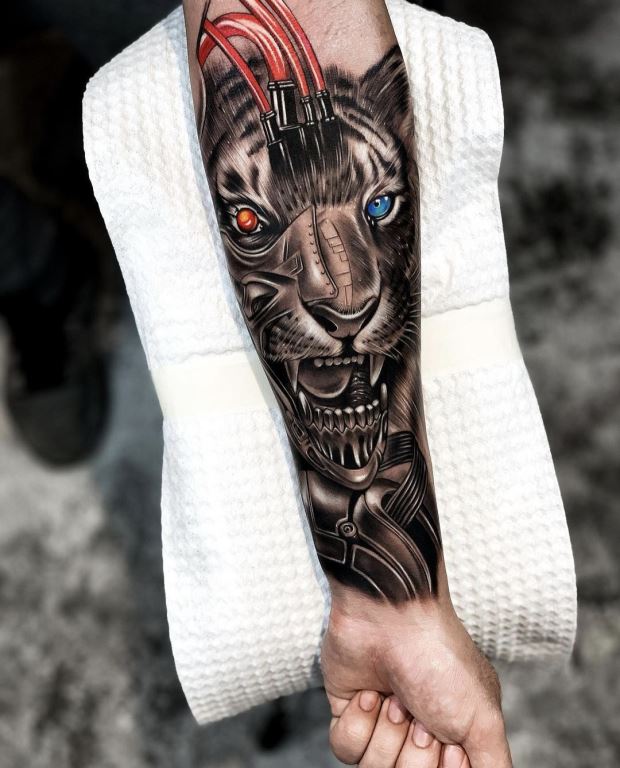
Q: Do you feel that being an immigrant
artist gives you a perspective that many local artists may not have?
A: Yes. Working in different countries taught me that tattooing can
be viewed very differently depending on culture, market, and
personal context. That experience taught me how to adapt, listen
more carefully, and appreciate different ways of understanding art.
I believe those experiences have enriched both my work and the way I
connect with clients.
Q: What is your American Dream within the tattoo industry?
A: My goal is to continue growing as an artist and to take my work
to the highest level possible. I want to develop increasingly
ambitious projects, continue evolving visually, and build an
artistic identity that is easily recognizable. For me, the dream is
not so much about a specific country, but about having the
opportunity to develop within one of the most important markets in
the world.
Q: Are there any specific studios or artists you would like
to collaborate with?
A: I respect the work of many artists and studios that have
contributed to the growth of the industry. However, rather than
pursuing specific names, I am interested in collaborating with
people who share a serious approach to tattooing and who value
creativity, specialization, and the constant pursuit of improvement.
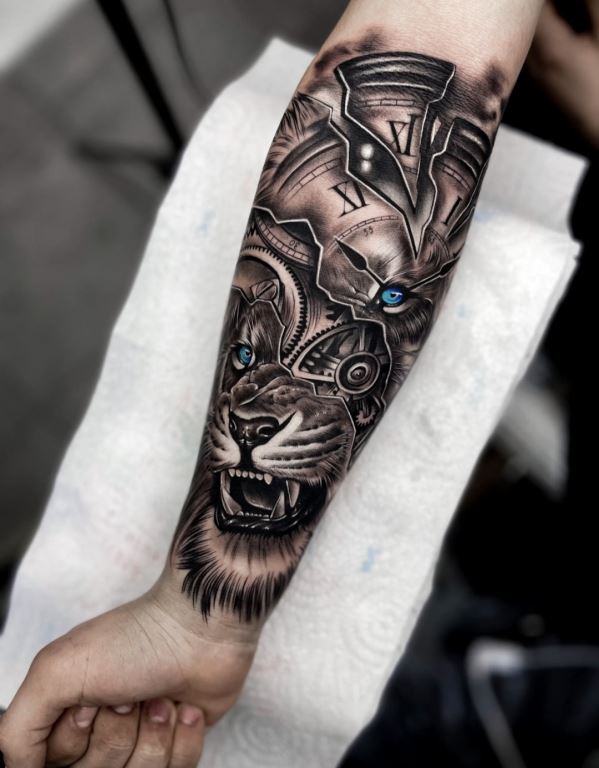
Q: What excites you the most about working
in the United States?
A: The opportunity to develop within an extremely competitive and
creative environment. The United States brings together world-class
artists, clients who value specialized work, and an industry that is
constantly evolving. I am also excited by the opportunity to present
new ideas and continue growing within a market that appreciates
artistic identity and originality.
Q: When you look at the global evolution of tattooing, do
you think the industry is moving in the right direction, or are
there areas that need to be reconsidered to preserve the integrity
of the art form?
A: I believe the technical level of tattooing has never been higher
than it is today, and that is something very positive. At the same
time, I believe it is important for the industry to continue valuing
originality and the development of a unique artistic voice. Tools
change, trends change, but the ability to build an authentic
identity remains one of the most important qualities any artist can
develop.
Q: If you could go back and give one piece of advice to your
apprentice self, what would it be?
A: I would tell myself to be patient and to focus on building a
unique identity rather than chasing quick results. Technical skill
improves with time, but developing a strong artistic vision requires
years of observation, practice, and experience. Looking back, I
believe consistency and discipline were far more important than I
understood when I was starting out.
Date: 25 June 2026
Interview: Fredrik Lindström


