
Interview with Camilo Osorio
Hello Camilo Osorio! Thank you so much for taking the time to do this interview. Please start by telling us something about yourself and your background. Who were some of your earliest influences that sparked your interest in art? Hi, it’s a pleasure to be here. My name is Camilo Osorio, and I’m a tattoo artist specializing in the Neotraditional style. I’ve been tattooing for about 13 years and I’m currently based in Bogotá, Colombia. I’ve been drawing for as long as I can remember. In the beginning, I worked only with pencil. One of my earliest influences came during school, my art teacher, who accompanied me throughout high school. She played a big role not only in developing my passion for art, but also for travel. I saw how much she traveled and explored, and that really inspired me. I think in many ways I’ve become a reflection of what she represented to me back then: someone who gets to live off what they love and travel thanks to it. I started tattooing around the age of 16, heavily influenced by the music I was listening to at the time and the BMX scene I was part of, where many of my friends were heavily tattooed. Around that time, I met my second major artistic influence, the person who introduced me to the world of tattooing. He’s my mentor, the one who taught me the foundations of everything I know. I owe a great deal to him, his name is Carlos Arrieta. I later studied Graphic and Digital Design and Illustration at La Escuela de Artes y Letras, where I refined my skills in drawing, digital illustration, color theory, technical drawing, and many other abilities that are essential to my work today.
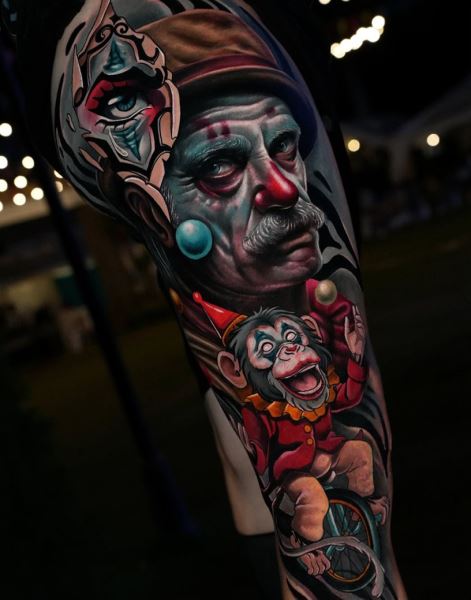
Q: What type of art did you like the most growing up?
A: As a kid, my parents had a friend who painted landscape scenes.
But even before that, my sister used to draw a lot, and I loved
replicating what she did. Going back to my parents’ friend and
following that same instinct to replicate, I started making my own
colored pencil landscapes. I’ve always loved cartoons, so I was
naturally drawn to anything graphic in 2D or flat imagery. At first,
I wasn’t really interested in studying a specific type of art like
Renaissance painting. Over time, though, I started diving deeper
into graphic arts and developed a strong interest in surrealism. One
artist I was really drawn to was Moebius. I also became very fond of
Art Nouveau. At one point, I became really invested in anatomical
drawing as well so I took several courses and workshops to improve
in that area.

Q: When tattooing came into the picture? Did you feel like
it's your calling or it came spontaneously?
A: Tattooing came into my life completely unexpectedly. I had a
friend who was learning how to tattoo, and he encouraged me to give
it a try but at the time, it seemed way too difficult to me. Still,
because of the influences I mentioned earlier, music and BMX
culture, I wanted to get a tattoo myself. So I designed it. Since I
was underage, I had to ask my parents for permission. I begged them
until they finally said yes. I ended up going to the only tattoo
studio in the small town where I lived. That’s where I met Carlos,
the tattoo artist working there. He saw potential in my drawing and
offered to teach me how to draw and paint. I agreed, and I started
visiting the studio regularly and eventually became his apprentice.
Before I knew it, I was setting up and breaking down tattoo
stations. Then I started practicing on synthetic skin and fruit and
eventually, I was tattooing real people.
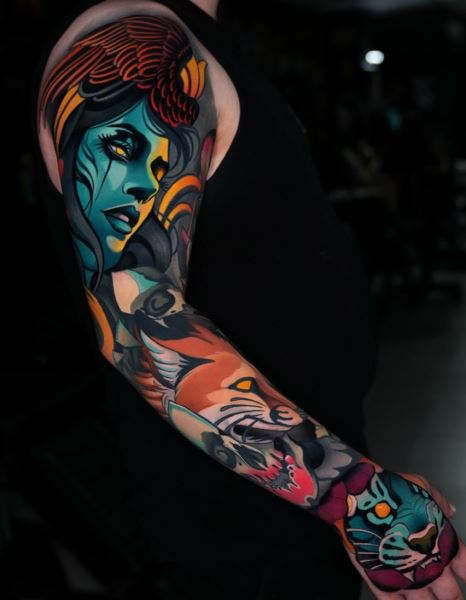
Q: As a beginner, what styles of tattoos did you typically
create? How long was it before you felt truly confident in your
skills and started attracting a steady clientele?
A: In the beginning, I did pretty much any style that came into the
studio as long as I felt capable of doing it. I started with
linework, shading, lettering, animals, geometric designs, and a bit
of Traditional and Oriental style, which were the main influences of
the artist who taught me. At that point, I didn’t have much
information about tattoo styles in general. I mostly replicated or
created something similar to what clients were asking for. I had
heard of Neotraditional, but I didn’t know much about it yet. After
about four years of tattooing, I started learning more about artists
who specialized in that style, mainly by attending conventions and
watching other people work. By the sixth year, after focusing more
seriously on Neotraditional and even winning a few awards at local
conventions, I began to notice that people were actively seeking me
out specifically for that style.
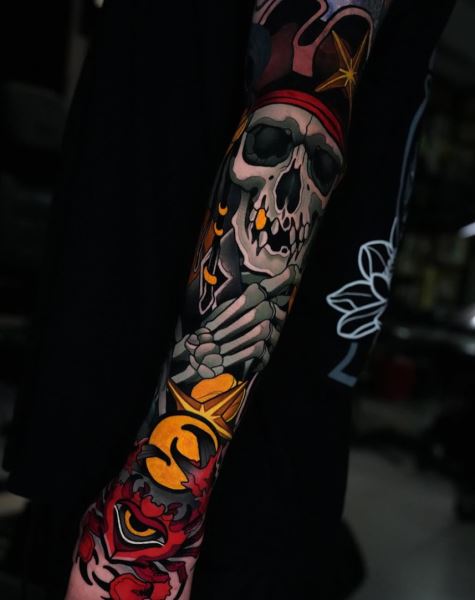
Q: What was the biggest challenge you faced transitioning
from a beginner to a professional artist working in a tattoo studio?
A: I think the biggest challenge was building confidence in my own
ideas and work. Since I started so young, a lot of people didn’t
trust me at first because of how I looked and my age, they didn’t
believe I could do a good tattoo. I never had trouble presenting my
ideas, because I’m someone who enjoys proposing concepts and
adapting them to the kind of graphic language I like. But another
big challenge was moving from a small town to tattooing in the
capital city. There’s always that fear, wondering if you’ll be able
to attract clients or be competitive among so many talented artists
in a big city.
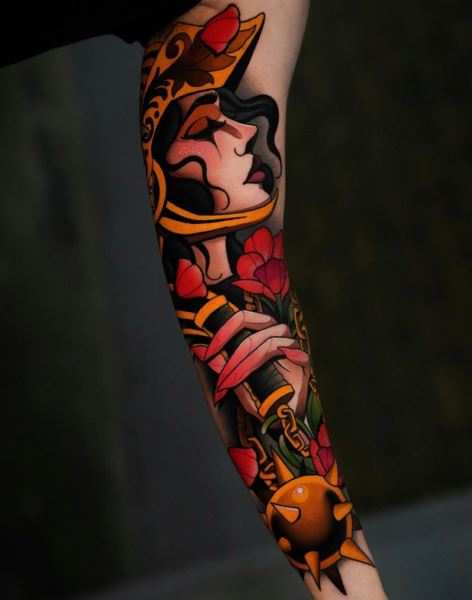
Q: You specialize in the neotraditional style. What drew you
to this particular aesthetic, and what aspects of it do you find
most appealing?
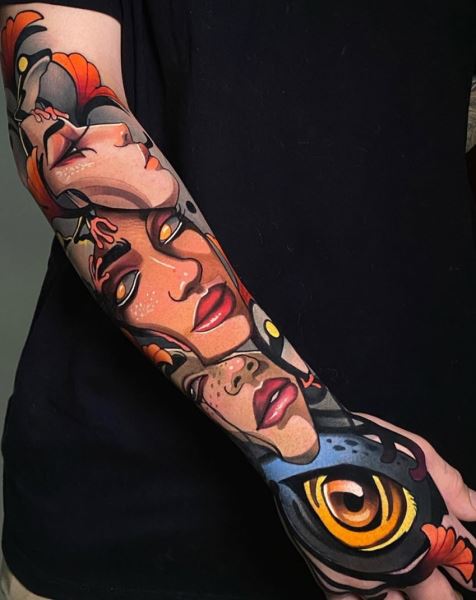
A: Even before I started tattooing, my preferences in drawing were
always focused on 2D and illustration. The artist who taught me
tattooing specialized in Traditional and Oriental styles, so that
influence played a big role early on. I liked Traditional, but I
wanted to evolve it to the next level. With all due respect to the
artists who work in that style, I found it to be a bit too simple in
terms of illustrative technique. That’s why I was always looking to
add more detail or bring something extra while still preserving the
strength and boldness of Traditional, but with a modern,
illustrative twist. In Neotraditional, I found that “something
extra” I had been searching for. It allowed me to express clearer
ideas within the tattoo format, and technically, I love its
solidity. The clean use of color, the structure, it’s a timeless
style. I really like how someone of any age can wear a
Neotraditional tattoo and still make it look great. One of my
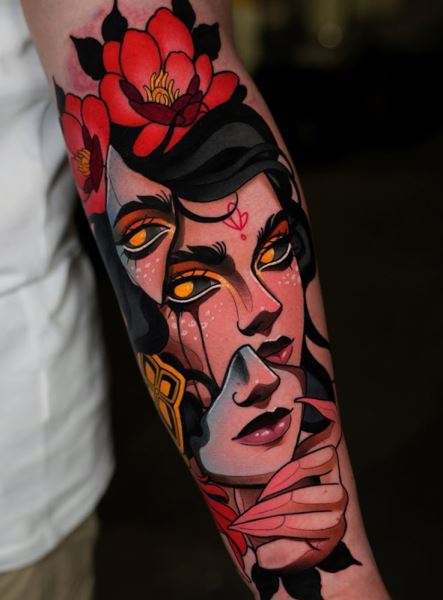
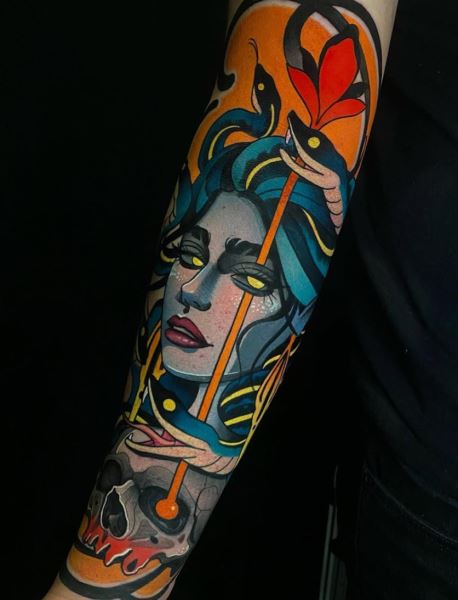
favorite things is taking a realistic face and translating it into
an illustrative version, with a touch of distortion or stylization.
Q: What do you consider the main characteristics of the
neotraditional style to be? Many describe it as a modern evolution
of classic old-school tattooing, would you agree with that
assessment?
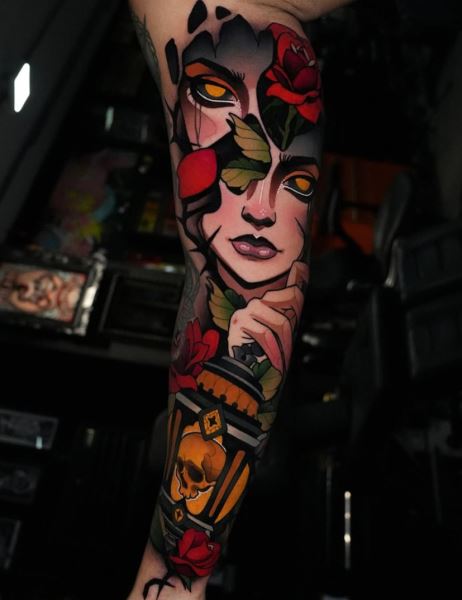
A: Absolutely. Neotraditional tattooing is about evolving the
old-school style by incorporating more elements, expanding the color
range, and using varied line weights. To me, one of the core
characteristics of neotraditional is creating timeless designs.
Achieving that means using a solid and well-balanced amount of black
pigment, which ensures the tattoo remains visually strong and
aesthetically pleasing for years. As I mentioned earlier, the use of
multiple line weights helps define details and emphasize outlines. I
draw from traditional tattooing in terms of saturation and color
strength, but with neotraditional, the color transitions need to be
much cleaner and softer.
Q: Your neotraditional designs are certainly vibrant and
creatively diverse. It seems color blending and mixing play a huge
role in their magic. Could you tell us more about your design
process, particularly who determines the color palette for each
piece?
A: For me, it’s essential to involve my clients in the creative
process. I like working together to shape their ideas and
reinterpret their vision through my style. Each tattoo carries a
part of me, and I feel a deep responsibility to ensure it fully
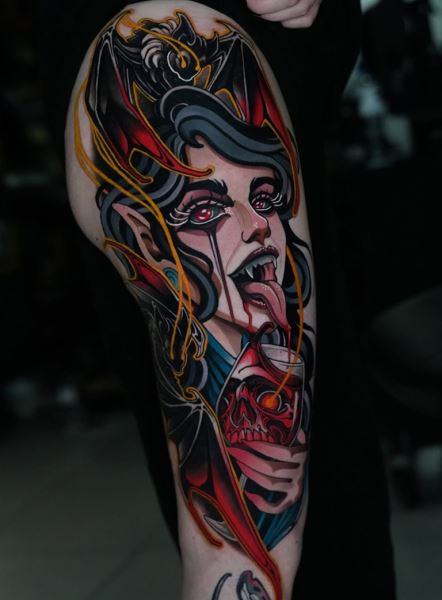
represents them. From a technical standpoint, I often design full
projects that flow with the body, building around a main character,
with complementary and secondary elements that create cohesion. I
always adapt my designs to the client’s anatomy, using body contours
and natural light sources to enhance the composition. When it comes
to color, I adjust the palette according to each client’s
preferences and skin tone. On very light skin, I usually balance
between warm and cool tones. On medium to dark skin, I lean toward
warmer hues, as they age better and work more harmoniously with
melanin. My main goal is always longevity and visual impact over
time.

Q: Your large-scale tattoos are truly impressive! How long
does it typically take to complete one of these masterpieces?
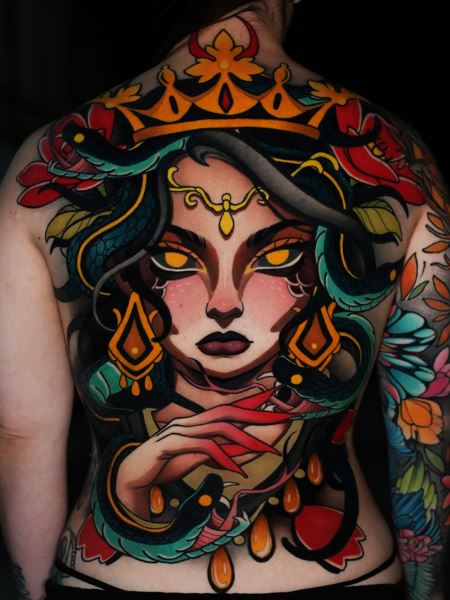
A: Thank you so much! Large projects require two fundamental things:
time and patience. I always explain this to my clients from the very
beginning. I work in sessions, and I like to revisit the tattoo once
it’s healed to strengthen any areas if needed. On average, a full
back piece takes me about ten sessions, but I usually take a bit
longer to ensure the healed result is as strong as the initial
application. I’m also very empathetic toward my clients, I
understand that these macro projects can be physically demanding.
So, the total number of sessions is always tailored to the client’s
pain tolerance and how much we’re able to achieve in each sitting.
Q: With the rise of collaborative tattooing, have you
thought about teaming up with another artist on a major project,
such as a full back piece?
A: Absolutely, you read my mind! I actually already have several
large collaborative projects scheduled with artists I’ve worked with
before. For me, chemistry between artists is crucial in
collaborations; when there’s a good connection, the results speak
for themselves. That’s why I tend to collaborate with friends,
artists I trust, admire, and have a great creative dynamic with.
Q: Have you recently completed a tattoo that, despite some
difficult hurdles, became a favorite because of how wonderfully it
turned out?
A: Yes, I’m currently in the process of finishing a full bodysuit
that has become one of my favorite projects for exactly that reason,
there were challenges along the way that made me develop a special
connection to it. While I was in Milan working on the chest portion
of the design, I experienced a serious kidney issue that made it
incredibly hard to concentrate due to the pain. Despite that, I
ended up winning an award at that convention, which is one of the
most important in the world. That day was filled with emotion. I was
at the peak of my career, yet physically unwell and unable to fully
enjoy the moment. It’s something I’ll never forget.
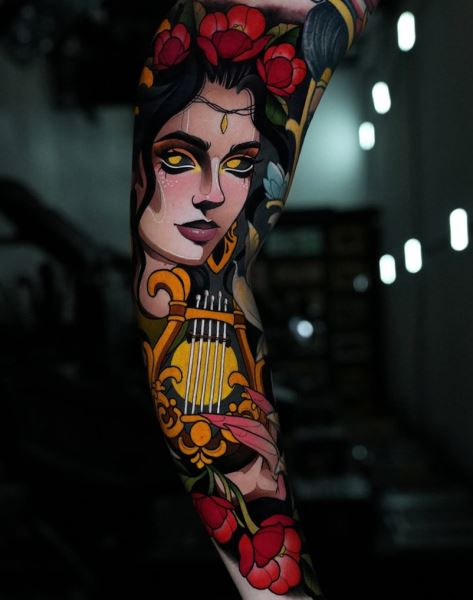
Q: The women's portraits typically combined with interesting
decorative elements like flowers or gypsy make up etc have always
fascinated me in neo-traditional style. Are there any specific
meanings or symbolism behind those designs?
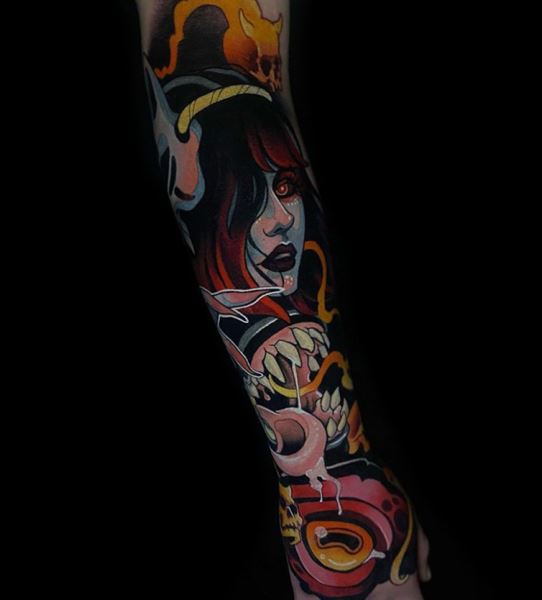
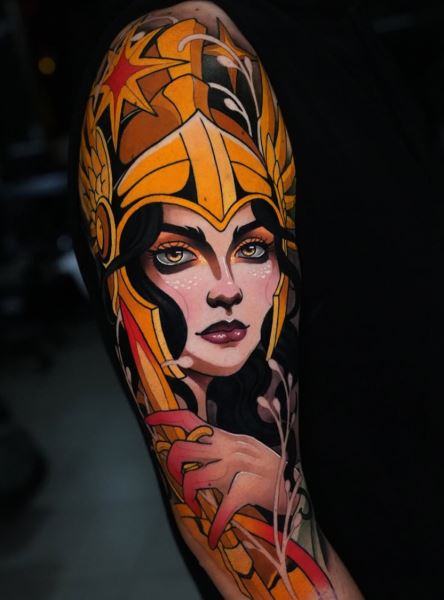
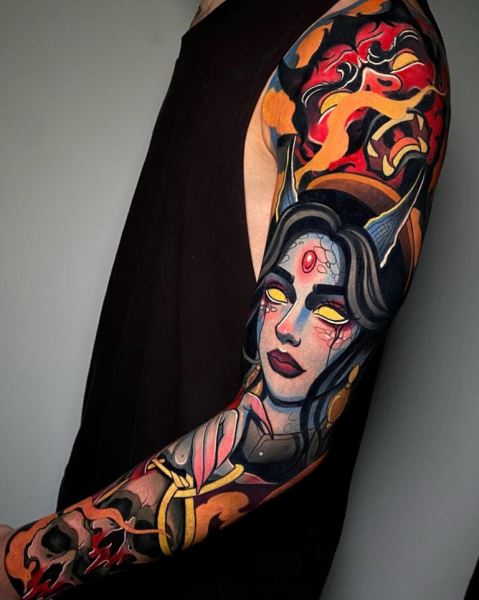
A: I love creating female faces, studying them, adapting them, and
making them my own. The complementary elements I use are often
rooted in Latin American and pre-Hispanic culture, which deeply
inspire me. I’m especially drawn to the indigenous cultures that
still exist around the world, particularly throughout Latin America.
There’s such a richness in both their symbolism and visual beauty.
Being born in a tropical country, I’m naturally inclined to include
elements of local fauna and flora in my work. These cultural
references are woven into many of my pieces.
Q: If you were given complete creative freedom, what would
be your absolute "dream" tattoo piece to design and execute?
A: I think many artists dream of complete creative freedom, but for
me, it’s a bit more complex. I truly value the relationship and
creative bond I build with my clients during the design process. I
want them to wear my work with pride and personal connection. The
closest I’ve come to full freedom has been when tattooing my wife,
but even then, I make sure to reflect her essence and preferences in
the designs. I don’t see my clients as blank canvases, I see them as
individuals who express their personality and vision through my art.
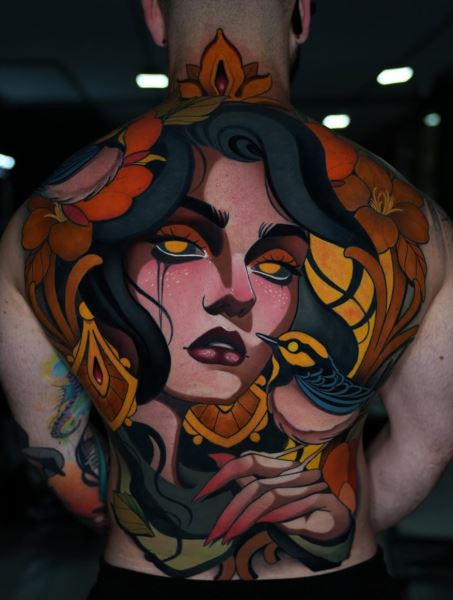
Q: Witnessing clients in such vulnerable and personal
moments during the tattooing process must be a unique aspect of your
work. How does it feel to be a part of these intimate experiences,
and does it influence your approach as an artist?
A: I feel a deep sense of gratitude toward the people who choose me
to bring their ideas to life. It’s an honor to have my work worn
with love, it’s a powerful level of trust. Throughout the process, I
regularly check in with them, making sure they’re comfortable,
asking if they need breaks. For me, their well-being before, during,
and after the tattoo is a priority. One experience that left a
lasting mark on my career was with a man who got his very first
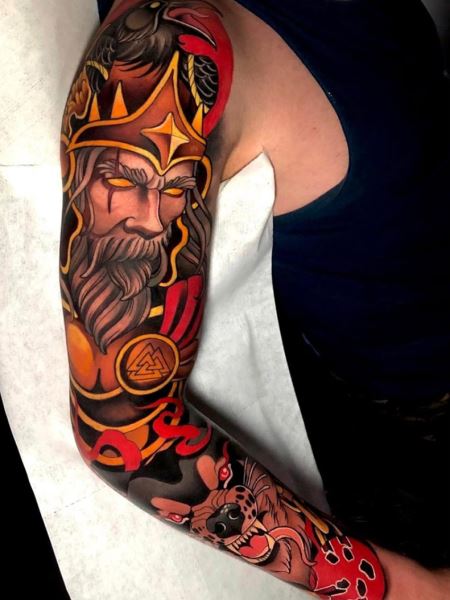
tattoo at 60 years old. He chose to get a full sleeve and decided I
was the right artist for the job. He told me he had waited a long
time to find someone who could bring his vision to life, and I was
truly honored to be that person. I deeply respect the trust my
clients place in me, it’s what motivates me to keep growing.
Q: I've noticed your really cool digital art designs, are
you open to commissions for custom prints?
A: I absolutely love digital illustration. It’s a creative space
where I can explore details and concepts that might not always be
possible in tattooing. That’s why not all of my prints are designed
to be tattooed. I do take on custom print commissions, especially
for conventions or well-known tattoo studios. These kinds of
projects are always exciting and challenging because you have to
appeal to a broader audience, but I really enjoy that kind of
creative push.
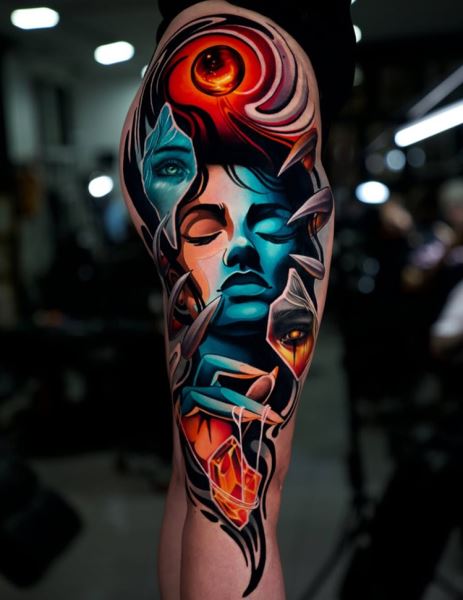
Q: Your unique neo-traditional aesthetic would translate
beautifully into an illustrated book, perhaps with captivating
characters and narratives. Have you ever thought about embarking on
such a project?
A: It’s funny you mention that, it’s as if you already knew what
I’ve been working on. I’ve definitely thought about releasing a
sketchbook that showcases some of my best designs. I personally
enjoy collecting books from great artists as a way of studying their
work, and I want to offer something similar through my own lens.
Like with any major project, I see it as a big responsibility. I
always want to deliver my best and improve with every step, which is
why I’m approaching this idea slowly and carefully to ensure the
final result is truly beautiful.
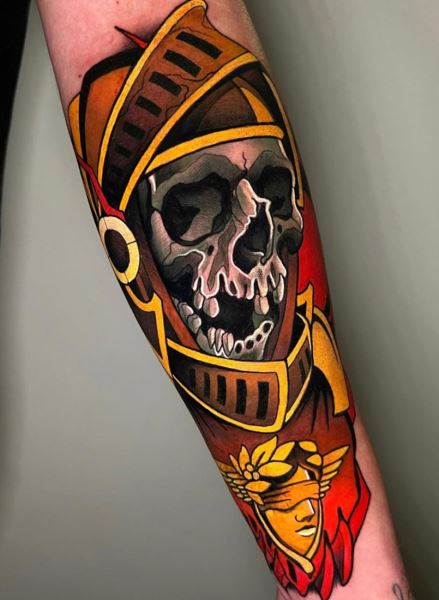
Q: We all aim for that fresh, vibrant, and bold look in a
healed tattoo. Achieving this seems to rely not only on excellent
aftercare but also, crucially, on the artist's proper ink usage.
What are your views on these factors, and what advice do you have
for both artists and clients to ensure a tattoo truly stands the
test of time?
A: In my view, it’s a 50/50 responsibility, half on the artist, and
half on the client. As artists, we’re working with skin, which means
it’s crucial to give clear guidelines before and after the tattoo
session. I always provide instructions and offer post-tattoo
follow-up to support the healing process. It’s also evident that
high-quality materials make a big difference, both during
application and in how the tattoo heals. That’s why I always use the
best supplies available for my clients. My main advice to clients is
to protect the tattoo from the sun, stay well-hydrated, and don’t
hesitate to get touch-ups if needed. For fellow tattoo artists, my
biggest piece of advice is never to cut corners on materials, to
keep learning, and to provide strong post-tattoo care. These things
are essential for long-lasting results.
Q: Let's discuss your first tattoo seminar in Colombia. What
were the primary goals and key teachings of this event? Who was the
seminar primarily designed for, and how did the audience respond to
it? Finally, are you planning to host a second seminar?
A: It took me a while to launch my first seminar because I believe
teaching demands respect and preparation. I wanted to reach a
certain level of expertise, not just artistically, but also in terms
of how to teach effectively. My goal with this seminar was to
present tattooing as a serious, long-term career. I invited 13
internationally renowned artists to share their knowledge, each
bringing a unique style and mastery to inspire new generations. The
idea was to offer not just technical instruction, but practical
insight into the realities of our profession. We had around 90
attendees, and the response was overwhelmingly positive, both for
the theoretical content and the hands-on exercises. It was a
beautiful, respectful, and enriching experience. I’m currently
planning a new personal seminar for next year, although I’ve also
held several workshops throughout this year.
Q: What's your take on the local tattoo scene? Are you
seeing any exciting developments, like new artists, styles, or
events?
A: It’s amazing to see how many new artists and styles are emerging
every day. I think we now have access to the information and
resources to help tattooing grow to an even higher level. Colombia,
in particular, is setting a new standard in both skill and
originality. I feel proud of the incredible artists around me and
the way our country is becoming increasingly recognized in the
global tattoo community, not just for individual talent, but also
for the events and conventions we’re hosting. It really fills my
heart.
Q: What about the global tattoo scene? Do you think we are
heading in a good direction?
A: My opinion is a bit divided. On one hand, I feel proud of the
many artists who work hard every day to elevate this profession and
gain the respect it deserves. We’re constantly pushing to take
tattooing to new heights. On the other hand, it saddens me to see
many emerging tattooers treating it as a quick way to make money,
without putting in the time to study, develop a personal graphic
voice, or show real discipline. It’s a craft that demands much more
than that.
Q: Given your extensive travels, you've likely experienced a
wide range of tattoo studios and met many artists. In your opinion,
what kind of environment or location offers the best climate for an
artist to truly develop their career?
A: I believe every studio I’ve visited has its own unique energy.
For me, it’s essential to be in a space where the work environment
feels warm and welcoming, and where there’s a mutual willingness to
share and learn. I’ve been in some stunning studios where the
artists barely spoke to each other, and that disconnect is
noticeable. The best environment for artistic growth is one where
you feel safe, respected, and encouraged to both teach and absorb
knowledge. That’s where true development happens.
Q: How frequently do you attend tattoo conventions and work
as a guest artist? From your experience, how valuable are these
opportunities, both conventions and working in foreign countries,
for your artistic growth and building client relationships?
A: I try to stay very active in both conventions and guest spots. I
usually attend at least one convention per month, along with one
guest visit at a studio. These events are incredibly important to
me, not only because I get to meet and exchange ideas with amazing
artists, but also because I have the opportunity to proudly
represent my country. Honestly, I’ve met some of my closest friends
through conventions, people who are not only talented but also
deeply valuable on a personal level. I view conventions as if they
were professional exams: I prepare with great care, aiming to
execute a piece that surpasses anything I’ve done before. To date,
I’ve received over 60 awards worldwide. Some of the most significant
include Best Large Color Piece in Milan, Third Place for Healed
Tattoo and Best of Day in Barcelona, Best of Show twice at Mexico’s
largest expo, Best of Show in Argentina, and Best Neotraditional
Tattoo at the World of Ink convention in Poland.
Q: Given the significant presence and variety within the
American tattoo world, is that a landscape you might be interested
in engaging with professionally at some point in your career?
A: Yes, absolutely. I’m genuinely interested in exploring the
American tattoo scene and learning from a new perspective. I’d love
to grow professionally in that environment and meet many of the
artists I’ve admired since the beginning of my career.
Q: What impact do you aspire to have on the tattoo
community?
A: My greatest aspiration is to develop a distinctive visual
identity through large-scale tattoo projects. That’s something I’ve
been working toward for quite some time. I also hope to bring more
multicultural influence, especially from Latin America into the
Neotraditional style. I want my work to serve not only as
inspiration for others, but also as a true reflection of my clients’
stories and cultural backgrounds.
Q: For those interested in booking a consultation or
appointment, could you please provide the location of your studio
and any relevant website or social media links?
A: Thank you so much for this enriching space. For anyone who wants
to learn more about my work or book an appointment, you can find me
on Instagram at @camilo.osorio.tattoos. I’m currently based in
Bogotá, working at Bright Tattoo Parlour, but I frequently travel
internationally for guest spots.
Q: If you could go back and give your younger self advice
about pursuing tattooing, what would it be?
A: I’d tell myself that patience is a virtue that opens many doors,
and that wasted time never comes back, it’s our most valuable
resource. I’d also remind myself that discipline and consistency are
the greatest teachers. They’re what will guide you forward, even on
the hardest days.


