
Interview with Cem Cengiz
In the world of high-contrast black and grey
realism, few artists bridge the gap between technical precision and
raw, emotive storytelling as seamlessly as Cem Cengiz. Originally
from Istanbul and now a powerhouse in the Hamburg tattoo scene, Cem
has cultivated a reputation that transcends borders. As the owner of
the renowned Vikink studios and a key figure in the development of
professional tattoo supplies like Bheppo, his influence on the
industry is both artistic and structural. His portfolio is a
masterclass in texture, from the rugged fur of a mountain wolf to
the weathered skin of a cinematic portrait. Today, we sit down with
Cem to discuss his journey from a self-taught enthusiast to an
international award-winner, his unique "Vikink" philosophy, and his
future ambitions within the global tattoo community, specifically as
he looks toward the United States.
Q: Cem, you’ve had a fascinating, unconventional path into
the industry. Can you tell us about the moment you realized that
tattooing was your calling rather than just a hobby?
A: I think the moment came when I realized tattooing gave me a sense
of freedom and emotional connection that nothing else did. I studied
economics and worked in product development before tattooing became
my full-time path, but no matter what I did, art always pulled me
back. When I saw how tattoos could permanently carry emotion,
memory, and identity on the skin, I understood this was more than a
hobby, it was my language.
Q: Being self-taught requires an immense amount of
discipline. What were the biggest hurdles you faced when you first
started practicing your craft in Istanbul?
A: The biggest challenge was information. Back then, there were not
many artists sharing techniques openly, especially in Turkey. I had
to learn through mistakes, observation, experimentation, and
thousands of hours of practice. I also had to develop patience.
Realism is unforgiving, every detail matters. Being self-taught
forced me to become extremely critical of my own work.
Q: Looking back at your very first pieces, can you identify
a specific “DNA” or influence that still exists in your work today?
A: Yes, contrast and emotion. Even in my earliest tattoos, I was
obsessed with creating a strong visual impact through deep blacks
and dramatic light. I always wanted tattoos to feel alive rather
than flat. That instinct is still at the center of my work today.
Q: Your work is synonymous with high-contrast black and grey
realism. How did you refine your ability to capture such intense
depth and light?
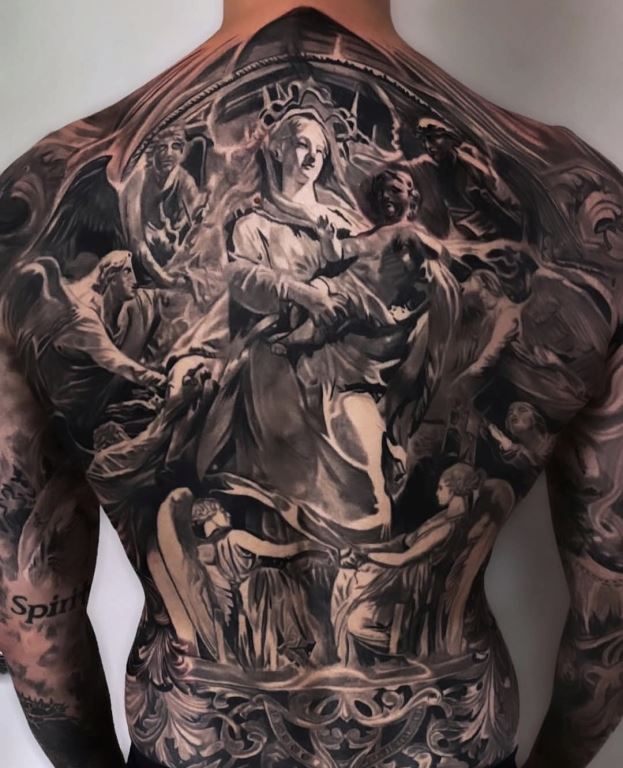
A: A lot of it came from studying photography and cinema. I became
obsessed with how light shapes emotion. I trained my eye to
understand where darkness should dominate and where highlights
should breathe. Technically, it also comes from layering tones
carefully and understanding how tattoos heal over time, not just how
they look fresh.
Q: Many of your tattoos like your lions and wolves have a
“living” quality. What is your process for studying anatomy and
texture to ensure they look three-dimensional?
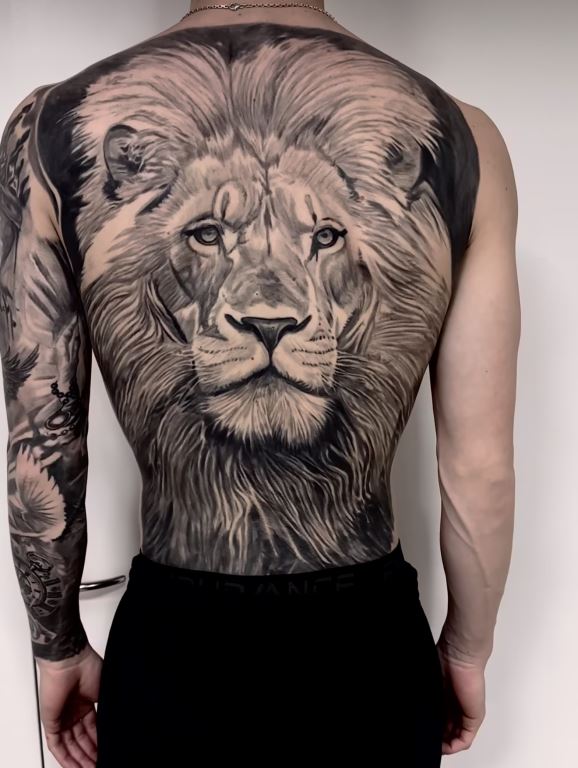
A: I study anatomy constantly. For animals especially, I look at
bone structure, muscle movement, fur direction, and lighting from
real references. Texture is about understanding rhythm. Fur, skin,
wrinkles, they all react differently to light. I try to build
tattoos almost like sculptures, using contrast and flow.
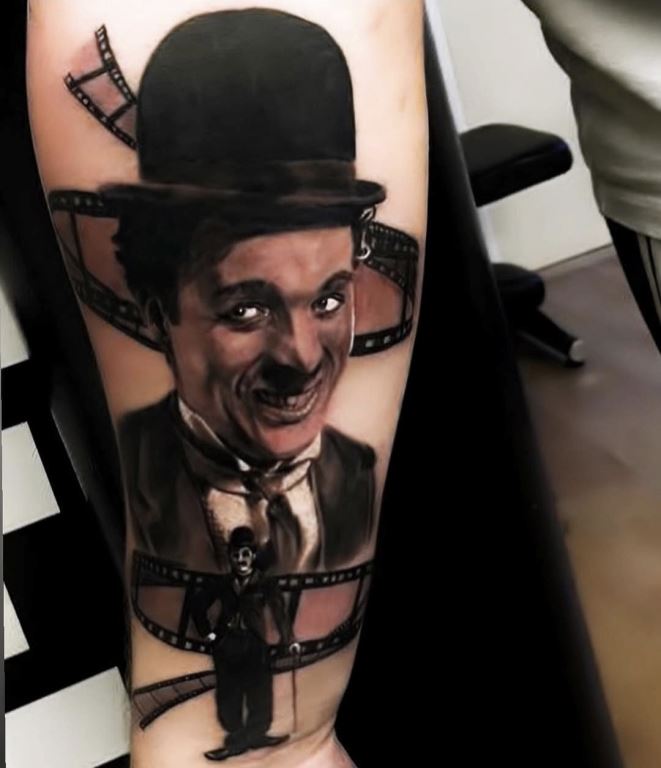
Q: You often incorporate cinematic elements. How do film and
photography influence your composition?
A: Cinema influences everything I do. Great films tell stories
visually without words, and tattooing works the same way. I pay
attention to framing, emotional tension, shadows, and perspective. A
tattoo should feel like a frozen scene from a powerful movie.
Q: In your portfolio, we see a blend of Viking/Warrior imagery and
delicate realism. How do you balance “tough” themes with “soft”
artistic execution?
A: I think strength and sensitivity belong together. Even aggressive
themes can carry emotion and elegance. My goal is never just to make
something look “hard.” I want it to feel human. That balance creates
depth in the artwork.
Q: You are the founder of Vikink Hamburg and Vikink
Fredericia. How has being a studio owner changed your perspective on
the “responsibility” of a tattoo artist?
A: It made me realize tattooing is not only about individual
success. As a studio owner, you shape the environment, mentor
artists, build trust with clients, and help define professional
standards. Responsibility becomes bigger than your own tattoos.
Q: Beyond the ink, you’ve ventured into tattoo cosmetics
with Bheppo. How did your personal experience with skin and needles
lead to the creation of the Blackout Slider?
A: After years of tattooing, I became very focused on how skin
reacts during long sessions. I wanted products made by tattoo
artists for tattoo artists, not just cosmetic companies entering the
industry. The Blackout Slider came from practical experience:
reducing irritation, improving workflow, and helping artists work
more comfortably during intense blackwork and realism sessions.
Q: Does your work as a product innovator give you a
“technical edge” over artists who don’t understand the chemistry of
the healing process?
A: Definitely. Understanding skin behavior, healing, hydration, and
ingredients changes how you tattoo. It affects needle depth,
saturation, trauma control, and long-term healing. Tattooing is art,
but it is also skin science.
Q: When a client comes to you with a vague idea, what is
your “signature” way of turning that into a Cem Cengiz original?
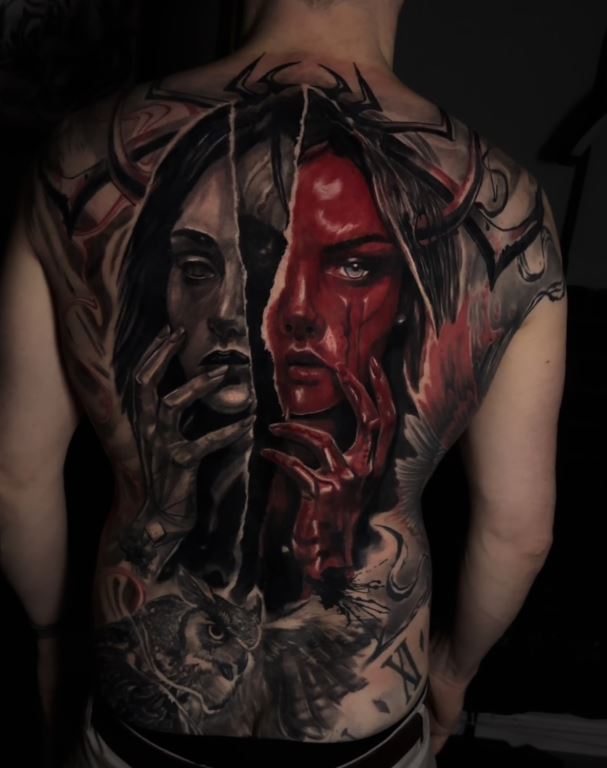
A: I focus on emotion first. I try to understand what the client
wants to feel when they look at the tattoo years later. Then I build
the composition around contrast, storytelling, and flow with the
body. I never want tattoos to feel generic.
Q: Your “Healed” highlights on social media show incredible
longevity. What is your secret to ensuring black and grey realism
stays crisp years later?
A: Simplicity and contrast. Many artists overwork details that
disappear over time. I design tattoos for healing, not just for
photos on day one. Strong structure, clean transitions, and enough
skin breaks are essential.
Q: How has the transition from the tattoo scene in Türkiye
to the German and Danish scenes impacted your artistic growth?
A: It expanded my perspective enormously. Different countries have
different artistic cultures and client expectations. Working
internationally pushed me to evolve technically and mentally. It
also taught me professionalism on a higher level.
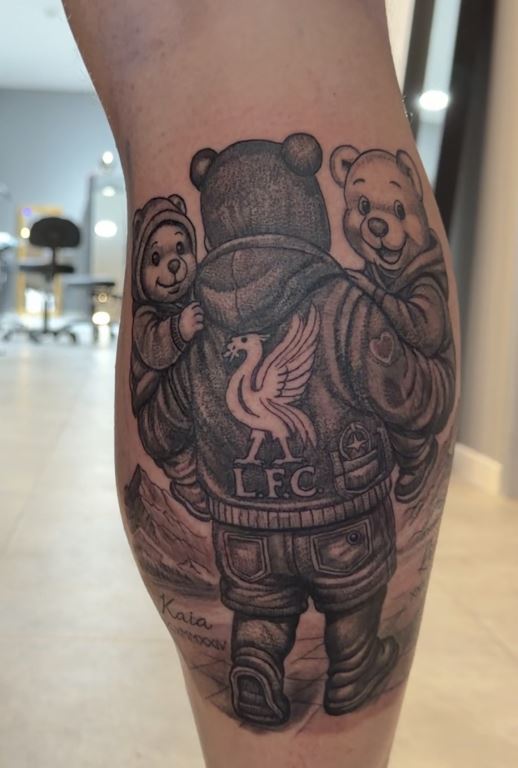
Q: Every artist has a “breakthrough” piece. Which tattoo in
your portfolio do you feel truly put you on the global map?
A: I think some of my large-scale animal realism pieces, especially
wolves and lions, started attracting global attention. People
connected emotionally with the intensity and texture. That helped
define my signature style internationally.
Q: What role does digital technology, like the iPad or
AI-assisted design, play in your current workflow?
A: Technology is a tool, not a replacement for artistry. I use
digital tools and AI to improve speed, composition planning, and
visualization, but the artistic eye still matters most. AI cannot
replace experience, emotion, or tattoo knowledge.
Q: How do you maintain your creative drive after thousands
of hours of needle-to-skin work?
A: I stay curious. I study art, cinema, sculpture, architecture,
mythology, and photography constantly. Creativity dies when
repetition becomes automatic. I always try to challenge myself
technically and emotionally.
Q: You’ve participated in major events like the
International Brussels Tattoo Convention. How does the energy of a
high-stakes tattoo convention compare to the quiet focus of your
private studio?
A: They are completely different worlds. Conventions are intense,
loud, competitive, and energetic. The studio is more intimate and
focused. I enjoy both because they push different sides of me as an
artist.
Q: As a guest spot veteran, what have you learned from
working alongside other world-class artists in different countries?
A: Humility. No matter how experienced you are, there is always
something new to learn. Traveling also showed me that great artists
often share the same mentality: discipline, an obsession with
improvement, and respect for the craft.
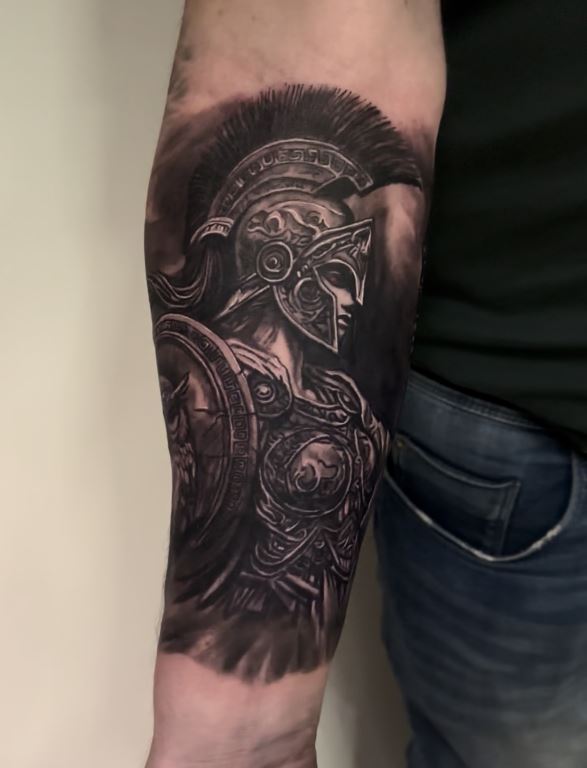
Q: Looking toward the United States, how do you perceive the
American black and grey realism scene compared to the European
style?
A: The American scene has a strong history and bold confidence,
especially influenced by Chicano and West Coast realism. Europe
often approaches realism with a more cinematic or sculptural
aesthetic. I think both scenes inspire each other today.
Q: Why is it important for an artist of your caliber to
establish a presence in the US tattoo market?
A: The US is one of the biggest centers of tattoo culture globally.
Being present there means connecting with a huge artistic network
and audience. It’s not only about business, it’s about cultural
exchange and growth.
Q: Are there specific American artists or historical tattoo
movements that have inspired your professional journey?
A: Absolutely. Chicano black and grey culture had a major influence
on me early on. Artists who mastered contrast, flow, and emotional
storytelling inspired me deeply. I also respect the discipline and
tradition behind American tattoo history.
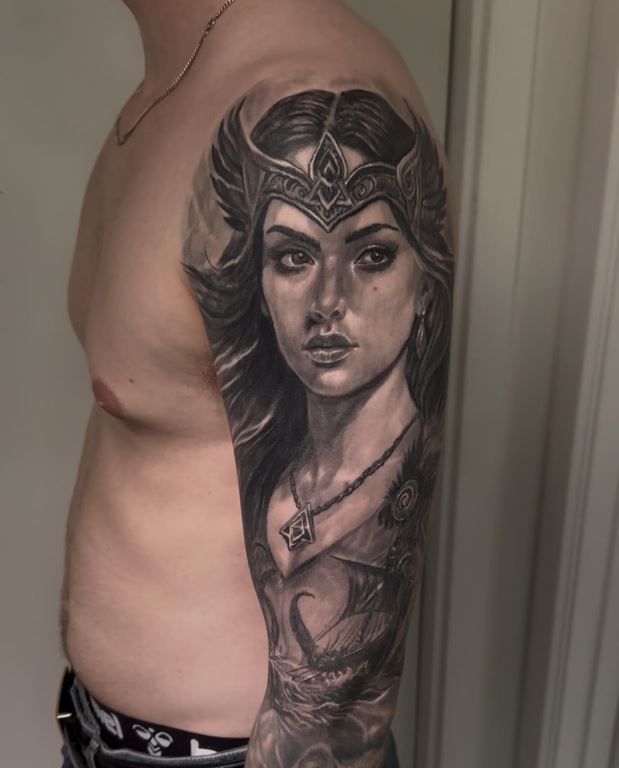
Q: How do you use your platform to mentor or influence the
next generation of global artists?
A: I try to show both the artistic side and the reality behind the
work discipline, consistency, and growth. Social media should not
only display success; it should inspire people to improve themselves
genuinely.
Q: What do you want your legacy to be not just as a
tattooer, but as a contributor to the art world at large?
A: I want to be remembered as someone who pushed realism forward
while helping tattooing gain more respect as a true art form. I also
want to inspire artists to think bigger, not only creatively, but
professionally and globally.
Q: If you could go back to the Cem who was first starting
out with a tattoo machine, what is the one piece of advice you’d
give him to speed up his evolution?
A: Stop comparing yourself to others and trust the process earlier.
Real mastery takes years. An obsession with improvement matters more
than quick success.
Q: What is the next “frontier” for Cem Cengiz? What can your
fans in the USA expect from you in the coming year?
A: The next chapter is expansion more international collaborations,
a stronger presence in the United States, and the continued
development of Bheppo products and technology for tattoo artists.
I’m also exploring AI-assisted tattoo workflows and pushing realism
into even more cinematic territory. My goal is to continue evolving
while helping shape the future of the industry.
Date: 02 June 2026
Interview: Fredrik Lindström


