
Interview with Chris Neirar
In the ever-evolving landscape of contemporary tattooing, few artists manage to balance the raw energy of tradition with a sleek, modern illustrative edge quite like Chris Neira. Splitting his time and influence between the bustling streets of
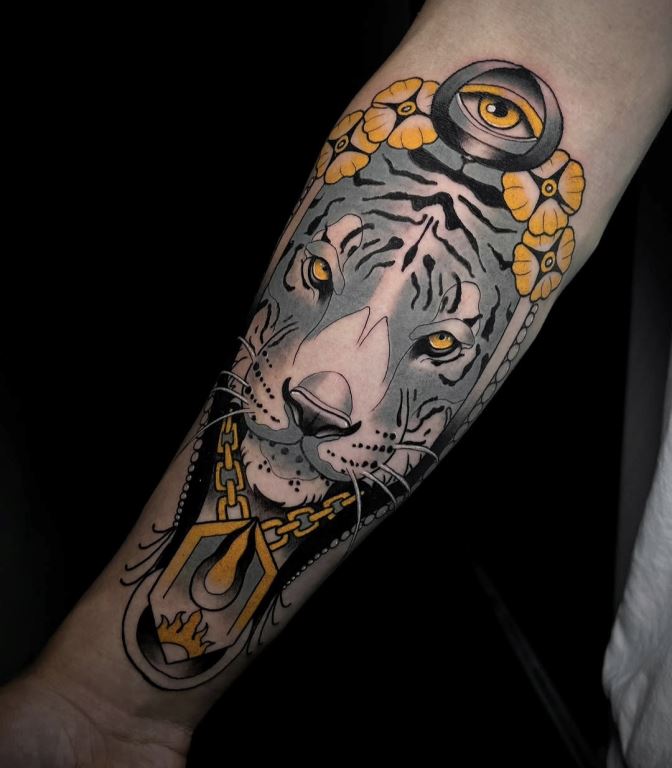
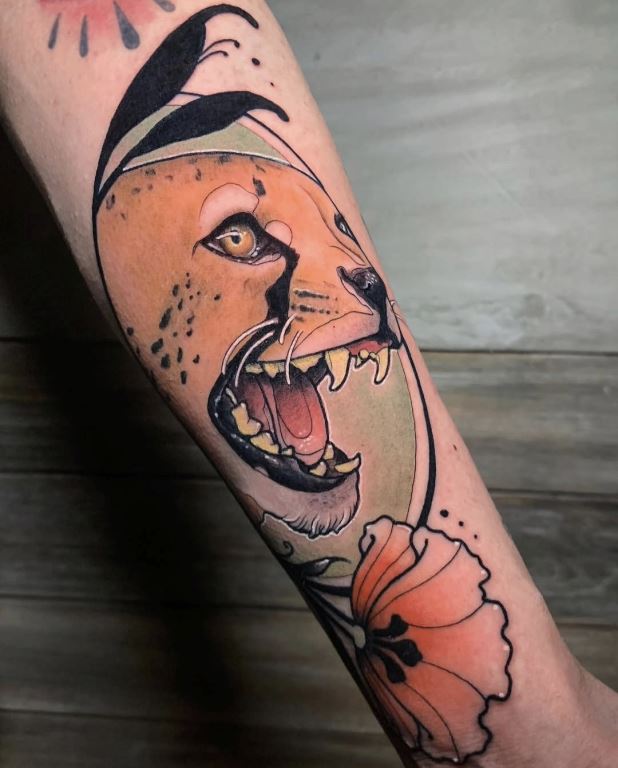
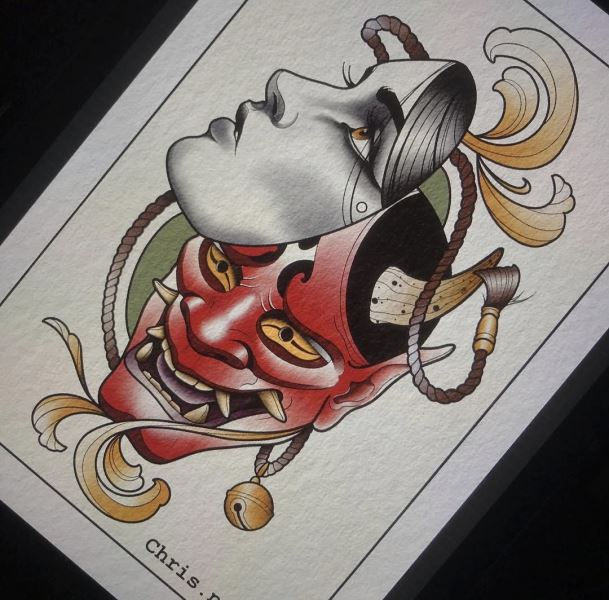
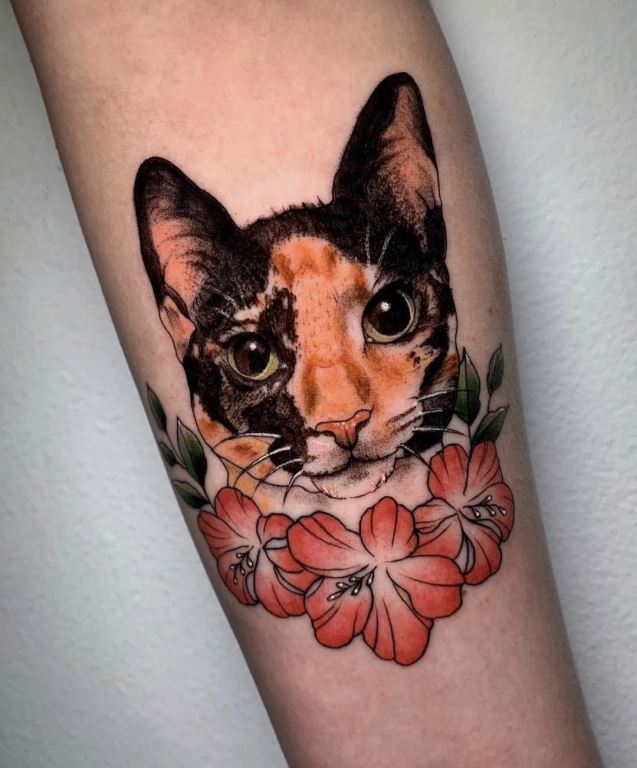
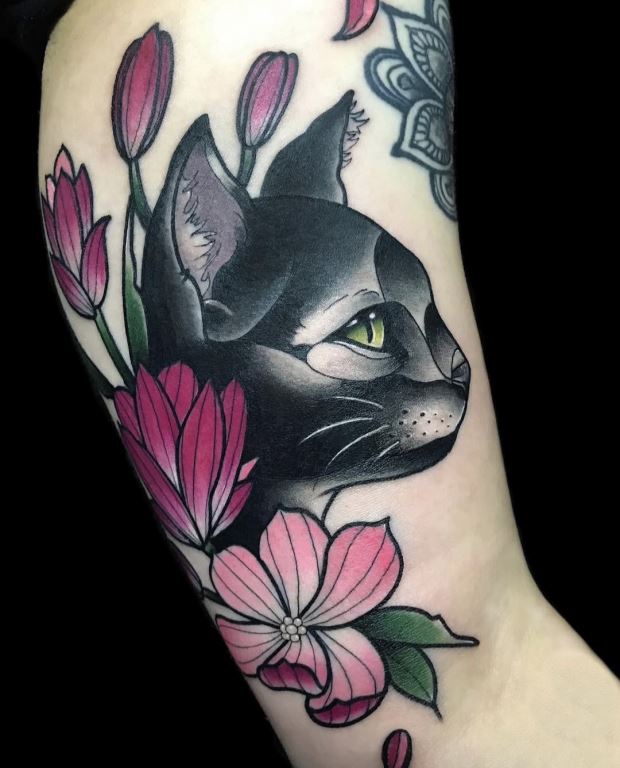
Mexico City and the deep artistic roots of Colombia, Neira has carved out a distinct niche for himself within the global tattoo community. A quick glance at his portfolio reveals a masterclass in Neo-Traditional and Japanese-influenced design. His work is characterized by "bomb-proof" saturated colors, razor-sharp linework, and a playful yet sophisticated approach to subject matter. From fierce hannya masks and snarling panthers to surprisingly soulful feline portraits and intricate floral arrangements, Neira’s versatility is matched only by his technical precision. We sat down with him to discuss his artistic journey, his dual-heritage influence, and what it takes to maintain such high-caliber consistency in a competitive digital age.
Q: How long was the process of self discovery and
development?
A: My process as a tattoo artist has been developing during the last
sixteen years, or even longer. Back in Colombia, I began with small
and simple tattoos that I made for my friends, finishing the year
2009. A couple of years later, I went to an art university, with the
purpose of enriching my career as a tattoo artist. After this, I
took off to different cities and countries, visiting studios and
different artists, aiming to share knowledge. This led me to where I
am now, established in Mexico city for the last six years, but still
traveling around the world to expand my career as a tattoo artist.
Q: Becoming a skilled tattoo artist involves navigating
numerous challenges. Looking back at your journey, what aspect of
the process did you find the most demanding, whether it was gaining
access to a professional studio environment or cultivating a
distinct and recognizable artistic style?
A: When I’m asked about my biggest challenges, the first thing that
comes to mind is the process of building my own style. It can be
very difficult to feel fulfilled/satisfied, because you’ll always
find ways to improve, or new interesting things to add. After all,
we are forever learners.
Q: The neo-traditional and old-school styles are clearly a
significant part of your artistic identity in tattooing. How do you
see your creative direction evolving? Do you anticipate your work
remaining primarily within these styles, or is there a possibility
of exploring other tattoo styles as your career progresses?
A: My two main styles (neo-traditional and old-school) have been
present since the beginning of my career. However, I’m constantly
experimenting with new styles that add extra value to my work.
Always circling back to the beginning with new, exciting additions,
updating the traditional styles, while keeping the original essence.
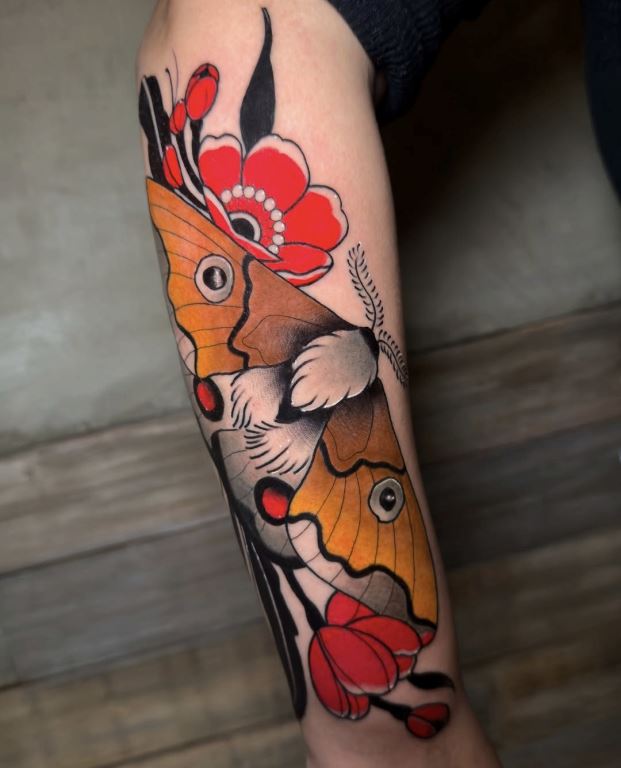
Q: The neo-traditional style, as seen in your tattoos, is
marked by its bold colors, significant symbolism, and a delightful
playfulness in its interpretation. What is it about the
neo-traditional style that you find most artistically satisfying or
engaging?
A: For me, the neo-traditional style has been very important in my
career because I see it as a balance between traditional tattooing
with its bold, solid lines and strong colors and something more
expressive. It allows for gradients, more detail, and variation in
line weight, which opens up more possibilities for each artist’s
personal expression. It’s also a style designed to last over time
without being heavily affected by aging.
Q: How would you describe the relationship between these two
styles? Do you see neo-traditional as more of an evolution or a
distinct departure from the classic old-school aesthetic, perhaps
building upon its foundations with new creative possibilities?
A: The relationship between both styles isn’t completely defined.
They share characteristics like bold lines and solid colors, and
even recurring themes like eagles or tigers. Personally, I wouldn’t
say neo-traditional is an evolution of traditional. Even though it
came later and has influences from it, both styles evolve
independently, branching out differently depending on the region and
the artist.
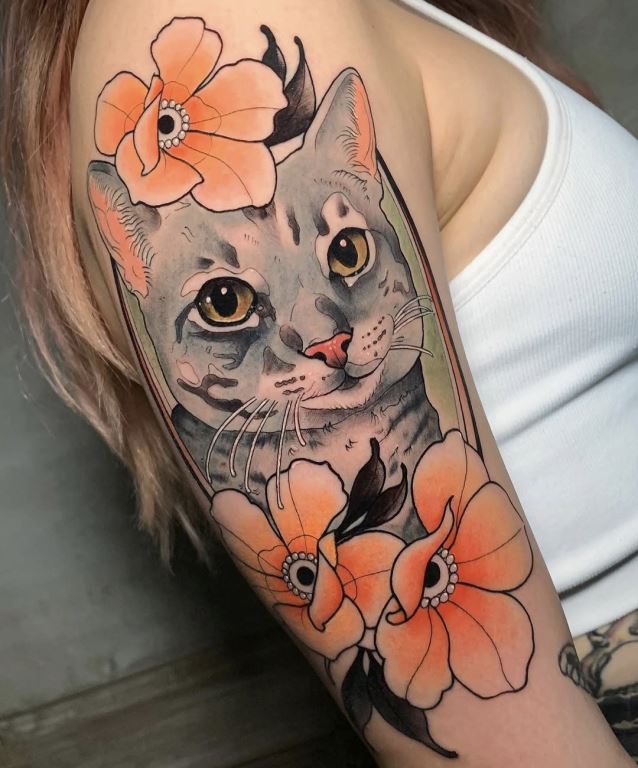
Q: Old-school and neo-traditional tattooing offer unique
artistic avenues. From your perspective, which of these styles do
you find more creatively fulfilling or personally enjoyable to work
on, and what aspects contribute to that preference?
A: I enjoy both almost equally. However, when I start drawing
something traditional, I often feel the urge to add more and more
detail. Before I realize it, it leans toward neo-traditional. At
that point, I have to decide whether to simplify it, which is
usually harder or continue in a neo-traditional direction, which I
feel more connected to. I especially enjoy working with varied line
weights and higher levels of detail.
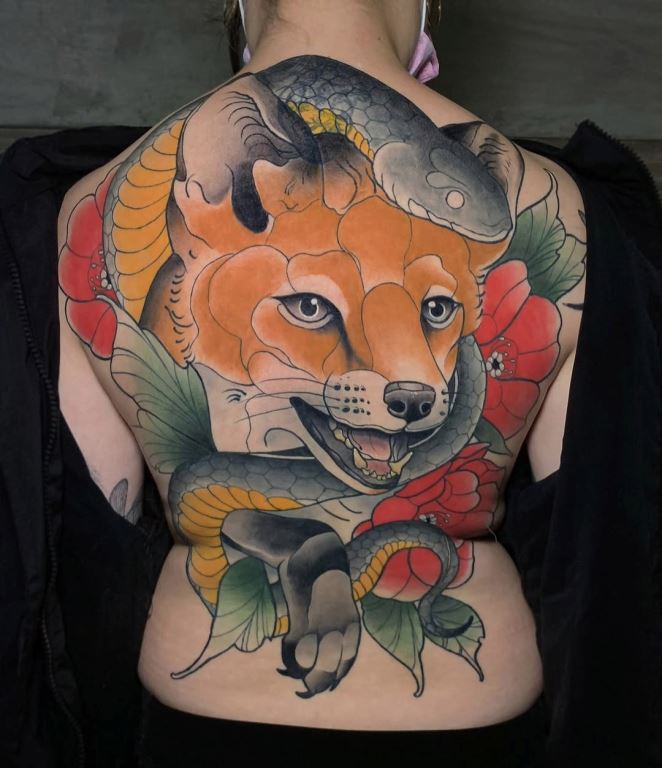
Q: Your large-scale pieces, such as full sleeves and back
pieces, are incredibly impactful. Could you share some insight into
the typical timeframe for completing a project of that size?
Additionally, what is your process for collaborating with clients on
the design and what does the preparation phase usually involve for
such extensive work?
A: Large pieces like sleeves or back pieces are always a bigger
challenge. I still feel nervous on the first session, similar to
when I first started tattooing, it’s a sign that you’re stepping out
of your comfort zone. If you feel completely in control, maybe you
still need to push yourself further. The time required depends on
the level of detail and the client’s body size, but on average, it
takes about six sessions of 5 - 6 hours each. Clients who commit to
large projects usually know what they want and trust your work. They
often give you an idea and a lot of creative freedom. I once did a
full back piece for someone who didn’t see the design until the
stencil was applied on the first day, he simply said, “Do whatever
you want.”
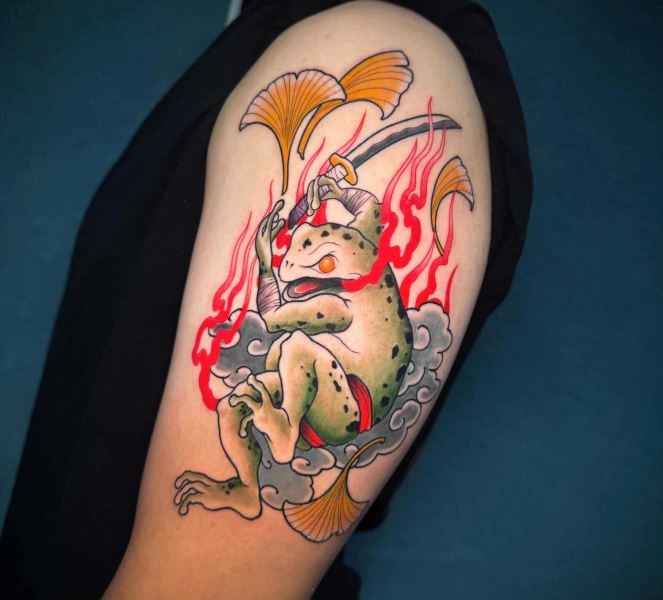
Q: Can you share an experience with a particularly
challenging tattoo you've undertaken? What specific aspects of that
piece made it so demanding, and what did you learn from the process?
A: Several come to mind, but cover-ups are usually the most complex.
It’s important that the original tattoo is barely noticeable, so you
go through countless design iterations before feeling satisfied.
Even then, once you place the stencil, it doesn’t always fit as
planned. You often have to improvise with freehand work, which makes
everything more difficult, including managing the client’s
expectations. Many people think you can cover anything with any
design or color, which isn’t true. Still, they’re very interesting
challenges.
Q: Many people strive to maintain the vibrant appearance of
their new tattoos for as long as possible. What are some of the
primary factors that can negatively impact tattoo longevity and
proper healing?
A: There are many important factors. On one side, there’s the
artist’s experience, proper technique, choosing the right ink brands
for each color (since no brand excels at everything), and using good
needles. That’s about half the responsibility. The other half falls
on the client - how they handle aftercare and long-term maintenance.
Before healing, hygiene and avoiding sun exposure are crucial.
Afterward, sun protection remains key for life. I’m always available
to answer any questions my clients or even non-clients might have
during the healing process.
Q: Can you share a memorable client story that highlights a
positive impact you made?
A: In this profession, you hear all kinds of stories good and bad
and there’s always something to learn from them. What I value most
is the connection between artist and client. I want them to feel
comfortable and trust the environment. Getting a tattoo isn’t an
everyday experience, it often represents something meaningful. I
like listening, having conversations when it happens naturally.
We’re not machines; the human factor matters. It’s not just about
getting a tattoo it’s a ritual, an experience.
Q: What's the best way for potential clients to contact you
regarding consultations or appointments? Can you share your studio's
location and any relevant website or social media links?
A: I manage everything related to my work through Instagram:
@chris.neirar. People can message me there about appointments,
travel dates, or any tattoo related inquiries. I’m currently based
in Mexico City, working in the Roma neighborhood. I’m also working
on launching my website soon, where I’ll share more information.
Q: Given the demands of consistently delivering
high-quality, custom work, are there occasions when you experience
creative blocks or encounter challenges in meeting client
expectations?
A: Yes, it’s common. It usually happens at the very beginning of a
design, the initial sketch can be the hardest part. Once I get past
those first lines, things start flowing more naturally. As for
meeting client expectations, it varies. Some give you complete
creative freedom, while others have clear ideas but struggle to
express them. In the end, things usually come together.
Q: With so many resources available today, from online
tutorials and workshops to conventions and guest spots, it seems
like there are more avenues than ever for aspiring tattoo artists.
Do you feel this increased accessibility has made it easier to break
into the field?
A: Yes, access to resources has made it easier to get started.
However, I see those resources, tutorials, workshops, conventions as
a complement, not a foundation. The best path is still learning from
a good mentor in a traditional way, while also taking advantage of
modern tools. There are many ways to reach the same goal, but not
all offer the same depth of experience.
Q: What qualities do you value most in an artist, beyond
their artistic skill?
A: For me, in any profession, the most important thing is being a
good person. A good person respects their clients’ time, is
committed to delivering quality work, and genuinely cares. There are
highly skilled tattoo artists out there, but if they’re not good
people, I personally wouldn’t choose to get tattooed by them.
Q: What's your take on the local tattoo scene? Are you
seeing any exciting developments, like new artists, styles, or
events?
A: There’s always new talent emerging with fresh ideas. Tattooing
continues to grow and evolve, with new styles and more events
everywhere. This has helped society become more open and accepting
of tattoos. However, not all changes are positive I do miss times
when there was more respect for the craft.
Q: How often do you attend tattoo conventions? In your
experience, how valuable are tattoo conventions for artistic growth
and building client relationships?
A: I attend conventions about 3 - 4 times a year. They’re great for
learning, networking, and sharing knowledge. I’ve participated in
competitions, won some awards, and even worked as a judge. Still, I
believe one of the best ways to learn is as an observer, if you
truly pay attention and allow yourself to be inspired. That said,
it’s important to choose good events, because not all conventions
maintain high standards.
Q: Have you ever done any guest spots in other studios,
either local or abroad?
A: Guest spots have been a constant throughout my career. I’ve
worked in many studios across different countries and have had the
chance to meet incredible artists and people. It’s one of the most
enriching experiences for a tattoo artist. You learn countless
techniques, tips, and perspectives, while also renewing your energy
and finding inspiration in others’ work.
Q: What are your thoughts on the American tattoo scene, and
are there any specific aspects that interest you professionally?
A: The U.S. tattoo scene is massive and incredibly diverse. Artists
from all over the world come together there, creating a fusion of
cultures, styles, and techniques. not just in tattooing, but in art
as a whole. If you want to innovate, it’s important to look beyond
tattooing and draw inspiration from other art forms. During my
visits, I’ve been amazed by everything, from major museums to small
galleries and street art.
Q: The US has a diverse tattoo landscape. If you were to
explore opportunities there, are there any regions or cities that
stand out to you?
A: Each state feels like its own country, with different styles and
cultures. You can find something interesting everywhere. That said,
New York and Los Angeles stand out as major hubs where many of the
best artists gather. There’s always something happening, constant
movement, constant change. They’re places where you could keep
learning for a lifetime.
Q: Do you have any favorite American tattoo artists you
would like to work with in the future?
A: That’s a difficult question. There are so many talented artists.
I wouldn’t want to name just one. During my visits to the U.S., I’ve
focused more on tourism and exploring art in general museums,
galleries, street art, rather than deeply engaging with the tattoo
scene. But there are definitely many artists, both American and
international, who have built their careers there and come to mind.
Q: What impact do you aspire to have on the tattoo
community?
A: I’d like to bring back, in newer generations, some of the ways
things were done before. I’m not saying things aren’t done well
today, tattooing has evolved in many positive ways, and there have
been a lot of improvements. But we can’t forget where we came from.
Something I feel has been lost among many new tattoo artists is
respect for this beautiful craft. I’m always open to both learning
and teaching.
Q: Favorite career highlights?
A: Several memories come to mind. The first was when a tattoo artist
friend agreed to teach me, back then, we didn’t have all the
information that’s available today on the internet, and finding
someone willing to teach you wasn’t easy. Another major moment was
when I decided to fully commit to tattooing, I left university,
opened my own shop, and put everything into it. Step by step, things
have worked out well. Then came other milestones: tattooing in
different countries, participating in events, appearing on
television, radio, and magazines, winning awards, and being invited
as a judge at conventions. Each of these moments are meaningful
because, even though I know I still have a lot to learn, there are
people who truly value my work. That means a lot to me, and I feel
very grateful to everyone who has supported me throughout these
sixteen years.
Q: How much the support from relevant tattoo brands like
Balm Tattoo Aftercare Jconly play a significant role in your career
development?
A: Interestingly, both brands came into my career in the same year
and even the same month. It wasn’t something I actively pursued,
they just came along. And of course, that makes you feel like you’re
on the right path, especially when they’re brands you admire because
they’re genuinely high quality. Working with them has been a great
experience, and having good materials definitely improves your work.
I’m grateful to Balm and Jconly for trusting me and making me part
of their pro team that motivates me to keep growing. Support like
that is always welcome and appreciated.
Q: How has your passion for tattooing evolved since you
first started? Are you just as enthusiastic, or even more so now?
A: For me, tattooing is like life itself it has its ups and downs.
But I’ve always loved doing this. I’ve spent nearly half my life
tattooing, and there hasn’t been a single day where I’ve thought
about leaving it behind. I don’t know when I’ll do my last tattoo,
but one thing I’m sure of is that I’ll never stop being passionate
about it.
Q: If you could go back and give your younger self advice
about pursuing tattooing, what would it be?
A: That’s a good question. Sometimes I think I could have been more
disciplined, but rather than seeing tattooing as an obsession, I see
it as my best friend, my life companion. Thanks to tattooing, I’ve
achieved a dream lifestyle. And I don’t mean material things while
they matter, they’re not my main priority. What I value most is
having the time and freedom to enjoy life. To me, tattooing
represents that as well: being free, a bit rebellious, exploring the
world, and sharing moments with family, friends, and colleagues. My
advice would be: go for it do it with respect, and never lose your
ability to be amazed.
Date: 06/04/2026
Interview: Fredrik Lindström


