
Interview with Cris Monroy
Hello Cris Monroy! It's a pleasure to have
you with us today. To begin, could you tell us a little about your
background and the experiences that have shaped you as an artist?
Could you also share the moment or time when you first discovered
your artistic inclinations? Hello, thanks for having me.
Since I was very young, I always had a great passion for art, I
would spend hours drawing and painting, it was something that came
naturally to me and made me feel connected with myself. In 2013,
when I was 18, I discovered the world of tattooing, and it was a
turning point: I was completely fascinated by the idea of being able
to permanently place art on someone’s skin. I began tattooing that
same year, and since then, I haven’t stopped learning and evolving.
From the beginning, my artistic inclinations were heavily influenced
by realism and neotraditional style. Over time, I honed my technique
and explored different styles until I found my true artistic
identity in black and grey, a style in which I am currently fully
focused. Every stage of this journey has shaped me not only as an
artist but also as a person.
Q: How did tattooing enter your artistic path, and what do
you remember about your early experiences with this craft?
A: Tattooing came into my life quite naturally, through friends who
already had tattoos. I was very drawn to seeing how the artists
worked, the level of detail, the process, and the whole world
surrounding tattoos. I became very close to the first tattoo artist
who tattooed me, and little by little, I got to know this craft more
closely. At that time, I was working at various jobs and still
didn’t know what I wanted to do, but the more I got closer to this
world, the more fascinated I became. My first experiences tattooing
were very humble, at my home with my family. Nothing formal. In
fact, the first person I tattooed was my cousin, and I am extremely
grateful to her for trusting me from the start. These beginnings,
although simple, were key in making me realize that I had found my
path.
Q: Are you a self-taught artist? If so,
what has been the most gratifying aspect of your independent
artistic development, and what unique perspectives or approaches do
you think this path has instilled in your work?
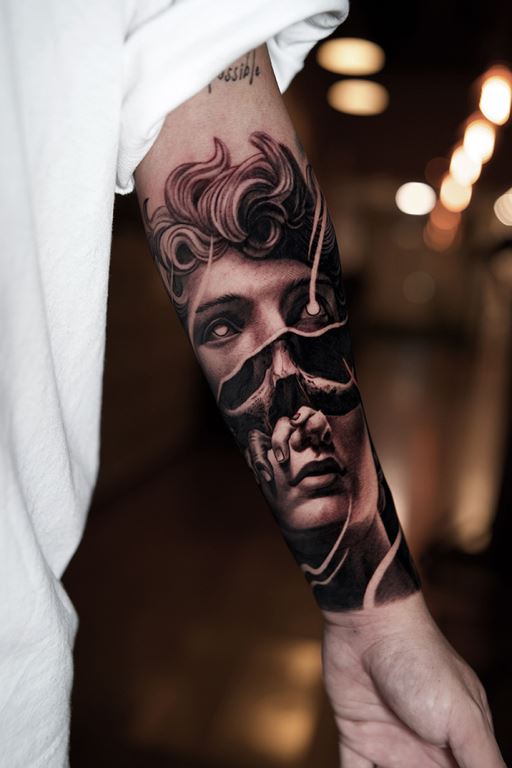
A: Yes, I am a self-taught artist. I never had a formal mentor, I
was the one who sought out tools and resources to learn, experiment,
and improve. This independent process helped me build a lot of
confidence in myself, as everything I achieved came directly from my
effort and dedication. Over time, seeing that people liked my work
and that I started to stand out motivated me even more to keep
growing. Being self-taught has allowed me to develop a very personal
perspective on my art, trust my intuition, and keep the curiosity to
continue learning alive.
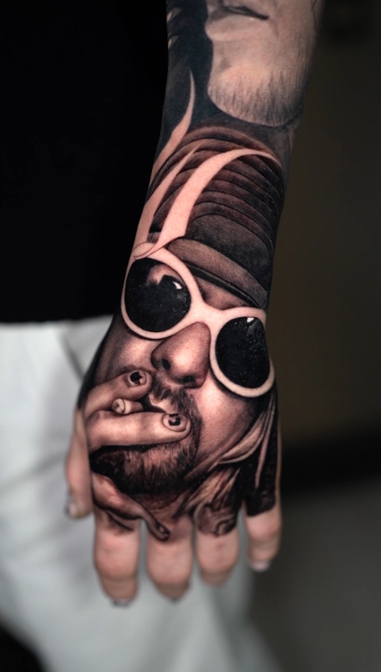
Q: Your realistic tattoos are truly
captivating, with incredible detail and precision. Could you share
some ideas about the process of perfecting your skills to achieve
such mastery in this demanding style?
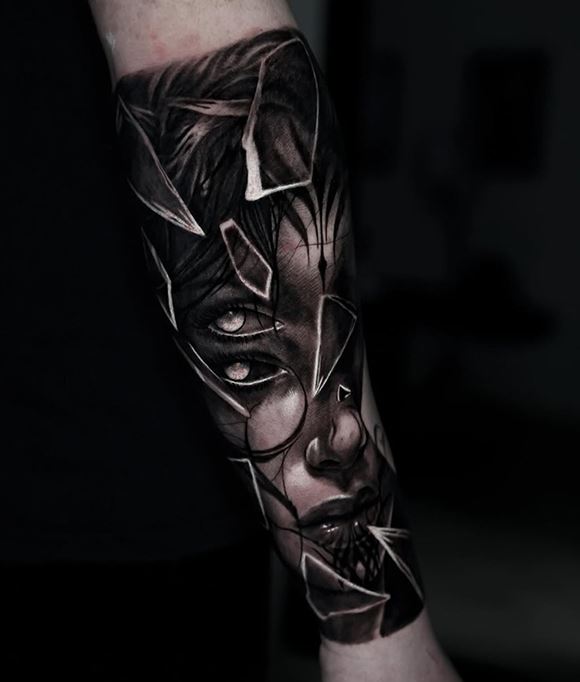
A: To reach a high level in realism, it is essential to study a lot,
especially painting. Painting teaches you to better understand art
in general: light, shadows, volume, contrasts, concepts that are
fundamental to transferring them correctly onto the skin. Being
organized and paying attention to every detail is also key. Realism
doesn’t allow for mistakes, which is why dedication, consistency,
and discipline are essential. I am always looking to learn something
new, perfect techniques, and improve as an artist. I believe you
never stop learning in this style, and that’s what makes it so
exciting.
Q: The tattoo world offers a wide range of
styles. What attracts you so much about the complex demands and
representative nature of realism? What unique artistic possibilities
or satisfactions does this style offer that others may not?
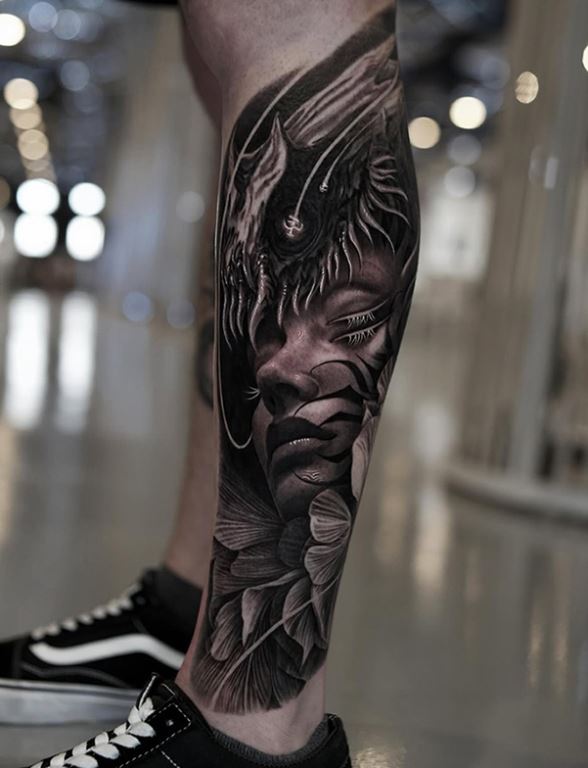
A: What attracts me most about realism is how demanding it is. It is
a style that doesn’t allow you to relax for a second; you always
have to be attentive to every little detail, and that forces me to
give my best in every piece. This constant challenge is what keeps
me evolving, preventing me from stagnating or falling into routine.
Additionally, the level of difficulty that realism presents,
compared to other styles, is incredible. Being able to represent
something with such fidelity and emotion on the skin is an enormous
challenge, but also one of the greatest artistic satisfactions I
have experienced. Every tattoo becomes an opportunity to surpass
myself and continue growing.
Q: Your black-and-white work has a lot of depth and nuance.
Have you ever considered exploring the possibilities that color
could bring to your artistic projects?
A: Yes, I have definitely thought about it. Color has great power,
both visually and conceptually, it can add a completely different
dimension to a piece, enhance emotions, or highlight key elements.
Although I am currently very focused on black and grey, I am not
closed off to anything. It’s very possible that in the future, I
will experiment a little with color and explore new ways of
expression within my work.
Q: While realistic portraits, both human
and animal, require exceptional skill, are there any specific
nuances or challenges you find particularly distinctive when
capturing the likeness and essence of each? For example, do you
approach the complexities of fur and animal anatomy differently than
the subtleties of skin tones and human bone strustructure.
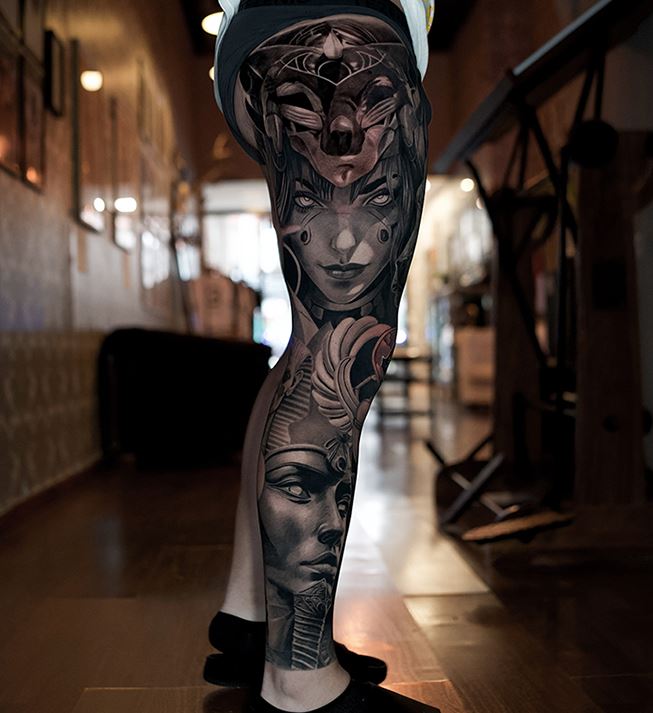
A: Yes, there are very distinct nuances when tattooing realistic
portraits of humans versus animals. In humans, the challenge lies in
capturing expressions, skin tones, and bone structure with
precision. For animals, the approach changes: you have to work
really well with the fur, texture, and anatomy to make the result
have depth and realism. Each has its complexity, and that’s what
makes the process so interesting and challenging for me.
Q: Understanding the properties and application of ink seems
fundamental in the art of tattooing. Could you explain the nuances
of working with black and grey inks, particularly the subtleties of
mixing, layering, and achieving different tonal values, and the
importance of mastering this for depth and realism in your
portraits?
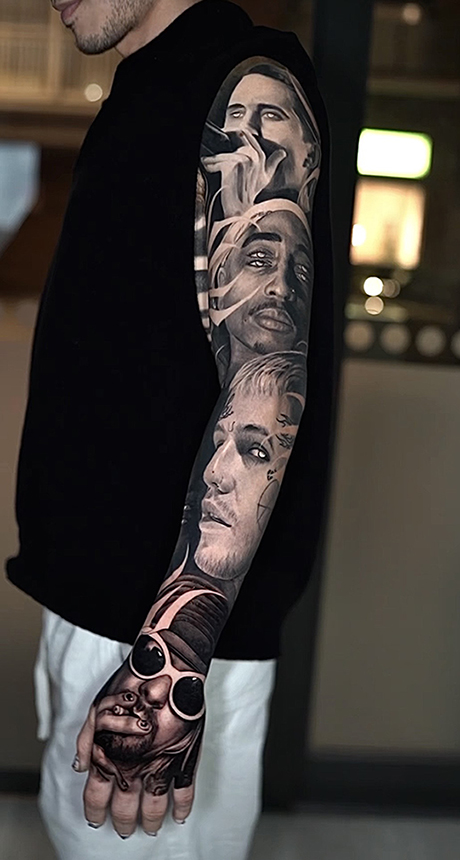
A: Working with black and grey inks requires a lot of control and
precision. It is essential to understand how to dilute and mix the
ink to achieve a wide range of tonal values, from the deepest blacks
to the softest greys. The key is knowing how to layer without
overworking the skin, keeping the cleanliness and smooth transition
between shadows.
Q: Achieving a perfectly healed tattoo is
crucial. What are your main recommendations or key principles to
ensure optimal healing and preserve the integrity of the tattoo over
time?
A: For a tattoo to heal well and remain in good condition over time,
the most important part begins at the moment of tattooing. It is key
to have a good technique for applying the ink: injecting it
precisely without overworking or damaging the skin. If the skin is
damaged, the healing process becomes complicated and can affect the
final result. Then, the client’s care is equally important. I always
recommend following the professional’s instructions to the letter:
washing the tattoo well with water and neutral soap, applying the
appropriate cream, and avoiding exposure to the sun, excessive
sweating, or submerging the tattoo in water (such as swimming pools
or the sea) during the healing process.
Q: Your work often combines realism with
surrealism, creating unique and captivating pieces. Since each
tattoo seems deeply personal, could you give us a glimpse into your
creative process, from the initial consultation with the client to
the final execution of these narrative-filled designs? How do you
collaborate with your clients to translate their stories and visions
into captivating visual realities?
A: First, I schedule an appointment with the client to discuss their
idea in detail. It’s important for me to understand every detail and
offer a personalized opinion based on what they want to convey.
During this conversation, I ask key questions to delve deeper into
the concept, what they want to project, and together we begin to
build a clearer vision of the design. The personal connection is
crucial. I like the client to feel comfortable and be part of the
process. We look for reference images, analyze styles and elements,
and from there, I begin to develop a design that combines their
ideas with my artistic approach. The goal is to create a unique
piece with narrative and meaning that not only looks good but also
holds emotional and personal value for the person wearing it.
Q: Reflecting on your impressive
portfolio, is there any tattoo in particular that stands out as a
significant creative and technical challenge, one where overcoming
those obstacles ultimately led to a deeply satisfying and
exceptional result?
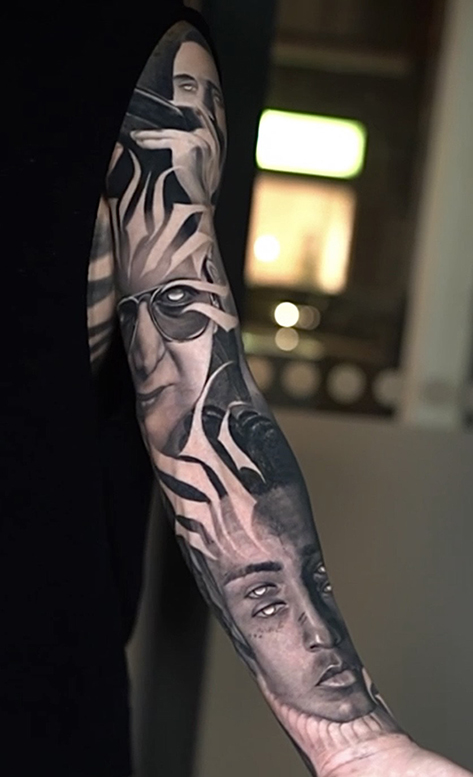
A: Yes, there are several works that have been a real challenge,
both creatively and technically. One that stands out the most was a
chest and stomach piece I did that covered the front of the body. I
also remember a full arm I worked on with a lot of detail. In both
cases, I was looking not only to achieve good aesthetics but also to
convey emotion through the composition and the chosen elements.
These pieces were very demanding in terms of proportion, continuity,
and visual narrative, but in the end, the result was deeply
satisfying and marked an important step in my growth as an artist.
Q: In addition to your custom designs, do you maintain a
library of preliminary sketches or design ideas that clients can
find useful to visualize their tattoo concepts?
A: I don’t have a library per se, but I do have some designs I’ve
created. However, I prefer to meet personally with each client to
work from their ideas and create something completely customized. I
like every tattoo to have a unique meaning and be specifically
designed for the person wearing it.
Q: What do you think is the most effective
way to maintain a good reputation in the tattoo community?
A: I believe the best way to maintain a good reputation is by
treating each client like a friend, with respect, honesty, and care.
Listening to their ideas, guiding them with sincerity, and offering
a professional yet personal experience are key. It’s not just about
doing a good tattoo, it’s also about making the client feel safe,
valued, and supported throughout the process. Always delivering
quality work, maintaining hygiene, and constantly improving your
skills are essential for building lasting trust and reputation.
Q: Tattoo collaborations are becoming more common. Are there
any artists whose work you admire and would like to collaborate
with?
A: Yes, I’ve done a few collaborations with other artists, and I
really enjoy it. I’m always open to experimenting and learning
different ways of working. It’s incredibly enriching to share ideas,
styles, and techniques with artists I admire, and I’m definitely
interested in exploring more collaborative projects in the future.
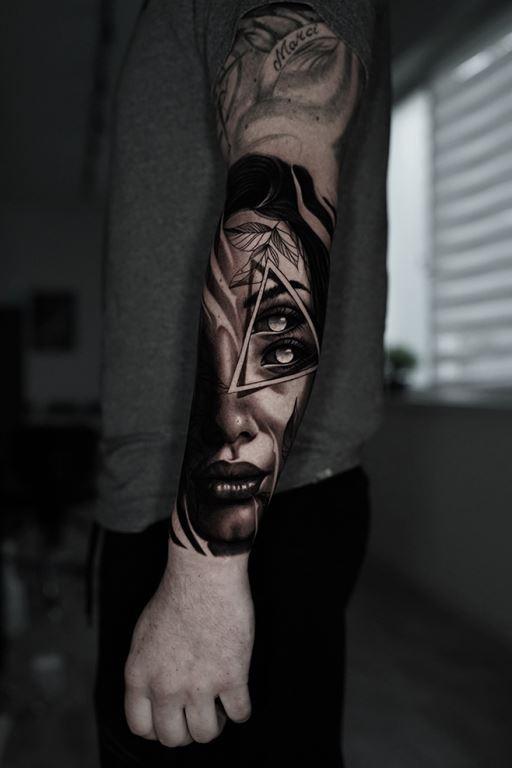
Q: Considering the dynamic evolution of
tattoo art, what emerging trends or stylistic crossovers do you
think will gain relevance in the near future?
A: The tattoo world is constantly evolving, and we’re seeing more
and more fusions of styles that once seemed very different. I think
in the future we’ll see more combinations of realism with abstract
or graphic elements, creating visually powerful compositions. Mixed
techniques, such as combining black and gray with strategic color
accents, are also gaining traction. Additionally, technology is
increasingly influencing the industry, and it wouldn’t surprise me
to see more integration of digital tools in the design process,
offering greater precision and customization. The possibilities are
endless, and what’s exciting is that there’s still so much to
explore and experiment with.
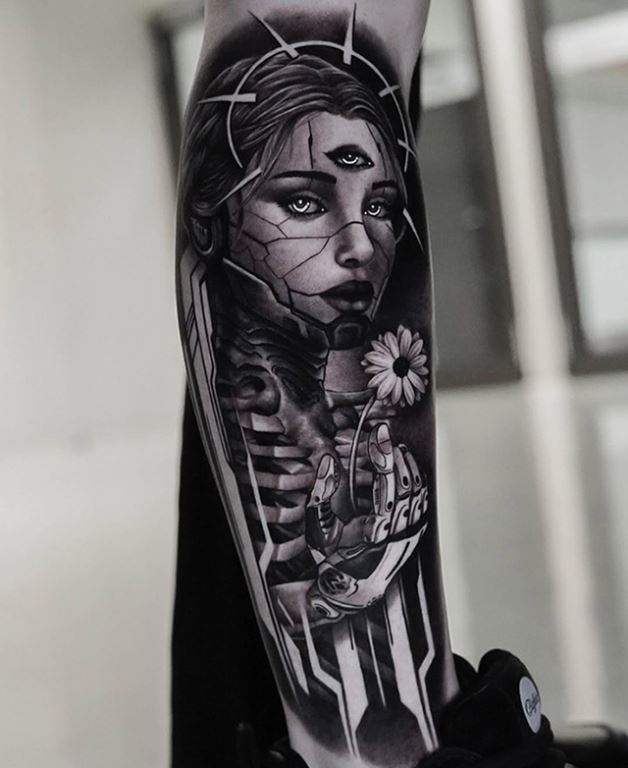
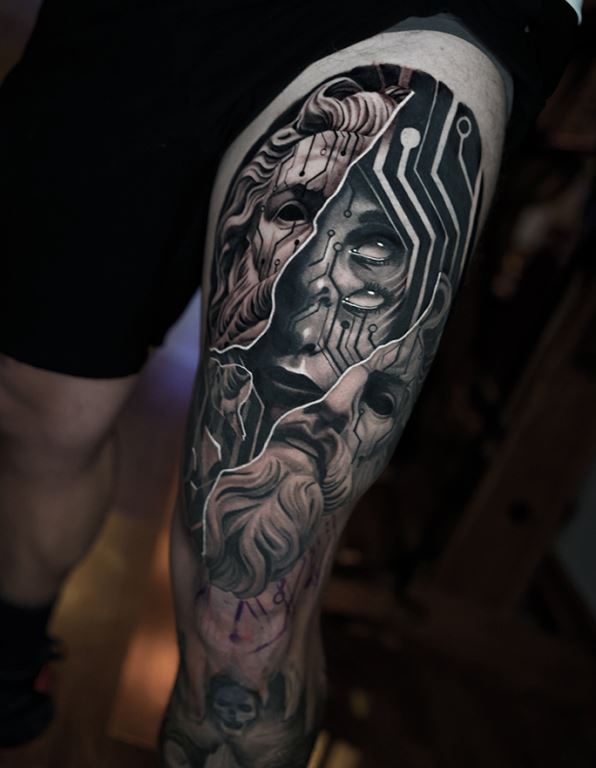
Q: The “cyber-girl” tattoo concept evokes a powerful
combination of technology and organic form. What are some of the
most captivating visual narratives or symbolic meanings you’ve
explored within this theme, and how do you see the evolution of the
“cyber-girl” aesthetic in contemporary tattoo art?
A: The concept of the “cyber-girl” is powerful because it represents
the fusion of the human and the artificial, combining elements of
technology, human anatomy, and imagination. I’ve explored different
symbolic meanings within this concept, such as the relationship
between technology and human evolution, the impact of artificial
intelligence on our lives, and the intersection of organic life with
cybernetics. The idea of “cyber-girls” reflects a sense of
empowerment, mystery, and transformation. I believe this aesthetic
will continue to evolve and merge with other futuristic or abstract
elements, incorporating more surrealism or other styles like
vaporwave, glitch art, and digital abstraction. It’s a very
versatile and dynamic theme that allows for continuous exploration
of the relationship between the human body and technological
advancements.
Q: You mentioned that you work closely
with your clients to create personalized tattoos. Could you
elaborate on how you incorporate the client’s personal story into
the tattoo design, making it a meaningful experience for them?
A: Every tattoo for me is an opportunity to create something unique
and meaningful. I always take time to get to know the client before
I start designing. I ask them about their life experiences, values,
passions, and what the tattoo represents for them. Some clients come
to me with a very specific idea, while others are more open to
suggestions, but the common thread is always personal meaning. For
example, if a client is looking for a memorial tattoo for a loved
one, I try to incorporate elements that are significant to them,
whether it’s something symbolic or a specific moment in time. If
it’s a motivational piece, I focus on the values they want to
express. The goal is always to make the tattoo not only visually
stunning but also emotionally significant, so that it becomes a
personal story in visual form.
Q: Do you ever face creative blocks or periods of artistic
doubt, and if so, how do you push through those challenges?
A: Yes, like all artists, there are times when I face creative
blocks or doubts about my work. These moments can be frustrating,
but I try to see them as part of the artistic journey. I give myself
space to rest and recharge without forcing the creative process.
Sometimes, stepping away from tattooing and working on other
artistic mediums, like drawing or painting, helps me find
inspiration again. I also take time to reflect on my past work and
my goals, which helps me reconnect with my passion for tattooing.
Talking to other artists, sharing ideas, and collaborating also
helps break the block and brings fresh perspectives to the table.
Ultimately, staying patient and trusting the process is key.
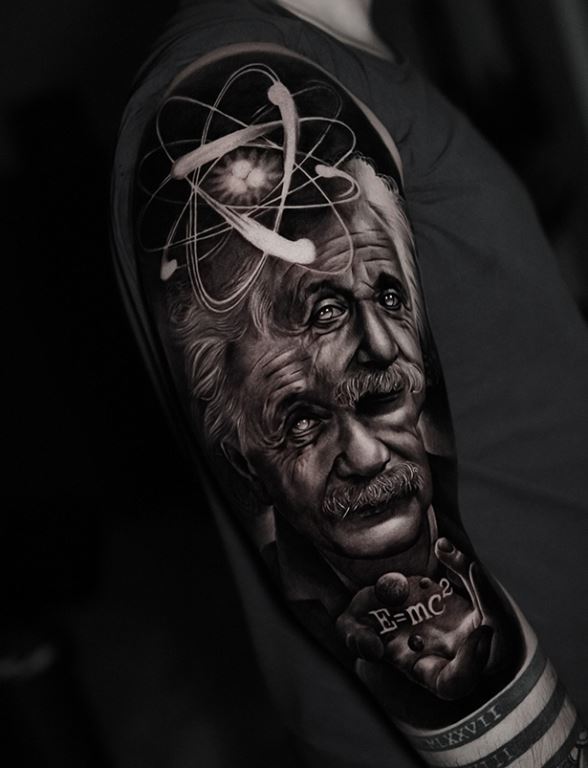
Q: Do you have a favorite tattoo machine
or tool that you rely on for your work, and why is it particularly
effective for the type of tattoos you specialize in?
A: I’ve tried many different machines over the years, but my current
favorite is a coil machine. For black and grey realism, coil
machines give me the precision and control I need. The way they
function allows me to work with finer details, especially when I’m
working on soft shading or delicate gradients. I also rely on
specific needles and inks that suit my style. For example, I use
finer needles for detail work and larger ones for shading and
texture. The quality of ink is also crucial because it affects the
depth and longevity of the tattoo. Having the right tools makes all
the difference in achieving the best possible results.
Q: Tattoos are often deeply personal, with each design
telling a unique story. How do you approach the challenge of
translating the intangible, emotions, memories, or personal symbols
into a visual art form on skin?
A: Translating intangible concepts like emotions and memories into a
visual art form requires a deep understanding of the person and what
they want to convey. I spend a lot of time talking to the client
about what the tattoo means to them. I try to understand the
emotional significance behind their ideas and find a way to
represent that visually. This can be achieved through symbolism,
imagery, or even abstract forms. For example, when translating a
memory or personal story, I may use symbolic imagery that represents
that moment or emotion. I’ll often incorporate elements that the
client feels connected to, such as a favorite animal, a meaningful
object, or a place, while considering their aesthetic preferences.
The goal is to make the tattoo resonate emotionally with the person
wearing it while maintaining visual balance and artistic integrity.
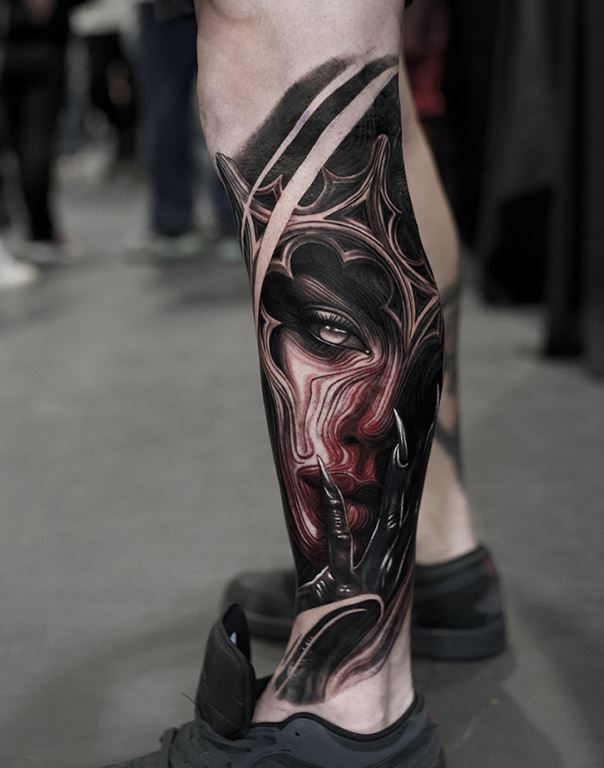
Q: As a tattoo artist, what role do you
think your personal artistic style plays in shaping the overall
experience for the client?
A: My personal style is very important in shaping the tattoo
experience. It’s not just about the design but also about the
approach I bring to each project. My style is focused on realism,
black and grey shading, and detailed linework, and I feel that these
elements have a distinct quality that sets my work apart. Clients
often come to me because they appreciate the way I approach realism
and the care I take in making sure every detail is as perfect as
possible. This style allows me to express both the technical skill
and the emotional depth behind the design. The client’s experience
is not just about getting a tattoo, but about collaborating with an
artist who shares their vision and brings it to life in a way that’s
uniquely their own.
Q: Over the years, tattoo trends have come
and gone. How do you stay true to your artistic identity while also
staying current with evolving trends in the tattoo world?
A: Staying true to my artistic identity is very important to me, and
I think that’s the key to long-term success. However, it’s also
essential to stay informed about trends in the tattoo world to stay
relevant and continue growing as an artist. What I do is keep an
open mind and be aware of what’s happening, but I never let trends
dictate my work. I always try to stay true to my core values: the
pursuit of perfection, the focus on emotion, and the dedication to
technique. I allow myself to experiment within the scope of my
style, blending new elements or techniques into my work without
compromising my artistic vision. This way, I can continue to evolve
while maintaining my unique identity as an artist.
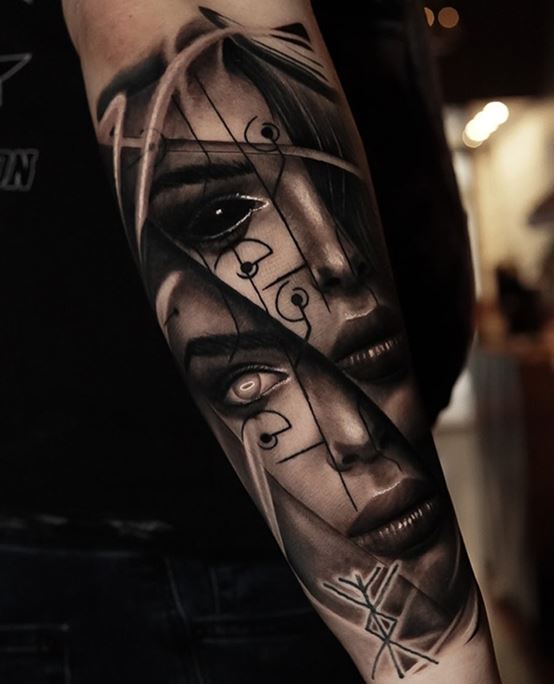
Q: For those considering getting a tattoo
for the first time, what advice would you give to help them choose
the right artist and design for their needs?
A: The most important thing is to take your time and choose an
artist whose style resonates with you. Each artist has a unique
approach, so make sure you look at their portfolio and see if their
work aligns with the type of tattoo you want. It’s also important to
do research about the artist’s professionalism, cleanliness, and
reputation. As for choosing the design, I always tell clients to go
with something that has personal significance, rather than just
following trends. This will ensure that the tattoo feels meaningful
and timeless. It’s also important to be open to the artist’s
suggestions, as they have the experience to know what will work best
on your body and last over time.
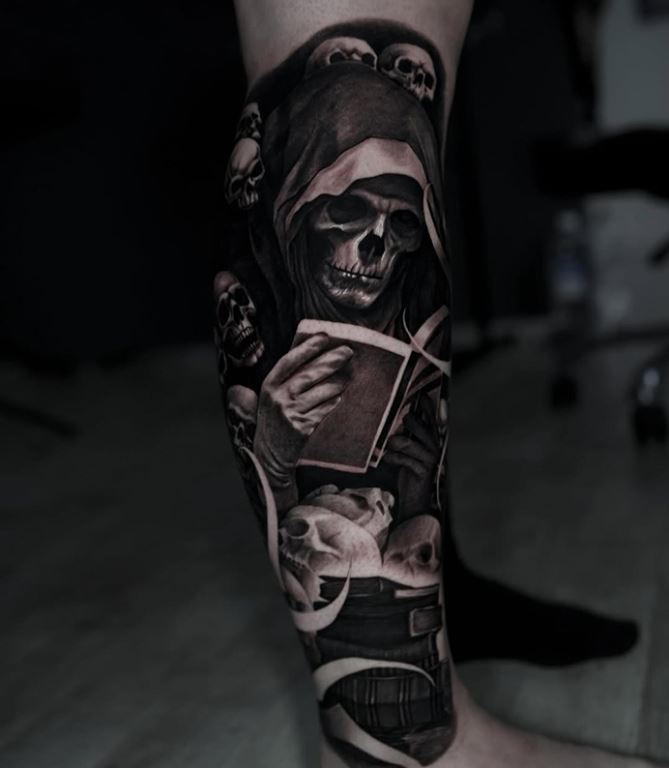
Q: Your tattoos are often intricate and large-scale. How do
you approach the technical challenges of working on larger areas of
the body, and what considerations do you take into account when
planning these expansive designs?
A: When working on larger areas of the body, the biggest challenge
is ensuring that the design flows well with the contours and natural
lines of the body. I carefully consider the placement, size, and
structure of the piece to make sure it complements the person’s
physique. I also break down large designs into manageable sections.
This allows me to focus on one area at a time, making sure every
part of the tattoo is detailed and well-executed. Communication with
the client is essential to make sure they’re comfortable throughout
the process, as larger tattoos require longer sessions. Planning is
key, and it’s important to make sure the design feels cohesive and
balanced when working on a large scale.
Q: Tattooing involves a lot of interaction
with clients, some of whom may be nervous about the process. How do
you help clients feel comfortable and at ease during their tattoo
sessions?
A: Making my clients feel comfortable is one of my top priorities. I
understand that getting a tattoo can be intimidating, especially for
first-timers, so I make sure to talk them through the entire process
beforehand. I explain what to expect, how the tattooing process
works, and any aftercare instructions. During the session itself, I
try to keep the atmosphere relaxed and friendly. I engage in
conversation, keep the mood light, and take breaks when necessary to
ensure they’re not overwhelmed. Communication is key, and I always
encourage clients to let me know if they’re feeling uncomfortable at
any point. My goal is to create a positive and enjoyable experience
from start to finish.
Q: Looking ahead, what are your artistic goals for the
future? Are there any specific projects or milestones you’re excited
to pursue in your tattoo career?
A: Looking ahead, my main goal is to continue refining my craft and
pushing the boundaries of what I can achieve in black and grey
realism. I’d like to take on even more complex and large-scale
projects, perhaps working on full body pieces or exploring new
techniques within my style. I’m also excited about the possibility
of traveling more to collaborate with other artists and learn from
different cultures and tattoo traditions. Another project I’m
passionate about is teaching and mentoring the next generation of
tattoo artists, helping them find their own voice in the industry.
Ultimately, I want to keep growing as an artist, take on new
challenges, and continue creating work that resonates deeply with my
clients.
Thank you very much for the interview. You can find me on Instagram:
@crismonroytattoo


