
Interview with Daebeom Kim
Hello Daebeom Kim aka
Graycode! Thank you so much for taking the time to do this interview. Please
start by telling us something about yourself and your background.
What sparked your initial interest in art? Did you have any
influential people growing up?
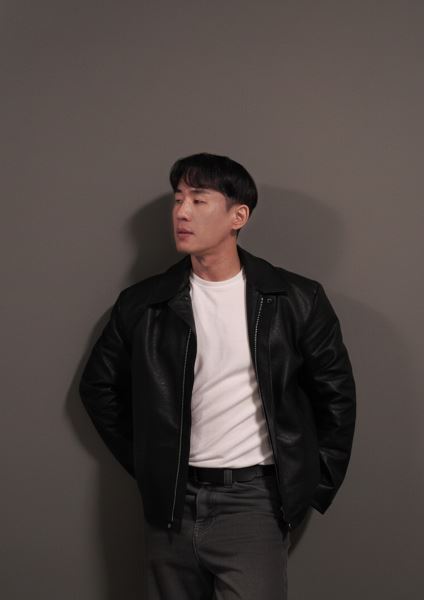
A: I’m a tattoo artist originally from South Korea, now based in Los
Angeles. My journey into art began as a child, inspired by cartoons
and watching my friends draw. I quickly realized I had a knack for
it, and the recognition I received for my talent became a huge
source of motivation. During my high school years at an art academy,
I was deeply influenced by the creative energy and friendly
competition of my peers, which pushed me to refine my craft and
eventually led me to where I am today.
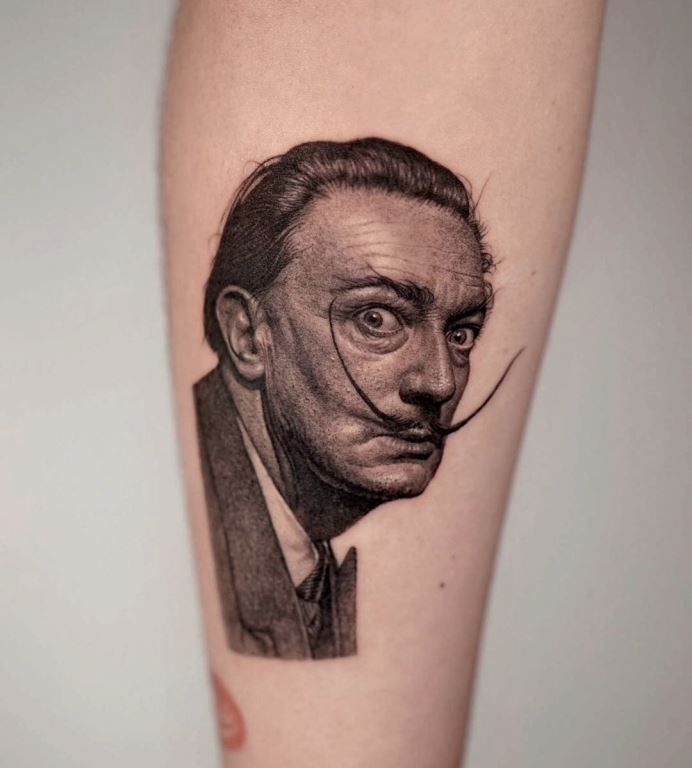
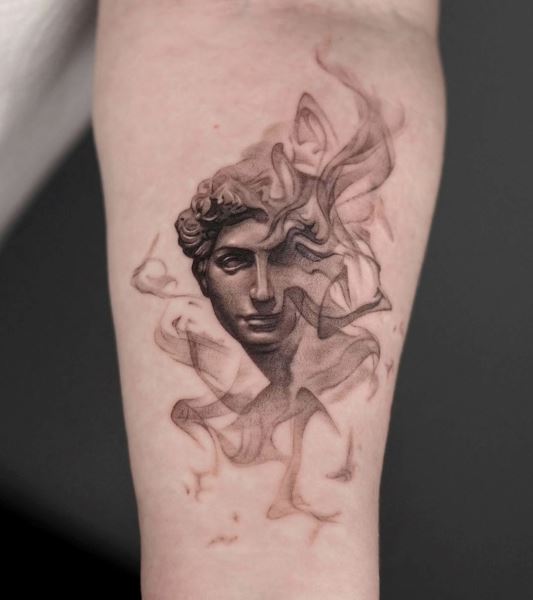
Q: Your work beautifully blends black and gray realism with
intricate detail. Why did you choose this particular style, and what
is it about realism, especially on a smaller scale that captivates
you?
A: I’ve always preferred the depth of black and grey over bright
colors. I think it comes from my childhood habit of observing tiny
details that others might miss. I have this strong desire to
recreate those details perfectly, and that’s really what drew me
into the world of black and grey tattooing. It allows me to focus on
precision and the essence of the subject.
Q: We see beautiful elements of Asian and Japanese mythology
in your portfolio. How do you integrate these classic motifs into a
modern realism style, and what meaning do you find in these visual
stories?
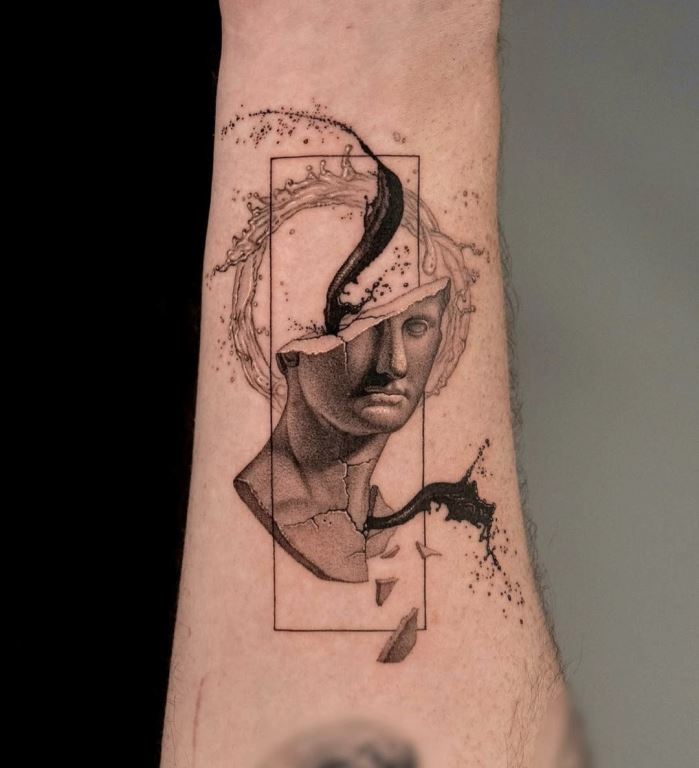
A: To be honest, I don't follow a strict formula for how I compose
my pieces. I simply arrange elements until they strike me as
beautiful, and that becomes the final result. I don’t look for deep,
hidden meanings; instead, I seek pure visual beauty. To me, that
beauty itself is the meaning. My work is a process of capturing the
perfection found in the details and translating them into a
monochromatic aesthetic that speaks for itself.
Q: Many artists start in other mediums. Did you have a
background in drawing, painting, or sculpture before tattooing? How
do those fundamental art skills translate into the needle and skin?
A: I have loved drawing since I was a child, and I spent my high
school years immersed in studying drawing and design. After moving
to the U.S., I majored in Transportation Design in college because I
found the aesthetics of automotive forms to be incredibly beautiful.
While the technical skills of traditional art don’t always translate
directly to tattooing, given the vastly different tools and the
'canvas' itself my background provides a crucial foundation. It
isn't just about the technique; it’s about the theoretical
principles. Understanding the logic of light and shadow, knowing
exactly where to deepen the blacks and where to let the highlights
breathe is what truly elevates my work in my specific genre.
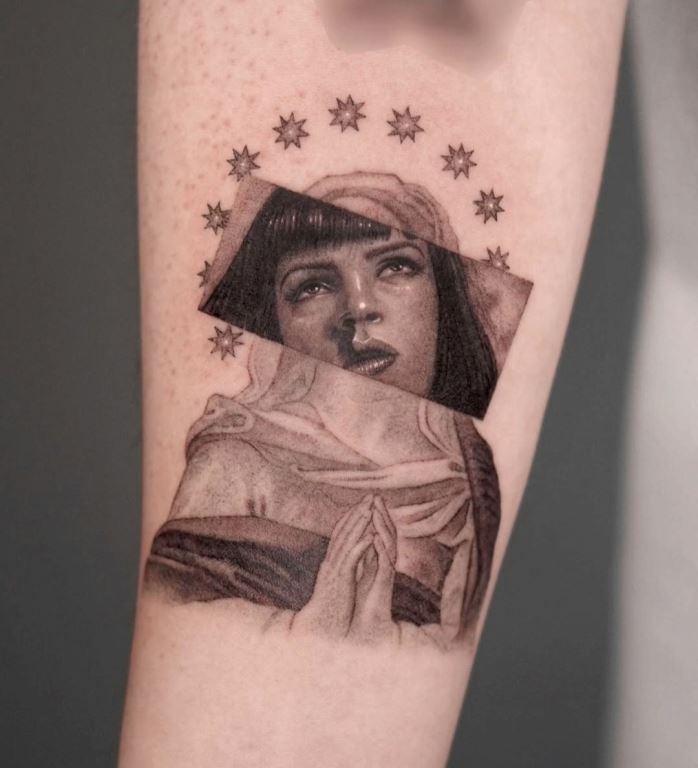
Q: The level of detail in your small-scale portrait work is
stunning. Can you walk us through your creative process, from the
initial client consultation to placing the final detail on the skin?
A: Portrait tattoos are all about precision and deep focus. It
starts with finding the right reference, but the real work happens
in the tonal adjustments. I carefully balance the 'amount' of light
and dark so the portrait feels alive on the skin. It’s a delicate
calculation: too much contrast hides the details, while too little
makes the piece look unfinished. I also have to factor in the
client’s skin tone and choose the exact needle sizes for every
expression. Even the timing of each session matters to prevent the
skin from over-swelling. It’s a complex puzzle with so many
variables to consider, but that’s exactly why I love it. Portraiture
is challenging and demanding, but it’s the most rewarding work I do.
Q: The tattoo industry is highly competitive and constantly
evolving. What does 'constant improvement' mean to you in your daily
practice?
A: Tattooing is a high-stakes world where perfection is expected.
Because a tattoo is a lifelong commitment, I put in a tremendous
amount of effort to keep improving every single day. My first
priority is how the tattoo heals. True expertise in tattooing is
only gained through years of seeing how different skin types hold
ink. My goal is for your tattoo to look just as beautiful years
later as it did in the studio. I also dedicate time to design
research. I love taking a client’s initial concept and offering them
even more creative, daring options they might not have considered.
It’s about turning a consultation into a collaborative project. You
have to keep growing in this industry, otherwise, you get left
behind. I choose to keep moving forward.
Q: Client satisfaction is key. How do you balance your
artistic vision with a client's request, especially when designing
something personal like a portrait or a significant mythical piece?
A: One of the most important parts of my job is being a visual
translator. Most of my clients aren't artists, so I work hard to
turn their thoughts into a concrete design through precise and
honest communication. I believe the best results come from
collaboration. That’s why I share the final design with my clients a
week in advance. I want them to see the image, sit with it, and let
me know if it truly resonates with them. It’s okay if they change
their mind or want adjustments, I value their perspective as much as
my own artistic direction. I’m always searching for that 'sweet
spot' where my style and their vision meet perfectly.
Q: In realism, a tiny difference in value or line weight can
make a huge impact. What are the biggest technical challenges you
face when executing such precise, detailed work in black and gray?
A: Precisely. In this craft, the smallest margin of error can have a
significant impact. The greatest technical challenge lies in the
fact that my canvas isn't a static piece of paper, it’s living,
breathing human skin. Because skin is elastic, I don't have the
luxury of a solid, fixed surface to rest my hand on like I would at
a desk. Every movement must be meticulously controlled. Furthermore,
humans are constantly in motion. Even when a client tries their
absolute best to remain still, micro-movements and the simple rhythm
of their breathing create a dynamic environment. Navigating these
subtle variables while maintaining surgical precision is perhaps the
most demanding part of the process.
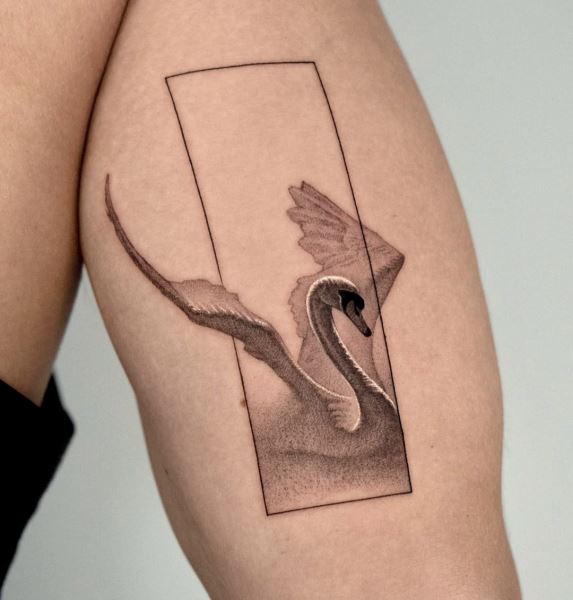
Q: You often work on small-to-medium-scale pieces, where
space for detail is highly constrained. What is the most difficult
aspect of executing realism effectively in a compact area, and how
do you ensure the image holds up as it ages?
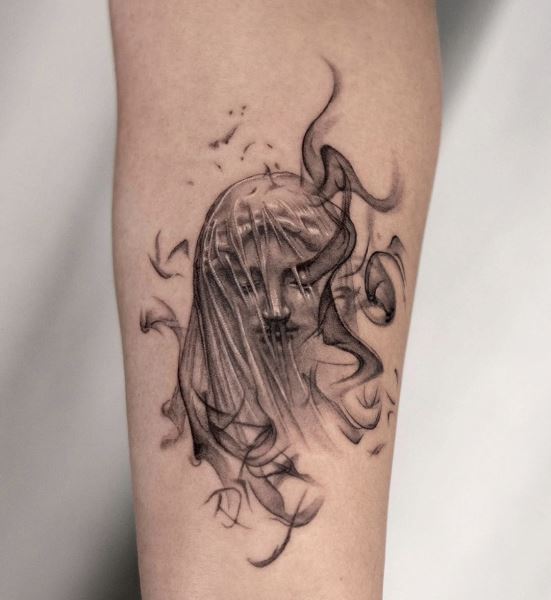
A: In the world of portraiture, every millimeter counts. Working on
such a small scale with realism requires me to be completely in the
zone, sometimes I even hold my breath to ensure my hand is perfectly
still. I rely on the single needle technique to preserve the
integrity of the design for the long term. While single needle work
is notoriously difficult and demanding, I’ve dedicated years to
perfecting it. It allows for a level of precision that larger
needles simply can't reach. Instead of risking a 'muddy' look, I use
these fine needles to meticulously calculate and etch every minute
detail, ensuring the tattoo stays sharp and beautiful as it ages.
Q: For a strong realism tattoo, the quality of the reference
material is vital. How strict are you about the photographs or
images you work from, and what specific qualities do you look for in
a reference picture to ensure a successful, lasting tattoo?
A: The quality of the reference material is paramount. To ensure a
successful, long-lasting tattoo, I carefully analyze the overall
flow of light and shadow, as well as the intricacy of the details.
If these elements are lacking, the final tattoo will inevitably
suffer. Because of this, I have a strict policy: if I cannot find or
produce a high-quality reference, even after extensive research, I
will not move forward with the project. It isn't about being
difficult; it's about integrity. A tattoo is a permanent commitment,
and I refuse to deliver a result that doesn't meet my standards of
excellence.
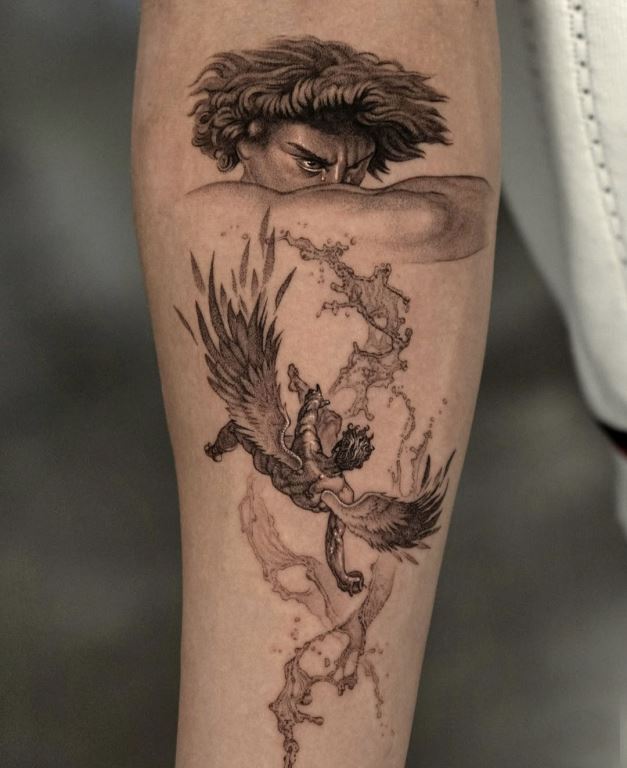
Q: Is there one particular tattoo you’ve done that stands
out as your most challenging piece to date? What was the concept,
and what specific technical or logistical hurdle did you have to
overcome to bring it to life?
A: The most challenging project I’ve ever faced was a cover-up. As
you know, it involves tattooing over an existing piece, but this
particular one had such high contrast and heavy saturation that I
knew it would be an uphill battle. To tackle it, I spent three
preliminary sessions just 'priming' the skin with white ink. My goal
was to neutralize the old ink and turn the skin back into a clean
canvas. I had to be incredibly careful, if I pushed too hard to hide
the old tattoo, I risked damaging the skin's texture beyond repair.
After allowing for a long recovery period, I finally tattooed the
new design. It was a success, but honestly, after that experience,
I’ve decided I’m not exactly in a hurry to take on more cover-ups!
(Haha).
Q: As a tattoo artist, you are often your own walking
portfolio. Do you have any tattoos that you've done yourself, and if
not, how do you approach choosing an artist you trust to put
permanent work on your skin?
A: I’ll admit it, I’m incredibly picky. That’s probably why I only
have one single tattoo on my body. And believe it or not, I did it
myself! It was purely for research and to understand the technical
nuances of the skin (Haha). But now, I’m finally ready to be on the
other side of the needle. I’m currently on the hunt for another
artist whose work resonates with my standards. It’s not easy finding
someone when you’re this meticulous!
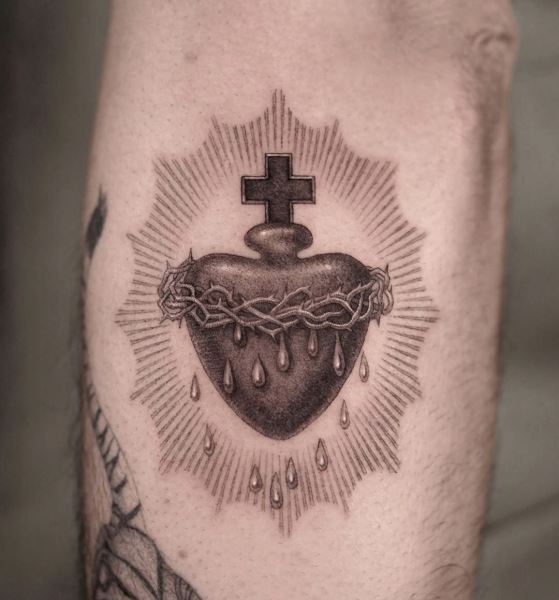
Q: Given that portraits and mythological motifs are often
highly personal, how important is it for you to understand the story
or meaning behind the tattoo before you begin the design process?
A: Understanding the client’s intent is crucial, but it’s a
challenging territory. While I strive to honor the meaning my
clients bring to me, I’m also mindful that a tattoo must function as
a piece of art. When a design is weighed down by too much symbolism,
it often loses its aesthetic impact. A good artist knows how to
control that balance, translating profound meaning into a clean,
beautiful visual language. It’s about finding that 'sweet spot'
where the sentiment is felt, but the visual execution remains
timeless and elegant.
Q: Do you have any favorite tattoo or a story from a client?
A: I haven't encountered any particularly strange or dramatic
episodes so far, and I think that’s a good thing. I view each
session as a disciplined, calculated process rather than a source of
drama. Because I prepare so thoroughly, sharing designs a week in
advance and carefully selecting references, I aim for a seamless
experience. For me, the 'special' part isn't a crazy story; it’s the
quiet satisfaction of seeing a portrait perfectly settled on
someone’s skin.
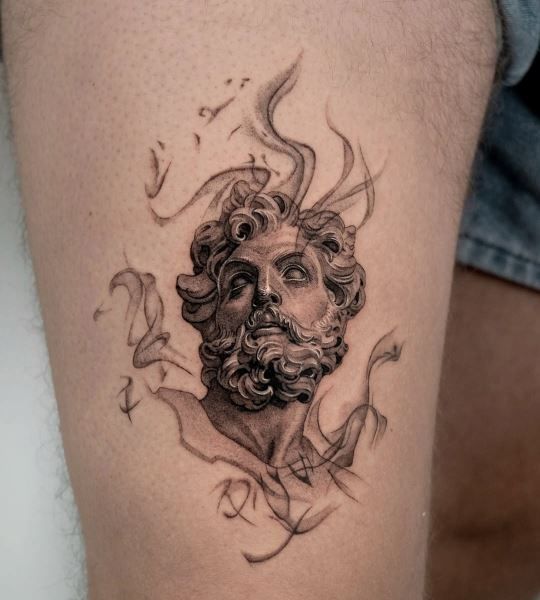
Q: What is your system for follow-up and aftercare guidance?
A: I think my advice is similar to others, but I emphasize the
'why.' The core is keeping the tattooed area cool. I tell my clients
to avoid intense workouts, alcohol, saunas, and tanning. When your
skin temperature rises, blood vessels dilate, and blood flow
increases, which can worsen inflammation, swelling, and redness.
Also, heat causes sweat, creating a moist environment that’s perfect
for bacteria to grow. Most importantly, heat irritates skin cells
and interferes with the ink settling properly into the skin. I
believe this is the most critical part of healing, so I send a
detailed email with this information to every client after their
session.
Q: Your Instagram features a dedicated highlight of "Healed"
tattoos. How do these healed photos help you manage the expectations
of potential clients regarding things like color retention, value
softening, and line diffusion over time?
A: I believe providing information on healed tattoos is essential
for my clients. While creating a stunning piece in the studio is
important, ensuring that the quality remains exceptional over time
is my true priority. This is why I love sharing 'healed' photos from
returning clients. By showcasing how the ink settles and ages, I
want my future clients to feel confident and clearly envision the
longevity and future of the art they will carry for a lifetime.
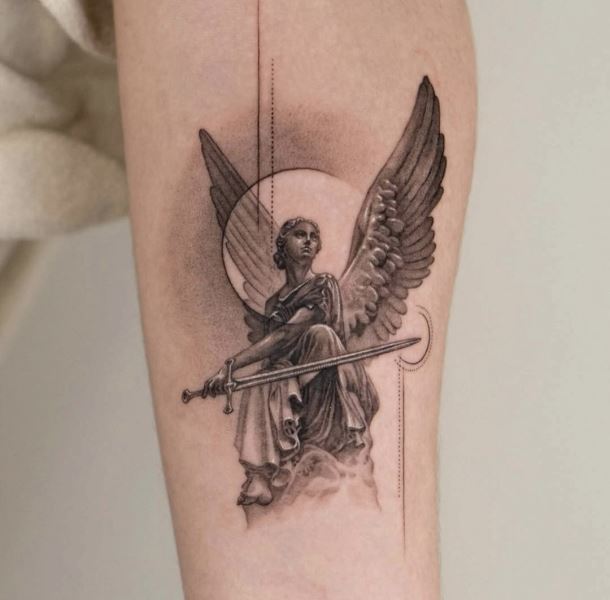
Q: Since a good healed result is a partnership between the
artist and the client, how do you emphasize the critical role of
proper aftercare in ensuring that the detail and contrast of your
realism work remain sharp and clear long after the session is over?
A: I make sure to give a very thorough explanation after the
session. In Realism work, aftercare is just as important as the
tattooing process itself. To be honest, I sometimes 'threaten' my
clients just a little bit haha! I tell them straight up: 'If you
don't take care of this properly, all this detail could be ruined.'
I say it with a laugh, but I want them to understand the gravity of
it. My goal is to make sure they stay vigilant so the piece stays
perfect.
Q: Where are you located? Please write down your studio
location and website/social media links. Are you available for
bookings?
A: I'm currently working out of LA. I’m actually in the process of
potentially moving my studio, so I'll be sharing the updated
location details very soon. If you're interested in starting a
project with me, the best way to get in touch is through email. You
can reach me at graycodetattoo@gmail.com. Just send over your ideas,
and we can go from there!
Q: If you could pick one mythological character, historical
figure, or visual concept you haven't tattooed yet, but are
absolutely dying to put your signature realism touch on, what would
it be and why?
A: If I had to choose a concept, it would be the Universe. Even
though it is the very space we belong to and live in, it remains a
profound mystery, an unknown frontier beyond the reach of human time
and current knowledge. To me, it feels incredibly mystical and
philosophical. I’ve always been drawn to both science and
philosophy, and the universe is where those two worlds meet in the
most beautiful way.
Q: Have you considered, or do you have any plans for, a
collaborative tattooing project with another artist? If so, what
kind of style synergy would you look for?
A: I want to push the boundaries of my realism by collaborating with
artists from different genres. I’m particularly drawn to the idea of
merging my style with traditional East Asian ink wash paintings or
bold, abstract strokes. I think there is something incredibly poetic
about the 'clash' of opposite styles, the meeting of hyper-realism
and raw abstraction. It would be a project where the structured and
the spontaneous coexist on the same skin.
Q: Looking at the evolution of tattooing over the last
decade, where do you see the future of black and gray realism
heading, and what innovation or trend are you most excited to see
develop in the coming years?
A: Black and Grey Realism has always been a cornerstone of tattoo
art, but for a long time, its strict adherence to 'reality' meant
there wasn't much room for deviation. But recently, the landscape is
changing. I’m seeing so much creative innovation from fellow artists
that it’s shifting my own perspective. I'm looking forward to a new
era of design where the foundation of realism meets bold,
imaginative evolution. I’m excited to see where we can take this
genre next.
Q: Is there anything currently new or upcoming in your
professional life, a new studio, a guest spot, a convention, or a
special project that you can share with our readers?
A: Looking ahead to next year, I have some exciting projects lined
up. I’ve been invited to participate as a judge at the San Diego
Tattoo Convention (Feb 13–15) and the Long Beach Tattoo Convention
(July 10–12). It’s always a privilege to contribute to the community
in this way. As for my home base, I’m currently exploring
opportunities with a new studio space for next year. Once the
details are settled, I’ll be making a formal announcement on my
Instagram. I’m looking forward to a fresh start in a new
environment.
Q: If you had to distill your passion down to a single
element, what is the most cherished aspect of being a tattoo artist,
is it the connection with the client, the moment the art is
complete, or the opportunity for constant creation?
A: If I had to distill my entire passion into one element, it would
be the relentless pursuit of beauty.
Interview: Ivana Kancheska
Publishing Date: 21 December 2025


