
Interview with Dani Samarsky
As Skin Artists Tattoo
Magazine marks its eighteen anniversary, the focus remains on the
exceptional talent and discipline that define the modern era of
tattooing. This milestone serves as a moment to highlight artists
whose commitment to the craft has set new standards in the industry.
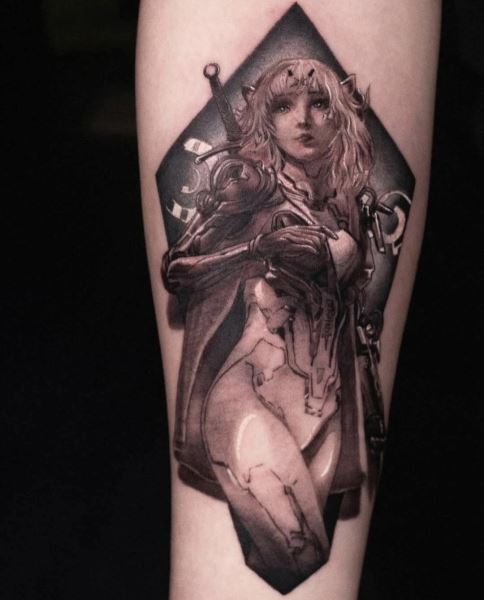
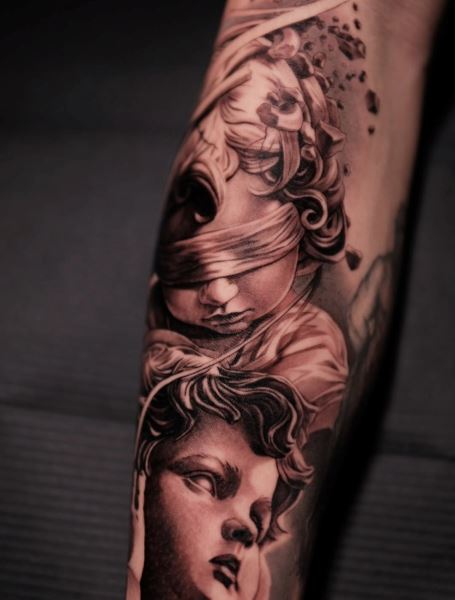
Dani Samarsky stands at the forefront of this group, representing
the pinnacle of black-and-grey realism.
Based in Vancouver at Love More Tattoo, Dani has spent over a
decade refining a style that demands absolute technical precision.
His work is characterized by a sophisticated mastery of light and
shadow, resulting in portraits and compositions that achieve a
remarkable lifelike quality on the skin.
The following interview explores the transition from his early
artistic origins to his current status as an established
professional. The conversation covers the inspirations behind his
high-contrast aesthetic, the rigor of his creative process, and his
perspective on the industry's evolution as the magazine enters its
nineteenth year.
Q: At what point in your
life did you realize you had a natural gift for visual art, and what
was the specific 'aha!' moment that made you decide to apply that
talent to tattooing?
A: I’ve been drawn to drawing since I was a child, but I never took
it seriously back then; it was just something I did when I was
bored. Toward the end of high school, I came across a few tattoo
magazines and tried copying some of the designs. That was the moment
I realized I could actually pursue this as a career. Interestingly,
it was only after I discovered tattooing that I began to formally
study art and build a professional foundation of knowledge.
Q: Many artists start with a hobby and then find a career.
For you, was there a clear bridge between being 'the kid who could
draw' and becoming a resident artist specializing in realism, or was
tattooing an unexpected path?
A: The realization that this was a serious profession came when I
moved to a new city. When you start looking for a studio in a new
place, you’re no longer just "the guy with a tattoo machine" you’re
a specialist with a high level of responsibility. My path to realism
wasn't immediate, it took time and experimentation with various
techniques and styles to truly find myself.
Q: Realism is widely considered the most technically
demanding style in tattooing because there is no room for error.
What was it about that level of difficulty that drew you in, and
what do you find most rewarding about successfully capturing a
'life-like' image on skin?
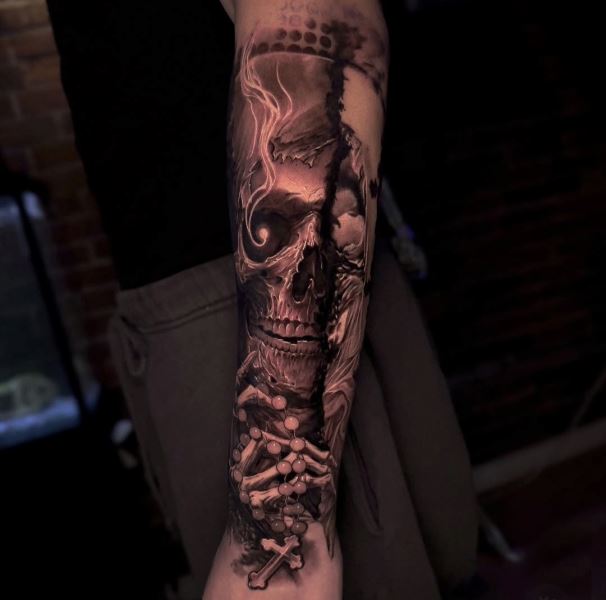
A: Skin is a complex medium. What I love about realism is the demand
for absolute precision. The key to success is understanding how to
balance contrast correctly against the client's specific skin tone.
Q: Your portfolio shows a move toward very 'smooth' realism.
How has your approach to black-and-grey shifted from your first year
in the industry to your current residency at Love More Tattoo?
A: The industry has changed beyond recognition over the years. We
now have better equipment, pigments, and advanced healing products,
which makes the work much more streamlined. Years of practice have
led me to a technique that allows for incredibly soft transitions,
ensuring my clients here at Love More Tattoo in the historic heart
of Vancouver receive the highest quality work.
Q: Having reached over a decade in the industry, how do you
keep yourself inspired and avoid 'creative burnout' while
maintaining such a high level of technical detail?
A: I love working with people, every client brings a unique idea,
which keeps the work from becoming repetitive. I focus on adapting
the client's vision so that it works perfectly as a tattoo design,
which requires me to constantly research and learn. To balance the
intensity of the work, I stay disciplined with my schedule: it’s
essential to make time for family, friends, and proper rest.
Q: Realism is often seen as a technical challenge, but in
your work, especially with larger compositions each piece feels like
it is telling a specific story. How do you approach the narrative
aspect of a tattoo when designing a custom project?
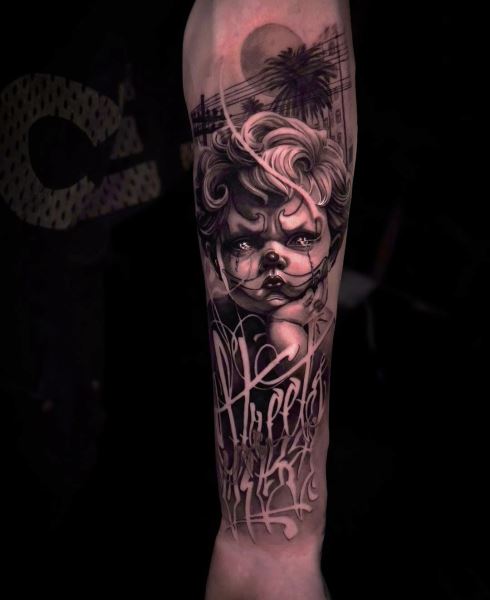
A: With large-scale pieces, my first priority is the composition. I
aim to place accents so that the viewer's eye flows naturally from
one detail to the next. That’s how a tattoo becomes a cohesive piece
of art that invites people to take a closer look.
Q: Tattooing large, realistic compositions is an intense
process for both the artist and the client. What is your approach to
managing the responsibility that comes with such a demanding job?
A: My clients place a lot of trust in me, and I value that deeply.
However, I am my own toughest critic. I always strive to do more
than just execute the client’s idea, I want to exceed their
expectations.
Q: You are known for "super smooth" realism and high
contrast. How do you balance the immediate "wow factor" of a fresh
tattoo with the technical needs of a piece that must age
well over several decades?
A: A fresh tattoo is only the beginning. I am always thinking about
how the tattoo will look in two, five, or ten years. That’s why I
emphasize contrast. Sometimes a tattoo might look a bit dark
immediately after the session, but once it heals, everything settles
perfectly into place. I always explain this logic to my clients
because they are the ones wearing this work for the rest of their
lives.
Q: Throughout your 12-year career, you’ve likely seen tattoo
conventions change significantly. Nowadays, do you view these events
as a genuine opportunity for artistic progress and networking, or do
you find them becoming more of a "waste of time" that lacks the
focus needed for serious technical development?
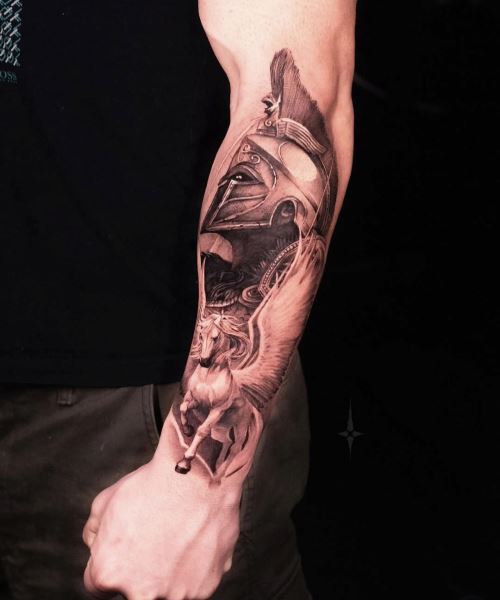
A: For me, conventions are primarily a chance to catch up with
colleagues, network, and meet new people. It’s a great way to change
your environment. As for the competitions that’s a different story.
I feel they need to evolve and implement more transparent, precise
judging criteria.
Q: Having practiced your craft internationally before
becoming a resident artist in Vancouver, how do you perceive the
local tattoo scene today? Do you see it as a thriving environment
for artistic growth, or do you feel it is becoming oversaturated
with repetitive trends?
A: Vancouver is home to many talented artists and a vast array of
styles. There is healthy competition here, which I think is a
positive thing, it forces you to keep evolving and to develop your
own unique voice.
Q: With the rise of AI tools in the creative world, how do
you feel this technology impacts modern-day realism? Do you see it
as a tool that expands your artistic exploration, or does it
threaten the individual creativity and 'maker's mark' that defines a
true artist?
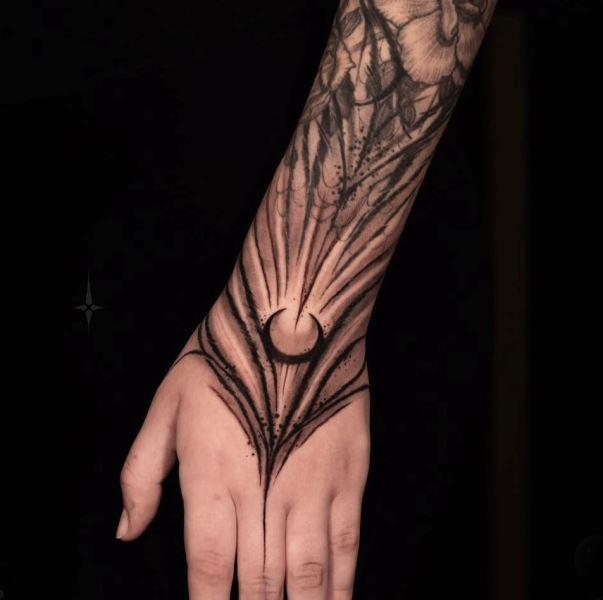
A: AI is just another tool, like a pencil or a tablet. If it helps
you find an interesting concept or prepare a reference more
efficiently, why not use it? The most important thing is that the
artist has a solid foundation of knowledge to properly guide and
refine what the AI produces.
Q: Looking ahead to the next decade, how do you think the
"canvas" of the human body will be treated creatively? Do you think
we will move toward even more complex, full-body narratives, or will
the future be about "micro-moments" of hyper-detail?
A: I think we will see even more diversity. People are increasingly
looking for something individual that reflects their inner world
rather than just copying images from the internet. Artists will also
become more specialized. Modern technology provides so much freedom
that both hyper-detailed "micro" pieces and massive projects can
look incredible.
Q: What do you want to see regarding styles and techniques?
A: I believe tattoos will become technically flawless, and we will
see styles continue to blend, leading to many exciting and
innovative artistic solutions.
Q: The tattoo industry is more competitive than ever,
especially in the realism niche where technical perfection is
expected. How do you protect your unique style from being lost in
the noise of repetitive trends, and what is your strategy for
staying relevant without compromising your artistic integrity?
A: My main focus is outperforming my past self. I analyze every
piece I do, performing a small "debrief" to see what I can improve.
I am constantly refining my technique and my approach to design. My
strategy is simply to work hard and keep growing.
Q: What are your goals for the future?
A: Strive and prosper. I want to keep creating better tattoos,
mastering cleaner techniques, and taking on larger projects. I’m
also interested in expanding into the fine art market with projects
on canvas.
Q: After a decade in the craft, many artists find that their
"vision" moves away from what is popular toward what is meaningful.
How has your personal definition of a 'successful tattoo' changed
since you started in 2013?
A: My goal is to create something that I am personally proud of
while fully realizing the client's vision. I tend to let trends pass
me by. To me, a successful tattoo is one that looks great years
later and leaves the client happy.
Q: Looking back on your 12-year journey from your first
tattoo to becoming a specialist in high-end realism, what is the
most profound lesson this craft has taught you, not just about art,
but about life and human connection?
A: Listening to the client and respecting their vision is a vital
part of the job. It’s equally important to reach a mutual
understanding and build a foundation of trust, especially when
starting a large-scale project. That trust must always be justified.
Q: What do you want your legacy to be? What is the one
feeling or message you hope people take away when they see a piece
by Daniil Samarskii?
A: I think we’ll find that out in time. It’s a difficult question to
answer, let’s leave a bit of intrigue there.


