
Interview with Donovan Lopez
Hello Donovan Yustin Vargas Lopez,
thank you for joining us today. We're eager to learn more about you.
To begin, could you please share a bit about yourself and your
background? We're especially interested in hearing about your
earliest influences and what first sparked your interest in the
arts. I started drawing when I was a kid, but to be honest,
I never imagined that art would become my true passion as an adult.
Back then and even during my teenage years, my greatest love was
football, and I never really saw myself as an artist. After
finishing high school, I enrolled in university to study Business
Administration. Interestingly enough, in one of my classes, we were
asked to create satirical caricatures, and it was in that moment
almost by chance, that I rediscovered my love for drawing and began
to feel a strong attraction to the world of tattooing. From that
point on, I started researching everything I could, even though
information was quite limited at the time. With some savings, I
bought my first basic kit: a coil machine, a few needles, and small
bottles of ink. I began practicing my first lines on lemons,
bananas, and pigskin, like many of us who started from scratch. I’ve
always been a self-taught and disciplined person. Even without
access to formal education or many resources, I found constant
learning through YouTube videos. I remember two of my earliest
references were Rodrigo Gálvez and Florin Zaharia - artists who
inspired me from the beginning and who I still deeply admire to this
day.
Q: At what point did you recognize that art was your true
calling and that you should commit to honing your abilities?
A: While I was studying Business Administration, I used every bit of
free time to learn and practice tattooing. I became obsessed with
understanding the craft and discovering everything it could offer
me. Two of the first tattoos I ever did were on my mom and my
sister. Even though they weren’t perfect, I absolutely loved the
experience. I enjoyed the feeling of tattooing, of transforming the
old tattoos they had into something new and beautiful. The deeper I
went into the world of tattooing, the more I fell in love with it. I
practiced relentlessly, constantly applying everything I learned,
and every tattoo became a chance to grow. Eventually, I made the
decision to leave university and devote myself fully to learning and
improving. I made a commitment to myself: every new tattoo had to be
better than the last. Ironically, although I left my degree behind,
it taught me something essential art isn’t just about making
beautiful tattoos. A true artist needs to be well-rounded. You have
to know how to run a studio, promote your work, connect with
clients, and manage your brand with care and vision.

Q: The deciding moment?
A: It was during a university class that something inside me was
reignited. I rediscovered my childhood passion for drawing,
something I had put aside for years. I started sketching more and
more, and around that same time, I was planning to get another
tattoo. When I went to that appointment, it wasn’t my first, I
experienced it differently. I paid close attention to everything:
how the artist designed, the tools he used, the rhythm of the
session, the way he approached his craft. And in that moment, I
realized I wanted to try it. Tattooing felt like more than just
decoration, it felt like a powerful form of expression. And like
with anything that truly inspires me, I gave it my all. I committed
with love, with discipline, with patience. Tattooing became my path,
my way of life. Today, I can honestly say that tattooing saved me,
it gave me purpose, identity, and a reason to keep growing.
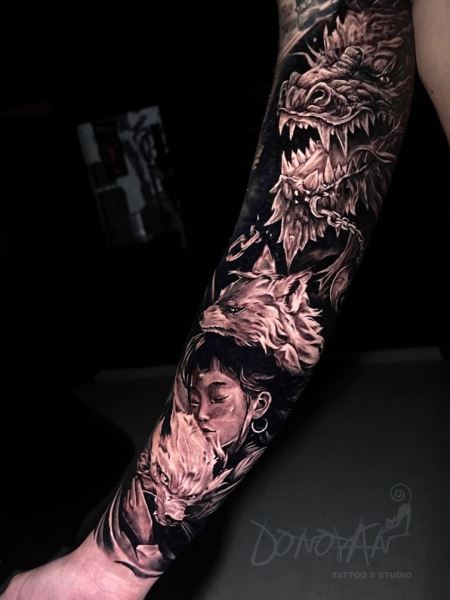
Q: As a beginner, what styles of tattoos did you typically
create? How long was it before you felt truly confident in your
skills and started attracting a steady clientele?
A: When I first started tattooing, there weren’t as many defined
styles as there are today. Back then, tattoos were more ornamental,
people would get infinity signs, names, dreamcatchers. The internet
was still just a new thing and references were limited, so that’s
where I started. As time went on, I began watching videos by Rodrigo
Gálvez, and I developed an interest in watercolor tattoos. I started
trying to give my work that fluid, expressive touch. It became a
personal exploration of color and form. Eventually, I took a major
step forward by focusing on shadows. That was a turning point,
because black and grey realism was becoming very popular. Working
with shadows opened many doors for me. I refined my technique and,
little by little, began to master realism and shading in a way that
made an impact. That’s when clients began coming to me consistently.
People brought me photographs, portraits of loved ones, pets,
animals, trusting that I could bring them to life on skin. Through
all that practice and evolution, I was able to establish myself as
one of the top black and grey realism artists in my region.

Q: What was the biggest challenge you faced transitioning
from a beginner to a professional artist in a tattoo studio?
A: As I mentioned earlier, I’ve always been a self-taught artist
someone who challenges himself and constantly strives to do better.
After a couple of years tattooing, I decided to open my own studio.
I was working alone, but the space was open to the public, and that
marked a turning point in my journey. I remember getting excited
with every new inquiry. Big projects started coming in, and with
them came real responsibility. That, to me, was the true transition
from beginner to professional. In the early stages, when you’re
still learning, you tend to play it safe you don’t want to risk
damaging someone’s skin. But once I opened my studio, I knew it was
time to fully commit to large-scale pieces, long sessions, and more
demanding designs. I had to rise to the level that the work and the
clients, deserved. Starting out on my own was tough, but it shaped
me. I’ve always been my harshest critic, and that helped me evolve.
It taught me to trust my instincts, refine my process, and face
every challenge with passion and responsibility. That experience
laid the foundation for the artist I’ve become today.
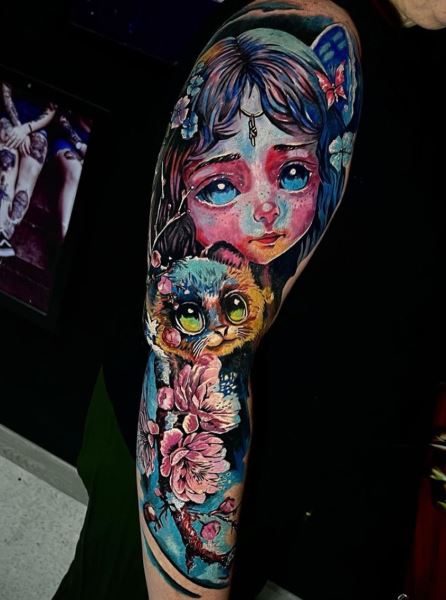
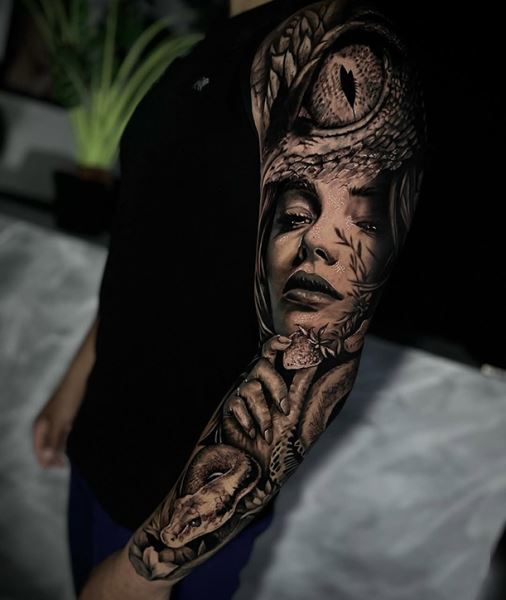
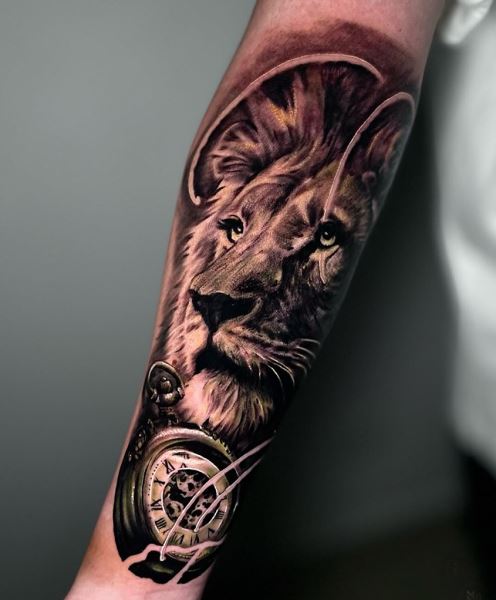
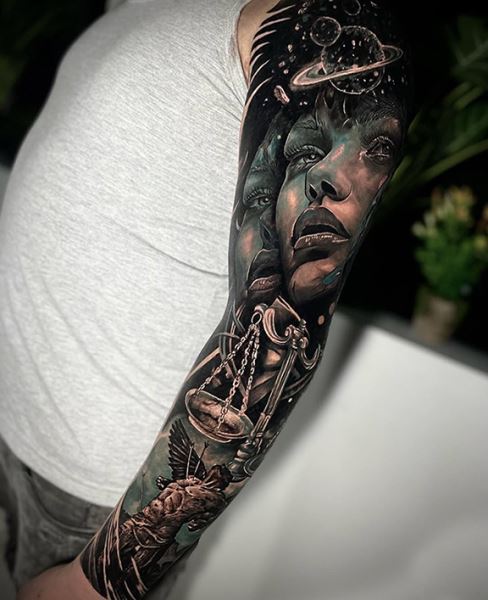
Q: You specialize in realism and surrealism - your portfolio
is truly impressive! What drew you to these specific styles as your
creative direction, and what do you find most compelling about
working within them?
A: After deeply understanding realism and refining my technique
within that style, I began to feel the need to take it further.
Realism allowed me to capture the essence of an image, but I wanted
to explore a deeper language one that didn’t just replicate a photo,
but told a story. That’s when surrealism came into the picture. I
started searching for more expressionist references, images that
could evoke emotion, spark curiosity, or reveal something beyond the
obvious. I wanted my tattoos to not only look powerful but to feel
meaningful, to carry emotion at first glance. Surrealism gave me
that freedom. It lets me blend realistic elements with bold,
imaginative graphics, use symbolism, and break the traditional rules
of space and time. It ensures a tattoo is never flat or ordinary, it
always goes beyond. What I love most about these styles is that they
allow me to merge technique with emotion, precision with chaos,
reality with imagination… and to me, that’s where true art lives.
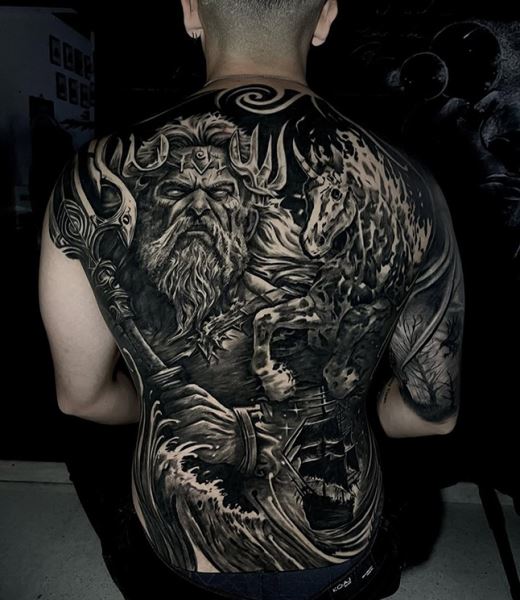
Q: I'm fascinated by the complexity, color, and decorative
details in your work. How do you approach creating your designs? Is
it a process of numerous preliminary sketches, or do you finalize
the design in collaboration with your clients on the day of their
session?
A: For me, every design has to be unique and unrepeatable crafted
specifically for each person. That’s why I always start by building
a connection with my clients. I take time to understand what they
want to express or communicate through their tattoo. I also explain
how the design might be influenced by the area of the body they’re
getting tattooed on, and during that meeting, we go through
reference images together and select the ones that speak to them the
most. Once we’ve built that image bank, I move into the design
process. This part often takes me more time than the actual tattoo
session because it demands deep focus and emotional investment. I
aim to create a piece that not only captures what the client wants
to express but also aligns with the visual voice I want to share as
an artist. Usually, I go through several design concepts until I
find the one that truly resonates with both of us, something that
not only looks beautiful on the skin but feels profoundly right.
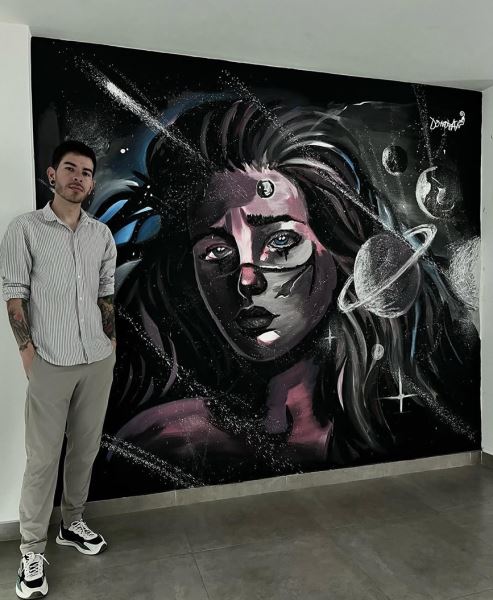
Q: From your perspective, what constitutes a truly effective
tattoo design? Are there specific principles or "rules" that must be
followed to ensure a tattoo not only looks good initially but also
ages well and remains clear once healed?
A: Over the years, experience has taught me that for a tattoo to not
only look good in a photo but also stand the test of time, a proper
injection technique is essential. From the moment I begin designing
a piece, I’m fully aware that every line, every fill, and every
shading must have a clear purpose. Nothing is random each element
must be thoughtfully planned to achieve the result we’re aiming for.
If I had to name one key rule, it would be this: take the time
needed to treat every part of the design with the detail and
dedication it deserves. It’s not about working fast, it’s about
working with intention and respect for the skin, so the final piece
is strong, long-lasting, and visually powerful as it heals and ages.
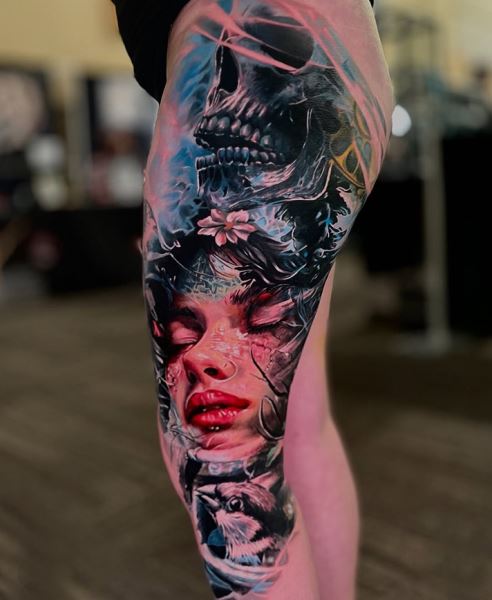
Q: Do you have any favorite tattoo you did that was a bit
challenging creatively and technically but it turned out really
great in the end?
A: That’s a tough question, because something curious always happens
to me, my favorite tattoo tends to be the last one I’ve done. I
become so obsessed with each piece that I give it everything I have
to make it look impressive. I believe that every new tattoo should
be better than the last, so I can’t choose just one favorite. That
mindset keeps me constantly pushing myself to grow and raise my
standards with every new piece. It’s part of what drives me as an
artist to never settle, and to always aim for the next level.
Q: Clients often come with unique ideas for their tattoos.
How much are you willing to negotiate and adapt your artistic vision
while still maintaining your distinct style?
A: I believe it’s essential to keep an open mind when it comes to my
clients’ ideas. I’m always willing to listen to their thoughts,
emotions, and references because I see each tattoo as a
collaborative creation. I strive to ensure that every piece carries
personal meaning for the person wearing it, while also staying true
to my artistic style. That said, I also believe it’s important to
protect my visual language as an artist. I’m happy to adapt and find
middle ground, but if a client is looking for something that falls
completely outside of my style, I don’t hesitate to be honest and
refer them to another artist who may be a better fit. For me,
artistic integrity is essential, tattooing is not just a technical
craft; it’s a deep expression of who we are as creators.
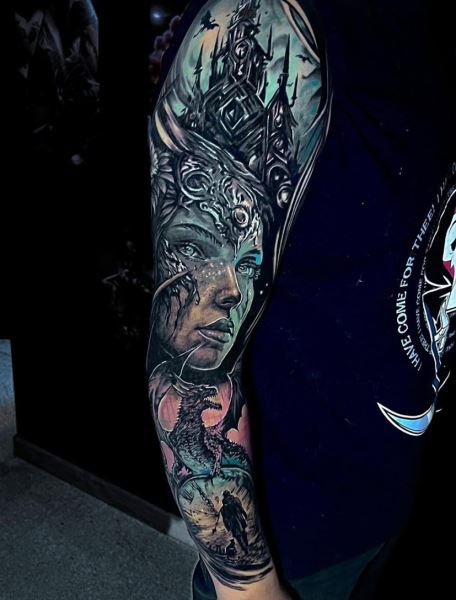
Q: I'm struck by how your expansive pieces, such as sleeves
and back tattoos, share the depth and intricate beauty of grand oil
paintings. Do you draw inspiration from classical artists or art
movements of the past?
A: I’ve always been deeply passionate about classical art. I greatly
admire artists like Caravaggio, and I even had the opportunity to
travel to Rome to learn more about the history of these great
masters and see their works up close. It was a truly inspiring
experience. That said, while classical art is a strong source of
admiration for me, the art I create is always looking forward. I aim
to design pieces that evolve with the present, that feel
contemporary and relevant rather than anchored in the past. Still,
there are elements that continue to influence my work, such as the
use of contrast, the intensity of shadows, or certain color palettes
that are clearly inspired by those classical masters.
Q: Would you ever reinterpret a famous painting or digital
artwork by another artist in your unique tattoo style?
A: While I find it fascinating to reinterpret the works of renowned
artists throughout history, I strongly believe that tattooing should
be a deeply original and personalized experience for each
individual. Rather than simply replicating a famous piece, I aim to
create artwork that carries a unique emotional value, something that
speaks to the person wearing it and is designed specifically for
their skin and story. That said, I’m open to drawing aesthetic or
conceptual inspiration from certain artworks, as long as it’s
transformed and reimagined through my artistic lens into something
entirely new.
Q: Given the demands of consistently delivering
high-quality, custom work, are there occasions when you experience
creative blocks or encounter challenges in meeting client
expectations?
A: Yes, I definitely experience creative blocks from time to time.
It’s important for people to understand that before being tattoo
artists, we’re human beings with emotions, personal experiences, and
internal processes that can influence our creativity. There are days
when inspiration doesn’t flow as clearly, and that’s a natural part
of any artistic journey. These blocks tend to arise more often when
I work with clients who aren’t quite sure what they want to express
through their tattoo. For me, tattooing isn’t just about creating a
beautiful image, it’s about crafting something meaningful and
intentional. When that direction is unclear, the creative process
becomes more complex and, at times, frustrating. However, I’ve
learned to navigate those moments through open dialogue and
connection with my clients. Listening to them, asking questions, and
understanding their story allows me to co-create an idea that not
only represents them, but also inspires me deeply as an artist.
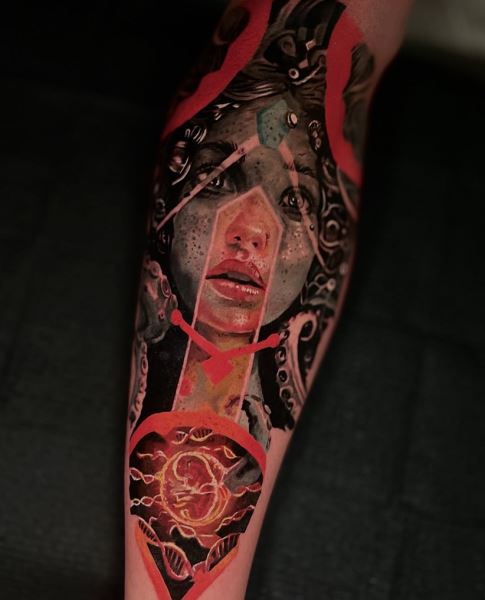
Q: Witnessing clients in such vulnerable and personal
moments during the tattooing process must be a unique aspect of your
work. How does it feel to be a part of these intimate experiences,
and does it influence your approach as an artist?
A: Being part of those intimate moments with clients is one of the
most meaningful aspects of this profession. Over the years, I’ve
encountered many stories that have left a mark on me, but one I
always carry with deep emotion is the experience of a woman who came
to get a portrait of her late husband. It wasn’t just a tattoo it
was her way of keeping him close, of feeling that he was still
walking beside her. Throughout the session, we shared silences, deep
emotions, and a human connection that transcended art. When we
finished, she hugged me and said, “Now I feel like he’s walking with
me again.” Moments like that remind me why I do what I do. The trust
that each person places in me is a true gift, it motivates me to
keep growing, to push myself further, and to give my very best in
every stroke. It’s not just about making a good tattoo; it’s about
connecting, being empathetic, and honoring the stories that live
forever on the skin.
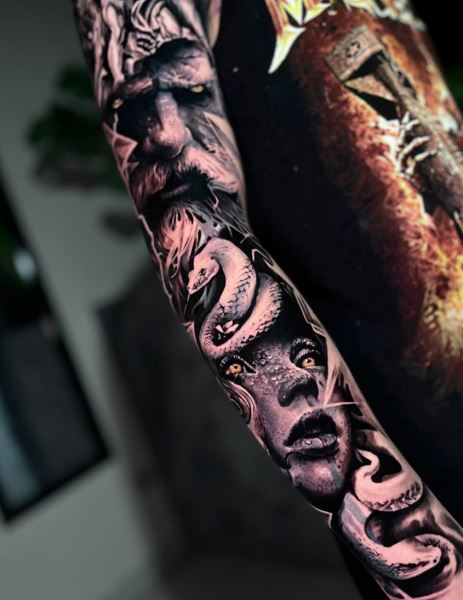
Q: What's your take on the local tattoo scene? Are you
seeing any exciting developments, like new artists, styles, or
events?
A: Tattooing in my city though, it’s a relatively small place that
has grown significantly in recent years. And when we talk about the
local scene, it’s important to look at the bigger picture: Colombia
is home to world-class tattoo artists and is now considered one of
the emerging global powers in the tattoo world. Thanks to social
media, educational seminars led by well-known artists, and the
wealth of information now available at our fingertips, many of us
have been able to refine our techniques and push our work to new
levels of excellence. Today, we’re seeing new artists emerge with
fresh perspectives, reputable events taking place, and a community
that’s increasingly committed to quality and innovation. I’m
incredibly proud to witness this evolution and even prouder to have
played a role in this journey of artistic growth.

Q: What about the global tattoo scene? Do you think we are
heading in a good direction?
A: I believe the global tattoo scene is currently going through one
of its most exciting phases. We've never had such open access to the
work of artists from around the world, and this has created a
network of constant inspiration, learning, and evolution. Tattooing
has moved far beyond its past stigma and has become a respected art
form, valued and appreciated across various sectors of society. What
truly excites me is how tattooing has brought so many artists
together in recent years. It’s somewhat ironic, when I was starting
out, most tattoo artists were very protective of their knowledge.
Sharing techniques or advice was rare. But now, every artist you
meet at a convention becomes your ally, offering you insights,
support, and helping you move through stages they’ve already been
through. That kind of solidarity has changed everything, it has
accelerated how we grow, both individually and as a global
community. It’s also inspiring to see artists blending styles,
experimenting with new techniques, and pushing the limits of what
tattooing can be. I celebrate the growing number of seminars,
conventions, and learning platforms where we can connect, exchange
ideas, and evolve together. There’s no doubt, we’re moving in a
powerful direction, one led by authenticity, creativity, and mutual
support. I can’t wait to see how far we can go.
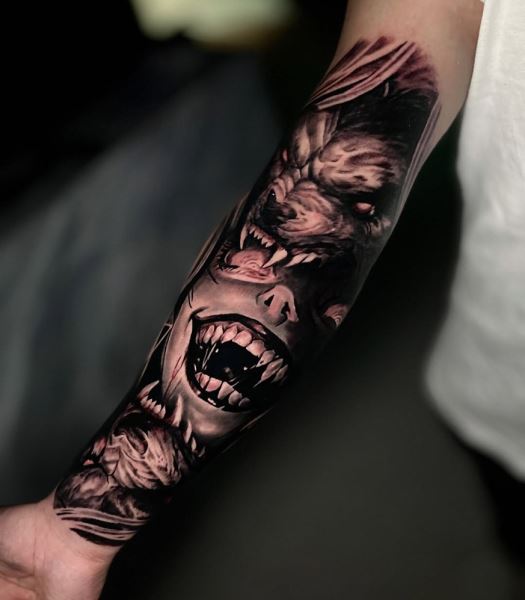
Q: Given your extensive travels, you've likely experienced a
wide range of tattoo studios and met many artists. In your opinion,
what kind of environment or location offers the best climate for an
artist to truly develop their career?
A: Throughout my career, I’ve had the opportunity to visit tattoo
studios in places like Spain, France, London, Aruba, and the United
States, each offering unique experiences and valuable lessons. What
I’ve found is that the most inspiring and growth-oriented
environments are those that pay attention to every detail. A great
tattoo studio is one that’s designed so that both the artist and the
client feel genuinely comfortable and supported. This includes the
layout of the space, the ambiance, the music, the team dynamic, and
clearly defined zones for each activity. Excellent customer service
is also essential: kindness, respect, and the ability to create a
smooth and welcoming experience especially during long tattoo
sessions can make all the difference for both the client and the
artist. I also believe that studios should strive to grow not only
in their artistic direction but also in their organization,
technology, and team culture. It’s been incredibly rewarding to walk
into studios where continuous learning and knowledge-sharing are
fundamental values. That kind of environment doesn’t just help you
develop as an artist, it motivates you to keep evolving and to give
your very best every day.
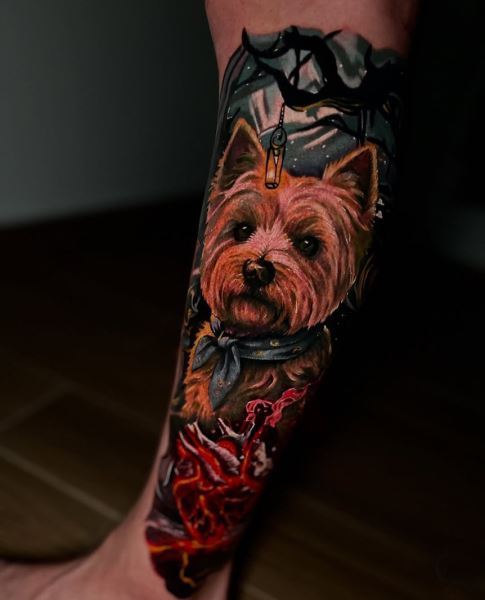
Q: How often do
you attend tattoo conventions?
A: I regularly attend tattoo conventions because they play a vital
role in my artistic and professional growth. Each event is a
creative challenge, a platform to showcase my work, and most
importantly an opportunity to connect with fellow artists and reach
new clients. I’ve had the honor of participating in major
conventions both in Colombia and abroad, and in several of them,
I’ve received awards that truly mean a lot to me. One of the most
unforgettable moments was winning "Best Tattoo of the Show" at the
Utah Tattoo Convention in the United States. It was my first time
tattooing in the U.S., and the way my art was received, with open
arms, was deeply moving. I felt that all the effort, dedication, and
passion I’ve put in throughout the years was truly appreciated, and
we came away with an incredible result.
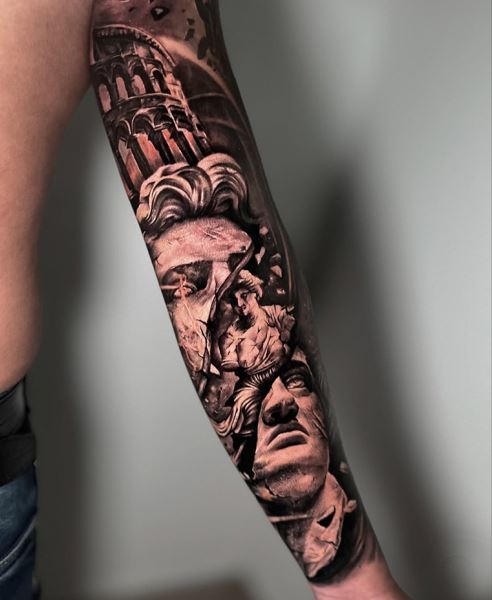
Q: What about guest spots? Have you ever worked as a guest
artist in another studio either locally or in a foreign country? If
so, what was the experience?
A: Yes, I’ve had the opportunity to work as a guest artist in
several studios both nationally and internationally, and it has been
one of the most enriching experiences of my career. I’ve worked as a
guest in countries such as Spain, France, Aruba, and the United
States, and in each of these places, I’ve been lucky to find studios
with a professional, respectful, and welcoming environment. What I
value most from these experiences is the chance to connect with
other artists who share the same passion. In many cases, those
connections have gone beyond the professional and turned into
lasting friendships. Exchanging techniques, creative processes, and
different perspectives has helped me grow, not only as a tattoo
artist but as a person.
Also, working in well-organized studios that pay attention to detail
and prioritize the comfort and well-being of both the client and the
artist makes a huge difference. It’s essential to feel comfortable,
respected, and supported by a team that values art and the unique
contribution of each artist in the space. These kinds of
environments not only inspire you to give your best, but also allow
you to deliver your highest-quality work. Without a doubt, working
as a guest artist has played a crucial role in expanding my vision,
renewing my inspiration, and continuing to grow in this profession.
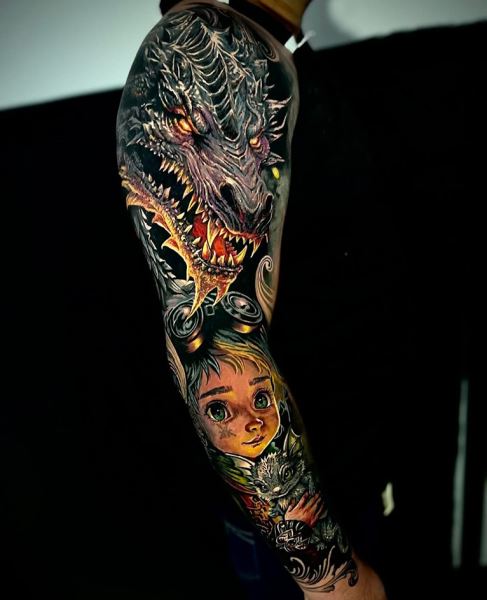
Q: Given the significant presence and variety within the
American tattoo world, is that a landscape you might be interested
in engaging with professionally at some point in your career?
A: Absolutely, the American tattoo scene is something I’m deeply
interested in and would love to engage with more professionally. I
had the opportunity to attend a tattoo convention in Utah as a
guest, and the experience completely exceeded my expectations. I was
genuinely surprised and touched by how people connected with and
appreciated my art. There was an amazing energy and a real openness
to styles like realism and surrealism, which inspired me even more
to keep evolving. Realizing how strong, respected, and professional
the tattoo culture is in the U.S. was incredibly motivating. It’s a
country where tattooing is lived with passion, and it offers
countless opportunities to grow, both technically and artistically.
I’m truly excited about the idea of continuing to explore this path
and finding my place in such a rich and diverse scene.
Q: If you were to consider establishing a presence in the
American tattoo scene, what kind of environment - in terms of
location and studio ethos - do you envision would be most conducive
to showcasing your unique blend of realism and surrealism and
supporting your continued artistic evolution?
A: If I were to establish myself in the American tattoo scene, I
would love to do so in an environment that deeply respects
professional ethics and values tattooing as a powerful and
meaningful form of artistic expression. I envision a studio located
in a culturally vibrant city somewhere where creativity flows and
people are open to bold, expressive styles like realism and
surrealism. The ideal studio for me would be a place that not only
offers the right technical setup and comfort for both the artist and
the client, but also encourages constant inspiration, collaboration
among artists, and ongoing learning. A space where each project is
treated with care, time, and attention to detail and where a culture
of growth and artistic evolution is truly supported. Beyond the
physical location, what matters most to me is finding a place where
my style can continue to grow freely and authentically, and where my
artistic vision can be shared with and appreciated by a community
that loves this craft as much as I do.
Q:
What impact do you aspire to have on the tattoo community?
A: My biggest aspiration within the tattoo community is to inspire.
I want my work to serve as a reference, not only in terms of
technique or aesthetics, but also on an emotional and human level. I
hope that people who see my pieces understand that behind every
tattoo, there’s a story, a deep connection between the artist and
the client, and a creative process filled with meaning. I also
strive to be an example of how one can grow in this profession
through discipline, passion, and respect. I want to motivate
emerging artists to believe in their talent, trust their process,
and not be afraid to build their own artistic voice. I'm deeply
committed to contributing to a community where sharing knowledge,
experiences, and lessons is the foundation for collective growth. If
through my journey I can show that tattooing is a true form of art
and that it’s possible to live from it with integrity and
sensitivity then I’ll feel I’ve made a meaningful impact.
Q: For those interested in booking a consultation or
appointment, could you please provide the location of your studio
and any relevant website or social media links?
A: Of course! For those interested in booking a consultation or
appointment, I’m currently based in Colombia, working at my studio
"Donovan Tattoos", located in the city of Tunja. I also travel
internationally for guest spots, and I regularly share my upcoming
dates and locations on my social media platforms. You can follow my
work and reach out through: Instagram: @donovan_tattoos Facebook:
donovan tattoo, Email: donovantattoos14@gmail.com
I’m always open to hearing new ideas, discussing projects, and
creating one-of-a-kind pieces for each client.
Q: If you could go back and give your younger self advice
about pursuing tattooing, what would it be?
A: If I could go back and talk to my younger self, I’d tell him to
trust his intuition, to listen to that inner voice that, even when
it hesitates, keeps urging him to create, to push forward, and to
believe in the impossible. I’d tell him that the beginning will be
tough that there will be moments of frustration, fear, and
loneliness but that every line, every mistake, and every tattoo will
be a step toward something much greater than he can imagine. I’d
tell him not to be afraid of being different, to embrace his own
style, to study hard, to observe everything, to stay disciplined,
and to never stop learning. But most importantly, I’d tell him to
enjoy the process, because the artistic path isn’t about reaching a
final destination, it’s about the journey, where every encounter,
every client, and every design leaves a meaningful mark. And lastly,
I’d remind him that art has the power to transform, not just other
people’s skin, but his own life. And that all the effort will be
worth it.


