
Interview with Elder Henrique
Hello Elder Henrique! Thank you so
much for taking the time to do this interview. We really appreciate
it. Please start by telling us something about yourself and your
background. Did you have any mentors or formal training, or are you
primarily a self-taught artist? I had influences from my
father and my uncle, both of whom painted canvases, but I wanted to
be better than them. That pursuit led me to study, but most of my
journey as an artist and tattooer was built in a self-taught way
alone and without information, through practice, dedication, and
research. Over time, I always sought to learn from great references,
but above all, I developed my own vision.
Q: When did tattooing come into the picture?
A: Tattooing came into my life exactly 17 years ago, as a way to
unite my passion for drawing. I saw it as an opportunity to bring a
professional perspective into tattooing, at a time when it was still
discriminated in Brazil. Being very focused and principled, I
understood that the opinions then negatively perceived could be
changed. I realized that I could eternalize stories and important
symbols for each person and also reach a more selective audience who
avoided tattoos because of prejudice toward studios at that time.
That’s why I wanted my studio to become a reference.
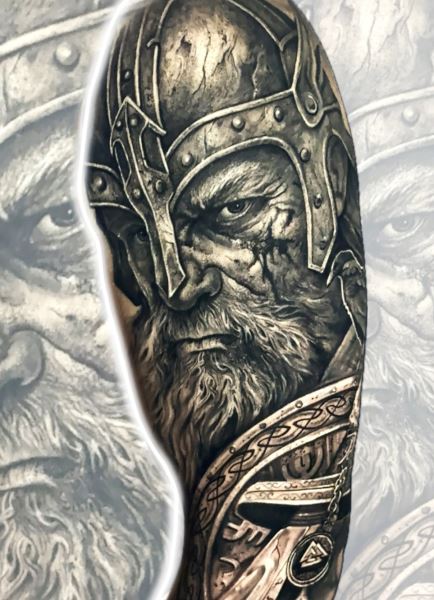
Q: You’ve clearly mastered realism. What aspects of this
style do you find most challenging or most rewarding?
A: The biggest challenge is capturing not only the appearance but
also the essence of the image or the character. The most rewarding
part is seeing the client’s emotion when what they imagined comes to
life in such an intense and realistic way on their skin.
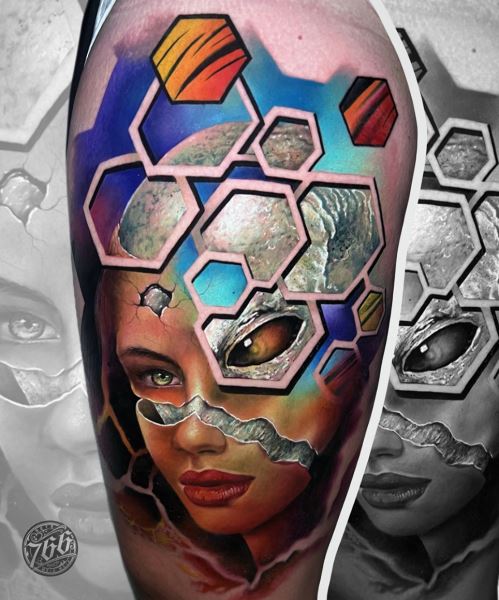
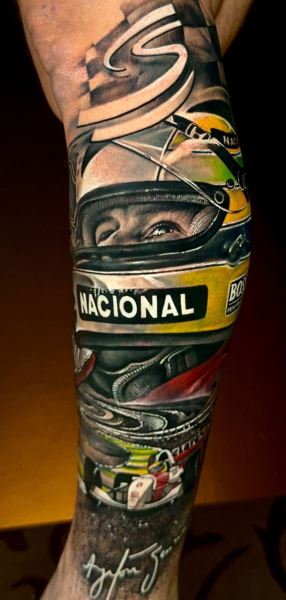
Q: Which do you find more challenging: a full-color piece or
a black and gray one? Which do you find more rewarding?
A: Both have distinct challenges. Color requires harmony, patience,
and technique so it doesn’t lose intensity over time. Black and gray
demand depth and contrast. But I find color more rewarding, because
it separates those who truly have deeper technical knowledge - it’s
more difficult to achieve. Reaching that level means reaching the
top of the pyramid.
Q: Your work has a strong blend of realism and surrealism.
How do you find that perfect balance?
A: I always start from a realistic base, but I like to insert
elements that expand the narrative, thinking about composition and
the connection between the primary and secondary. Classical
architecture, mythology, spirituality, and even surreal compositions
enrich the scene and create impact. This balance comes from an
artistic eye trained between painting, drawing, and tattooing.
Q: Tattooing is such a unique exchange between the artist
and the client. What’s the most rewarding part of that connection
for you?
A: Trust. Knowing that someone gives me their own skin to carry my
art forever is an immense responsibility. It inspires me to always
give my best, respecting the client’s wishes and elevating the final
result.
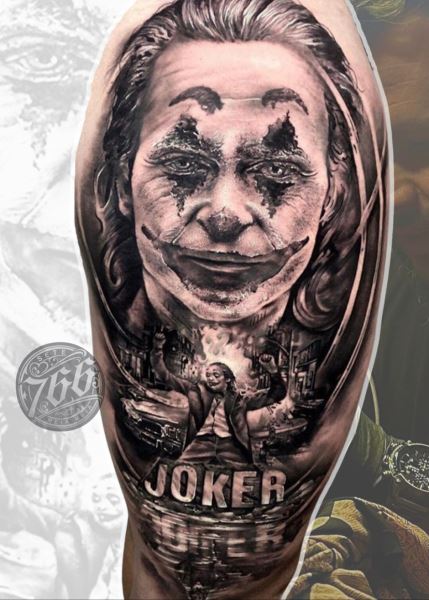
Q: What was the most challenging tattoo you’ve ever done?
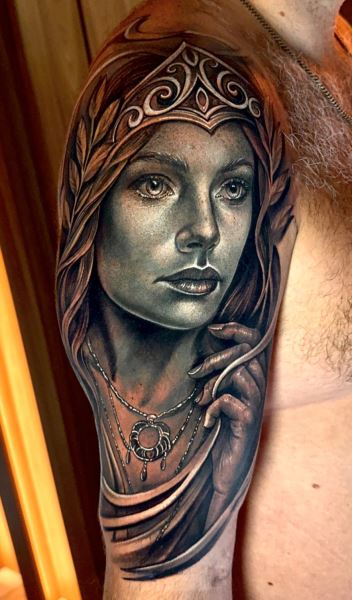
A: Large projects always bring big challenges, but I can mention two
that pushed me the most. One was the Joker tattoo right after the
movie release, at my first convention, that was a major challenge.
The second was a surrealistic woman piece at my first participation
in the world’s largest tattoo convention, Tattoo Week São Paulo. It
took almost 35 hours to complete that work.
Q: What are some of your artistic goals or areas of focus
for the coming years? Do they include experimenting with other
techniques or styles?
A: I want people in the U.S. to know my art as they do in Brazil.
Training new artists has always been my life’s purpose and
transformation. Helping others achieve the dream of becoming
tattooers will continue to be part of my path. I want to focus on
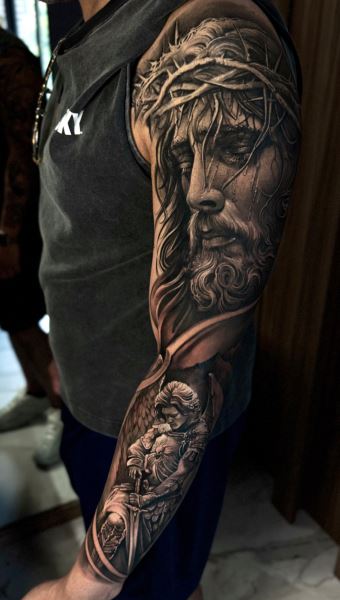
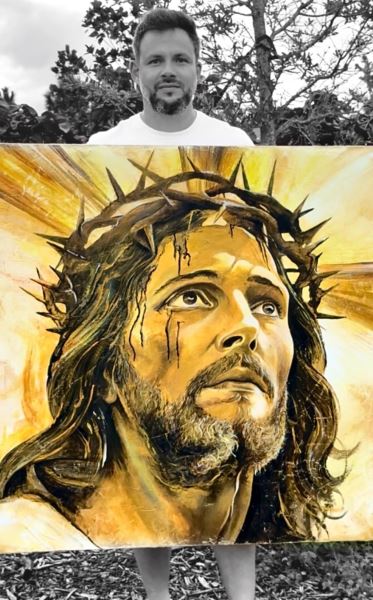
large realism projects and also strengthen my production of sacred
and Christian-themed paintings. In addition, I plan to participate
in international conventions and expand the 7six six brand as both a
gallery and a studio.
Q: I really admire your paintings in your portfolio. Are
they available for purchase, and if so, where can we find them?
A: At the moment, I don’t have works for sale because I am studying
some styles I want to adopt in my career.
Q: What’s the best way for potential clients to contact you?
A: Through Instagram @elderhenrique or email elderarts.usa@gmail.com
Q: What’s your take on the local tattoo scene? Do you see
progress?
A: Yes, definitely. The audience is increasingly demanding, and that
raises the artistic level of professionals. In the U.S. especially,
there is a growing appreciation for realism and exclusivity.
Q: Have you ever worked in a foreign tattoo studio? If so,
what was the experience like?
A: Yes, I had the opportunity to visit Europe twice, in 2019 and
2022. On both occasions, I was able to bring my art to people’s
skin. It was such an incredible experience that it motivated me to
come to the U.S. to share both my art and my knowledge.
Q: What about tattoo conventions?
A: Conventions are fundamental, both to showcase my work and to
learn from other artists. I have already participated and I intend
to continue competing in major conventions, especially in the U.S.,
bringing my unique style of realism and surrealism.
Q: How do you see the American tattoo scene evolving?
A: I see a market that is becoming increasingly professional and
demanding. This forces artists to reinvent themselves and raises the
quality of work. For newcomers, it’s a challenge but also an
opportunity. I believe that in the next five years tattooing will
make a huge leap in the United States, where more and more Americans
will want large realism projects and I am here for that, to offer my
art at the level they deserve.
Q: Where do you see yourself tattooing in the long term?
Would you consider working in the USA?
A: We first came to the U.S. as tourists, my children dreamed of
visiting Disney. After 20 days, on the eve of returning, my children
didn’t want to leave. So my family and I decided to live a new
experience for a few more weeks. After that, we thought about
staying longer to study here. Learning English has always been a
dream for us, since we traveled a lot to other countries. That
awakened the desire to spend more time and to understand more about
this amazing country, its people, and its culture. That’s why we are
here, and I want to be part of the art and tattoo scene.
Q: Any favorite American tattoo artists?
A: I admire several American realism artists, especially those who
combine impeccable technique with strong identity. When I was
younger, I used to watch TV shows like Ink Master, Miami Ink, and LA
Ink, and I always dreamed of one day being at the same level as
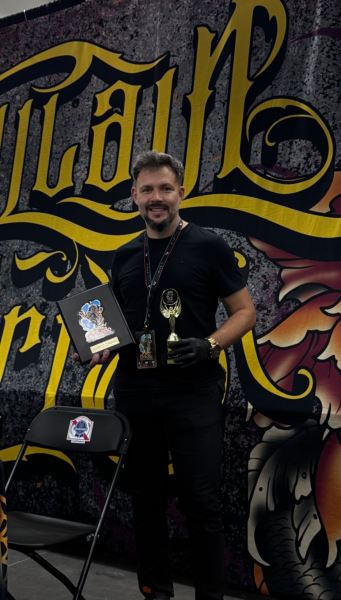
those great artists. When I participated in the Orlando convention
and was judged by an Ink Master artist and even won an award that
was a dream coming true.
Q: Based on your experience, what makes a city a great
environment for a tattoo artist to thrive?
A: It’s the combination of a demanding audience, cultural diversity,
and appreciation of the value of art. When a city values
authenticity and quality, the artist has the space to grow.
Q: How do you envision your artistic style and influence
evolving in the coming years?A: I want to go even deeper
into realism with classical and spiritual elements, creating works
that are not just tattoos but timeless pieces of art on the skin.
I’m certain that in the coming years, this desire will grow stronger
and lead to major projects.
Q: Favorite career highlight?
A: Every big project feels like a milestone. I had three tattoo
studios in Brazil, one of them in São Paulo - one of the largest
cities in the world. It was a great challenge for four years, and I
trained many artists who are now successful in tattooing. When I
look back, I see myself as a winner, not only because of my art but
because of the lives I helped transform. I am also an architect by
training and had the opportunity to see many places in the world.
All of that fills me with pride. But I believe that today is always
the most important moment, and being here in the U.S., starting to
build a new career, is already one of the highlights of my life.
Q: What advice would you give to someone aspiring to a
career as a professional tattoo artist?
A: Be true to your purpose. Study art, practice every day, and
understand that tattooing is not just technique it’s also emotion
and dedication. Moreover, know that this profession also requires
entrepreneurial vision and discipline. Be close to the best if you
want to become one of them!


