
Interview with Ester Tarabal Cabezas
Hello Ester Tarabal Cabezas! Thank you so much for taking the time to do this interview, we are really happy to have you here. Please start by telling us something about yourself and your background. When did you discover your talent for arts? I was born in a town near Barcelona and developed a strong interest in drawing and painting from a very young age. I was fortunate to have a supportive family who always encouraged my creativity and helped me pursue what I loved, even before I had a clear idea of where it would lead. I naturally gravitated toward the arts throughout my education, eventually earning a BA in Fine Arts from the University of Barcelona. During those years, I took part in exhibitions and creative projects, and I also spent a semester abroad in Helsinki, which broadened my perspective and approach to making images. Although I explored many different disciplines, I felt most at home with drawing, painting, and printmaking mediums that still shape how I work today. Over the years, I’ve been influenced by a range of artists outside the tattoo world. Egon Schiele’s raw, expressive lines, Hokusai’s powerful compositions, Audrey Kawasaki’s dreamy, feminine portraits, and Juan Francisco Casas’ hyperrealistic ballpoint pen drawings have all inspired me in different ways and continue to echo in how I approach my own visual language.
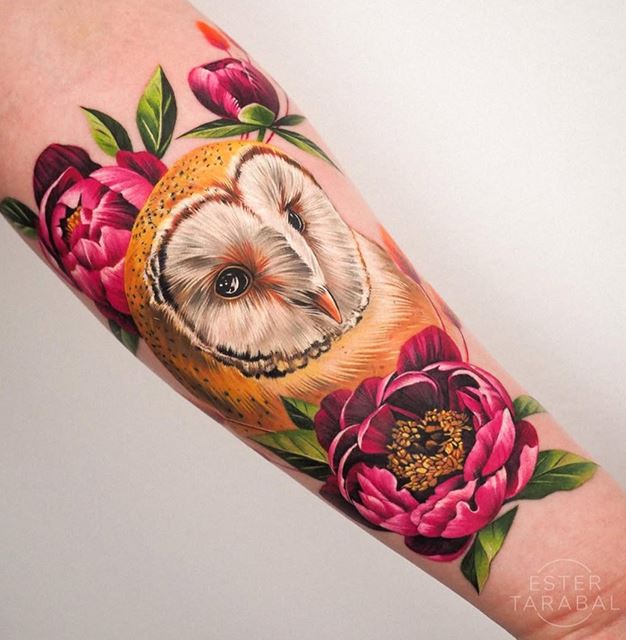
Q: What sparked your interest in
tattooing? What inspired you to give it a try?
A: I started tattooing in 2014, but my connection to the world of
tattooing began much earlier. Back in 2008, when I had just started
my Fine Arts degree at the University of Barcelona, I got a student
job as an illustrator for a tattoo studio. It’s not very common to
work as a drawing assistant in that setting, but it gave me a
close-up view of the process and culture around tattooing even
though, at the time, I had no plans to become a tattooer myself. It
wasn’t until a few years after finishing my degree, when I moved to
Copenhagen, that I decided to give tattooing a real shot. I was
mostly self-taught in the beginning, learning through trial and
error, but over the years I’ve been lucky to grow by working
alongside talented and generous colleagues who’ve helped shape the
way I work today.

Q: Your creative direction seems to be
tattoo realism with some nuances of other styles which I really
like. What do you like the most about this style?
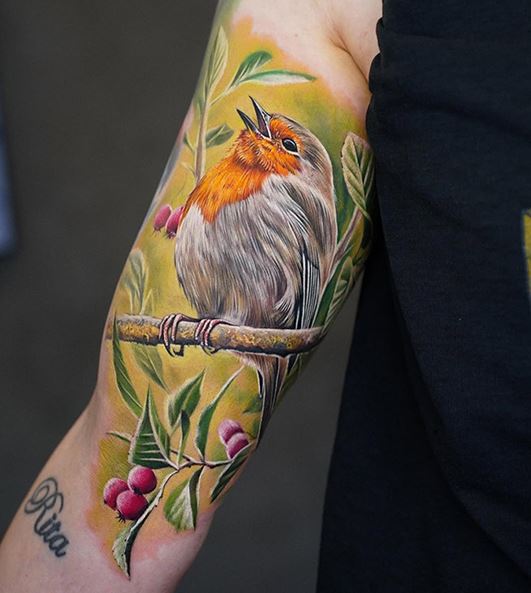
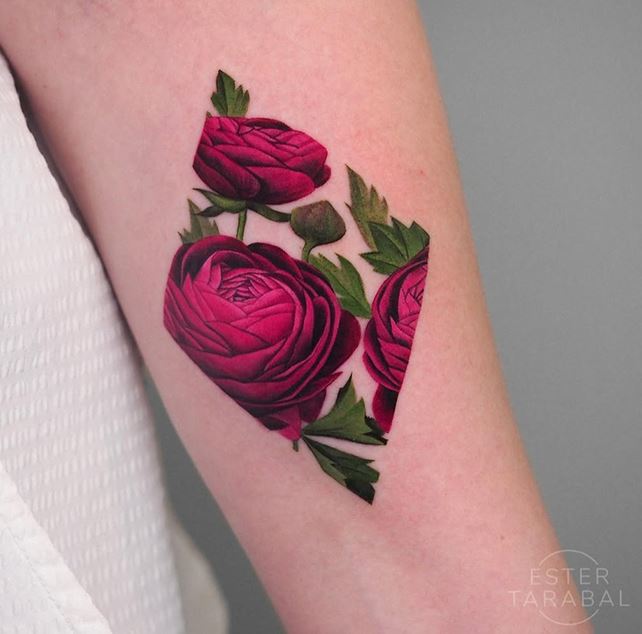
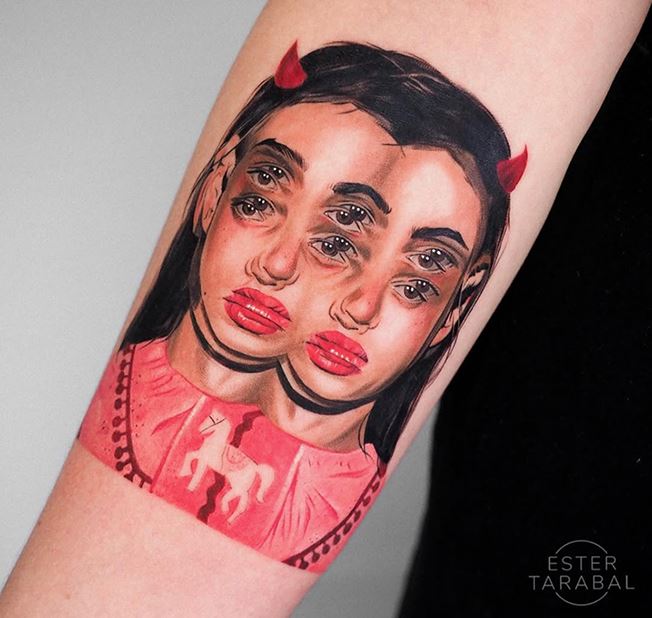
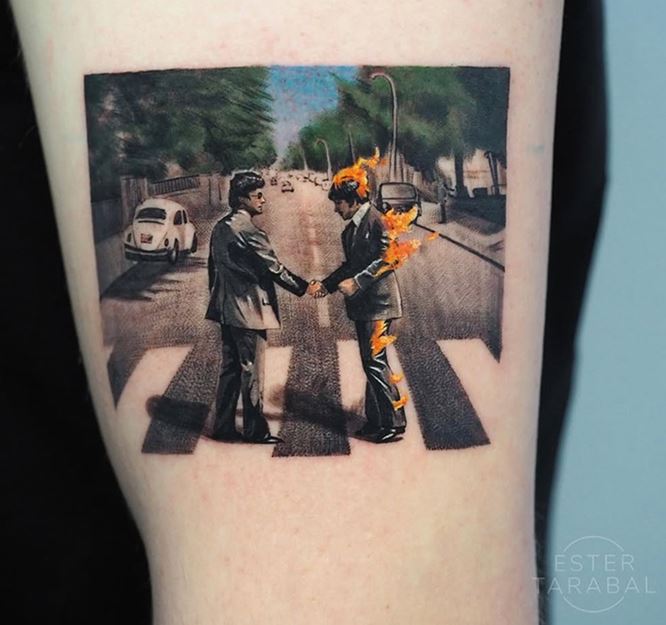
A: Realism is definitely the base of my work, it’s the approach that
comes most naturally to me. I’ve always had this instinct to observe
things closely and translate them accurately, whether I’m working on
paper or skin. But what I enjoy the most is not the replication
itself, it’s the space where realism meets imagination. I love
playing with composition, color choices, or combining different
elements to create something that feels real, but isn’t a direct
copy. That tension between something that looks like it could exist,
but has actually been invented or reinterpreted is what really
excites me. At the same time, I’ve never seen myself strictly as a
realism artist. Since the beginning, I’ve explored different styles
and techniques, and I still like to subtly bring those influences
into my tattoos. I enjoy mixing things up, even if it’s just a small
twist or detail that adds a different layer to the piece.
Q: Given the emphasis on precise
replication in tattoo realism, how do artists maintain their unique
artistic voice and express their individual creativity within the
constraints of this style?
A: That’s a great question, and one I’ve thought about a lot,
especially in the early stages of my career. I used to worry that I
didn’t have a “signature style” like many successful artists seemed
to have. I was drawn to so many different styles and ways of
working, and I didn’t quite know how to fit into just one box. Over
time, I’ve realized that this need to explore is just part of my
creative path. It’s not something I have to fight against, it’s
something I can embrace. In realism, even if two artists are working
from the same reference, their final pieces will never look exactly
the same. Your personal voice shows up in the decisions you make,
what you emphasize, what you leave out, how you frame the subject,
the mood you create. For me, the creative freedom comes through how
I build the image, how I choose to balance accuracy with
interpretation, and how I blend in subtle influences from other
styles. It’s not about copying reality, it’s about shaping it
through your own lens.
Q: Tattooing involves constant client
interaction. How do you balance fulfilling client requests with
maintaining your unique artistic vision?
A: Tattooing is definitely a collaborative process, it’s not just
one-directional. While there are times when I have complete creative
freedom, I also enjoy the part of the process where I work with the
client to bring their ideas to life. I’m confident that when people
come to me, it’s because they’ve seen my work and they appreciate my
style and ideas, which gives us a great starting point for
collaboration. I’m always open to listening to client suggestions
and ideas, and I’m very honest with them about what will work best
for the design, especially when it comes to technical aspects.
Sometimes a client might not be aware of certain limitations or
possibilities, so I make sure to explain why certain elements may or
may not work well. When we can shape the idea together, that’s when
the design and composition really start to shine. I think this
back-and-forth collaboration is what leads to the best outcomes.
Q: Have you ever turned down someone?
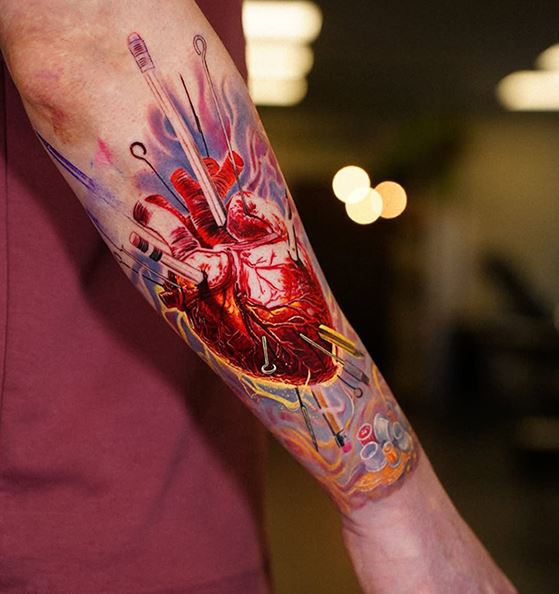
A: While I’m generally very open to working with clients’ requests,
there are times when something just doesn’t feel right, or we might
not be the right fit for each other. In those cases, I’m always
upfront about it, and I believe it’s important to make sure both the
artist and the client are comfortable with the direction. I want to
ensure that the final tattoo is something we’re both excited about.
Q: Have you recently completed a
challenging tattoo that you're particularly proud of?
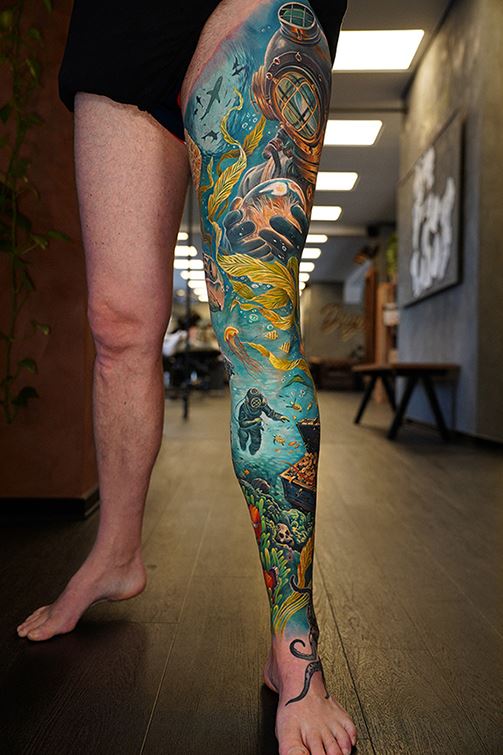
A: One of the most challenging and rewarding projects I’ve done is a
full leg sleeve with an underwater theme I started around a year
ago. It was my first time working on a full leg sleeve, and the
process involved multiple long sessions, around fifteen in total.
The client came to me with the idea of incorporating underwater
elements because he loves diving, but we agreed from the beginning
that we didn’t want just a static underwater scene. I suggested we
create different moments that hinted at a narrative, without making
it too literal. Designing for a leg is uniquely challenging, it’s a
wraparound canvas, elongated and constantly moving, so I wanted each
side to offer something interesting, with a good balance of
close-ups and background elements. I used kelp to create a natural
flow between scenes and frame certain areas, which helped avoid a
cluttered or flat look. I also limited the color palette, mainly
cool tones like blues and teals, with some warm accents, to keep the
piece harmonious and not overly chaotic. One of my favorite touches
was repeating a character, a diver in an old-fashioned suit in
different contexts. On the lower leg, he’s seen from afar reaching
toward a treasure chest, while on the thigh, there’s a detailed
close-up of him holding a glowing treasure. These subtle shifts add
a sense of storytelling to the realism, which is something I really
enjoy exploring in my work. This project taught me a lot, not only
about managing large compositions but also about preparation. I
spent a lot of time planning before even starting, so once we began
tattooing, I had a clear direction and could focus on refining the
details. It ended up coming together almost exactly as I envisioned,
and I’m really proud of that.
Q: Your color work is truly exceptional,
with some of your tattoos achieving a remarkable level of realism.
Could you elaborate on the significance of proper ink usage in
achieving this hyperrealistic look?
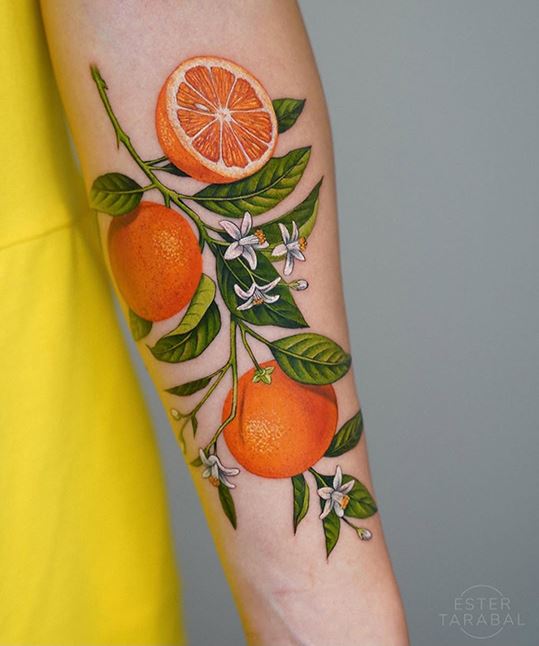
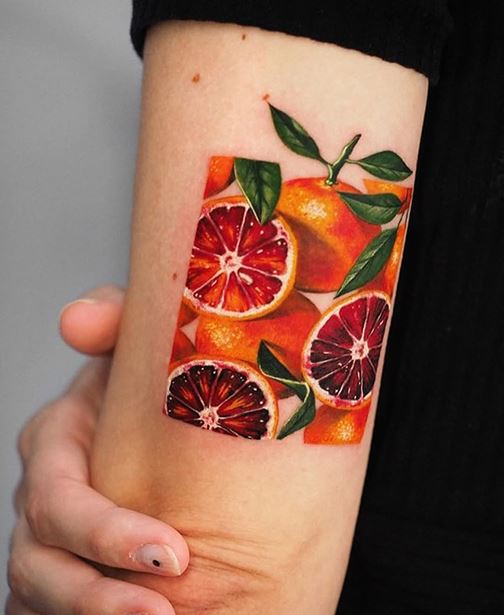
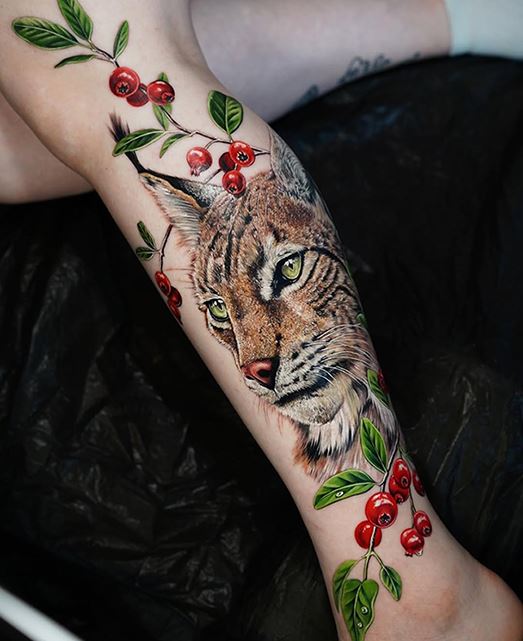
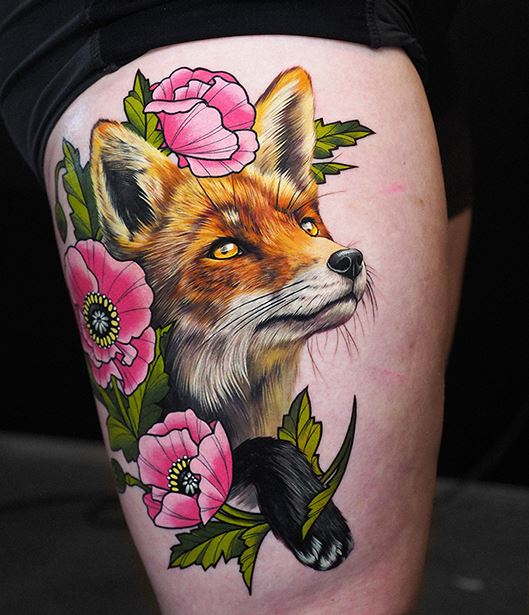
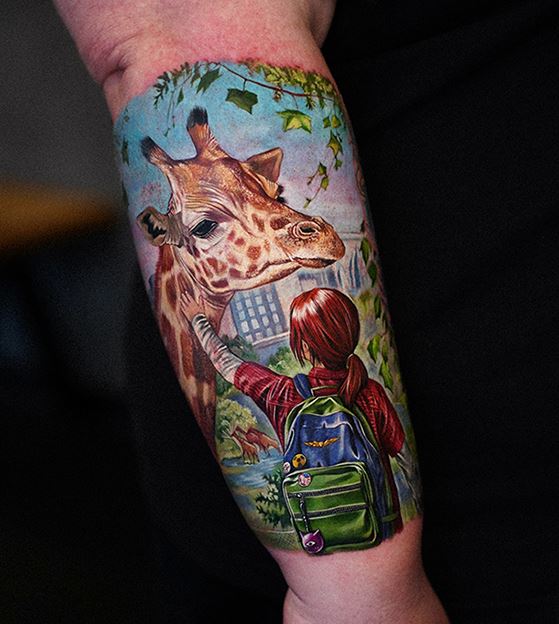
A: When working with color realism, my focus isn’t just on making
something hyper-realistic, it’s about making sure the tattoo reads
clearly and works as a whole. Every element has to relate to the
full composition, whether there’s a background or not, so I always
keep the big picture in mind, even when I’m working on smaller
sections. Technically, proper ink usage plays a huge role. I rely a
lot on layering to build depth and achieve smooth transitions,
especially in larger pieces. But unlike painting on a canvas,
tattooing requires adapting to the process, often working element by
element, so it’s crucial to maintain control over tone values to
keep everything cohesive. I also believe that realism in tattooing
isn’t about copying an image exactly. What works in a photograph
doesn’t always translate to skin. So I reinterpret references,
emphasizing textures, light, and key details while simplifying
others, so the final piece still feels real and alive, but works
better as a tattoo.
Q: Many people strive to maintain the
vibrant appearance of their new tattoos for as long as possible.
What are some of the primary factors that can negatively impact
tattoo longevity and proper healing?
A: Honestly, I always make sure to give my clients everything they
need for proper healing, clear instructions on paper, good aftercare
products, and honest advice. I know that with my style, healing can
sometimes be a bit tricky, so it’s really important to follow the
process carefully. A good result doesn’t just come from the tattoo
itself, but from taking care of it afterward, and I want to make
sure my clients are fully supported through that.
Q: Your tattoos are all unique and
distinctive. Could you describe your design process? Do you
primarily utilize digital tools like a pen tablet, or do you prefer
traditional sketching methods before beginning a tattoo session?
A: My design process really depends on the tattoo. When I work with
realism, I use multiple photo references, sometimes I edit them
digitally to show the idea, but the real designing often happens
during the tattooing itself. I don’t fully copy one image, I pull
elements from different photos, maybe one has the right light,
another the right texture, and another the right angle, so I can
build something cohesive while tattooing. I use an iPad for all my
sketches now, unless it’s a piece meant to become a drawing or
print. Digital is clean and efficient, which helps me focus my
energy on the tattoo itself. But I started years ago drawing
everything by hand, with no light table or stencil machine, just
pencil and paper. That process taught me a lot, like how to adapt,
refine, and build a solid visual instinct, and I still rely on that
foundation today.
Q: We understand that your time as a
tattoo artist is valuable. What is your general approach to design
corrections and revisions requested by clients?
A: For me, the most important part is the preparation, getting all
the right info from the start. I use a detailed booking form to
collect references, a photo of the area, and a description of the
idea. Even when the references aren’t perfect, I’ve developed a
strong instinct for understanding what my clients are really looking
for. I often send feedback with suggestions or visual examples to
make sure we’re on the same page before the appointment. By the time
they arrive, I always have something prepared, either a full design,
a composition, or the elements ready to work with. And honestly,
because of all the effort done beforehand, it’s rare that I need to
change anything on the day. But if we do need to adjust something,
that’s totally fine, it’s part of the process. I’ll never tattoo
something my client isn’t fully happy with. I think my traditional
drawing background helps a lot here, it means I can redraw quickly,
sketch directly on the skin, or tweak things easily without stress.
Those old-school skills still make a big difference today.
Q: Can you share a memorable client story
that highlights a positive impact you made?
A: It’s hard to pick just one story because every day I get to share
meaningful moments with my clients, whether the tattoo is deeply
personal or just for fun. Even the smallest pieces can carry a lot,
and being chosen to do them is something I don’t take for granted.
This job can be emotionally draining at times, and like anyone, I’ve
had moments of doubt. But then someone comes in, thanks me not just
for the tattoo but for the experience, for listening, for the care
and that gives me perspective again. Those interactions mean a lot
and remind me why I do this.
Q: With the rise of collaborative projects
in the tattoo world, have you considered collaborating with other
artists on a tattoo design? What are your thoughts on the potential
benefits and challenges of such a venture?
A: Absolutely, collaborating with other tattooers is such a fun
experience. It can be challenging, especially when styles differ,
but that’s what makes it exciting. I love the exchange of ideas and
working together to create something unique. It’s not always easy to
sync schedules, but it’s definitely something I want to keep doing.
I’ve done small collaborations with Ruben Riksfjord, Martin Rothe,
and Christian Boye, and I’m eager to do more in the future. Guest
spots have also been a huge source of inspiration for me. One of the
highlights was working at Black Ship in Barcelona, owned by Kike
Esteras. Being in a different studio gives you a fresh perspective,
and I got so much inspiration from how the artists work and the vibe
of the space. Similarly, at Humanfly in Madrid, owned by Jee Saya, I
was surrounded by amazing talent, and it really sparked new creative
ideas. It’s such an enriching experience to guest at different
places and learn from other talented artists.
Q: How would you describe the current
state of the Danish tattoo scene? Do you observe any significant
growth or evolution in terms of emerging artists, new styles, and
community events?
A: Denmark is a small country, and one of the things I love about
that is how most of us tattooers know each other. There’s a strong
sense of community here, which is really special. I’ve definitely
seen growth and evolution in the tattoo scene, especially with more
traveling artists coming through and conventions. These events bring
different styles and ideas together, helping to push the scene
forward. The way artists collaborate and exchange ideas at
conventions, for example, has been really exciting to see. It feels
like there’s always something new to learn and discover in this
close-knit but ever-growing tattoo community.

Q: What is your experience working at
Dropout Tattoo Studio? I admire the studio's reputation for
fostering a collective of incredibly talented artists. Could you
describe the team dynamic and the opportunities for professional
growth and learning within the studio?
A: Dropout holds a special place in my heart. It’s not my studio,
but I’ve been there since the very beginning and have been part of
its development. Being surrounded by incredibly talented artists who
are also friends creates a unique vibe. The studio strikes a perfect
balance between being professional and friendly, with a real sense
of community. It’s open-minded, and we help each other without it
feeling too rigid or strictly professional. There’s room to relax
and feel at home, which has been really important for me. I’ve grown
a lot here, and being able to work alongside skilled artists has
been invaluable. It’s a place where you can always learn, improve,
and grow, while also feeling like part of a family.
Q: How frequently do you participate in
tattoo conventions, and how do you leverage these events to enhance
your professional visibility, connect with clients and fellow
artists, and potentially expand your career opportunities?
A: Tattoo conventions have definitely been one of the greatest
experiences in my development as a tattoo artist. I think they
really push you to expand your boundaries, put you in your place,
and show you just how much more is out there. Every time I attend, I
leave feeling inspired and eager to push myself even further. My
very first convention was the Copenhagen International Tattoo
Convention in 2015, just about a year after I started tattooing. I
had no idea what to expect, but jumping in so early really opened my
eyes to what the tattoo world is all about. Working in your studio
is one thing, but seeing what other artists are doing makes you
realize there’s so much more you can achieve. Since then, I’ve
participated in several Danish conventions, like Nordic Ink
Festival, HCA Ink Tattoo Fest, and Prison Ink, and it’s been so fun
getting to know international artists and making friendships with
local tattooers. It’s easy to feel like a newcomer at first, but the
tattoo community is so welcoming, and it creates a sense of
connection right away. I eventually decided to compete, which I was
really nervous about, but in 2019 at Nordic Ink, I won my first
award, a second place for Best Realistic. That gave me the
confidence to push further, and in 2021 at HCA Ink, I won first
place in Best Color and first place in Best Show. Those two awards
were especially meaningful because they were for pieces I was really
proud of, and being recognized for them was incredibly rewarding.
I’ve also participated in international conventions, like Tattoo
Planetarium (Mondial du Tatouage) in 2022, 2024 and 2025, and
Stockholm Ink Bash in Sweden. In 2023, I won the Best of Show award
in Stockholm, which was another great experience. I love attending
these conventions, not just for the chance to compete, but also to
learn, get inspired, and stay connected with the global tattoo
scene. I’m looking forward to participating in even more in the
future.
Q: Given the vibrant and diverse nature of
the American tattoo scene, are you interested in exploring more
professional opportunities within the United States?
A: Absolutely. I’ve mainly worked within the European tattoo scene,
but I’m sure a whole new world would open up to me in the American
tattoo world. The U.S. has such a rich and diverse tattoo culture,
there’s an incredible range of styles, histories, and influences
depending on the region. From bold traditional work to fine-line and
experimental approaches, I feel like the American scene holds so
much to learn from. There’s also a strong sense of legacy in certain
places, with long-established shops and artists who’ve helped shape
the industry. I’m excited about the possibility of connecting with
that, exchanging ideas, and continuing to grow through new
experiences and perspectives.
Q: If you were to pursue a long-term career as a tattoo
artist in the United States, is there a specific region or city that
particularly interests you?
A: I would love to explore what each city and region in the US has
to offer. I think every place has its own unique tattoo culture, and
I’m really interested in learning from different styles and
perspectives. I’m open to exploring wherever I feel there’s an
opportunity to grow and learn, as well as tattoo conventions.
Q: What kind of impact do you hope to make
on the world of tattoo art in the years to come?
A: I hope to continue pushing the boundaries of my own work,
constantly evolving and experimenting with new techniques and
styles. My goal is to inspire others, whether it’s fellow tattoo
artists or clients, by showing that tattoos can be both personal and
artistic. I also want to contribute to a more open-minded and
inclusive tattoo culture, where people can express themselves freely
without feeling limited by trends or expectations. Ultimately, I
just want to create meaningful tattoos that leave a lasting
impression.
Q: What activities or interests help you maintain a balanced
lifestyle and foster personal growth outside of your professional
endeavors?
A: Maintaining a balanced lifestyle is definitely a challenge,
especially when your passion becomes your job. For tattooers, the
line between personal and professional life can get blurry, but in
the end, I see that as a blessing. Traveling is really important to
me, not just for work but also for personal growth. I try to
differentiate the two, even though it’s difficult! I recently went
to Japan with my sister, who also shares an art background, and we
explored art stores, flea markets, and nature. It’s a reminder that
inspiration is everywhere. Whether it’s about getting away or
immersing myself in new cultures, it all shapes my work and how I
approach tattooing.

Q: What are the most rewarding aspects of
your career as a tattoo artist?
A: The most rewarding part of being a tattoo artist is definitely
the connection with people. When clients trust me to help bring
their ideas to life, it’s a huge honor. I love the creative process,
how every tattoo is a unique collaboration between me and the person
in front of me. There’s something deeply fulfilling about seeing the
way a tattoo can change someone’s perspective, boost their
confidence, or simply make them feel heard. It’s a combination of
art, storytelling, and personal connection that keeps me passionate
about what I do every day.
Q: Favorite careers highlights?
A: One of the most rewarding aspects of my career has been stepping
out of my comfort zone and challenging myself to grow as an artist.
From the moment I started tattooing, I’ve sought opportunities to
push my boundaries, whether through collaborating with other artists
or taking on new styles that pushed my technical skills. Each time I
took a leap, whether it was participating in conventions, traveling,
or working alongside different artists, I felt like I grew not only
professionally but also personally. It’s those moments of growth and
overcoming challenges that stand out to me as some of the best
highlights.
Q: What is the most valuable advice you
can offer to someone who is serious about becoming a professional
tattoo artist?
A: The most valuable advice I can give is to stay humble and
continuously push yourself. Don’t rush into it thinking you’ll be
great right away, tattooing takes years of practice, patience, and
learning. Be open to feedback from others and don’t be afraid to ask
questions or admit when you don’t know something. Build your own
style over time, but also remain adaptable. And lastly, never lose
your passion for what you’re doing, it’s a hard career, but if you
love it, you’ll find ways to grow and succeed.
Ester Tarabal
@estertarabal (IG and TikTok)
estertarabal.com
Dropout
Vesterbrogade 149, Building A, 2nd floor
1620 Copenhagen
Denmark
@dropout_cph (IG)
dropout.dk


