
Interview with Fabian Rodriguez
Today we are joined by Fabian Rodriguez, a
London-based tattoo artist whose work has redefined the boundaries
of Black and Grey Realism. Known for his cinematic compositions and
masterful use of contrast, Fabian has become a sought-after name at
the world-renowned No Regrets Studios. From ancient mythology to
intricate portraiture, his portfolio is a testament to technical
precision and a deep understanding of the human canvas. In this
interview, we trace his journey from his first needle to his
emergence as a leading figure in the global tattoo community.
Q: Fabian, every master was once a beginner. Can you take us
back to the moment you realized that the skin was your preferred
medium over traditional canvas or paper?
A: Honestly it was a quick transition, I practised on synthetic skin
and pigskin, ten years ago there was not much information on how to
tattoo empirically, what is closest to human skin is pig skin, I did
not have a mentor or someone to guide me, YouTube was my best
counsellor to be honest, in my country Colombia it is very difficult
for someone who has been taking you as an apprentice for years. I
drew since I was a child and the transition from paper to skin was
beautiful, something I will never forget.
Q: Early in your career, who were the artists, either within
the tattoo world or from classical art history that shaped your
aesthetic? I see a lot of classical sculpture influence in your
work, did Renaissance art play a role in your training?
A: In the beginning of my career in terms of tattooing, I had two
references that remain Dmitriy Samohin and Carlos Torres. The
precision and detail that I saw in each of their works made me
vibrate and inspire, but I knew that to reach that level I had to
practice a lot, and the era of the Renaissance has always inspired
me, from the paintings, inventions to the sculpture, without a doubt
every time I see a sculpture of some master I want to tattoo on
skin.
Q: What was the specific moment or piece
of work where you felt you had moved from being a 'practitioner' to
an 'artist' with a distinct voice?
A: I had only been tattooing for six months when I won second place
in the 'Rookie' category. Something just clicked inside me. The
judges told me I had a lot of potential, which made me feel like I
truly belonged. That was the real beginning of my career.
Q: Your work features a very specific type of
'high-contrast' realism; the blacks are incredibly deep, and the
highlights are piercing. How did you develop this specific technique
to ensure your tattoos age as well as they look on day one?
A: By working carefully and with a lot of patience, I ensure the
pigment is well-saturated, whether I'm working with shading or solid
black. It is a long process that requires following up with every
client. I always keep the most complex parts of a piece in mind and
check to ensure they’ve healed correctly. I’m constantly striving to
make every tattoo heal better than the last, you never stop
learning. Of course, a lot depends on the client's aftercare, so I
always walk them through the step-by-step process to ensure the best
result.
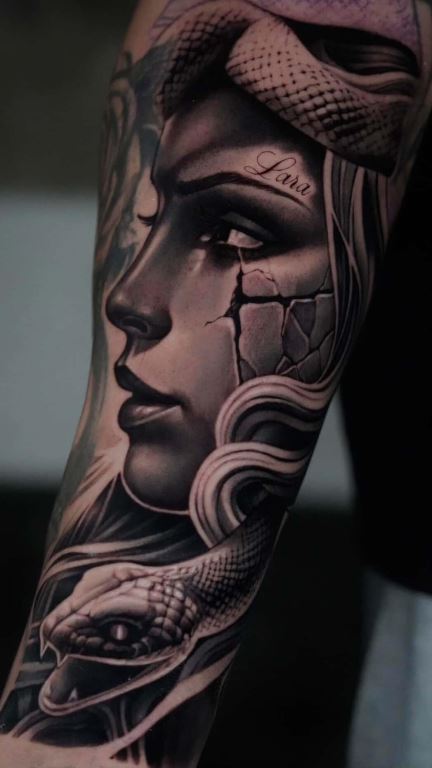
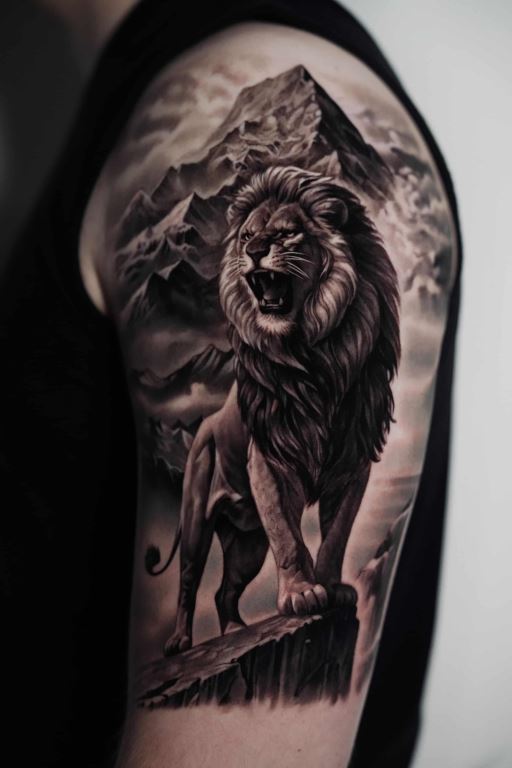
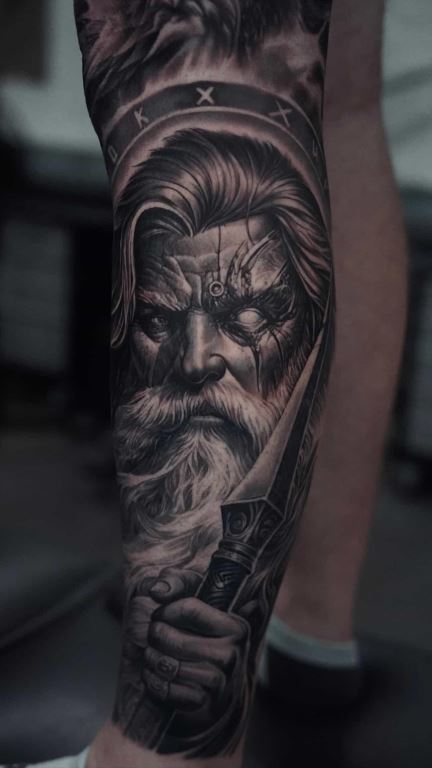
Q: Looking at your large-scale pieces (like the full
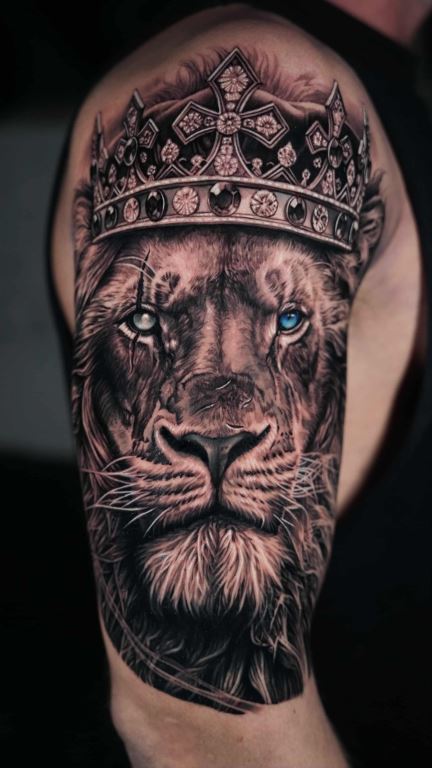
sleeves featuring Greek gods or lions, there is a sense of
storytelling. How do you approach the 'flow' of a design to ensure
it complements the anatomy of the client?
A: Before tattooing I like to talk to my clients about what they
like, and I always ask if they want the arm they are going to tattoo
complete, because they come for something small but over time they
want to tattoo the whole arm. I like to make the complete design
based on my client's arm or leg, and we do it session by session
making sure that everything looks fluid and that it tells a story.

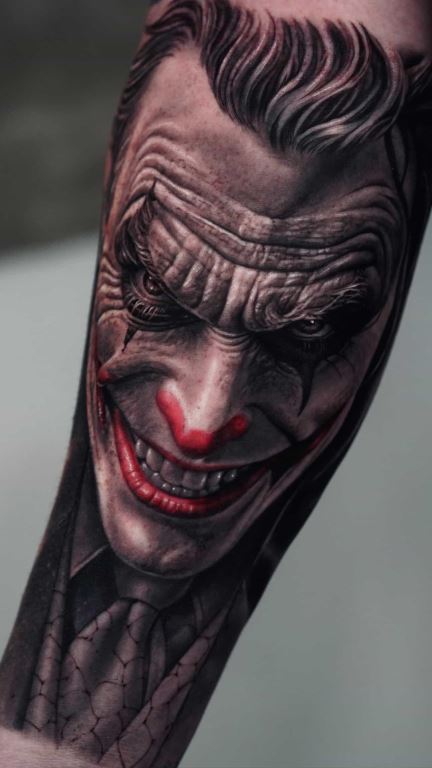
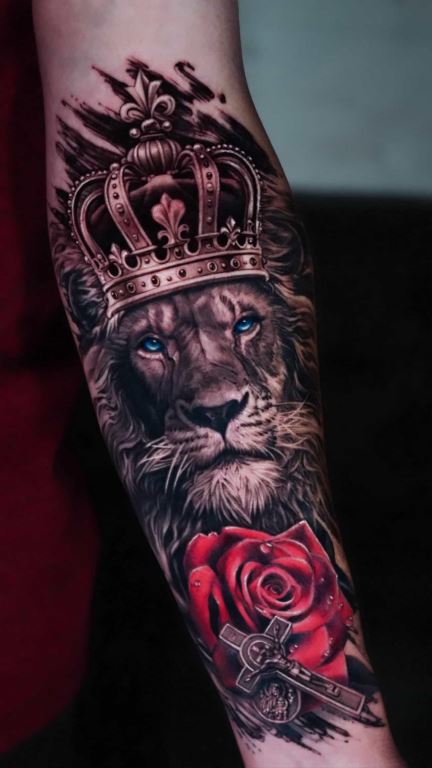
Q: Portraiture and animal realism leave
no room for error. What is your mental process when approaching a
piece like your 'Joker' or 'Lion' tattoos to ensure you capture the
'soul' and not just the image?
A: In realism, each stroke is important, the value of each line and
shadow can generate great results. Before starting to tattoo I like
to see, observe and analyze every detail of the work that I will do
and I create an order and work map. I focus a lot on the expression
of the gaze, there is a soul of each animal or portrait I make.
Q: I noticed several impressive 'Cover-up' transformations
in your portfolio. Many artists shy away from these because of their
difficulty. Why do you take these on, and what is the satisfaction
in 'reclaiming' that skin for a client?
A: In my opinion, cover-ups are among the most difficult tasks a
tattoo artist can face. You have to guarantee the client that the
old tattoo won't show through once it heals, which often requires a
long process and several sessions. That’s why many artists avoid
them. Since I started, I’ve taken on many cover-up challenges. While
not everything can be covered sometimes I recommend laser removal
first to ensure a better result, seeing my clients' expressions when
we finish is priceless. That is my ultimate reward.
Q: In your neo-classical pieces, like the tattoos of Atlas
or Zeus, you manage to make the skin look like cold, weathered
marble. What is the secret to capturing the texture of stone versus
the softness of a human portrait?
A: To achieve a realistic marble effect, I prefer working in layers
and maintaining a disciplined order but above all, it requires a lot
of patience. I’ve discovered that using a variety of gray tones and
diluted grey washes works incredibly well. This approach generates a
level of contrast and realism that makes the texture feel truly
interesting.
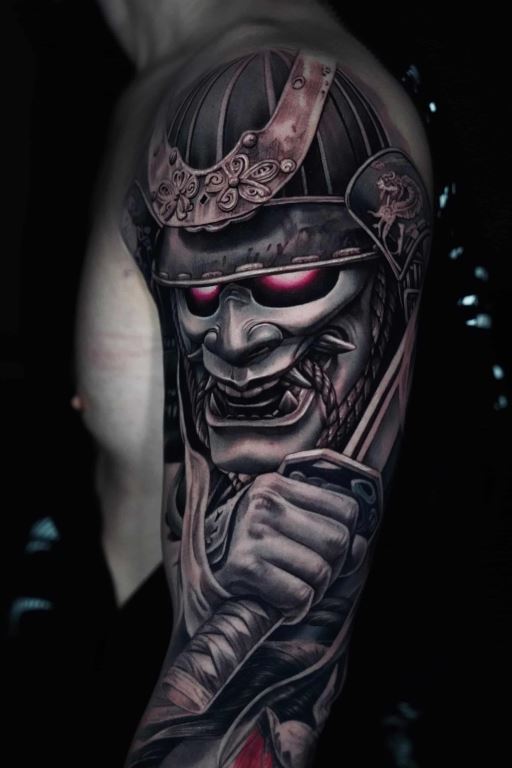
Q: Looking at your animal portraits,
there is a specific 'wetness' or life in the eyes. How much of that
is a result of your needle grouping choices, and how much is a
result of your study of light physics?
A: As I mentioned before, the eyes are everything in an animal
portrait; they are the focal point. I don't use many different
needles; I typically outline and shade with a Round Shader (RS).
While other artists prefer Round Liners (RL) or Soft Edge Magnums
(SEM), I find that the RS leaves a more realistic 'aura' it's less
harsh. Realism is achieved by defining the shape through shadows
rather than hard lines. Depth is also crucial: I use pure black for
the pupils and, when working with color, I focus on a smooth
gradient. For me, that is the key.
Q: Your compositions often feel like a still frame from a
movie. Do you draw inspiration from cinematography or photography
lighting (like Chiaroscuro) when you are staging a new piece?
A: Chiaroscuro is essential, both in the background and the overall
composition, as it creates the necessary contrast and depth. My goal
is for the tattoo to be 'readable' from a distance; I don't want it
to look like a dark blur or something so light that it fades away
over time. Deep black is incredibly important in my work to ensure
the piece stays defined for years to come.
Q: While you are a master of Black and Grey, you
occasionally use subtle color or 'blue fire' effects.What dictates
the choice to break the monochrome palette with a 'pop' of color?
Would you ever consider trying full-color tattooing?
A: Color creates a beautiful and unique contrast. Although many
clients still prefer the classic look of black and grey, there are
those who embrace color to break away from tradition. I always
suggest color based on the client’s skin tone to ensure the best
results. A solid black and grey foundation paired with
well-saturated color and smooth transitions will always create a
high-impact piece. I would love to take on more full-color projects;
evolving and changing my work is an essential part of my process.
Q: Fabian, your pieces are often massive,
multisession projects. How do you handle the initial consultation to
ensure that the client's vision is honored while maintaining your
own artistic integrity?
A: Honesty is fundamental in my work. While I provide an estimate of
how many sessions a full-sleeve project will take, several factors
come into play: the client's physical size, their lifestyle (such as
lifting weights or playing sports), the complexity of the design,
and their pain tolerance. I always tell my clients that I refuse to
rush; I prefer to work conscientiously and focus on the fine
details, that is my signature. It often happens that we need more
sessions than originally planned, but once the client sees the
quality and how the arm is coming together, they never have an issue
with the extra time. Quality is everything.
Q: The tattoo chair is often a place where
people open up. Have you had experiences where a tattoo, perhaps a
memorial or a symbol of a new beginning became a therapeutic process
for the client? How do you hold space for those emotions?
A: Absolutely. Many clients come to me during difficult times, and
for them, the tattoo becomes a symbol of healing and growth. Whether
it's honoring the loss of a loved one or commemorating an
unforgettable moment, I always make it a point to listen. I want to
understand the story behind the ink so I can bring that memory to
life. This process is so personal that many of my clients end up
becoming close friends. It’s one of the most beautiful aspects of my
profession, capturing those deep emotions and knowing they will
always remember the role I played in their journey. For many,
tattooing is truly a form of therapy.
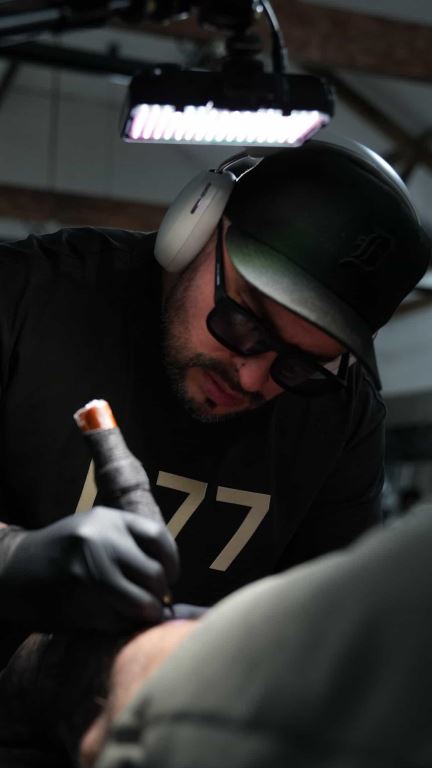
Q: Professionalism in the tattoo industry
is often overlooked. What are the 'unspoken rules' of conduct you
follow to ensure every client, regardless of who they are, feels
they are receiving a world-class service?
A: From the moment they walk in until the session ends, my priority
is ensuring the client is as comfortable as possible; this is what
guarantees the best results. I always demonstrate my hygiene
standards by showing that everything is clean, I only work with
fresh gloves, and all needles are brand new. Building trust and
maintaining an orderly workspace is why my clients keep coming back.
Of course, there are exceptions: I will not tattoo anyone who
arrives under the influence of alcohol or substances, it's
unprofessional and unsafe. During long sessions, we take breaks to
stay hydrated and eat, which is vital. My 'law' is that a
comfortable client leads to a perfect tattoo.
Q: A major indicator of a great artist is 'collector'
loyalty. Do you have clients who have traveled across borders
specifically to have you continue their work? What does that loyalty
mean to you personally?
A: Of course, it has happened to me quite often. When I was
tattooing in Colombia, customers began traveling to see me once they
saw the quality of my work. At first, I was surprised, but
eventually, I understood that art has no borders. I’ve tattooed many
people from the United States and South America, and to this day,
they still ask me when I’m going to return, that is true loyalty.
Now that I am based in London, the same thing is happening; people
travel so that I can capture their ideas on their skin. I do
everything possible to make them feel comfortable and to ensure the
best possible bond between the artist and the canvas is formed.
Q: Since January 2024, you have been a
resident artist at No Regrets Studios in London, working alongside
13 other globally recognized artists. How does being part of such a
high-caliber roster influence your work, and what do you feel your
specific style brings to the studio's reputation?
A: Working at No Regrets has been a wonderful experience. Most of my
career was spent in my home country, so the fact that they have
placed their confidence in me to work here in London is a huge
honor. Every artist here has a unique style, and I’ve adapted many
of their techniques and processes into my own work, everything from
how to apply a stencil to choosing the right needles. My work has
evolved and is now much more solid. I really appreciate my style
because of the high level of detail it requires and how adaptable it
is for large-scale projects. I hope to keep improving and
contributing to the profession through my craft.
Q: You are frequently cited as an
award-winning realism artist. Can you discuss a specific accolade or
competition that was a turning point for your career recognition?
A: Without a doubt, it was the 2018 Armenia Tattoo Expo, where I won
three awards: Best of Day, Best of Category, and Best of Show. That
convention was incredibly high-level, and winning there was a major
turning point in my career. It was the moment I realized I was
capable of achieving great things. Many people within the industry
guild congratulated me, and it remains a very pleasant and
unforgettable milestone for me.
Q: London is a global hub, and your work
has gained significant attention online. Do you find that your
career now attracts clients who travel internationally specifically
for your 'Black and Grey' signature?
A: Yes, I have had many clients travel specifically to get tattooed
by me coming from Germany, Italy, Romania, Ireland, and Spain, among
others. It is incredibly gratifying to see my art valued in this
way. Being able to reach so many different people and cultures
through my work is something that truly moves me, and I hope to
continue expanding those horizons.
Q: As you look toward the United States, how do you see your
career evolving? Do you plan to engage in guest spots or
collaborations with other top-tier American studios to continue your
international exchange of techniques?
A: That is exactly my goal: to continue growing both personally and
professionally. The prospect of going to the United States, where
the artistic and professional standards are so high, really excites
me. I would love to participate in several major international
conventions there and, of course, share everything I have learned
throughout my journey so far. I am very much looking forward to
making that happen.
Q: Why is the United States the right
destination for the next chapter of your artistic journey?
A: No Regrets recently opened their U.S. headquarters in Miami, and
they have invited me to continue my legacy there following the great
results I’ve achieved in London. Beyond that, I have always wanted
to go to the U.S. because I have family and friends there. It feels
like the right next step for me a chance to continue expanding my
horizons and introducing my work to a new audience.
Q: What specific elements of the US tattoo
scene do you find most inspiring, and how do you see your Black and
Grey realism style evolving within that environment?
A: There is an immense level of respect for the tattoo scene in the
U.S. It is home to many world-renowned traditional studios and
legendary artists whom I can learn so much from. Between the
high-level conventions and the technological innovations that help
refine my craft, it is the perfect environment to grow. Being able
to collaborate with colleagues and connect with the many artistic
references I have followed for years would be a massive leap forward
for my career.
Q: In London, you are a resident at a top-tier studio. Do
you have aspirations to eventually mentor American artists or lead
workshops to share your specific techniques?
A: I would love to share everything I have learned through workshops
or seminars. I believe that knowledge is meant to be shared.
Providing tools to help other artists who follow my work grow and
improve and contributing to the overall advancement of the tattoo
scene is something that would make me very happy.
Q: The 2026 market is moving toward
vegan-friendly, non-toxic inks and sustainable studio practices. How
does your practice at No Regrets align with these global shifts
toward safer, ethical tattooing?
A: Everything evolves, and the career of a tattoo artist is no
exception. Currently, I work with several vegan inks, and I’ve seen
no negative impact on the quality or longevity of my work. I will
continue to promote and adopt any practices that are better for the
human body and the environment.
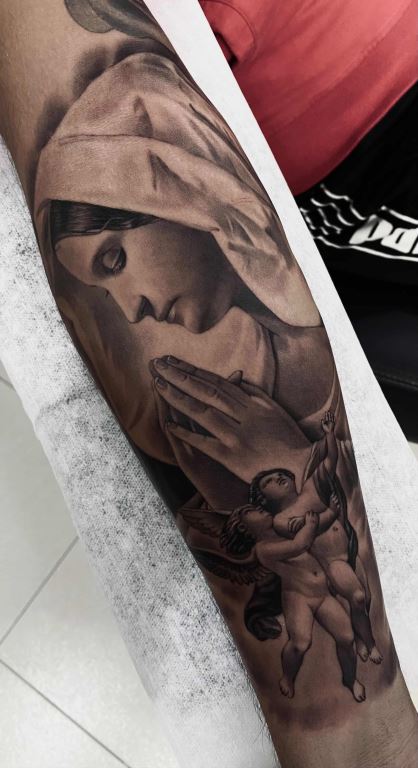
Q: Tattoos have moved from the 'fringe' to
being showcased in museums like the MFA. How does it feel to be a
part of the generation of artists that finally broke the 'rebel'
stigma and brought tattooing into the realm of fine art?
A: I feel like I am positioned right between two generations. When I
first started, coil machines were the standard; now, everything is
wireless and digital. The stigma around being tattooed has faded, I
see it most clearly with modern parents who come in to get tattooed
alongside their children. It is an incredible experience. Many of us
began as painters, sculptors, or graffiti artists before becoming
tattooists, and seeing those artistic roots recognized as fine art
is a major milestone for our industry. I hope one day to see a work
of mine in a museum, it's worth dreaming.
Q: With platforms like Instagram acting as
a 24/7 global gallery, how do you handle the pressure of having a
'digital legacy' that is viewed by millions of people across
different cultures every day?
A: It can certainly be difficult to handle the pressure of
documenting and publishing my work every day. I understand that
social media is necessary for visibility and reach, but I am usually
very busy tattooing, and I prefer to spend my free time in
environments outside of work. However, I am committed to posting
more frequently and eventually creating educational content. I want
to share my knowledge and teach others, so I will continue working
to improve the quality and consistency of my digital presence.
Q: As an artist who has successfully
navigated the European market, what is your message to the global
community about the importance of artists moving between continents
to share specialized knowledge?
A: When I started my career, I worked alone in my private studio.
While that wasn't bad, I knew I needed to break out of that mold. In
2022, I had the opportunity to work at a renowned studio in Sweden
alongside other professionals, and it completely changed my
perspective. I learned so much and realized how vital it is to share
your art and knowledge with others. Traveling is incredibly
enriching, not just for seeing new places, but for professional
growth. I highly recommend traveling to establish yourself in new
markets, though I suggest being guided by friends or colleagues who
have done it before. You have to be careful, as some places may try
to take advantage of you with unfair pay or long hours, but if you
find the right environment, it is an invaluable experience both
personally and professionally.
Interview: Ivana Kancheska
Date: 16/02/2026


