
Interview with Hans Amesquita
Hello Hans Amesquita! It’s a pleasure to
have you with us for this interview. To begin, we’d love to hear a
bit about you and your journey. What sparked your initial interest
in the world of art, and have you pursued any formal art training?
Thank you, it’s great to be here. Art has always been part of my
life, I was drawn to it as a way of expressing things I couldn’t
really put into words. I didn’t have formal art training in the
traditional sense, but I spent years teaching myself through
practice, observation, and eventually an apprenticeship that helped
me turn that passion into a profession. Tattooing became my focus
because it felt like the most direct way to connect with people
through art, something permanent and personal.
Q: What were the initial steps and timeline that marked the
beginning of your career in tattooing?
A: My tattoo journey started over ten years ago. I began
experimenting in a small setup at home, just trying to understand
the basics and get a feel for the machine. Eventually, I got the
opportunity to apprentice at Zhimpa Tattoos, which is one of the
most recognized studios in Peru. That experience gave me a deeper
understanding of the industry, and I worked hard to build from
there, first opening a private studio in my apartment, then
co-founding a 250 m² shop in Miraflores, Lima. That’s where I really
started to establish my style and reputation before moving back to
the U.S. and continuing my career here in Las Vegas.
Q: Were you primarily a self-taught artist? If so, could you
describe the challenges you faced while learning the foundational
skills of tattooing? And looking back to your early days, what were
some of the types of tattoos you practiced?
A: I'd say my path into tattooing was definitely hands-on and very
much shaped by observation. I did have an apprenticeship, but it was
more informal, there wasn’t a structured curriculum or guided
lessons. It was more of a “watch and learn” environment, where I was
expected to absorb everything by paying attention, asking the right
questions, and figuring things out through practice. It wasn’t easy,
but I think that kind of pressure helped me develop a strong sense
of independence and problem-solving early on. At first, I actually
experimented with new school tattooing, but it didn’t come naturally
to me. So I shifted toward traditional and neo-traditional styles,
and from there I started getting really into blackwork. Throughout
all of that, my main focus was developing solid technique especially
line work. I knew that clean, confident lines were the foundation of
any good tattoo, so I spent a lot of time just working on that.
Eventually, I started exploring whip shading as a way to bridge into
black and grey work, and that became the gateway for me into the
black and grey realism I do now.
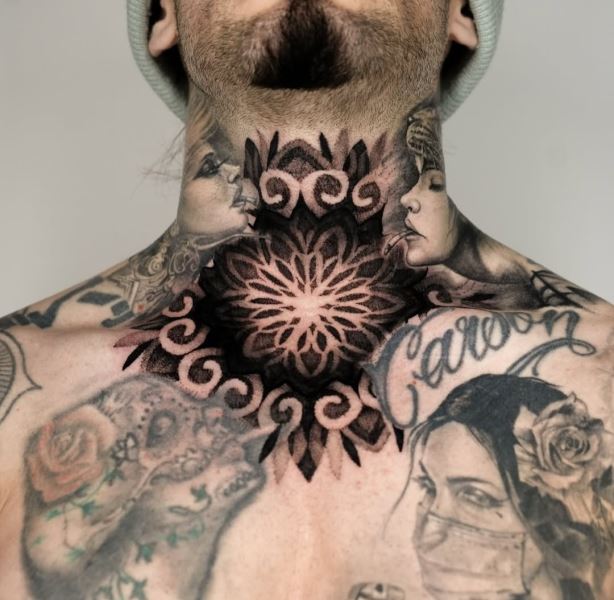
Q: With such a compelling fusion of tattoo realism, mandala,
and other unique elements, how do you personally define or
categorize your artistic style?
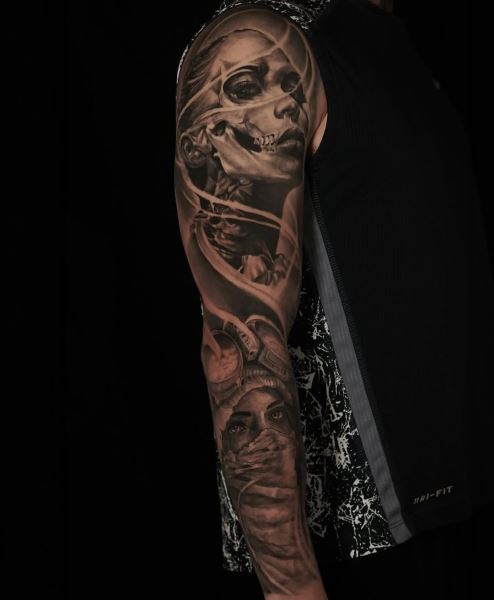
A: My style really started with blackwork that’s where I learned how
to use contrast and negative space in a bold, impactful way. Later,
I transitioned into black and grey realism and began blending the
two styles. Now, I’m focused on creating high-contrast, emotionally
driven pieces that merge the precision of blackwork with the depth
and softness of realism. I like building compositions that are
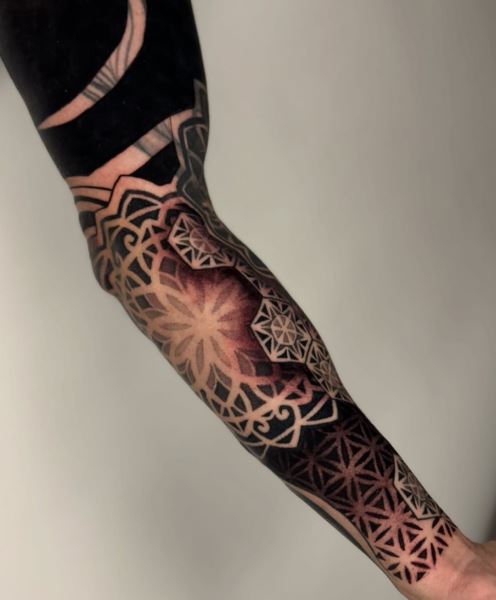
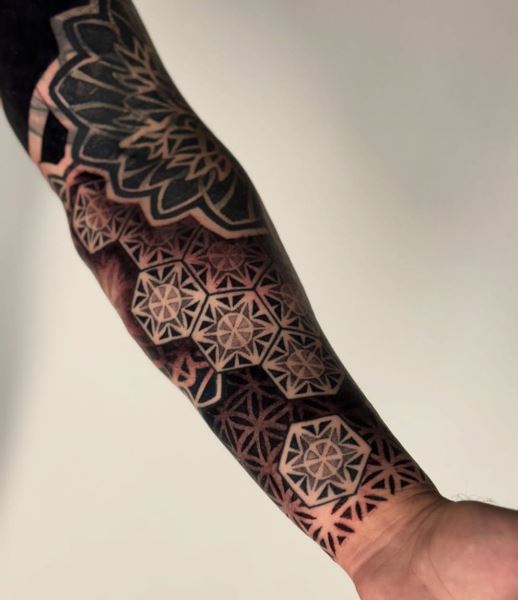
structured but still have a strong organic feel whether I’m working
on a micro pet portrait, a dark-themed chest piece, or a spiritual
forearm tattoo. My goal is always to create something that feels
timeless and true to both the client’s story and my own artistic
identity.

Q: Are there particular tattoo designs or styles that you
especially enjoy creating? And on the other end of the spectrum,
which types of tattoos tend to be the most time-intensive and demand
the highest level of technical skill?
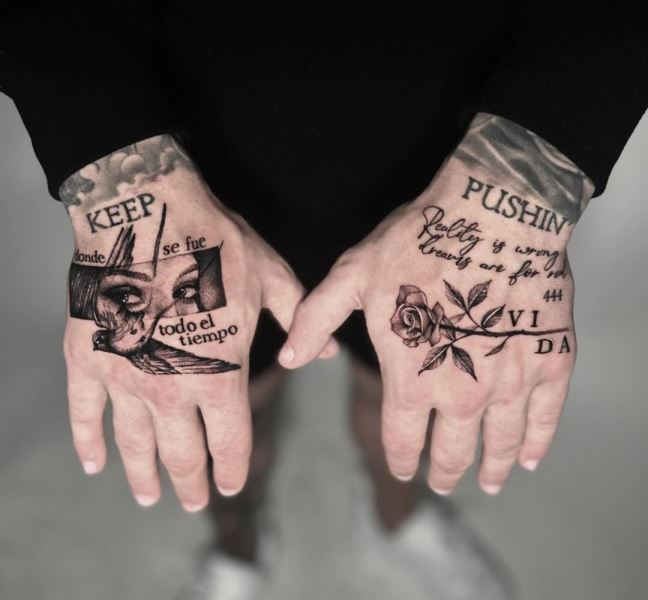
A: I really enjoy working black and grey realism fused with
blackwork, it gives me a wide range of expression while still
staying true to my strengths. I especially love creating
high-contrast, story-driven pieces that have both visual impact and
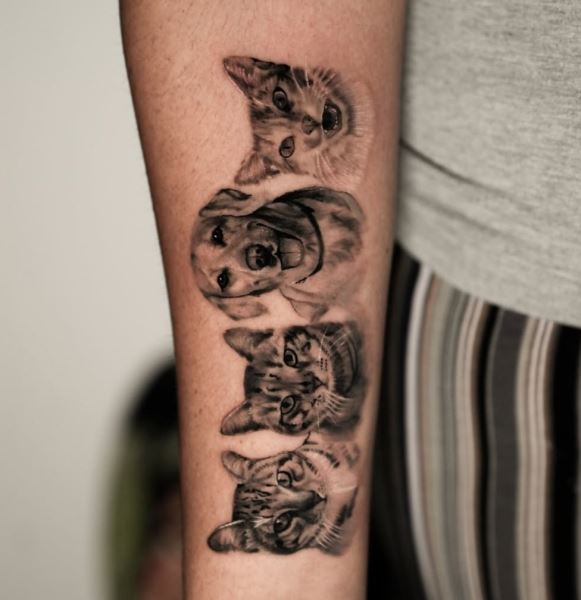
emotional weight. On the more technical side, anything involving
portraits especially micro pet portraits takes a lot of precision
and time. Getting the likeness right in such a small format leaves
no room for error, and I like that challenge. Full chest pieces or
large-scale tattoos with complex compositions are also incredibly
time-intensive but rewarding, because they allow me to bring a full
vision to life over multiple sessions.
Q: With every tattoo being a unique creation, I imagine
collaboration with clients is key. Could you elaborate on your
creative process, particularly how you translate a client’s vision
into your signature style through sketches and design development?
A: Absolutely, collaboration is huge. It starts with listening. I
try to understand not just what the client wants on the surface, but
why they want it, what emotion or meaning is behind it. From there,
I guide the concept into something that fits their story but also
plays to my strengths stylistically. I’ll usually do rough sketches
or digital mockups to give them a feel for the layout, flow, and
contrast. Once we’re aligned on the direction, I dive into the
detailed design work. Even when clients come in with something
specific, I always try to elevate it and bring a unique angle to the
table, something they didn’t expect, but end up loving.
Q: Any favorite tattoo you did recently?
A: One that stands out was a black and grey Grim Reaper chest piece
I did, it had a really intense presence and a lot of detail, from
the folds in the cloak to the light source in the lantern he was
holding. It was one of those pieces where everything came together,
the concept, the placement, the contrast and the client gave me a
lot of trust and freedom to run with the vision. I love when I get
that kind of space to create something meaningful and bold.
Q: What aspect of your work as a tattoo artist provides you
with the deepest sense of satisfaction? Perhaps seeing the impact
your art has on your clients?
A: Definitely the impact. There’s something powerful about creating
something permanent for someone, something that represents a part of
who they are, or helps them heal, or honors someone they love. I’ve
had clients cry after a session, or come back later to tell me how
much their tattoo helped them through a tough time. That’s what
really fuels me. It’s not just about making something that looks
good it’s about the connection and the trust. I feel incredibly
grateful to have clients who believe in my work and allow me to
leave a piece of myself in their story. That trust is what pushes me
to keep evolving and giving my best every time I pick up a machine.
Q: Beyond your work, are there any hobbies or creative
pursuits you’re passionate about, such as painting or digital art?
A: Outside of tattooing, I’ve always been into drawing and sketching
especially with pencil or charcoal. Lately, I’ve been trying to get
more into digital art as well, mainly for design mockups and
experimenting with compositions. It’s a useful tool, especially for
refining ideas before translating them into tattoos. I also like
photography and exploring visuals through different mediums, it
helps me stay creative and avoid burnout. But honestly, even when
I’m not tattooing, I’m still thinking about tattoos. It kind of just
blends into everything I do at this point.

Q: To allow our audience to connect with you, please provide
your studio location, website, and social media links. Finally,
kindly let us know if you are currently accepting new bookings.
A: I'm currently working out of 7 Tattoo Studio in Las Vegas, NV.
You can check out my work on Instagram at @hanz338, and if you’d
like to book a session, feel free to reach out via email at
hanz@seventattoolv.com. I’m currently accepting new bookings, but
availability can be limited so the sooner you reach out, the better.
Q: What are your observations regarding the local tattoo
community? Are you witnessing any significant developments, such as
the rise of new artists, evolving styles, or innovative events?
A: The Las Vegas tattoo scene is wild in a good way. It’s
fast-paced, competitive, and full of incredibly talented artists
from all over the world. There’s a constant push to stand out and
evolve, and I think that’s what makes it such an inspiring place to
work. Clients here are really open-minded and creative too, which
makes it easier to push boundaries and do unique work. I’ve seen a
big rise in artists blending fine art techniques with tattooing, and
there’s definitely more collaboration and innovation happening at
conventions and local events. Being part of such a dynamic scene
keeps me sharp and motivated.
Q: As collaborative tattooing gains popularity, are there
any artists whose distinct style or approach you find particularly
compelling, and with whom you’d be interested in exploring a shared
creative venture?
A: There are definitely a few artists I’d love to collaborate with
especially those who specialize in styles that contrast or
complement mine. I’m drawn to artists who bring strong visual
storytelling or have a really clean illustrative or color-based
approach, because I think merging those with my black and grey
realism could create something completely new. I’m always open to
collaboration, especially when there’s a shared drive to challenge
each other creatively and come up with something that pushes both of
our styles further.
Q: How did you navigate the path towards establishing your
unique creative direction and developing a strong sense of
confidence in your work?
A: Finding my creative direction took time and a lot of
experimentation. I wasn’t in a rush to settle into a style I wanted
to really build a strong foundation first, both technically and
artistically. I spent years focusing on line work, composition,
shading techniques, and understanding the skin as a canvas. Over
time, I naturally gravitated toward blending bold blackwork with
black and grey realism. Once I started leaning into that fusion, it
felt like everything clicked. Confidence came with consistency,
finishing pieces, seeing the healed results, and getting honest
feedback from clients and peers. I’m still evolving, and I’d love to
expand into more complex or concept-heavy pieces, maybe even
experiment with color in the future. But at the core, I think having
a recognizable, personal style is more important than ever. That’s
what helps you stand out in a growing industry.
Q: Have you had the opportunity to attend any American
tattoo conventions? If so, which ones have you found particularly
memorable?
A: Yeah, I’ve had the chance to attend a few conventions here in the
U.S. and each one brings something different to the table. One that
really stands out is the Golden State Tattoo Expo, the energy, the
talent, and the level of competition are next level. It’s also a
great chance to connect with other artists, exchange ideas, and push
yourself. Being around that many passionate people really reminds
you why you do what you do.
Q: What impact do you aspire to have on the tattoo
community?
A: I want to be someone who raises the bar both in terms of artistic
quality and how we treat the people who trust us with their stories.
I hope to inspire younger artists to take their craft seriously, to
stay curious, and to always look for ways to grow. If I can build a
solid legacy of work that’s both technically strong and emotionally
resonant, and also help others in the process, that’s the kind of
impact I’d be proud of. I’m grateful for the opportunities I’ve had
so far, and I’d like to pay it forward however I can, whether it’s
through collaboration, mentorship, or just being real about the
highs and lows of this path.
Q: If you could go back and give your younger self advice
about pursuing tattooing, what would it be?
A: I’d tell myself to slow down, be patient, and trust the process.
When you’re just starting out, you want to be great overnight but
tattooing doesn’t work like that. It takes time to develop the
skill, the eye, the confidence. I’d also say: don’t compare yourself
too much to others. Focus on your lane, stay humble, and remember
that the real flex is consistency, not hype. Every tattoo you do is
a step forward just keep showing up and putting in the work.


