
Interview with Jeramee Diaz
In honor of the eighteen anniversary of Skin
Artists Tattoo Magazine, we are looking back at the humble
beginnings and high-level discipline that define the world’s most
respected artists. Jeramee Diaz joins this milestone celebration as
a top-tier talent whose journey from simple setups to technical
mastery serves as a blueprint for the next generation of realism
artists.
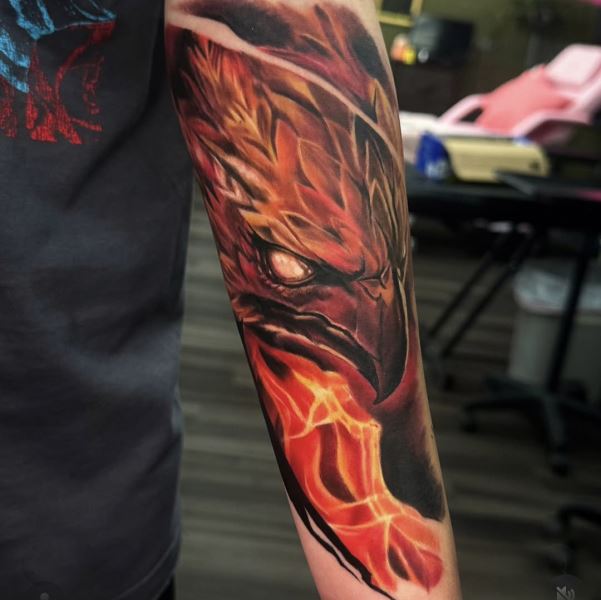
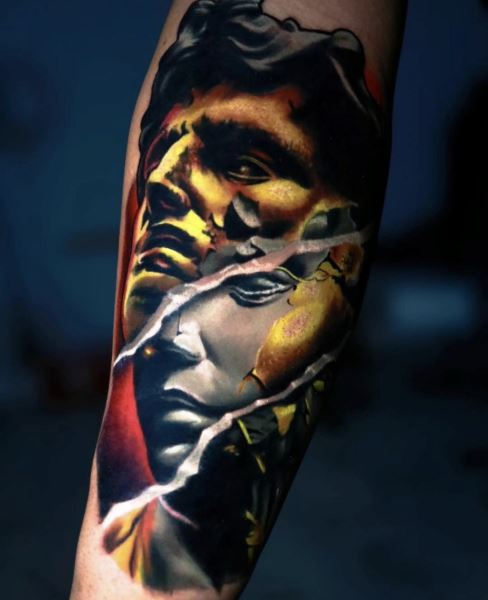
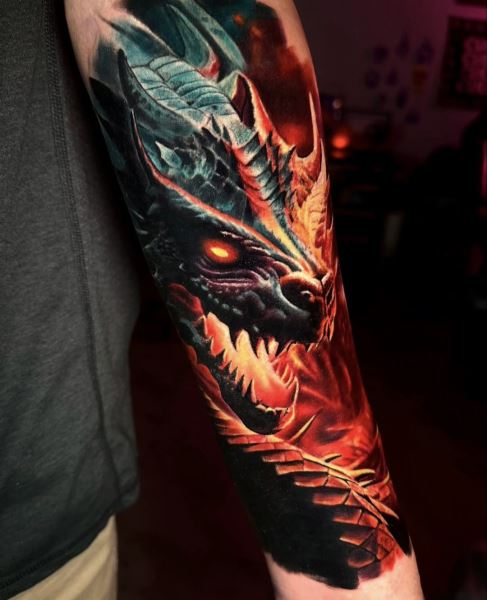
Jeramee’s portfolio is a masterclass in visual impact,
characterized by a striking use of deep, saturated blacks against
the skin’s natural highlights. Whether executing macabre
mythological figures or vibrant, illustrative portraits, his work is
defined by an uncompromising focus on contrast and clean execution.
By prioritizing the structural integrity of a design over the vanity
of expensive equipment, he has developed a signature style where
every value is perfectly placed to ensure the tattoo reads deep and
stays permanent.
The following interview is dedicated to exploring the future of
tattooing. We discuss the essential lessons learned from the early
days of the craft, the importance of a disciplined apprenticeship,
and Jeramee’s perspective on how the industry's standards must
continue to evolve as we look toward the years ahead.
Q: What sparked your initial interest in art?
A: I’m Jeramee Diaz, a realism tattoo artist. I’ve loved art since I
was young, drawing was always my escape, and tattooing became the
most meaningful way to turn that passion into something permanent.
Q: What did your first 'shop' or setup look like? Looking
back, what is the one lesson from those humble beginnings that you
still carry with you today?
A: My first setup was simple, but it taught me one thing fast: your
standards matter more than your equipment. I focused on clean work,
not excuses.
Q: What's the best way to start? Do you believe in mandatory
apprenticeship?
A: Start with fundamentals: drawing, hygiene, and understanding
skin. Apprenticeships help a lot, but what matters most is to be
disciplined.
Q: In the early days, before you had your own signature
style, whose work were you trying to emulate, and how did that help
you find your own voice?
A: Early on I studied realism artists like: Robby Latos and Victor
Garcia to understand contrast and detail. It took years of
repetition to find my own style.
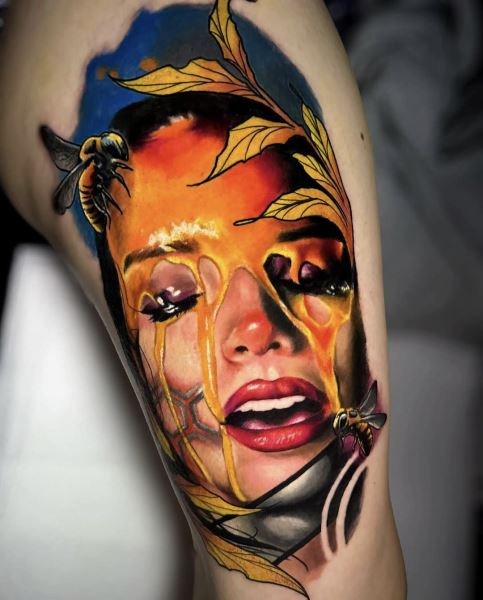
Q: Your portfolio features some breathtaking Black and Grey
Realism, particularly with skulls and mythological figures. What
draws you to these darker, more macabre themes? Is it the texture,
the lighting, or the symbolism?
A: I’m drawn to darker themes because they’re powerful visually,
texture, lighting, and symbolism all hit harder.
Q: The contrast in your work is very striking, the deep
blacks against the skin’s natural highlights. How did you develop
your eye for 'seeing' value and depth in a way that translates so
cleanly to the skin?
A: I trained my eye by studying values in black and white. If the
values are right, the tattoo reads clean and looks deep.
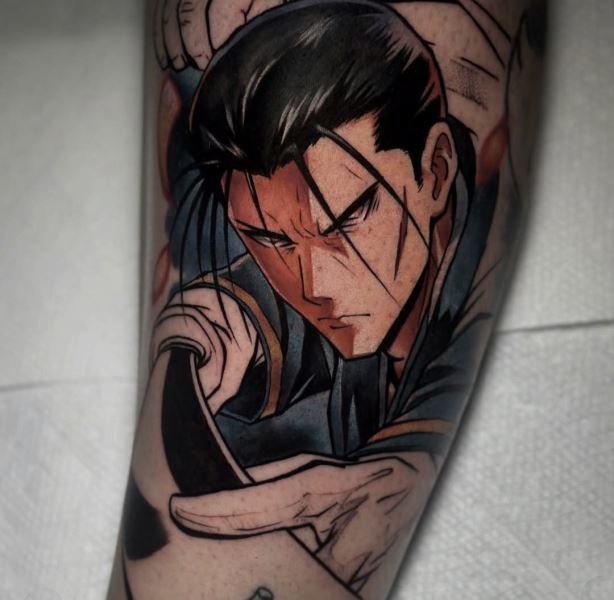
Q: When working on a large-scale piece, like a full sleeve
or chest, how do you balance the 'anatomical flow' of the body with
the rigid details of a realistic portrait?
A: I design for the body first. If it flows with the anatomy, the
tattoo looks better and lasts longer.
Q: When you are blending multiple elements together, like a
portrait merging into architectural details or smoke, what is your
'golden rule' for creating a seamless transition?
A: My rule is simple: match the values and lighting. If that’s
right, transitions look natural.
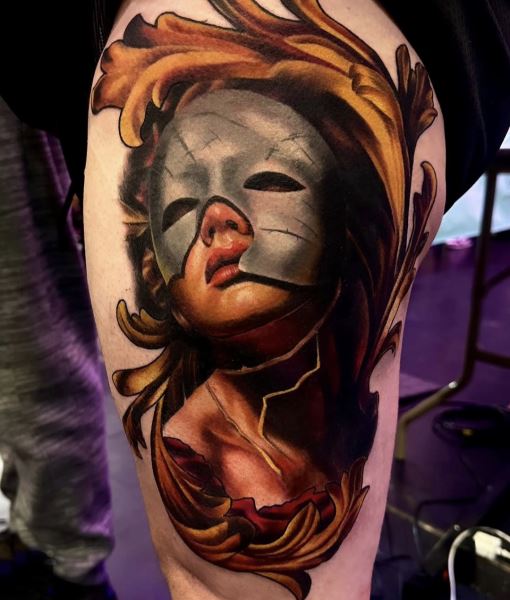
Q: There is a distinct dark, cinematic mood in your
portfolio. Do you consider yourself more of a 'storyteller' or a
'technical translator' when you're taking a client's idea and
turning it into a piece of art?
A: Both. I translate the client’s idea, but I guide the design so it
stays unique and tattooable.
Q: You mention in your bio that you believe in 'doing things
well or not at all.' How many hours of digital or mental preparation
go into a large-scale design before the needle ever touches the
skin?
A: Hours. I plan everything layout, lighting, and reference before
the needle touches skin.
Q: You’ve made a name for yourself in the circuit. When
you’re at a convention, surrounded by hundreds of other talented
artists, how do you stay focused on your specific vision?
A: I stay focused by treating every piece like a portfolio tattoo.
Conventions are great for growth and networking.
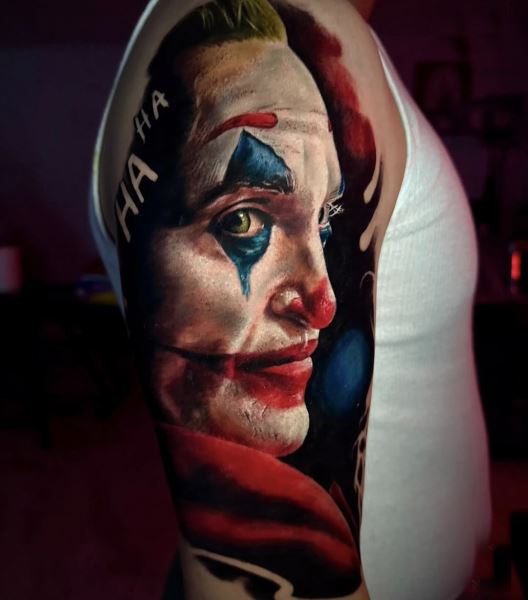
Q: The USA has one of the most competitive tattoo markets in
the world. How do you feel the American scene has influenced your
drive to innovate?
A: The U.S. scene is very competitive, so it pushes you to level up
constantly. There are many artists from different countries
gathering in the same space.
Q: Tattooing has moved from underground shops to reality TV
and now to high-speed TikTok and Instagram trends. How do you feel
this 'viral' culture has changed the way clients approach you with
their ideas?
A: Social media makes clients want fast results. I educate them when
they arrive to the stuido that great realism takes time. Rushing is
not an option for me.
Q: You’ve seen the industry grow on a global scale. Is there
a specific country or city right now that you think is pushing the
boundaries of realism more than anywhere else?
A: Realism is being pushed worldwide. Europe, South America, and the
U.S. all have artists raising the bar.
Q: In an age of 'fast fashion' tattoos small, trendy pieces
you focus on large-scale, intricate realism. How do you educate your
clients on the value of 'slow art' in a fast-paced world?
A: I explain that realism is “slow art.” Quality takes time, and
rushing ruins results.
Q: We are seeing a massive rise in AI-generated art and
'perfect' digital references. How do you maintain the 'human soul'
in your work when the world is leaning more toward digital
perfection?
A: AI is cool for ideas, but the soul comes from the artist’s
decisions on real skin. It just one more tool and I can be used for
good.
- What is one trend in the tattoo world right now that you
genuinely love, and one that you hope disappears by next year?
A: Trend I love: more focus on quality and showing the tattoo
process. Trend I hate: none that I can think of.
Q: The tools of the trade are changing fast, from wireless
machines to advanced pigments. How have these technological shifts
changed your personal relationship with the medium?
A: New tools help, but they don’t replace skill. Control still
matters the most.
Q: What is your biggest hope for the next generation of
tattoo artists, and conversely, what is your biggest concern about
the direction the industry is heading?
A: My hope is more disciplined artists that love all type of art.
Not just tattoos. My concern is people chasing money.
Q: Where do you see the 'Jeramee Diaz' style in five years?
Are there any new techniques or subject matters you are dying to
explore?
A: In five years I want even cleaner, more cinematic large-scale
realism, color that last longer and stronger storytelling.
Q: Jeramee, for the aspiring artists looking at your work
and dreaming of reaching this level, what is the one piece of advice
you’d give them that isn’t about drawing or technical skill?
A: Stay disciplined. Consistency and mindset will take you further
than talent.


