
Interview with Joozy Tats
Hey Joozy Tats, it's a real pleasure to
have you with us today! To kick things off, could you share a bit
about your journey and the experiences that have shaped you as an
artist? I'm particularly curious about when you first realized your
passion for the arts and if there were any key individuals or
moments that ignited your unique creative voice. I got my
first tattoo when I was 21. As I received one, then two, and more, I
developed a strong desire to do tattoos on people's skin. I started
drawing on my own and bought a tattoo machine to practice on my own
body, improving my skills. The moment I held the tattoo machine
while drawing, I felt an incredible excitement and knew that this
job would be my lifelong career.
Q: To gain insight into the early stages of your artistic
journey, could you tell us about how long you dedicated to initial
learning and whether you chose to pursue formal art education or
were guided by a mentor?
A: I had no formal training in art, so at first, I just copied the
drawings of other artists. I used to love gaming and hanging out
with friends, but after I started tattooing, I spent all day drawing
alone. I didn't receive guidance from a mentor and studied tattooing
on my own, so it took a long time. However, I believe that because I
learned by myself, I have a unique style that truly belongs to me.

Q: Let's dive into the world of tattooing.
Could you share your journey into this unique art form? I'm curious
about what sparked your interest in tattooing, who or what inspired
you to start, and what your early experiences were like – perhaps
the style of tattoos you first practiced, the transition to working
on real skin, and how long it took for you to feel confident in your
craft.
A: I got my first tattoo, a lettering tattoo, when I was 21.
Eventually, I was drawn to the traditional tattoo genre, which led
me to get tattoos on my own body. When I looked in the mirror after
getting a tattoo, I felt a strange emotion that I had never
experienced before in my life. That feeling really inspired me. In
the early days of starting tattooing, I began drawing designs from
first-generation tattoo artists like Sailor Jerry. When I got my
first tattoo on my body, it was so much fun and exciting that I
didn't even feel the pain. Using thick needles is quite tricky, but
now other artists ask me about the types of machines and needles I
use. It took about two to three years to get to this point.

Q: Could you share when you transitioned
to working in a professional tattoo studio and what that experience
was like for you?
A: I practiced a lot on my own skin because I couldn't practice on
others due to the lack of opportunities. After that, I worked on my
friends' skin. Usually, artists with short experience join other
tattoo shops, but I opened my own tattoo shop from the very
beginning. I had that much confidence in myself.
Q: The old school/traditional style, as seen in your
tattoos, is marked by its bold colors, significant symbolism, and a
delightful playfulness in its interpretation. What is it about this
style that you find most artistically satisfying or engaging?
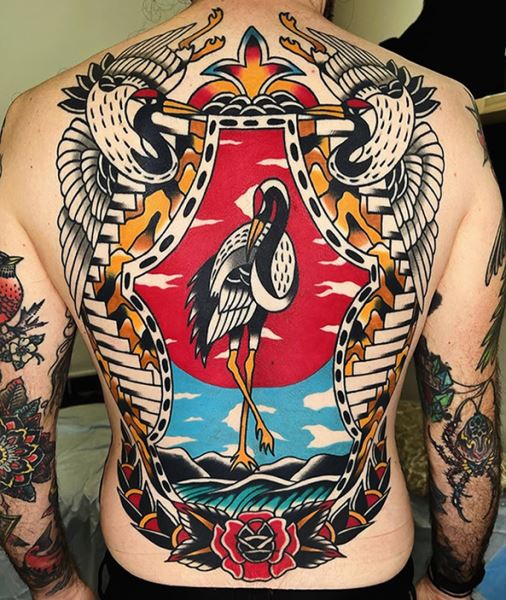
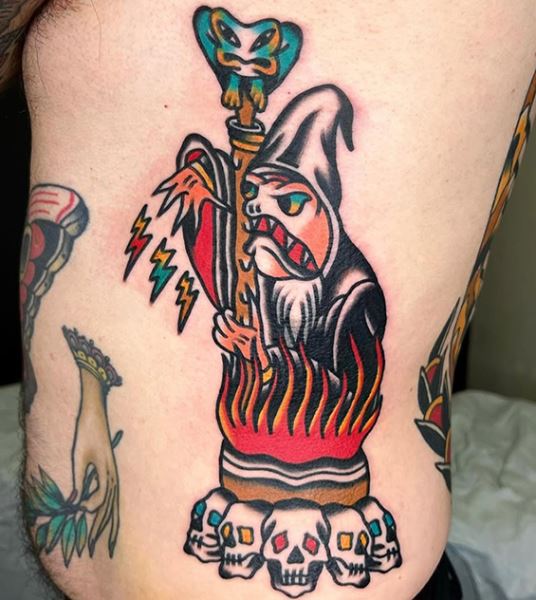
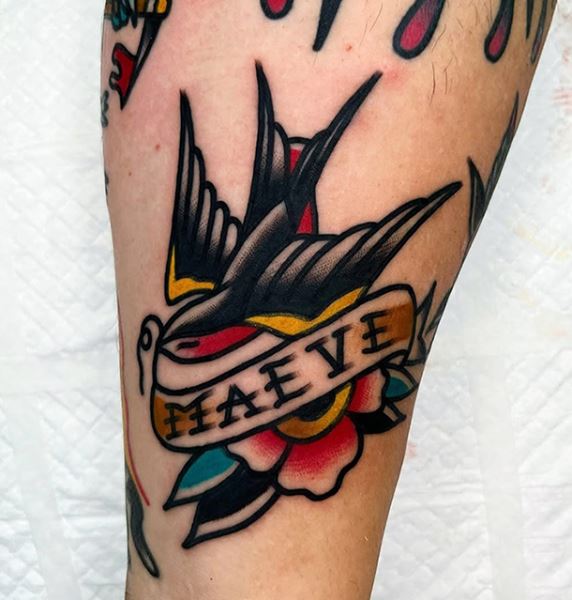
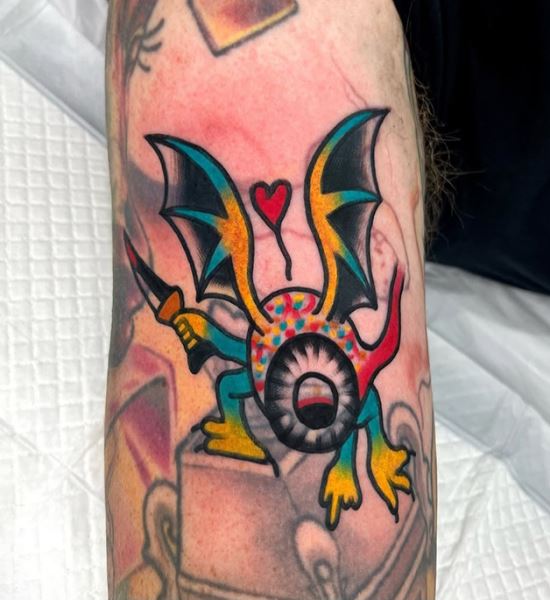
A: The old school/traditional style is characterized by thick lines
and vibrant colors. Because of this, the tattoos are clearly visible
even from a distance, which is its biggest charm. Unlike other
genres, I think the most appealing aspect is filling an area with
different designs, each unique and distinct.

Q: Do you have any favorite tattoo
designs?
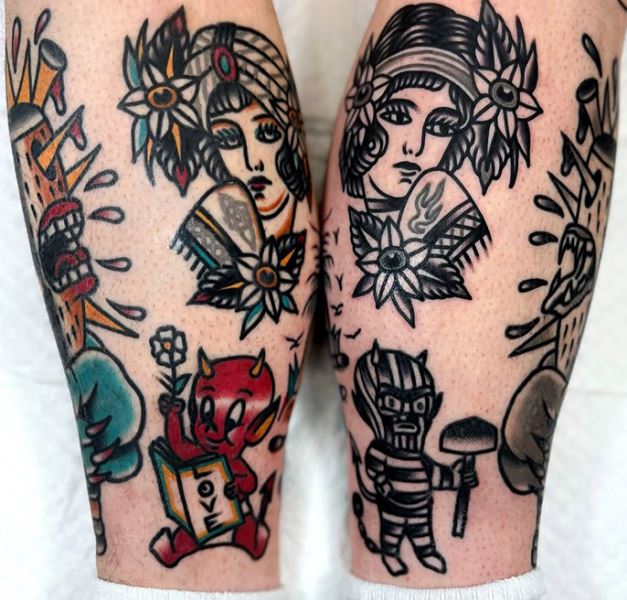
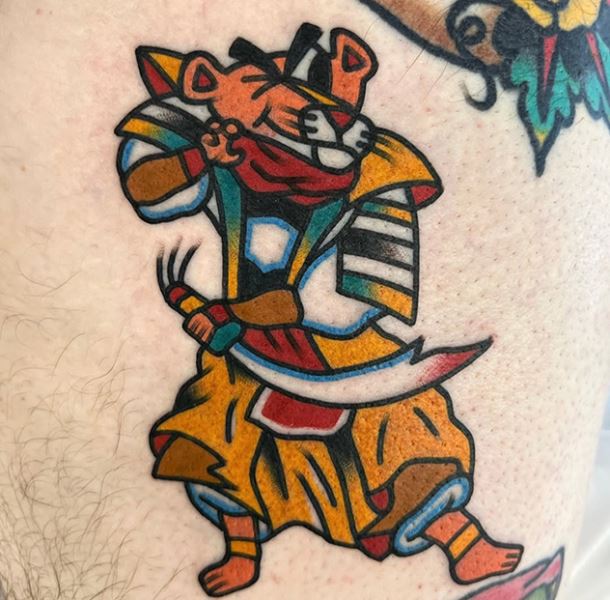
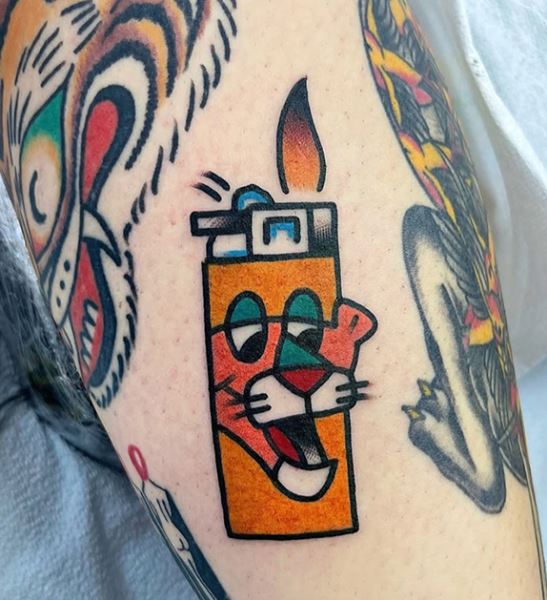
A: Personally, I love designs based on characters. For example, I
enjoy creating my own style using various characters like Pink
Panther, The Simpsons, and Hot Stuff the Devil. Many people
appreciate my style.
Q: Do you anticipate your work remaining primarily within
this style, or is there a possibility of exploring other tattoo
styles as your career progresses?
A: I believe I can gradually change my style since I can't stick to
the same style forever, but I don't think I'll switch genres. I
think I should continue to explore and develop a style that is
unique to me, rather than just doing something that anyone can do.
Q: How much does the willingness of clients to embrace
unique and personalized designs, rather than selecting from standard
catalogs, influence your creative process and the final artwork?
A: There are clients who request a lot of details and others who
prefer simple designs. I accept 100% of the feedback from clients
who don’t choose my designs but still pursue a style that is
uniquely mine. Therefore, the influence on the process and final
artwork isn't significant.
Q: Many people strive to maintain the
vibrant appearance of their new tattoos for as long as possible.
What are some of the primary factors that can negatively impact
tattoo longevity and proper healing?
A: The longevity and proper healing of tattoos are very important.
For about two weeks to a month, it's essential to avoid excessive
drinking, swimming pools, seawater, and saunas. After a week, using
body lotion for moisturizing is also a great method. I highly
recommend using products like Second Skin as well.
Q: Can you share a memorable client story that highlights a
positive impact you made?
A: It was a lettering tattoo, not a large design. The numbers
tattooed were not from any particular language but represented the
date of the client's father's passing. I always work carefully
during each tattoo, but this time I focused even more intently.
After finishing the tattoo, the client expressed immense
satisfaction, and I could feel a sense of poignancy in the air as
well. Since it was a very simple tattoo, it didn't take long to
complete, and in that moment, I thought of my own father, so I
decided not to charge the client.
Q: Given the demands of consistently
delivering high-quality, custom work, are there occasions when you
experience creative blocks or encounter challenges in meeting client
expectations?
A: As a tattoo artist, it's something that everyone experiences at
least once. While it's important to reflect all of the client's
requests, it's also challenging to let go of my own style. I believe
it's more ideal to engage in discussions with the client and
persuade them rather than just giving them the tattoo they want for
money. However, if the request is something I can't do or is too
demanding, I would recommend they seek another tattoo artist.
Q: Your flash sets are impressively displayed. Could you
elaborate on the significance of a well-executed design presentation
when working with clients? Additionally, are any of these sets
available for purchase?
A: I need to understand whether the client prefers black or color
and what layout they want. Generally, when a client describes the
design they want, I draw various designs to create a flash set. In
this case, the client has a wider range of options, and there are
rarely any design modifications needed. My flash sets are always
available for purchase, and I have actually sold many of them.
Q: Your artistic style is so imaginative.
Has the idea of featuring your artwork on a clothing line ever
crossed your mind?
A: I was planning to use my designs to create clothing, but before
that, I wanted to try making tattoo stickers and phone cases first.
If the opportunity arises, I would consider including clothing as
well.
Q: I'm interested in learning more about your tattoo
seminar. Could you tell me where it takes place, what the main
learning outcomes are for participants, and your experience as an
instructor?
A: All seminars and masterclasses at 10KF Academy were held in
Seoul. All students learned everything a tattoo artist must know of
skin layers and got the skills to create clean lines and perfect
shading. The seminars also included the process of designing, not
just the technical aspects. I can confidently say that this was a
valuable experience for all the participants and that it was crucial
for them to acquire skills and methods they didn’t know before.
Honestly, to be able to share my knowledge makes me feel great and
I'm proud to contribute to someone else’s growth at the same time
that I keep learning.

Q: What qualities do you value most in an
artist, beyond their artistic skill?
A: I believe there are no right answers in art. However, to capture
the attention of most people, I think it's essential to have a
distinct personal style. It should not be art that anyone can easily
imitate, but rather pieces that evoke the artist's identity when
most people see them.
Q: What's your take on the local tattoo scene? Are you
seeing any exciting developments, like new artists, styles, or
events?
A: Currently, there are countless tattoo artists active in South
Korea, and new artists are emerging every day. Because of this, many
tattooists have limited opportunities to work. This ongoing
situation has led most tattooists to recruit students to make money,
resulting in a cycle of the same thing happening repeatedly.
Personally, I don't want to follow this approach. However, as
customers who appreciate my style continue to seek me out, I remain
unaffected.
Q: How often do you attend tattoo conventions? In your
experience, how valuable are tattoo conventions for artistic growth
and building client relationships?
A: I have never participated in a tattoo convention. However, I
definitely have the intention to participate in tattoo conventions
hosted in various countries. Currently, I am working in Korea to
prepare for participating in conventions.
Q: What about guest spots? Have you ever
worked as a guest artist in another studio either locally or in a
foreign country? If so, what was the experience?
A: I have done guest spots not only in my country, Korea, but also
in Canada, Australia, and Thailand. Working with people from other
countries, not just Koreans, is an incredible experience as a tattoo
artist. Additionally, meeting tattoo artists from those countries
and sharing techniques while becoming good colleagues greatly
benefits not just our tattoo skills but also our human
relationships. Moreover, experiencing the culture, language, food,
and various aspects of those countries provides a wonderful
opportunity for personal growth.
Q: Considering the current global tattoo landscape, what are
your overall thoughts on its evolution and trajectory? Are there any
aspects you find particularly positive or any areas where you see
potential for change or improvement within the collective tattoo
community?
A: The tattoo scene is rapidly evolving. There are many highly
skilled tattoo artists and numerous tattoo supply companies around
the world, and I can feel that products like machines, needles, and
inks are also advancing quickly. I believe this positive development
will continue, and if it does, the culture and techniques
surrounding tattooing will grow rapidly. Currently, information
about AI and robots evolving quickly and reducing jobs is easily
accessible. However, I believe that being a tattoo artist is a
profession that cannot be replaced by AI or robots, making it a
promising career.
Q: How has your passion for tattooing
evolved since you first started? Are you just as enthusiastic, or
even more so now?
A: I can say that my passion for tattooing is even stronger now than
when I first started. In every field, beginners often see a
significant improvement in their skills, but I believe it becomes
harder to build on that skill level once you reach a certain point.
Since I'm not satisfied with my current tattoos and feel the need to
improve, my enthusiasm is higher now than it was when I started.
Q: Favorite career highlight?
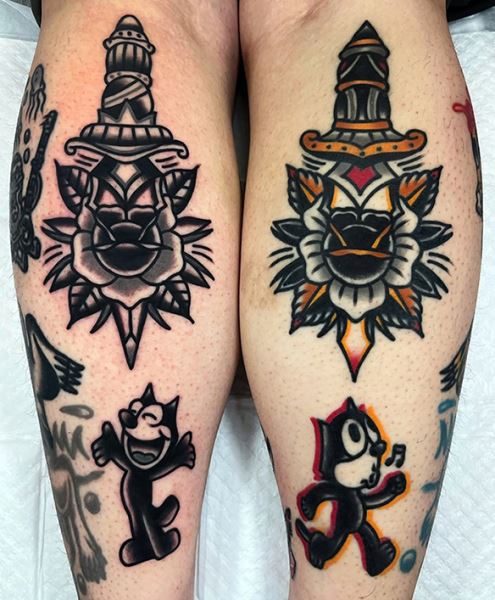
A: My favorite career highlight was when a female client had both of
her legs completely covered with my tattoos. She trusted me with all
the designs, and the healing process went perfectly. Since her skin
tone was on the lighter side, I personally think it was one of my
most memorable works.
Q: The United States has a rich history of
regional tattoo traditions and contemporary trends. Are there any
specific American tattoo styles or cultural influences that
particularly resonate with your artistic sensibilities, and how
might you see those influences manifesting in your future work?
A: I would say my genre is based on American traditional tattooing,
utilizing it to create my own unique style. Many artists pay respect
to the artists who were active in the early days by reinterpreting
their designs. A notable figure is Sailor Jerry. The designs from
that era have been so well preserved that they have become a
significant cultural aspect that many artists go through during
their learning stages, which I believe is a key part of the
emotional resonance and shared understanding of the American tattoo
styles.

Q: Do you have any favorite American
tattoo artists you would like to work with in the future?
A: I would like to work with an artist named Ozzyink. The reason is
that when I first started, I studied a lot of his works, and I
believe they align with the direction I want to take. His flash
sets, lines, and shading have had a significant influence on me.
Q: Considering your admiration for American tattoo culture,
how do you envision your own artistic style evolving or adapting as
you become immersed in the diverse influences and trends within the
United States?
A: Most of my Instagram followers are located in LA. Most old-school
tattoo artists reinterpret the classic designs that American tattoo
culture holds. This means that not only artists but also clients
appreciate classic designs. By aiming for my own unique style while
reinterpreting classic designs in my way, I believe I can not only
grow as an artist but also attract significant interest from a wide
audience.
Q: Where in America you would like to
work?
A: It's hard to pinpoint a specific place in America because the
country is so vast and diverse, but I would love to work in major
cities like LA and New York, as well as in slightly smaller areas
like Omaha and Denver.
Q: What impact do you aspire to have on the tattoo
community?
A: I aspire to attract a diverse range of clients, as well as to
inspire other tattoo artists to pursue their craft. Many tattoo
artists have asked me questions about what machines and needles I
use. Each time I receive such inquiries, I feel that I have some
influence in the tattoo community. I also have a desire to promote
my name and my work widely, and if the opportunity arises, I would
love to hold an exhibition.
Q: For those interested in booking a
consultation or appointment, could you please provide the location
of your studio and any relevant website or social media links?
A: I work in two locations in South Korea: Hongdae in Seoul and
Cheonan. My main studio is located in Dujeong-dong, Cheonan, and my
Instagram address is www.instagram.com/joozy_tats
Q: If you could go back and give your younger self advice
about pursuing tattooing, what would it be?
A: I would tell my younger self to believe in what you love and
continuously develop your skills while firmly establishing your
unique style. I would advise aiming to become a tattoo artist whose
work is recognizable, so that when someone sees your art, they can
say, 'This is definitely their work.
Author: Ivana Kancheska
Date: 11 May 2025
Read our second interview with Joozy.


