
Interview with Jordan Bloomquist
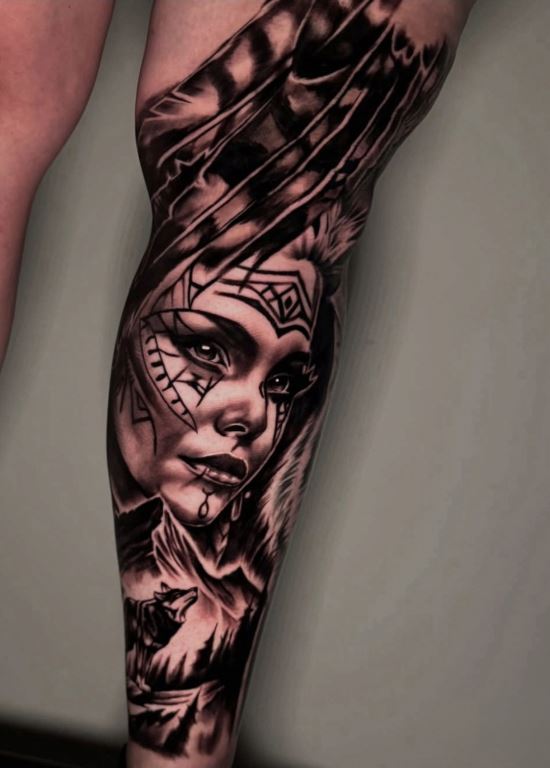
Hailing from Calgary, Alberta, Jordan Bloomquist is an elite
force in the realm of black and grey realism. As the owner and
visionary behind Black Heart Studios, located in the vibrant heart
of downtown Calgary, Jordan has cultivated a premier creative space
that mirrors his dedication to the craft. A glance through his
portfolio reveals smooth gradients, striking contrasts, and an
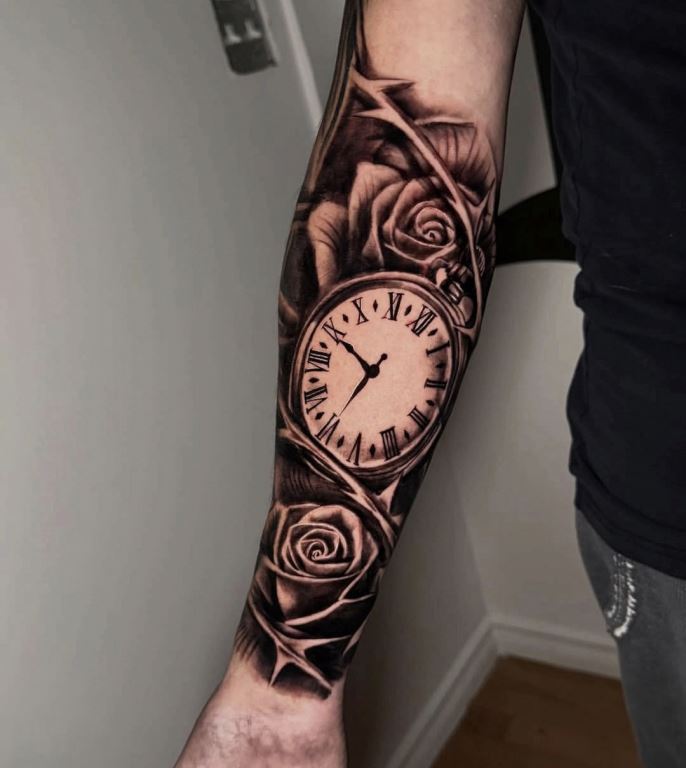
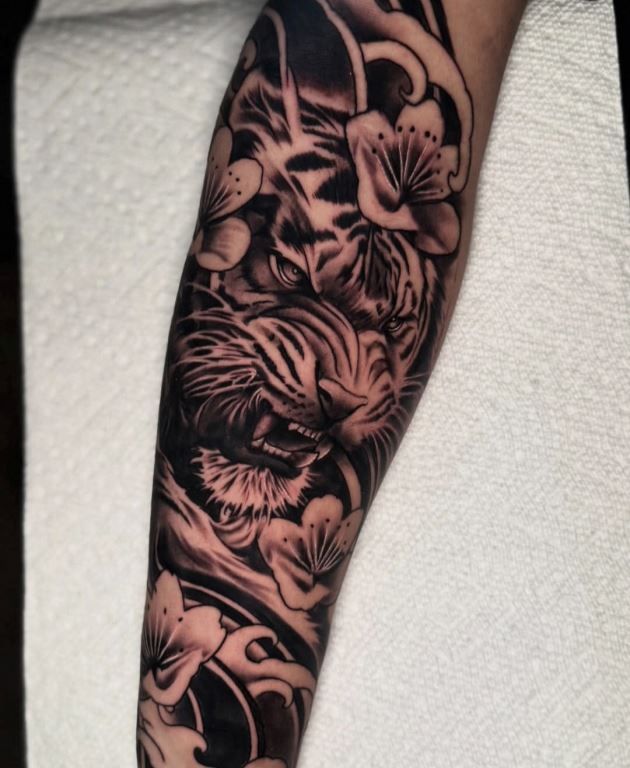
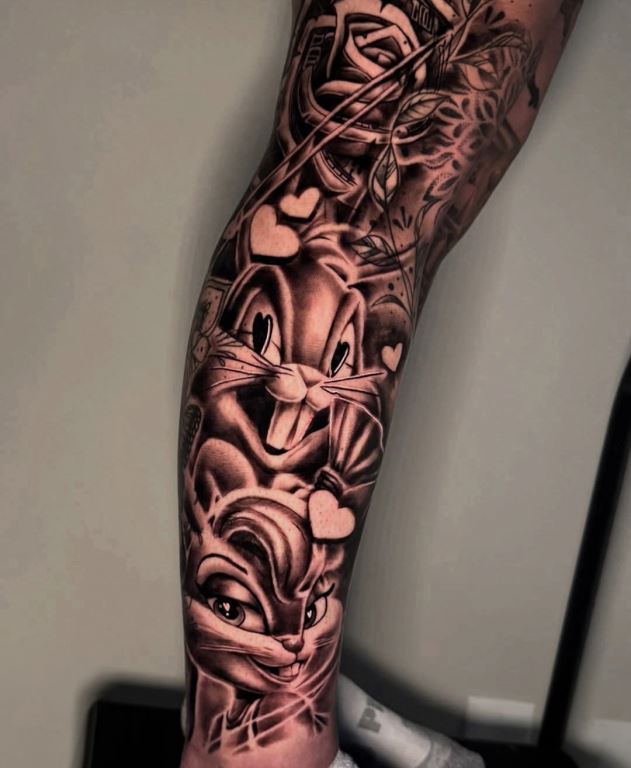
uncanny ability to breathe life into skin through hyper-realistic
portraiture, wildlife, and intricate dark surrealism. His masterful
control over light and shadow has rightfully earned him a dedicated
international following and a reputation as a true technician of the
medium. For Skin Artists Tattoo Magazine, we explore his artistic
journey, the philosophy driving Black Heart Studios, and his
perspective on the rapid transformation of the global tattoo
industry.
Q: What first drew you to the world of tattooing, and did
you always know you wanted to specialize in black and grey realism?
A: Growing up, a lot of my family were heavily tattooed. I always
thought they looked so cool and stood out from the crowd. When I
turned 18 i went and got myself black and grey geisha on my inner
forearm. That was my first tattoo. It took 8 hours and I was hooked
from the moment I saw it. I kept going and getting more and more
tattoos and one day I spoke to my tattoo artist about how to go
about becoming a tattoo artist and he offered me an apprenticeship.
I didn’t know much about realistic drawing, as a kid I always drew
graffiti, not portraits. So I had to learn.
Q: Looking back at your very first year in the industry,
what was the hardest technical skill for you to master?
A: The hardest technical skill was actually drawing. I had to master
portrait drawing before my mentor would allow me to move on to fake
skin and then real skin. Portrait drawing is difficult because every
little shadow matters. A lot more than I initially expected. The
first six months of my apprenticeship was drawing and fake skin
practice.
Q: Who were the artists or mentors that heavily influenced
your mindset and work ethic during your early days?
A: The tattoo artist that I was being tattooed by is Lee. His
Instagram is @tattoosbylee. He was my inspiration. Not only is he a
great tattoo artist, he’s a really good guy. Not alot of people
would have offered me an opportunity like he did and I’m forever
grateful for that. My mindset was already there. Framed by a strong
upbringing from both of my parents. I worked from 13 years old so my
work ethic/drive was always there and was instilled from a young
age. Others are tattooers such as @kindamo @focustattoos and many
others.
Q: Every artist has a "lightbulb moment" where everything
clicks. When did you realize that tattooing was no longer just a
job, but your life's calling?
A: I knew it wasn’t a job and i could call it a career when I was
able to quit my full time job and just tattoo. The day I was in the
tattoo studio calling myself an apprentice was the day I knew it was
my calling. The smell of a tattoo shop was and is still my favourite
thing. Knowing I get to go to work every day and tattoo something
different but in the same style I get on my own body is super cool.
I’m truly blessed.
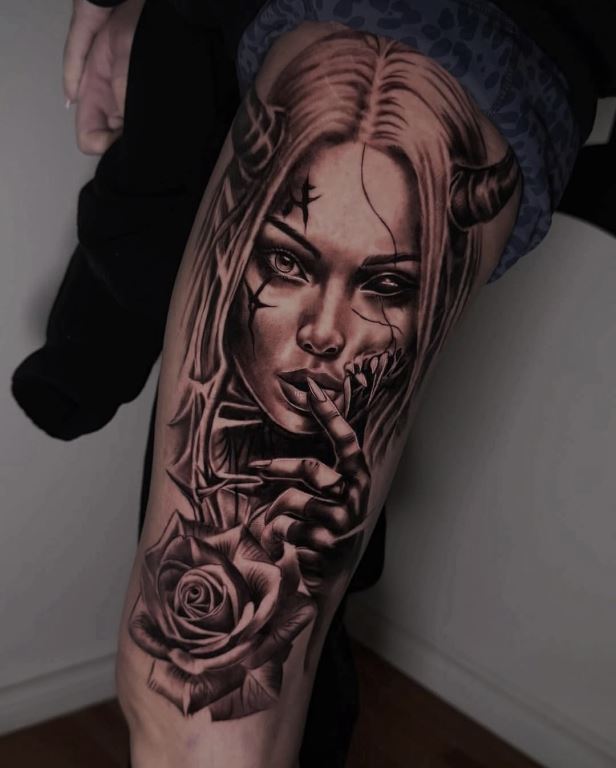
Q: Your portfolio showcase an incredible depth of contrast
and ultra-smooth saturation. How did you develop your signature
approach to light and shadow?
A: I learned a lot from my mentor but I always knew I wanted to take
it up a notch from what he taught me. I took countless seminars from
some of the world’s best artists and learned a ton. I always chose
to work in a busy shop because you could gain so much information
from so many talented artists. During my apprenticeship I didn’t do
to many.
Q: When approaching large-scale realism, how do you ensure
the design flows naturally with the anatomy of the human body?
A: I studied the anatomy of the body during my apprenticeship and
how to flow with the body not fight against it. I try to go in a
sort of figure eight or on across the muscle in a way that follow
the body’s natural curve.
Q: Realism requires an immense amount of patience and
precision. How do you maintain your mental focus during long,
demanding sessions?
A: I try to take a lot of breaks throughout my day. I do it so I
don’t get too caught up in one area, as well as to see how the
tattoo looks from a distance not just up close.
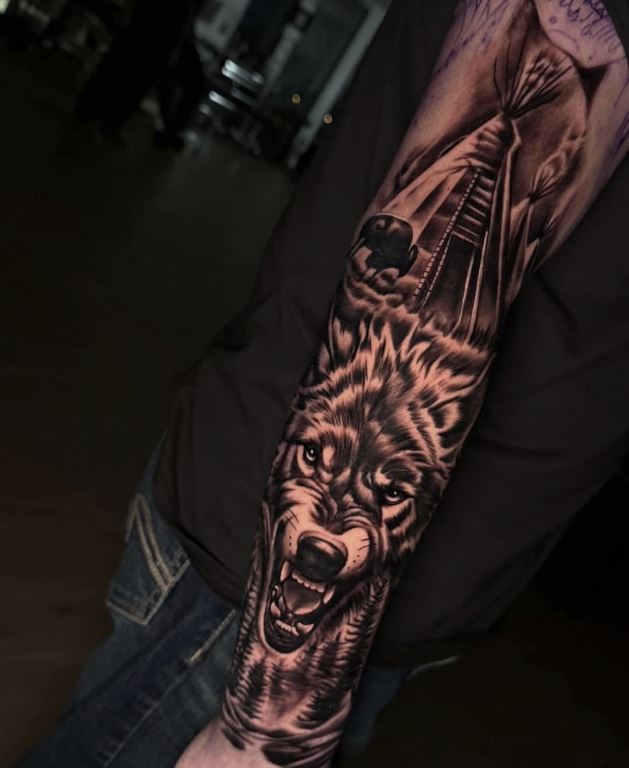
Q: While working strictly in black and grey, how do you
create the illusion of texture, making elements like fur, stone, or
skin look distinct and tangible?
A: I like to focus on the shapes of each element and then I break
down the textures within that shape. I use the appropriate needle
for the job as well.
Q: Over the course of your career, you’ve achieved immense
milestones, including opening Black Heart Studios in downtown
Calgary. What did that specific achievement mean to you personally?
A: I never really thought I’d be able to tattoo let alone be the
owner of a tattoo studio. When I started tattooing I knew I wanted
to do big things and take tattooing to its fullest extent. I guess I
saw the spectrum from being an apprentice to a tattoo artist to an
owner and mentor. It just showed me the full entirety of the
spectrum. I guess it was the end game and I got there.
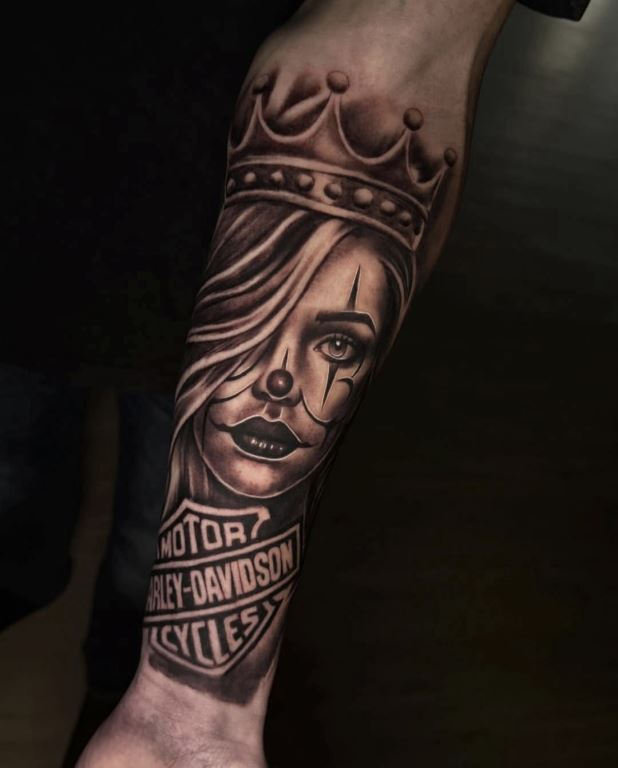
Q: Convention culture is a major part of our community. Can
you share some of your favorite highlights or awards you’ve taken
home from tattoo conventions over the years?
A: I’ve went to a few conventions in the United States as well as
Canada. I have only won awards in the US. I won 5 awards at a
convention in New Jersey and 1 award at a convention in Palm
Springs!
Q: Looking at your career trajectory, what is one moment or
accolade that made you step back and think, "I've really made it"?
A: I think opening my own studio made me realize that I’ve
accomplished everything I’ve set my mind to in the tattoo world.
Q: How would you describe the current tattoo culture in
Calgary, and how has the local scene evolved since you first
started?
A: When I first came to Calgary the tattoo scene was strong. A lot
of really good Realism artists made it difficult for a new guy from
out of town to stand out. I had to maintain a strong social media
presence to attract clients from the local area.
Q: Moving from local to global, social media has completely
erased geographic borders for artists. How do you view the current
state of the global tattoo scene?
A: I think the global tattoo scene is growing daily. It’s become
very common to travel for tattoos and I think that people should
look into that option more often. Especially those people from small
towns where there isn’t many options.
Q: In your opinion, how much has the industry progressed
technologically, from machines and needles to inks and aftercare
since your early days?
A: They have progressed a lot! When I started everyone around me was
using battery powered machines already. There are a lot more
inexpensive options for battery powered machines compared to when I
started. It’s nice seeing that tattooing is progressing and
innovative.
Q: With the industry growing so fast, do you think tattooing
has lost some of its counter-culture underground mystique, or has
the mainstream acceptance unlocked better opportunities for artists?
A: I think that the mainstream acceptance has unlocked better
opportunities for artists without a doubt. You used to be judged and
treated like a criminal hence why teachers lawyers and doctors would
avoid them. Now you see hospitals full of tattoos and teachers with
full sleeves. I think it becoming mainstream has allowed acceptance
and broken down the barriers for the average person to go in and get
tattoo.
Q: As the owner of Black Heart Studios, you lead an
incredible team of diverse talent. What kind of environment and
culture were you intentional about building when you opened your
doors?
A: I really wanted to focus on a drama free environment including a
wide variety of artists who specialize in their own specific style.
I wanted to create a family like culture where we aren’t just
friends inside the studio we are friends outside as well. We
prioritize team events and try to build something bigger than a
workplace relationship.
Q: The standard for apprenticeships has drastically shifted
from the past to nowadays. How do you view the modern
approach to teaching the craft versus the old-school, gatekeeping
methods?
A: I prefer the gatekeeping methods. Not because I don’t think
people should have opportunity but because people should have to go
through a proper apprenticeship. If you learn by yourself at home
sometimes you can build bad habits that can only hurt you in the
future. Learn the right way and you can avoid so many unnecessary
mistakes.
Q: What do you look for in a resident artist or collaborator
to ensure they fit the creative synergy of your shop?
A: I look for someone who has respect, kindness and a strong sense
of integrity. I try not to have too many artists that specialize in
one specific style. I hire artists with a strong attention to
detail. A very strong hygienic standard and a positive mindset.
Q: Realism often involves deeply personal subject matter for
clients, from memorial portraits to symbolic landmarks. How do you
handle the emotional responsibility of bringing those visions to
life?
A: I try to connect to people on an emotional level. I try to ask
why they are getting what they are getting. Whether it be solely
aesthetic reasons, or if it is very meaningful. We approach each of
those situations in different ways.
Q: What is the most rewarding or satisfying part of the
dynamic between you and the clients who sit in your chair?
A: Creating real friendships that last a lifetime. Someone of my
best friends started as clients and I’m so thankful for the
clientele I have. We really do feel like best friends after
completing a project like a full sleeve.
Q: Are you working on any particularly exciting or
unconventional projects right now that you can tease for our
readers?
A: I am working on a really cool horror themed leg sleeve for my
good client who gave me creative freedom. My other project I’m
looking forward to completing is a collaboration back piece with an
artist from Vancouver!
Q: As an artist who has already achieved so much, what are
your primary career and creative goals moving into the next few
years?
A: My goals are to visit more tattoo conventions and to keep growing
my personal brand as well as Blackheart Tattoo! Focusing on clothing
for the brand is a big goal for me within the next few years!
Q: If you could give one piece of unfiltered advice to an
aspiring artist looking to break into the world of high-end realism,
what would it be?
A: To learn from an artist that you really look up to, either go get
tattooed from them, take a seminar from them, or buy more online
courses. There’s a lot of great information out there these days,
you just need to look.
Q: Looking back at the entire trajectory of your life, what
is the single most satisfying thing about being a tattoo artist?
A: Creating something new each day and always having a creative
outlet in my life. Each day is a new opportunity to make amazing art
and great relationships!
Q: Dynamic trends come and go, but what is the lasting
legacy you hope to leave behind on the tattoo industry?
A: I always try to focus on timeless designs. Soft black and grey
realism that stands the test of time. I hope to look back on my
career and the amount of people I’ve impacted whether it be through
inspiration or through destroying their insecurities and given them
confidence back, or even helping them grieve.


