
Interview with Carl Joseph L.Geologo
Hello Carl Joseph L. Geologo! Thank you so much
for taking the time to do this interview. Please start by telling us
something about yourself and your background. What sparked your
initial interest in art? Hi, I’m Carl Joseph Geologo, also known as
Mico Geologo. I come from a family of artists, both of my parents
worked at Fil Cartoons Animation, a subsidiary of Hanna-Barbera
Productions. I graduated with a degree in Digital Arts major in
Animation from the University of Makati in 2015 and I am currently
an undergraduate student in the Master of Fine Arts and Design
program at Philippine Women’s University. After graduating, I was
offered a position as an Art Professor at the same university and
started teaching right away. During my years as a professor, I also
found time to explore other forms of art, which led me to study the
art of tattooing.
Q: Your bio mentions you are also a musician and a visual
artist beyond tattooing. How do these different creative outlets
influence one another? Does the rhythm of music ever translate into
the way you approach a tattoo machine?
A: Aside from visual arts, I was also fortunate to discover music as
another way to express myself. Learning and understanding music
helped deepen my appreciation of visual art, especially in terms of
design and composition, which are essential in tattooing. Concepts
such as balance, contrast, and flow exist in both music and visual
arts. The rhythm and structure of music influence how I approach
movement and flow in my tattoo work, especially when creating
dynamic compositions on the body.
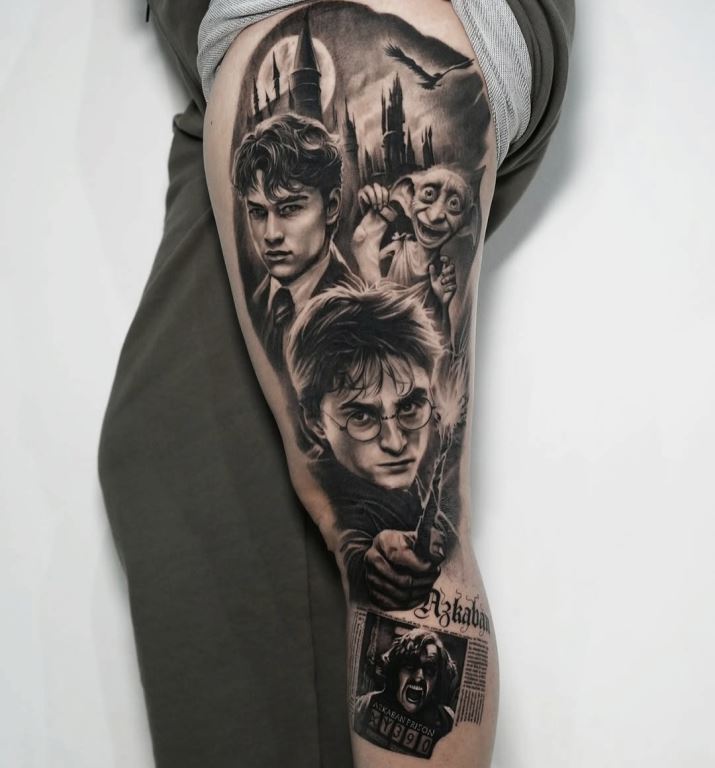
Q: Looking back at your early days, what
was the very first tattoo you ever performed, and what was going
through your mind at that moment? How does that memory compare to
the high-level work you’re doing now at @artcoholic_tattoo?
A: Honestly, when I was starting out, I didn’t expect that tattooing
would become the main path I would pursue. In my early days, I was
more focused on painting, which felt calm and relaxing compared to
tattooing, a process that is more intense because it combines art
with aspects of medical practice or minor procedures. The first
tattoo I ever did was a Japanese lotus flower. It was one of the
biggest challenges I experienced in my art career. While I
understood visual art well, I struggled with the actual process of
tattooing, especially the first time I encountered blood from a
client.
That challenge, however, became the reason I committed my life to
tattooing. I don’t allow myself to stop until I can overcome
something. I wanted to prove to myself that I could do it, and do it
well.
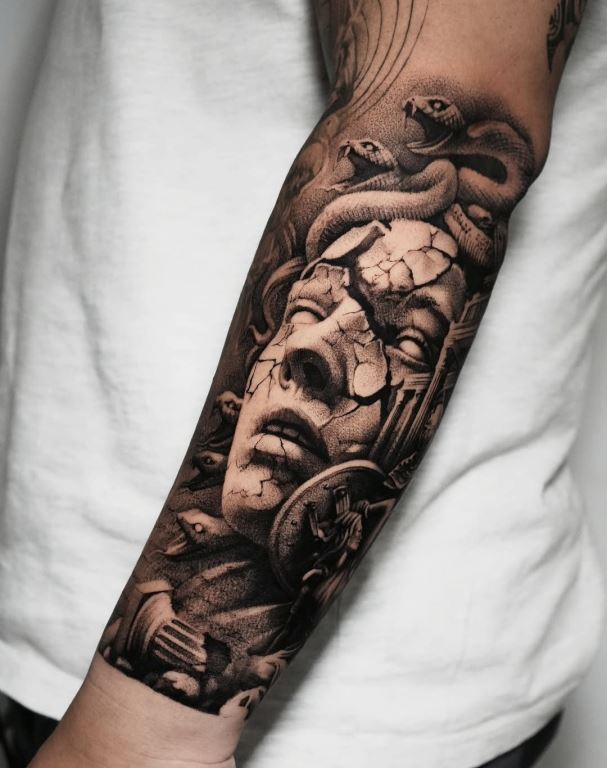
Q: Your portfolio shows a mastery of stippling and black &
gray. What drew you specifically to these techniques? Is there a
particular challenge in stippling that keeps you coming back to it?
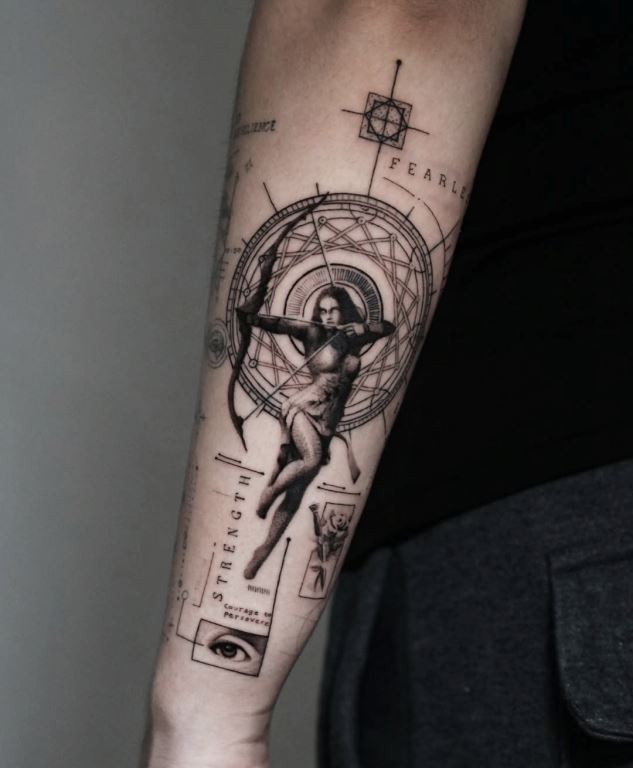
A: As a former art professor, I see stippling as an exceptional
practice because it requires a high level of patience, accuracy, and
focus. Achieving consistent details and tonal values through dot
work is very challenging, which is why I enjoy it, it pushes me to
improve with every piece. This technique allows me to be more
detailed and meticulous, since every mark is placed intentionally. I
also consider my clients’ experience and healing process; stippling
causes less skin trauma compared to heavier techniques, which
results in better healing and longevity of the tattoo.
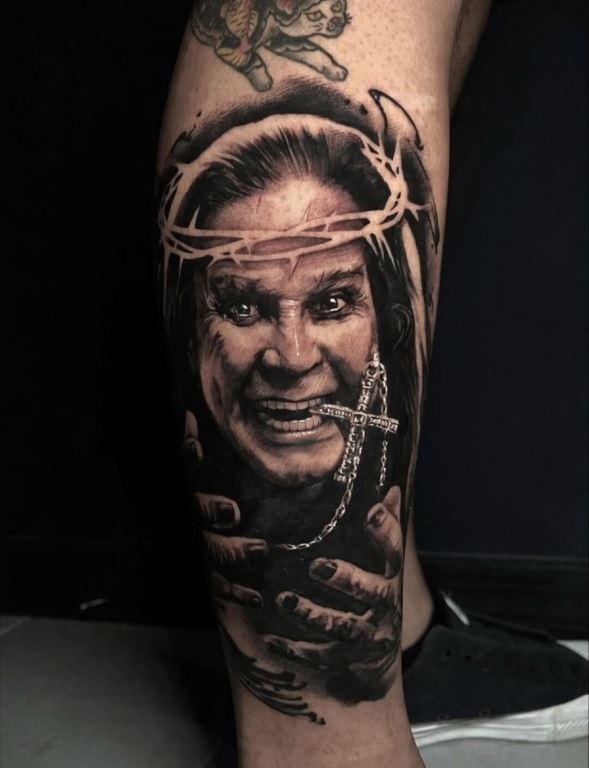
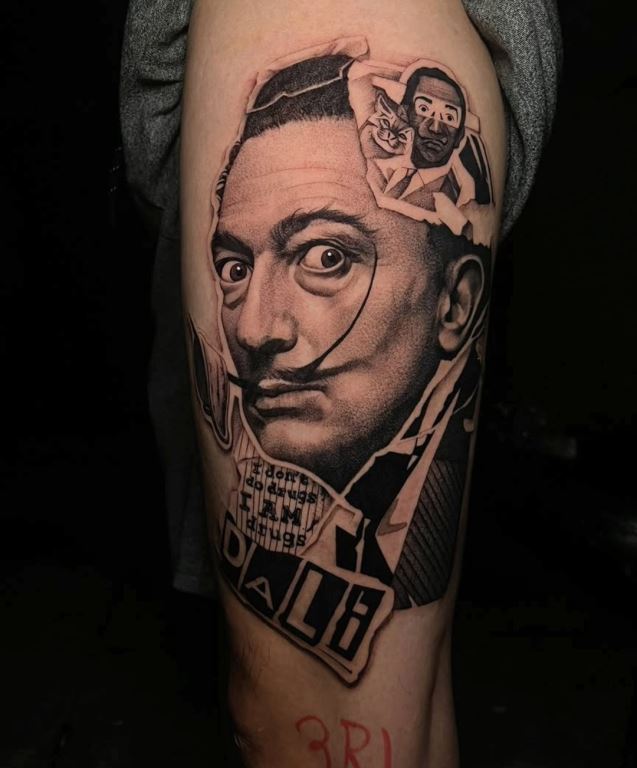
Q: We noticed some incredible realism in your work, from
portraits of Salvador Dalí and Ozzy Osbourne to hyper-realistic
textures like the eye of a reptile. How do you approach capturing
the “soul” of a subject in a portrait to ensure it looks alive on
the skin?
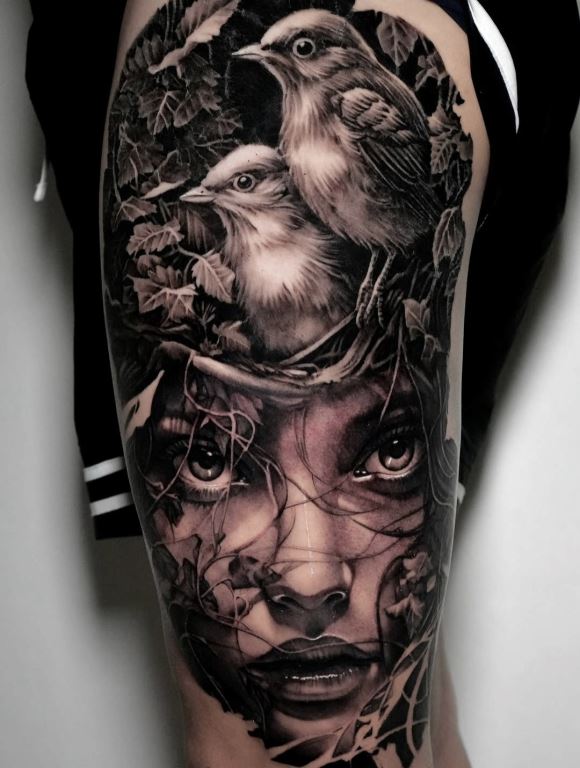
A: I focus on achieving accurate tonal values to create depth and
realism in the piece. Getting the lighting and contrast right is
crucial in making a portrait feel alive. I also pay close attention
to textures and subtle details, such as skin, wrinkles, eyes, and
shadows. These elements help capture the character and “soul” of the
subject, allowing the tattoo to feel expressive rather than flat.
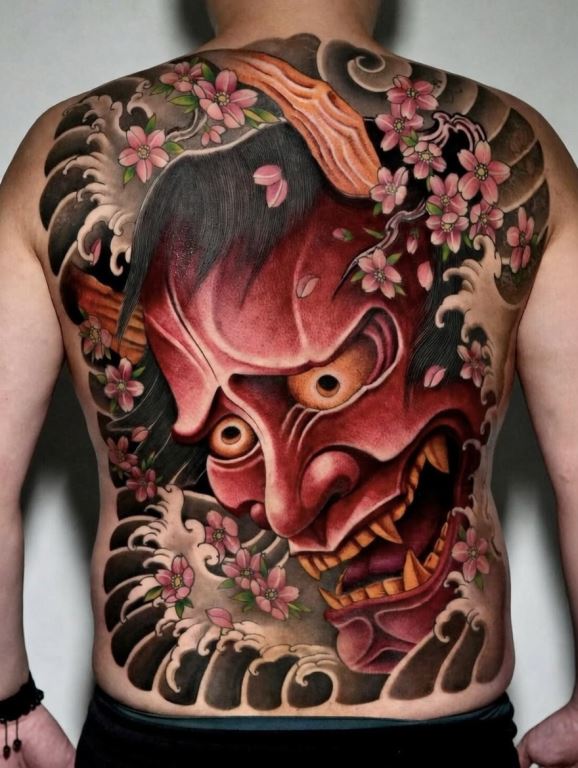
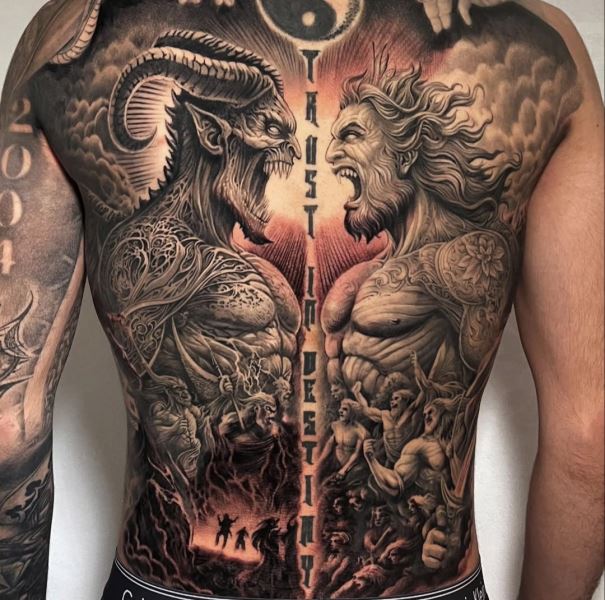
Q: You recently shared a breathtaking
Hannya back piece, describing it as a 'year-long journey, one flight
at a time'. Could you walk us through the endurance required for a
project of this scale? How did the 'one flight at a time' process
affect the way you and the client bonded over the artwork?
A: We completed this back piece over the course of more than a year.
My client, Andi, is from Indonesia and works there full-time. He
wanted his very first tattoo to be a full back piece, and he
specifically wanted me to do it. I explained to him that the project
would require at least 7–8 sessions to complete properly. I was
truly impressed and deeply honored, by his level of commitment. He
flew from Indonesia to the Philippines once a month just to continue
the tattoo sessions. That kind of dedication means everything to an
artist. When a client is willing to give that much time, effort, and
trust to your work, it pushes you to give your absolute best in
return. I made sure to put a part of my soul into every session of
that piece. By the end of the project, our sessions felt like more
than just a transactional tattoo process. It became a shared
journey. We built a genuine connection, what started as an
artist-and-client relationship naturally grew into a friendship.
Q: Tattooing is a unique collaboration.
How do you balance your artistic vision with a client’s personal
(and sometimes conflicting) expectations?
A: With over a decade of experience, I’ve developed a system that
works well for both me and my clients. I start by gathering all the
important details and keywords they have in mind for the piece. I
also take time to educate them about the tattoo style, proper
placement, and how the design will age on the body over the years.
From there, I create a customized design based on their story and
ideas, but executed through my artistic vision. That mutual respect
and trust allow us to meet in the middle and create a piece that
we’re both genuinely happy with.
Q: What is the hardest lesson you’ve learned about the human
“canvas” that you can’t learn from drawing on paper?
A: I wouldn’t say the “hardest,” but definitely the most valuable.
Tattooing means creating art directly on living skin, on a canvas
that will carry your work for a lifetime. That responsibility
humbles me and makes me deeply grateful for the trust clients give
me. One important lesson is learning to balance artistic focus with
empathy. While you’re trying to create a masterpiece, you also have
to be sensitive to your client’s pain, comfort, and limits. Time
management, pacing, and care become just as important as the art
itself. Another lesson is relationship-building. As an introvert,
socializing didn’t come naturally to me. Tattooing pushed me to
connect with people, listen to their stories, and become more open.
In a way, the craft taught me how to grow not just as an artist, but
as a person.
Q: You’ve won several major awards
internationally and been featured in Manila Standard and News 5. How
have these accolades changed your perspective on your career or the
way you approach your craft?
A: These recognitions gave me more confidence and pride in my
profession. In the Philippines, tattooing isn’t always fully
accepted as a serious career path, so receiving international awards
and media features felt very meaningful. It’s an honor to represent
our country through my craft and show that Filipino tattoo artists
can compete at a global level. More than personal achievement, it
motivates me to keep raising my standards and to inspire younger
artists to take their work seriously and believe in their potential.
Q: As the founder of Artcoholic Tattoo in Manila, what is
the most important lesson you’ve learned about running a studio and
mentoring the next generation of artists?
A: Leading by example is everything. It’s important to show a clear
path and direction, not just in creating art, but in respecting the
industry, the craft, and our clients. I believe in lifting others by
sharing knowledge, techniques, and experiences. When you guide
younger artists with respect and openness, you help shape them into
responsible, professional, and passionate individuals. That’s how we
build a healthier and stronger tattoo community.
Q: Please write down your studio location
and website/social media links. Also let us know if you are
available for bookings.
A: My studio is located at Bormaheco Condominium, Zapote Street,
Makati City, Philippines. You can check our studio’s Instagram at
@artcoholic_tattoo.
You can also follow my personal Instagram micogeologo_tattoo for
updates on my work and future international guest spot schedules. I
am currently open for bookings and collaborations, subject to
availability.
Q: Do you like the local tattoo scene? Do you see progress,
and are there any local artists you would like to work with?
A: I really admire the local tattoo scene in the U.S. The culture
continues to evolve while still honoring the roots and foundations
of tattooing. It’s inspiring to see how artists push creativity
forward while respecting the history of the craft.
Two artists I would love to collaborate with in the U.S. are Deanna
James and Alex Sorsa. I respect their approach to realism and
storytelling, and I feel our styles could complement each other
well.
Q: The U.S. scene is currently seeing a huge rise in
“Story-Driven Realism” and “Fine-Line Stippling.” Since these are
your specialties, how do you plan to bring your unique Filipino
perspective to these American trends?
A: One Filipino value I bring into my work is openness to
collaboration and storytelling. I take time to deeply listen to my
clients’ stories and translate them into visual narratives that are
meaningful for them and artistically fulfilling for me. This
collaborative approach allows me to respect the client’s personal
journey while adding my own artistic interpretation, creating
tattoos that are emotionally grounded and visually strong.
Q: You’ve been invited to join the Sgoons
Pro Team, a global tattoo supply giant. How do international
collaborations like this help bridge the gap between being a “local
hero” in the Philippines and becoming a “global name” in the U.S.?
A: Being invited to join the Sgoons Pro Team gave me a deeper sense
of confidence and validation. It means I’m representing not just
myself, but also a global tattoo brand on an international stage.
Moving from a local platform to a global movement is a completely
different level of responsibility and exposure. It’s an honor to be
trusted by one of the biggest names in the global tattoo scene, and
it motivates me to continuously elevate my standards and presence
worldwide.
Q: In America, the “Guest Spot” culture is huge. If you
could spend a month tattooing at any specific studio in the U.S.,
from NYC to LA, where would it be, and why does that specific shop’s
style resonate with you?
A: Some studios I would love to guest spot at include: Monolith
Tattoo, Brooklyn, NYC, Eden Tattoo, Dallas, Texas, Seattle,
Washington (Alex Sorsa) These studios resonate with my artistic
direction and the way I want to present my work internationally.
Their focus on strong composition, storytelling, and refined
execution aligns with my own values and perspective in tattooing. It
feels like a natural fit for how I want my work to be experienced
and appreciated.
Q: For an artist of your caliber, moving
to a new market often means a "rebranding." How do you plan to
balance your roots as the founder of Artcoholic in Makati while
establishing yourself as a premier artist in the highly competitive
American landscape?
A: With over a decade of experience participating in international
conventions and guest spots across different countries, including
Japan, I’ve had the opportunity to work with clients from various
nationalities, including many Americans, especially through the
presence of U.S. military bases in Japan. Because of that exposure,
I believe I have a solid understanding of the expectations and
demands of the American tattoo market. As an Asian artist, I also
see my background as an advantage. Many American tattoo collectors
deeply appreciate Japanese tattoos and other Asian art forms,
including tribal traditions. I can bring not just the aesthetic, but
a more authentic and culturally grounded understanding of these
styles, executed with respect, depth, and historical awareness. At
the same time, expanding into the U.S. market doesn’t mean leaving
my roots behind. As the founder of Artcoholic in Makati, my growth
on a global stage also elevates my brand back home. Representing my
work internationally strengthens the identity of Artcoholic and
reinforces its reputation as a studio that operates at a world-class
level. For me, it’s not about rebranding, it’s about expanding while
staying true to who I am and where I came from.
Q: If someone looks at a Carl Joseph
Geologo piece ten years from now, regardless of what country they
are in, what do you want that tattoo to say about the artist who
created it?
A: I want my tattoos to remain clean, readable, and timeless. Ten
years from now, I want people to see discipline, intention, and
respect for the craft in every piece. A tattoo should age well, not
just physically on the skin, but conceptually. If someone looks at
my work years later, I want them to feel that it was created by an
artist who valued precision, clarity, and long-term integrity over
trends.
Q: Every artist has a core belief that keeps them grounded
regardless of how many awards they win or how many countries they
visit. As you prepare for this next chapter in the U.S., what is the
one personal standard or philosophy that you refuse to compromise
on, no matter where your career takes you?
A: I will always remain a student. I strongly believe that learning
never stops. No matter how many awards I receive or how many
countries I visit, there will always be something new to study,
refine, and understand. Growth keeps me grounded. Staying humble and
committed to continuous improvement is a personal standard I refuse
to compromise on.
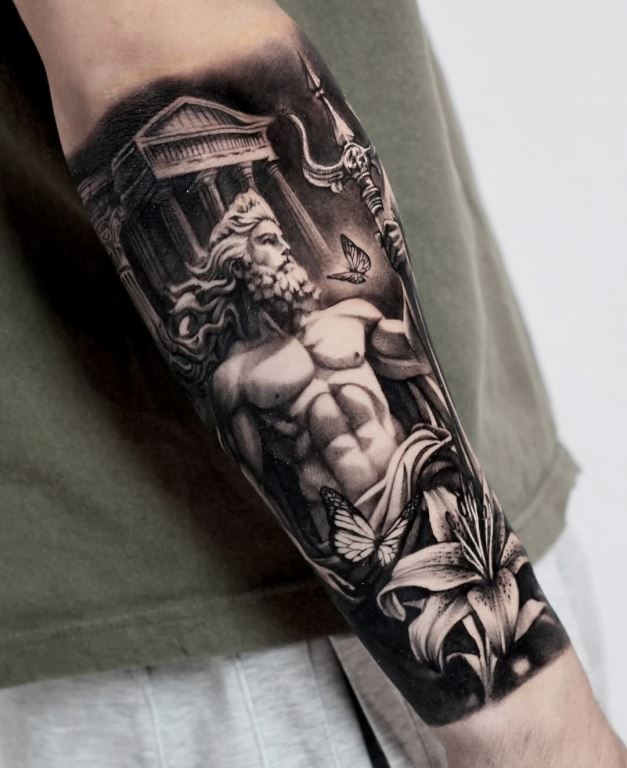
Q: If you could go back to the very first
day you picked up a tattoo machine and give that younger version of
Carl Joseph L. Geologo one piece of advice about the journey ahead,
what would it be?
A: I would tell him: Just keep going. Always give your best and it
will all be worth it. Make art your life until art gives life back
to you. As we say in Filipino: “Gawin mong buhay ang sining hanggang
ang sining ang magbigay ng buhay sa’yo.” If you dedicate yourself
fully to your craft with discipline and sincerity, it will
eventually open doors you never imagined.
Interview: Ivana Kancheska
Date: 02/03/2026


