
Interview with Kate Perets
As Skin Artists Tattoo Magazine marks its 18th anniversary, the focus turns to the creators who are defining the next era of the industry. To celebrate nearly two decades of documenting skin art, we are highlighting a selection of top-tier artists who represent the gold standard of modern tattooing. Kate Perets stands out among this elite group, bringing a vibrant, high-energy perspective to the craft.
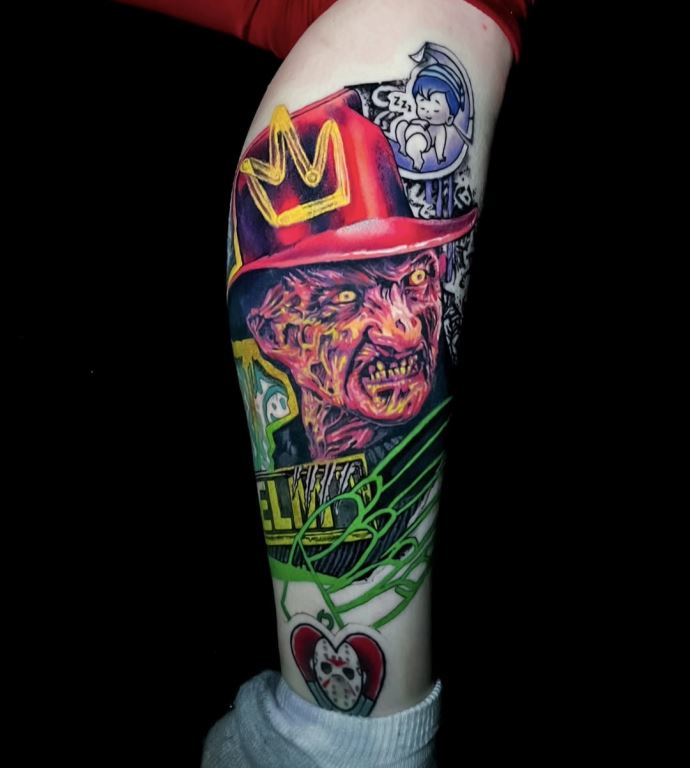
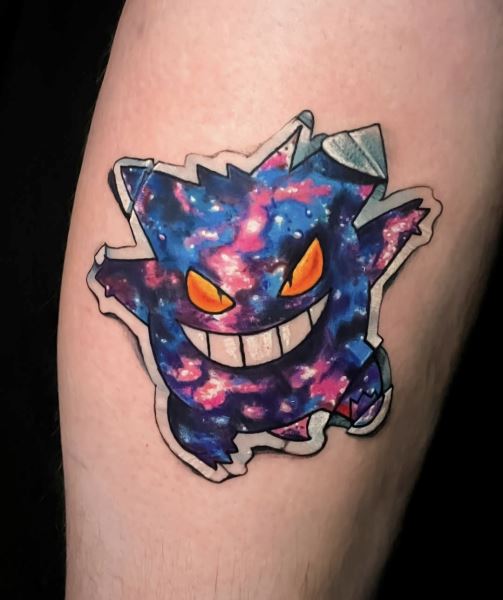
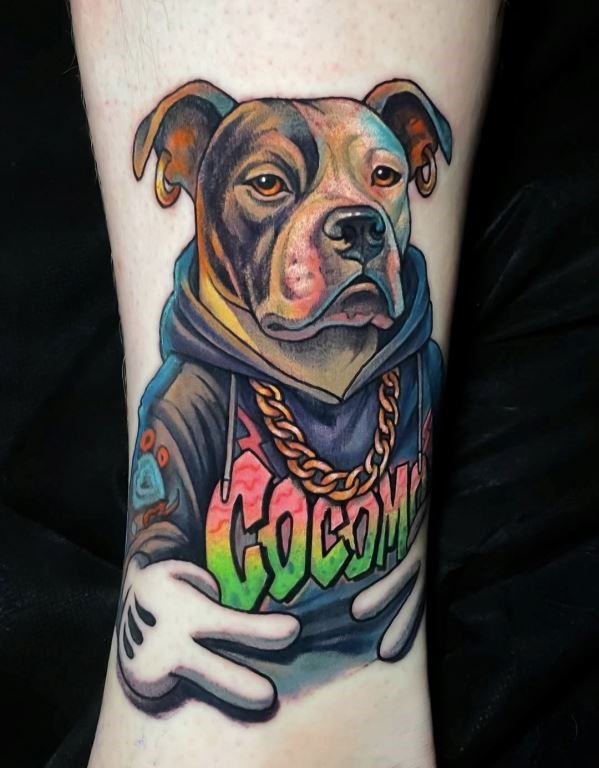
Based in Seattle at Crab Neck Tattoo, Kate has gained international recognition for her mastery of the New School style. Her portfolio is a masterclass in explosive color, exaggerated proportions, and a distinct illustrative flair that pushes the boundaries of traditional design. Her work combines technical precision with a bold, imaginative aesthetic that has made her an essential voice in the contemporary scene.
The following interview explores the evolution of her artistic style, the future of tattooing, her approach to multi-style collaboration, and what it means to be at the forefront of the industry as the magazine looks toward its next chapter.
Q: New School is built on exaggerated proportions and
'liquid' flow. In 2026, as CGI and animation become more realistic,
how do you push your designs to stay even more 'unreal' and
imaginative?
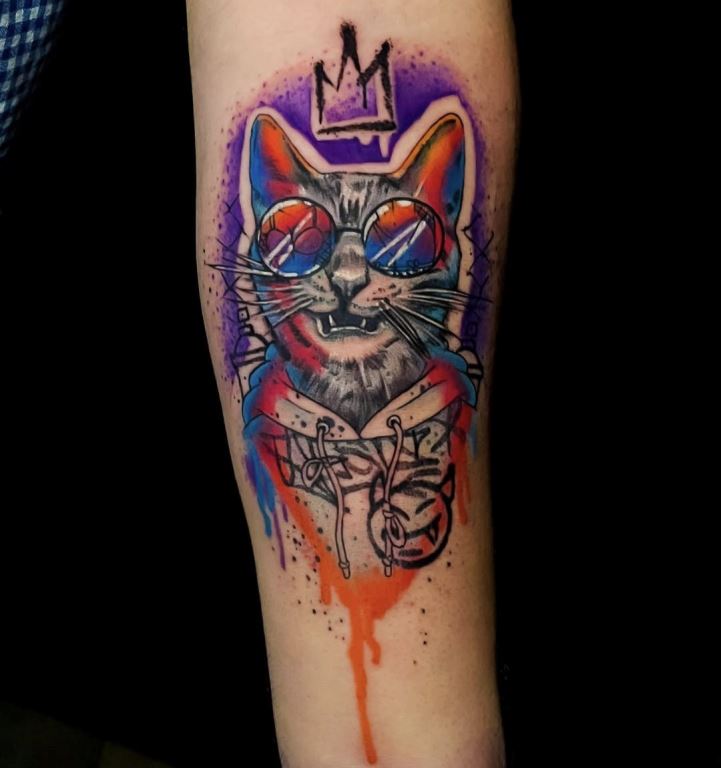
A: In 2026, “unreal” is no longer rare. CGI has mastered polished
fantasy, which means New School must evolve beyond surface
exaggeration. As an international award-winning artist and
convention judge, I see a clear shift toward smarter distortion
rather than louder distortion. I push emotional elasticity,
impossible light logic, and calculated color tension. My characters
are not simply exaggerated, they are psychologically amplified. I am
not competing with digital rendering, I am expanding what visual
identity can mean on human skin.
Q: Many see New School as the cousin of street art. How has
the evolution of global graffiti and muralism in the last decade
influenced the way you structure your tattoo compositions today?
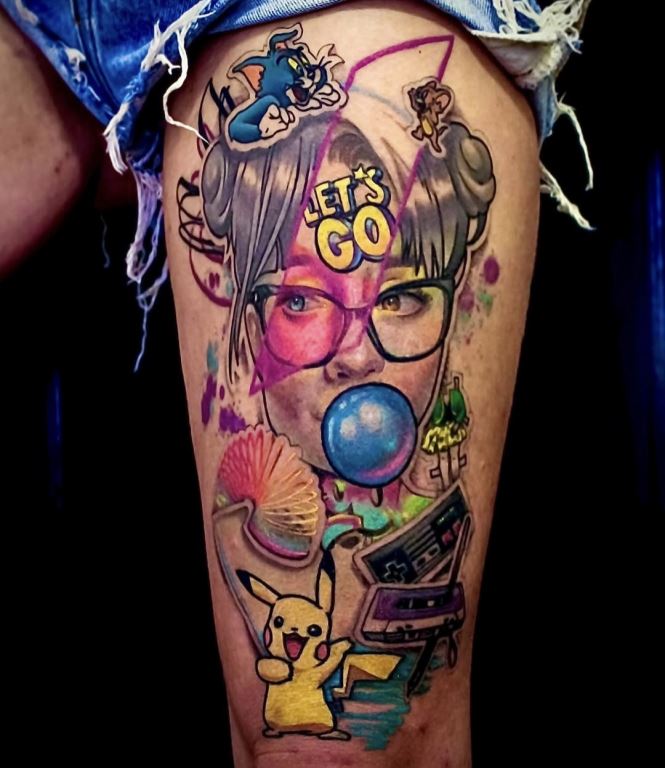
A: Graffiti shaped my structural thinking and taught me hierarchy,
dominance, and rhythm. After years of working across international
conventions and observing global mural movements, I apply the same
architectural logic to skin. A tattoo must read from distance,
survive aging, and hold power in motion. Bright color without
structure is decoration, structured chaos is design.
Q: You create characters that feel alive. How do you ensure
that a cartoonish or stylized design still carries a deep, emotional
'soul' for the person wearing it?
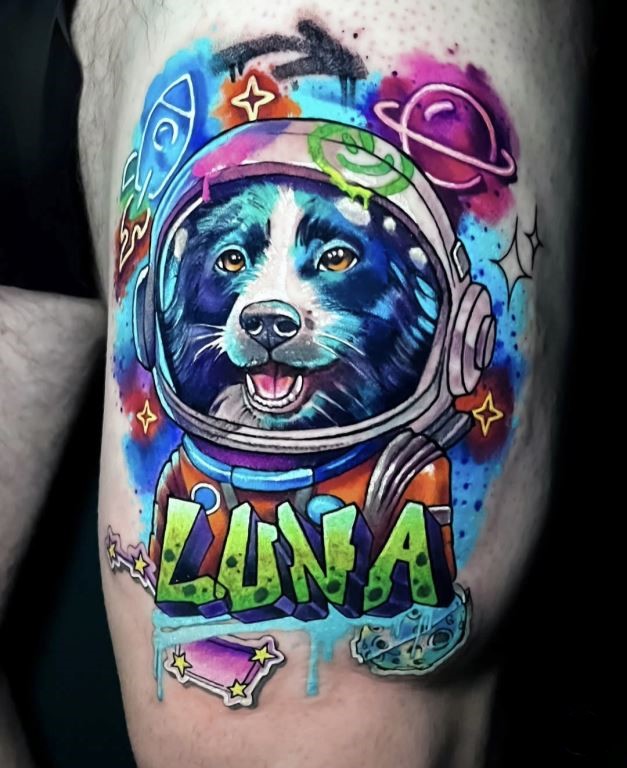
A: Cartoon exaggeration is often dismissed as playful, but I see it
as emotionally strategic. Every character I create carries tension
in the eyes, gesture, posture, and silhouette. As a judge, I often
see technically clean work that lacks emotional charge. Soul cannot
be copied, it must be built through intention and clarity of
character.
Q: Your colors are incredibly bold. What is your 'Visionary'
approach to color theory, do you follow the rules of the color
wheel, or do you prefer to create 'impossible' palettes that
shouldn't work, but do?
A: I approach color with discipline and aggression at the same time.
Understanding the color wheel is mandatory, breaking it responsibly
is power. Through competitions and international exposure, I have
seen saturation misused as noise. My philosophy is layered pigment
density, temperature contrast, and strict value control. In a
minimalist era, controlled excess becomes a signature rather than
chaos.
Q: Every New School piece tells a story. When a client comes
to you, are you tattooing a design, or are you 'directing' a scene
on their skin?
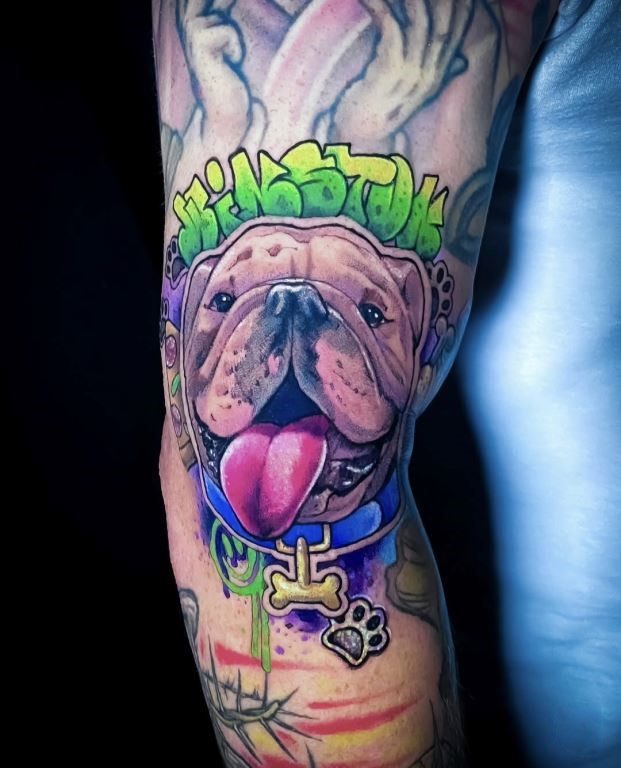
A: I do not tattoo images, I construct scenes. Every placement
accounts for anatomy, muscle movement, pigment stability, and
readability from multiple distances. Years of judging reinforced
this belief, composition must survive scrutiny. A character should
interact with the body, not float on it.
Q: New School was one of the first styles to fully embrace
digital design. How has the 'Undo' button changed the way we think
about the risk and weight of permanent ink in 2026?
A: Digital tools refined preparation, but they did not reduce
responsibility. The Undo button exists on the screen, not under the
needle. Technology supports precision, but tattooing demands
irreversible decisions. Professional maturity means transferring
digital confidence into permanent execution.
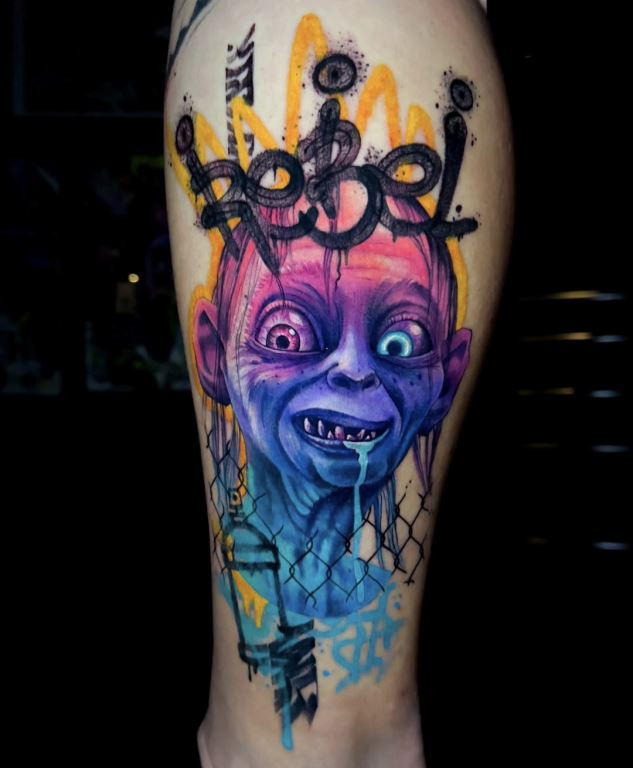
Q: AI is great at 'averaging' things, but New School is
about 'extremes.' Do you think AI struggles to replicate the
specific, wacky humor and 'intentional mistakes' of your style?
A: AI excels at imitation and averaging aesthetics, but New School
thrives on extremes. My work contains intentional imbalance,
exaggerated distortion, and aggressive color tension driven by
instinct. Algorithms replicate trends, artists interpret emotion.
That difference defines originality.
Q: With the rise of UV-reactive and 'smart' pigments, do you
see New School becoming a literal 'light-up' art form in the next
few years?
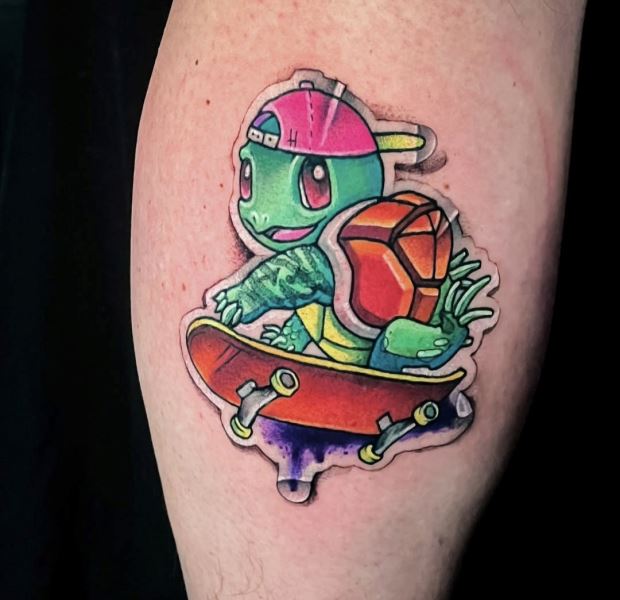
A: Innovative pigments are enhancements, not foundations. If a
tattoo depends on UV reactivity to feel impressive, the structure is
weak. Technology should amplify vision, not compensate for lack of
design depth. A strong composition must stand without novelty.
Q: In 2026, we see artists using 'holographic' color
palettes to create 3D illusions. With your style being centered on
volume, how is this technology changing the way you compose your
characters?
A: True volume is built on tonal discipline and light logic.
Holographic palettes and spectral transitions can elevate a piece,
but without value control they collapse visually. I construct light
and shadow first, then use color to intensify what is already
structurally sound.
Q: Because New School looks 'fun,' many beginners think it's
'easy.' What is the biggest technical trap that young artists fall
into when they try to skip the fundamentals of saturation?
A: New School appears playful, which creates the illusion of
simplicity, but it is one of the most technically demanding styles.
High saturation requires precision, depth control, understanding of
healing, and consistency across sessions. In competitions I often
see promising artists skip fundamentals, and discipline is what
separates boldness from mess.
Q: As the industry professionalizes, do you think New School
should be taught in art universities, or is it a style that can only
be learned in the "wild" of a traditional shop?
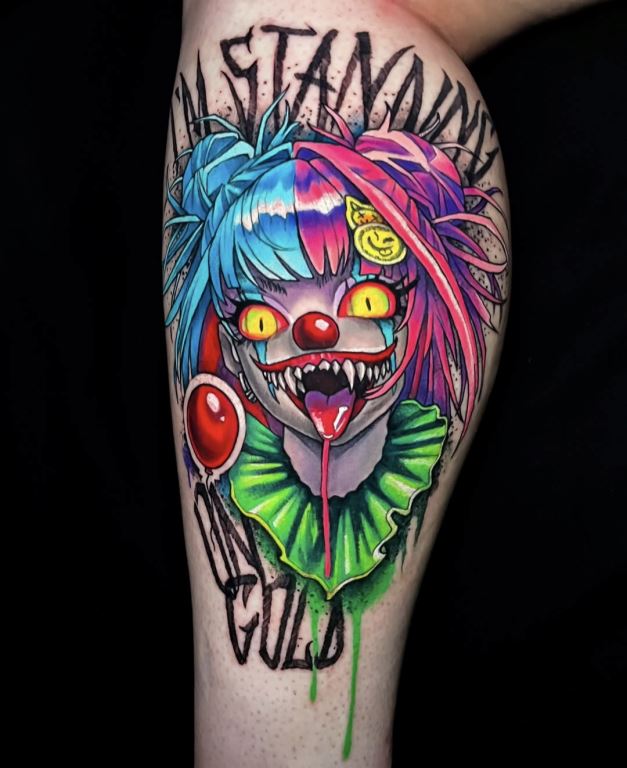
A: New School deserves academic recognition, but it must remain
grounded in real studio practice. Professional environments teach
pressure management, hygiene discipline, and accountability in ways
classrooms cannot replicate. Art education without practical
immersion risks sterilizing a style that was born from rebellion and
energy.
Q: If you were teaching a New School Masterclass in 2026,
why would you make your students study classic animation or 1990s
graffiti culture?
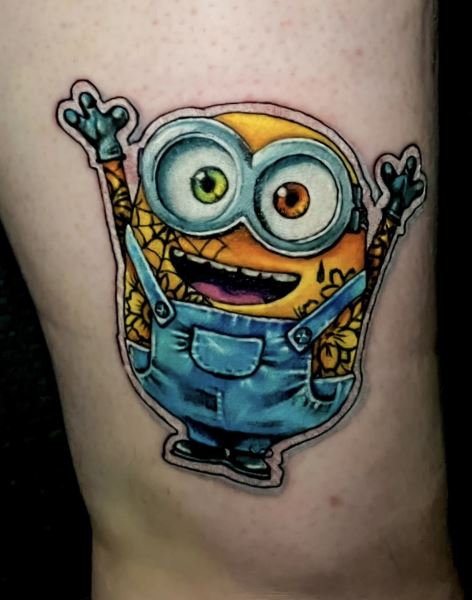
A: If I were teaching a Masterclass, classic animation would be
mandatory because it teaches exaggeration with control and movement
with logic. 1990s graffiti culture would also be essential because
it teaches hierarchy, visual pressure, and fearless composition.
Without these roots, New School loses its cultural backbone and
becomes surface decoration.
Q: In 2026, is a mentor still a 'teacher,' or have they
become more of a 'creative director' for their apprentices?
A: A mentor today is part teacher, part creative director, and part
strategic advisor. Beyond technique, they shape identity,
positioning, and ethical standards within the profession. As the
industry grows globally, responsible mentorship becomes critical to
maintaining integrity and long-term sustainability.
Q: What is the one thing about 'Color Realism' that every
New School artist must understand to make their work truly pop?
A: Every New School artist must understand the light discipline of
color realism. Without tonal accuracy and structural volume,
saturation becomes flat and decorative. Depth creates authority, and
authority creates longevity.
Q: In a market where everyone is shouting for attention on
social media, how do you keep your work from becoming 'visual noise'
and ensure it remains 'Fine Art'?
A: Social media rewards noise, but Fine Art requires structure. I
maintain a recognizable visual system, controlled focal hierarchy,
and disciplined contrast. Consistency builds authority, and
authority allows longevity in an oversaturated market.
Q: How has your personal 'vibe' as an artist helped you
build a following that trusts your weirdest and wildest ideas?
A: My personal vibe is unapologetic boldness supported by technical
precision. Clients trust my most radical ideas because they see
structure behind the excess. Vision without control becomes chaos,
and control without vision becomes sterile. My work lives between
those two forces.
Q: If you could change one thing about 'Global Tattoo
Culture' right now to make the industry healthier for the next
decade, what would it be?
A: The industry needs stronger quality benchmarks and transparent
educational responsibility worldwide. Through international
conventions I have seen how dramatically standards vary.
Professionalism must become universal rather than optional if the
craft is to evolve responsibly.
Q: In a world of 'apprentice mills,' how can we as a
collective better protect the integrity of the professional studio?
Is the answer more regulation or higher standards of mentorship?
A: Apprentice mills dilute professional integrity and lower
expectations across the market. The solution lies in mentorship
accountability and higher standards, not easier entry points.
Protecting the studio culture protects the craft itself.
Q: You spend your life bringing imaginary characters to life
on human skin. When you look back at your work in 2026, which of
your creations feels most like a reflection of your own spirit?
A: The characters that reflect me most balance humor, rebellion, and
tension. They are vibrant but not naive, expressive but controlled,
playful yet sharp. They carry the same drive and independence that
shaped my career.
Q: Your work carries a specific 'frequency' of joy. In a
world that can often feel clinical or dark, what is the one core
'vibe' you hope your tattoos provide to your clients for the rest of
their lives?
A: In a world that often feels clinical and restrained, my work
offers controlled intensity and unapologetic color. I want my
tattoos to give people confidence, boldness, and a lasting sense of
identity. Color is not decoration, it is emotional frequency made
permanent.
Read our first interview with Kate Perets.
Interview: Fredrik Lindström
Date: 21 February 2026


