
Interview with Leonardo Luzardo
Hello Leonardo Luzardo, it's a genuine
pleasure to have you with us today. To begin, could you share a bit
about your artistic journey and background? Specifically, I'm
curious about how your path as an artist unfolded. Were you
primarily self-taught, or did formal training play a role in your
development? Also, at what point did you recognize your passion and
aptitude for the arts? Since I was little, I was very
interested in drawing, painting, and sculpting with modeling clay.
It was a space of peace and tranquility. I really enjoyed trying to
capture everything I saw that I liked and caught my attention.
Q: When tattooing came into the picture and why?
A: My interest in tattooing began in high school. I was really into
skateboarding and would see tattoos in skate videos as another tool
for expression within urban culture and street tribes. That’s when I
really wanted to get my first tattoo. But it wasn’t until
university, when some friends bought tattoo machines and started
tattooing at home, that I got motivated to buy my own equipment and
start tattooing myself.
Q: Could you describe your transition into the professional
tattoo studio environment?
A: It was very interesting - the change was radical. It went from
being a hobby to becoming a trade. I saw all the professionalism and
dedication involved in the tattoo world, all the hours of study,
effort, and sacrifice behind a good tattoo.
Q: As you were establishing yourself as an artist, what were
the primary forces that fueled your growth and kept you motivated?
What was the biggest source of inspiration or drive during those
early stages?
A: I think my main drive was my family. They always encouraged me to
believe I could achieve anything I set my mind to if I did it
wholeheartedly. Nothing comes easy, but you have to be hardworking
and brave to reach your goals. If you’re going to do something, do
it well.
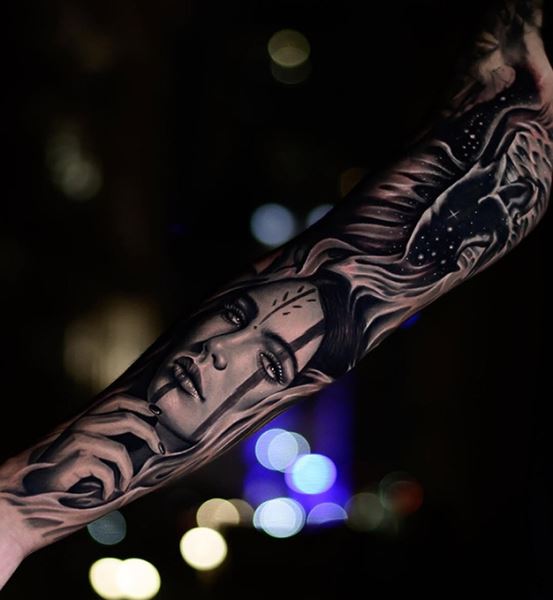
Q: You've gravitated towards tattoo
realism. What draws you to this particular style, and what aspects
of realism do you find most compelling or rewarding as an artist?
A: I find the whole theme of light and shadow fascinating and very
philosophical, how they interact and converge to create the images
we see, the structures that form each element and each shape in
nature, as if everything had been designed by an architect. Then,
the idea of reproducing that on skin with a needle and ink is
mind-blowing. It requires many hours of practice and attention to
detail. You shouldn’t be afraid of self-criticism.
Q: Some argue that the precision demanded by hyperrealistic
portraiture might feel creatively restrictive. However, do you find
that working within the realm of tattoo realism still offers avenues
for artistic exploration and personal expression? If so, how do you
navigate the balance between accuracy and creative innovation?
A: I think realism gives you the technical and theoretical
foundations to confidently explore different styles and
combinations. It’s a solid starting point. Then, through mixing,
exploration, and personal expression, motivated by constant
research, experiences, and inspiration from other artists, your own
voice emerges.
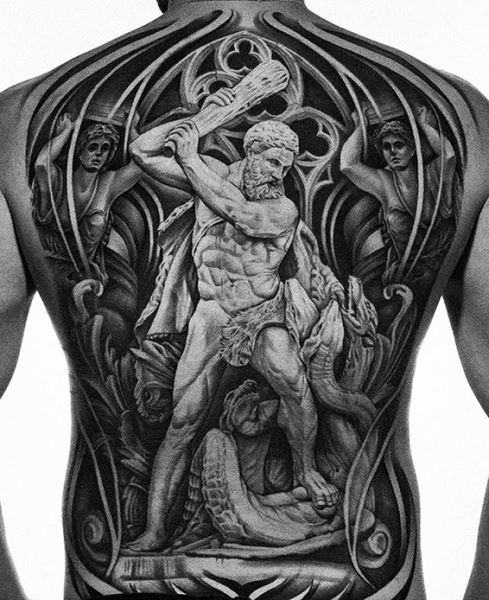
Q: Your black and gray realistic portraits
demonstrate remarkable consistency and skill. Looking ahead, is this
style your primary artistic focus, or do you envision exploring
other tattoo styles or perhaps incorporating color into your work in
the future?
A: Yes, I’m always exploring new artistic tools that allow me to
evolve and expand the expressiveness and impact of my work. I try to
enjoy moving back and forth between the classic-traditional and the
avant-garde-experimental.
Q: When approaching a portrait tattoo, what are the key
elements you focus on to capture not just a likeness, but also the
essence and character of the subject?
A: I believe the gaze is key, the angle of the face and the type of
lighting make up the perfect triad. Personally, I really like a 3/4
pose with Rembrandt lighting.
Q: Any favorite tattoo you did recently?
A: I’m currently working on a bodysuit inspired by Japanese Noh
theatre, and I’m loving it. I think it’s a high-impact piece that’s
allowing me to explore many things.
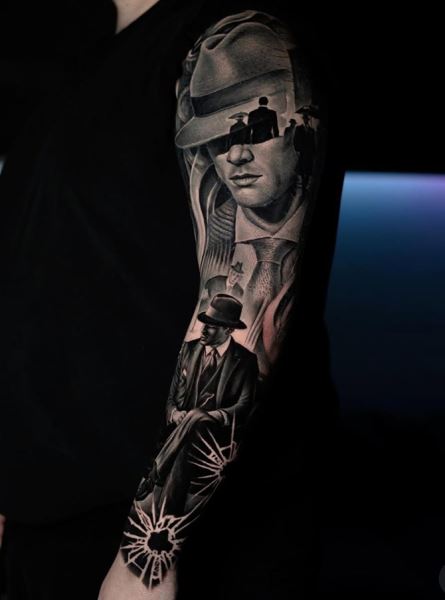
Q: Beyond discussing the design and
aftercare, how do you typically engage with your clients during a
tattoo session to create a comfortable and positive experience for
them? Are there particular approaches you find effective in building
rapport and making the time enjoyable?
A: I believe a tattoo represents a bridge between our inner world
and the outer world. Each person has their own code and language.
Understanding tattooing as an extension of our capacity for
expression puts me in a position of respect for every project and
helps me connect with the collector in an honest and safe way. It’s
very important to create an atmosphere of trust to navigate all the
emotions and moments during the session.
Q: Could you describe your process for developing custom
tattoo designs? Do you typically create preliminary sketches prior
to the client's appointment, or do you prefer to collaborate with
the client on the day of their session to finalize the design?
A: I like to start with a consultation before the session, where we
can develop a concept, understand what the person wants to express,
what the purpose of the tattoo is, and define the aesthetic or
visual path we can take. Everyone has their own code and resonates
with certain forms more than others. From that meeting point, the
tattoo project is born.
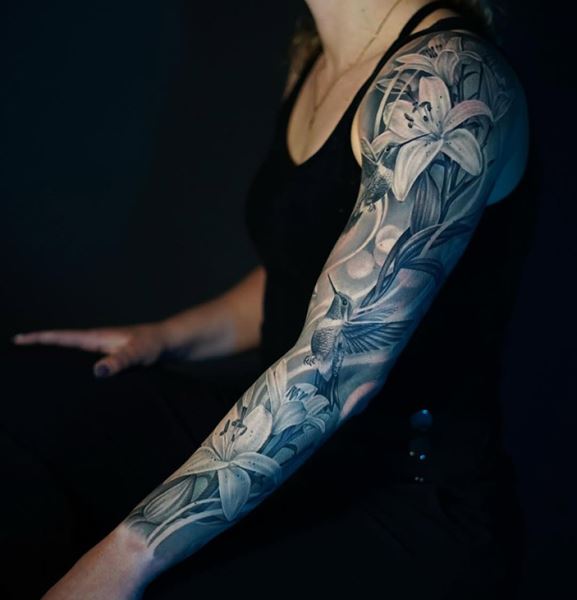
Q: Many clients choose tattoos with deep
personal significance. How do you encourage them to share the
stories and meanings behind their chosen designs, and how does
understanding this personal connection influence your approach to
the tattooing process, making it a more meaningful experience for
both of you?
A: That understanding is key because it supports the whole project,
the understanding of the creative intention, whether it’s to
decorate, represent, interpret, or reproduce. It’s very important to
give full value to every opportunity someone gives you when they
trust their body to your hands.
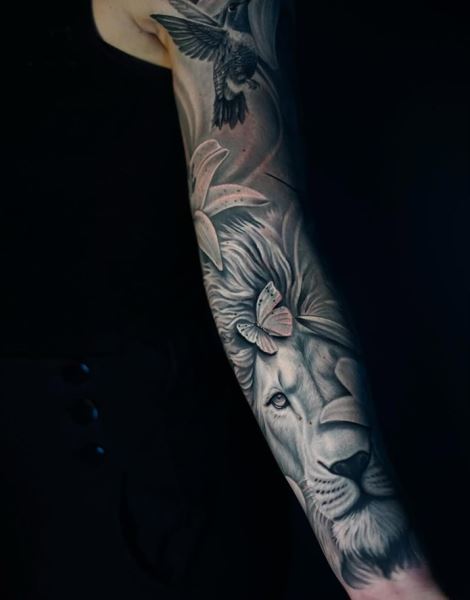
Q: Any funny stories?
A: One time, we went to a convention in Germany and all our luggage
was lost. We were left with only one backpack. We had to buy clothes
and materials and turn that adverse situation into an exercise in
resilience. We overcame the setback and ended up creating an
incredible tattoo. We laughed about it afterward, and on the last
day of the convention, we recovered our bags at the airport.
Q: Could you share an instance where a tattoo project
presented a unique creative or technical hurdle that required you to
think outside conventional approaches to find a solution? What was
the challenge, and how did you ultimately overcome it?
A: Every project presents its own challenges. The most important
thing is to approach it with time, study it well, and create a solid
strategy that adapts to the characteristics of each piece.
Q: Given the proliferation of resources available to
aspiring tattoo artists today, such as online tutorials, workshops,
conventions, and guest spots, how do you perceive the impact of this
increased accessibility on the process of breaking into the tattoo
industry? Has it genuinely lowered the barrier to entry, or are
there other factors that remain significant hurdles?
A: I see it as something very positive because it makes the learning
process easier. It’s much safer and leans into professionalism. It
makes it clear that the biggest obstacle is our own will.
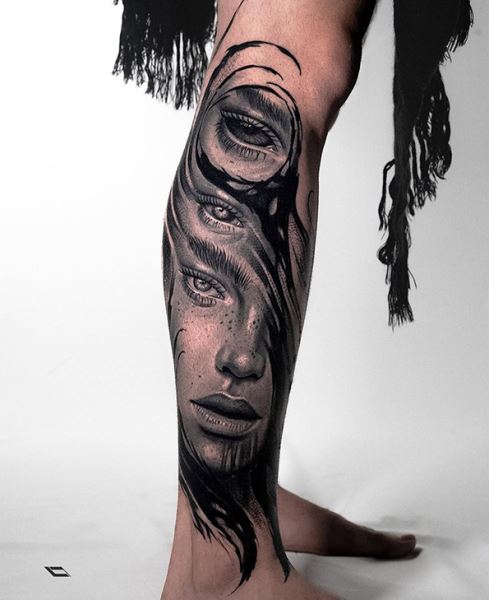
Q: You previously showcased a captivating
Japanese-inspired art exhibition in Buenos Aires. Could you
elaborate on the inspiration and creative process behind that?
Beyond tattooing, are there other artistic mediums or creative
pursuits that you actively engage in now?
A: For that project, I watched several documentaries and researched
books about the origins and characteristics of Noh theatre. To
create the design, we used several techniques: first, we made 3D
prints of the masks, then we did photography under specific lighting
conditions that created different sensations and added expression.
We also experimented with the suminagashi technique, which involves
transferring ink patterns from water onto paper. We used that to
integrate all the characters.
The piece is titled “The Healing Fire” and it tells the story of a
battle between the forces of good and evil over the soul of a woman
consumed by anger, revenge, and resentment. In the end, her father
invokes the celestial forces to cleanse all the demons attacking her
with fire so she can regain her life.
Q: What's your take on the local tattoo scene? Are you
seeing any exciting developments, like new artists, styles, or
events?
A: Today, there’s a lot to see, tattoo culture is very active,
constantly evolving, proposing and reinventing itself, generating
new ideas while staying connected to the traditional and classical.
That fusion is fascinating to me.
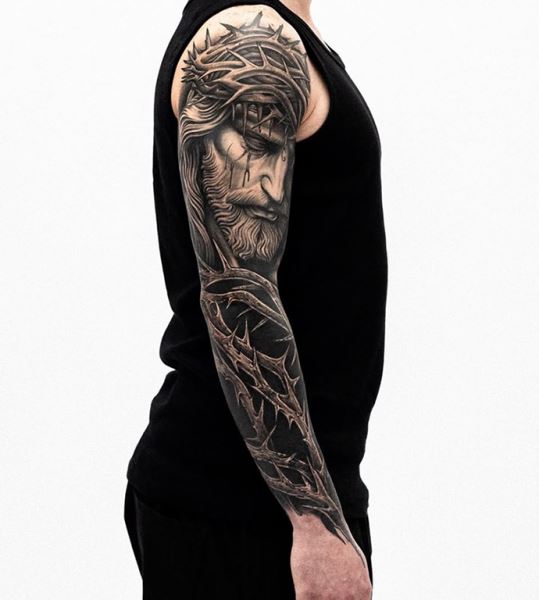
Q: How often do you attend tattoo
conventions? In your experience, how valuable are tattoo conventions
for artistic growth and building client relationships?
A: Conventions are essential for connecting, finding inspiration,
and projecting your career. It’s a space for artistic proposal and
discovering new possibilities. More than looking for clients, it’s
about strengthening community ties and learning.
Q: How has your passion for tattooing evolved since you
first started? Are you just as enthusiastic, or even more so now?
A: Yes, I feel it’s growing more and more, thank God, with more
ideas and the desire to keep experimenting.
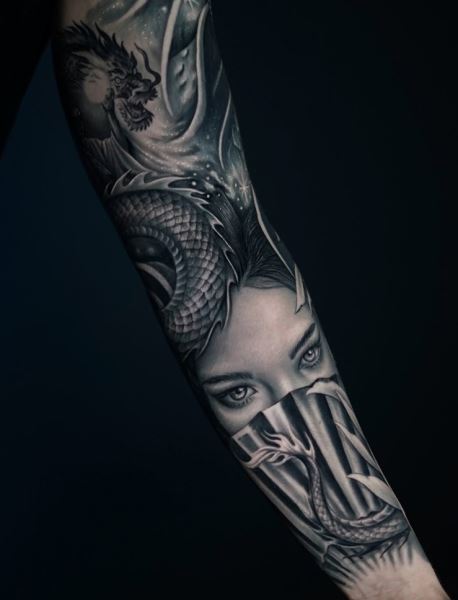
Q: Favorite career highlight?
A: When I did my first full sleeve, it was epic. At that time,
completing a project I had invested more than 30 hours into was
extraordinary.
Q: What's next?
A: I want to keep discovering new destinations. I want to visit the
United States and Asia, continue innovating, and take tattooing out
of its usual context, to expand the artwork and set it in motion
around the world.
Q: If you could go back and give your younger self advice
about pursuing tattooing, what would it be?
A: I’d tell someone starting out: take things calmly and with
discipline, do your research, and practice. Always do everything
with passion. All the effort, time, and energy you invest will come
back as achievements. Do everything as if it were always for God.


