
Interview with Lobo Art
Hello Lobo Art! Thank you for
joining us. We're excited to learn more about your journey. To
begin, could you tell us a bit about your background and what
initially sparked your passion for art? From a very young
age, influenced by music, the urban tribes that arrived in Colombia,
and a particular ideology, tattooing became a form of expression for
me, a way to show my essence. I started tattooing over 11 years ago
while studying psychology. At that time, it was almost impossible to
find a mentor, so I learned in a self-taught way, through trial and
error. My passion was born from a very deep creative need: I felt I
had something to express, and tattooing became the perfect medium to
tell stories on human skin. It became my own psychology within art.
Q: Were there any key individuals who significantly shaped
your early creative development?
A: In addition to being a tattoo artist, I am a visual artist who
paints and sculpts. Although I didn’t have a direct mentor, I found
great inspiration in classical masters such as Caravaggio. His
mastery of light and shadow deeply influenced the way I approach
depth, contrast, and emotion in my work.
Q: Your artistic style strikes me as a compelling dialogue
between realism and surrealism. How do you perceive the interplay of
these elements in your work, and what draws you to this particular
combination?
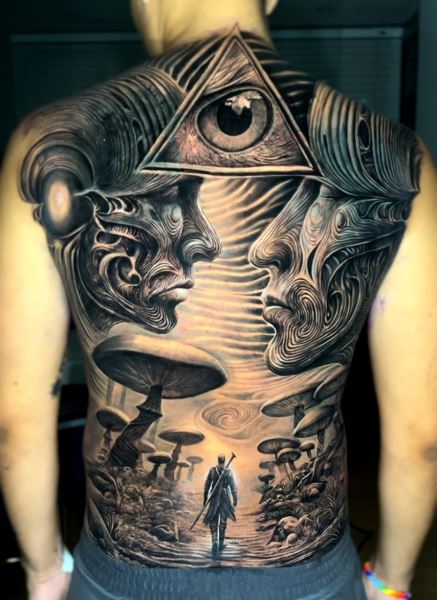
A: Tattooing is my daily practice, where I have developed mastery
over textures and volumes. This has allowed my work to include
elements that do not seem to belong to this reality alongside others
that are very close to it, giving each piece a soul beyond just
technique.

Q: Could you walk us through your creative process, from
initial concept to the final design?
A: In tattooing, unlike painting and sculpture, I try to be the
perfect channel between the client’s idea and the final design to be
placed on the skin. The connection I create with the collector of
these works is very important to me, as it will not only be my piece
but also the tattoo that will accompany them for the rest of their
life. Everything begins with understanding the collector’s story and
what they want to convey. I research references and integrate
artificial intelligence into my design process, because in the past,
the lack of references sometimes diminished originality in my style.
I then transform the concept into a sketch or digital composition,
giving it my own identity and texture. During the tattooing process,
I adapt and refine in real time so that the result is not only
visually powerful but also personally meaningful for the client.

Q: Every artist encounters projects that push their
boundaries. Can you recall a specific tattoo that tested your
creative and technical skills in a significant way, and what made
the final outcome so rewarding?
A: For me, my clients’ stories are extremely important, and many of
them have left a mark on me. Some have lost children, others have
been on the verge of death, some have achieved lifelong dreams, and
others have stories of perseverance. This has allowed me to witness
a rainbow of stories, some very sad, others full of strength. I
couldn’t choose just one, but I can say that the emotional reaction
each client has upon seeing the final result is what drives me.
Interpreting these stories on the skin and knowing that my clients
were happy with the result has always been a personal challenge,
proving that tattooing can heal and restore someone’s self-esteem.
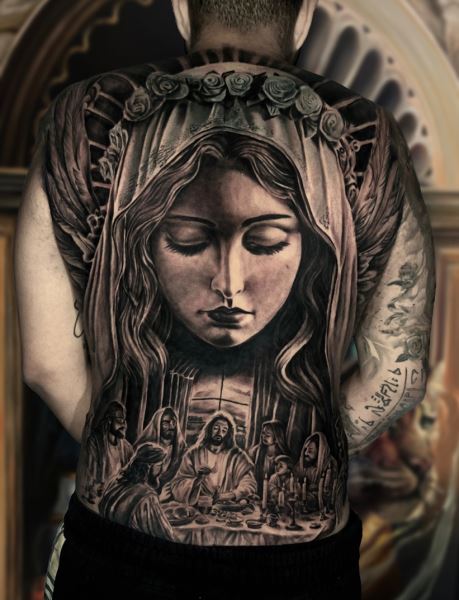
Q: Your back tattoos are truly exceptional. Given the scale
and detail, how many sessions are typically required to complete a
piece of that magnitude, and what is your process for preparing
clients for such extensive work?
A: A full back can take between 6 and 12 sessions, depending on the
complexity. I prepare my clients by explaining the process, the
healing stages, and thanks to my Pain-Free Tattoo method, offering
an anesthetic sedation procedure applied by a medical team. This
allows clients who don’t have the time for multiple long sessions to
complete the work in a single sitting, enjoying a luxury tattoo
experience in Colombia.
Q: Any favorite tattoo you did recently?
A: Yes. Colombia has incredible biodiversity, and my love for
animals is something deeply rooted in me. I would say an iguana I
recently tattooed, it allowed me to connect with its animal essence
and reflect that in the piece.
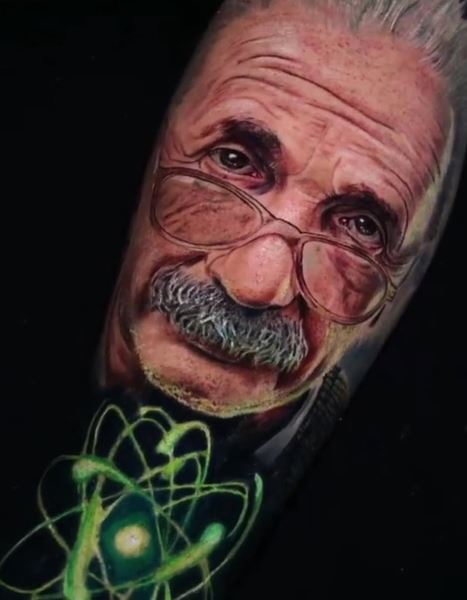
Q: Portrait realism in tattooing demands a high level of
technical skill. What specific technical challenges do you encounter
when creating a portrait, and how do you address them to achieve
such accurate likenesses?
A: The greatest challenge is capturing the subtle details that make
a person unique: skin texture, light reflections in the eyes, and
the exact balance of shadows. I work with high-resolution references
and build layers of tones gradually, always checking proportions and
contrast.
Q: Your designs have such a profound and meaningful quality.
Have any of your clients shared the personal stories or meanings
behind their tattoos with you?
A: All my clients share their stories with me, it’s a crucial step
in interpreting the design for their skin. Many come to mark moments
of transformation: recovery from illness, tributes to loved ones, or
symbols of personal victories. These stories fuel my passion and
make my work much more than just ink on skin.

Q: When you collaborate with other artists, what does that
experience typically bring to your creative process? Is it more of a
learning experience or a fun new challenge?
A: It’s both. Collaborations force me to adapt, learn from other
perspectives, and create unique pieces I might not have imagined on
my own.
Q: Do you plan more collaborations with tattoo artists in
the future? If so, with who?
A: Yes. Every week, I’m collaborating with different artists. My
Pain-Free Tattoos project opens the door for artistic exchange with
exceptional tattoo artists. I believe collaborations are one of the
best ways to grow as an artist. I plan to travel with this project
to many countries and connect with more artistic souls who want to
join this creative space.
Q: Getting a large tattoo can be a painful experience, but
I've noticed you use a method to help ease your clients' discomfort.
Can you tell me more about the anesthetic you use and how it helps
with the process?
A: Through my Pain-Free Tattoo method, we work with certified
anesthesiologists who administer sedation, allowing the client to
rest comfortably without feeling pain during long sessions. This
innovation has attracted clients from the United States, Europe, and
Latin America, turning tattooing into a premium and enjoyable
experience, and positioning Colombia as a tattoo tourism
destination.
Q: For those interested in booking a consultation or
appointment, could you please provide the location of your studio
and any relevant website or social media links?
A: I work in a private studio in Bogotá, Colombia. You can find me
on Instagram at @loboart and @lobotattooartist. Due to high demand,
I only take appointments through my WhatsApp line: +57 350 374 0183.
14.
Q: What's your take on the local tattoo scene? Are you
seeing any exciting developments, like new artists, styles, or
events?
A: The Colombian tattoo scene is booming. There’s a new wave of
talented artists exploring styles and techniques, and our
International Tattoo Colombia Convention will be the perfect stage
to showcase this creative movement to the world.
Q: How often do you attend tattoo conventions? In your
experience, how valuable are tattoo conventions for artistic growth
and building client relationships?
A: Conventions are invaluable, they allow artistic exchange,
networking, and direct connection with potential clients. Although
I’ve recently focused on my own projects, I closely follow the
global circuit, and soon I’ll be hosting the first major tattoo
convention in Colombia through my Tattoo Colombia platform.

Q: As someone who likes to work with other artists, have you
ever done any guest spots at other studios, either here or abroad?
A: Yes. I’ve worked as a guest artist in studios abroad, and each
experience has enriched my artistic vision and allowed me to learn
from different cultures and working methods. I’ve had the
opportunity to guest in Germany, Spain, the Czech Republic,
Switzerland, Peru, and Mexico.
Q: What's next?
A: We’re preparing the first International Tattoo Colombia
Convention, expanding HIU Tattoo Aftercare, my skincare and tattoo
care brand, internationally, and developing new collaborations that
merge art, technology, and client experience.
Q: What are your thoughts on the American tattoo scene, and
are there any specific aspects that interest you professionally?
A: Its entire history fascinates me, especially how it has fought a
cultural battle to earn the respect it has today, from Sailor Jerry
to today’s artists. The American scene is a hub of innovation and
diverse styles. I’m particularly interested in its high level of
technical specialization and strong collector culture.
Q: The US has a diverse tattoo landscape. If you were to
explore opportunities there, are there any regions or cities that
stand out to you?
A: Cities like Los Angeles, New York, and Miami stand out for their
global influence, vibrant art scenes, and openness to new
techniques. Miami and Los Angeles especially, for their artistic
movements not only in tattooing but also in painting and sculpture,
and areas like Wynwood in Miami, which has an inspiring story of
transforming from a dangerous neighborhood into an art hub.
Q: What impact do you aspire to have on the tattoo
community?
A: I want to redefine the tattoo experience, making it more
comfortable, safe, and recognized as a true art form while inspiring
other artists to pursue excellence, vision, and progress.
Q: If you could go back and give your younger self advice
about pursuing tattooing, what would it be?
A: I’d say: stay disciplined, be patient, and never stop learning.
Every challenge is part of the path to mastery.


