
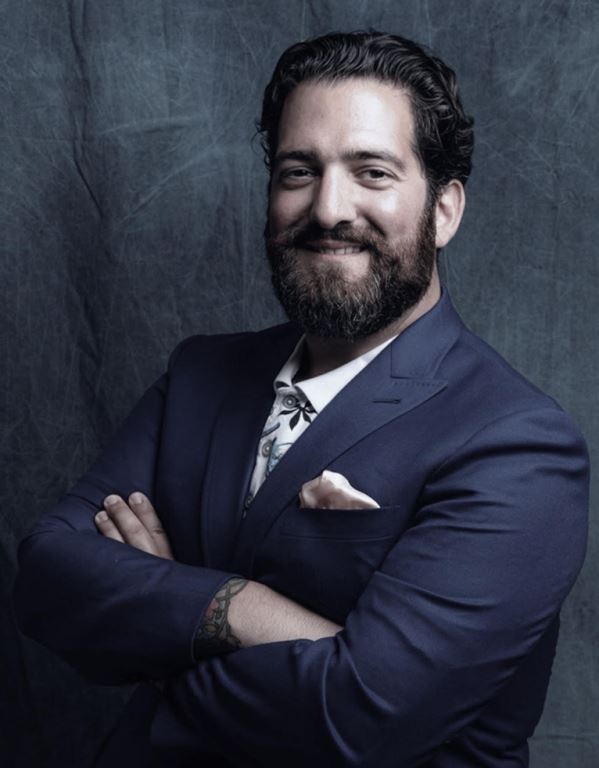
Interview with Michael Cataliotti
Hello Mr.Michael Cataliotti! Thank you for
returning for a second interview today. We deeply value your
willingness to share your insights with us again. My
pleasure! Always happy to chop it up and get some quality
information out there. Today, we aim to provide
insight into the current U.S. immigration situation and its
practices, shedding light on the legal complexities and the
substantial rewards of working in the United States.
Q: You specialize in a rather niche area of immigration law,
assisting tattoo artists from outside the U.S. in obtaining work
visas. What sparked this focus?
A: I do, but I also help a lot of other artists, entertainers,
athletes, entrepreneurs, and workers across industries. When I
started my practice, I had already been working in law for 6 years
or so, in different areas and across different industries; I knew
how I wanted to practice and what I wanted to focus on: Corporate,
Entertainment, and Immigration. I also knew that in more traditional
areas-like music, fashion, and film-there were a ton of people
focused on those individuals and entities. I wanted to help and
support lesser known, lesser recognized, and lesser respected
disciplines and industries. Tattooing was one such area, as was
burlesque, avant-garde jazz, animal training, adult film and
entertainment, and a whole host of others. Everyone deserves help
and support, not just those who are more traditionally focused.
Those cases aren't as easy, necessarily, but they take more
creativity, flexibility, and craftiness to be able to properly
present a persuasive argument and understand the nuances.
Q: What are the primary types of work visas that
international tattoo artists typically qualify for?
A: It's interesting: People always assume the only visa they can get
is an O-1 or they lean on the EB-1 (green card) pathway. And yes,
the O-1 is the most common, the one that most folks have and that
makes the most sense for most artists. There are others, though,
such as an L-1, if, for instance, an artist owns a studio outside of
the U.S. and wants to open a branch or another within the U.S. An E
visa may be applicable for someone from certain countries who wants
to invest in and open their own studio or brand in the U.S. It could
also work for individual artists who are going to work within that
studio in the U.S. from that country.
Q: What are some of the biggest challenges these artists
face when trying to immigrate to the U.S. for work?
A: I often find folks struggling to figure out where to work, with
whom to work, and how to structure their visas. Everyone is
different, and some folks like to move around, not be committed to
any one particular place, whereas others enjoy and appreciate the
comradery and comforts that come with being part of a group. I don’t
believe there’s any right or wrong way to go about this, but it does
seem to come up regularly with folks. And to be clear, I’m not
speaking strictly about tattoo artists: Remember, I represent a wide
range of individuals from visual artists who are sculptors and
painters, to live performance, dancers, singers, actors,
playwrights, opera singers and librettists, among many, many more.
For some, it’s easy: They’re coming here to work with one
institution, organization, establishment, studio, and that’s it,
done, easy. For others who have that desire to bounce around, it can
be more complicated. Now, that’s in terms of the preparation for the
filing and the like. On the other side of things, is the
governmental processes and procedures. Those can be incredibly
haphazard and all over the place. Most notably, there has been
significant pushback at the Embassies and Consulates worldwide, with
Consular Officers seemingly looking for reasons to refuse visa
applications.
Q: Can you walk us through the typical process for a tattoo
artist seeking an O-1B visa?
A: So, it always begins with evaluating someone’s credentials to
determine the types of documentation they have. Like most things,
you can qualify, have the best name in the business, but if you
can’t prove it, well, it won’t work. For me, once we start the
process of preparing the petition, I begin by drafting the letters
of recommendation, based on the materials provided to me. Those
letters are for individuals who have agreed to support the artist in
the process. We draft the framework, but leave it to the person
signing and/or the artist to modify and adjust however appropriate.
Once those are signed, we move on to the memo that details the
person’s qualifications, and compiling the evidence to support those
qualifications for example, if I’m saying that someone has 7 awards
from 5 conventions, I need to demonstrate that the conventions are
reputable or prominent, and that the awards, too, are reputable and
prominent or competitive. Once this is all done, we then send it to
the client to review. If acceptable, great, on it goes to a
colleague of mine who I ask to review and issue a consultation
opinion if he deems their qualifications acceptable. If so, then
great, I get that letter, it goes into the file, and out the door it
goes to USCIS. (I’m stripping this down to the most barebones
process here, but it’s the basics.) After filing, USCIS will either
approve outright, or ask for more information / clarity (a “request
for evidence” or “RFE”). RFEs are not unusual and increasingly
common (again, as they were during the first Administration). An RFE
can be administrative-asking for clarifications about the work
relationship or duties-or comprehensive-asking about every detail
and aspect of the person’s background. Responding depends on
strategy and the content of the request. Once you respond to the
RFE, USCIS will then issue its decision of either approving, or
denying the petition. And there you go. If they deny, for whatever
reason, usually, you’ll want to refile, unless something is
glaringly wrong in the decision (not just a subjective opinion by
USCIS), in which case, you may want to file a motion or an appeal.
In either of those situations, though, the wait time can be anywhere
from 3 months to 14 months. You’re usually better off just refiling.
Q: What advice would you give to a tattoo artist living
abroad who dreams of working in the United States?
A: Do not wait until you feel you have all of your paperwork ready,
or a perfect case (presumably to guarantee approval): you’ll never
be fully ready and there is no such thing as a guaranteed approval
in immigration, especially U.S. immigration. Regardless of what you
hear and what people say, no outcome is guaranteed and anyone who
says otherwise is full of it. That aside, though, if you are going
to go through this process with an attorney, be sure you’re
comfortable with whomever you choose. You must have mutual respect,
confidence, trust, and comfort with the person representing you. If
you don’t, or if you just don’t gel with that person, that’s fine,
go elsewhere. I don’t try to tell everyone I’m for them-I’m not! I
don’t bullshit and I don’t have time to sugarcoat things for people.
That can come across as inconsiderate, but my job isn’t to be
considerate, it’s to strategize how to best realize your goals,
whatever they may be. It’s important, though, to focus on these
aspects: (1) Start early, and (2) Choose the best attorney for you.
Q: Moving on to broader immigration issues, we are currently
in the second term of a Trump administration. What are some of the
key immigration policies and trends you've observed under this
administration that might impact international artists seeking to
work in the U.S?
A: The same nonsense and pushback that they did during the first
Trump Administration, they’re doing again, but ramped up: blanket,
redundant, or nonsensical requests for evidence (RFEs), that delay
the process; increased denials (for certain industries and
categories, though I’m not experiencing that too much within the
tattoo arts and body modification space); and this is where the
newest aspect comes in - refusals of visas at the Embassies and
Consulates. So, after someone files their petition for a
classification, let’s say the O-1with USCIS, and it gets approved,
if that person was in the U.S. at the time of filing and approval,
at some point, whenever that person leaves the U.S, before
returning, they will need to apply for a visa stamp at a U.S.
Embassy or Consulate outside of the U.S. The same goes for someone
who was never in the U.S. at the time of filing or approval.
Historically, the majority of folks would be able to breeze through
these, as purely administrative or ministerial matters. Now, not so
much: Consular Officers are diving deep into social media posts,
twisting notions of what is or is not “work” within the United
States, and seemingly looking for reasons to refuse someone’s visa
application. To put it bluntly: It’s bullshit. But, knowing this, we
can better prepare and plan both for the interview, as well as a
potential refusal (such as reapplying, utilizing a Congressional
representative to weigh in, applying for a waiver if needed,
possibly suing).
Q: Have there been any specific policy changes or executive
orders under this second Trump administration that directly affect
O-1B visas or the arts and entertainment industries?
A: They haven’t gone after O-1s directly, but absolutely there are
policies and practices that impact arts and entertainment
industries. Look at the recent Proclamations that effectively bar
folks from entering the U.S. at all, or in certain categories, such
as B, F, M, or J visas: plenty of folks come here to study, train,
perfect their crafts (whether it be acting, painting, performing,
singing, writing), or competing in competitions, which is generally
lawful under a B visa and ESTA. Now, some of those restrictions have
modifications to them, such as, validly issued visa holders will not
be barred from entering the U.S, even if from a country listed in
the Proclamation, but, realistically, who knows how that will play
out at the Border?
Q: What are some of the most pressing immigration issues
that you believe need to be addressed in the U.S. today?
A: I have to start with the actions by ICE, which have turned into a
roaming gang, wrangling anyone who seems to be in their way.
Policies and practices within Immigration should be nuanced,
surgical, you don’t go fishing with a net: you always catch things
you didn’t intend, don’t need, and don’t want. Unfortunately, this
Administration is fishing with a net and not caring one bit about
who they catch. No one is saying don’t go and arrest the individuals
harming or threatening our neighborhoods; people are saying, be
careful and focus your energies and attention on those people, not
the barber who’s mean with the tape-up, or the woman who’s fierce
with the tailoring, or the parents who work a combined 3 or 4 jobs
to let their kids have better lives. Another aspect is the
absolutely horrendous practices by USCIS officers, and Consular
Officers, to try and make it increasingly more difficult for folks
to enter the U.S. This notion of “the good ones” is fake, it’s
bullshit, it was never real, and was always a way to get people to
try and favor one group or kind of person over another. Really,
there are a lot. The entire system is a mess, and needs a proper
overhaul to bring it current. We could have had that several times,
but it was either blocked by one party, or the other was too afraid
to take action and do anything about it, so, here we are.
Q: Given the current political climate, what is your outlook
for international artists seeking to work in the U.S. in the coming
years?
A: It’ll get better. These things won’t last. Remember, artists are
big business, no matter how much this Administration and its
supporters may not be aware or think otherwise. And it goes beyond
artists: don’t forget that athletes also get the O visa and P visas.
Plenty of those folks are from Mexico, Central and South America, as
well as Africa, Eastern Europe, and South Asia (really, just plain
worldwide). We’ve already started seeing this attitude shift with a
recent post by Trump where he’s seemingly just learning that his
policies and practices are hurting the agriculture/farmers, and
hospitality/hotels and such, industries. Go figure.
Q: You mentioned the importance of a U.S. employer. What are
some of the key considerations for a tattoo studio looking to
sponsor an international artist?
A: This is key: I often advise studios, not just artists, about what
they can or can’t, should or shouldn’t do. In terms of a studio,
it’s the same idea as most in that you want to find a person who has
the right fit for you, for your studio, your brand, your group of
artists. You also have to know what you want your studio to look
like and feel like: Do you want a select group of artists that will
be committed to you and your brand, rotating as needed or desired,
or do you want a mix of folks who are residents and guests. Totally
up to you, and again, there’s no right or wrong, but you should be
mindful of it. You also have to decide if you want to be the one to
hold the artist’s visa as the sponsor, or if you’re fine being the
employer only.
Q: Are there any ethical considerations that arise when
representing international artists seeking work visas?
A: Always. There are various aspects here, that range from whether
you’re engaging in dual representation-as in, representing the
artist and the studio that’s sponsoring them to communications. Dual
representation is an important aspect to be mindful of: For my part,
with certain studios, I tell folks upfront and clearly that I
represent both them, and the studio/sponsor, meaning if they have an
opinion where they want to leave the l studio, or stop the process
with the initially agreed upon studio/sponsor, and they tell me
before the studio/sponsor, then the artist has 24 hours to notify
the studio/sponsor or else I will. Likewise, it goes the other way,
too: If the studio/sponsor tells me that they are no longer going to
work with an artist, they have 24 hours to notify the artist or else
I do. It keeps everyone honest and clear, clean, avoiding any
confusion behind the scenes. This usually isn’t so much of an issue,
though, it is something I point out to folks from time to time. The
bigger issue, and the one that really gets me, is when I see or hear
about these folks-whether they’re lawyers or not who are posting
about their clients getting a visa or a green card or whatever else.
If you’re an attorney, or an accredited representative, your job,
your entire world, is to be behind the scenes, quiet, doing your
job, to get your client(s) what they are after. You are not the
center of attention; that’s the artist, studio, client(s). If the
artist wants to go and post about their approval(s), so be it,
that’s their decision; if the studio wants to post about it in one
way or another, so be it, again, that’s their decision; but why
would an attorney or representative do this? To help the artist? To
promote the studio? It makes no sense. There is no value added for
anyone to know that an individual obtained a visa, nor that a studio
sponsored someone. If the argument is that it helps promote the
artist and lets people know they’re going to be available for work
in the U.S., you can do that without commenting on their immigration
status. And, in case it needs to be said, this really isn’t the time
that you want to promote someone as holding a visa or green card.
Attorneys are supposed to speak when it benefits our clients, helps
alleviate or clarify something for their benefit. I’ve worked in a
variety of areas of law over the last 20 years, and I’ve yet to see
any value to a client in an attorney posting things and commenting
about someone’s immigration status. I can see the value to the
attorney or the representative, though.
Q: What role do professional organizations or unions play in
the immigration process for artists, particularly in providing
advisory opinions for O-1B visas?
A: They are mandatory. Any and every O-1 petition must have either a
consultation opinion from a labor organization, labor and management
organizations, or a peer advisor if neither exists. What that means
for folks in the tattoo and body modification areas, is that you’ll
need or want an additional letter of recommendation, attesting to
the artist’s qualifications and abilities. Now, this has to come
from someone based within the U.S. The person does not have to be a
U.S. citizen, but they must be qualified to comment on the
individual, and they must be based in the U.S.
Q: Have you seen any shifts in the types of evidence that
USCIS finds most persuasive when evaluating the extraordinary
ability of tattoo artists?
A: Not shifts, really. It’s the same old item for most anyone:
Press. It’s always been and always will be press. Think about it,
though, it’s easy to identify the quality and content. Serving as a
juror is also great, as are awards, but I often find that being a
juror is a notch above, as you are the one who’s deemed to be so
exceptional, that you qualify to judge the work of others. In the
O-1A space, there’s a category just for this, but unfortunately
there isn’t in the O-1B. Either way, it’s the usual materials: Press
is paramount, followed by any other industry achievements (awards,
honors, juror roles), and also look at your hourly or session rate,
with the applicable split. If you’re the kind of artist who doesn’t
go to conventions, well, that’s fine, maybe you have a significant
number of Instagram followers. If you don’t, all right, well, maybe
you just focus on your work, building your studio, and that’s it, so
your studio is one of the pre-eminent ones. Perhaps you have
all-star, or famous clientele. These are all angles and evidence
that shape the narrative for an O-1.
Q: For tattoo artists who successfully obtain a work visa,
what are some common pathways to permanent residency (a green card)
in the U.S.?
A: There’s the EB-1A, which I think most people know about-it’s
essentially the green-card version of the O-1, and with that, comes
a very high standard of review, level of scrutiny, and need for
recognition. Unlike the O, though, it doesn’t provide a status at
the outset, unless you’re filing concurrently - submitting the EB-1A
filing (same as the O-1 with all of the documentation and
qualifications), as well as the green card filing (this is the more
administrative aspect, but it is fully dependent on the success of
the EB-1A, or else it fails). There’s also an EB-2 NIW that could
work well, which is for individuals who have either an advanced
degree or its equivalent, or “exceptional ability”, not to be
confused with “extraordinary ability”. This would require similar
showings to that of the O-1 and EB-1A, but it would also require
showing that whatever the artist is going to do, is in the national
interest, such that they should not need to have a job offer.
Essentially, the person is going to contribute something so great to
the U.S. that we don’t particularly care about determining if anyone
else can do it. The EB-1A can be faster all around, whereas the EB-2
NIW is backlogged by about 2 years or so, between filing the first
part and the actual application for a green card. It isn’t ideal for
most folks.
Q: Given the potential for stricter enforcement and policy
changes, many international artists express concerns about
discrimination or the fear of potential deportation. How do you
address these anxieties with your clients?
A: It’s real. And it’s a genuine concern that shouldn’t be
dismissed. But, if you prepare folks for what to expect when
entering the U.S., what to do if someone stops you, what to carry,
what to say, and you stay available for them, it helps (I think,
I’ve been told). I’m pretty available in most cases (hell, I’m
responding to e-mails and texts from clients while I type this up at
11:04 pm on a Thursday).
Q: What specific legal challenges do you anticipate if the
Trump administration implements stricter immigration enforcement,
particularly concerning those with valid work visas?
A: I’ll be filing more lawsuits, I can tell you that. So long as
clients don’t stop me, or at least cover some of the hourly costs,
I’ll be filing a hell of a lot of suits to fight back. You’re
already seeing the ACLU file a bunch, and win, State Attorneys
General file a bunch, and win. So, the momentum is there, it just
needs to not falter or waver. The hardest part is going to be suing
over folks not getting their visas issued (at the Embassies or
Consulates), because you really can’t sue for that. It’s generally
deemed a matter of national security, making it incredibly difficult
to fight against.
Q: How do you advise clients to prepare for potential
changes in immigration law that could affect their status?
A: One step at a time. There are some things that we can foresee
coming-like stricter and more in-depth reviews of social media, more
requests for evidence, possibility of denials or refusals, or
administrative processing at the Embassies/Consulates and those you
can plan for, but most of it, you just have to roll. I thought I was
so philosophical saying “just be like water”, until a handful of
folks told me Bruce Lee said this some 40/50 years ago, so, I guess
great minds think alike? :) It’s exactly what we need to do now,
though: Be like water. You can slow water, divert it, stop it
temporarily, but you can never truly beat it. And so, I try to let
folks know that they aren’t alone, and as I have anything of value,
I’ll let them know, and we can strategize how to move forward. If
they hear of something, by all means, ping me, that’s what I’m here
for, and I want to know.
Q: In your opinion, what are the ethical responsibilities of
immigration lawyers in this potentially volatile climate?
A: To zealously represent their clients, don’t put them in a bad
light or spot, maintain communication that is crucial these days (it
always is, but even more so now) and fight the nonsense that we’re
seeing. This is not the time to sit back, post on your social media,
and play pretend; this is the real world, and this administration
has made it clear that they don’t like Immigration lawyers; they
don’t want us around or involved in these things.
Q: Beyond the legal hurdles, what are some crucial aspects
of American culture and the tattoo industry that international
artists should be aware of before relocating?
A: I think a lot of that depends on which part of the U.S. someone’s
going to. For instance, NYC is going to have a completely different
vibe from Long Island, which will be closer to, but still different
from upstate New York. That’s just there. Now, Florida, Texas,
Louisiana, California, Oregon and Washington, the Dakotas, Illinois,
and so on, these are all going to have different vibes and
attitudes. Find where you’re comfortable maybe you know already!
Maybe you don’t, but find your space. Depending on where you were
living before, or where you were raised during your formative years,
maybe a more rural/country area is going to be better and more
enjoyable. Maybe you know you need the water, or a tropical climate,
so, there you go. Different cities, different States and towns, will
have different attitudes in many cases, extremely different. In
terms of the industry, I’ll leave that to the artists and studio
owners/managers. :)
Q: How crucial is a strong building client base and
networking?
A: As important as anything else. If you’re an artist, you’re a
brand, even if you’re part of a bigger brand. Now, some studios will
promote you, and do your bookings and all for you. That’s great. Not
all do. So, be mindful of that.
Q: What are some common financial considerations that
international tattoo artists might overlook when planning their move
to the U.S?
A: You can make a lot of money here, but it’s also expensive in most
of the places you’ll be doing that. So, be mindful. And when tax
time comes, just prepare, be sure to have a good accountant who
understands the laws and treaties in place between your home country
and the U.S.
Q: How does the legal framework in the U.S. regarding
intellectual property and artistic rights apply to tattoo artists,
and what should international artists be aware of?
A: It’s funny, I wrote an article about this when I was in law
school, it tied together tattoo ownership and also looked at
graffiti/street art. I’ve always been interested in this area (and
before I decided to focus fully on immigration, I used to do
corporate and entertainment law, as well, so it was one of the
focuses for me). I suppose it depends on the focus of the question,
really. If you’re asking about who owns the artwork on the body,
versus the photos of the artwork, versus the design, or anything
else, well, that gets real messy. I’m not sure I can really answer
this competently here, but hey, I’m happy to chat about it with
folks if they have questions! I can also refer anyone to a crack
attorney in this area.
Q: What are some common misunderstandings or misconceptions
that international tattoo artists have about working in the U.S.?
A: That they can simply come in, make a ton of money, jump from one
studio to the other with their visa in every situation, and the
like. Folks also think that coming into the U.S. with a tourist visa
or ESTA, and going to a convention and tattooing there constitutes
work: It may, but it doesn’t necessarily have to. It depends on how
the situation is structured and whether the artist is getting paid
for the convention, or, if they are tattooing, and then collecting
whatever they win. Because the latter, would generally be deemed to
constitute participation in a competition, which is in most cases,
acceptable.
Q: Considering your experience, what is the most rewarding
aspect of helping international tattoo artists achieve their dream
of working in the United States?
A: The entirety. I got into this area, because I wanted to be a
musician, realized I didn’t have the support or internal drive to
make it happen for myself, and I said, “Ok, well, I’m going to help
other artists, the way I wasn’t.” I focused on corporate and
entertainment law, as well as immigration, and after several years,
decided to focus solely on immigration, because it’s more rewarding
overall (for me). I make less than I did with corporate and
entertainment, it’s more stressful, and more emotionally involved,
this is the worst part for me... emotions aren’t my bag but man,
when it works, being able to help someone make a jump or reach the
next step in their life and career, that’s huge. It’s an honor and a
privilege, truly. And look, even when it doesn’t work, and a case
gets denied, or someone’s visa gets refused, the important thing is
to know how to move forward, how to take the next step. That is when
the attorney comes in to deliver, right? Not when it’s easy, but
when it’s difficult. As much as I can’t stand the difficulties and
in a perfect world, I wouldn’t even have a job doing this because it
would all be streamlined, I love the fact that I can fight for my
people and win.
Q: What message of encouragement would you offer to
international tattoo artists who are currently navigating the
often-challenging U.S. immigration system?
A: Stay up. Stay positive. Stay confident. You’ll get there,
wherever it is you’re trying to go, just be sure to have the right
support. It can be a friend, family member, partner, attorney,
whomever, just make sure you have that support. Because now,
especially, things are messy, and this isn’t the kind of system you
want to navigate alone.
Q: Finally, what is one key takeaway you hope our audience
will remember from this discussion about immigration for
international tattoo artists?
A: Things are difficult, and they will continue to be difficult,
maybe even more so over the next several months and years, but don’t
give up, have support, have confidence, and you’ll get there. \m/
((><)) \m/ (Showing my age there feel free to rip that out.)
Mr. Michael Cataliotti, thank you for your insightful perspectives
and valuable information. My pleasure! I truly hope this was useful
to people.
You can read our first interview with
Mr.Michael
Cataliotti on this link.
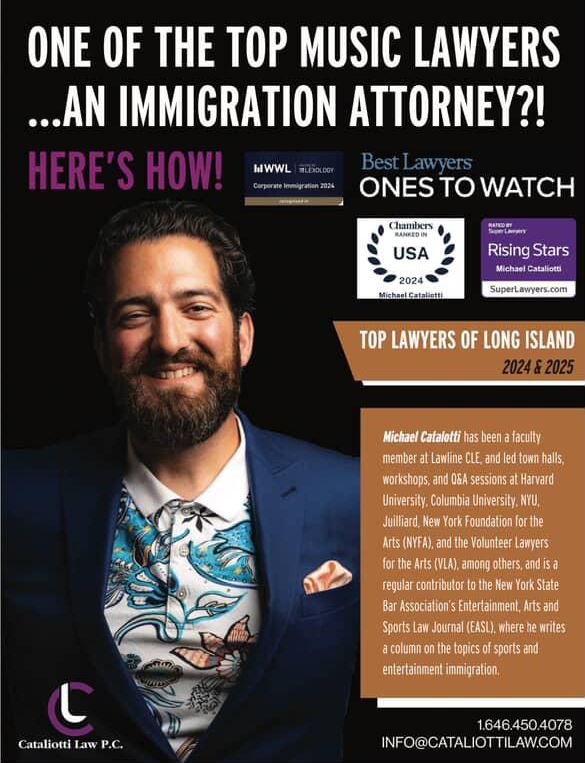
Mr.Michael Cataliotti is our official partner who works with many
tattoo artists we interviewed and are now living and
working in the USA. You can find more
about our Visa Interviews on this link.


