
Interview with Miguel Rey
The global tattoo community continuously evolves
through the contributions of artists who successfully merge distinct
artistic subcultures into cohesive, highly technical bodies of work.
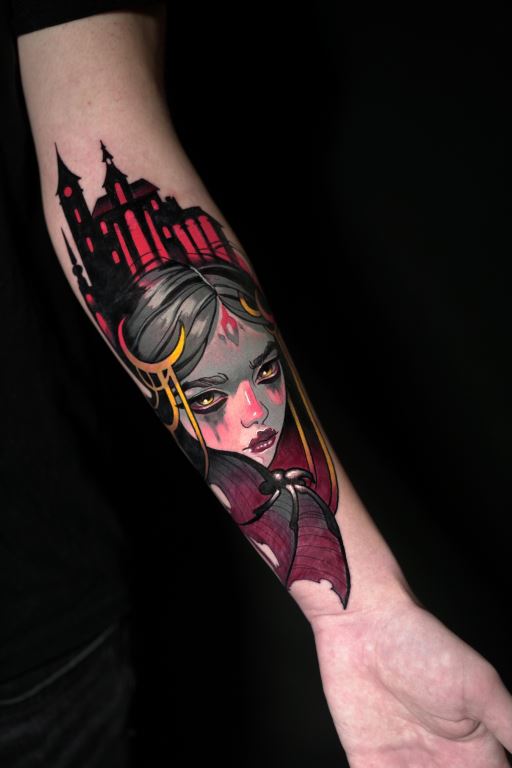
Miguel Rey an artist with over a decade of elite
experience, has established a formidable reputation defined by a
mastery of color realism and dynamic compositions. His creative
identity is multifaceted, firmly rooted in both the precision of
contemporary tattooing and the raw, large scale energy of graffiti
art. This synthesis of street level public murals and delicate skin
canvas production has earned him over ten international industry
awards, as well as high profile sponsorships from industry leaders.
By consistently balancing striking color pallets with a highly
technical design process that spans digital mediums and traditional
prints, Miguel Rey stands out as a leading creative
force poised to make a significant impact on the international
stage.
Q: What originally sparked your interest in fine arts, and
how did your formal or informal educational background help shape
your early creative instincts?
A: I have always been one of those kids who never stopped drawing
or painting. I was fortunate to grow up in a home where art was
already a part of everyday life. My father painted, so there were
always canvases, oil paints, brushes, and creative materials around
the house. One of my earliest memories is watching him paint in the
living room and being absolutely fascinated by the process. There
was one piece in particular that had a massive impact on me: a
charcoal reproduction of Don Quixote that my father had drawn. It
hung in our living room, and as a child, I could spend hours
studying all its details. I believe that image helped spark my
imagination at a very early age. My parents also enrolled me in
pastel painting classes when I was very young. Those were my only
formal art lessons, but they helped me understand that drawing and
painting could be powerful ways to express ideas, emotions, and
imagination. After that, I was mostly self-taught. I learned by
drawing constantly, experimenting, making mistakes, and following my
curiosity. That mix of art at home, a touch of formal training, and
a lot of personal exploration shaped my creative instincts from the
very beginning.
Q: At what specific point in your journey
did you realize that skin would become your primary canvas, and how
did you transition from traditional mediums to tattooing?
A: It happened almost by chance. At the time, I was 23 years old
and making a living painting murals. My friend David had just opened
a tattoo studio and knew I needed a space to meet with my mural
clients, so he offered to rent me a booth in his studio.
Little by little, he started asking if I wanted to learn how to
tattoo. At that time, I was actually completely against tattoos; I
didn't even have any myself. But one day, he convinced me to watch
him work. When I saw how technically difficult tattooing really was,
something clicked. I remember thinking, “I need to learn how to do
this.”
Before that experience, I felt confident painting on almost any
surface: walls, cars, caravans, boats, signs, canvases, and event
spaces. But tattooing felt completely different. It seemed almost
impossible to master, and that exact challenge is what drove me to
learn it.
Q: How did your early experiences navigating the art world
influence your decision to pursue tattooing as a full-time career
path?
A: It was a complex transition. In the beginning, tattooing caused
me a lot of anxiety because I have always been a perfectionist. I
didn't start by tattooing at home or just practicing on friends; I
began directly in a professional studio, tattooing paying clients.
The level of responsibility felt monumental. I remember times when
the studio staff would bring me a cup of linden tea, and I already
knew what it meant: “You have an appointment.” It became a running
joke, but it genuinely helped calm my nerves. Ultimately, nothing
was ever as catastrophic as I imagined. I look back at that period
as a very happy and pivotal stage in my life. I was nervous,
excited, fearful, and fascinated all at the same time. While I
already felt confident in painting, tattooing forced me to start
from zero. That was a profound lesson in humility, and it made me
respect the craft from day one.
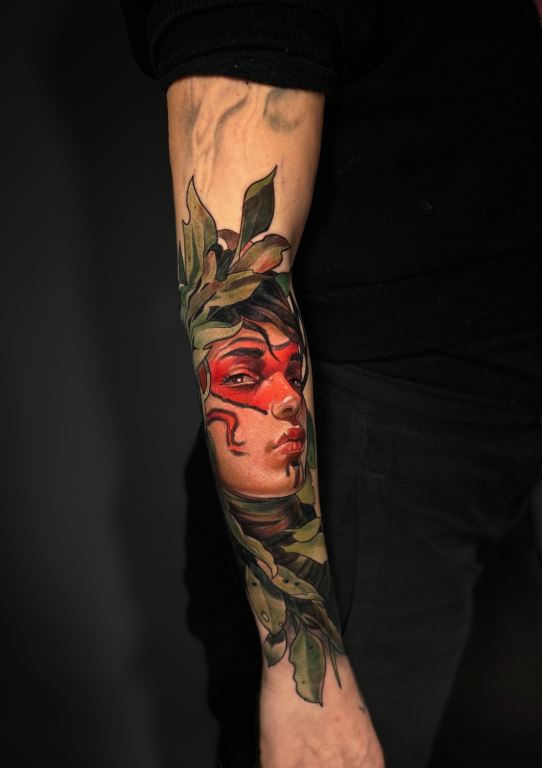
Q: Your current portfolio focuses heavily
on color realism and dynamic tattoos. How would you describe the
evolution of this distinct personal style over the past ten years?
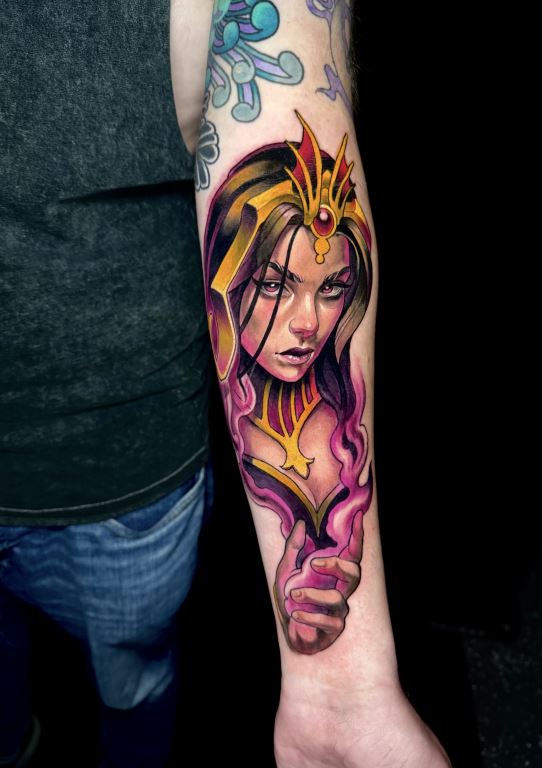
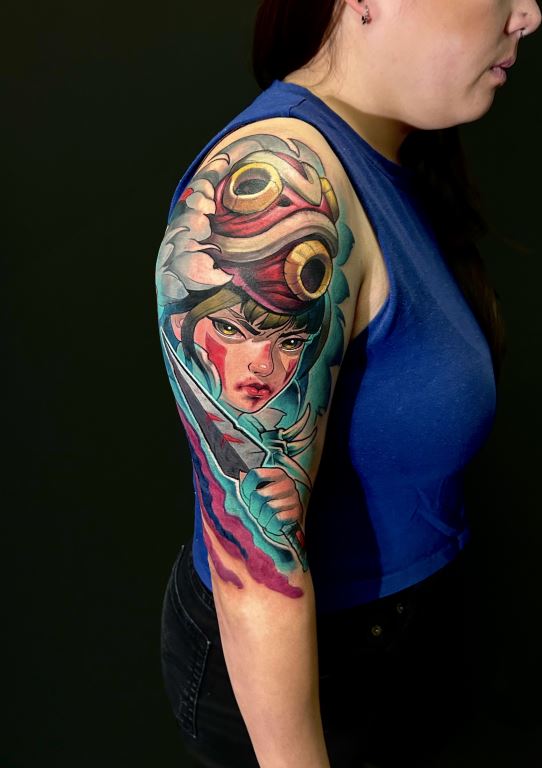
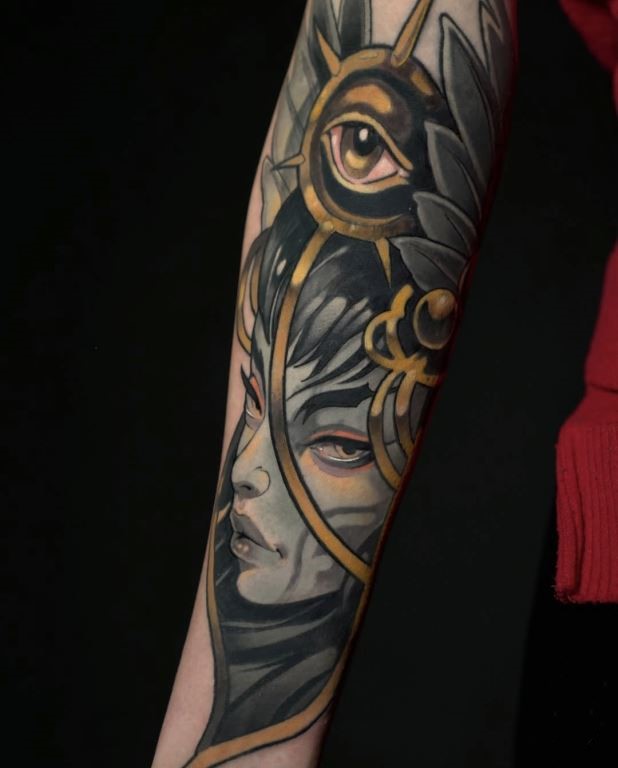
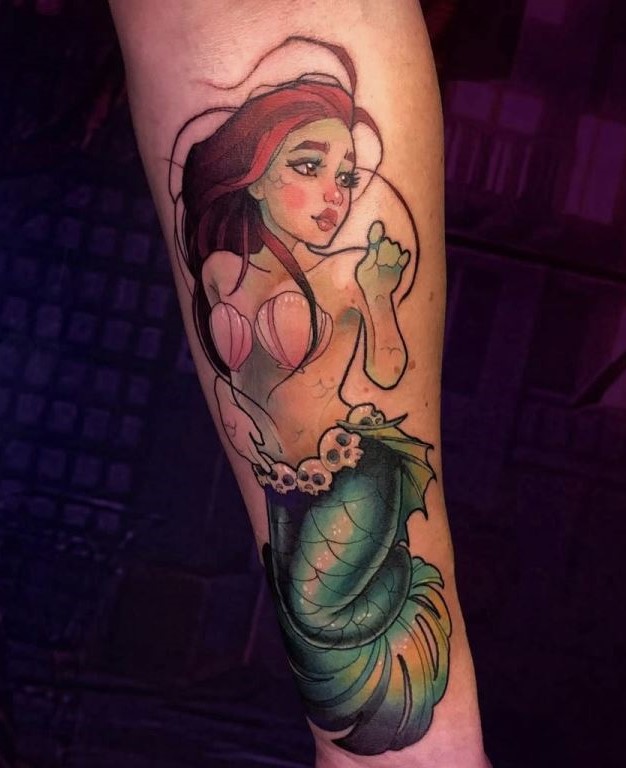
A: I think that evolution is clearly visible across my portfolio. My
roots are in graffiti, so in the beginning, my work was much more
"new school" and cartoon-based. I loved dynamic shapes, busy
compositions, and highly saturated colors. Later, as I began to see
how tattoos healed and aged over time, I realized that less is often
more. I started removing unnecessary information from my designs and
incorporating more realism, especially regarding volume, depth, and
dimension. That process gradually steered me toward a style closer
to neo-traditional tattooing, because it gave the pieces structure,
strength, and contrast. However, I still wanted to bring a realistic
edge to the work. Today, what I enjoy most is that exact fusion: the
solidity of neo-traditional tattooing paired with the softness,
emotion, and depth of realism. I love the balance between a strong
underlying structure and the realistic details that bring a tattoo
to life.
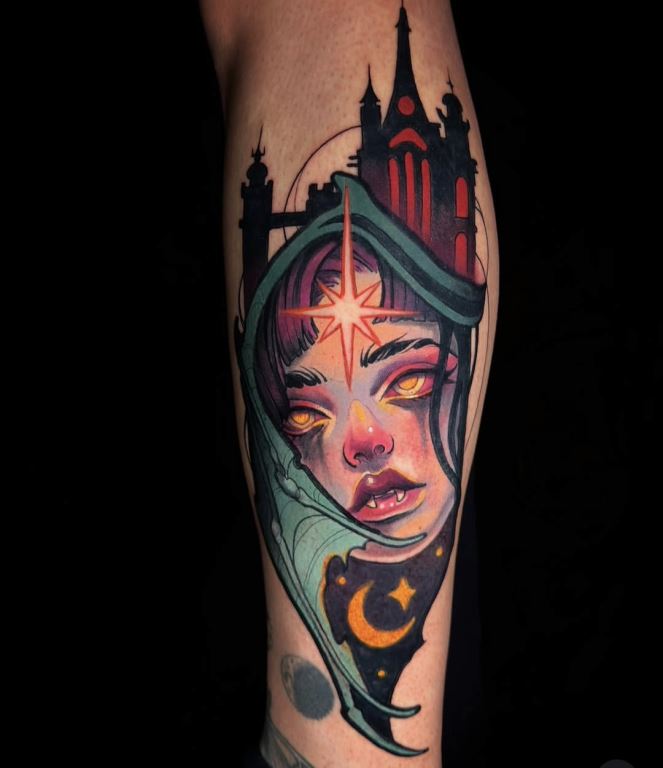
Q: When approaching complex color work, what is your
technical philosophy regarding contrast, skin tone adaptation, and
ensuring longevity in the healed piece?
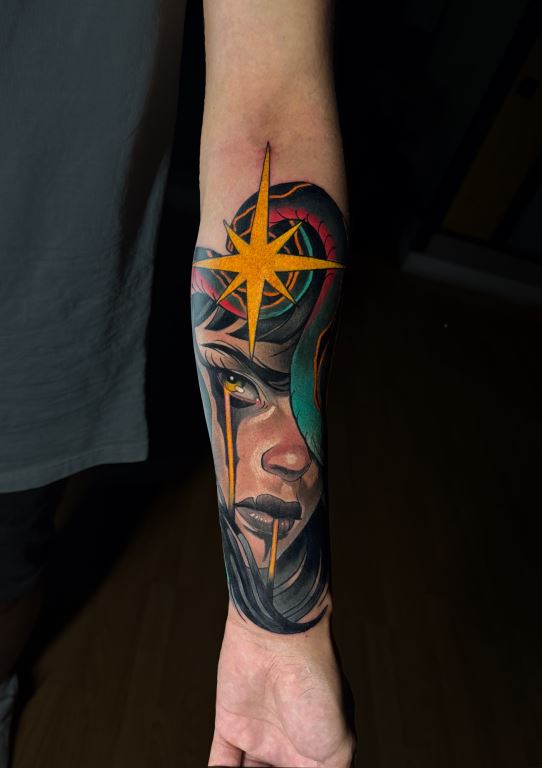
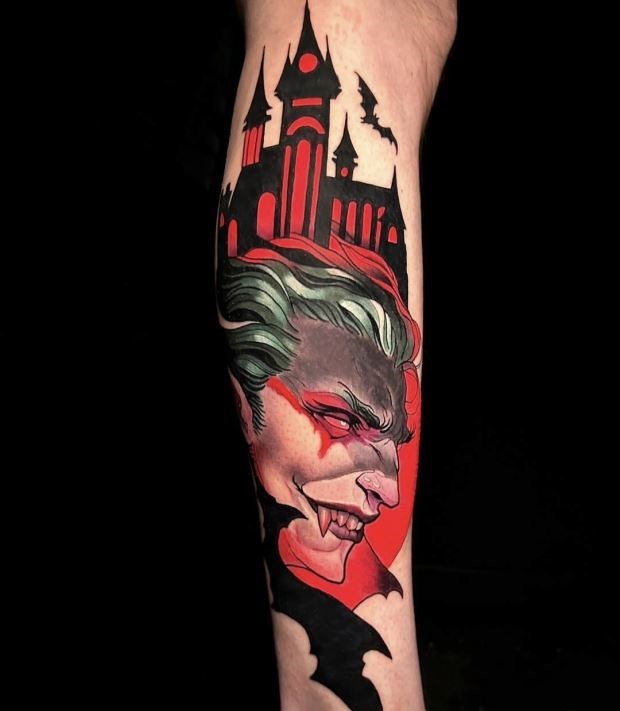
A: I always look for strong contrast. Always. If you want a color
to truly shine, you need a dark tone next to it. I work extensively
with the balance between light and dark, as well as between cool and
warm tones. I also make sure to include solid areas of black
whenever the composition allows. Black holds incredibly well over
time, providing the tattoo with structural integrity while forcing
the surrounding colors to pop. For me, a color tattoo must look
powerful when it is fresh, but it fundamentally has to be designed
to age gracefully once healed.
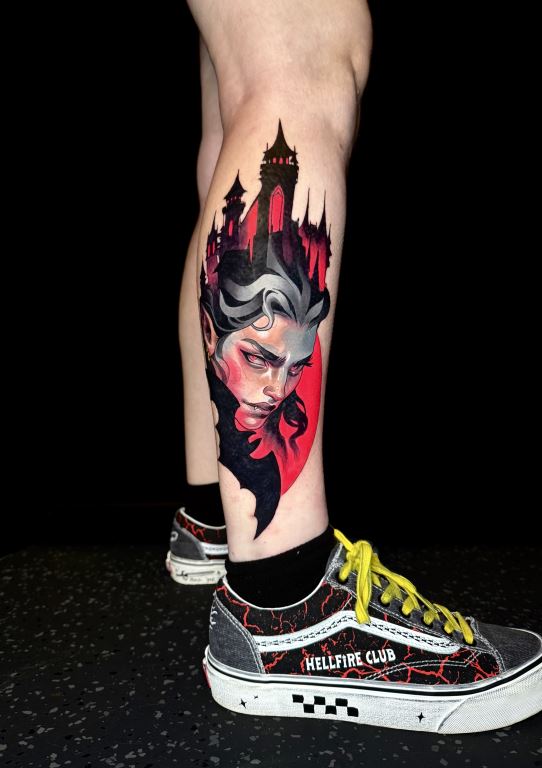
Q: Beyond tattoos, you are heavily
involved in creating digital art and physical prints. How does
working in these alternative mediums influence the composition and
flow of your tattoo designs?
A: I love working across mediums because I do not view myself
solely as a tattoo artist. Before I ever picked up a machine, I was
someone who painted, experimented, and needed to create things with
my hands. Tattooing became my primary path, but I still thrive on
creating in different mediums. Digital art and physical prints give
me the freedom to experiment without constraints. Often, a texture,
composition, or visual concept born from those experiments
eventually finds its way into my tattoo work. Working in diverse
mediums keeps my perspective fresh. It forces me to constantly think
about movement, rhythm, composition, and how to effectively guide
the viewer's eye through an image.
Q: Could you walk us through your typical creative process,
from the initial conceptual brainstorming and digital rendering to
the execution on skin?
A: My creative process has transformed significantly over the years.
When I started tattooing in 2013, everything was done with colored
pencils, sketchbooks, and a mountain of tracing paper. There were no
iPads or advanced digital workflows like the ones we rely on today.
Now, I really enjoy developing designs through digital collage and
composition. I often reference a variety of source materials,
including items sent by the client, such as photographs, postcards,
sculptures, or drawings anything that helps tell their story.
Typically, I begin by placing the main elements directly over a
photograph of the client’s body. This allows me to test the scale,
direction, movement, and flow until the composition aligns perfectly
with their anatomy. Once the underlying structure works, I begin
drawing the final design over it. For me, the goal is never just to
create a pretty picture; the tattoo must naturally belong to that
specific body, respecting its unique movement, balance, and
personality.
Q: Your artistic identity is strongly tied
to your roots as a graffiti artist. How did your early experiences
painting large-scale walls influence your understanding of
perspective and color placement?
A: Murals and tattoos share one vital rule: both must be perfectly
readable from a distance. There is no point in painting a massive
wall with tiny, intricate details that no one can appreciate from
the ground. Similarly, a large tattoo shouldn't require someone to
stand two inches away just to understand the subject matter.
Graffiti and mural work trained me to prioritize immediate visual
impact: silhouette, stark contrast, deliberate color placement, and
macro-composition. I still apply that exact mindset to tattooing
today. A tattoo needs to carry immense strength from afar, while
still offering rich details when viewed up close. That balance
between impact and detail comes directly from my years painting
large-scale walls.
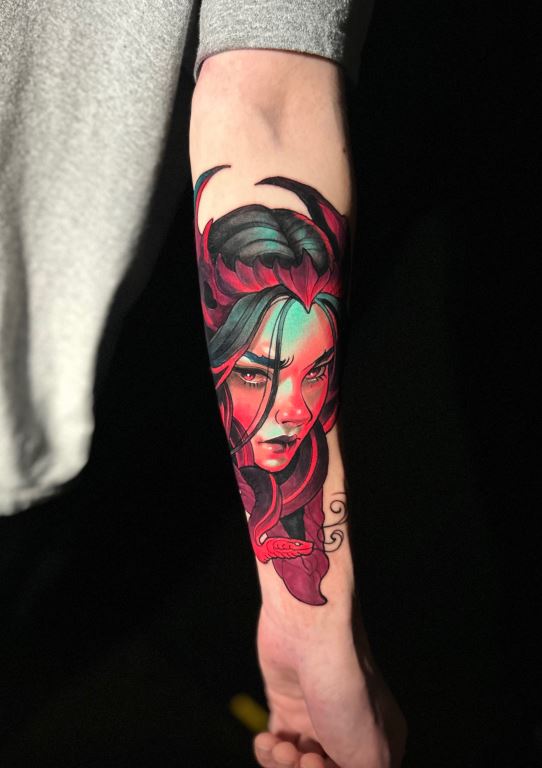
Q: In what ways do the free-flowing, public nature of
graffiti and the highly precise, permanent nature of tattooing
balance or complement each other in your daily life?
A: They operate much like yin and yang. What I love most about
murals is the absolute freedom. I can arrive at a wall with a loose
concept, start painting, and if a better idea strikes mid-process, I
can completely pivot and adapt the piece on the fly. Tattooing is
the exact opposite; there is very little room for improvisation.
Every line, every color choice, and every technical decision carries
weight because you are working on human skin, and the result is
permanent. Over the years, I have learned to allow myself small
creative freedoms during a session, but the design itself is highly
calculated before the machine ever touches the skin. This is why
the two worlds complement each other so beautifully. Murals grant me
creative freedom and fluid movement, while tattooing instills
discipline, precision, and a deep respect for the final execution.
Q: Large-scale murals require immense
physical and structural planning. What technical lessons from
painting massive outdoor walls have you successfully applied to
designing large-scale body suits or complex tattoo compositions?
A: Large-scale murals require an immense amount of logistics before
a drop of paint even touches the wall. You have to factor in heavy
machinery, safety protocols, the surrounding environment, traffic,
pedestrians, timing, and project staging. While the setting in a
tattoo studio is vastly different, the core mentality remains the
same. The greatest lesson I carried over from mural painting is the
ability to conceptualize an entire project as a whole before diving
into the details. When painting a large wall, the macro-shapes,
direction, contrast, and overall structure must work first. I apply
this identical philosophy to large tattoo compositions. A sleeve, a
full back piece, or any ambitious bodysuit cannot simply be a
collection of disconnected small details. It requires sweeping
movement, a cohesive structure, and clear visual priorities. Another
critical lesson is structural organization, knowing how to break a
massive project into technical stages. This is incredibly useful for
managing large-scale tattoo projects, both for technical execution
and for managing the client’s physical endurance.
Q: With over a decade of professional experience and more
than ten industry awards to your name, which specific accolade or
milestone do you feel best represents your peak growth as a
technical artist?
A: There are two distinct milestones that mean the most to me. The
first was the very first award I ever won, which was at the Sevilla
Tattoo Convention. It was for a piece I did on my friend Mesta’s
forearm, it featured a spray can and paint elements with a heavy new
school influence. At that time, that aesthetic perfectly captured my
world. Winning that award gave me a massive wave of confidence. It
was my first time attending an industry event of that scale, and
having established professionals recognize my work was
life-changing. The second pivotal moment occurred in 2017 when I won
"Best of the Day" at Only Tattoo Barcelona. I executed a
graffiti-inspired fox tattoo that I am still incredibly proud of
today. That piece represented a major technical leap forward.
Winning that specific award validated that my graffiti background,
color theory, composition, and tattoo application were finally
merging into a mature, cohesive style.
Q: You have earned a prestigious
sponsorship from a global brand such as Elite Tattoo. What does this
professional partnership mean to you, and how does it validate your
standing in the global tattoo community?
A: I am incredibly grateful for this partnership, especially
because Elite Tattoo was a brand I trusted and used long before we
began working together. They manufactured cartridges that were
already staples in my daily setup. When the opportunity arose to
collaborate, it felt entirely organic rather than a forced corporate
relationship. For me, a sponsorship must be rooted in honesty. I
only want to endorse brands and products that I genuinely believe in
and use to advance my craft. This partnership means a lot because it
indicates that an industry-leading global brand recognizes the
caliber of my work, while allowing me to authentically represent
tools that are vital to my creative process.
Q: Tattoo conventions are highly competitive environments.
How has your regular participation in these international events
helped refine your ability to work under pressure and connect with
peers?
A: In this regard, my background in graffiti gave me a massive
competitive advantage. I had been painting in public spaces since I
was very young, completely exposed to onlookers watching, asking
questions, and stopping to critique the process. Creating art under
public scrutiny was a environment I was already intimately
comfortable with.
As a result, working under pressure at high-profile tattoo
conventions feels entirely natural to me. People can watch, ask
questions, and dissect my process without breaking my focus.
Graffiti prepared me for that stage seamlessly. Additionally, I
love conventions because of the peer connections they facilitate.
Over the years, I’ve had the privilege of meeting artists whose
careers I have followed for a long time. It is always an incredible,
humbling surprise to discover that many of them are already familiar
with my work as well. That sense of community and mutual respect is
one of the most rewarding aspects of my career.
Q: How do you maintain an innovative edge
and achieve measurable success in an industry that has become as
hyper-competitive and saturated as modern tattooing?
A: I believe the key to standing out today is not necessarily
trying to run faster than everyone else, but rather focusing deeply
on refining your own craft. The tattoo industry has shifted
dramatically; everything is instantaneous, highly visible, and
intensely competitive. At times, the industry can mirror a fast-food
model: produce rapidly, post it, and immediately move on to the next
trend. While I understand that fast-paced reality, I choose not to
play that game blindly. For me, the true challenge lies in staying
fiercely focused on technical quality, artistic identity, and
creating work that feels entirely honest. Of course, I pay attention
to industry movements and observe what other artists are doing to
keep learning. However, I believe your only real competition is who
you were yesterday. Success, to me, means building a highly
recognizable body of work, attracting clients who connect deeply
with my specific vision, and continuously evolving without ever
losing sight of why I started creating in the first place.
Q: The digital landscape has completely transformed tattoo
design over the last decade. What is your view on the integration of
modern digital tools and software in the initial drafting phase of a
tattoo?
A: I am a major proponent of incorporating digital tools into my
workflow. I thoroughly enjoy exploring digital pipelines,
experimenting with AI tools, and generating my own custom reference
materials. In the past, I could spend hours scouring the internet
trying to find a photo that matched the exact concept in my head.
Today, I can generate a tailored reference that instantly matches my
imagination, saving immense time. However, I view these digital
tools strictly as a foundation, never the final product. They help
construct the initial blueprint, but the artist must still manually
draw, adapt, simplify, and translate that digital image into a
composition that actually functions structurally as a tattoo. A
beautiful digital image does not automatically translate into a
technically sound tattoo. The artist’s human eye and expertise are
irreplaceable when making those critical spatial decisions. Digital
tools and AI do not replace human creativity; they expand its
horizons.
Q: Social media has completely changed how
artists showcase their portfolios. How do you balance the demand for
digital content creation with the deep focus required for pure
artistic execution?
A: Honestly, I try to maintain a healthy boundary and not give it
undue power over my life. I view social media primarily as a clean
digital catalog to showcase my portfolio. While it is true that
modern culture makes it feel like you don't exist if you aren't
active on Instagram, that is ultimately an illusion. There are
countless phenomenal artists thriving entirely outside of social
media, and real life exists far beyond an algorithm. I am a visual
artist, not an influencer, and I have no desire to become one. I
simply share my work when I feel a piece is exceptionally strong, or
when I genuinely want to connect with my audience. Social media is a
highly useful tool, but it should never overshadow or dictate the
integrity of the work itself.
Q: Applying for an O-1B visa requires demonstrating
extraordinary ability in the arts. Why have you chosen this specific
time in your career to expand your professional footprint to the
United States?
A: I believe this is the absolute perfect moment to take this step.
After more than a decade fully dedicated to perfecting my craft, I
have developed a highly recognizable artistic style, earned
international acclaim through industry awards and publications, and
cultivated a strong following, particularly within the United
States. The U.S. has always been a primary professional destination
for me because it represents one of the most influential, historic,
and competitive landscapes in the global tattoo industry. When the
right professional opportunity aligned, it felt like the organic
next step in my career. Consequently, I decided to initiate the O-1B
visa process to relocate my practice to the United States. Looking
back, it was undeniably the right decision. I arrived here at a
point in my career where my artistic identity is fully mature and
backed by the extensive technical experience required to actively
contribute to such a prestigious market, while continuing to push my
own creative boundaries.
Q: What unique cultural and artistic
elements of the American tattoo scene draw you toward wanting to
live and work in the United States permanently?
A: A significant portion of the visual culture that originally
shaped my artistic identity originated in the United States. Long
before I discovered tattooing, my primary creative influences were
iconic American graffiti pioneers like Seen and Cope2. Their
revolutionary use of color, explosive movement, and grand
composition fundamentally shaped how I understood visual art. Later,
when I transitioned into professional tattooing, I was deeply
inspired by American masters such as Tony Ciavarro, Joe Capobianco,
and Timmy B. Their illustrative creativity, flawless technical
application, and bold color theories heavily informed the
development of my own signature style. For me, establishing my
career in the United States is about far more than just living in a
different country; it means immersing myself in the exact artistic
birthplace that inspired my journey from day one. Furthermore, I
deeply admire the mindset of American collectors. They are
incredibly open-minded, receptive to ambitious, large-scale
concepts, and willing to grant the artist complete trust to execute
their creative vision. That level of artistic freedom is profoundly
motivating.
Q: How do you foresee your background in color realism and
European street art contributing uniquely to the current landscape
of the American tattoo industry?
A: I believe that artistic influence naturally functions as a
two-way street. My European background and the American tattoo
landscape stem from distinct visual traditions, and I believe the
intersection of those two worlds can generate something truly
unique. I didn't come to the United States with the arrogant mindset
of teaching anyone how to tattoo; the American industry is already
one of the absolute strongest and most revered in the world.
Instead, I view my presence here as an invaluable opportunity for
artistic and cultural exchange. My extensive background in graffiti
and large-scale mural painting taught me to look at art through the
lens of macro-movement, structural composition, spatial contrast,
and legibility from a distance. Those core public art principles
dictate how I design tattoos today. Concurrently, my years mastering
color realism have trained me to focus intensely on subtlety, depth,
atmospheric lighting, and emotional resonance. Fusing these two
distinct realms, the raw energy of street art combined with the
precision and softness of color realism, is exactly what gives my
portfolio its unique identity. My goal is simply to contribute a
fresh, distinct perspective to the American tattoo community while
continuing to learn from the incredible artists who anchor it.
Q: When you look at the history of
American tattooing, who are some of your favorite American artists,
and how have they inspired your approach to the craft?
A: When reflecting on the rich history of American tattooing, I am
consistently drawn to the trailblazers who defined a powerful visual
language using bold color, illustrative mastery, complex
composition, and sheer creativity. Early in my career, artists like
Tony Ciavarro, Joe Capobianco, Timmy B, Bobby Johnson, Chris Primm,
and Teresa Sharpe heavily influenced my direction. What captivated
me most about their work was its undeniable energy, saturated color
palettes, dynamic compositions, highly expressive character designs,
and unforgettable visual impact. Simultaneously, I was deeply
shaped by American graffiti culture. Pioneers like Seen and Cope2
taught me how to think about movement, rhythm, and how an image
communicates a message across a massive space. It wasn’t merely
their flawless technical execution that inspired me; it was their
artistic philosophy, the belief that a tattoo should carry a
distinct personality, human emotion, and an unmistakable visual
signature. Those diverse American influences helped forge my own
artistic vision, allowing me to develop a style that speaks with its
own clear voice.
Q: What are your immediate plans regarding studio
collaborations, guest spots, or resident artist positions once you
establish your practice in the United States?
A: At this stage, I am already proudly residing in the United States
with my wife and son, so my immediate focus is centered on
accelerating the professional path I have initiated here. My primary
objective is to firmly integrate myself into the American tattoo
community by working high-profile conventions, booking strategic
guest spots, and launching collaborative artistic projects with
top-tier studios and clients. Attending the prestigious Empire State
Tattoo Expo is a major priority for me. I am also actively planning
to showcase my work at key regional events, including the Hudson
Valley convention, the Live Free or Die Tattoo Expo in Concord, and
the Puerto Rico Tattoo Convention. Beyond tattooing, I am highly
eager to continue painting large-scale public murals across the
country. I have been actively scouting appropriate walls and project
partnerships, and I am currently reviewing a couple of exciting
mural proposals in various locations, including Buffalo. My
immediate blueprint is to maintain an exceptional standard of work,
travel wherever premium creative opportunities arise, and
continuously expand my footprint through a balanced mix of
tattooing, conventions, and public art.
Q: Do you have any long-term goals
involving the American graffiti and public art scene, perhaps
through community mural projects or public exhibitions?
A: Yes, absolutely. One of my definitive long-term ambitions is to
spearhead major public art initiatives across the United States,
specifically through large-scale murals and, ultimately, a solo
gallery exhibition. I currently have several concepts developing,
and my immediate goal is to synthesize them into a singular,
cohesive creative thesis. I want to produce a curated body of work
that seamlessly bridges my multi-faceted background in graffiti
culture, fine art tattooing, color theory, and visual storytelling.
Public art has always held a sacred place in my career because it
bypasses the traditional gatekeepers of elite galleries, creating an
immediate, democratic connection with everyday people. I am
incredibly eager to expand that legacy here in the U.S., using both
brick walls and fine art exhibitions to engage with American
communities.
Q: How do you plan to leverage your existing corporate
sponsorship with Elite Tattoo to engage with educational seminars or
trade shows across the United States?
A: I view my global sponsorship with Elite Tattoo as a powerful
professional platform to give back to the community, rather than
just a personal accolade. Partnering with Elite allows me to stay
deeply connected to cutting-edge industry innovations while proudly
representing tattooing equipment that I have vetted and relied on
for years.
In the future, I intend to leverage this professional alliance to
lead technical seminars, participate in panel discussions, and
engage with peers at major trade shows across the country. I believe
my unique ten-year journey offers valuable insights for the next
generation of artists, particularly regarding complex color
packaging, master contrast principles, anatomical flow, and the
logistical execution of large-scale body compositions. My ultimate
goal with this sponsorship is to foster education, share hard-earned
technical knowledge, and meaningfully contribute to the elevation of
the American tattoo industry.
Q: Where do you see your career
development heading over the next five years as you integrate into
the United States creative economy?
A: Over the next five years, my goal is to cultivate a fully
realized, multi-dimensional artistic life in the United States.
While tattooing will undoubtedly remain the cornerstone of my
professional career, I have a deep desire to dedicate serious time
to fine art painting and creating physical, tangible artwork. I have
a backlog of conceptual paintings that have lived in my mind for
years, and I want to establish a fluid balance between my studio
tattoo sessions and developing this personal fine art portfolio. The
ideal trajectory for me over the next five years involves
continuously rising as a premier tattoo artist while simultaneously
producing gallery collections, mounting solo exhibitions, and
painting one or two landmark large-scale public murals annually. I
want to become fully integrated into the fabric of the U.S. creative
economy, not defined strictly as a tattooer, but celebrated as a
versatile visual artist commanding multiple mediums.
Q: Looking back at the beginning of your ten-year journey,
what advice would you give to your younger self when you were first
picking up a tattoo machine or a spray can?
A: I would tell my younger self to breathe, enjoy the ride, and
trust the process a little more. Honestly, looking back, I wouldn't
change much about the path I took. I worked as hard as humanly
possible, fearlessly followed my curiosity, and always gave 100% of
my energy with the tools and knowledge I possessed at any given
moment. Of course, I made mistakes along the way, but I recognize
those technical and personal missteps as essential components of my
education. My advice would be beautifully simple: keep pushing
forward, never stop learning, protect your passion, and never fear
starting back at zero when a new medium challenges you. Whether
holding a spray can or a tattoo machine, the core philosophy remains
identical: stay hungry, stay humble, and always remember the pure
love of creation that started it all.
Q: Ultimately, what kind of lasting legacy do you hope to
leave behind across both the skin canvas and the public walls of the
global art community?
A: Ultimately, I want my work, regardless of the medium to serve as
a catalyst that inspires people to discover their own creative
potential or pursue something profoundly positive. At times, the
physical artwork itself isn't the final destination; what truly
matters is the internal spark it awakens within the viewer. Whether
it is a child who stops in front of a mural, completely captivated
by a vibrant color, a dynamic shape, or a character, or an adult who
finds a momentary escape and inspiration in a tattoo I executed,
that is where real legacy lives. I want my lasting impact to extend
far beyond permanent ink on skin or paint on brick; I want my work
to move something deep within people, leaving them with a heightened
sense of curiosity and a desire to see the world through a more
imaginative lens
Date: 07/12/ 2026
Interview: Fredrik Lindström


