
Interview with Milan Sugic
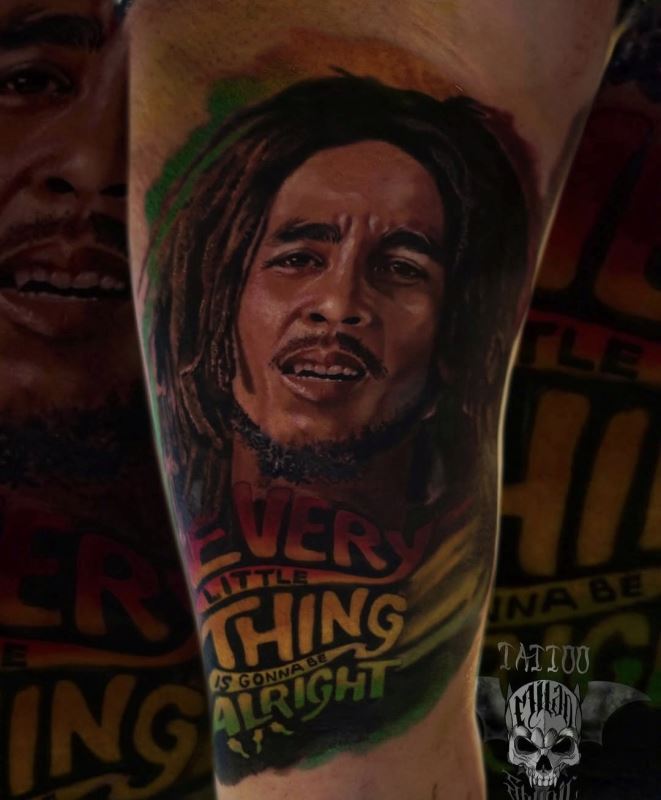
Hello Milan Šugić! Thank you so much for taking the time to do this interview. Your work in color realism is truly world-class, and it’s a pleasure to dive into the story behind the art. Before you ever picked up a tattoo machine, were you already trained in classical drawing or painting? Was realism always your primary focus in art, or did that fascination develop specifically through the medium of tattooing? Yes, long before I ever touched a tattoo machine, I was deeply involved in classical drawing and painting. My foundation was built through traditional studies anatomy, light, composition, and observation all rooted in fine art. I was especially drawn to oil painting and the dramatic language of Baroque and Renaissance masters, where emotion and light carry as much weight as form. Realism was always present in my work, but it wasn’t rigid or purely technical. I was more interested in atmosphere, storytelling, and the psychological presence of a subject. Tattooing didn’t create that fascination, but it refined it. Working on skin forced me to rethink realism, to simplify without losing depth, to respect movement, aging, and the living canvas itself. In that sense, tattooing became an extension of my fine art background rather than a departure from it.
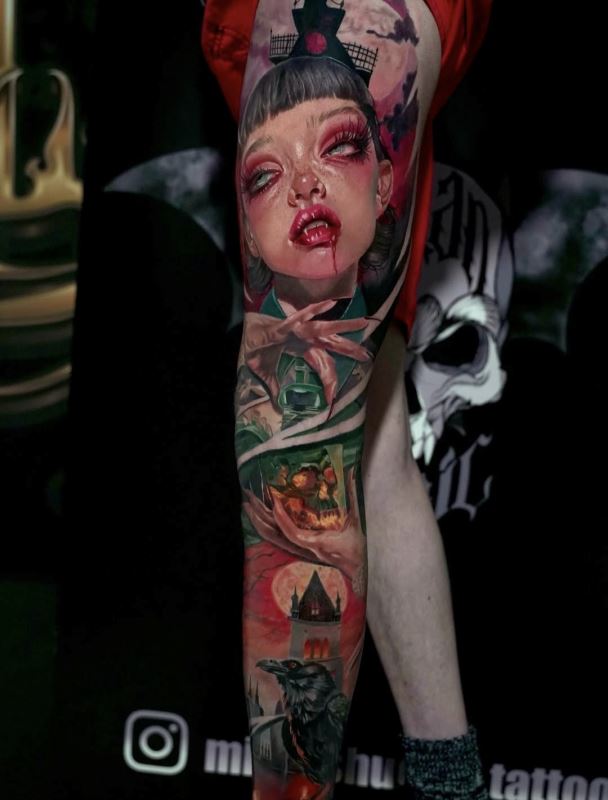
Q: You are a well-known artist from Novi Sad. How did the
local scene there shape you in your early days, and at what point
did you realize your work was ready for the international stage?
A: Novi Sad has a small but very dedicated tattoo scene, and growing
up in that environment shaped me a lot. I began my career in one of
the biggest studios in the city, which gave me a strong starting
point and clear exposure to the realities of professional tattooing.
That early phase pushed me to take the craft seriously and focus on
long-term growth rather than quick results. Because the scene is
intimate, your work becomes your voice very quickly. There’s no
hiding behind trends, you’re forced to develop a strong visual
identity and be honest about your progress. At the same time, the
city’s cultural atmosphere influenced my sensitivity to mood,
emotion, and storytelling. I realized my work was ready for the
international stage gradually, through guest spots abroad. When I
saw that my approach to realism, light, and composition resonated
with people from different countries and cultures, I understood that
the work could communicate beyond a local context.
Q: Realism is arguably the most technical and unforgiving
style in the industry. What was the most intimidating part of your
first "pro" year, was it the pressure of capturing a perfect
likeness, or the technical side of color saturation?
A: Realism is one of the most technical and demanding styles, and my
first professional year was full of challenges. Achieving a likeness
wasn’t too intimidating, thanks to my background in drawing and
painting. What was definitely harder was the tattooing technique
itself, how to pack color without damaging the skin, how different
skin types behave, and how to ensure the tattoo heals beautifully.
That first year taught me a lot, but it also made me realize just
how much I still had to learn. By the end of the year, I felt I had
grown technically and in trusting my instincts when working with
skin and complex portraits.
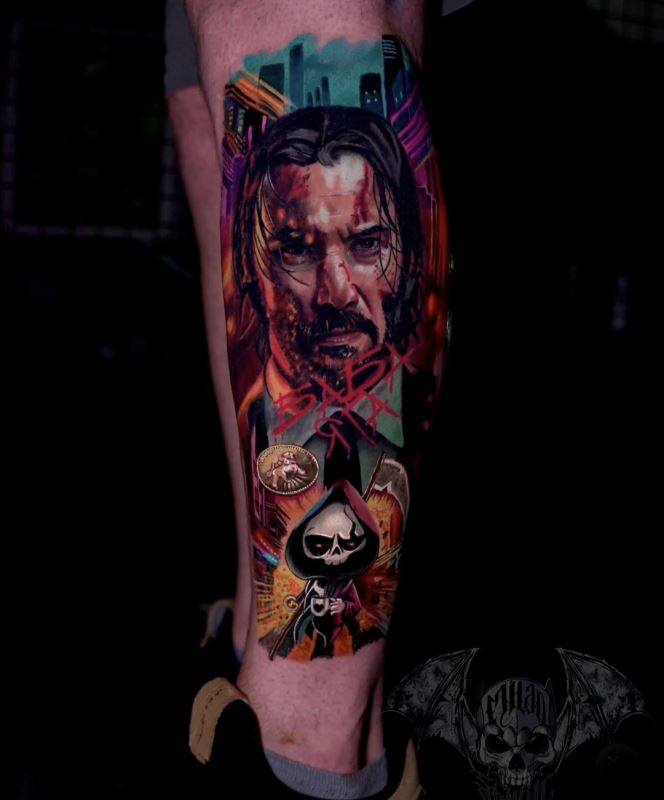
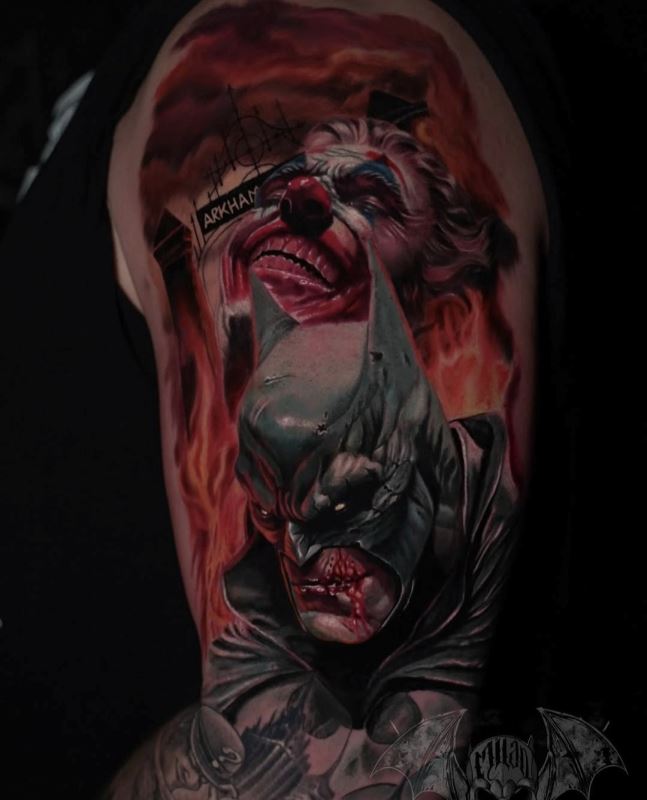
Q: Looking at your portfolio today filled with complex
pieces like John Wick or The Joker, can you recall a specific tattoo
from your early career that acted as a "breakthrough," where you
felt you finally moved from being a beginner to a professional?
A: Looking back, one tattoo really marked a turning point in my
early career, a full-color T-800 Terminator skull. It was extremely
challenging for my level at the time, with tons of color transitions
and blending. Completing it successfully felt like a breakthrough;
it was the moment I began to sense and discover my own style,
opening a new dimension of thinking and study in my work. That
experience set the tone for the kind of intricate, expressive work I
pursue today.
Q: Every artist struggles with something at the start, what
was the biggest "lesson learned the hard way" during your
apprenticeship or early years?
A: One of the biggest lessons I learned the hard way during my early
years was how much patience and observation tattooing truly
requires. Coming from a drawing and painting background, I was used
to controlling every detail on paper, but skin is unpredictable,
every canvas behaves differently, and the way it heals can
completely change the result. I quickly realized that rushing,
overworking, or not respecting the skin could compromise a tattoo,
no matter how good the design. That taught me to slow down, study
each client’s skin, and adapt my technique, a lesson that has shaped
everything I do as a tattoo artist.
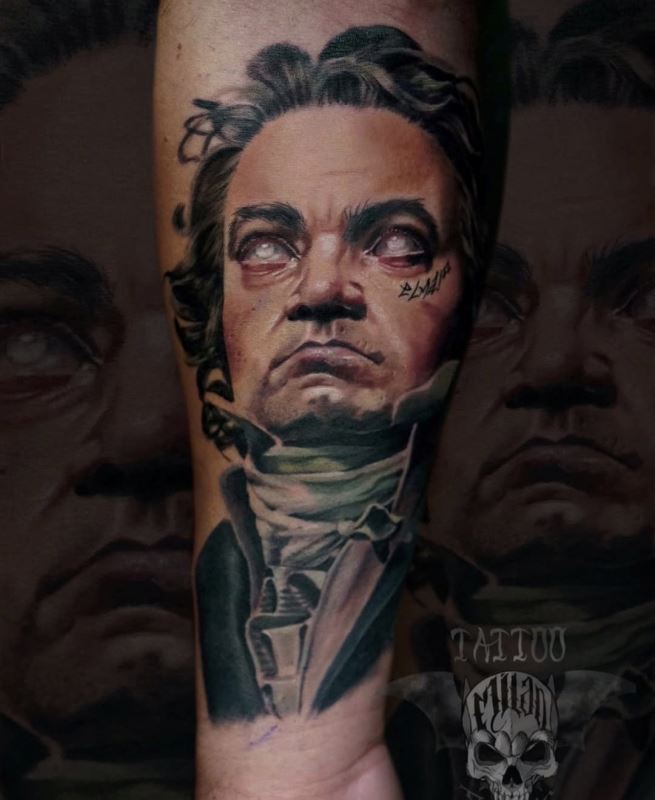
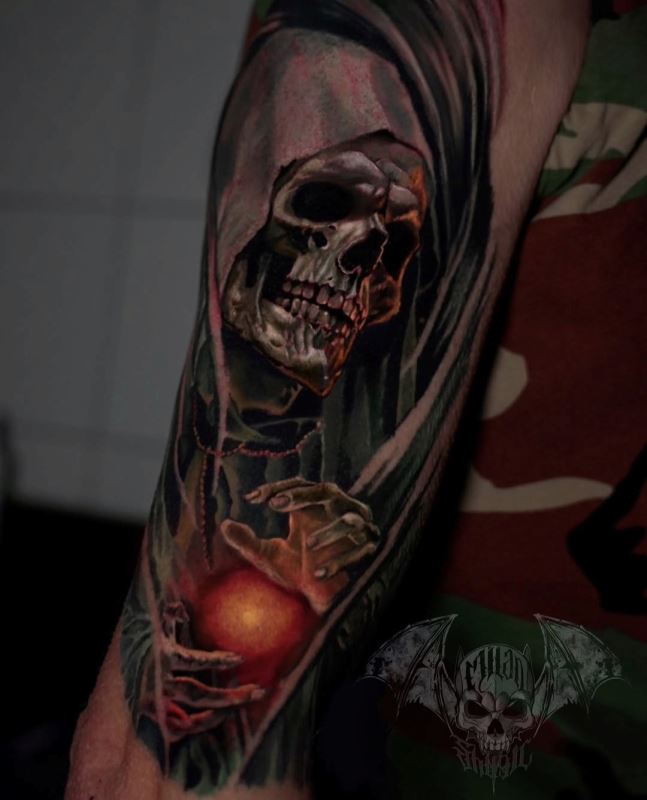
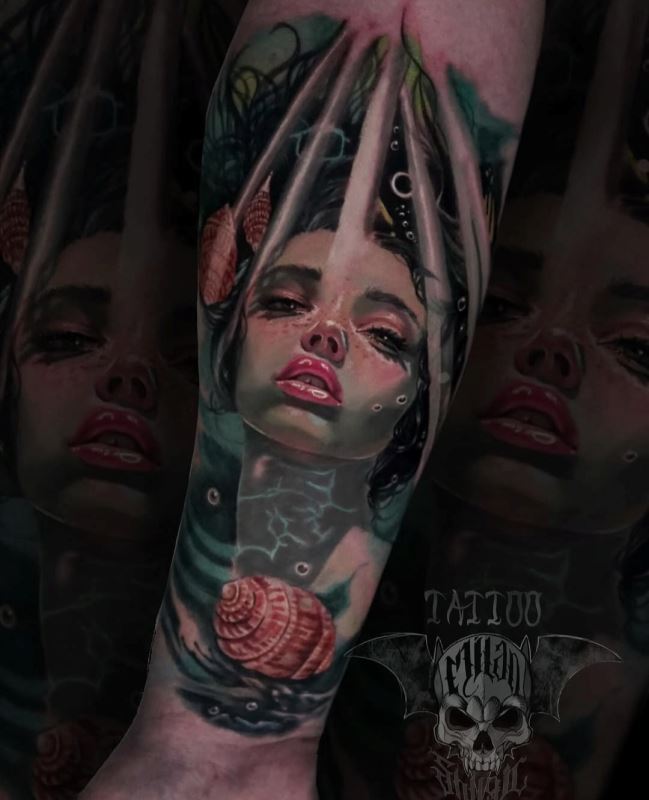
Q: Your portfolio shows a fearless use of bright reds, deep
purples, and electric blues. How did you develop your eye for such
high-contrast color schemes that still maintain a realistic feel?
A: Developing my eye for high-contrast color schemes came from years
of studying classical painting and my deep admiration for classical
art. I’ve always been drawn to the dramatic use of light and shadow
in Baroque and Renaissance works, where complementary colors create
tension and depth. Translating that to skin meant learning how to
balance vibrant hues like bright reds, deep purples, and electric
blues without losing realism or over-saturating the piece. It’s a
constant study of how colors interact, how they age on different
skin tones, and how to use contrast to guide the viewer’s eye and
enhance the overall storytelling of the tattoo.
Q: You have a dedicated highlight for "healed tattoos". How
has your technical approach changed over the years to ensure that
these complex color realism pieces hold their vibrancy long-term?
A: Ensuring that complex color realism pieces hold their vibrancy
over time has been a continuous learning process. In the early
years, I focused mainly on achieving a great result immediately, but
over time I realized that the way I work with skin, layering, and
color application directly affects how a tattoo heals. Achieving
strong contrast is especially important, without it, a healed tattoo
can look flat or washed out. Now, I carefully consider each skin
type, adjust saturation and layering techniques, and work
thoughtfully to avoid overworking the skin. This approach, combined
with a deep understanding of color interactions, allows my healed
tattoos to retain their contrast, vibrancy, and realism for years
and it’s something I constantly refine with every piece I do.
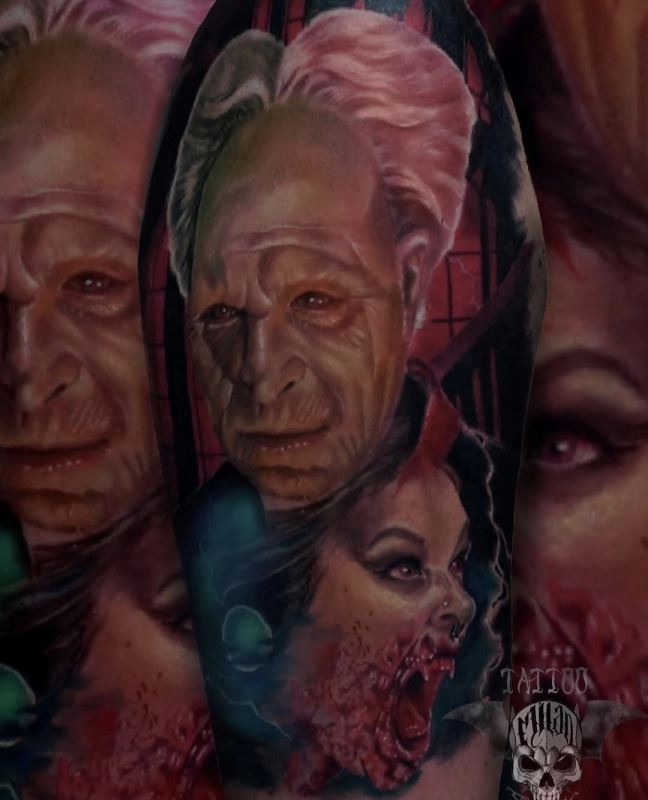
Q: From the pores in a person's skin to the rough texture of
fabric, your work captures incredible detail. When you are working
on a piece, how do you decide which details are essential to include
and which ones might be "lost" over time as the skin ages?
A: Great question! When working on a piece, I always think about the
story and impact of the image as a whole. Not every tiny detail will
survive over time, skin changes, heals, and ages so I focus on the
elements that define the character, mood, and realism of the tattoo.
Proper ink usage and technique are essential to ensure the tattoo
heals well and retains its vibrancy. Equally important is guiding
clients on proper aftercare and showing healed results, which builds
trust and transparency. By combining careful detail selection,
technical expertise, and clear client education, I make sure each
tattoo looks its best both immediately and years down the line.
Q: For realism artists, the stencil is often a complex map
of highlights and shadows. Could you walk us through your
preparation process? How much of the final result is planned out in
Photoshop versus decisions you make on the fly while tattooing?
A: In the beginning, I relied heavily on stencils, which were often
very complex and packed with information. Over time, that changed,
now my stencils are simple and minimal, focusing on capturing the
essence of the piece, mapping the light source, and the darkest
areas, while the rest is more of a creative play. I also rely a lot
on the emotion the piece gives me, letting that guide the final
outcome. Most of my preparation and study happens during the design
process itself, which is why I never create a design on the day of
the appointment, I always work on it several days in advance.
Tattooing then becomes a living process, where I let my style take
over and adapt shading, blending, and highlights on the skin to
bring the piece fully to life.
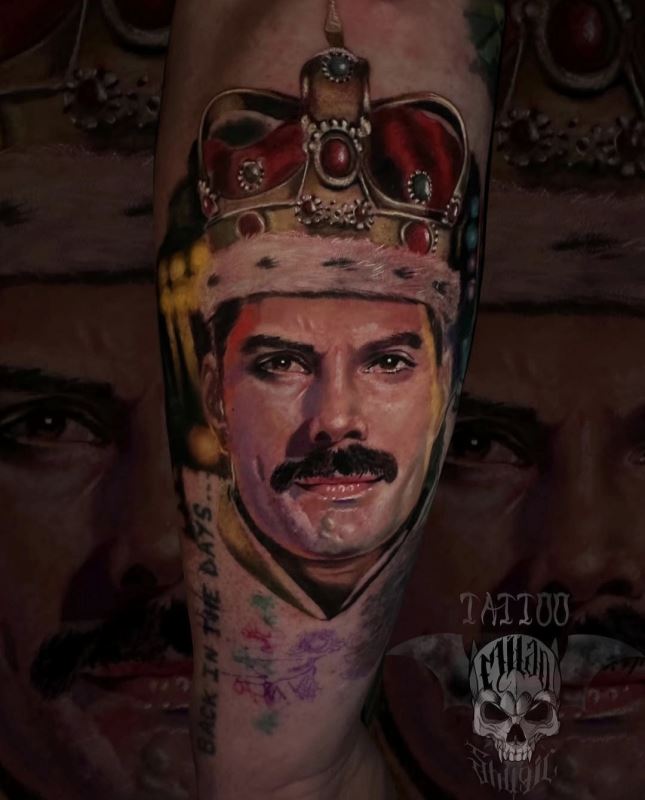
Q: Realism artists often walk a fine line between being a
"copier" of a photo and being an original artist. How much of
yourself do you put into a piece? Do you ever find yourself pushing
back on a client’s demand to ensure the final piece remains "your"
style?
A: Oh, the good old debate (which I can’t stand) haha I always put a
lot of myself into every piece. Even when working from a photo, I
focus on capturing the essence and emotion rather than just copying
every detail. My style, the way I handle light, texture, and color,
naturally comes through in the work. I constantly try to push my
style as much as possible. This isn’t just about realism, in every
style there are those who don’t invest much, or even anything, in
creativity, and I strongly oppose that mindset. Realism is a very
broad concept, at least in tattooing, and it’s not just about
copying portraits, landscapes, or references. It offers immense
possibilities; it can be a style that tells incredible stories in a
realistic and creative way, both in tattoos and in painting. I
always push my style, it’s simply the way I work. I never do
something generic or follow a design that’s just a bad idea; the
tattoo is always my vision.
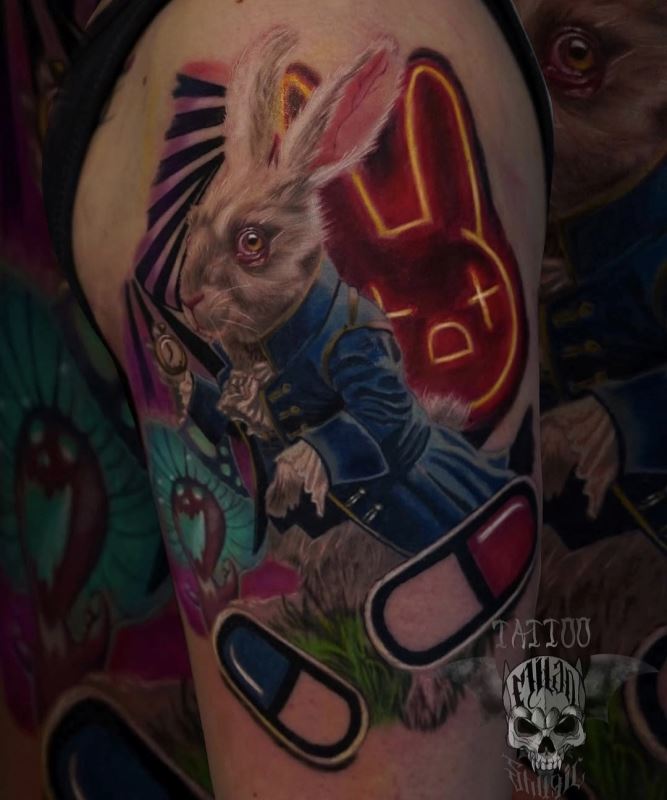
Q: Your large-scale color realism pieces take many hours.
How do you build rapport with clients who have to sit in your chair
for multiple full-day sessions?
A: Most of my work consists of large pieces that take multiple
sessions, it’s not a quick one-and-done deal. I like to keep things
relaxed and friendly, and I even offer the occasional bonus “ear
singing” service. It either lightens the mood or becomes so
unbearable that it distracts them from the pain, either way, it’s a
winning combination. ;) That’s also why many of my clients have
become friends, and why I have such a strong returning client base,
naturally, all thanks to my singing. I make sure the whole
experience is enjoyable, because what’s the point of a beautiful
tattoo if the client has gone through hell sitting in the chair and
had to put up with a pompous artist? A tattoo should be a full
package - good vibes, a smooth process, and a piece that leaves the
client feeling great. The studio I work at, Inkstitucija, has a very
laid-back atmosphere with amazing energy, which makes it the perfect
place for long sessions and big tattoos.
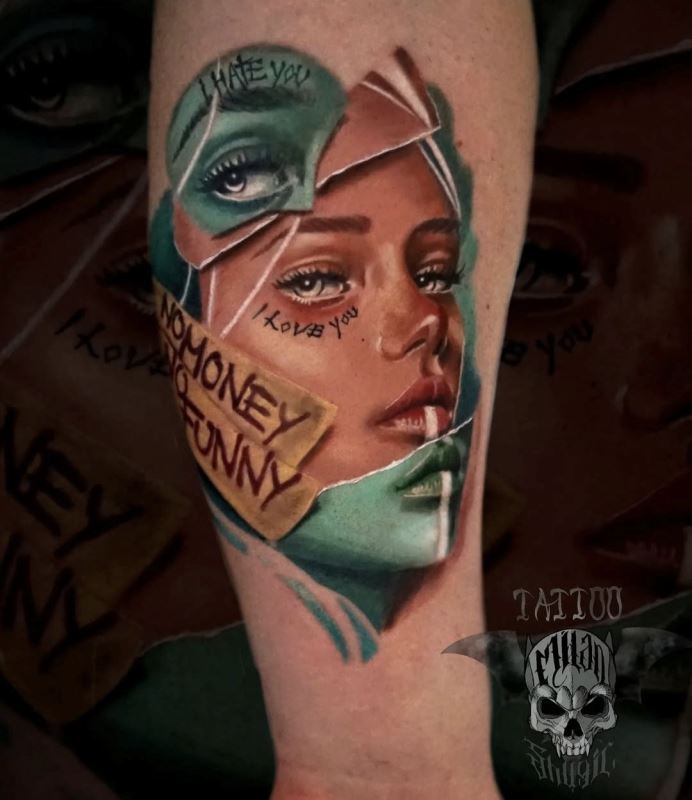
Q: Please write down your studio location and website/social
media links. Also let us know if you are available for bookings.
A: I work at Inkstitucija Tattoo Studio, located in Novi Sad,
Serbia, a beautiful city, at Bulevar Oslobođenja 131. It’s one of,
if not the largest studios in the country, with an amazing team of
talented artists. You can check out my work and follow me on
Instagram: https://www.instagram.com/milanshugic_tattoo. I’m
currently accepting bookings, but the earliest available dates are a
few months away. I focus on large-scale color realism projects and
carefully plan each design to ensure the best results and an
enjoyable experience for my clients.
Q: You are currently a sponsored artist for Ozer
Quickstencil. For those outside the industry, what does a
sponsorship like this represent for an artist’s career?
A: A sponsorship like the one I have with Ozer Quickstencil is a
significant recognition in the tattoo industry. It represents trust
in my work, technique, and professionalism, and it also connects me
with a global community of artists and brands. For an artist, it’s
more than just a logo on your Instagram or gear, it’s a signal that
your work is respected and valued at an international level. It
opens doors to collaborations, guest spots, and educational
opportunities, and it’s a validation that the time, effort, and
dedication you put into your craft are recognized beyond your local
scene.
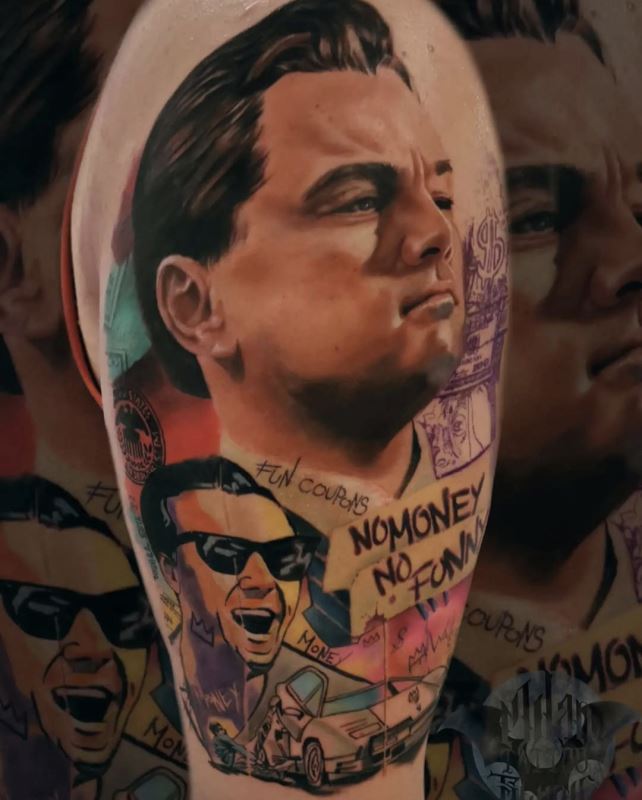
Q: You’ve participated in major events like the Milano
Tattoo Convention. How do you handle the high-pressure environment
of a convention, tattooing for 8+ hours while being surrounded by
crowds and fellow artists?
A: Hours, constant attention, and being surrounded by fellow artists
and crowds can be challenging. For me, it’s all about focus and
preparation. I make sure I’m fully ready before the session, both
mentally and with my setup, so I can dive into the work without
distractions. Conventions also bring a unique energy; the excitement
of the crowd and being around other talented artists actually
motivates me. I try to stay present in the process, manage my pace,
and keep a good rhythm, it’s a mix of discipline, experience, and
feeding off the creative atmosphere that allows me to deliver
high-quality work even under pressure.
Q: Do you think tattoo conventions are a great way to
present yourself as an artist and connect with fellow artists?
A: Absolutely! Tattoo conventions are one of the best ways to
showcase your work, meet other talented artists, and exchange ideas.
They create an environment full of energy and inspiration, and they
also give you the chance to connect with clients and the wider
tattoo community in a way that few other platforms can. For me,
conventions are not just about tattooing, they’re about learning,
networking, and being part of the global art conversation.
Q: You’ve brought home awards for your work. When you are
preparing a piece specifically for a convention competition, what
are you looking to achieve that sets your work apart from the other
world-class realism artists in the room?
A: It’s very important to understand that at a convention, anyone
can win, and many factors influence the outcome. The technical side
is already a given, at that level, most artists are more or less on
the same page when it comes to skill. At the end of the day, it’s
often the design and concept that make the difference. A lot depends
on the jury’s personal taste, so you shouldn’t become obsessed with
winning. The key is to showcase your style and promote your own
artistic voice. Sometimes that will influence the jury in your
favor, and sometimes it won’t. What matters most is staying true to
your style, because a convention is ultimately your promotion as an
artist.
Q: How often do you attend conventions?
A: Not as often as before, but I choose my battles and focus on
conventions where I know there will be talented and interesting
artists, that’s important to me. I’ll be looking to increase my
presence at conventions in the near future.
Q: From the Netherlands to Spain and Iceland, you’ve
traveled extensively as a guest artist. How does working in
different studios across Europe influence your growth? Is there a
particular city or studio that has left the biggest impact on you?
A: I absolutely love guest spots, and I owe a lot of my growth as an
artist to them. In the beginning, they’re an amazing way to develop,
you come into contact with many different artists, some more
experienced, some less, and there’s always something to learn from
everyone, even just a small trick or insight. Later on, once you’ve
developed a clear and unique style, guest spots become a fantastic
way to share your art around the world, reach new audiences, gain
international recognition, and refresh your own work. Being in
contact with so many different mentalities, cultures, and folklore
inspires me and keeps my art evolving, which is what matters most to
me in this profession.
Q: What keeps you
motivated?
A: A lot of things keep me going, my passion for creating, exploring
new ideas, and pushing the boundaries of my style. I love the
challenge of turning concepts into vivid, lifelike tattoos and
seeing the joy they bring to clients. Traveling, guest spots,
learning from other artists, and constantly discovering new
techniques all of that is fuel that feed my drive. At the end of the
day, it’s the combination of artistic growth, sharing my vision, and
connecting with people through my work that keeps me inspired and
excited to keep creating.
Q: If you could go back to your very first day as a beginner
in Novi Sad, knowing everything you know now about the industry, the
traveling, and the technical skill required, what would you say to
yourself?
A: If I could go back to my first day in Novi Sad, I’d tell myself:
“Hang in there, it’ll be worth it! And maybe take some singing
lessons ;) Learn, explore, make mistakes, and enjoy the ride,
everything else will fall into place.
Q: In 2026, the tattoo industry is seeing a "structural
shift" where competition is higher than ever. How do you stay
relevant in a global market that is becoming increasingly saturated
with high-level realism artists?
A: I’d say it’s not just high-level realism, the entire tattoo scene
has advanced in almost every style. That’s why it’s so important to
find yourself and develop your own style. Being recognizable is key,
one of the biggest compliments I’ve ever received from a fellow
artist was: “Out of 100 tattoos, he could always spot mine.” I think
this kind of individuality is noticed not only by clients but by the
industry as well. It’s important not to force yourself to fit into a
mold that doesn’t suit you. Keep working on yourself, stay hungry,
curious, and always, educate yourself, keep learning, and speak
through your work. Your style and vision will naturally set you
apart.
Q: We are seeing more artists use AI tools (like Midjourney
or specialized tattoo generators) to create hyper-realistic
references. What is your take on AI in the tattoo world? Do you see
it as a helpful tool for composition, or do you think it risks
taking the "soul" out of custom art?
A: Like anything in life, AI can be used in many ways, it’s a tool
that can reflect who you are as a person and as an artist. I think
it’s useful for generating interesting references. I’ve never used
it to design entire pieces, but it’s handy for creating elements
like a portrait that I can then draw around and build a full design
from. I used to do this by photographing models and getting the
lighting just right, but sometimes it’s hard to find someone who
fits the idea. I even had the idea to paint twenty different
portraits to use in my designs later, but I never got around it,
though the idea is still in my head. So in short: AI is useful, and
how you use it depends entirely on the kind of artist you are.
Q: Many European realism artists view the United States as
the ultimate "proving ground" due to its massive history with the
style. Do you have concrete plans or aspirations to move your base
of operations to the USA, or do you see yourself more as a
"traveling artist" who visits for guest spots and conventions?
A: The United States definitely has a huge history and influence
when it comes to realism, and it’s an important place for any artist
in this style. I don’t want to move there permanently, I really love
the European vibe, but I’m definitely drawn to the U.S. culture, and
especially the tattoo scene. I’ve already connected with some of the
leading color realism artists in the U.S., and I can’t wait to meet
them all in person. For me, being a traveling artist while keeping
my base in Europe is the perfect balance: I get to share my work
internationally, grow through new experiences, and connect with
different scenes around the world.
Q: If you were to open a studio or take a long-term
residency in a major American hub like Los Angeles or New York, how
do you think you would need to adapt your "European" workflow?
A: Hmmm… honestly, that’s not something I’ve planned, so I’ve never
really thought about it. I don’t think I’d need to adapt much, the
U.S., with its diversity and vibrant art scene, would likely find a
touch of European flow and the influence of European art appealing.
My approach and style are part of who I am, and I believe
authenticity always resonates. My work ethic is very high, so that
wouldn’t be a problem, and I truly believe these two things go hand
in hand.
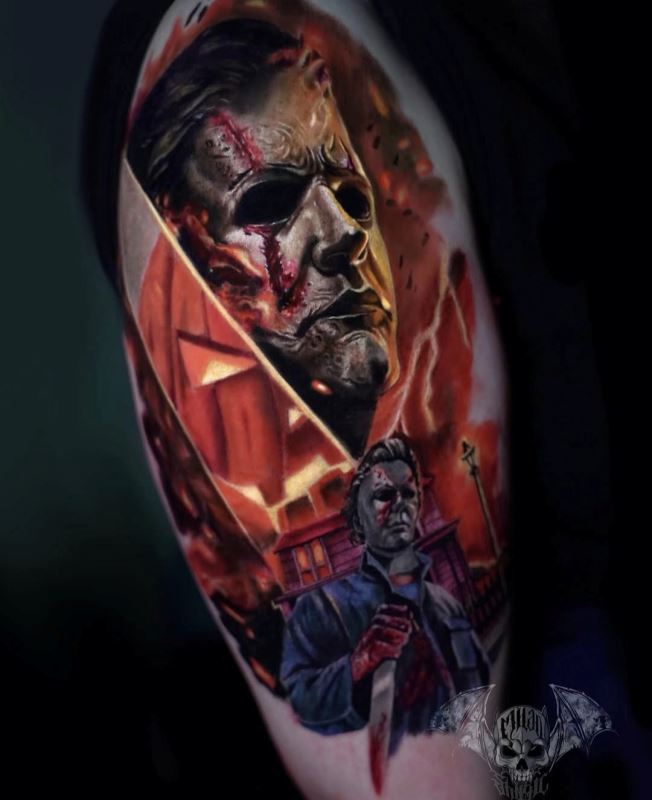
Q: What is the one thing about the American tattoo culture
that excites you the most, and conversely, what is one thing from
the European scene that you would want to "import" to the US to show
them how we do things here?
A: Great question! What excites me the most about American tattoo
culture is the level of ambition and the scale of the industry, the
creativity, the energy, and the sheer variety of artists and styles
is incredible. I’m also very drawn to the idea of seeing what kind
of “taste” clients have and what’s in demand. I have the impression
that the tattoo scene in the U.S., especially at the highest level,
is taken to a whole other level and is more closely connected to
art. Conversely, one thing I’d love to “import” from the European
scene is our approach to art and design, the way we blend classical
art influences with tattooing, and the emphasis on creating a
distinct, personal style. I think they’d really appreciate seeing
that perspective and the European flow in action.
Q: Many realism artists in the US are heavily influenced by
the black-and-grey Chicano style which originated in the Southwest.
Do you ever find yourself incorporating elements of that American
heritage into your work, or do you prefer to keep your style?
A: That’s also why I’d love to go, it’s the diversity of the scene
that’s so interesting to me. It’s the same direction, realism, but
with a completely different source of inspiration. I don’t draw my
inspiration from black-and-grey Chicano style because it’s not close
to me and I can’t relate to it, it feels foreign. I always pull
inspiration from my roots, European folklore, and the European
school of art. The connection comes from the fact that I love and
grew up with American movies, comics, and music, so a lot of that
naturally inspires me, and through the lens of my own style, it
takes on a completely new form. Even when I work on a subject
inspired by Chicano culture, I give it a full chiaroscuro makeover
while keeping the essence and core of Chicano intact, making it part
of my artistic language.

Q: What impact do you aspire to have on the tattoo
community?
A: I aspire to be a recognizable as an artist and to bridge
classical art with tattooing. I want my work to show that tattoos
can be more than just images on skin, they can carry the depth,
emotion, and storytelling of fine art. I also want to be associated
purely with art, so that my pieces are seen and respected as works
of art, while inspiring others in the community to find and express
their own style.
Q: For an artist just starting out today in a world
dominated by social media algorithms and high-tech gear, what is the
most important "old school" skill they should never neglect?
A: I’m not sure if this counts as “old school,” but the most
important skill is drawing and understanding fundamentals,
especially for colleagues interested in realism and related styles.
No matter how advanced your tools or software are, if you can’t
draw, you can’t create a meaningful design. Composition, light,
shadow, anatomy, and storytelling, these are the core skills that
will always matter. Social media and high-tech gear can help
showcase your work, but the foundation of being a great artist comes
from mastering the basics. As for safety and hygiene, I don’t even
want to talk about it, that’s the foundation of everything, and
anyone reading this interview has probably already mastered that
step.
Interview: Ivana Kancheska
Publishing Date: January 9 2026


