
Interview with Nathan Mathewson
Hello Nathan Mathewson! Thank you so
much for taking the time to do this interview. Please start by
telling us something about yourself and your background. What
sparked your initial interest in art? When I was young I
always had a feeling that I wanted to create, although I didn’t know
how to get the emotions or ideas out. I never took art classes
throughout school as I wasn’t interested in the contemporary art
they seem to push, but I always had a pen in hand doodling on
anything that came in sight. When I finished school a family friend
suggested tattooing, I had no tattoos and knew nothing about art at
the time. From there my artistic abilities and knowledge changed
over the years as I immersed myself in the tattoo world and learnt
about other art forms.
Q: Were there any influential people who taught you the
fundamentals of drawing, or are you a self-taught artist?
A: I'm self taught and kind of figured it out along the way. Once I
found a tattoo apprenticeship I picked up tips and tricks from those
around me.
Q: What initially sparked your interest in tattooing, and
how has that passion evolved throughout your career?
A: I honestly knew nothing about tattooing - never had one and never
been in a shop. I bought an eBay kit and tried tattooing pig skin
then thought there has to be a better way. So I went around studio
after studio for a year every weekend asking for an apprenticeship
only to be told these drawings aren’t tattoo art. I was drawing
realistic images, but at the time realism wasn’t really a big thing
in New Zealand. I eventually got into a studio, although short lived
as it wasn’t the right time in my life only being 18. I left and
worked trade jobs for a few years until I couldn’t stand them. The
tattoo shop feeling and smell of detto, never left my mind so I
decided to quit my job leaving no option for failure. I was going to
become a tattooist come hell or high water. I found another
apprenticeship and never looked back.
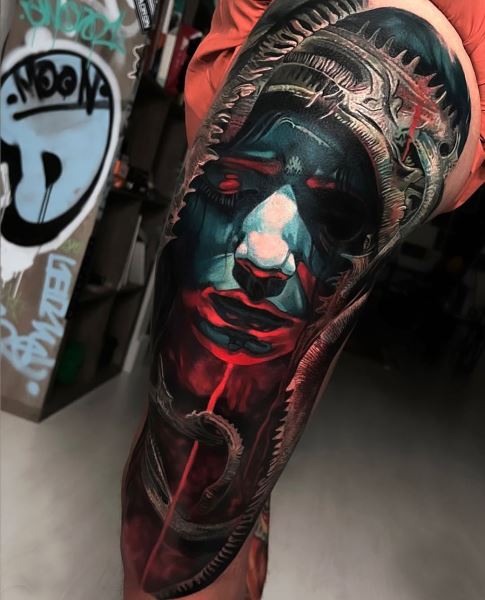
Q: How long did it take you to find and define your tattoo
style, and what was the tipping point that made you feel confident
enough to work in a professional studio?
A: I still don’t feel I have a style as such, I would like to focus
in one direction but being from such a small country, New Zealand
has its challenges. Color surrealism is quite niche in NZ, and due
to our sun being so damaging and my clients mostly working outside
jobs I have to choose wisely for the longevity of the tattoo case by
case with the client. Therefore knowing how to tattoo multiple
styles etc helps. I have always worked in a professional
environment, I believe you are a reflection of your surroundings.
For me it wasn’t a decision based on how I felt it was on what
needed to be done so that I could focus on being the best version of
myself.
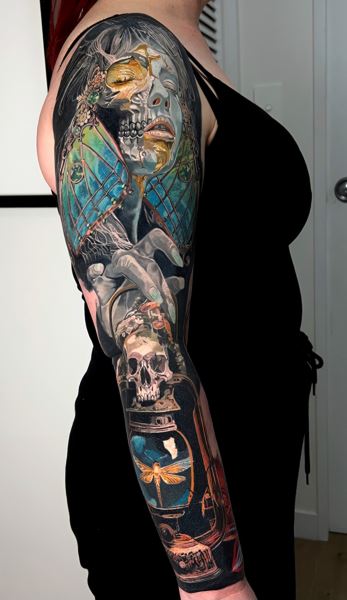
Q: Your artistic style strikes me as a compelling dialogue
between realism and surrealism. How do you perceive the interplay of
these elements in your work, and what draws you to this particular
combination?
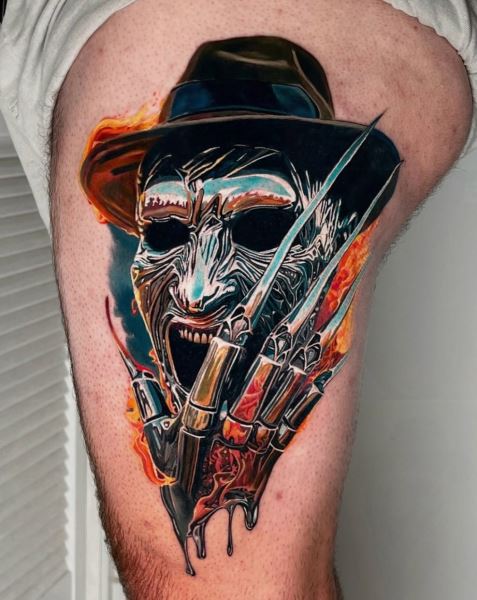
A: I started with realism, I didn’t like other styles when I started
tattooing because I didn't understand them. From there as I learnt
and evolved, I began to love all styles of tattooing. I didn’t
tattoo color for the first few years of my apprenticeship as I
constantly chewed people up when I tried. After a while of black &
grey realism I lost the passion, so I decided to try some color. I
always created darker themed tattoos throughout my career so
instinctively I merged them. I used my knowledge of other styles and
focused more on creating unique and surrealistic designs. Surrealism
is fun because it's much more open for interpretation. I also have a
lot of crazy dreams so maybe that's why I’m drawn to it more and
more.
Q: Could you walk us through your creative process, from
initial concept to the final design?
A: Normally they are my client's ideas - I take their concept,
figure out what’s most important to them and get to work. Sometimes
I don’t know what I’m doing until I figure out what doesn’t work,
almost like a process of elimination. Composition is really
important to me, and from there I figure out which key elements will
work best and how. Once I get that it’s how it makes me feel, and
how does that feeling translate to a concept. I try to not limit
myself to one idea. I use procreate a lot and freehand or draw when
needed.
Q: Your black and gray work has incredible depth, and your
color pieces look like vibrant paintings. Do you have a personal
preference between working in black and gray or color?
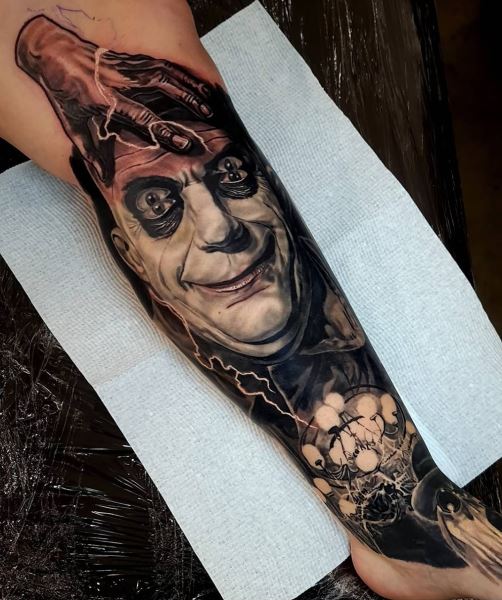
A: I ultimately prefer color as I believe you can do the same tattoo
but give it much more emotion through color, where black and grey is
more focused on contrast and if it’s smooth or textured. DBK tattoo
once said to me “black and grey is a day off” and it’s true,
although color is my favourite it’s technical especially in
realism/surrealism, so I like to mix them up. They both play
important roles in tattooing further than just aesthetics, as well
as client preference or location. It’s important to educate our
clients and choose wisely in regards to color selection/values or
contrast which is why I tattoo both.
Q: Thinking about the technical skills involved, which
tattoo has been the most challenging for you and what did you learn
from it?
A: I don’t think I have the most technical piece. Some days an over
designed tattoo on the wrong skin can make your life a living hell.
Because I haven’t stuck to one formula I’m constantly being
challenged to put myself out of my comfort zone, and learn something
from every tattoo I do. I break down what I hate about my decisions
then try better the next time. I feel like sometimes to get the
masterpieces everything has to align from your mental state, clients
budget, clients skin, creative freedom, design, and clients ability
to sit still for long periods.
Q: Since the goal of realism is to replicate a subject as
accurately as possible, where do you find room for creative
exploration within that style?
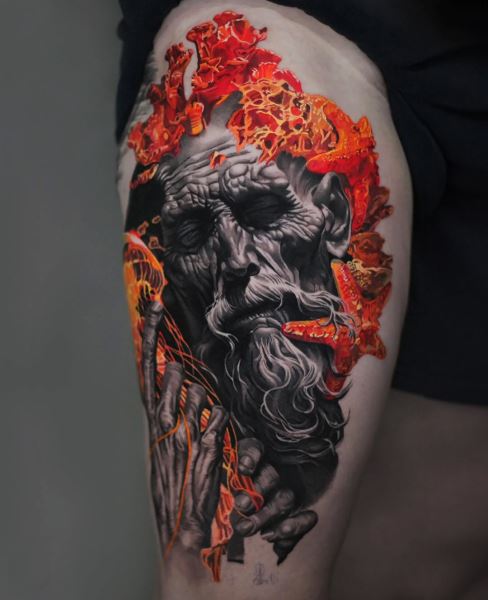
A: I don’t think there is creative freedom within realism, I think
the only thing you can do is focus on composition. Realism doesn’t
need to be anything more than that as they are such impressive
tattoos when done well. This is why even though I do it often, I
don’t necessarily define myself as realism artist. The only thing I
normally tattoo untouched (design wise) is a portrait.
Q: Witnessing clients in such vulnerable and personal
moments during the tattooing process must be a unique aspect of your
work. How does it feel to be a part of these intimate experiences,
and does it influence your approach as an artist?
A: When clients find you specifically because they think you can
bring what they want to life, it’s pretty rad. I treat all my
clients with the same respect as my family or friends, and because
of this they are open and honest and we have a bloody good time.
It’s something I pride myself in as an artist and I can honestly say
I have never had any run-ins or trust issues with clients. I don’t
really think too much beyond doing the best tattoo I can for my
client.
Q: When clients are unsure what they want, I can imagine
it's a huge help to have a collection of your Procreate designs and
sketchbooks for them to browse. How important is it for you to have
that creative resource on hand for consultations?
A: It’s not that important, I don’t try to push my art on them too
much. I talk them through the reasoning behind their tattoo or why
they want it, sometimes I show other artists work for possible
styles and then if it’s something like mine I'll dive deeper. Mostly
when they see my premade designs they don’t pick them directly, but
sometimes there is enough to spark an idea. From there I can quickly
whip up a rough design and if they like where it’s heading we will
create from there.
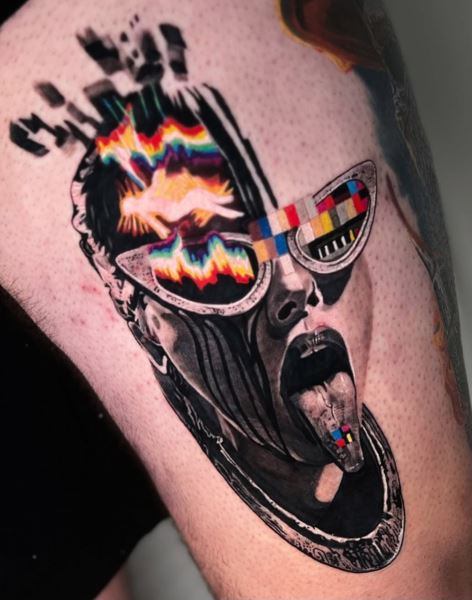
Q: Let's talk a little about the extra painful tattoos -
head and neck tattoos? What kind of person typically requests this
type of tattoo, and what are the most crucial aftercare
considerations for ensuring a good result?
A: I personally have my head and neck completely covered so I know
how it feels. During these tattoos I try to take as little break
time as possible so that I’m not leaving it then jumping back in
after it’s calmed as I find people respond negatively. That being
said I have full sympathy so ultimately if you want a break I
understand and no judgement. My shops is a safe space where I will
make you as comfortable as possible while getting the job done. Head
and neck tattoos vary, I don’t think there is one group although a
lot of men get head tattoos especially once hair loss starts necks
heal well and fast. Back of neck and sides of head are no issue, but
tops can be a little problematic due to black losing contrast or the
tattoo dropping out. For aftercare, I treat all tattoos the same.
The main thing is to keep away from the sun, especially these spots
where it’s hard to. So keeping covered and then clean two times a
day and a tiny bit of ointment. Less is more!
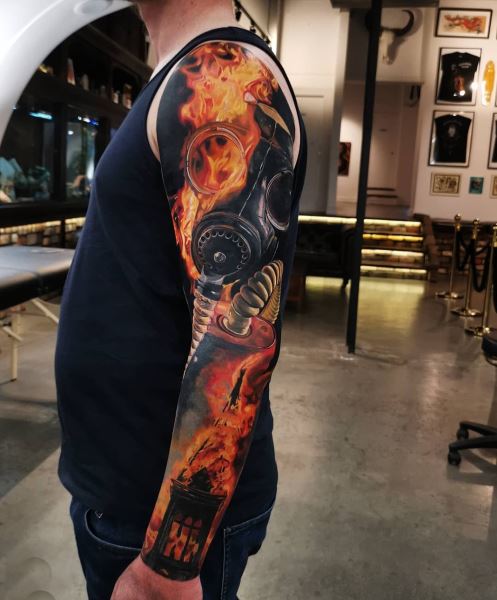
Q: It's impressive that you're willing to take on cover-up projects, as they require a level of skill and trust that's different from working on bare skin. What is your process for approaching a cover-up, and what do you consider before agreeing to a design? A: The most important thing about a cover up is making the client aware that not everything is possible, if they don’t like what you do there, there is no going back, or it is a very expensive long laser process. The way I think about a cover up is to deceive the eye, not necessarily cover every part. Sometimes scaring from bad tattoo jobs can show through as well, so all things to be aware of. The design is important, it can be a mission of a job so choosing simple effective designs are your best bet. Things like bird feathers or textured areas can also work a treat. It’s such a case by case process but honesty is the best policy - don’t be a snake oil salesman.
Q: It seems like a beautiful place to be. Does living in
Auckland, New Zealand influence your art, and do you work in a
private studio?
A: New Zealand is beautiful, Auckland not so much. I guess you could
say there are many beautiful views and our native birds get tattooed
a lot so these elements of nature have some impact. I find for me
New Zealand’s geographical location/size brings a lot more
challenges than good for tattooing. Before Covid I worked at
Shipshape Tattoo, a truly world renowned studio. I currently work in
a private studio as well as my friend Ryan Evan’s shop. Covid at the
time dictated my move to a private studio, but once I got set up I
chose to stay as my clients preferred the more chill experience.
This has been great, but I’m ready to be back out amongst it.
Q: What's your take on the local tattoo scene? Are you
seeing any exciting developments, like new artists, styles, or
events?
A: NZ is extremely impressive with tattooists artistic ability and
the level is very high all around. Every day artists all around the
country are pushing the limits and it’s truly not short of
inspiration. The limiting factor here is skin quality and
unfortunately now there are a lot of artists so it’s overstated,
especially in cities like Auckland. New Zealand has been hit hard
since Covid, the tattoo scene has gone downhill in regards to
opportunities, overseas talent coming through and clients knuckling
down on spending due to cost of living. One really exciting thing on
the horizon is DBK has started the Roots Tattoo Convention here in
Auckland. Coming from such a high level knowledgeable artist I’m
sure it will be amazing to provide an oasis for the world's best.
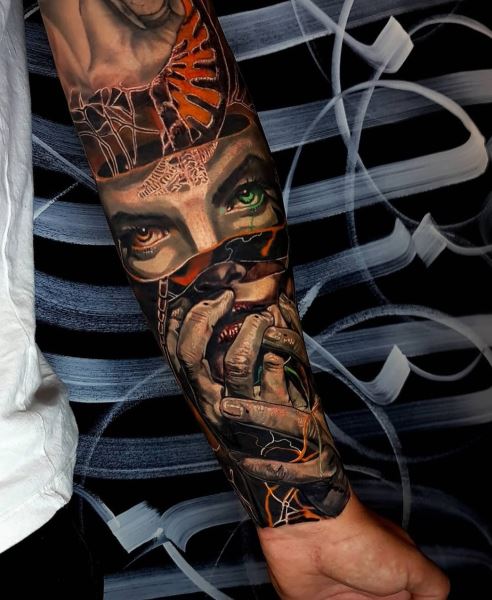
Q: How often do you attend tattoo conventions? In your
experience, how valuable are tattoo conventions for artistic growth
and building client relationships?
A: I attend conventions whenever I can, they’re always inspirational
and are great for networking. I believe they are one of the most
important things an artist can do especially towards the start of
their career. I’ve been lucky enough to travel to Australia and Hong
Kong conventions, both open your eyes in different ways especially
cultural differences in the history, work and clients. I’ve won a
few awards, one being the best category for small realism black and
grey at the Tattoo Extravaganza in Tauranga.
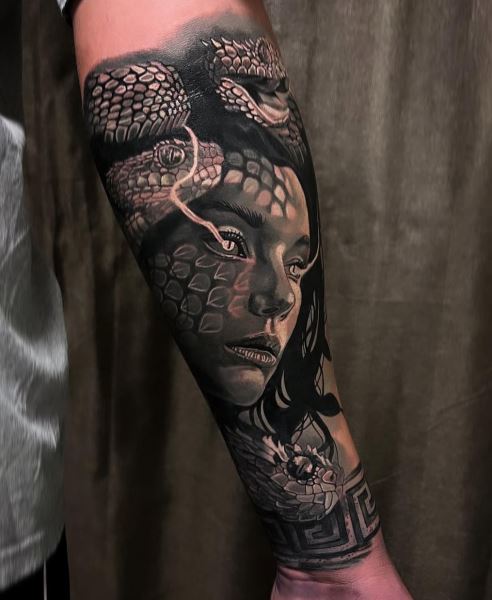
Q: Given New Zealand's strong connection to Māori tattooing,
are you noticing more artists dedicating their work to this
traditional style? And on another note, have you ever considered a
collaborative project with another artist?
A: No I don’t think so, I feel most artists respect it’s not
necessarily their culture and without the understanding surrounding
Tā moko meanings they leave it to the select artists that really
specialise in it. Different tribes have different markings so some
artists even specialise in designs within their Iwi. A kirituhi is
basically a version of tattoo for anyone not of Māori descent. That
being said, the Tāmoko artists we have are killing it and I’ve seen
a lot of absolutely perfect work lately.
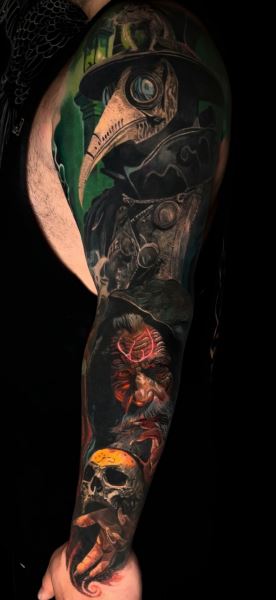
Q: The global tattoo community is bigger than ever, and for
talented artists, marketing and networking are essential for career
growth. With the significant presence and variety within the
American tattoo scene, is that a landscape you might be interested
in engaging with professionally at some point?
A: Yes for me America is key. America provides a massive area to
travel and network with clients, studios and those involved with
manufacturing and sponsors. A big draw card for me is that you can
get by speaking English and Spanish which helps a lot, as that is
something Europe can make extremely difficult. The United States is
the best place in the world with the most opportunities.
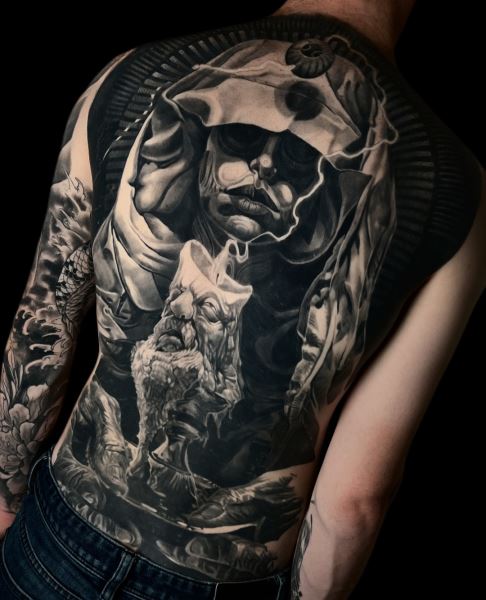
Q: If you were to consider establishing a presence in the
American tattoo scene, what kind of environment in terms of location
and studios, do you envision would be most conducive to showcasing
your unique blend of realism and surrealism and supporting your
continued artistic evolution?
A: My good friend Sean Foy owns Dark Moon Galleries, so I would like
to work with him. He also has dmityvision working in his studio so
the 3 of us together would be a great surrealism team. I would love
to get out amongst the convention scene and really be active at as
much as I can, to get to and make my presence. I would love to guest
at shops such as Love Machine, Monna Lissa, The Raven and the
Wolves, Night Owl etc. I really want to just immerse myself and see
how far I can push my abilities.
Q: We often see your incredible work, but what inspires you
outside of tattooing? Do you have any personal passions or hobbies
that you feel are crucial for staying creative and hungry for
progress?
A: Tattooing was my life for so long, it really didn’t allow much
time for anything else. I really enjoy motorsport and motorcycles
however, one of my creative outlets was building bikes. I enjoy the
design and being creative plus I’m never content with it just as is.
Riding and driving is like therapy in the way it helps me forget
about tattooing, so it’s one thing I can say helps me relax.
Q: What impact do you aspire to have on the tattoo
community?
A: I want to be remembered by my peers not only for having great
work but for being a great friend and someone that has earnt the
respect and honor of those surrounding me. I want my clients to feel
proud to wear my art not only because it’s good, but because they
enjoyed the connection as a whole. A good tattoo is great but who
wants to wear something that’s from an egotistical douchebag?
Q: Best part of being a tattoo artist?
A: The best part of tattooing is the community. Tattooing brings
people from all walks of life and cultures together, it's given
people that might have been long gone a place to call home and a
reason to live. It brings hope, discipline, freedom to create and a
place to express. It means a lot to me and to so many it is
everything. Without it so many would be lost.
Q: For someone just starting out, what are the most
important things to focus on to build a career as a tattoo artist?
A: Get an apprenticeship, not just the easiest one you can find but
the one that suits you best. Having these people around is going to
launch you so much faster and further into your career. Why pave the
path when someone else has already, it’s wasted energy. Apprentice
for free and earn your spot as this will make you respect the
industry more, one day you will understand. Don’t open your own
studio for at least 8 years. Money isn’t everything. Working for a
good studio has so many advantages that people just oversee. From
contacts of the surrounding artists, knowledge, learning how things
operate etc. People always try to make a quick buck, but be patient,
learn and absorb. You need time to focus on yourself and your
skills, not all the bullshit of running a shop.


