
Interview with Nil Senturk
Hello Nil Sentürk! Thank you so much for
taking the time to do this interview. Please start by telling us
something about yourself and your background. Hello, my
name is Nil Şentürk. I am 24 years old and was born in Turkey. I am
a fashion design graduate and have been tattooing for about four
years. In my artistic life, I have developed myself by combining my
fashion design education with tattoo art. Currently, I am focusing
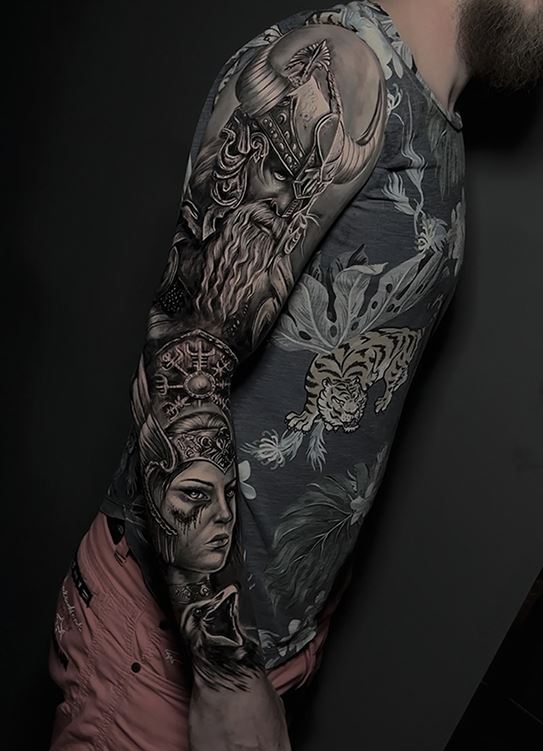
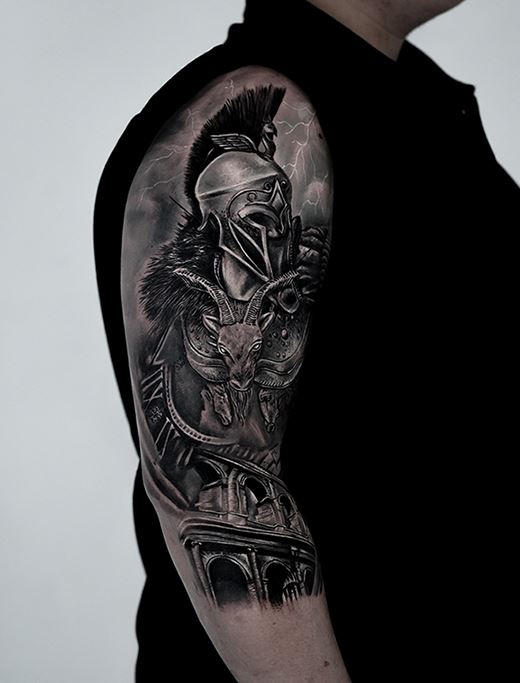
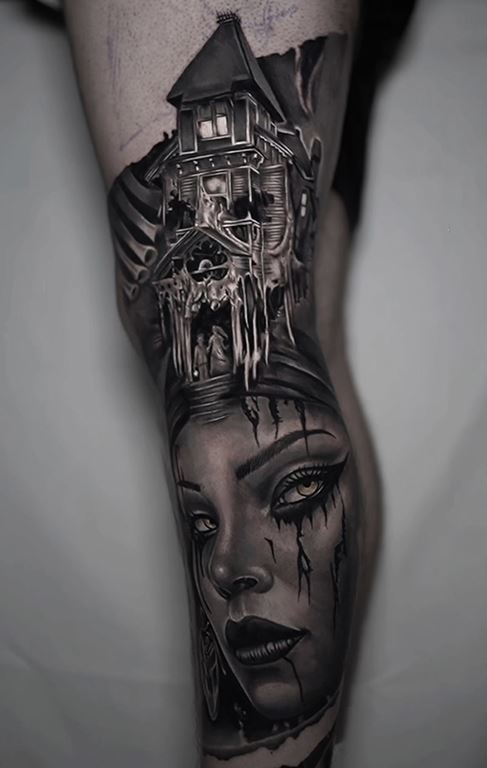
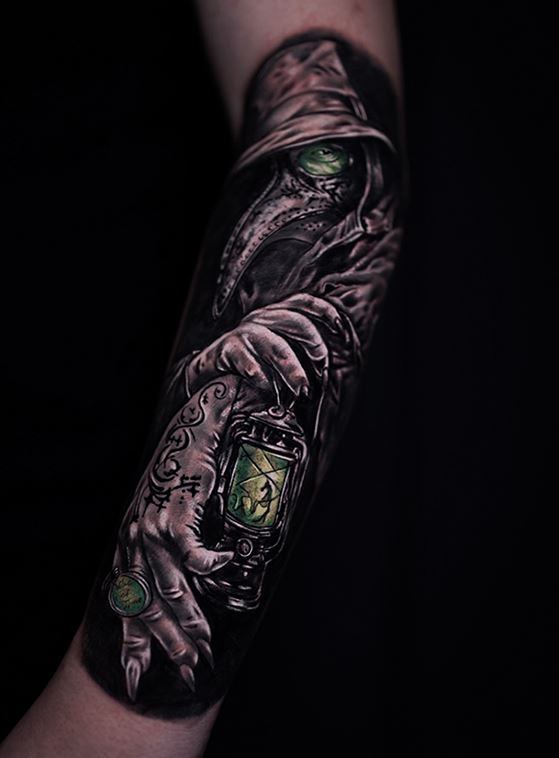
particularly on black and grey realistic tattoos. In this style,
with the emphasis I place on shading and details, each tattoo shapes
itself like a work of art. While tattooing, I try to tell a story
with every drawing and leave a permanent mark on my clients.
Q: How long took you to figure out your style and gain a
steady client base?
A: Finding my style and reaching a consistent client base was a
time-consuming process. At first, I experimented with different
styles and techniques, but over time, I realized that my true
passion and strength lay in black and grey realistic tattoos.
Mastering this style technically challenged me while allowing me to
achieve more satisfying results. Reaching a client base was another
process. Gaining trust in the tattoo world and showing people the
quality of my work and my style required me to build my portfolio
over time. Social media played a big role, but most importantly, it
was standing behind my work and showing a dedicated approach to each
client. Over time, I developed a loyal customer base who appreciated
my style and tattoo art. This has strengthened both my technical
skills and customer relationships.
Q: What was the most challenging part of getting into the
modern tattoo scene?
A: Entering the modern tattoo world was a challenging process for me
in many ways. The biggest challenge was developing myself
technically in the beginning. Tattoo art is an area with increasing
competition, and the quality standards expected by people are quite
high. Mastering the black and grey realist style, with its fine
details and precise shading, was particularly demanding. Another
challenge was going through the acceptance process in the tattoo
industry. People who get tattoos often expect not only technical
skill but also trust and sincerity from the artist. In the
beginning, gaining people's trust and proving myself by offering
quality work was a gradual process. Lastly, the impact of social
media on the tattoo world is enormous. At first, it was not easy to
promote myself correctly and get my style and work out to a wider
audience. However, over time, I overcame these challenges by
consistently standing behind my work and expanding my portfolio. I
am now working harder every day to strengthen my place in the modern
tattoo world and continue to develop myself.
Q: Did you feel an extra pressure or
something like that since you are a woman in this still heavily male
dominated profession?
A: Unfortunately, it is sometimes inevitable to feel extra pressure
as a female artist in the tattoo world. Especially in the early
years of my career, it was quite challenging to establish myself in
a sector dominated by male artists. People sometimes approached
female artists with a prejudice like "Can a woman be in this
industry?". However, over time, by developing my own style and
continuing to do the work I love, I was able to break down these
taboos. These experiences have made me stronger, and I realized that
I needed to work harder to solidify my place. While there are
challenges in choosing this profession as a woman, my passion for my
work and the quality I provide to my clients have earned me respect
over time. Ultimately, I advocate that everyone in the industry
should be valued equally, and I see more and more female tattoo
artists breaking down these prejudices every day.
Q: Who were some of your first clients?
A: One of my first clients was a close friend of mine. I wanted to
start with someone I trusted in order to test myself in tattooing.
At that time, I was a bit excited, but this experience provided me
with great motivation and it was an important step in the beginning
of my tattoo journey.
Q: Was it exciting to do a tattoo on
someone’s skin or very stressful?
A: I was definitely excited when tattooing someone’s skin for the
first time because it was both a new experience and a challenging
thing to do. It was also a bit stressful because mistakes in
sensitive areas can be more noticeable. But in the end, achieving a
successful result was very satisfying and it motivated me even more.
Q: What do you like the most about tattoo realism?
A: The reason I turned to black and grey realism was my desire to
create realistic details and depth. My background in fashion design
helped me understand sensitivity in drawings and shading. What I
love most about this style is that each tattoo tells a story and
gives the viewer a sense of reality. Being able to work with fine
details, deep shading, and light excites me and pushes me to develop
more.
Q: Why black and gray style?
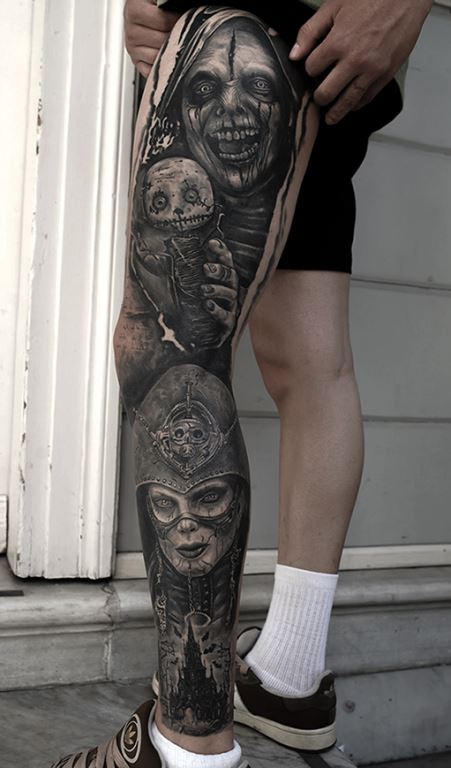
A: I generally prefer the black and grey style. This technique
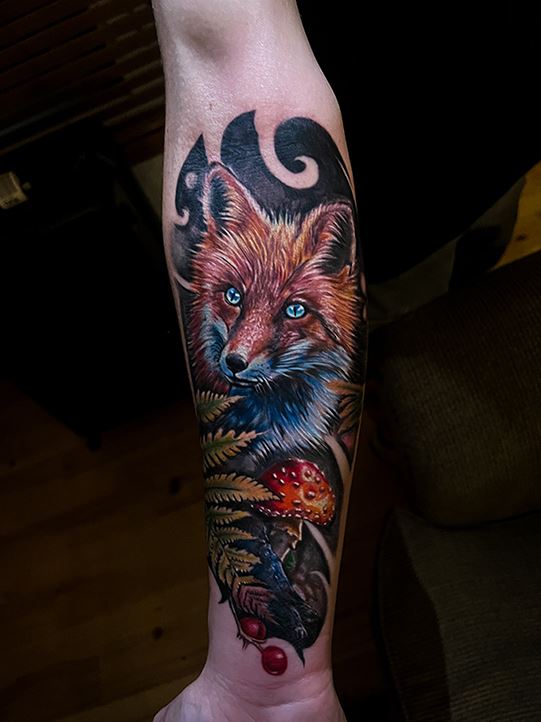
allows me to play more with depth, shading, and details. Colored
tattoos are beautiful too, but black and grey offers me more freedom
of expression and originality.
Q: How long are you in America? Do you like the American
tattoo scene?
A: I’ve been in America for three months now, and the tattoo scene
here is really interesting. It’s an environment where different
styles and techniques are more freely expressed. The tattoo culture
is highly developed, and artists are encouraged to express
themselves in various ways. This inspires me and offers
opportunities to further develop my style. I love the tattoo scene
in America because it’s a place where I can learn a lot in terms of
diversity and innovation.

Q: Tell me more about Cleopatra Ink.
A: Halil İbrahim Karadere is the founder and operator of the
Cleopatra Ink brand, but he is not a tattoo artist himself, he is an
entrepreneur focused on the business side of the tattoo industry.
Under Halil İbrahim Karadere's leadership, Cleopatra Ink has grown
into a significant brand in the tattoo world. Halil İbrahim Karadere
has achieved great success in the tattoo industry and made Cleopatra
Ink a large-scale brand with branches not only in Turkey but also
abroad. Karadere is known as a business person who has made
significant contributions to the tattoo industry, particularly in
managing tattoo studios, brand strategies, and his innovative
approach to the industry. Under his vision, Cleopatra Ink has
provided development opportunities for artists and helped tattoo art
reach a wider audience.
Q: Is Cleopatra Ink the biggest career highlight? Or there's
more to the story?
A: Cleopatra Ink is definitely one of the biggest turning points in
my career, but there is more to my journey. Before founding
Cleopatra Ink, I worked in various fields and gained a lot of
experience before stepping into the tattoo industry. Creating the
brand and bringing my vision to life in the industry was a crucial
step, but everything doesn’t end there. I’m always chasing new
projects and goals.
Q: Do you have any favorite tattoo artists
you would like to work with? Let's say a big scale tattoo like a
back piece etc?
A: There are a few tattoo artists I would love to work with,
especially for large-scale pieces. Back pieces, for example, require
a lot of detail and composition, so these types of tattoos come with
both artistic and technical challenges. In the future, I would love
to work with Valentina. Her style and technique deeply influence me,
and working with her on large projects would be a great opportunity
to further develop myself.
Q: Do you have any favorite tattoo you did recently?
A: The calligraphy design I did on my hip. It was aesthetically
pleasing to me, and it carries a deep meaning. Every time I look at
it, it inspires me.
Q: Is traveling a challenge or do you
handle the busy schedule like a boss?
A: Traveling is not a challenge for me, on the contrary, seeing new
places, exploring different cultures, and meeting new people while
doing my job is a great source of inspiration. Despite my busy
schedule, organizing my travels helps me manage time effectively.
This way, I can do my job efficiently while also gaining new sources
of inspiration.
Q: How important is be sponsored by a tattoo brand?
A: Getting a sponsorship from a tattoo brand can be a huge
opportunity, both personally and professionally. Sponsorship can
increase the artist's visibility, reach a broader audience, and
provide financial support. Such a partnership can elevate the tattoo
artist's career and give them the chance to showcase their art on
larger platforms. Moreover, working with a trusted and high-quality
brand can solidify your artistic credibility and earn respect in the
tattoo community.
Q: Do you have any interesting hobbies?
Modeling maybe?
A: Modeling is also one of my interesting hobbies. Parallel to
tattoo art, doing modeling for magazines and exploring different
aesthetics while showcasing my body art is a fun experience for me.
Modeling not only promotes my art and style to a wider audience but
also inspires me to create visual stories. Tattooing and modeling
are actually two complementary areas, both focus on personal
expression and creativity. I usually spend my day doing three main
activities: working out, watercolor painting, and cooking. I prefer
to start my mornings with exercise, which helps both my body and
mind stay energized. After that, I take a creative break with
watercolor painting, which helps me relax and sparks my inspiration.
In the evenings, cooking feels like therapy to me. Trying different
recipes and spending time in the kitchen allows me to express my
creativity in a different way.

Q: Your advice for those who want to try
getting into professional tattooing?
A: If you’re considering becoming a tattoo artist professionally,
you should know that this job requires patience and constant
development. I also faced many difficulties when I first started,
but over time, I learned how to progress both technically and
artistically. If you decide to pursue this, developing your drawing
skills is crucial. Tattooing is not just about using the machine; it
also requires being a good artist. For me, the most important step
was finding a really good mentor. Learning from a master speeds up
the entire process and helps you learn from your mistakes more
quickly. Of course, being patient is key! At first, not everything
will be perfect, but rather than focusing on that, try to learn from
your mistakes. Hygiene and safety should always come first. To work
professionally, you must operate in a sterile environment. And most
importantly, develop your own style. Everyone has their own style,
and over time, you’ll discover what you love and what style you feel
most comfortable working with. Tattooing is not just a job, it's a lifestyle. If you’re truly passionate about it,
you’ll have fun while progressing on this journey.


