
Interview with Paul Taylor Lavey
It is a true pleasure to conduct this interview
with Paul Taylor Lavey, an artist who has redefined the boundaries
of horror realism. Paul, your work is a visceral blend of anatomical
precision and cinematic atmosphere - a style that has earned you
global acclaim and a room full of international awards. As you
prepare to bring your unique vision to the United States, we at Skin
Artists Tattoo Magazine are thrilled to feature your journey from a
dedicated apprentice to a world-class master of the macabre. We are
honored to dive into the mind behind these haunting masterpieces.
Q: Looking back at your early career, you made a very
deliberate shift to move away from 'standard' tattooing to focus
exclusively on high-level realism. How did that period of intense
re-evaluation and study change the way you look at the technical
precision of your work today?
A: During my early career, I dabbled in a myriad of styles to find
which made the most sense to me, which of course landed in realism.
The technical precision in my work is an entire mixture of
repetition and finding what works well for me, and watching a lot of
seminars from artists whose work I look up to.
Q: Transitioning from a beginner to a master in a niche like
horror realism is a steep climb. What was the specific 'aha!' moment
when you realized you could manipulate light and shadow to create
something that looks three-dimensional on skin?
A: I don’t particularly remember a specific moment that changed how
I work, but it was more of a gradual shift - drawing realism with
pencils helped me to have a better understanding of layers, any form
of mixed media really helps to set the tone and learn what makes
something look real.
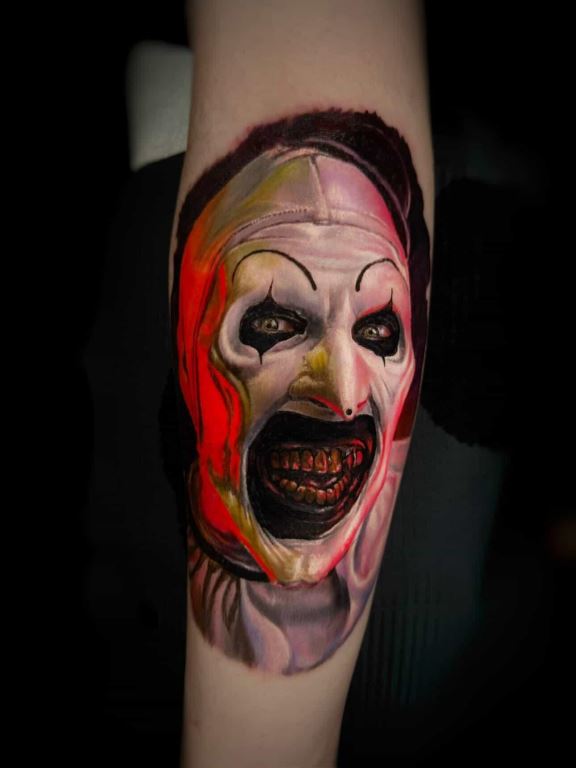
Q: Your work is world-renowned for its use
of color in the horror genre. Was color always your primary goal, or
did you start in black-and-grey and find that color allowed for a
deeper, more visceral expression of the macabre?
A: I started off as a primary black and grey artist, wanting to
follow closely in Bob Tyrell and Paul Booth as their work really
speaks for itself, but over time my curiosity got peaked especially
when I first discovered the work of Paul Acker. The technical detail
amazed me, bringing an image to life on the skin with subtle uses of
color made me push forward and gave me a new challenge.
Q: Your work doesn't just depict horror; it depicts realism
within horror. How do you approach the 'bio-organic' textures, like
decaying skin or wet ocular reflections to ensure they look
medically accurate yet artistically haunting?
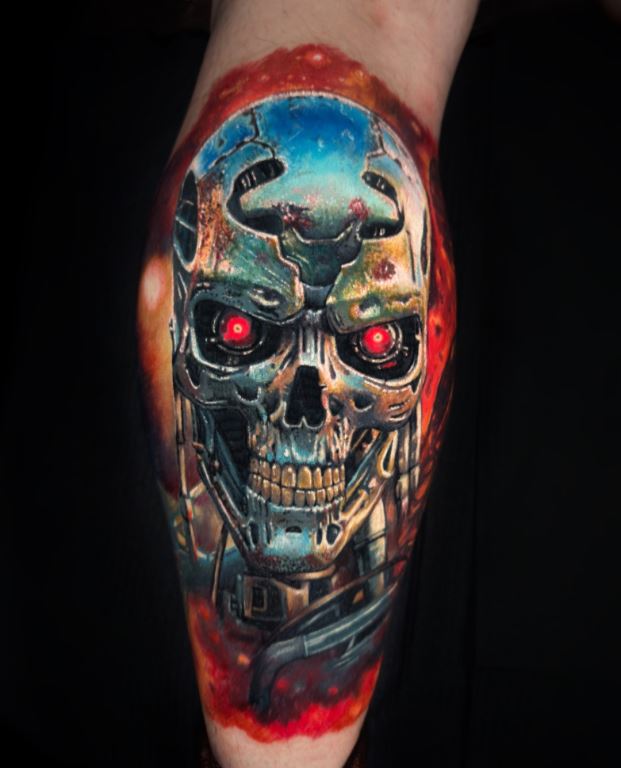
A: I follow closely my references, but there’s multiple styles of
tattooing that actually gets used to create the specific textures.
Dotwork/stippling are a good example as nothing is flat in reality -
it needs different approaches to really get the details in.
Q: Horror realism is often about catharsis. How do you
collaborate with clients to turn their internal fears or dark
inspirations into a permanent, 'distinguished' piece of art?
A: Honestly, having a pretty laid back client base is key. I have
multiple clients who let me have free reign as they trust in my
ability to make their ideas truly come to life, horror and pop
culture are when my best ideas come to fruition so realistically the
scarier the better.
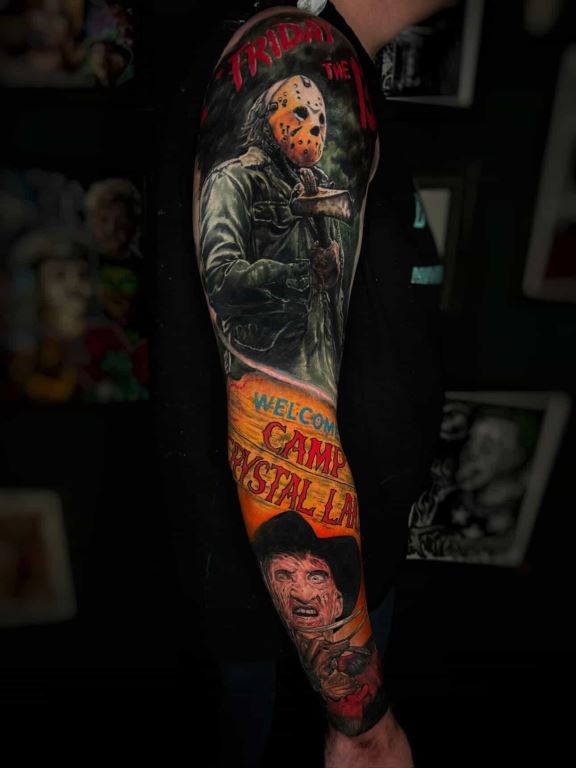
Q: Is there a particular horror movie
character or cinematic monster that sparked your obsession with the
macabre, and how has that character influenced your approach to
tattoo design?
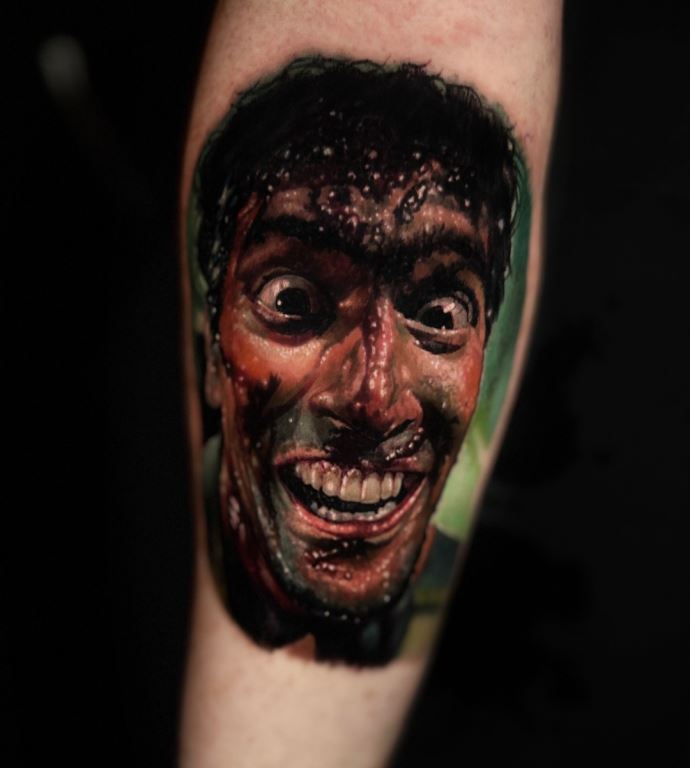
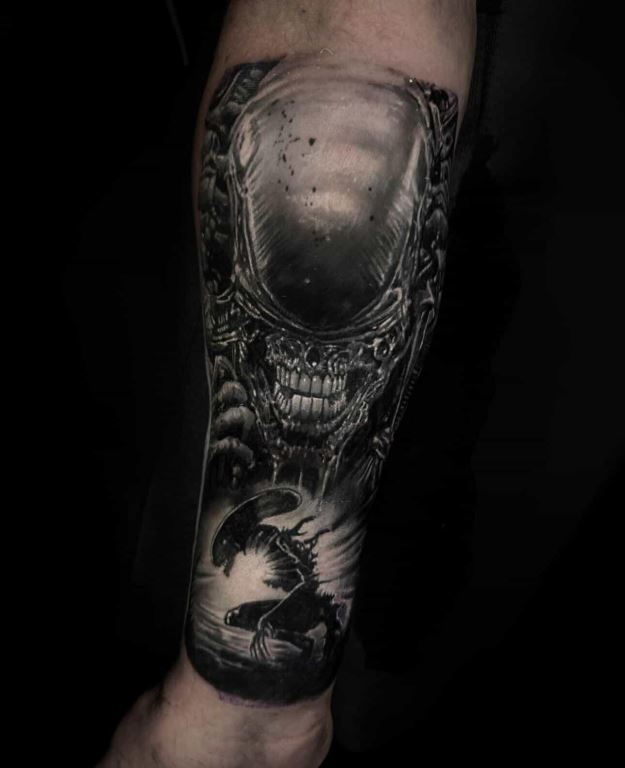
A: I have a soft spot for niche B list horrors, so when it comes to
thinking particular designs on my days off they typically come more
to mind but honestly? Any variation of horror is welcome.
Q: In an era of 'micro-tattoos' and 'fine-line,' you stay
committed to large-scale, high-contrast realism. Why is this
high-impact style the most effective 'voice' for your artistic
expression?
A: As artists we all have a medium we prefer, a style we veer more
towards. Simplistic tattoos are fun and a break from the norm - but
I don’t get the same type of satisfaction compared to finishing a
larger scale realistic project.
Q: Your portfolio shows a master-level understanding of
chiaroscuro, the dramatic contrast between light and dark. How do
you use light sources in your designs to make a flat limb look like
a three-dimensional, terrifying sculpture?
A: It’s all about contrast and really studying the light sources
available, the more dramatic the contrast the more striking the
imagery. You need to make sure you’re using suitable imagery
otherwise you’ll fall at the first hurdle.
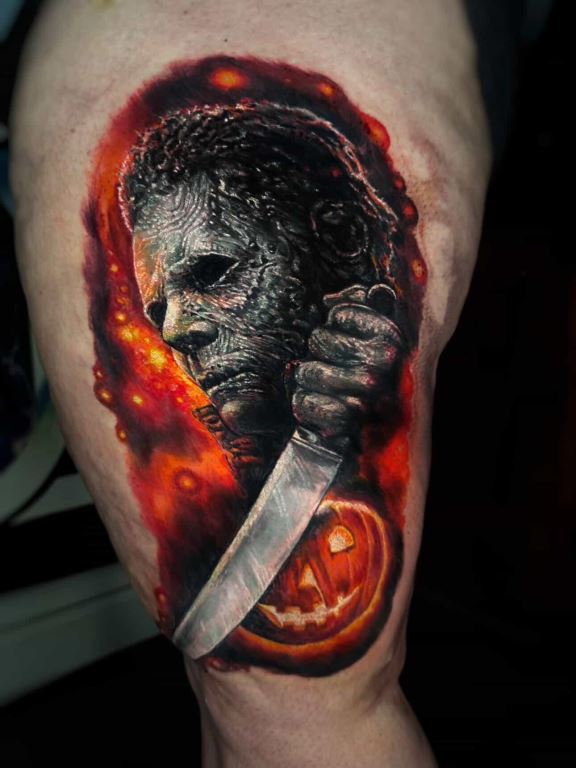
Q: In pieces like your ocular and dental
realism, the 'wetness' and reflections look incredibly lifelike.
What is your secret to layering whites and highlights so they don't
lose their impact over time?
A: Pack them in well! A good trick is to add a drop of blue in your
white, or a drop of black - a lot of the time when tattoos age,
white tends to change to more of a yellow tone and really lose that
vibrancy. Adding a little blue, or a little black helps to avoid
that over time discolouration.
Q: When someone sees one of your pieces across a room, what
is the specific stylistic 'fingerprint' you want them to recognize
instantly as a Paul Taylor Lavey original?
A: Accuracy! Realism doesn’t have too much wiggle room in terms of
stylistic preference (such an neo trad or black work), so I’d like
people to look at my work and note it for its accuracy and vibrancy
- which of course is the most important part of being a realism
artist.
Q: Horror realism requires a mix of real-world reference and
dark imagination. How much of your final composition is planned, and
how much is 'freehand' or intuitive based on how the skin reacts to
the ink?
A: 98% of the time, my work is planned out but on occasion I do have
to freehand onto clients skin, the other occasion is when my stencil
isn’t playing ball and decides to rub off midway through a tattoo.
Everybody’s skin reacts differently to the process so you have to
learn to quickly adapt and overcome.
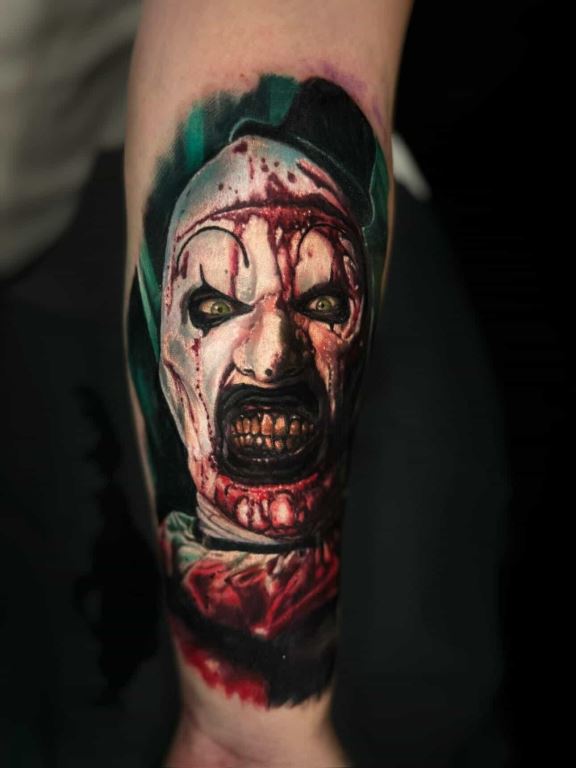
Q: Many of your best works are large-scale
projects. How does your style adapt when moving from a single
portrait to a full sleeve or back-piece where the narrative needs to
be more complex?
A: I mostly adapt by studying the area in question, with large scale
projects you have to make sure each piece fits in the right area,
like a jigsaw puzzle. It’s all about following the flow and the
direction of the body to make it truly compliment the area.
Q: Winning multiple awards at international conventions is a
testament to peer recognition. Which specific award felt like the
'tipping point' for your career, and what did the judges see in that
piece that set it apart from the rest?
A: The first award that was a tipping point in my career was my very
first award; which was on a very good man who has since sadly passed
away. It was a portrait of his father in the clouds, made from a
steam train. I think they just saw that it was different from other
things at the time, and involved more thinking outside of the box
than a standalone portrait, I went on to win 4 more awards that same
year.
Q: You’ve shared your knowledge through
pro-team memberships. What is the one 'golden rule' of horror
realism you find yourself teaching most often to other professional
artists?
A: I don’t think it varies too much but as a general rule to
tattooing is just to slow down. Especially with realistic work, slow
down and take your time incorporating as much detailing and texture
as possible. If it takes longer than you thought, then so be it.
Your client will return if they love the work, if you rush it, why
should they come back? I think doing multiple sessions for layering
gets the best results. If you need to do it in one hit then
saturation rather than detail is more important , especially for
longevity. I’m currently working on a digital seminar.
Q: As a sponsored artist and a prominent figure in the
European scene, how do you feel the global tattoo culture has
shifted in its perception of 'Dark Art' as a legitimate high-art
form?
A: I’m glad it’s more widely recognised, I wouldn’t necessarily say
it wasn’t before but with a higher standard quality of equipment it
makes high level detail much more achievable so it opened it up to a
wider audience. Thankfully horror is a much loved genre!
Q: The United States has a rich history of horror in cinema
and literature. Why is now the perfect time for your specific brand
of horror realism to enter the American tattoo landscape?
A: Is there ever a bad time to push yourself artistically? Being
able to access a wider audience with fresh ideas, whilst being able
to visit places that inspire the very work you create - incredible.
The world is full of inspiration and the US is a beautiful place to
really push my own personal boundaries.
Q: American collectors are known for being
incredibly dedicated. How do you plan to push the boundaries of your
style to meet the expectations of the high-end US 'collector'
market?
A: I want to keep making leaps in my career, try different things,
incorporate different ideas, I want to really step out of my comfort
zone to give the American collectors a piece they’ll love in the
years to come and come back for more.
Q: Relocating to the US is a massive career move. Beyond
just opening a shop, how do you intend to leave your mark on the
legacy of American tattooing?
A: Having been newly recruited into the Quantum Ink team, there are
ideas in the works to release my own variety of inks, there’s
nothing that would make me feel more honoured than to share a
collection of my favourite go to colours across the entirety of the
US.
Q: In an industry that used to be very secretive, we are now
seeing a global shift toward transparency and sharing techniques. As
someone at the top of the realism niche, how do you feel this
openness is changing the quality of tattooing worldwide, and do you
believe it’s important for elite artists to set a standard for the
next generation to follow?
A: I think the openness has its own pros and cons. We’re seeing a
real shift with the general quality of tattooing, but unfortunately
that openness is making it much easier for those that see our job as
just money signs to worm their way into the industry - despite not
caring for the art, or the history of tattooing.
Q: With the 2026 rise of AI-assisted
design and precision skin-scanning technology, how do you maintain
the 'soul' and hand-crafted mastery that defines a Paul Taylor Lavey
original?
A: I mostly maintain it by sticking to how I’ve always done things.
It wasn’t until recently that I started using procreate for my
stencils, I held onto hand stencils for as long as possible until I
stopped being stubborn and realised I could make life a little
easier. Technology is constantly evolving but being stubborn and
stuck in my ways is what keeps my work being mine.
Q: Industry insiders are currently identifying a new wave of
'architects' in tattooing - The Global Rising 20. How does it feel
to be operating at a level where you are no longer just following
trends, but actively dismantling the old hierarchies of the craft?
A: I’ve never really focused on hierarchies or trends, I’ve just
tried to push my own standards and make each piece better than the
last. If people see that as a new wave of tattooing, it’s a huge
honour. For me, it’s about respecting the foundations of the craft
whilst pushing the boundaries of what’s possible on skin. If that
encourages other artists to experiment and take risks then that’s
the best outcome.
Q: We’ve seen a massive shift in how the
public views tattoos moving from 'counter-culture' to 'fine art' in
galleries. Do you feel your work helps bridge that gap by presenting
horror as a high-concept aesthetic rather than just a subculture
symbol?
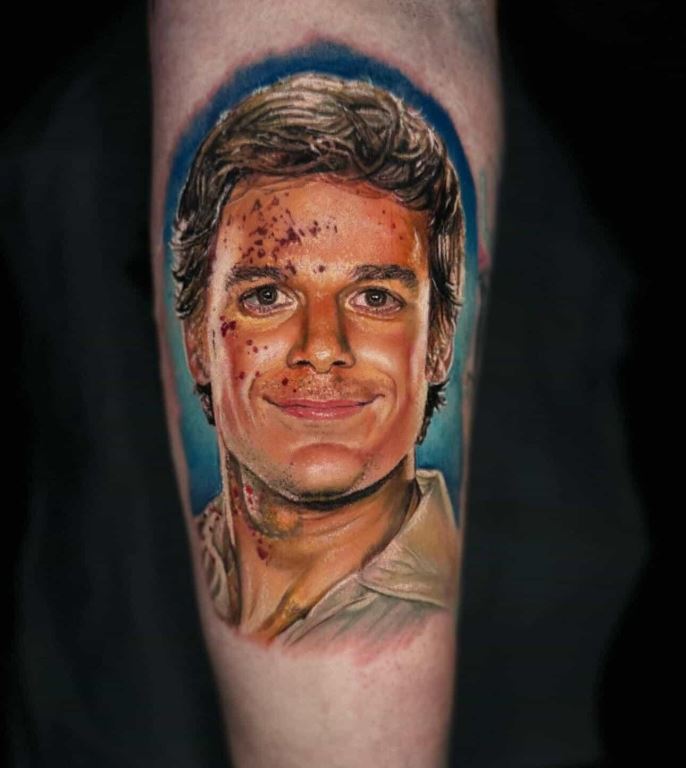
A: Absolutely. Realism as a whole is an impressive feat - much like
a portrait hanging in a gallery it takes a very keen eye, a very
steady hand and the right judgements when it comes to the colours
and mediums chosen. Now if you tried painting a portrait on a
canvas, while said canvas was reaching over to grab the phone they’d
just dropped. It’s challenging but it’s worthwhile. It's all art.
Q: After a decade of full-time mastery, what is the 'white
whale' for you? What is the one piece or project you haven't done
yet that keeps you pushing the limits of realism?
A: It kind of circles around to my earlier response, cheesy old
horror movies! I’d love to do more of them, I welcome any and all
horror but I’d love to do things I’ve not yet had the pleasure to do
- Killer Klownz in particular have evaded me for years.
Q: What keeps you motivated? Is there any
specific goal or a person in your life that just inspire you to keep
evolving?
A: Wanting to better mine and my family life is always my biggest
motivation, I want to make not just them but myself proud. I’m
licensed by Lucasfilm Ltd which will always be a career highlight
and I’m always going to be chasing similar highs. I want to do
better and be the best version of myself while exploring as much as
possible.
Q: What's your advice for those who want to try getting into
professional tattooing today?
A: Work on your portfolio and don’t start tattooing at home, you’ll
make it more difficult for yourself. If you truly want a meaningful
career, make it meaningful from the beginning and show your chosen
mentor that you’re the right choice. There’s an influx of newer
artists, push yourself to stand out from the rest.
Interview: Fredrik Lindström
Date: 10 March 2026


