
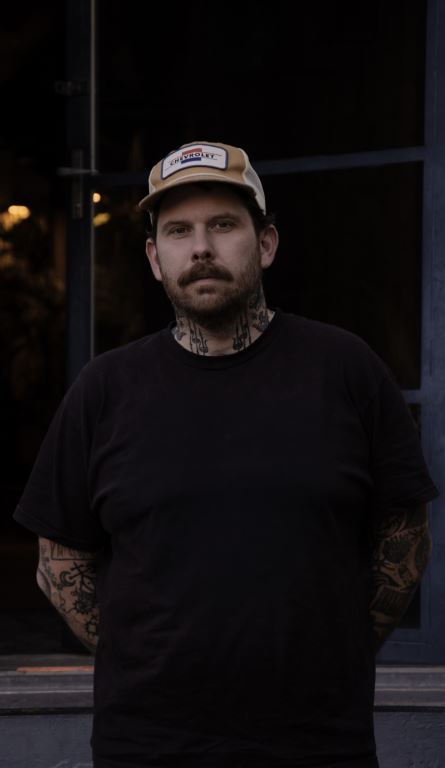
Interview with Philip Spence
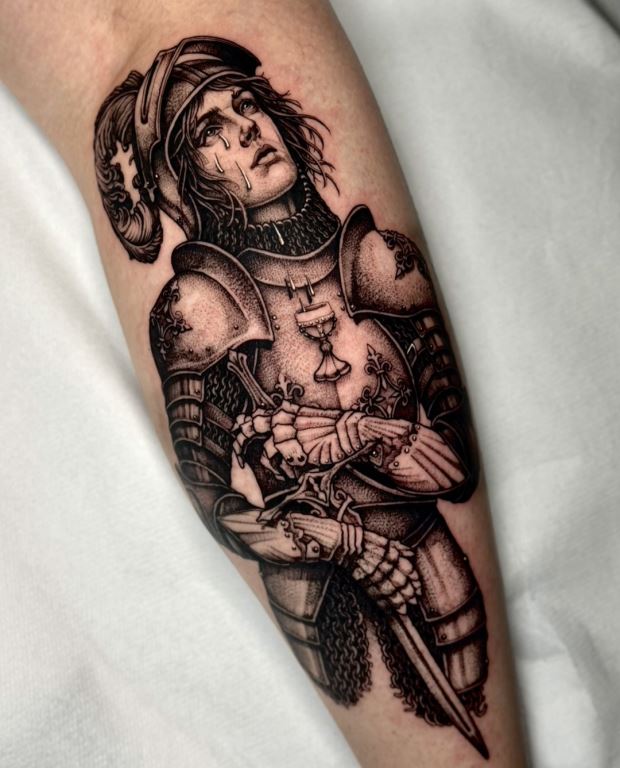
In the world of contemporary blackwork, few
artists manage to balance the raw, haunting energy of medieval
woodcuts with the clinical precision of modern illustration. Philip
Spence is one of those rare exceptions. Having carved out a
formidable reputation across the European circuit from the
underground pulse of Berlin to the historic streets of London,
Spence has become a synonymous name for high-contrast, "etched"
aesthetics that demand attention.
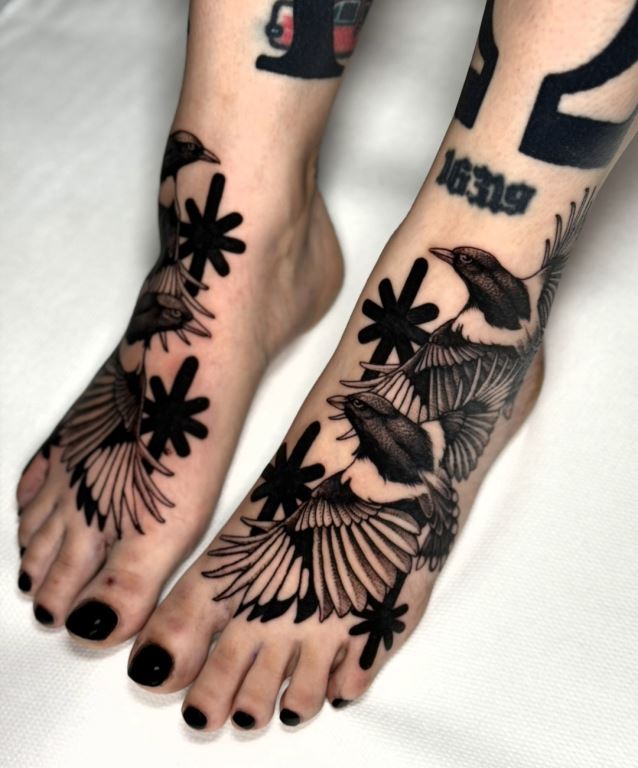
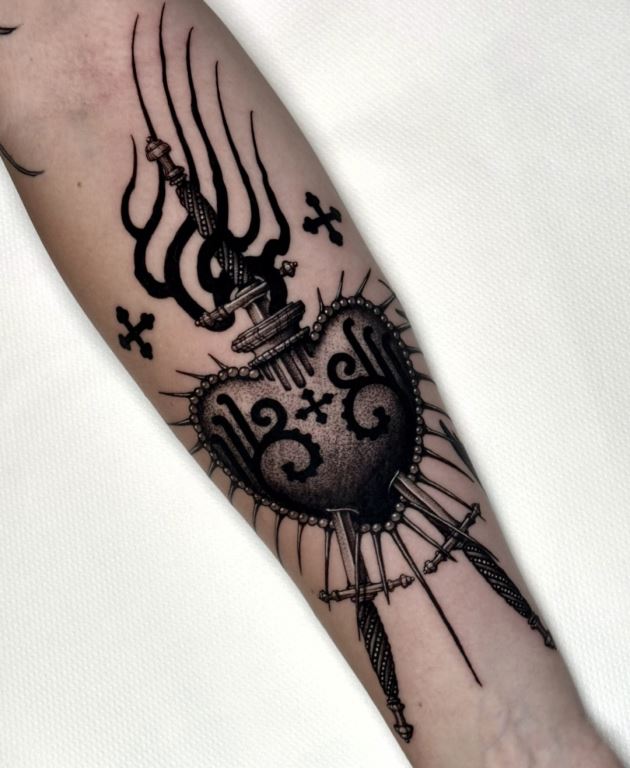
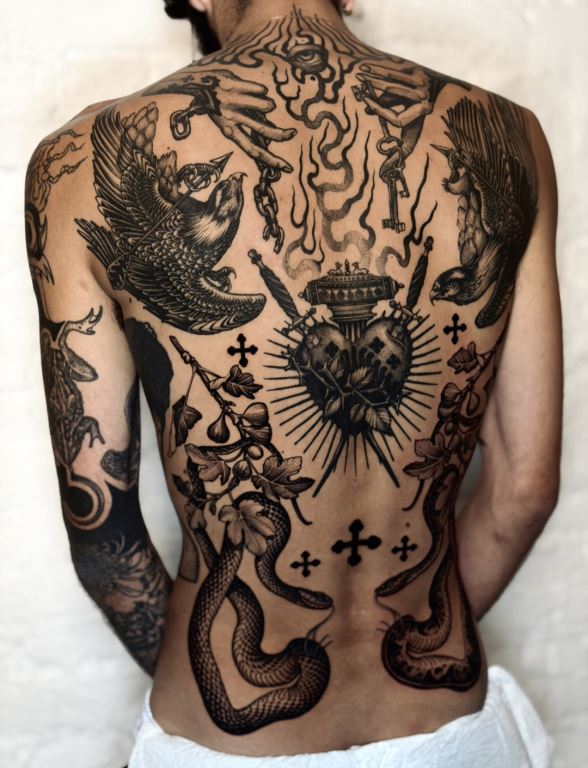
His portfolio is a masterclass in the use of negative space,
utilizing the skin as much as the ink to create depth that feels
both ancient and cutting-edge. We’re diving deep into the philosophy
behind the ink: exploring the evolution of his style, the
psychological pressure of staying unique in a digital age, and what
it truly takes to be recognized as an artist of "extraordinary
ability" in a global industry.
Q: Every artist has a "spark" moment. Looking back at your
time in the UK and Germany, can you pinpoint the exact experience or
aesthetic that convinced you that tattooing specifically this dark,
illustrative style was your calling?
A: I am sure this was a process over years and especially working
together with clients. Obviously it’s not always just up to me how
the tattoo will look in the end. But the most significant point was
the pandemic. We weren’t allowed to work for quite a while and being
forced to stay at home me the time to focus on stuff that only I
want to do. So even when that time was really tough, it had a good
outcome for me and my work.
Q: Your work carries a heavy, almost medieval weight
combined with modern precision. In your early days, how did you
balance learning the technical "rules" of tattooing while
simultaneously trying to break them to find your own voice?
A: Nothing was ver planned. It was more a natural process. It took
me ages to figure out hoe to design a tattoo in a good way. Trying
to translate an illustrative drawing in to a tattoo and learning
from traditional tattooing. Keeping it as simple as possible, but
still adding detail and depth.
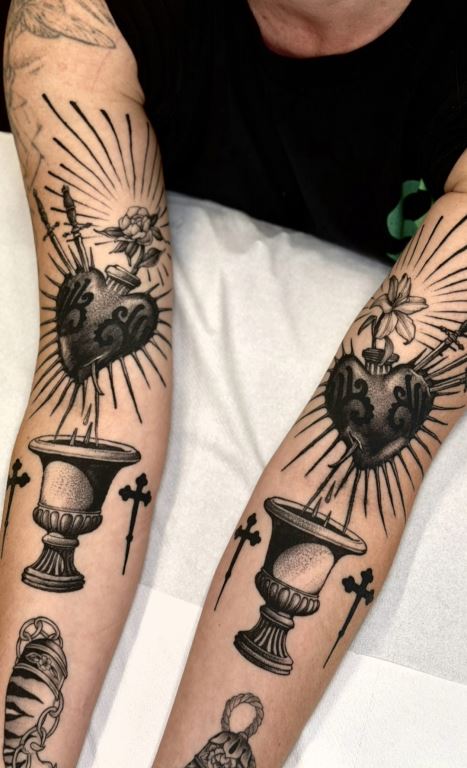
Q: How has your background and upbringing influenced the
darker, more somber themes that seem to permeate your portfolio?
A: I grew up in a small town within the punk sub culture. My first
impressions were black and grey tattoos being very bright. I wanted
something else. My grandma was a painter and she used a lot of black
in her oil paintings. That also inspired me a lot.
Q: Before the world of social media, how did you go about
finding your "tribe" or the mentors that helped shape your
professional ethics?
A: My mentor during my apprenticeship was great. She told me to find
something different, my own style. I didn’t even knew what she was
talking about back then. After my apprenticeship I went on guest
spots quite quickly. Bigger cities, bigger shops. Made a lot of
friends and learned a lot from older artists that was working with.
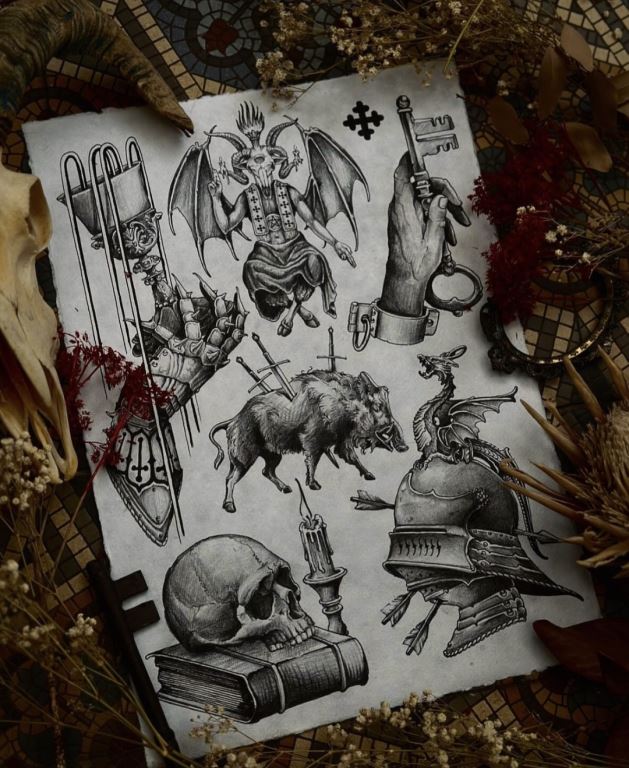
Q: Your style is instantly recognizable for its high
contrast and "etched" feel. How do you describe the evolution of
your linework over the last few years?
A: To be honest I tend to switch now and then. I’ve got phases where
I think a nice bold outline would be great around that thing. A few
weeks later I’m already back to pretty thin lines, maybe even
getting them a bit loose. I also like to get the depth through the
line work. Bolder lines on the side turned away from the light and
thinner lines on the side with the light source.
Q: In a field as saturated as blackwork and illustrative
tattooing, what is the "secret sauce" that keeps your work distinct
from the thousands of other artists working with black ink?
A: Use a good ink and don’t hesitate with packing black. I tend to
not have to many lines for themselves.
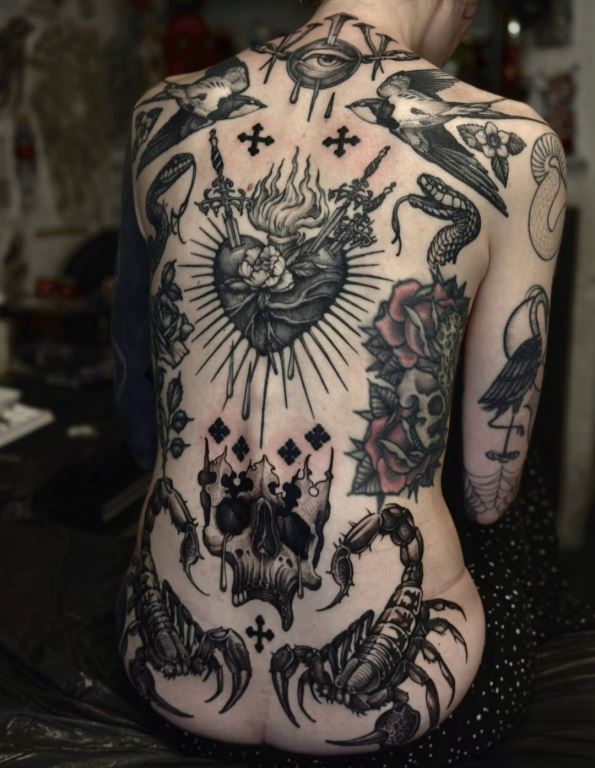
Q: How do you approach the "negative space" in your designs?
It seems to play as much of a role as the ink itself.
A: I like it when the shape of the tattoo already works good. So
while drawing or tattooing take a step back and see if you can
recognise what’s going on. I if you need to have a closer look,
build in more negative space. I guess since I don’t have the option
with having different colours separating spaces, I need to use the
negative space.
Q: Does the pressure to remain "unique" ever feel like a
burden, or is it a natural byproduct of your creative process?
A: Definitely a natural byproduct. Also staying open to trying new
things.
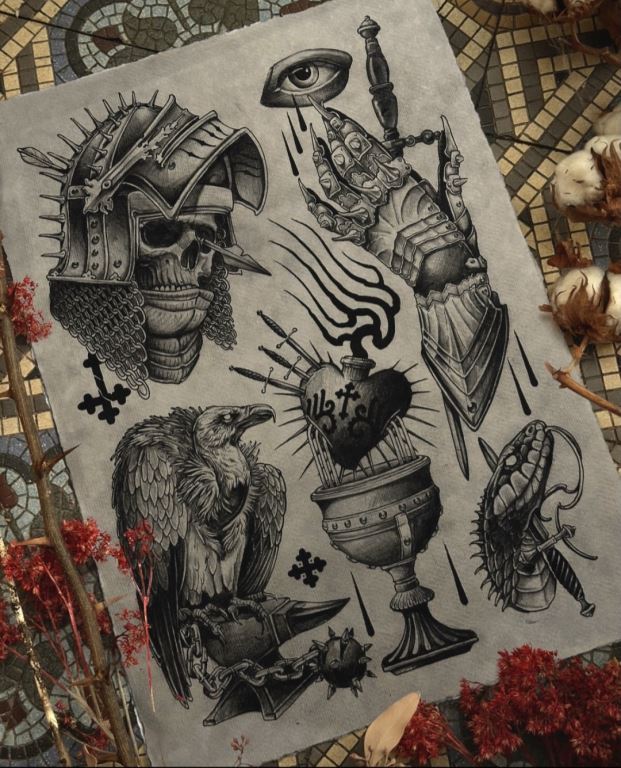
Q: How much of your design process is spent in the digital
realm (like Procreate) versus traditional sketching, and how has
that influenced your final output?
A: The best design process happens in my mind and then it either
gets the chance end up on paper or on skin. The digital version is
just a tool to get the deminson on skin. I wish I could proper draw
digitally, but I do suck at it.
Q: You’ve spent significant time in Berlin, London, and
Bremen. How does the "energy" of the tattoo scene differ between
these cities, and which one pushed you the most artistically?
A: Berlin definitely had the biggest impact on me. Did my first
guest spot there (2016) and over the time met so many interesting
and inspiring artist. Also a good city for blackwork.
Q: Traveling as a guest artist is often romanticized. What
is the reality of adapting your workflow to different studios and
cultures every few weeks?
A: There were times when I was exhausted from doing guest spots. One
week away, one week at home and so on. Now I kinda love it. Berlin
and London are home to me as much as Bremen always has been. Staying
in one place for more than a week helps too.
Q: Conventions are often seen as the "litmus test" for an
artist’s standing. What has been your most challenging convention
experience, and what did it teach you about the industry?
A: The only challenging experience was my first one, cause I didn’t
know what to expect. And it taught me that the industry in a big
gathering is less competitive and much more respectful then I would
have thought.
Q: How do you handle the "peer pressure" of the convention
circuit, where you are surrounded by some of the best talent in the
world?
A: I like pressure. It has always been rather motivating than
anything else. It’s the same when working in a big shop with a lot
of other good artists around you.
Q: With the rise of "viral" tattoos and TikTok trends, do
you feel the longevity of tattoo art is being compromised for
immediate social media gratification?
A: I think a lot of tattoos are being made to look good on a photo
to be uploaded and do its job. But on the other hand everyone is now
trying even harder, cause its not just the people in you’re
neighbourhood looking at it. No its far more then that now and they
are comparing your work with others too. And clients seem to be
traveling further these days to get their desired tattoo. So it’s
not enough anymore to be the best of your village. I know it’s tough
for a lot of tattooers, but I think social media has increased the
general quality.
Q: How has the transition from a local, "shop-based" culture
to a global, "Instagram-based" culture changed the way you interact
with your clients?
A: Thats why they’re clients and not customers. I get to know much
more and we work on something together, rather than someone just
coming in and purchasing something. And then not even remembering
what my name was.
Q: What is your take on the current "Blackwork" movement, is
it a trend that will peak, or is it the new foundation of modern
tattooing?
A: Since blackwork is such a vast category I’m sure it will always
be around in some kind of way. Still changing and developing.
Q: How do you balance the desire to be an "artist" with the
practical reality of being a service provider for a client’s vision?
A: I prefere being called a tattooer or tattooist. But I understand
when Clients want to see me as their artist. And looking at other
people in tattooing who I admire, I also call them artists :)
Q: Applying for an O-1B "Extraordinary Ability" visa is a
massive undertaking. What was the catalyst that made you decide that
the United States is the next logical step for your career?
A: I always loved being on holiday in the states and a couple of
years ago more and more clients flew in from the states to get
tattooed.
Q: The US has a very different tattoo history compared to
Europe, rooted heavily in traditional Americana. How do you see your
European-influenced style fitting into or disrupting the American
scene?
A: I think it’s more like a lice addition to what is already there.
And I#m very exited to let that American style influence me in some
kind of way.
Q: Which American cities or studios have always been on your
"bucket list," and why?
A: I have been to the Bay Area and Los Angeles and love the weather
and vibe. But I’m looking forward to visit the east cost, Chicago,
Texas. Actually the whole country.
Q: Does the idea of the "American Dream" still hold weight
for a tattoo artist in 2026, or is it more about the specific
artistic community there?
A: I think that dream is still a thing. But definitely the US tattoo
culture and atmosphere is something I’m looking forward to.
Q: If you could go back to the day you picked up a machine for the
first time, what is the one piece of advice you’d give yourself to
save a few years of struggle?
A: Listen to the older ones dude!
Q: How do you stay inspired when you hit a "creative wall"?
Are there non-tattoo related art forms you look to for a fresh
perspective?
A: Just don’t panic. Give yourself some time and rather sort to some
stressful things that are going on.
Q: Finally, for the aspiring artists reading this and dream
of international recognition and a visa of their own: what is the
most important "extraordinary" trait they should cultivate?
A: Get your inspiration from other artist (even outside of
tattooing), but try something new, different and definitely eave
your comfort zone.


