
Interview with Ruby Ink
Hello Ruby Ink, thank you so much for taking the time to speak with us today. We’re fascinated by your unique tattooing style. Could you walk us through the timeline your career, from when you started tattooing to the point where you feel your distinct creative voice truly emerged? Hello! I began tattooing in 2011, but the passion for this artform sparked much earlier when I was just 13 years old. From a young age, I was drawn to the idea of creating permanent art that carried deep emotional meaning for others. I am a self-taught tattoo artist, although I also pursued two formal art educations, which gave me a solid foundation in visual composition, anatomy, and oil painting. In the early years of my tattooing journey, I explored various styles, from traditional to illustrative work, but I was always fascinated by realism especially the ability to capture emotion, texture, and depth in skin as if it was on canvas. Over time, as I continued to refine my skills and experiment with different techniques, I began developing a signature approach: emotionally charged Black & Grey realism, often infused with mystic, erotic, and surreal elements. I would say that my true artistic voice emerged around 2016–2017. By that time, I had gained enough technical confidence and creative clarity to fully commit to the subjects and aesthetics that resonated with me the most. That’s when clients started coming to me not just for tattoos, but for my specific artistic identity which I see as a powerful moment in any artist’s career. Today, I combine my background in fine art with tattooing, always striving to create work that feels timeless, intimate, and bold. Each piece I do is more than just ink it’s a visual story shaped by emotion, symbolism, and technical precision.

Q: How long was the process of self
discovery and development?
A: The process of self-discovery and artistic development has been
ongoing, but the most defining period lasted several years roughly
from 2011 to 2017. When I started tattooing, I was focused on
learning the craft, mastering technique, and understanding how to
work with different skin types, machines, and pigments. But
alongside the technical growth, I was constantly exploring who I was
as an artist. It took time and a lot of self-reflection to
understand what I truly wanted to express through my work. I tested
different styles, learned from mentors, studied classical art, and
gradually began fusing my love for realism, mysticism, and emotional
storytelling into one cohesive style. By 2017, I felt confident in
what I had built. My tattoos were no longer just technical
achievements they began to reflect deeper concepts, personal
philosophies, and emotional narratives. That’s when my creative
identity really solidified, and I started to receive recognition for
my unique approach. But even now, the process isn’t “finished.” I
believe real artists never stop evolving. Every project teaches me
something new, and I’m always pushing myself to grow both
technically and emotionally.
Q: What draws you to the realism style?
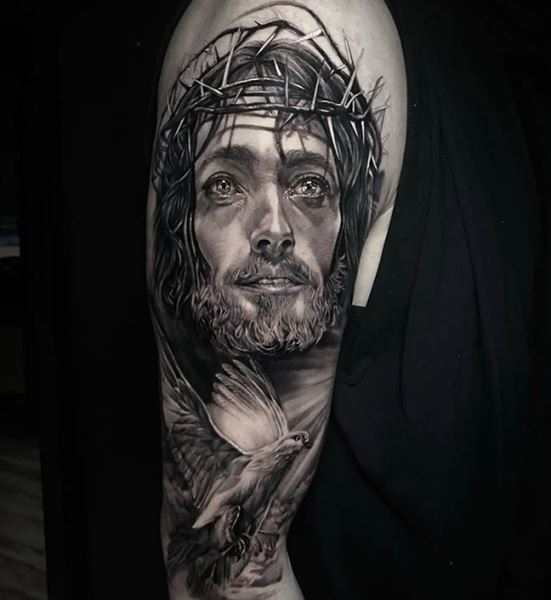
A: Realism has always spoken to me on a very deep emotional level.
There’s something incredibly powerful about turning a fleeting
expression, a subtle texture, or even a moment of pain or beauty
into something permanent on the skin. It’s a way of freezing time,
telling stories without words, and honoring the complexity of human
emotion and experience. As an artist with a background in classical
and fine art, I’ve always been fascinated by light, shadow, and
anatomical precision. Realism allows me to apply those principles
directly into my tattoo work but with an added layer of emotional
depth. It’s not just about copying a photograph it’s about capturing
the essence of a moment or a subject and translating it into skin in
a way that feels both alive and timeless. There’s also a challenge
to realism that keeps me fully engaged. It requires technical
mastery, patience, and a strong emotional connection to the subject.
For me, it’s the most honest and intimate way to express what I feel
and what my clients want to say sometimes without even realizing it
themselves.

Q: Tattoo realism style is often
acknowledged for its complexity and the immense satisfaction it can
offer. In your experience, how do the unique challenges of this
style compare to the artistic rewards you gain from it?
A: Realism is undoubtedly one of the most demanding styles in
tattooing. It challenges you to be precise, patient, and technically
flawless. Every detail matters—whether it’s the subtle gradation of
shadows, the texture of skin or fabric, or the emotional tone behind
a facial expression. There’s no room for shortcuts, and mistakes are
not easily forgiven in this style. But it’s exactly this level of
difficulty that makes it so rewarding. The moment when a piece
starts to “breathe” when you step back and see that it feels real,
that it moves people emotionally that’s a feeling I can’t compare to
anything else. It’s pure magic, and it reminds me why I do what I
do. Realism also demands a deep connection to the subject. I don’t
just replicate images, I try to interpret them emotionally and
artistically. That’s where the true reward lies: in taking something
deeply personal, whether it’s a portrait, a symbolic figure, or even
a surreal composition, and turning it into a powerful visual
narrative. The challenges sharpen my skills, but the emotional
responses I get from my clients the tears, the silence, the joy,
those are the moments that stay with me forever.
Q: You’ve established a powerful aesthetic with your black
and gray tattoos. Could you share your reasons for primarily working
in this style, and is color something you might consider
experimenting with in the future?
A: Black and gray has always felt like the most natural language for
me. It allows for such a wide range of emotional expression from
soft and intimate to dark and powerful. I’m drawn to contrast,
depth, and the way light interacts with skin. In black and gray,
every subtle detail matters. It’s poetic in a way that color
sometimes isn’t. I also find that this style gives me the most
freedom to express stories that are complex or emotional. It strips
everything down to the essentials form, shadow, feeling. That
simplicity allows the message to come through more clearly and
timelessly. That said, I have worked with color in the past and I do
enjoy it. I believe that every style and technique has its own place
and value. While black and gray is my primary medium, I’m always
open to exploring color in the future especially when it serves a
concept or story that calls for it. Art is never static, and I see
each new project as an opportunity to evolve.

Q: Your large-scale pieces, such as full
sleeves and back pieces, are incredibly impactful. Could you share
some insight into the typical timeframe for completing a project of
that size? Additionally, what is your process for collaborating with
clients on the design and what does the preparation phase usually
involve for such extensive work?
A: Large-scale projects like full sleeves or back pieces are a
journey—for both the client and myself. The timeframe can vary
depending on the complexity of the concept, the client’s
availability, and how well their skin heals between sessions.
Typically, a full sleeve can take between 25 to 40 hours, spread
across several sessions. A detailed back piece can take even longer
sometimes up to 60 or 70 hours, completed over months or even a
year. For every big project, I start with a deep consultation. I
want to understand the client’s story, their personality, and what
message or feeling they want to carry with them permanently. I often
ask questions about their emotional connection to certain symbols,
themes, or references, and we build the concept together from there.
The preparation phase involves sketching, digital mock-ups, and
sometimes even photo shoots to capture the exact pose or reference I
need. Once we agree on the final vision, I carefully plan the
composition across the entire area of the body to ensure the flow
and balance are perfect. These pieces are not just tattoos they are
visual symphonies. The process is intense, but it creates a unique
bond between artist and client. In the end, it’s always worth it.

Q: Looking back at your extensive
portfolio, could you share an experience with a particularly
challenging tattoo you’ve undertaken? What specific aspects of that
piece made it so demanding, and what did you learn from the process?
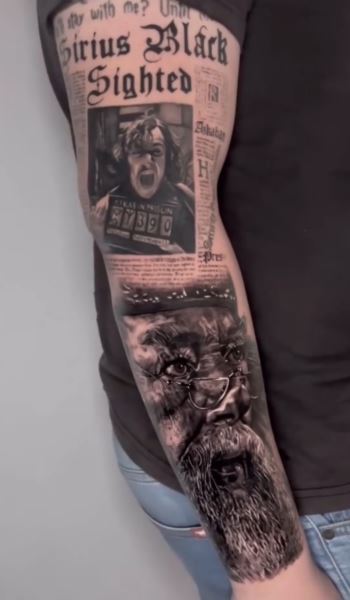
A: One of the most challenging pieces I’ve ever done was an erotic
Black & Grey composition that combined surreal anatomy with
emotional symbolism. The client had gone through a deeply personal
loss and wanted to express the pain and transformation they had
experienced without using any literal or recognizable symbols. It
was a creative and emotional challenge at the same time.
Technically, the piece required perfect control of contrast,
texture, and smooth gradients over a large area of sensitive skin.
The composition had to flow naturally with the body while
maintaining narrative coherence. Every detail from the folds in the
skin to the reflections in the eyes had to be executed with
precision, because one small mistake could change the entire
emotional tone of the work. Emotionally, it was intense. The client
cried during the final session not from pain, but from l emotional
release. That moment reminded me of how powerful tattooing can be
not just as an artform, but as a healing experience. From that
process, I learned how important it is to be both technically
prepared and emotionally open. It reinforced my belief that tattoos
are more than visuals they’re deeply personal stories, and I’m
honored to be the person who helps bring them to life.

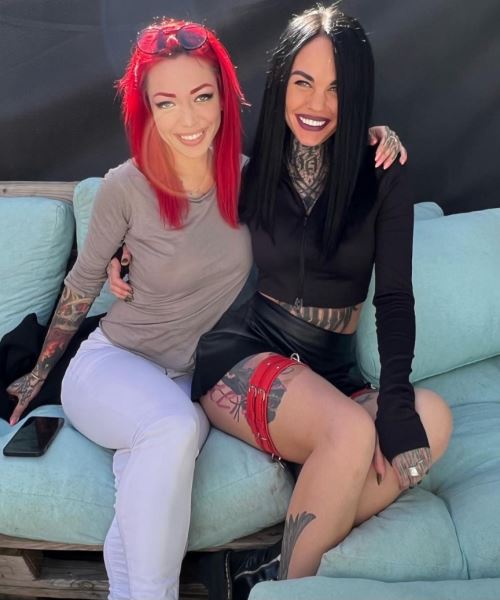
Q: The artistic synergy between you and Valentina Ryabova is
evident. Have you ever considered a collaborative piece together?
Beyond that specific connection, how much does the broader support
network of fellow artists contribute to your growth and motivation?
A: Valentina Ryabova
and I have known each other for quite some time, and I’ve always
admired her work deeply. We’ve never specifically discussed doing a
collaboration, but I would absolutely be open to it in the future.
She’s, in my opinion, one of the most talented female realism
artists in the world, and I have great respect for both her
technical skills and her artistic vision. Our relationship is
friendly and based on mutual appreciation, which is something I
truly value in this industry. Beyond that, the tattoo community has
played a major role in my growth. Whether it’s exchanging ideas,
sharing techniques, or just supporting each other during guest spots
or conventions being surrounded by like-minded artists is incredibly
motivating. It’s not a competition; it’s a collective evolution.
I’ve learned so much from watching other artists work and being open
to feedback and inspiration. Even casual conversations with fellow
creatives have led to breakthroughs in my own practice. I truly
believe that the tattoo world is stronger when we lift each other up
and I try to embody that in everything I do.
Q: Many people strive to maintain the
vibrant appearance of their new tattoos for as long as possible.
What are some of the primary factors that can negatively impact
tattoo longevity and proper healing?
A: Proper healing is absolutely essential for long-term tattoo
quality. Some of the biggest issues I see are caused by improper
aftercare things like sun exposure, sweating too early, wearing
tight clothing over the tattoo, or using heavy, perfumed lotions.
Even something as simple as not washing the area correctly can
impact how the ink settles. That’s why I always emphasize using
high-quality, tattoo-specific products. For example, I often
recommend the aftercare line from Believa Tattoo—a brand I’ve worked
with and trust. Their healing butter, made with ingredients like
coconut oil and grapeseed extract, is gentle, nourishing, and helps
reduce inflammation while protecting the skin. It’s the kind of
product that supports both healing and tattoo longevity. I also give
each client detailed, customized advice after their session. Every
skin type and tattoo placement is different, so I make sure they
know what works best for them. And of course, I’m always available
if they need anything questions, photos, concerns I prefer to be
involved in the process even after the session is over. Tattoos are
a shared responsibility between the artist and the client, and I
take that very seriously.
Q: We understand that your time as a
tattoo artist is valuable. What is your general approach to design
corrections and revisions requested by clients?
A: I believe communication and mutual respect are the foundation of
every successful tattoo. That’s why I take the design phase
seriously and invest time in listening to my clients’ ideas,
inspirations, and expectations right from the start. Of course,
revisions are sometimes part of the process especially for deeply
personal or symbolic tattoos. I welcome client feedback, and I’m
always open to adjusting the design as long as it stays within the
artistic and anatomical logic of the composition. My goal is to
create a piece that both represents the client’s vision and reflects
my own artistic integrity. Usually, I offer one round of small
revisions free of charge, especially if they’re part of the initial
consultation. If a complete redesign is requested after the drawing
phase is complete, I charge a fair fee based on the extra time
required. But honestly, it rarely comes to that, because I involve
my clients early on in the concept phase and we refine the design
together until it feels right. For me, the perfect tattoo is a
collaboration not just an execution. And I’m committed to making
sure my clients feel heard and seen throughout the entire journey.
Q: Can you share a memorable client story that highlights a
positive impact you made?
A: There are many moments that stay with me, but one in particular
I’ll never forget. A woman once came to me after surviving a serious
car accident that left her with deep physical and emotional scars.
She had been through multiple surgeries and felt disconnected from
her own body. She told me, with tears in her eyes, that she didn’t
recognize herself in the mirror anymore. She asked for a large,
flowing piece across her ribcage and abdomen an area that had been
heavily affected by the accident and surgeries. She didn’t want to
hide the scars; she wanted to reclaim them. We worked together
closely on a surreal Black & Grey concept part botanical, part
anatomical, symbolizing rebirth, vulnerability, and inner strength.
The tattoo process itself was deeply emotional. At one point during
the final session, she looked down at her body and said, “I feel
like myself again.” That moment reminded me why I love what I do.
It’s not just about ink or technique. It’s about giving someone a
part of themselves back. I’ve laughed, cried, and healed with my
clients. I hear their stories funny, painful, beautiful and I honor
those stories. Being open, patient, and fully present in those
moments doesn’t just create better tattoos it builds trust, and that
trust is sacred to me.

Q: With the rise of collaborative projects
in the tattoo world, have you considered collaborating with other
artists on a tattoo design? What are your thoughts on the potential
benefits and challenges of such a venture?
A: I love the idea of collaborative work. While I haven’t done many
direct co-tattoos yet, I’ve had the privilege of working as a guest
artist in several studios around the world including in Belgium,
Russia, Germany, Egypt, and Dubai. These experiences were incredibly
enriching, both artistically and personally. Each studio has its own
energy, workflow, and artistic philosophy, and being part of that
even for a short time taught me so much. You learn new techniques,
adapt to different client expectations, and build meaningful
connections with fellow artists. That kind of exchange pushes you to
evolve. I’m definitely open to collaborating more in the future,
especially with artists whose vision complements mine. I think the
main challenge is syncing two strong creative minds into one unified
design, but when it works, it can lead to truly unforgettable art.
Collaborations are not just about the final tattoo they’re about
sharing perspectives, growing together, and creating something that
neither artist could have done alone.

Q: How would you describe the current
state of the local tattoo scene? Do you observe any significant
growth or evolution in terms of emerging artists, new styles, and
community events?
A: The tattoo scene in Europe especially in countries like Germany
and Belgium has evolved tremendously in the past decade. I’ve seen a
huge rise in young, ambitious artists who are not only technically
skilled but also creatively bold. Many of them are pushing
boundaries with experimental styles, mixed media influences, and a
strong focus on storytelling. What’s interesting is that tattooing
is no longer seen as underground or taboo. It’s becoming more
respected as a serious art form, with galleries, conventions, and
even universities beginning to acknowledge tattoo artists as true
visual creators. At the same time, I’ve noticed a shift in client
expectations. People are becoming more educated about tattoos they
ask better questions, they’re more invested in quality, and they
understand the value of custom work. Of course, the community still
has challenges especially in terms of supporting each other instead
of competing. But I try to lead by example, mentoring younger
artists and participating in events that foster collaboration and
mutual respect. Overall, I feel optimistic. The scene is growing in
the right direction, and I’m proud to be part of that evolution.

Q: How frequently do you participate in tattoo conventions,
and how do you leverage these events to enhance your professional
visibility, connect with clients and fellow artists, and potentially
expand your career opportunities?
A: I actively participate in tattoo conventions throughout Europe,
as they offer a great platform for artistic exchange, networking,
and personal growth. These events allow me to stay connected with
other professionals, meet collectors, and continue evolving as a
tattoo artist. This year, I was proud to take part in the Gods of
Ink Tattoo Convention 2025 in Frankfurt, one of the most prestigious
and highly curated events in the global tattoo community. I worked
on a large-scale Black & Grey piece during the convention, and being
surrounded by such a high-caliber lineup of artists was both
humbling and inspiring. I’ve also participated in the Brussels
Tattoo Convention three times an event recognized as one of the
leading conventions not just in Belgium, but across Europe. Each
time, it has offered a dynamic mix of serious collectors, talented
artists, and a creative atmosphere that challenges and motivates me
to push my own limits. Although I don’t always join contests, I’ve
been honored in the past with an award in the “Best Black & Grey”
category, which affirmed the emotional and technical impact of my
work. Tattoo conventions are not just events for me they are
milestones. They help me grow, expand my reach, and keep my creative
fire alive.

Q: Given the vibrant and diverse nature of
the American tattoo scene, are you interested in exploring more
professional opportunities within the United States?
A: Absolutely. The American tattoo scene has always fascinated me
not just because of its diversity, but because of the way art is
truly respected there. In the U.S., I’ve noticed that people seek
out artists for their unique vision. They’re more open to creative
freedom and personal storytelling. That level of appreciation is
incredibly motivating for me as an artist. In Europe, especially in
parts of Germany or Belgium, clients often come with a fixed idea of
what they want frequently based on trends or popular motifs. While I
respect that, it can sometimes limit the artistic process. In the
U.S. I’ve found more clients who say, “I love your work do your
thing.” That kind of trust leads to stronger, more meaningful
results. So yes, I would love to take on more projects in the U.S.,
participate in conventions, do guest spots, and build lasting
artistic connections. For me, it’s not just about expanding my
business it’s about growing as a creative and being part of a
culture that values individual artistic voices.
Q: If you were to pursue a long-term career as a tattoo
artist in the United States, is there a specific region or city that
particularly interests you?
A: If I had the opportunity to choose a base for my artistic work in
the United States, I believe Florida would be a strong candidate. It
offers a great balance between lifestyle, creative freedom, and a
diverse clientele that appreciates original tattoo work especially
in cities like Miami, Tampa, or Orlando. That said, I’m very
open-minded. Cities like Boston, with its unique cultural blend and
art scene, really interest me as well. Even New York, although
intense, has its own incredible energy and artistic depth that I
would love to experience at some point. For me, it’s not about one
dream city it’s about finding the right environment where I can grow
artistically, connect with meaningful clients, and contribute to the
tattoo culture in a positive way.
Q: Tell me about the collaboration with
Believa Tattoo? How and when did it happen?
A: My collaboration with Believa Tattoo started very naturally
through mutual respect and a shared commitment to high-quality
tattooing and aftercare. I first discovered their products a few
years ago and was immediately impressed by the ingredients, the
skin-friendly formulations, and the way they supported the healing
process of my tattoos. As someone who works primarily in Black &
Grey realism, I need the skin to stay calm, moisturized, and
balanced during and after each session. Believa’s tattoo butter and
care products became a staple in my workflow, and over time, that
practical trust evolved into a deeper partnership. Eventually, we
started working together officially. I became one of their supported
artists, and they’ve been incredibly professional, respectful, and
supportive of my work. What I love most is that they don’t just push
products they really care about the artistry behind each tattoo and
about the long-term results for both artists and clients. It’s rare
to find a brand that aligns so well with your values. For me,
Believa is not just a sponsor it’s a collaboration built on
integrity, shared passion, and the drive to elevate tattoo culture
through quality and care.

Q: I bet it is a very nice experience to be part of the
German Tattoo Association. Please let me know more.
A: Being a member of the Bundesverband Tattoo e.V. (BVT) has been an
important and meaningful part of my professional life as a tattoo
artist. The BVT is the official tattoo association in Germany and
represents a growing network of professional artists who are
committed to ethical standards, quality work, and the recognition of
tattooing as a serious art form. As a member, I’m part of a national
dialogue about improving health regulations, client education, and
artist support. The association actively works with politicians,
medical professionals, and cultural institutions to improve the
public perception of tattooing and ensure a safe, respectful, and
professional environment for both clients and artists. For me, being
part of the BVT is not just about the title it’s about
responsibility. It means standing for quality, supporting younger
artists, and showing that tattooing deserves the same respect as any
other art discipline. The community is constantly growing, and I’m
proud to contribute to shaping the future of tattoo culture in
Germany.

Q: Now tell me about the creative work for
“My Story Karlsruhe”. I’m sure you will inspire a lot of young
artists.
A: “My Story Karlsruhe” is much more than just a tattoo studio it’s
a creative hub, a cultural space, and a home for world-class
artistry. I’m proud to be a co-owner of this location, which serves
as the flagship studio for the My Story brand, an international
tattoo studio network with locations in Germany, Belgium, Egypt,
Dubai, and even Los Angeles. Karlsruhe was the first of its kind and
the studio we built everything around. From the beginning, I played
an active role in curating the artistic direction of the studio.
Because of my experience and global network, I was able to bring in
some of the most respected and talented tattoo artists from around
the world. Many of them are not just colleagues, but friends people
I’ve worked with at conventions, through guest spots, or admired for
years. My goal at My Story Karlsruhe is to create an environment
where creativity thrives. I want young artists to be inspired by
excellence and see what’s possible when you combine discipline,
passion, and a strong community. We focus on quality, individuality,
and emotional storytelling both in our work and in the atmosphere
we’ve built. It’s a place where every artist has a voice, and every
client feels part of something meaningful.

Q: What activities or interests help you maintain a balanced
lifestyle and foster personal growth outside of your Professional
endeavors?
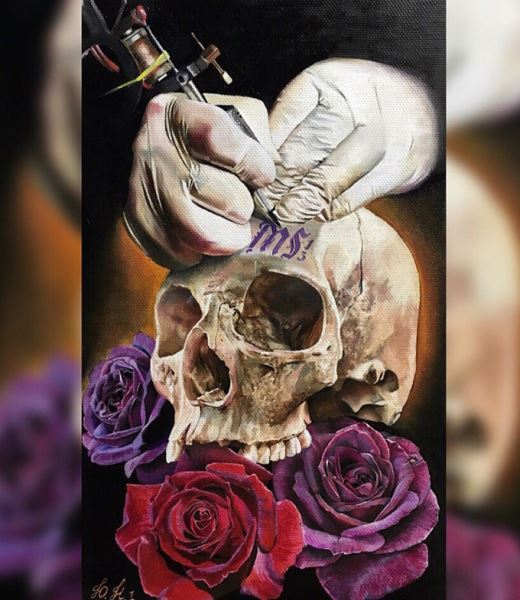
A: Outside of tattooing, painting is my personal sanctuary
especially working with oil on canvas. It gives me space to explore
ideas that go beyond skin. Sometimes I paint themes that I’m not yet
ready to tattoo, or I revisit emotions from past projects. It’s
deeply personal and keeps me grounded as an artist. I also enjoy
going to the gym. Physical strength and posture are essential for a
tattoo artist, and working out helps me stay focused, energized, and
balanced. Plus I’ll be honest if I skip the gym for a few weeks, my
back starts reminding me who’s boss. Tattooing for hours requires
serious physical stamina, so staying fit is not just a hobby it’s a
necessity! And then there’s something more personal a quiet passion
I’ve developed for Tarot. Over the years, it has become a kind of
meditative practice for me. It’s not about fortune-telling, but
about reflection, symbolism, and inner dialogue. The imagery, the
archetypes, the emotional depth they all resonate deeply with the
way I approach both art and life. It helps me stay connected to
intuition and meaning, which I try to carry into everything I
create. Together, these practices form a balance between mind, body,
and spirit and they remind me that true creativity needs space,
silence, and a little bit of magic.

Q: Favorite career highlights?
A: There have been many meaningful moments in my career, but a few
stand out as particularly important. Being part of the Brussels
Tattoo Convention multiple times has definitely shaped my journey.
It’s one of the most respected conventions in Europe, and being
invited back again and again has been both an honor and a sign of
growth. Winning an award for “Best Black & Grey” there was a proud
moment that reflected my dedication to the craft. Another key
chapter has been my work with My Story Karlsruhe. While I didn’t
co-found the studio, I joined early on and quickly became deeply
involved in shaping its artistic direction. Since then, the studio
has grown rapidly attracting international artists and building a
reputation for high-level, emotionally driven work. Seeing that
development and knowing I contributed to its success has been very
fulfilling. And of course, some of the most rewarding moments happen
every day when a client stands up, looks at the finished piece, and
you can see they’re proud to wear it. That kind of genuine
appreciation is the real highlight for me.
Q: What kind of impact do you hope to make on the world of
tattoo art in the years to come?
A: I want to contribute to tattooing as both an art form and a
deeper form of human expression. My goal isn’t just to create
beautiful images but to tell stories that matter, and to give people
a sense of identity, healing, or empowerment through their tattoos.
In the long term, I hope to be part of the shift that brings even
more recognition to tattooing within the art world. I believe that
tattoos deserve the same respect as fine art because they are just
as intentional, emotional, and technically demanding. I also want to
support younger artists, especially women, who are still finding
their voice in the industry. Whether it’s through collaboration,
education, or simply setting a strong example, I believe we all have
a role to play in elevating the standards and spirit of the tattoo
community. If my work can inspire someone to take their art more
seriously, to feel more connected to themselves, or to see tattoos
as something meaningful and powerful that would be the kind of
impact I’d be proud of.
Q: What is the most valuable advice you can offer to someone
who is serious about becoming a Professional tattoo artist?
A: Take your time this craft is not a race. Tattooing is a lifelong
journey of learning, discipline, and humility. Master the
fundamentals first: drawing, anatomy, light and shadow. Without a
strong foundation, flashy techniques won’t carry you far. Also,
respect the skin. Tattooing is not just about design it’s about
working with a living canvas. Learn how to treat it with care and
responsibility. Another important point: develop your own voice.
It’s okay to be inspired by others, but don’t just copy. The artists
who stand out are the ones who dig deep and express something real.
That takes time, reflection, and sometimes even struggle but it’s
worth it. And finally surround yourself with people who push you to
grow. Whether it’s through a good mentor, a strong studio, or a
supportive community, having the right environment is everything.
This path isn’t easy, but if you love it, and you give it
everything, it will give back in ways you never imagined.


