
Interview with Tolga Temirlenk
The global tattoo industry thrives on a rare
caliber of visionaries who possess the power to elevate skin into a
canvas of fine art. Tolga Temirlenk is undeniably one of these
forces. An internationally acclaimed, multi-award-winning tattoo
artist, Temirlenk has built an exceptional reputation defined by
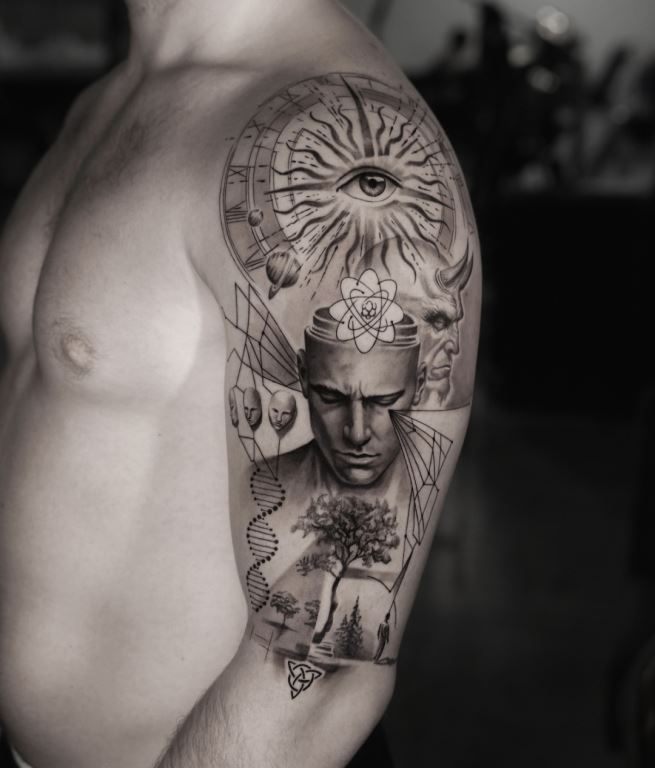
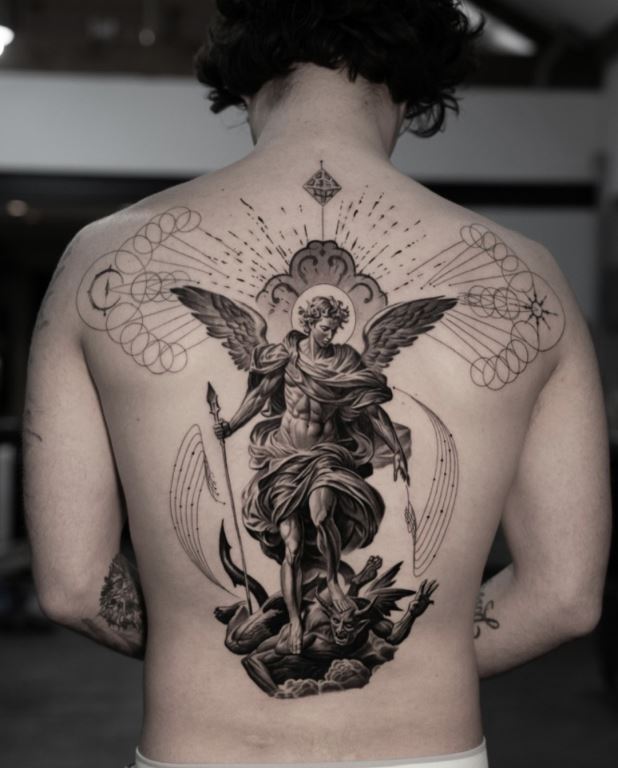
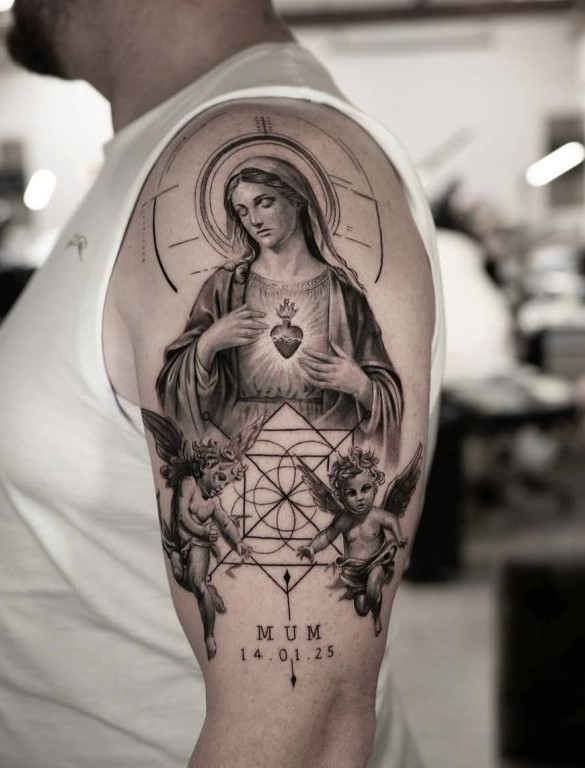
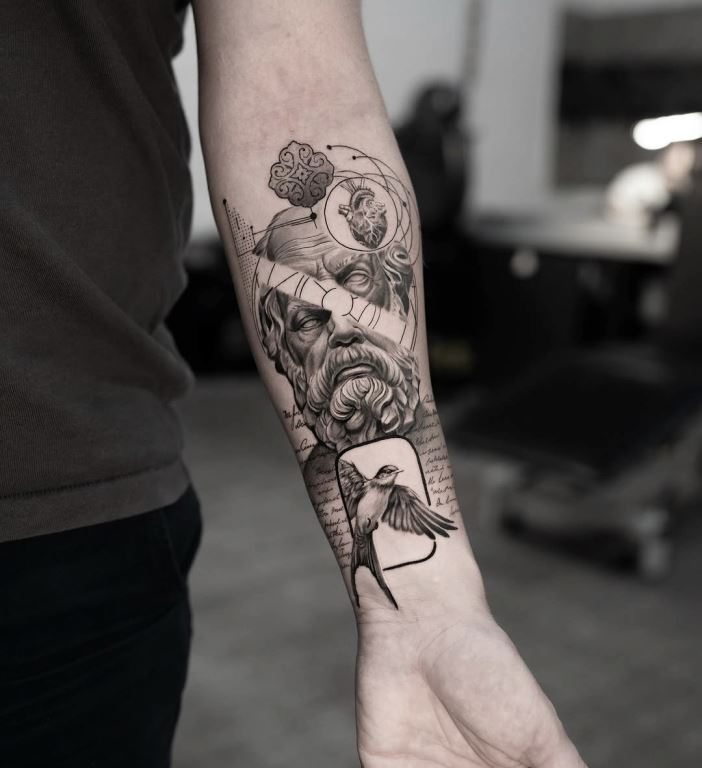
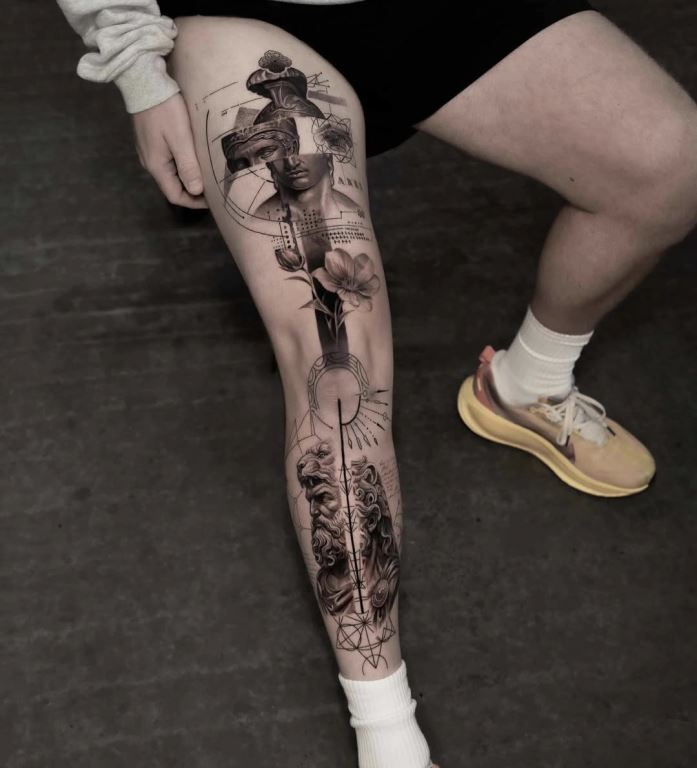
high-level mastery over black and grey realism, beautifully infused
with architectural and mythological elements. His career spans
significant international lines, establishing deep roots within
prestigious studios in Turkey and the United Kingdom, where his
technical execution and bold style continue to captivate clients and
peers alike.
Temirlenk’s status as a top-tier industry professional is cemented
by elite endorsements from global tattoo brands and major
competitive achievements. Backed by official industry sponsorships
with world-renowned names like Killer Ink Tattoo, Allegory Ink, Big
Wasp, and Tattoo Spray, his work stands at the forefront of
contemporary technical innovation. Furthermore, his accolades speak
volumes to immigration and art authorities alike; he has repeatedly
triumphed in demanding international arenas, taking home prominent
awards such as "Best of Small Black & Grey" at the Tattoo Tea Party
in Manchester and multiple top honors at the Marmaris Tattoo
Festival. Recognized not just as a competitor but as an elite
industry authority, he has even been invited to serve as an official
jury member to judge the work of his peers at premier events.
Now aiming his sights toward the United States, Temirlenk
represents the precise profile of extraordinary ability intended for
the O-1B visa, bringing a wealth of international distinction,
commercial value, and cultural enrichment to the American tattooing
landscape.
Q: Your professional footprint stretches across different
countries, most notably Turkey and the United Kingdom. Can you share
how navigating different cultures and artistic environments
initially shaped your foundational approach to the craft?
A: Working across Turkey and the United Kingdom shaped my foundation
in two distinct ways. In Turkey, I developed discipline, speed, and
strong technical control through a highly demanding working
environment. In the UK, especially during my time in London, I
learned how to communicate with a diverse, international client base
and how to translate personal stories into refined, custom tattoo
concepts. Together, these experiences helped me build a more
universal artistic language.
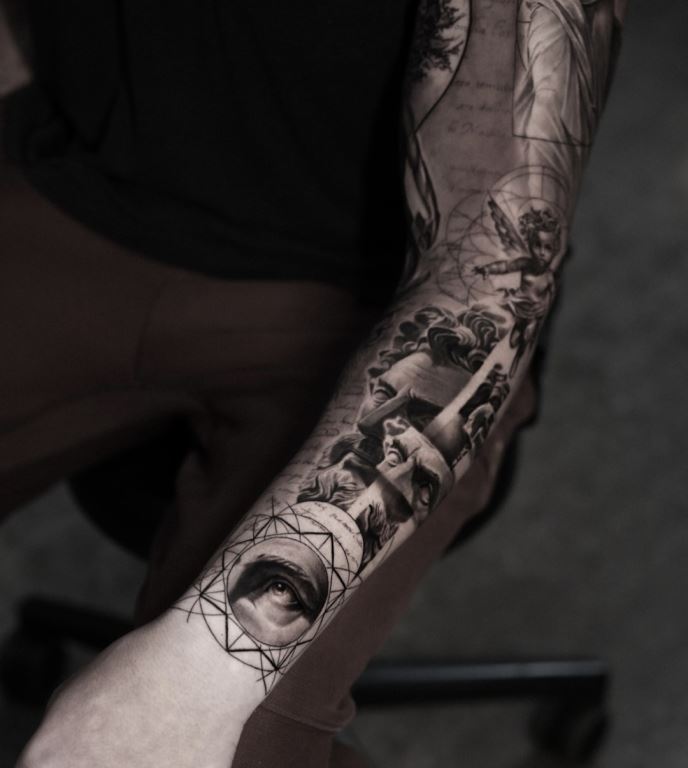
Q: Your body of work displays a distinct
signature in black and grey realism, often merging classical
mythology, statuesque symmetry, and intricate geometric or
architectural elements. How did you develop this specific aesthetic,
and what technical challenges did you have to overcome to make it
globally recognizable?
A: My aesthetic developed out of my interest in classical sculpture,
mythology, architecture, and black and grey realism. I have always
been drawn to strong forms, anatomy, high contrast, and timeless
compositions. The biggest technical challenge was learning how to
translate those fine-art references onto skin without losing
readability over time. To solve this, I focus heavily on body flow,
contrast, correct placement, and simplifying complex ideas into
clear, tattooable compositions.
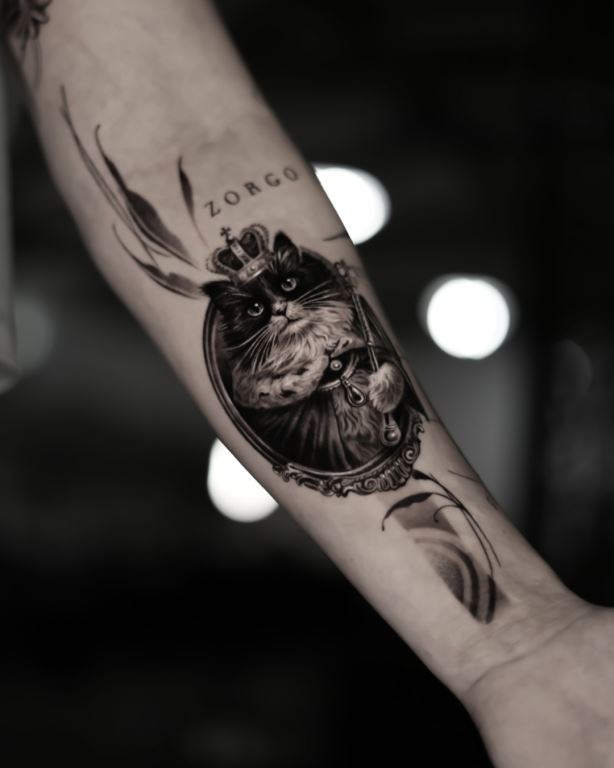
Q: Fine art realism requires an immaculate understanding of
contrast, light source, and longevity. What techniques do you deploy
to ensure that your soft gradients and micro-details preserve their
clarity on the skin over time?
A: Longevity is always one of my main priorities. I work with a
single, clear light source, controlled contrast, and enough
breathing space between details so the tattoo remains readable as it
heals and ages. I avoid overloading the skin with unnecessary
micro-details, building soft gradients carefully with smooth black
and grey transitions. My goal is not only to make the tattoo look
striking when fresh, but also to ensure it ages beautifully.
Q: Every elite artist has a turning point
where their hobby turns into a definitive, high-level career. At
what moment did you realize your work had crossed the threshold from
skilled local artist to internationally recognized professional?
A: A major turning point occurred when my work started receiving
recognition outside my home country, especially through
international conventions, awards, and my time working in London.
When clients from different countries began seeking me out
specifically for my unique style, I realized I was no longer just a
local artist; I was building a true international artistic identity.
Q: Looking back at your early career development, what were
the most pivotal educational or hands-on experiences that
accelerated your growth into a multi-award-winning tattooist?
A: The most crucial part of my development was working consistently
for many years in highly professional studio environments. My early
years gave me strong discipline and technical repetition. Later,
working in London pushed me to elevate my client communication,
design process, and ability to work at an international standard.
Competing in conventions also helped me understand exactly what
separates good work from award-level work.
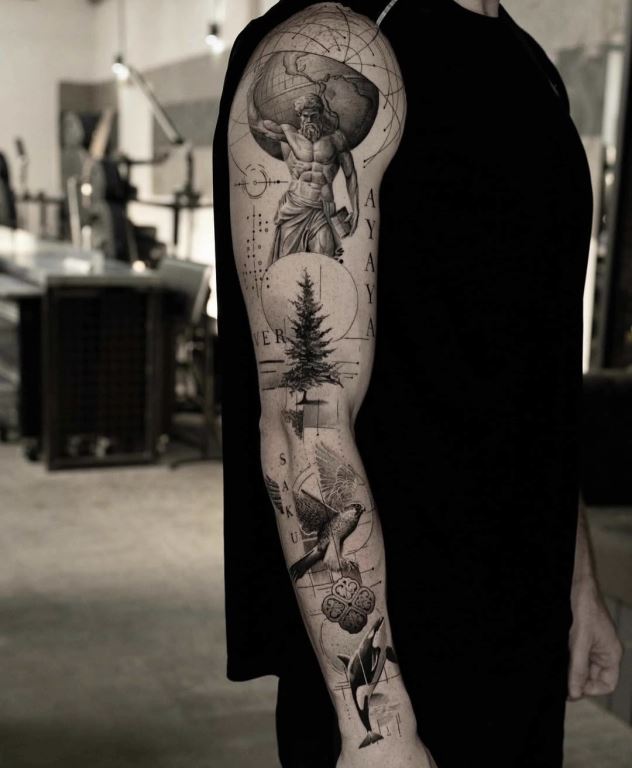
Q: Elite industry brands like Killer Ink,
Allegory Ink, Big Wasp, and Tattoo Spray only sponsor artists who
demonstrate sustained excellence and high commercial visibility. How
did these partnerships materialize, and what does it mean to you to
represent these brands on a global stage?
A: These sponsorships materialized naturally through consistency,
visibility, and the quality of my work. For me, representing
respected tattoo brands is not just about receiving support; it is a
major responsibility. It means that my work, my standards, and my
professional image are trusted by the most prominent names in the
industry. That recognition motivates me to keep improving and to
represent those brands with the utmost professionalism.
Q: How does having access to cutting-edge products from your
sponsors, such as specific shading solutions or specialized
cartridge configurations, influence your day-to-day creative
boundaries?
A: Having access to top-tier, professional products helps me
maintain absolute consistency in my work. In black and grey realism,
smooth shading, pigment stability, and needle control are incredibly
important. Working with high-quality materials allows me to push my
technique further while keeping the healed results clean and
predictable. Ultimately, it gives me the confidence to execute
highly detailed concepts at an elite level.
Q: At major conventions like the Tattoo
Tea Party in Manchester and the Marmaris Tattoo Festival, you have
consistently won competitive titles, such as "Best of Small Black &
Grey". What goes into preparing a piece capable of winning under
intense competitive scrutiny?
A: Preparing an award-winning piece starts long before the
convention doors open. I focus on choosing a strong concept,
designing it around the anatomy of the body, and making sure the
composition has an impact from a distance while still holding fine
detail up close. During the tattoo process, I stay completely
hyper-focused on contrast, smooth transitions, and clean execution.
In a competition, the work has to be both technically flawless and
visually memorable.
Q: Beyond competing, you have also been invited to sit on
the official jury for major conventions to evaluate the work of
other top-tier professionals. How does transitioning from competitor
to judge change your perspective on what constitutes an
"extraordinary" tattoo?
A: Moving from competitor to jury member shifted my perspective
deeply. As a competitor, you mainly focus on your own canvas. As a
jury member, you must evaluate many different artists objectively,
judging technique, composition, healing potential, originality, and
overall impact all at once. It made me more aware of the
responsibility behind judging and pushed me to look at tattooing
through an even higher professional standard.
Q: Convention environments are notoriously
high-pressure, fast-paced, and filled with distractions. How do you
maintain the hyper-focus necessary to execute museum-grade realism
under the watchful eyes of thousands of attendees and judges?
A: Convention environments require immense mental control. I stay
focused by meticulously preparing my design and materials before the
session, managing my time strictly, and blocking out external noise
while I work. Having spent many years tattooing in busy
environments, I have learned how to stay entirely calm under
pressure. For me, discipline and preparation are the keys to
producing high-level work in front of an audience.
Q: Having built a stellar reputation across both Turkey and
the United Kingdom, what differences have you noticed in how tattoo
art is consumed and respected across different international
markets?
A: In Turkey, the tattooing scene is growing rapidly, and clients
are becoming increasingly open to artistic, custom projects. In the
United Kingdom, I noticed a much more established culture of
collecting large-scale, high-value tattoo work. Clients there often
deeply understand the process of custom design and are fully willing
to commit to bigger projects. Experiencing both markets has helped
me understand how tattoo art is uniquely respected across different
cultures.
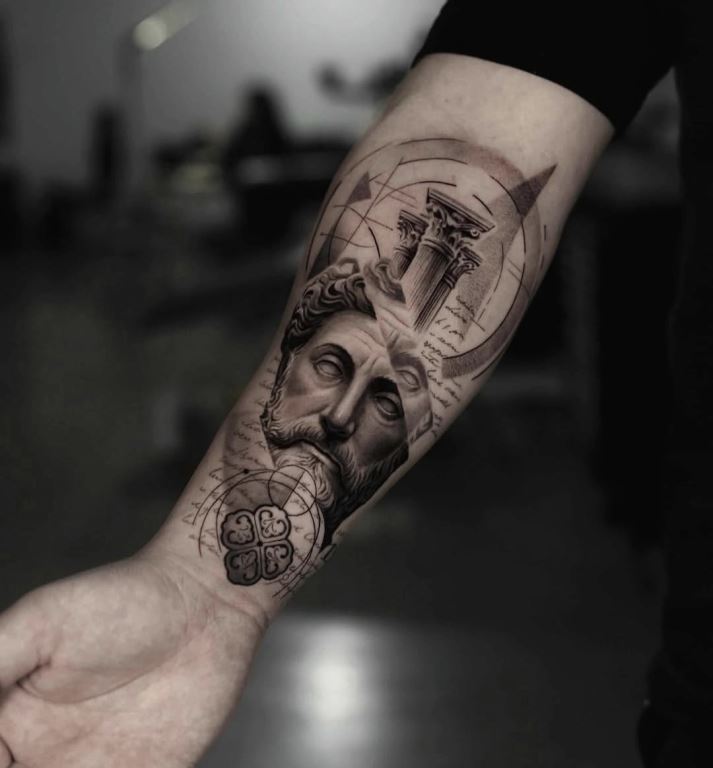
Q: The United States possesses one of the
most historically rich and highly competitive tattoo markets in the
world. Why is the US the definitive next logical step for your
career development?
A: The United States is the definitive next step because it is home
to one of the most prestigious and competitive tattoo markets in the
world. For an artist looking to continue growing internationally,
the US offers a much larger platform, stronger global visibility,
and the opportunity to work with serious collectors. I believe my
style can bring distinct value to the American black and grey
realism scene.
Q: From an artistic standpoint, what unique perspectives or
technical styles do you feel you can introduce to the American
tattoo community that will enrich their local industry?
A: I believe I can bring a refined European classical-art influence
to the American tattoo community. My work uniquely combines realism,
sculpture-inspired figures, mythology, architecture, and geometric
structure. I strive to create tattoos that feel timeless rather than
trend-based. Technically, I also bring a strong balance of speed,
high quality, and large-scale composition, which I believe will
contribute positively to the industry.
Q: An O-1B visa is reserved for
individuals who have achieved sustained national or international
acclaim. What major milestones or large-scale projects do you intend
to execute once you establish your practice in the United States?
A: Once I establish my practice in the United States, I intend to
build a prominent body of large-scale custom work, continue
competing at premier conventions, collaborate with respected
American artists, and eventually contribute to the industry's
education through seminars and live artistic demonstrations. My goal
is not just to work in the US, but to actively grow there and become
a highly recognized part of the American tattoo community.
Q: How do you plan to leverage your relationships with your
global sponsors to contribute to the education and professional
growth of aspiring tattoo artists in the US?
A: I want to utilize my relationships with sponsors to support
education, product awareness, and professional growth for the next
generation of artists. Sponsorships can be much more than just a
marketing tool; they can help bridge the gap to better materials,
advanced techniques, and higher professional standards. I look
forward to contributing through educational content, masterclass
demonstrations, and sharing my experiences with aspiring artists.
Q: The US market highly values business
acumen alongside artistic genius. How do you plan to build a
commercial brand in America that balances fine art with commercial
viability?
A: I believe a strong commercial brand must be built on an authentic
artistic identity. I do not want to alter my art simply to follow
passing trends; however, I understand that communication,
presentation, social media presence, and the overall client
experience are essential in the US market. My goal is to present
fine-art-inspired tattooing in a way that is accessible, desirable,
and highly valuable for serious collectors.
Q: You frequently engage in high-profile collaborative
projects, such as your joint sessions with other renowned artists
like Mert Sönmez. What is the key to a successful artistic
collaboration when two distinct creative minds share a single
canvas?
A: Successful collaboration starts with mutual respect. When two
artists work on a single canvas, ego has to become secondary to the
final result. Each artist must fully understand the composition,
body flow, and the shared vision of the project. I believe the best
collaborations happen when both artists bring their individual
strengths while seamlessly protecting the harmony of the entire
piece.
Q: In an industry that is becoming
increasingly crowded and digitized, what do you believe is the ideal
mindset and attitude required for an artist to achieve long-term
success and commercial longevity?
A: Long-term success requires humility, discipline, consistency, and
adaptability. The industry is highly crowded, but artists who commit
to continuous improvement, communicate effectively, and maintain
strong professional ethics will always stand out. Talent is
important, but discipline and attitude are what keep an artist
relevant over a lifelong career.
Q: Tattooing is a deeply personal service. How do you
balance your definitive artistic vision and high standards with the
personal stories, ideas, and anatomy of your clients?
A: I always listen carefully to the client’s story and ideas, but I
also guide them using my professional experience. A tattoo must
seamlessly fit the body, age well, and remain visually striking. If
a specific idea will not work well as a permanent tattoo, I explain
that honestly and suggest a better artistic direction. My goal is to
respect the client’s personal meaning while still creating an elite
piece of art.
Q: What are your foundational ethics when
it comes to client care, originality, and the cultural
responsibility of placing permanent art on an individual's body?
A: My ethics are firmly based on originality, honesty, respect, and
responsibility. I do not believe in directly copying another
artist’s work. I also believe clients deserve transparent
communication regarding what will work best for their anatomy and
long-term results. Because tattooing is permanent, I view every
single project as a profound responsibility, not just a business
transaction.
Q: How do you continuously push yourself out of your comfort
zone to ensure that your style never stagnates, even after achieving
international accolades?
A: I push myself by constantly studying classical art, refining my
digital and physical design processes, and challenging myself with
increasingly complex, larger-scale projects. Even after receiving
international awards, I never view myself as a finished product.
Recognition is motivating, but it also creates a duty to evolve. I
want every new stage of my career to reflect growth, not repetition.
Q: How do you navigate the fine line between drawing
inspiration from classical arts like European sculptures and
architecture and translating those mediums onto a dynamic, living
human body?
A: The key is artistic translation, not just copying. Sculpture and
architecture are designed for stone, space, and static structures,
whereas tattooing is meant for a moving, living human body. I study
the form, light play, and emotion of classical references, and then
completely redesign them around human anatomy and body flow. The
final tattoo must look like it lives naturally on the person, rather
than simply looking like a flat image stamped onto the skin.
Q: In your opinion, what separates an
exceptional "tattoo technician" from a true "tattoo artist" in the
modern era?
A: A tattoo technician can execute clean lines and smooth shading,
but a true tattoo artist injects unique vision, emotion, and custom
composition into the work. Technical skill is an essential
foundation, but artistry comes from a deep understanding of concept,
placement, storytelling, and originality. A true artist knows how to
turn an abstract idea into an enduring piece of art that belongs
perfectly on the body.
Q: Looking back at the beginning of your journey versus your
current status as an internationally sought-after guest artist and
award winner, what is the most valuable lesson tattooing has taught
you about yourself?
A: Tattooing has taught me patience, unwavering discipline, and
self-belief. In the beginning, my focus was purely on improving my
technical skills. Over time, I learned that sustained success
requires consistency, exceptional communication, responsibility, and
resilience. The most valuable lesson I've learned is that growth
never stops; every project has something to teach you if you remain
humble.
Q: If you could summarize the ultimate
legacy you want to leave behind in the global tattoo community,
particularly as you prepare to embark on this new American chapter,
what would it be?
A: I want my legacy to be that I helped elevate tattooing as a
recognized form of fine art while staying entirely true to the
authenticity of the craft. I want to be remembered for timeless
black and grey work, a distinct artistic vision, and uncompromised
professional integrity. As I prepare for this new American chapter,
my goal is to leave a meaningful, lasting contribution to the global
tattoo community.
Q: For the young artists out there reading this who look at
your sponsorships, international awards, and global career path as
the blueprint, what is the single most important piece of advice you
can give them?
A: My advice to young artists is to be patient and focus on building
an undeniable foundation. Do not chase fame or recognition before
you have mastered the actual skill. Study classical art, respect the
skin, work hard, stay consistent, and never stop trying to improve.
Awards, elite sponsorships, and international opportunities are not
things you chase they are the natural results of discipline and
quality.
Date: 03/07/ 2026
Interview: Fredrik Lindström


