
Interview with Victoria Enright
Today we are speaking with Victoria Enright, an
internationally recognized tattoo artist whose mastery of intricate
detail and unique artistic voice has made her a standout figure in
the Irish and European tattoo scenes. Known for her work at Soul
Addiction and her presence at prestigious events like the Limerick
Tattoo Convention, Victoria represents the vanguard of modern
illustrative tattooing. In this interview, we explore her journey
from her early inspirations to her future impact on the United
States tattoo landscape.
Q: Victoria Enright, can you take us back to the moment you
realized that the skin would be your primary canvas, what drew you
to the medium of tattooing over traditional fine art?
A: I always remember from a young age having an interest in tattoos.
I knew from about 10 years old that it was something I wanted to do.
Of course, I grew up watching Miami Ink and La Ink on the television
and the idea just stuck with me. No one in my immediate family had
tattoos, bar an aunt of mine, and of course the stereotype of tattoo
artists was still in its prime in the early 2000’s and when my
sister got her first tattoo I remember just being sucked into the
whole world of tattooing! The tattoo artists who my sister used to
go to, used to let me hang out in the back of the shop while she was
getting tattooed and I remember drawing and copying tattoos that
they had from magazines and books lying around. Over the years my
family gradually started getting tattooed and I became more close
with the local tattoo artists so it just happened over time that I
got into the tattooing world. Of course I still went to college at
18 and actually have a degree in fine art, but I had an
apprenticeship lined up for me the second I finished college.
College thankfully helped me build a backbone and taught me how to
take constructive criticism, as well as dealing with the
personalities and egos that are in this world.
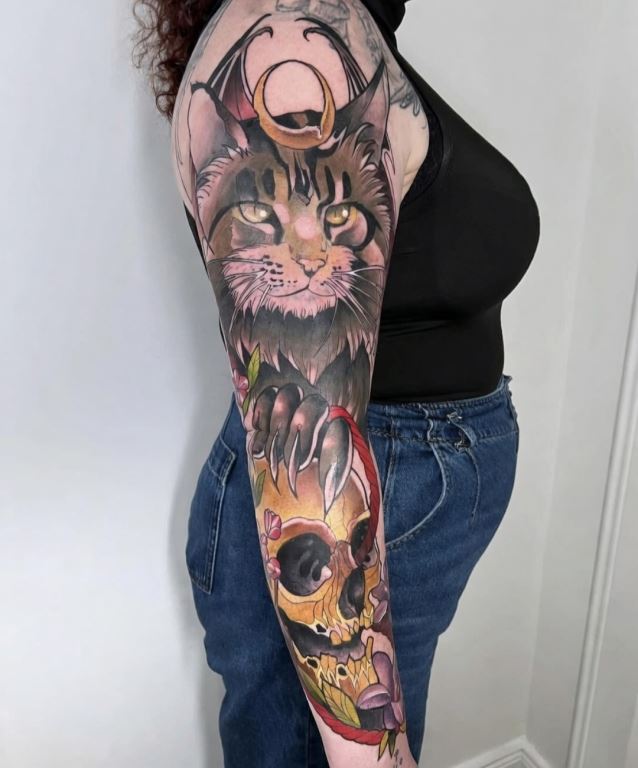
Q: Looking back at your early
apprenticeship days in Ireland, what was the most significant hurdle
you overcame to find your footing in such a competitive industry?
A: I think to not listen to the haters, as cringey as that sounds.
It is such a competitive industry and it’s filled with big egos,
when there is no need for them. It’s an industry that will make or
break you as an apprentice and you find out quick if you’re capable
for this lifestyle or not. Tattooing in Ireland has given me some of
the most amazing life experiences, memories, customers, as well
friends! I couldn’t imagine myself doing anything else! It can also
be a very jealous industry and some people hate to see others doing
well. So with that said, that’s even more of fuel to add to the fire
when you want to do good! It’s never too late to learn, try new
styles, new ideas but it’s also an industry that people think
“anyone can do that”. Anyone can be a tattoo artist, but it’s hard
to become a good one!
Q: How did your initial training influence
the professional discipline you maintain today?
A: I thankfully had a really great apprenticeship. I did my
apprenticeship in Soul Addiction and was an artist there for five
years because it was a good environment and I was surrounded by
great and talented artists who had a good outlook on tattoo
discipline too. It thought me alot of things like, how to deal with
all walks of life, dealing with great customers, difficult ones. It
also thought me how to respect your clients opinions, their time
(don’t be stopping for a break every ten mins) time management, and
also realising that these are the people who want your work, pay
your bills and also help you have your dream job everyday.
Q: When looking at your portfolio, there
is a distinct use of contrast, how do you approach the "longevity"
of a design while maintaining such high levels of detail?
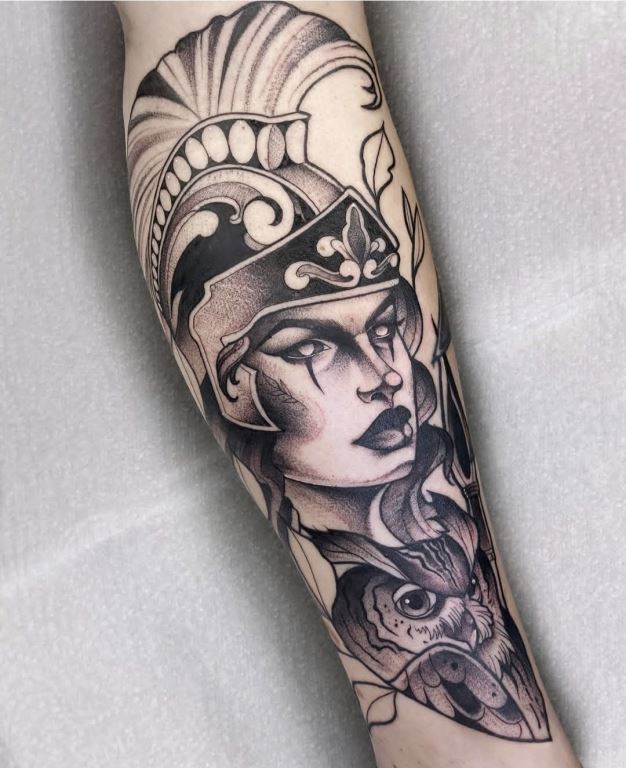
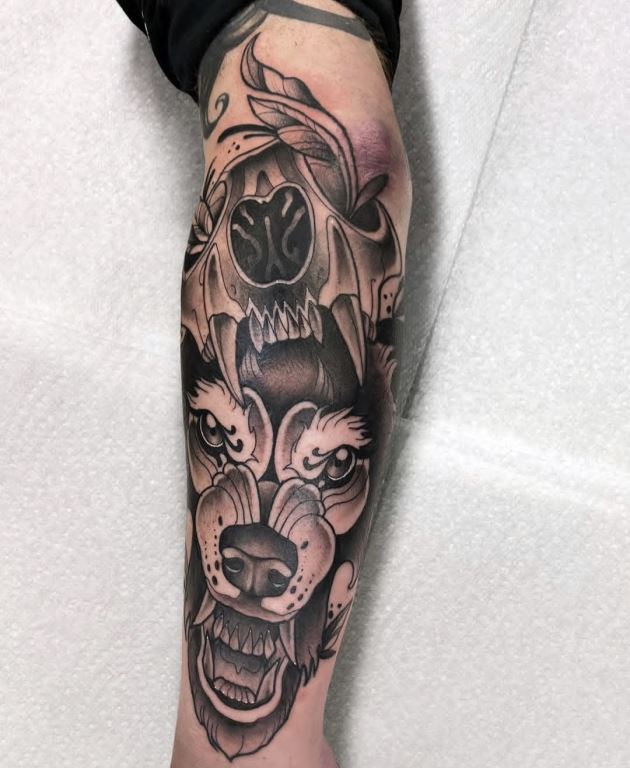
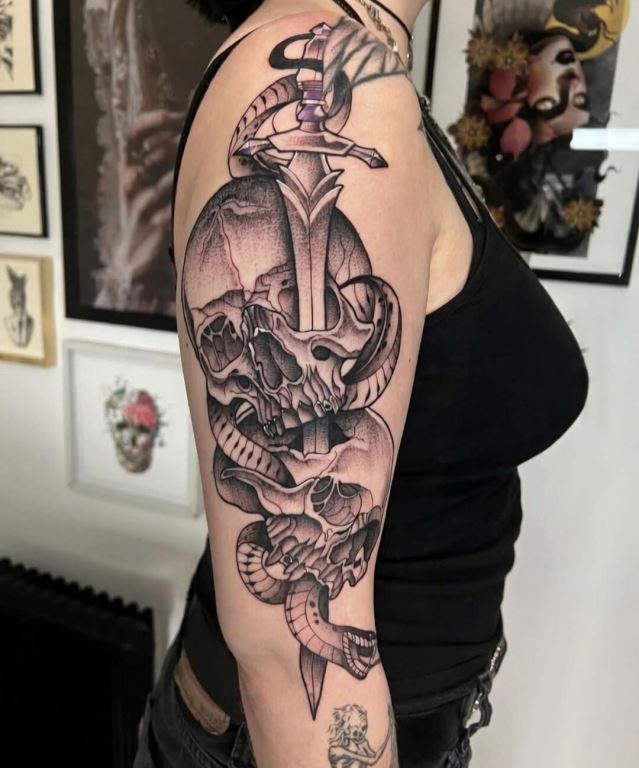
A: I guess through understanding linework and shading a bit more.
For example, knowing when to use smaller lines in contrast with
bigger, bolder lines so it stands out and creates contrast, while
not blending everything together. Understanding values helps too.
Understand how light and dark can affect the overall structure of
the tattoo, and showing off details without shading over them. You
don’t want to spend hours outlining a piece and have loads of
details, for it to be over-shadowed by shading. You want the
customer to be able to see the detail, and appreciate it too.
Q: Many of your pieces feature botanical
and organic elements; what is your process for mapping these designs
to the natural flow of the human body?
A: I think everyone’s body flows the same but not everybody is the
same. It’s an element that you either learn to do or you already
kinda know how to create flow in a piece. A piece that might flow on
someone that is 5”2, might not sit the same on someone that’s 6”2.
Understanding muscles and how they naturally are on the body can
help with the design. I normally get people to send me a picture of
the body placement I’ll be tattooing, so I can play around with
composition and flow on the iPad and it makes things easier before
they come in for their session. There are also some sessions, where
I might freehand the flow of a piece too. If someone is getting a
piece made up with all different flowers and leaves, I’ll map into
the body with a sharpie and then place the pieces on top. Every body
is different and it’s good to be able to work on every type.
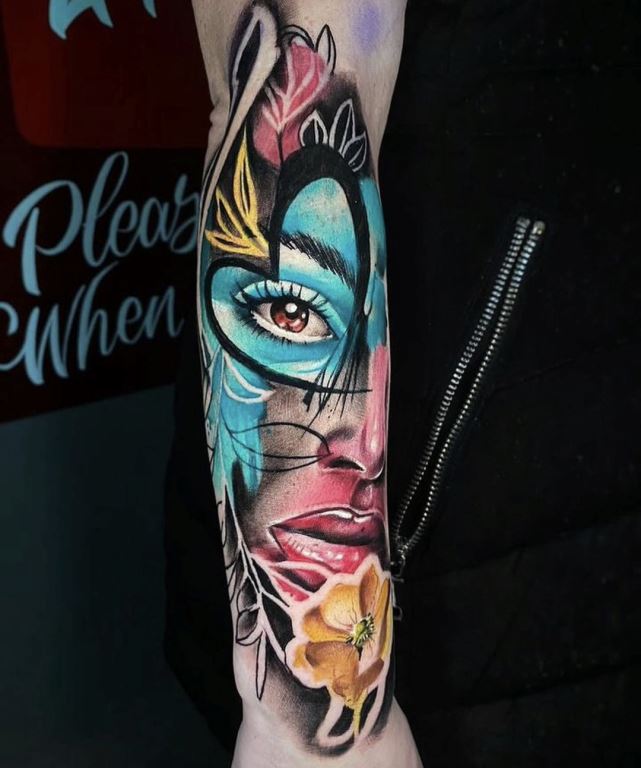
Q: Could you walk us through your color
theory? What guides your choice between a monochromatic, dark
palette and vibrant, contemporary colors?
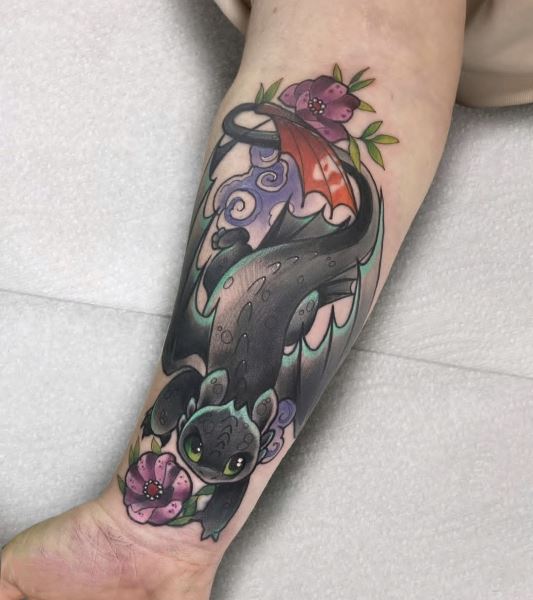
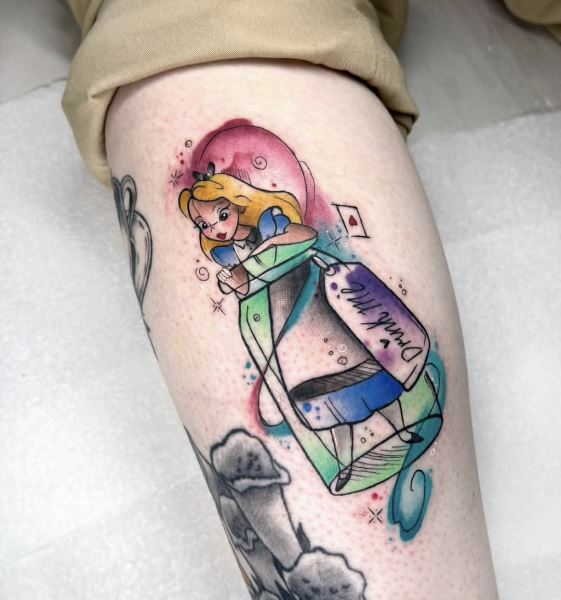
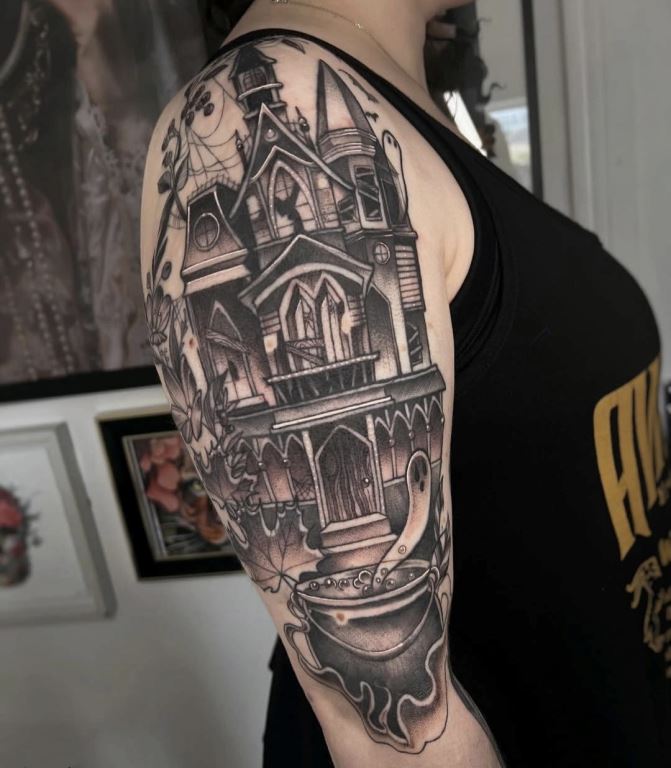
A: When it comes to colour theory, for me, it’s very individual to
each piece and its theme. If a design is more dark and gothic, I
tend to naturally go towards grey washes or blackwork. But if it’s a
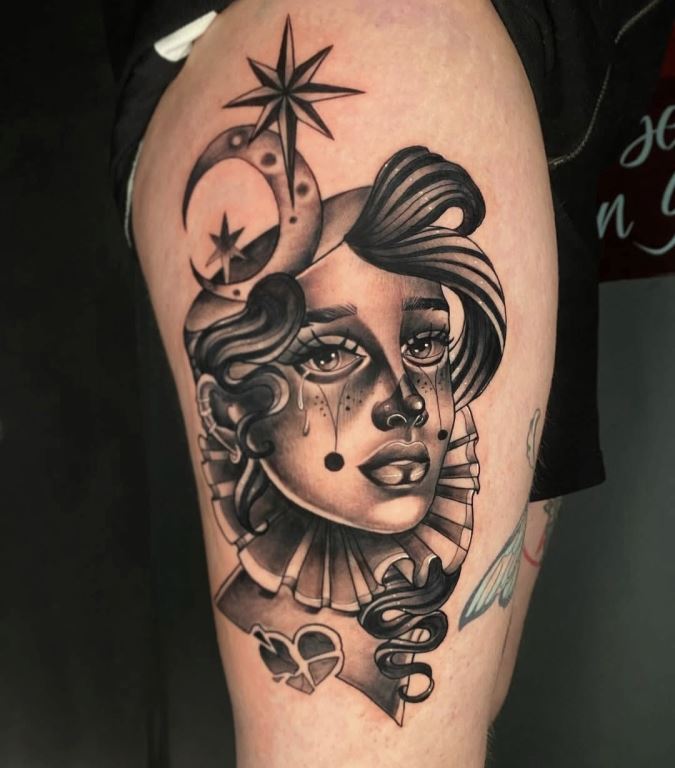
cartoon, bold lines, big and bright flowers, a neo-traditional lady
face, I’ll always push for colour. Colour tattoos can be hit or miss
in Ireland. There’s a theory that “they’ll fade after ten years” but
if you don’t mind your skin, and have good overall maintenance with
your skin, of course it’s going to fade! I think alot of people can
be scared of colour but it’s such a fun element of tattooing I
enjoy! Yes I love doing black n grey too, but I think colour is
definitely my favourite of the two. When it comes to learning about
color theory, I personally learned online and through trial and
error on tattoos. Some inks mix better than others and different
brands will also mix differently.
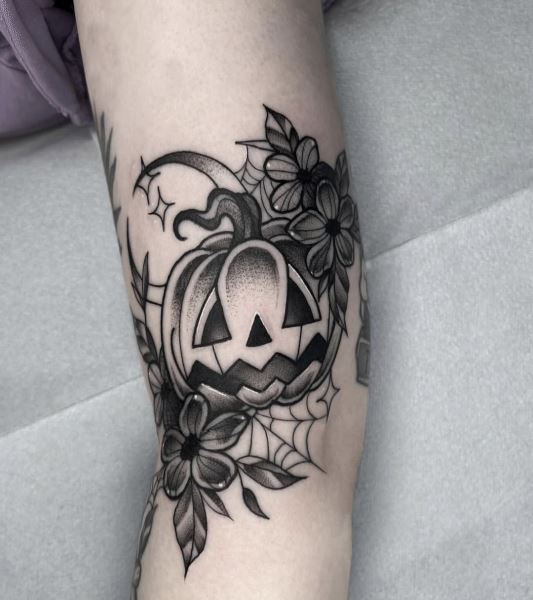
Q: Is there a specific "Victoria Enright"
signature, a detail or technique that fellow artists would recognize
as uniquely yours?
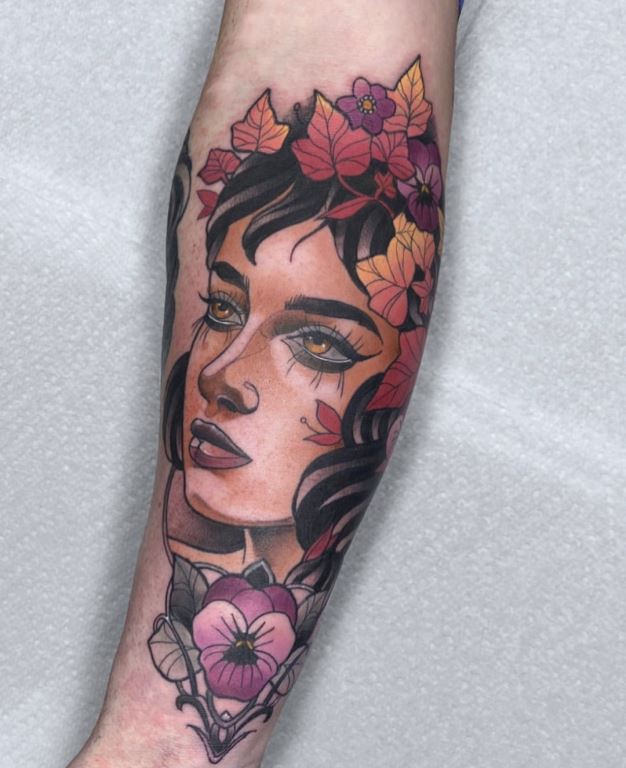
A: I’ve been told that people can tell my work by how I do lady
faces and certain blackwork styles. A few people have said they’ve
gotten compliments on the work I’ve done and it’s been followed with
“Did Victoria do that one?” which amazes me as I can see different
styles of artists, and most everyday people wouldn’t. So it’s
comforting and nice to hear when people can recognise your work out
in the wild.
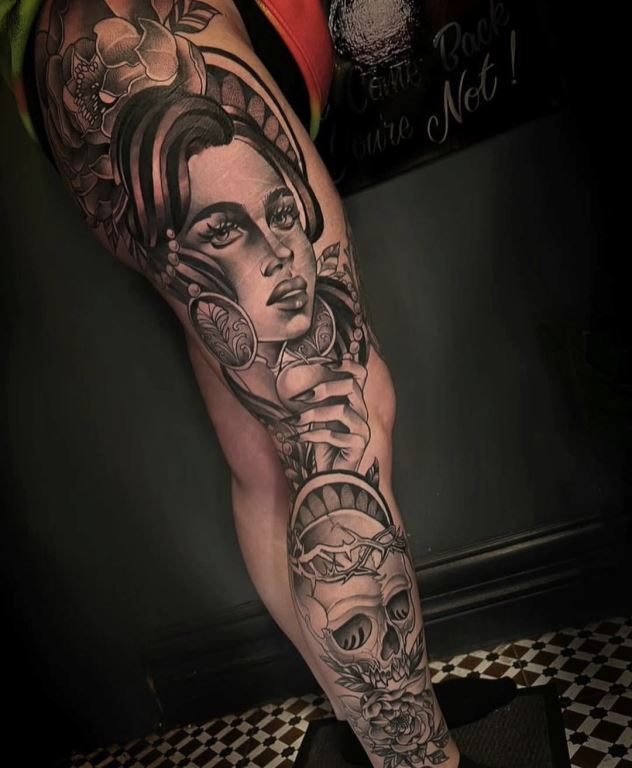
Q: How has your background in other art
forms (like illustration or embroidery) directly informed your
tattooing technique?
A: I’ve always been a creative person for as long as I remember.
When I was very little, I wanted to work for Disney and do animation
but as time went on and as I got older I just realised tattooing was
the one for me. I always appreciated art with a lot of detail and
smaller details. One of my favourite movies is The Hunchback of
Notredome, purely because of all the hand painted elements and
detail in it. I’ve always appreciated art that has detail, and small
details that not everyone might notice. I see a piece of art, a
building, a sculpture, or a tattoo with loads of detail and I can
appreciate how long it took to be made. Even when it comes to any of
the embroidery work I’ve done. I started doing that during lockdown
and I love seeing a piece slowly come together over time. Some
pieces I’ve made have taken me three weeks to a month, and when I
tell this to people , they’re always amazed by it and say “you’ve a
lot of patience”. Art and tattoos with small details, always take
time but are worth the wait. I’ve done all types of art over the
years and this year I’m hoping to do more and revive my love for
painting again.
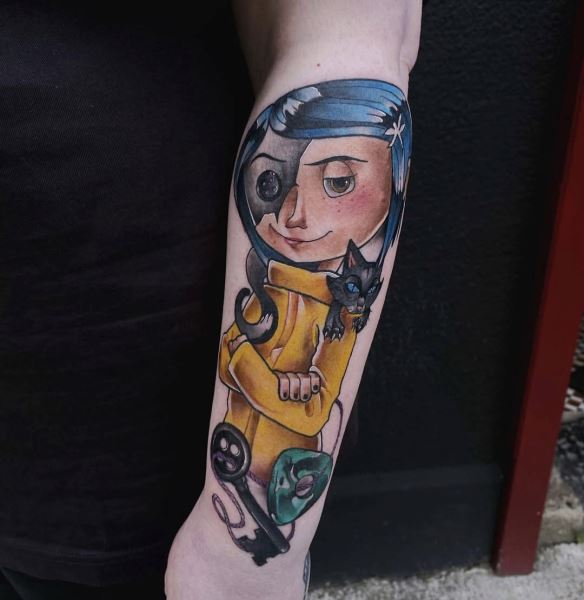
Q: You’ve been a prominent figure at the
Limerick Tattoo Convention; how has participating in such
high-caliber events shaped your perspective on the industry?
A: Tattoo conventions are great here in Ireland and even abroad!
It’s rare I’ve come across a convention I didn’t like, because a lot
of the time it’s the people you meet at a convention make the
atmosphere. Ireland has some great tattoo conventions now in Ennis,
Dublin, Cork, Galway and Belfast. It’s a chance for other tattoo
artists to meet fellow artists and to get to know other people. It’s
a great chance to enter competitions and show off your work to other
artists and the public!
Q: How do you prepare for a high-stakes
tattoo convention where you are tattooing live under the scrutiny of
your peers and judges?
A: I actually avoided conventions for about a year or so, just
because my own anxiety became overwhelming, I felt like I was on
display and had to put on a show for people. So yes, it can be a
very scary thing to do at times. Depending on the customer and how
comfortable they are, I’ll try to wear headphones and play my own
kind of music and just focus on the tattoo, without too many
distractions. I love meeting new people at conventions. Conventions
are great to met new artists, and customers. Yes it can be scary to
attend but once you realise that you are more than capable to be
there and deserve to be there, it shifts your mindset a bit.
Q: Tattooing is a grueling physical and mental process, how
do you maintain your focus and precision during multi-hour sessions?
A: Coffee and a can of monster! I struggle a lot with my back, as a
lot of other artists will agree and as I am getting older, I really
need to start considering that more because I want to be in this
career for as long as possible. Stretching between breaks, staying
hydrated, making sure you have snacks and a lunch prepared, all are
small things that can really make or break a day session. If I don’t
get enough sleep the night before, and don’t have a good breakfast,
I’m a demon by 12pm.
Q: Your clients often come to you for
deeply personal pieces, like memorial tattoos; how do you navigate
the emotional responsibility of translating their stories into
permanent art?
A: I really appreciate when people come to me for memorial pieces. I
think like most of us, I do have a memorial piece on my body so I
can emphasise and understand what might be going through their heads
as they are getting the tattoo. It’s a very emotional experience and
it’s always good to be kind and gentle with people in this
situation. Be patient, we are all humans at the end of the day and
have experienced our own losses. Memorial tattoos can be from
something small like a birth flower or a random sweet they used to
love! It’s very different to tell how a piece will be but as long as
it resonates with that person and they are happy, that’s key. Make
them feel comfortable, put on quieter music, and just be kind. We
are all human at the end of the day.
Q: How do you manage the "collaborative tension" when a
client’s vision competes with what you know will look best
artistically and technically?
A: I’ve only ever refused to tattoo one person in my whole seven
years of tattooing because of this! I will never pressure anyone to
get something that doesn’t look right or doesn’t sit well because
it’s permanent at the end of the day! I had a client who wanted a
massive piece to be upside down, and facing her (I don’t mind when
people get small ones “upside down”) but this was hand sized and she
wanted it in an awful placement on her arm. Whenever I tried to
explain the placement to her and that it wasn’t correct, she turned
to my coworkers and wanted their opinions hoping that they would
take her side and idea and they all dissgreed with her. I think I
put the stencil on her 15 times, she was there for two hours and
eventually I refused to do her tattoo and told her I didn’t feel
comfortable tattooing her. At the end of the day, your name is still
attached to every tattoo you do, no matter how big or small it is.
It’s okay to say no to a client if you know they could potentially
dirty your name or vision.
Q: What is the one thing you cherish most
about the relationship you build with your clients throughout the
tattooing process?
A: Oh I have so many clients I love and adore and see as family! If
some of my clients asked me to help them move house or help in
anyway I would in a heartbeat! I love when I people feel comfortable
enough to be themselves around me and just say whatever they feel.
I’ve heard love stories, heart breaks, marriages, holidays,
illnesses, school runs, family celebrations and loses, I’ve heard it
all and I love it! I love hearing people’s stories and their
backgrounds. People are fascinating creatures and we come from all
walks of life. There are some days I hardly get any work done
because I’m laughing so much with customers, some days where I have
cried with customers. It’s hard to not want to get to know someone
when you’re practically face to face with them for five or more
hours.
Q: How do you view the current evolution of the USA tattoo
scene, and why do you feel now is the right time for you to
contribute to it?
A: I feel like here in Ireland, sometimes they’re still very old
school with trends and creativity. I think it’s rare enough to find
people who want your own original artwork, and not just something
from Pinterest, or something that their mates already have. It’s
like people are scared to be different and it’s a fear of looking
different too and being judged for it. I think moving to the US it
would open up a new clientele of work and a bigger audience for
creativity. Yes of course we still love the small, everyday tattoo,
but being able to let lose and have creative freedom is amazing!
There are some artists in the USA that I would love to get to meet
and pick their brains. At the end of the day we all want to be
successful, but something feels different when people come to you,
for YOU and for YOUR work.
Q: In your opinion, what makes the
American tattoo market the ultimate benchmark for an artist of your
caliber?
A: I feel like the American market opens up a lot more opportunities
to communicate and grow in the tattoo world. I think that America
allows for artists to meet other amazing artists, as well as open up
the opportunity to talk to more suppliers, the possibility of
sponsorship and collaborations with other artists. I feel like there
are more opportunities to grow and learn from others. It will be
interesting to see how artists view the tattoo world compared to
Ireland and see a different standard of art.
Q: Victoria Enright, looking five
years into the future, what is the ultimate goal you hope to achieve
during your time in the United States?
A: I think overall, I would love more of a comfortable work - life
balance. I love to travel and see the world and I also know I can’t
do that without the amazing people that come to me. I’m hoping that
by being around new tattoo perceptives and ideology, that it will
help me grow and become a better artist. I’d love to reach a level
where people travel specifically to get tattoos by me. I think it’s
such an honour to have people willing to travel so far to get a
piece of art from you. I’ve travelled for artwork myself so I know
it’s a big deal.
Q: If you could leave one lasting mark on the global history
of tattoo art, what would you want your legacy to be?
A: That I was kind! That she was a lovely girl who is super talented
but she was also super kind and patient with customers. I would hate
to get a bad name for myself or an ego, and lose friends and
customers because of that.
Q: To finish, Victoria, what message do you have for the
artists and collectors in the US who are eagerly awaiting your
arrival?
A: I’m looking forward to meeting everyone, learning and growing to
become a better tattoo artist and personal artist too! I’m looking
forward to meeting fellow artists with similar interests and all the
potential future clients too!
Date: 24 Mach 2026
Interview: Ivana Kancheska


