
Interview with Vlad Shuvalov
We are honored to feature an exclusive interview
with Vlad Shuvalov, a master tattoo artist whose powerful,
hyper-detailed work has been pushing the boundaries of realism,
surrealism, and bold conceptual tattooing from Almaty, Kazakhstan,
to the international stage. With a rapidly growing global following
and an impressive portfolio that blends cinematic storytelling, dark
aesthetics, pop culture icons, biomechanical elements, and flawless
technical execution, Vlad stands out as one of the most exciting
talents emerging from the post-Soviet tattoo scene. As he eyes new
opportunities in the United States under the O-1B visa for
individuals with extraordinary abilities in the arts, we sat down
with him to explore his journey, artistic philosophy, and vision for
the future.
Q: What first sparked your passion for tattooing, and how
did you take your initial steps into the profession in Kazakhstan?
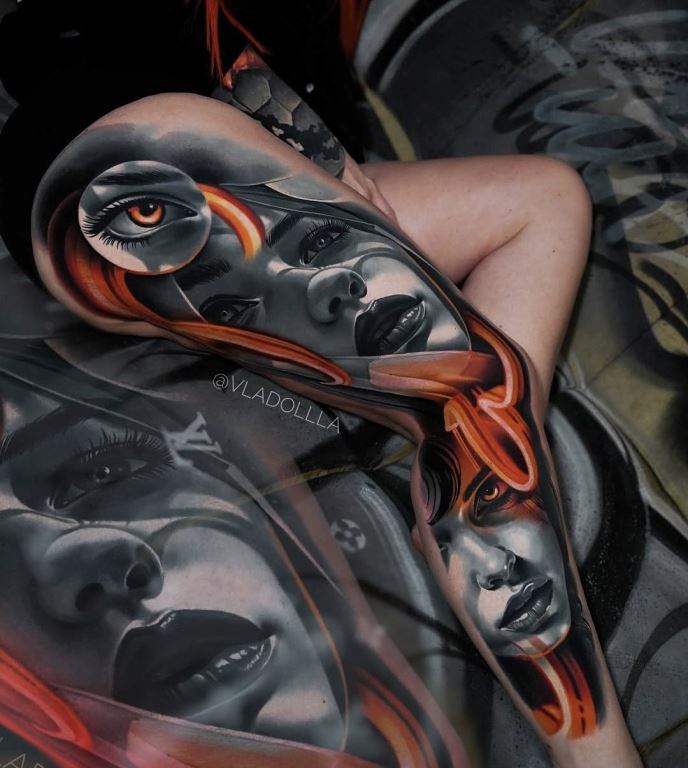
A: Everything started when I turned 18 and got my first tattoo.
Before that, I had been drawing since childhood, so creativity had
always been an important part of my life. When I first walked into a
tattoo studio, I was immediately drawn to the atmosphere. The walls
were covered with paintings, there were creative people all around,
and the whole environment really resonated with me. I remember
thinking that this was exactly the kind of place I wanted to be. At
some point, I started wondering why I shouldn’t try tattooing
myself. I was already drawing all the time, I had my own artistic
vision, and I wanted to bring it from paper onto skin. That’s how it
all started. At first, it was simply curiosity and a desire to try
something new, but pretty quickly I realized that this was something
I wanted to take seriously.
Q: Looking back, what were the biggest
challenges you faced in your early years as a tattoo artis, both
technically and in building a client base?
A: The biggest challenges I faced in my early years were definitely
technical. I’m self-taught, and when I first started tattooing, I
was only shown the very basics how to pull a line and how to do
solid shading. That was pretty much it. Everything else I had to
learn on my own through trial and error. There wasn’t anyone
constantly guiding me, correcting my mistakes, or showing me the
right way to do things, so a lot of lessons came from personal
experience. Looking back, that was probably the hardest part, making
mistakes, learning from them, and gradually figuring everything out
for myself. Building a client base had its challenges too, but those
challenges changed as I evolved as an artist. When I worked in one
style, I attracted one type of client. When I started focusing on
realism, I had to build a new audience around that direction and
find clients who were looking for that kind of work. But if I had to
choose the biggest challenge, it would definitely be the learning
process itself. At that time, there weren’t many experienced artists
in my city who could mentor me or provide valuable feedback. Because
of that, I learned almost everything on my own. Honestly, I’m still
learning today, the only difference is that the challenges I’m
solving now are on a completely different level.
Q: Who were your key mentors or influences
in the beginning, and how did they shape your approach to the craft?
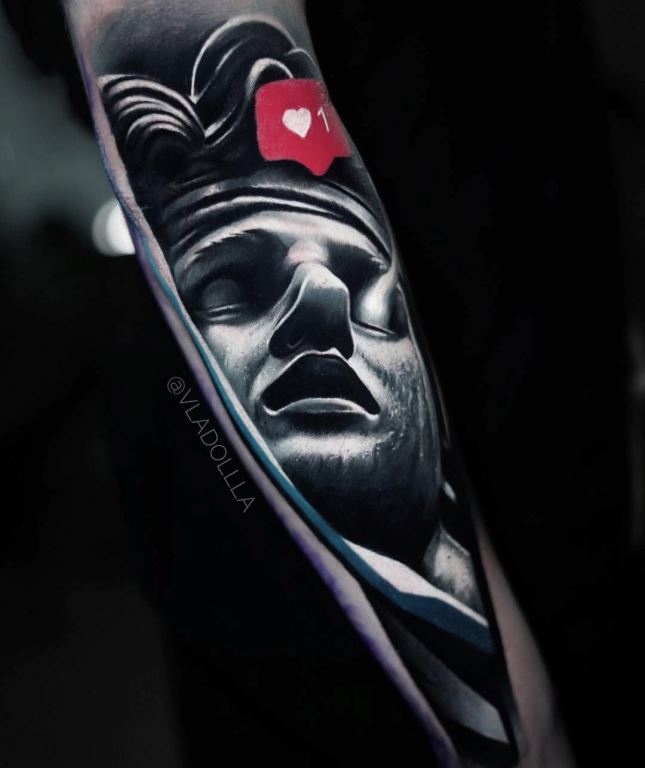
A: To be honest, my biggest mentor has always been myself. In the
beginning, my friends showed me a few basic things, just enough to
get started, but everything after that came through self-learning,
practice, analyzing my mistakes, and constantly searching for ways
to improve. In general, I’m self-taught in many areas of my life. I
enjoy learning new things, diving deep into them, and understanding
how they work. When something genuinely interests me, I can spend
countless hours studying, experimenting, and figuring things out on
my own. That’s exactly how my approach to tattooing was formed. I
didn’t follow one specific mentor or a particular school of
tattooing. Instead, I constantly analyzed my work, looked for
weaknesses, and focused on making each tattoo better than the last.
I think that mindset of continuous learning and self-improvement has
had the biggest influence on me not only as a tattoo artist, but
also as a person.
Q: How has your artistic style evolved
from those first tattoos to the highly detailed, immersive pieces
you create today?
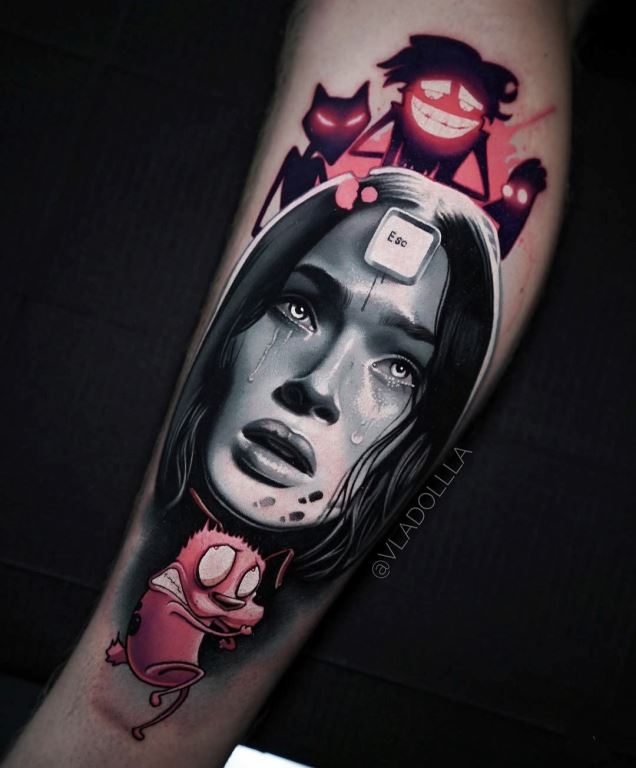
A: My style has changed dramatically over the years. When I first
started tattooing, I had no real understanding of what realism was
or how to properly translate it onto skin. Like many beginners, I
spent a lot of time experimenting. I started with graphic styles,
used whip shading, and explored different approaches to figure out
what truly resonated with me. Over time, I began applying those
techniques to more realistic pieces and gradually moved closer to
realism. Then I started experimenting with different needle
configurations, especially magnums. That allowed me to create softer
shading, smoother transitions, and more depth in my work. Little by
little, I moved away from graphic styles completely and focused on
realism, constantly refining my technique and improving the quality
of my work. Later, I introduced silvers and color accents into my
tattoos, which became an important part of my visual language. None
of this happened overnight it was a gradual process built through
constant practice, experimentation, and learning. If you scroll all
the way down on my Instagram, you can literally see that entire
journey from my very first tattoos to the style I work in today.
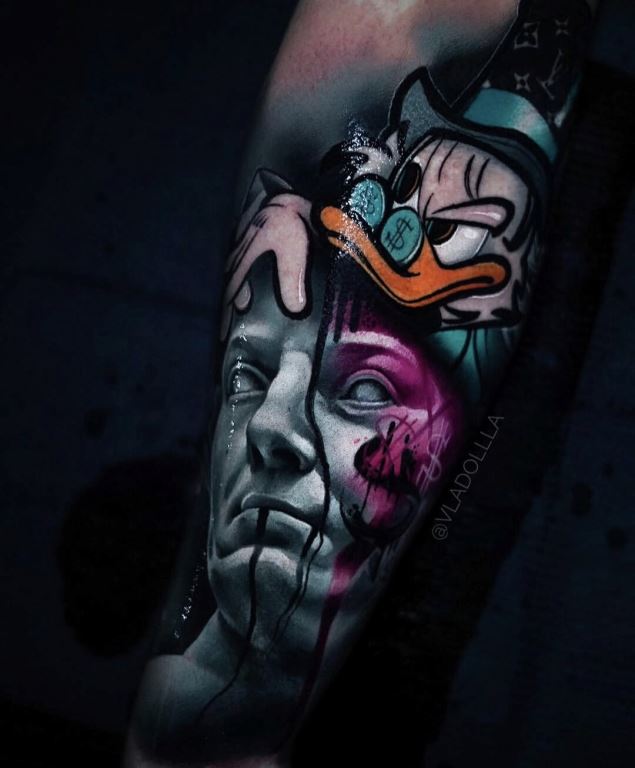
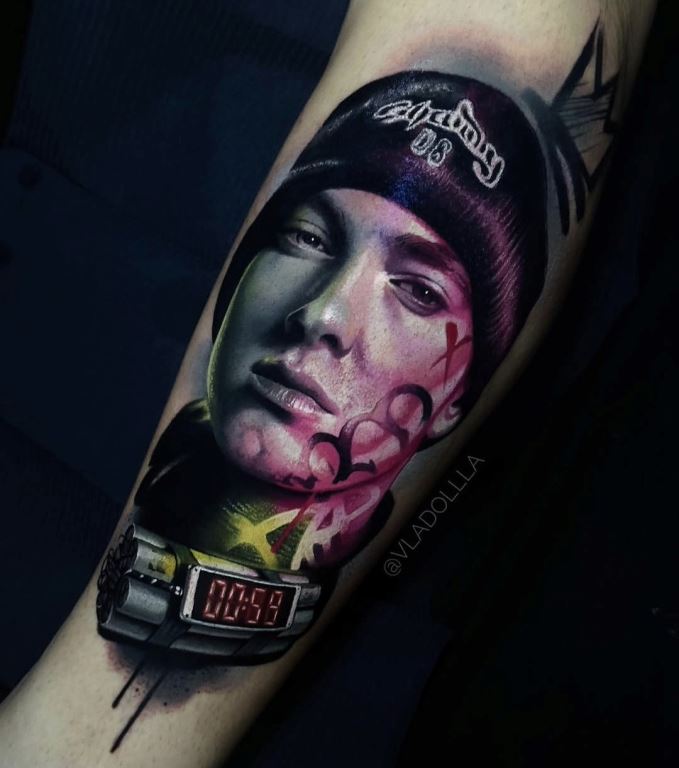
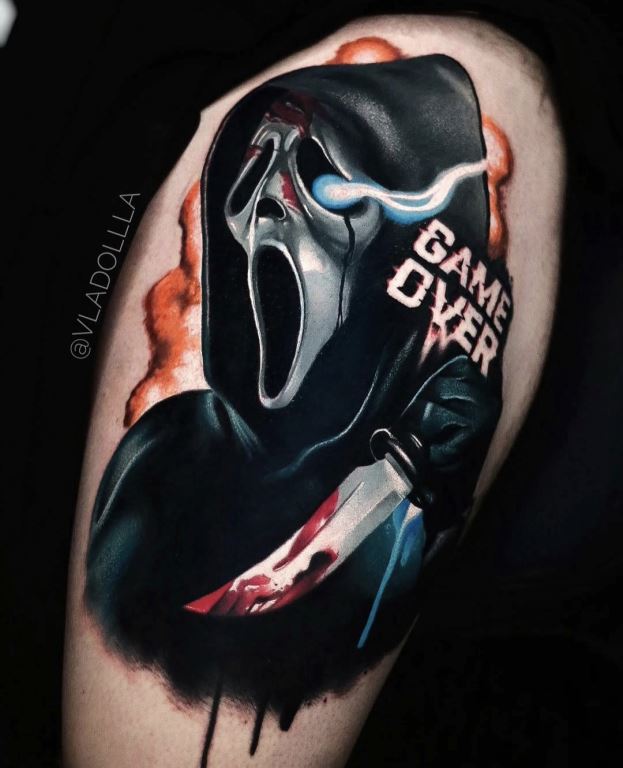
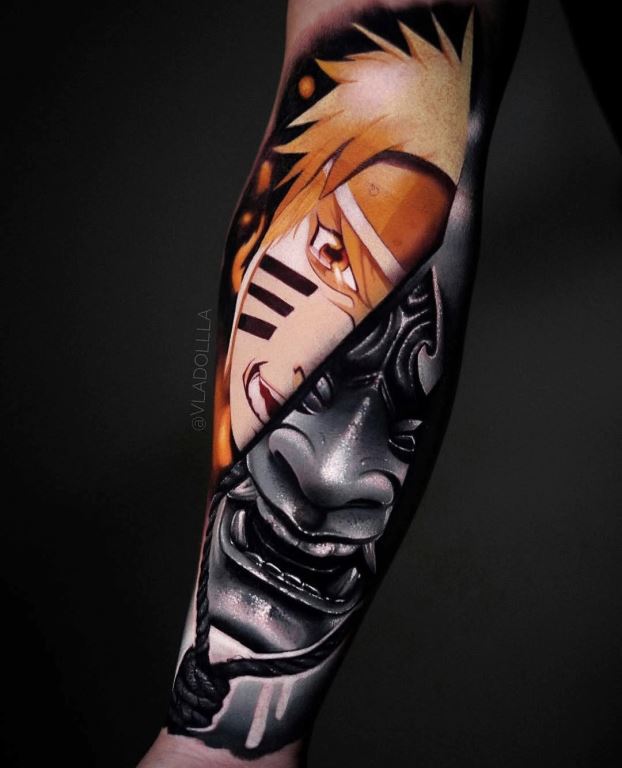
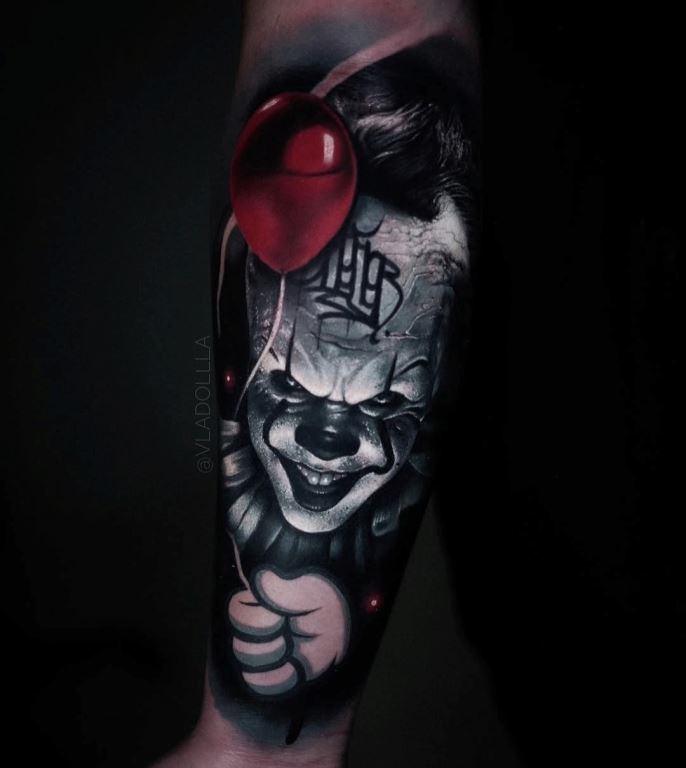
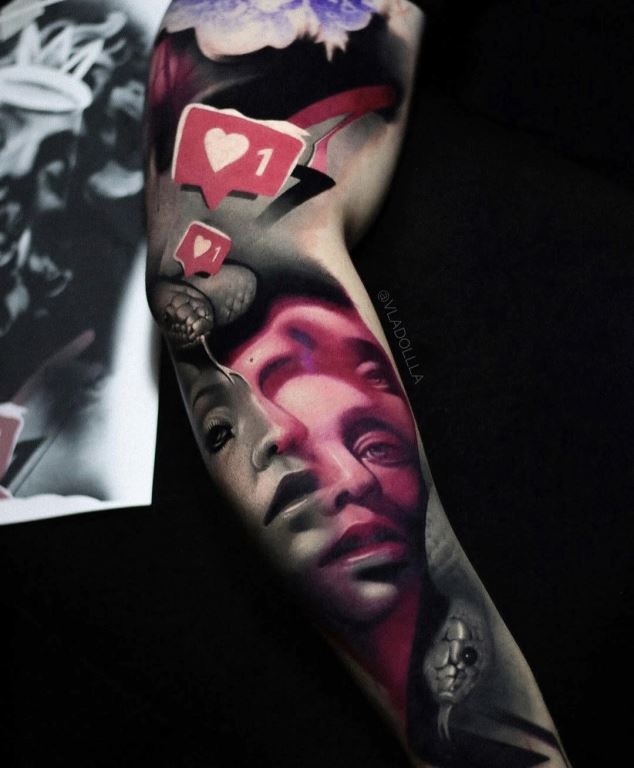
Q: Your portfolio showcases an incredible range from
hyper-realistic portraits and dark surrealism to pop culture homages
and biomechanical work. How would you describe your signature style?
A: To be honest, it’s always been difficult for me to define my
style with a single label. I’ve never liked putting myself into a
box and saying, “This is what I do, and this is what I don’t do.”
What I enjoy most is variety. It can be portraits, characters from
movies and video games, sculptures, unusual objects, or completely
surreal concepts. For me, the subject itself is less important than
what can be done with it visually and how it can be integrated into
a composition. American culture has had a huge influence on me.
Growing up, I watched American movies, played video games, and
listened to a lot of music, all of which shaped my visual taste.
That’s why my work often includes references to films, pop culture,
music, iconic characters, and other recognizable imagery. I enjoy
incorporating hidden details, easter eggs, and different visual
elements that make a piece more engaging and help create a specific
atmosphere. I think the defining characteristic of my approach is
that I try to filter every idea through my own artistic vision. So
even though the subjects may be completely different from one
project to another, they are still connected by my perspective on
composition, atmosphere, and presentation. If I had to describe my
style, I would call it realism with elements of surrealism, a
cinematic atmosphere, and a strong focus on visual references.
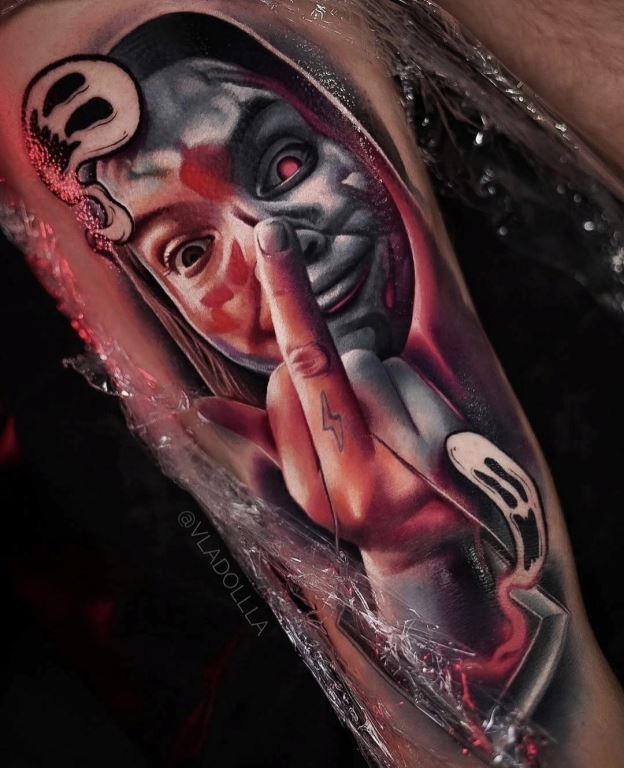
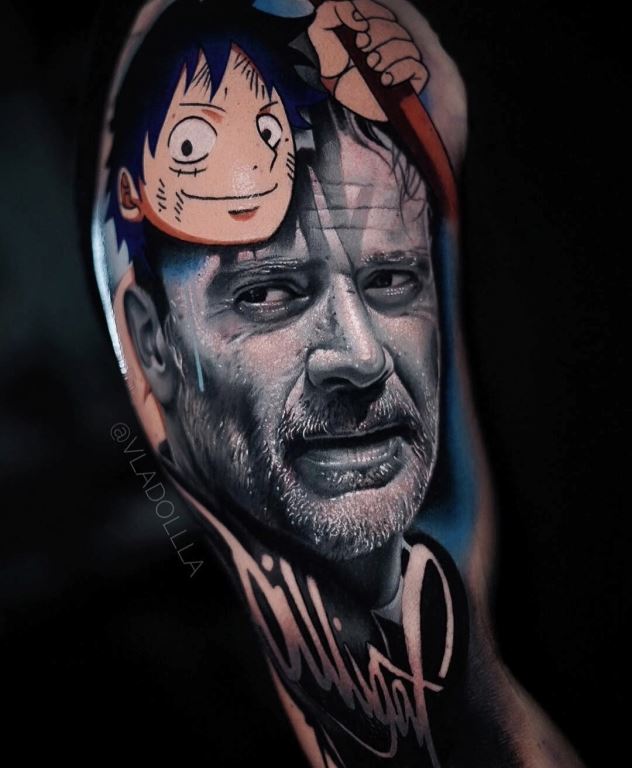
Q: What draws you to blending realism with
surreal, cinematic, or horror elements in your tattoos?
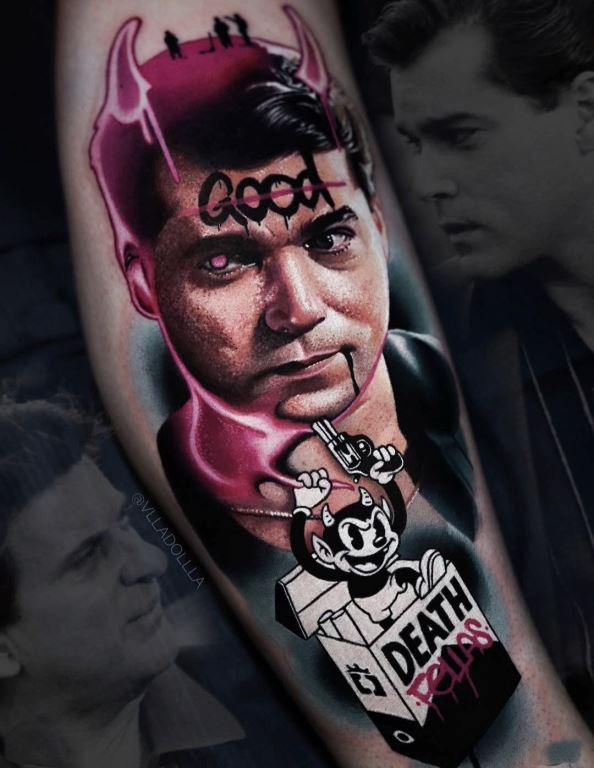
A: I’ve always been drawn to contrast. I like taking something
serious, dark, or even slightly intimidating and combining it with
something completely opposite. I think those kinds of combinations
make a piece more interesting. When different elements start
interacting with each other, something unexpected happens, and it
creates an image that people want to spend more time looking at. I
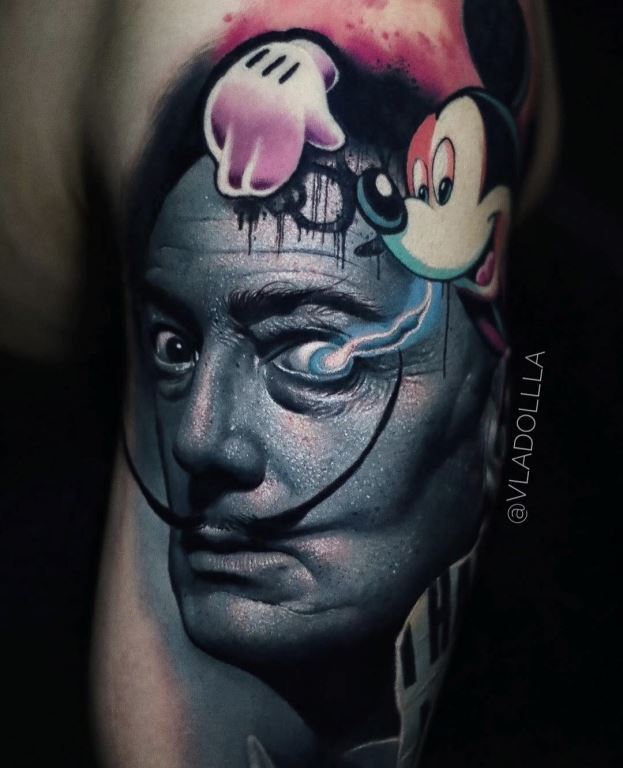
also enjoy adding references and easter eggs. For example, I might
take a familiar character and place an object next to them that
seems completely unrelated at first glance, but together they create
a new association or an interesting visual idea. What I enjoy most
is the process of finding those unexpected combinations taking
something familiar and presenting it in a different way through my
own vision, atmosphere, and composition.
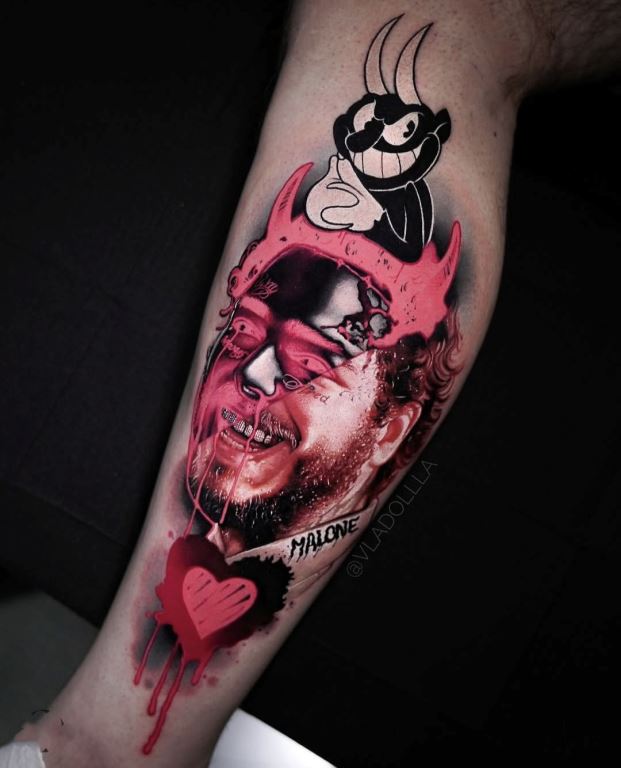
Q: How do you approach collaboration with
clients? Do you prefer full creative freedom on larger pieces, or do
you thrive on interpreting their personal stories?
A: In general, I prefer having creative freedom. The more trust a
client gives me, the more interesting the final result usually
becomes. At the same time, I always start with what is important to
the client. For example, if they like a particular character, an
antihero from a movie, or a specific idea, that becomes the
foundation of the project. From there, I build the composition,
develop the details, and look for interesting visual solutions that
make the piece more unique. I enjoy working with clients who come to
me for my artistic vision. When someone has already seen my work,
understands my approach, and is willing to give me room to create,
that’s when I can fully express myself as an artist and come up with
ideas they might never have considered on their own. At the same
time, it’s important for me to preserve what the client originally
wanted. I’m not trying to impose my own ideas, I take their concept
and filter it through my artistic vision. I also create concepts and
projects that I personally would love to tattoo. Sometimes people
see those designs and realize that it’s exactly what they’ve been
looking for. When that happens, it becomes the perfect combination
of the client’s interests and the artist’s vision.
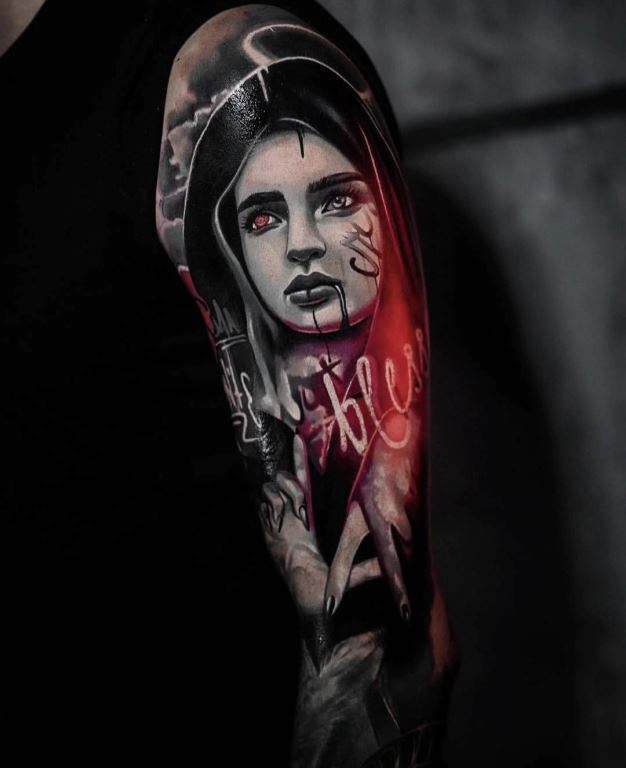
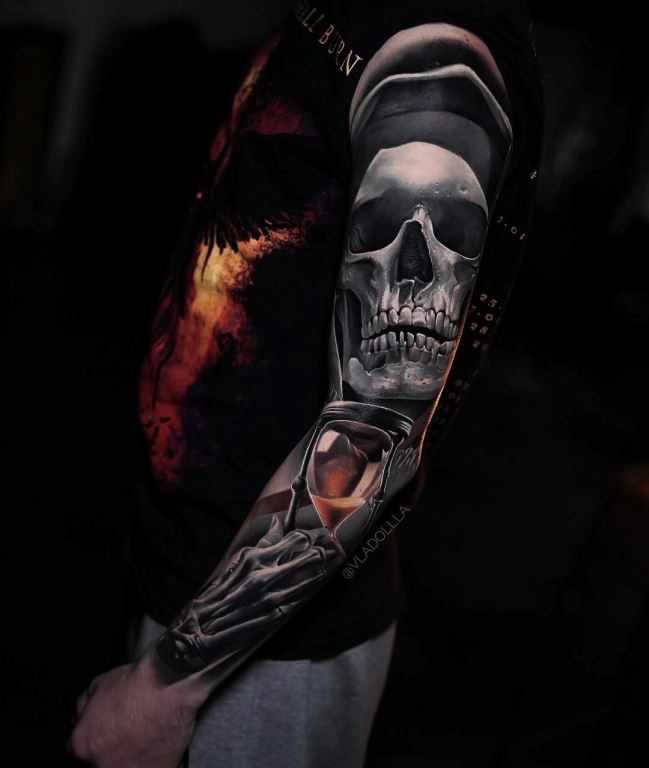
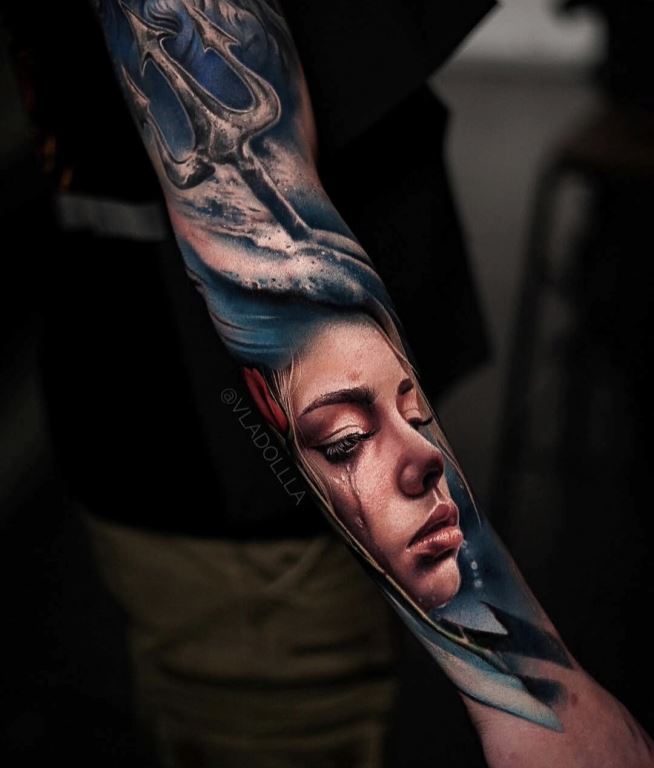
Q: Many of your pieces feature dramatic
lighting, deep shading, and almost painterly depth. What technical
aspects of tattooing are most important to achieving that level of
realism?
A: I think one of the most important things in realism is contrast.
I try to make my tattoos slightly more contrasty than they appear in
the original design because every tattoo naturally softens over
time. If a piece starts out too soft, some of its depth and impact
can be lost as it ages. Understanding light and shadow is just as
important. They’re what create the illusion of depth and make an
image feel more alive and three-dimensional. Color is another big
factor. It’s important to understand how colors work together and
how they will actually look once they’re applied to skin. At the end
of the day, there’s no single secret to achieving realism. It’s
really a combination of knowledge and experience that comes together
over time. The better you understand light, shadow, contrast, and
color, the more realistic the final result will look.
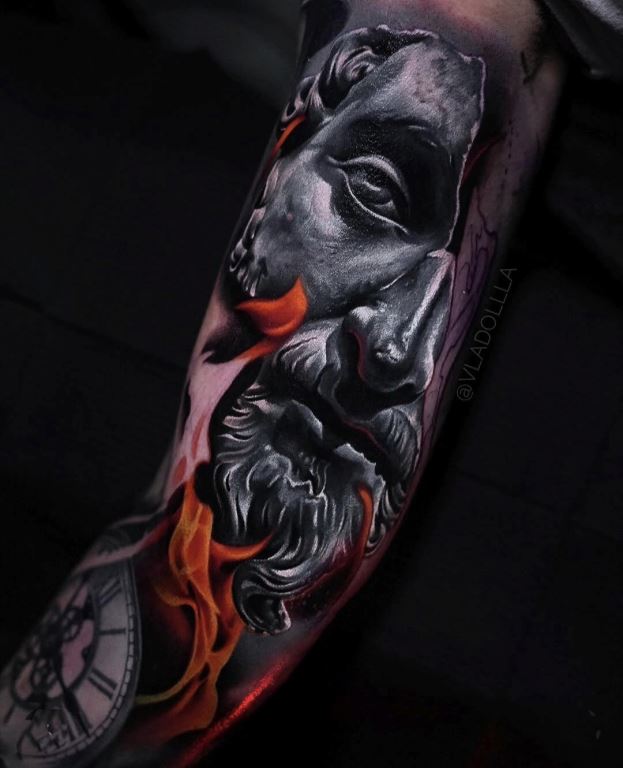
Q: How do you stay inspired and push your
work further, especially when working on large-scale or cover-up
projects that require complex problem-solving?
A: What helps me stay inspired is the desire to keep growing. I’m
constantly looking at the work of other artists, exploring new
styles, approaches, and techniques. This isn't to copy anyone, but
to see how the industry is evolving and what new ideas are emerging.
At the same time, my biggest motivation is the desire to make each
new piece better than the last one. I always want to raise the bar a
little higher, try something new, or solve a creative challenge
better than I did before. When it comes to cover-ups, what inspires
me the most is the reaction of my clients. A bad tattoo can
sometimes make a person feel uncomfortable or simply unhappy with
what they see. When I complete a cover-up and see someone genuinely
excited and happy with the result, that feeling is incredibly
rewarding. Those are probably the moments that motivate me the most
the opportunity not only to create interesting tattoos, but also to
help people feel better about something they see on themselves every
day.
Q: What are some of the proudest
milestones in your career so far competitions, guest spots, or
specific tattoos that stand out to you?
A: Probably the most memorable moment of my career was my first win
at Gods of Ink. It is one of the most prestigious and well-known
tattoo conventions in the world, so just being there was already a
huge milestone for me. At that time, I had just moved to Germany to
officially work in a tattoo studio. It was a very important stage in
my life because my entire journey up to that point had taken place
in Kazakhstan, and this was my first major international tattoo
convention of that level. I remember everything feeling a bit
unreal. A new country, some of the strongest artists from around the
world, a massive convention and in the middle of all that, I won
first place. Of course, there have been other awards, victories, and
important moments since then that I’m also proud of, but that
particular day will always stand out. I think it was because it
confirmed that all those years of hard work, learning, and constant
self-improvement had been worth it. It was one of those moments that
stays with you for the rest of your life.
Q: You’ve participated in major events and
collaborated with top brands like FK Irons, Kwadron, and others. How
have these experiences accelerated your growth?
A: Sponsorships have played a huge role in my professional growth.
Honestly, they gave me a massive boost not only in terms of
opportunities, but also in confidence and motivation. They showed me
that I was moving in the right direction. My first major sponsorship
came from FK Irons, one of the leading tattoo equipment companies in
the world. To put it into perspective, FK Irons is like the Apple of
the tattoo industry. At the time, I became only the second tattoo
artist in Kazakhstan to be officially sponsored by the company,
which was a huge milestone for me. After that came partnerships with
Kwadron, Radiant Ink, later Raw Pigments, and other brands. For me,
sponsorships were never just about receiving equipment or supplies.
They represented recognition from companies that help set the
standards for the entire tattoo industry. Experiences like that
raise your expectations of yourself. You realize that you’re not
only representing your own name, but also brands that trust you and
believe in your work. That creates a strong sense of responsibility
and motivates you to keep improving. The same can be said about
tattoo conventions. They give you the opportunity to see the work of
the world’s best artists up close, exchange knowledge, meet new
people, and gain a much broader perspective on the industry. Both
sponsorships and conventions have been incredibly important in my
development as an artist, and they have played a major role in
shaping the artist I am today.
Q: Winning or placing highly at
conventions (such as the Royal Tattoo Battle) must have been
validating. How important are competitions for an artist’s
development?
A: Yes, I think winning awards at conventions is a very important
sign that you’re moving in the right direction. Awards mean a lot to
me because they show that the decisions I make in design,
composition, placement, and technical execution are working. It’s
also a confirmation of my own instincts as an artist. When you
personally feel that you’ve created a strong piece and then that
work receives recognition, it gives you even more confidence and
motivation to keep pushing forward. Conventions are incredibly
important for tattoo artists and creatives in general. They allow
you to see unique solutions from other artists, experience
high-level work in person, and get a better understanding of where
the industry is heading. When you’re surrounded by great work, it’s
very motivating. It makes you want to create at that same level or
even better.
Q: Your work has been featured in studios
like Eden Body Art and international festivals. What does
international recognition mean to you at this stage?
A: International recognition is very important to me because I
clearly remember where everything started. The entire journey from
my first tattoos in Kazakhstan to where I am today was built from
the ground up, and that’s why everything I’ve achieved holds so much
value for me. I’m proud that today my work is recognized by people
and studios from different parts of the world. When you’re invited
to work in Europe or asked to do guest spots in the United States,
Asia, and other countries, it shows that your work is reaching
people far beyond your home country. Of course, there’s also a
level of status that comes with that. When well-known studios,
convention organizers, and other artists know your name and want to
work with you, that means a lot. For me, it’s a sign that I’m moving
in the right direction. If people from different countries follow
your work, invite you to collaborate, and want to work with you,
then all the time, effort, and energy you invested into your growth
were worth it. And that’s something I’m genuinely proud of.
Q: How do you see the current state of the
global tattoo scene particularly the rise of hyper-realism and
social media’s influence?
A: I think the tattoo industry is evolving very quickly right now.
New techniques, new approaches, and new tools are constantly
appearing. Artificial intelligence has had a big impact as well. I
use AI in my own work and believe that, when used correctly, it can
be a valuable tool for finding ideas and creating designs. As for
hyper-realism, the overall level of work around the world keeps
getting higher. Artists are constantly pushing themselves to create
tattoos that are more realistic, more detailed, and higher in
quality. Social media also plays a huge role. Today, it’s not enough
to simply create great tattoos you also need to know how to present
your work to people. Overall, the industry is developing very
rapidly, and it’s exciting to watch.
Q: What differences do you observe between
the tattoo culture in Kazakhstan, Central Asia, Europe versus the
broader international scene?
A: I think that in every country and region, tattoo culture is
influenced in one way or another by local culture, history, and
traditions. For example, in Asia, you often see the influence of
Japanese, Chinese, and other Eastern mythologies. Europe has its own
popular styles and cultural influences. The United States has also
developed a strong tattoo culture with its own unique styles and
approaches. At the same time, because of the internet and social
media, the boundaries between styles have become much smaller.
Artists and clients all over the world are inspired by each other’s
work and can choose from almost any style they like. If we talk
about Kazakhstan, you can find all kinds of tattoo styles there
Japanese tattoos, graphic work, realism, and much more. In the end,
it all comes down to personal taste and what resonates with each
individual. As the saying goes, different strokes for different
folks.
Q: What are your impressions of the
American tattoo scene? Which aspects of it excite you the most as an
artist considering a move there?
A: I have a great deal of respect for the American tattoo scene.
There are a huge number of highly skilled and talented tattoo
artists there who continue to push the industry forward and set a
very high standard. I’ve been following many of them for years, and
I’ve even built personal connections with a few. Being surrounded by
that level of artistry is incredibly motivating and constantly
pushes you to improve. What attracts me the most as an artist is the
incredibly strong culture across so many different areas. Movies,
music, video games, comics, and pop culture all create an endless
source of interesting ideas, imagery, and inspiration. I think that
kind of environment naturally encourages artists to keep evolving,
explore new ideas, and continuously raise the quality of their work.
Q: In your view, what unique strengths does the American
tattoo industry have, and where do you think there is still room for
fresh international perspectives?
A: I think one of the biggest strengths of the American tattoo
industry is the sheer number of talented artists and the incredible
variety of styles. No matter what direction you’re interested in,
you can find world-class artists working at the highest level.
Tattoo conventions are another major strength. Many of the most
respected and influential events take place in the United States and
bring together some of the best artists from around the world.
Another important factor is the brands. Many of the companies that
set the standards for the tattoo industry today were founded in the
United States. Whether it’s equipment, inks, technology, or
innovation, a lot of it originates there. In many ways, the American
tattoo industry sets the benchmark that artists, companies, and
brands around the world look to and learn from.
Q: How has social media changed the way
tattoo artists build careers, and what advice would you give to
emerging artists navigating this digital landscape?
A: Social media has completely changed the way tattoo artists build
their careers. Today, it’s one of the main tools for showcasing your
work and attracting clients. At the same time, I think it has become
much harder to get noticed than it was in the past. There is an
enormous amount of content online, and the level of competition has
increased dramatically. But in the end, it all comes down to the
individual and how much they want it. If you truly want people to
see your work, they eventually will. You just have to keep putting
your work out there, keep experimenting, and not be afraid to show
what you create. My advice to young artists is simple: don’t be
afraid to put yourself out there. Keep working, keep sharing your
work, and stay patient. If you continue to improve and create
quality tattoos, people will notice.
Q: What role do tattoo conventions play in your career
networking, learning, showcasing work, or something else?
A: Tattoo conventions have played a big role in my career. Thanks
to them, I’ve met many talented and well-known artists from around
the world. They’re a great opportunity to showcase your work, see
the caliber of other artists, and build valuable connections.
Conventions are also places where brands and companies can discover
your work and notice what you’re doing. Overall, I see tattoo
conventions as a highly valuable tool for growth and creating new
opportunities.
Q: Have you noticed changes in how
conventions function over the years? What makes a great convention
experience for both artists and attendees?
A: I think it has become much more challenging for convention
organizers today than it was in the past. There are so many tattoo
conventions happening now that organizers constantly have to find
new ways to attract both artists and visitors. To be honest, many
conventions feel quite similar these days. That’s why organizers are
always trying to come up with new formats, activities, and ideas to
make their events stand out. In my opinion, the most memorable
conventions are the ones that bring together a strong lineup of
artists, have a great atmosphere, and offer something that makes
them unique. It’s also important to create entertainment for
visitors. If there’s nothing happening besides tattooing, people can
get bored pretty quickly. A great convention isn’t just about having
great artists it also needs a strong program and an enjoyable
experience for the audience.
Q: Would you be interested in teaching
seminars or workshops in the future? What knowledge or techniques do
you feel most passionate about sharing with other artists?
A: Absolutely. I’m already planning to teach seminars, and several
of them are currently in preparation. I believe that over the years
I’ve gained enough knowledge and experience to share with other
artists. I’m also asked about seminars and education quite often, so
there is definitely interest in it. What I’m most interested in
sharing is my approach to realism, design composition, working with
light and shadow, creating atmosphere in a piece, and finding
interesting visual solutions. I definitely plan to continue
developing this side of my career, and I hope to teach seminars not
only in my own country but also internationally if the opportunity
arises.
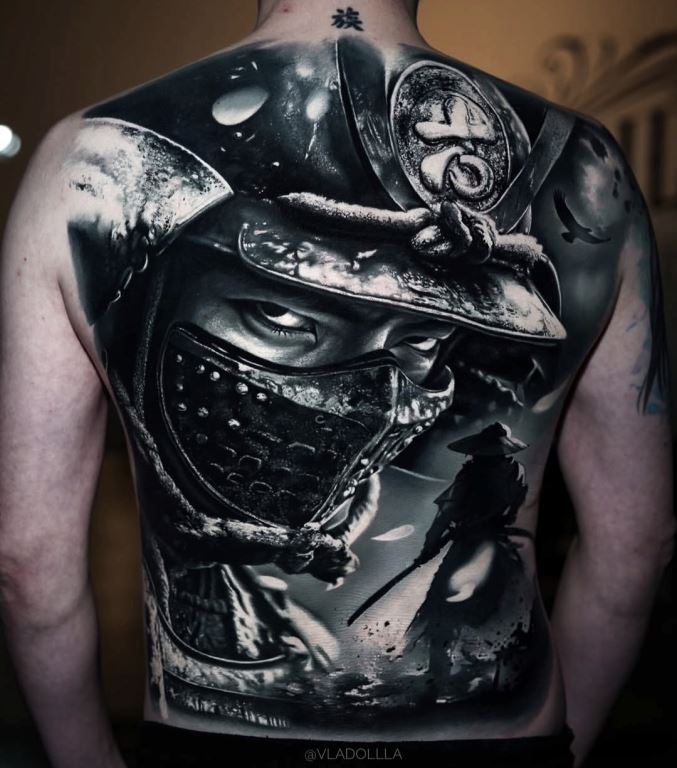
Q: How do conventions help bridge
different tattoo cultures and styles across countries?
A: Conventions help bring different cultures and tattoo styles
together because artists from all over the world gather in one
place. Because of that, you get the chance to see styles and
approaches that you might never come across in your everyday life.
For example, when I attended Gods of Ink, I saw a lot of work from
artists based in Asia. I don’t often get the opportunity to see that
level of work and those particular styles up close, especially when
it comes to large-scale bodysuits. Honestly, some of those pieces
completely blew me away. I looked at them and thought, “I never
would have imagined tattoos could be done like that.” That’s what
makes conventions so special. They show you how differently artists
from various parts of the world approach tattooing, and they remind
you just how large and diverse our industry really is.
Q: What motivated you to pursue opportunities in the United
States, specifically through the O-1B visa?
A: It all started when I received an invitation from Eden Body Art
Tattoo to join their studio as a resident artist. After that, we
began the process of applying for an O-1 visa. I saw it as the next
logical step after Europe. For me, it’s a great opportunity, and
I’ve always believed in taking opportunities when they come your way
rather than turning them down. I think that when a new door opens in
front of you, you should at least try to walk through it. You never
know if that opportunity will come around again. So when this
opportunity presented itself, I thought, “Why not?” I’m confident
that this experience will give me even more opportunities for
growth, new connections, and further development as an artist.
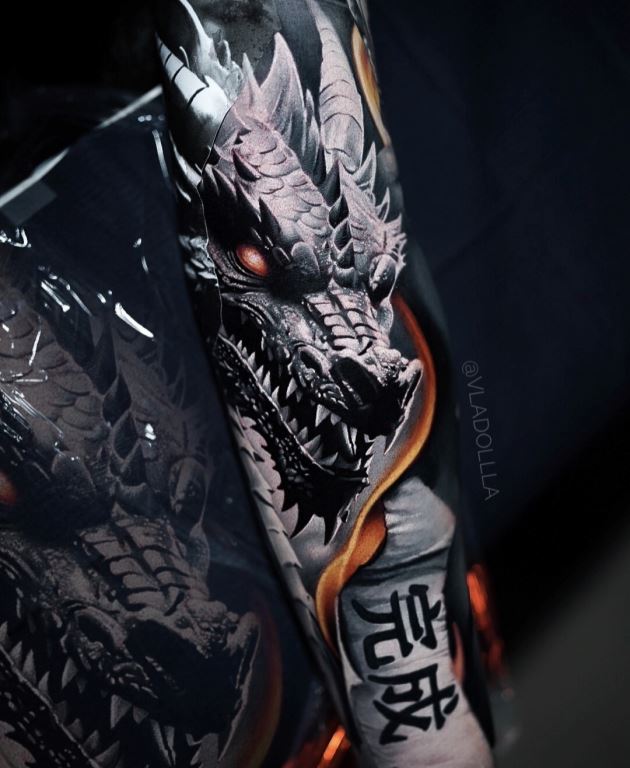
Q: What do you believe you can bring to
the American tattoo scene whether it’s technical excellence, fresh
artistic perspectives, or cultural influences from your background?
A: I think I can bring my own vision, ideas, and approach to
tattooing. I pay a lot of attention to the technical side of the
craft detail, contrast, healing, and how a tattoo will look years
from now, not just right after the session. I like creating that
“wow” effect, where someone looks at a tattoo and it immediately
grabs their attention. And of course, every artist has their own
perspective on design. I have mine as well, and I think that’s
exactly what I can bring to the American tattoo scene.
Q: Why do you see working in the USA as a major career
highlight? How do you envision this move impacting your artistic
evolution?
A: First of all, I believe that working in the United States carries
a certain level of status. It’s a major achievement for any tattoo
artist. Not every artist can simply move to the U.S. and work there,
especially if they weren’t born there. It takes years of hard work,
growth, and building a name for yourself to reach that point. For
me, it represents one of the highest levels of professional
development and a natural next step after Kazakhstan and Europe. I’m
confident that this move will have a huge impact on both my creative
and professional growth. A new environment, new connections, and new
opportunities always push you to grow faster. I also believe that I
can not only learn a lot from the American tattoo industry, but also
contribute to it through my experience, my vision, and my approach
to tattooing.
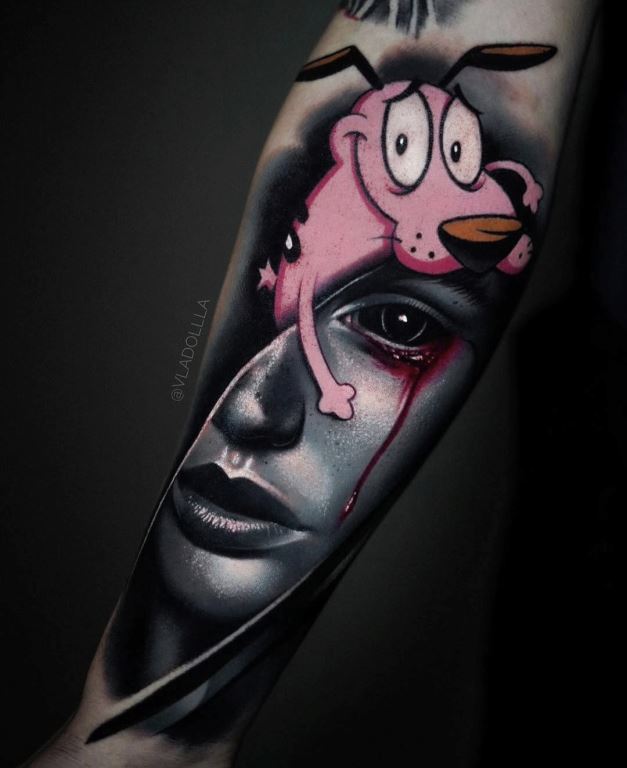
Q: Are there specific cities, studios, or
types of projects in the US that particularly appeal to you? How do
you plan to adapt your style and workflow to the American market
while staying true to your artistic identity?
A: Right now, the place that attracts me the most is Eden Body Art
Tattoo because it’s full of great people and highly skilled artists.
That’s one of the main reasons why I was interested in the
opportunity to work there. As for cities, I’d definitely love to
spend time in New York. It’s a city with an incredible number of
talented people and a very strong creative environment. The same
goes for Los Angeles, Chicago, and Boston. I’m drawn to places where
there are a lot of talented artists and people who are passionate
about what they do. When it comes to my style, I don’t think I’ll
need to change it specifically for the American market. My work is
already heavily influenced by American culture, movies, music, and
video games. I’m sure some things will naturally evolve over time,
but I don’t plan on adapting myself just to fit the market or moving
away from my own artistic approach.
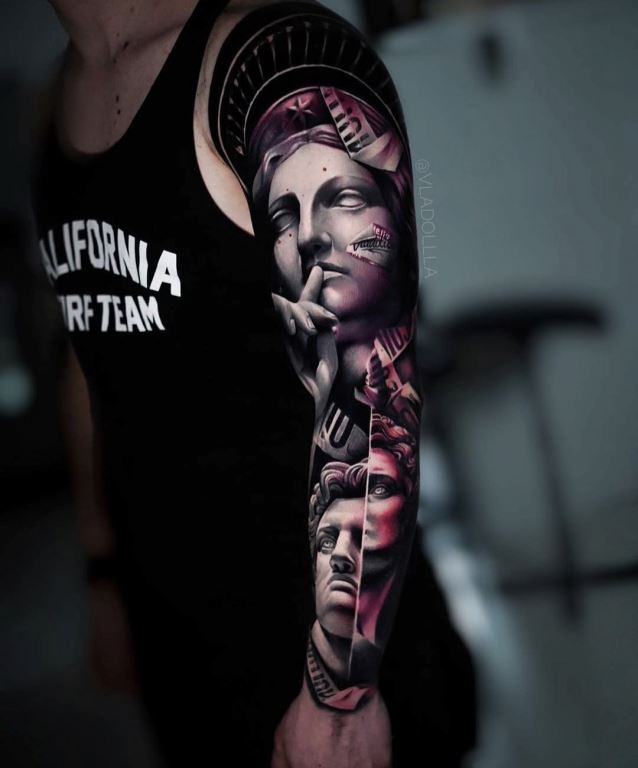
Q: Looking back at your journey from
Kazakhstan to the international stage, what are the most important
lessons you’ve learned about artistry, perseverance, and the tattoo
industry?
A: One of the most important lessons I’ve learned is that you have
to genuinely love what you do. It’s also important to be
hardworking, persistent, and never stop improving. You have to keep
learning, trying new things, analyzing your mistakes, and moving
forward. I don’t think you should be focused only on money. If you
truly love your craft and give it everything you have, the results
will come. It’s also important to stay true to your principles and
your vision, even when the road is longer and more difficult than
you expected. I think that mindset is what helped me go from
tattooing in Kazakhstan to working on an international level.
Q: What advice would you give to young
tattoo artists who dream of taking their careers global?
A: My advice is actually pretty simple: love what you do, work
hard, and never stop improving. If something doesn’t work out, don’t
give up, look for solutions and keep moving forward. It’s also
important not to be afraid of trying new things and finding your own
path. I think it’s crucial not to be just like everyone else, but to
develop something that makes your work uniquely your own. If you
keep working, learning, and staying true to your vision,
opportunities to build an international career will come with time.
Q: If you could reflect on your legacy, what do you hope
clients and fellow artists remember most about your work and your
contribution to the craft?
A: I believe that I’ve made a meaningful contribution to tattoo
culture in Kazakhstan. When I started, I didn’t have any special
connections or a clear path laid out in front of me. I started from
zero and built everything step by step. Because of that, I’d like my
story to show other artists that if you’re willing to work hard and
stay persistent, you can achieve great things no matter where you
come from. I think I helped raise the standard of quality and
showed that a tattoo artist from Kazakhstan can succeed
internationally, work with major brands, win prestigious awards, and
build a career across different countries. Today, many tattoo
artists, tattoo suppliers, and people within the industry know who I
am, and my work is often recognized by people on the street. To me,
that’s a sign that I’ve truly left my mark. That’s why I believe
I’ve already earned my place in the history of Kazakhstan’s tattoo
culture, and I’m proud of that.
Q: Finally, what are you most excited
about for the next chapter of your career?
A: What inspires me most is what lies ahead, new people, new
projects, new opportunities, and challenges that I haven’t faced
before. I’ve always enjoyed stepping outside my comfort zone, trying
new things, and seeing where they can take me. But it’s not only
about that; I’d also like to leave behind something meaningful,
something that can inspire other people regardless of where they
come from or what stage of their journey they’re currently on.
Someday, when I’m older and looking back, I’d like to know that
everything I went through, the hard work, the mistakes, the
victories, and the decisions I made was all worth it. I think that’s
one of the biggest things that keeps me moving forward.
Date: 01 June 2026
Interview: Fredrik Lindström


