
Interview with Volodymyr Havryliuk
Hello Volodymyr Havryliuk! Thank you so
much for taking the time to do this interview. To start, could you
please tell us a little about your background and what initially
drew you to the arts? When did you first recognize this unique
talent? I grew up in a small town in Ukraine, and one of my
earliest memories is coming home from school to watch anime on TV.
The art style really stuck with me and shaped my taste over time.
Later, I got into a video game called Marc Eckō’s Getting Up:
Contents Under Pressure, it opened my eyes to graffiti and street
art. Around the same time, I found my brother’s sketchbook full of
graffiti, and that inspired me to start drawing myself. That’s how
my journey with art really began. I didn’t have formal training, but
I was fully into it and just kept learning on my own.
Q: Moving on to your career, how did you transition from
other forms of art into tattooing specifically? Can you describe
your apprenticeship or early days of learning the craft?
A: When I first got into tattooing, I didn’t have any mentor or
studio to guide me. I was working as a waiter at the time, saving up
for my first tattoo machine. Once I finally got it, I went deep into
YouTube and just watched every video I could find. I actually bought
my first machines from a tattoo YouTuber I followed. In the
beginning, I was tattooing friends at home, just trying to get as
much practice as possible. I was hooked on the process right away.
It felt so exciting to translate my drawings onto skin. There
weren’t really any other artists in my small town I could ask for
help, so I had to figure out everything on my own. It was a lot of
trial and error, but I was obsessed and just kept going.
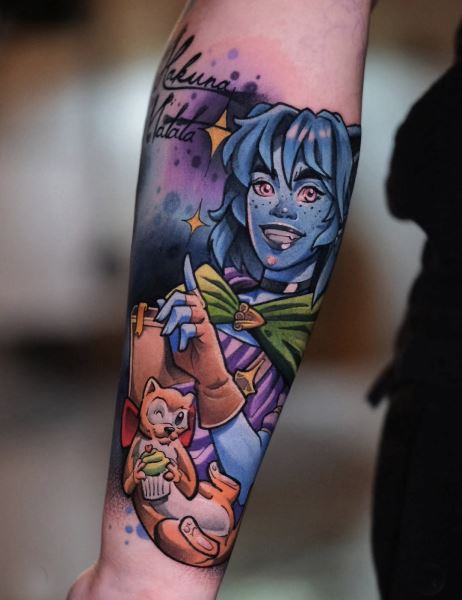
Q: What was your first professional piece
and how did that experience influence your direction?
A: When I moved to Lviv for university, I found a tattoo studio
there and that’s where I got my first proper shot at working in a
professional setting. My first project there was a pretty cliché
tattoo, a black forest wraparound on the forearm. But honestly, I
was just stoked to be doing it in a real studio. Seeing the
environment, the tools, the vibe… it changed everything. It made me
feel like an actual professional, and that feeling stuck. I got so
into it that I started skipping classes just to spend more time
tattooing and working with clients. That experience really pushed me
forward and made me realize this is what I want to do full-time, no
plan B.
Q: How did you first discover and start specializing in the
anime aesthetic? What drew you to this particular style?
A: Honestly, it happened not that long ago. I’ve always loved
experimenting with different styles and techniques in tattooing. I
can pretty much do anything if needed. I’m not saying I’m the best
in every style, but I enjoy exploring them. And when you do a bit of
everything, you start noticing what truly clicks for you. For me,
that turned out to be anime. I started realizing how much I enjoyed
working in that aesthetic. I always had a great connection with
anime clients, and every time I did an anime tattoo, it just felt
right. It came out naturally and looked really solid. So a couple of
years ago, I decided to focus more on it. I still do other styles
sometimes just because I love the craft, but anime is definitely
where my heart is. It’s what brings me the most joy and what I want
to grow in.

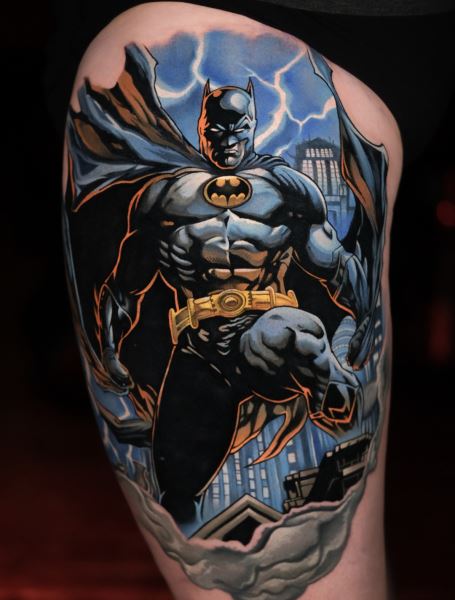
Q: Your color work is highly saturated and
vibrant. Could you share a bit about your philosophy behind using
color contrast to make the tattoos truly "pop" off the skin?
A: To be honest, I can’t even fully explain how it works sometimes,
it just happens almost automatically now. I think after years of
practice, I’ve developed this muscle memory when it comes to color.
I use a pretty limited palette, maybe around 20 main inks, and I mix
from there. That helps me keep my colors consistent and
recognizable, and also keeps me from going crazy trying to manage
hundreds of shades. I pay a lot of attention to how colors interact
with each other, not just how bright they are. Sometimes muted tones
that work well together can look way more striking than pure
saturated ones that just clash. I also like using bold color accents
while keeping most of the piece more subtle. It gives the tattoo
that “pop” while still feeling balanced and not like a coloring
book. And of course, I always guide my clients through aftercare.
Even the best color work can fade badly if it’s not healed properly.
Skin type, tone, and healing make a huge difference, so I try to
think about the long-term result, not just how it looks fresh.
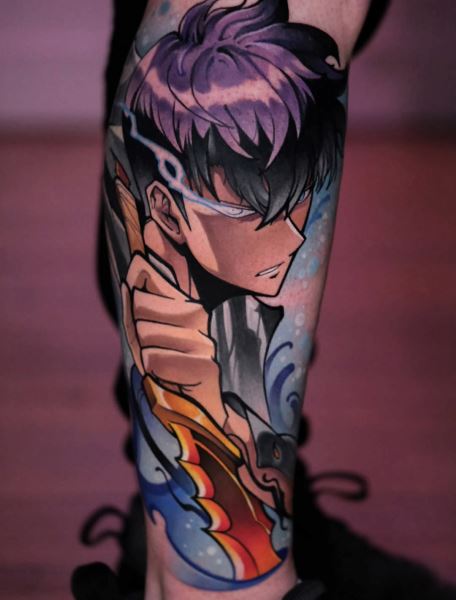
Q: How do you ensure the design elements
(like bold outlines, sharp shapes, or dramatic lighting) translate
effectively from digital mock-up to a permanent tattoo?
A: It’s been a long process of trial and error, figuring out what
works and what doesn’t. The more I experimented, the more I started
picking up little tricks that stuck with me. Masterclasses and
tutorials from other tattoo artists helped a lot too. I’ve had the
chance to work alongside some really talented people over the years
and I always tried to absorb what I could from them. If something
clicked with my way of working, I’d add it to my personal toolbox
and keep using it. That process never really ends. Even now, if I
see something that catches my eye, I’ll probably try it out in a
tattoo the next day. I always aim to make sure the design actually
works on the body. It has to look right in the context of skin,
placement, and flow. I try to communicate the creative side of
tattooing to my clients because I look at tattoos all day and have a
better sense of how things will actually read on the skin. But at
the same time, I really respect my clients’ ideas. It’s always a
balance between their vision and mine, and the goal is to make
something we’re both proud of.
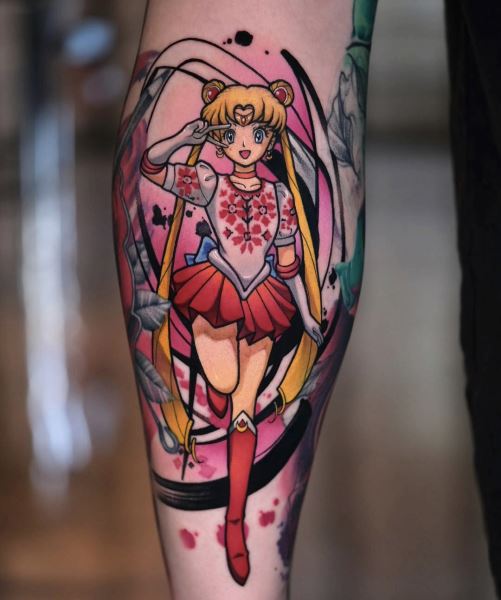
Q: Do you generally prefer adapting
characters directly from the source material, or do you enjoy
creating original poses or compositions for the client?
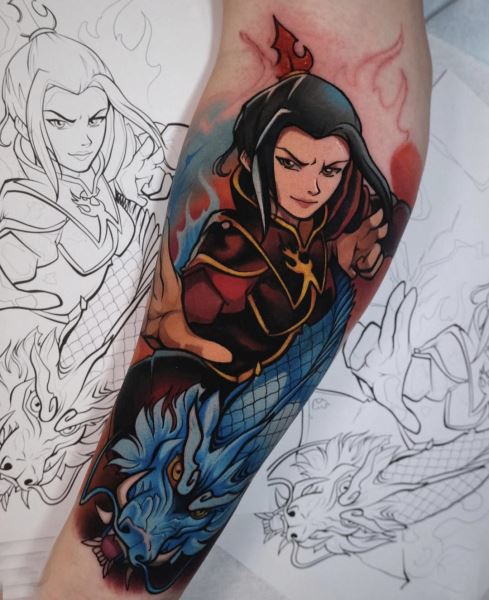
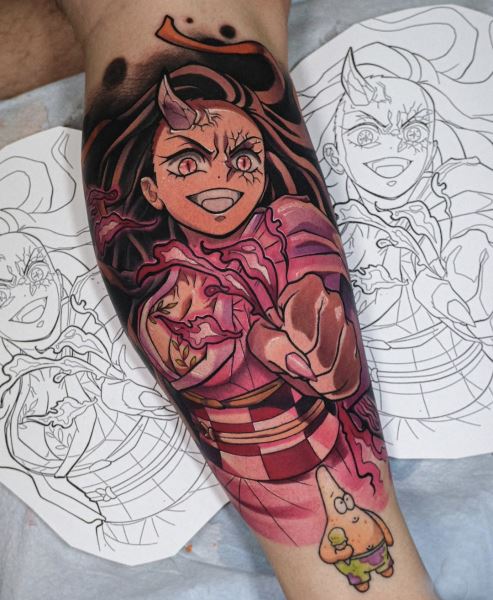
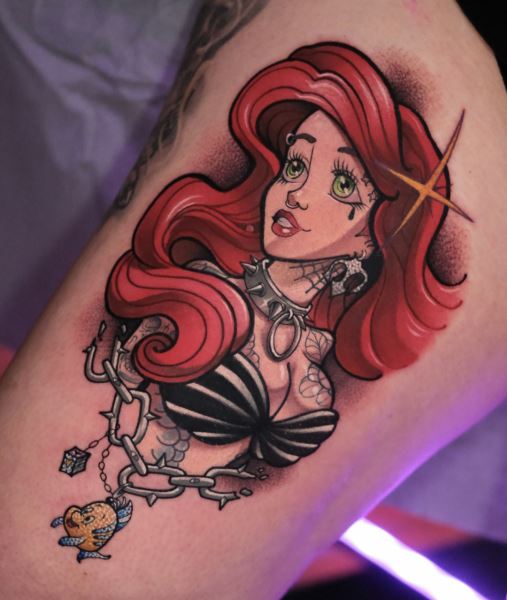
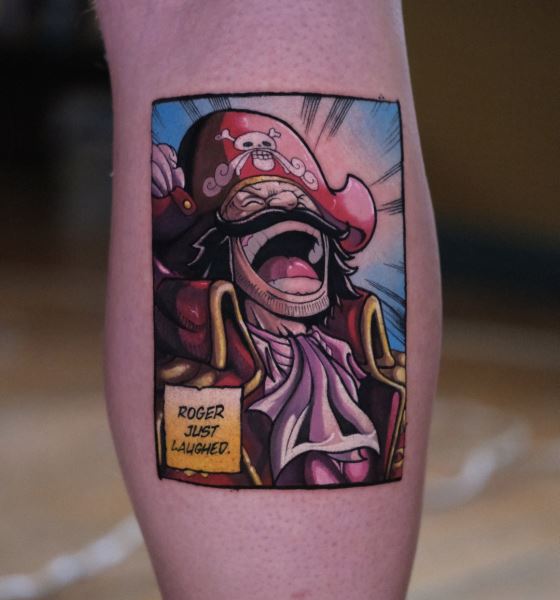
A: It really depends on the project. Most of the time, I like to
take the original character and build on it with more detail. Some
anime frames are pretty minimal, especially when it comes to shading
and depth, so I try to push that further and give it more richness
since we’re working with a single still image. I prefer when the
character actually looks like themselves, not some random fan art
version where their face or features are totally changed. I always
try to keep their authentic look but adapt the design in a way that
works better for a tattoo. That means adding certain decorative
elements, adjusting composition or flow, so it sits well on the body
and still feels dynamic.
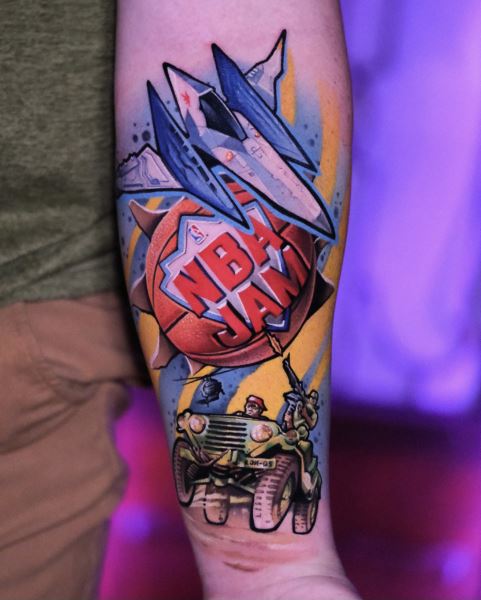
Q: Most have very interesting stories and characters. How
often do you find clients want a lesser-known character or a
deep-cut reference versus a major protagonist? Do you prefer working
on one over the other?
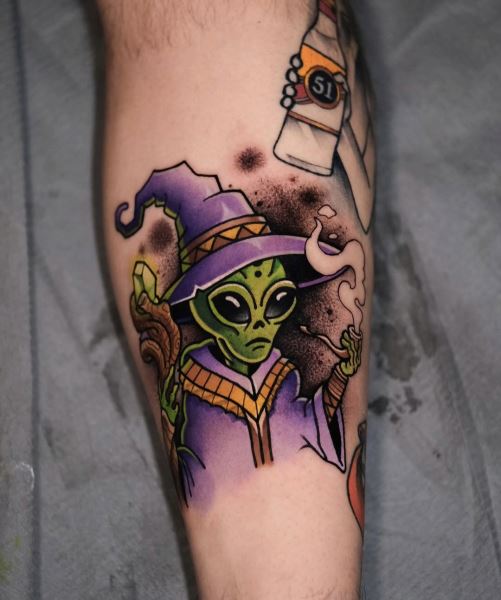
A: I feel like it’s pretty evenly split between popular and more
niche characters. I enjoy working with both. Well-known characters
are always fun because of the recognition and excitement they bring,
but deep-cut references or underrated characters often let you get
really creative with the design and composition. I don’t really have
a strong preference either way. I think having a balance keeps
things fresh and interesting, otherwise it can start to feel
repetitive over time.
Q: Any favorite character?
A: I’d say my favorite characters are Minato Namikaze and Jiraiya
from Naruto. I don’t even fully know why, there’s just something
about them that always stuck with me. Their personalities, their
stories… it all really hit me, and they’ve been my top picks ever
since.
Q: Could you share one of your most memorable or amusing
stories that perfectly captures the dynamic or atmosphere in the
studio during an extended tattoo session?
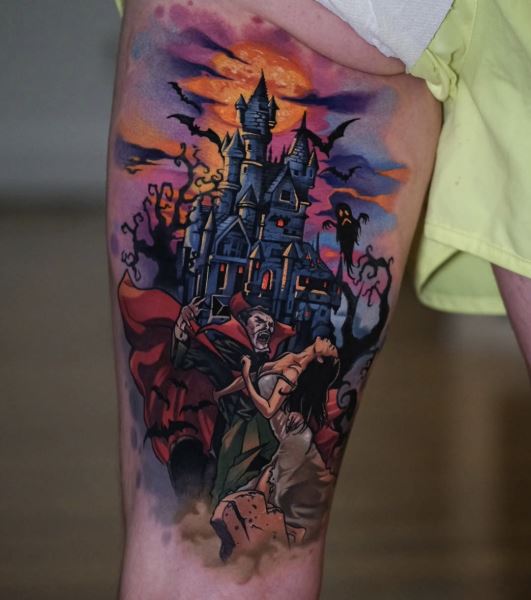
A: There was a session with one client that really stuck with me. It
was a long piece on her thigh and we worked for hours. At some
point, she started sharing the personal story behind the tattoo, and
it honestly hit me emotionally. When we finally finished, she looked
at it and just smiled in a way that I’ll never forget. That moment,
seeing someone light up like that after going through hours of pain,
it’s the kind of thing that reminds me why I do this. It keeps me
motivated to keep pushing my art further. And honestly, I don’t
really have any wild or crazy studio stories, because I like to keep
the vibe pretty calm and focused. I think it’s a good sign when the
weird stuff is rare.
Q: If you were to get a new tattoo for
yourself right now, which anime character or series would you
choose?
A: If I were to get a new tattoo for myself right now, I’d go with a
leg piece featuring Jiraiya and Minato from Naruto, along with the
toads. They’ve always been my favorite characters, and I’ve had this
idea for a while now. I want to create a full custom project that
really captures their vibe and energy.
Q: Is there a particular style or trend within the
anime/color tattoo world that you are excited about exploring more
in your future work?
A: Right now I’m really focused on developing my own recognizable
style. I love experimenting, and that’s probably what keeps
tattooing exciting for me. There’s something really rewarding about
taking little ideas from different styles and figuring out how to
make them work together in a way that still feels like me. I want my
work to be something people can recognize even without a tag. So
yeah, pushing that personal style forward through constant
experimentation is a big goal for me.
Q: What has been your most challenging or rewarding color
palette to work with, and why?
A: I really enjoy mixing and muting my colors rather than always
using super saturated ones. Like, if I need a blue that’s not too
bright, I’ll just throw in a tiny bit of orange to tone it down. It
gives me more control and helps create a more balanced, natural
look. Probably the most challenging palettes are the ones I use when
covering old tattoos. I often mix white, black, and blue to get
these cold gray-blue tones. They help with the coverage, but it
takes a lot of experience and creativity to make it actually look
clean and cohesive. It’s tricky, but I love that challenge.
Q: Have you found a separate creative
outlet in producing and selling digital prints or original art based
on your tattoo concepts?
A: Right now I haven’t really gotten into selling prints or original
artwork, but I do paint anime-inspired canvases to decorate my
studio. I definitely want to explore merch in the future, like
clothing or prints, because it sounds super fun and creatively
fulfilling. The only problem is… if you want to do it right, it
takes a lot of time. And I’m just the perfect mix of lazy and too
responsible to half-ass it. So for now, it’s still on the “someday”
list.
Q: What do you see as the biggest trend or evolution
currently happening in the illustrative tattoo style, and what
advice would you give to artists trying to find their own signature
voice?
A: I think the best way to find your style is to study other
artists’ work in detail. Look at their technique, colors, shadows,
background elements just everything. Try to break down what you see
and recreate it in your own way. That process really helps shape
your own voice. As for trends, I’m not sure. But I see a lot of
talented and creative artists doing amazing things, and that keeps
me motivated to grow and stay sharp.
Q: The client-artist relationship is
critical, especially given the permanence of the medium. Beyond
discussing the design, how do you build trust and ensure open
communication with your clients, particularly during long or
sensitive sessions?
A: I always try to make sure my clients feel comfortable and safe
during the session. If someone feels anxious or overwhelmed, we take
breaks or even reschedule if needed. I might not talk much while
tattooing so I can stay focused, but I’m always checking in to see
how they’re doing. It’s important for me that they feel like I’m on
their side and that we’re doing this together.
Q: Given the demands of consistently delivering
high-quality, custom work, are there occasions when you experience
creative blocks or encounter challenges in meeting client
expectations?
A: I don’t do final designs right away. I start with a line sketch
so it’s faster and easier to adjust if needed. This helps me manage
many projects without burning out. When I feel stuck, I just sketch
a bit or take notes to keep the flow going. I don’t put pressure on
myself to be perfect from the start. That mindset keeps things
creative and enjoyable. My clients trust me with my approach and I
really appreciate that!
Q: Halifax is an interesting location for specialized tattoo
work. How would you describe the local tattoo community and
clientele in Nova Scotia, particularly the acceptance and demand for
full-color anime and graphic styles?
A: Halifax has been an amazing place to grow as a tattoo artist. The
community here is genuinely welcoming. When we moved, a lot of local
artists reached out, and I’ve built great friendships with many of
them. The city itself feels special to me. It’s not too big, people
are kind and open, and there’s a real sense of connection between
everyone. I love that, it feels like a place where artists and
clients really support each other.
Q: You are part of Ethereal Tattoo Studio. What is the
collaborative atmosphere like in the studio, and how does working
alongside other specialized artists influence your own practice?
A: Ethereal is such a great studio and I feel lucky to be surrounded
by amazing people there. I usually blend into any team pretty
easily, but here it’s been something special. There’s so much
support and inspiration in the space. And the best part is that my
wife Dasha works right next to me. She’s my biggest source of
motivation and always helps me grow, no matter what environment I’m
in.
Q: The tattoo industry is very global. Does working in
Halifax give you a specific focus on traveling to conventions across
Canada or the US? Are there any conventions that you prioritize for
showcasing your style?
A: Working out of Halifax gives me a great home base. Right now I’m
focusing on conventions across Canada, especially in the Atlantic
provinces and major cities, because I want to grow a strong client
community here. I’d also love to explore international shows one
day, including in the US, when the time is right. Conventions are a
great way to meet other artists, get inspired, and share your work
with new people.
Q: The American tattoo market is renowned for its sheer size
and vibrant diversity, particularly in styles like yours. How do you
view the US scene compared to the one in Canada, and if the
opportunity arose to collaborate or move your practice to a major US
hub, would you consider taking that step to expand your reach?
A: Absolutely. The US tattoo scene is massive and full of amazing
talent. There are so many artists there I’ve been following and
looking up to for a long time, and I’d love the chance to meet and
maybe even collaborate with some of them one day. It would be a big
step for me. I’m really focused on growing my name within Canada
right now, but if the opportunity came up to work or travel to a
major US city, I’d definitely be excited to explore it.
Q: What impact do you aspire to have on the tattoo
community?
A: I’m at the stage where I’m building myself and my name, so that
in the future I can support and inspire other artists, maybe even
teach and share what I’ve learned. But honestly, my biggest goal, as
simple as it sounds, is to leave people with tattoos that will make
them happy for the rest of their lives. That’s not easy to do, but
it means everything to me.
Q: As you reflect on your career so far, what is a specific
project, award, or moment that you consider to be your proudest or
most defining career highlight, and why does it stand out to you?
A: Honestly, every award I’ve received at a convention means a lot
to me. Just hearing people say kind words about my work really
motivates me to keep pushing and growing. But if I had to choose one
highlight, it would be winning my first Best of Show for the Rengoku
tattoo. The emotions I felt in that moment are hard to describe. It
was a huge milestone and reminded me why I put so much of myself
into what I do.
Q: For the new artists entering the highly competitive
tattoo industry, what's one key piece of advice for developing their
unique artistic voice and navigating the business side of the
industry?
A: You just have to work hard and keep practicing. Everything comes
with time and experience. The best ideas, the right connections,
lucky breaks, and great clients will show up while you’re fully
invested in the process. But if you’re not putting in the effort,
it’s hard to survive in such a competitive field. There are so many
talented artists out there, and the only way to stand out is to keep
growing and pushing forward. That’s exactly what helped me get to
where I am now, but I still see it as just the beginning of my
journey.
Interview: Ivana Kancheska
Date: 18/11/2025


