
Interview with Yigit Savas
Hello Yigit Savas! Thank you so much
for taking the time to do this interview. Please start by telling us
something about yourself and your background. What was the moment or
experience that made you realize art was your calling? I
was born in Eskişehir, Turkey, and discovered my passion for art at
a young age. I was first inspired by Bob Ross on television, which
led my family to enroll me in an art workshop. After training there,
I pursued my dream of studying painting by attending a Fine Arts
High School, and later continued with a degree in Art Education at
university. During those years, dance also became an important part
of my life, shaping me alongside my artistic journey.
Q: Were there any influential people who taught you the
fundamentals of drawing, or are you a self-taught artist?
A: In the beginning, I had teachers who guided me through the
fundamentals of drawing, especially during my time in art workshops
and at Fine Arts High School. Their support helped me build a strong
foundation. However, over the years I have also spent countless
hours practicing on my own, constantly studying and experimenting. I
would say my journey has been a combination of both, benefiting from
my teachers’ knowledge while also developing myself through
self-discipline and curiosity.
Q: Your portfolio seems to draw on a rich sense of history.
Could you tell me about the sources that inspire your work?
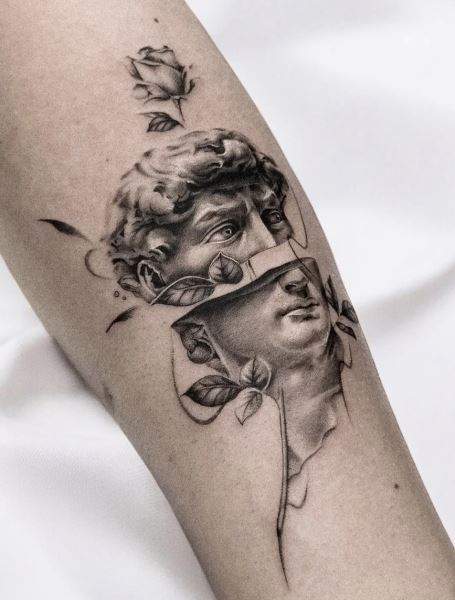
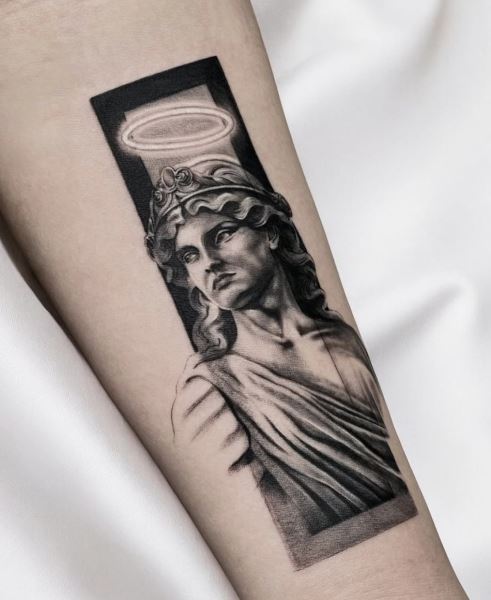
A: I am deeply inspired by history, mythology, and classical art.
Ancient sculptures and paintings give me a sense of power and
emotion that I try to reflect in my tattoos. At the same time, I
also draw inspiration from my clients’ personal stories, combining
both to create meaningful and timeless pieces.
Q: I love how your art blends tattoo realism and fantasy.
What inspired you to create this unique fusion, and what do you
enjoy most about working in this style?
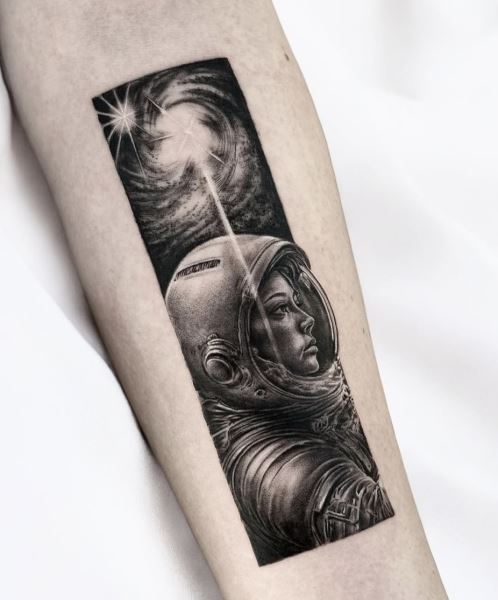
A: I’ve always been fascinated by both realism and fantasy, so
combining them felt natural to me. Realism allows me to capture life
with precision, while fantasy gives me the freedom to go beyond
reality and create something unique. In my creative process, I often
use reference images, but I never copy them directly. Instead, I
sketch and adapt them to match each client’s idea and personality.
Before every session, I prepare a custom design, because I believe
every tattoo should be as unique as the person wearing it.
Q: I'm really interested in the Greek and Roman symbolism in
your work. Could you talk a bit about the philosophical meanings
behind these designs? Have clients shared the personal significance
of these tattoos with you?
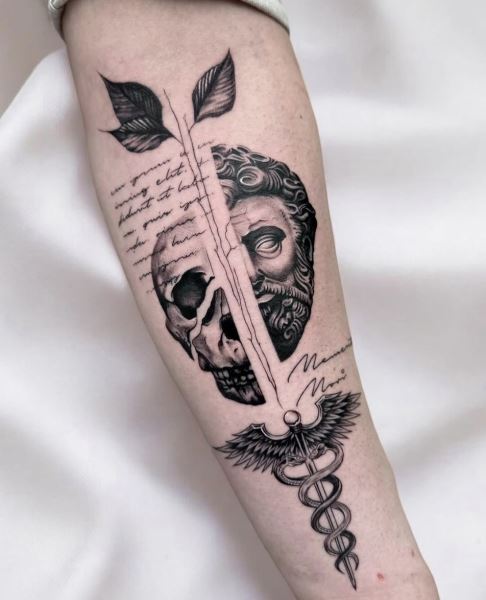
A: I like using Greek and Roman symbols because they have strong
meanings about strength, wisdom, and life struggles. Many clients
choose them to reflect their own stories, and that gives the tattoo
a deeper value.
Q: What are the most crucial and time-consuming elements
that go into creating a hyperrealistic portrait tattoo?
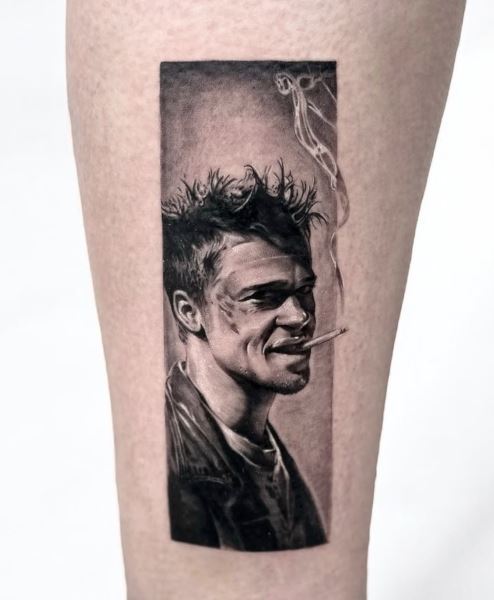
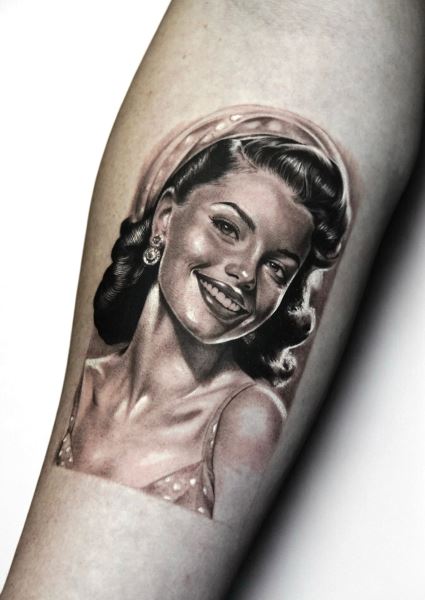
A: The most crucial elements are precision, patience, and detail.
Every line, shadow, and tone must be carefully built step by step.
What takes the most time is creating smooth transitions on the skin
so the portrait looks alive and natural.
Q: Given that precision is essential in realistic
portraiture, how much does a deep knowledge of ink usage and its
properties contribute to the stunning depth and photographic quality
in your black and gray work?
A: A deep understanding of ink is essential. In black and gray work,
the way you dilute, layer, and control the ink directly affects the
depth and softness of the portrait. Knowing how ink heals on the
skin is just as important as how it looks on the first day, and this
knowledge is what creates a realistic, long-lasting result.
Q: Would you try experimenting with color?
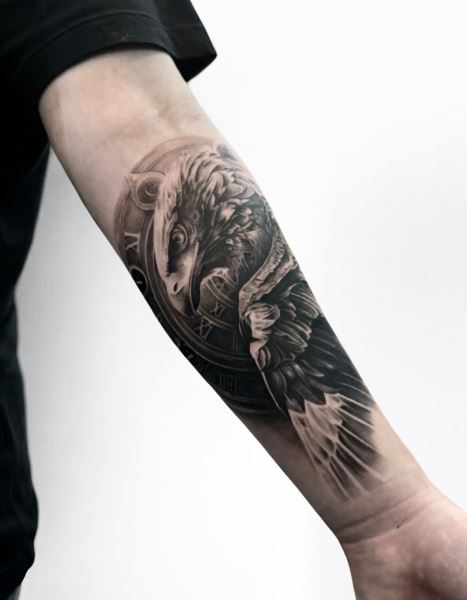
A: I have tried working with color before, but I realized it doesn’t
give me the same satisfaction. My true style and passion are in
black and gray realism, where I feel I can express depth, emotion,
and detail much better. That’s where I fond myself as an artist.
Q: Could you share an experience with a particularly
challenging tattoo you've undertaken? What specific aspects of that
piece made it so demanding, and what did you learn from the process?
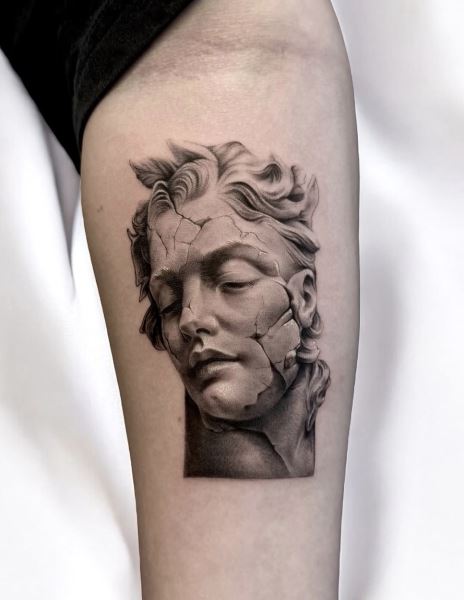
A: The most challenging tattoos for me were small portraits. They
require a lot of precision, because even the tiniest detail can
change the whole look. Once I learned to overcome those challenges,
I realized that working on larger portraits became much easier and
more comfortable for me.
Q: As a tattoo artist yourself, your own collection must be
a curated reflection of your artistic values. Could you share some
insights into the pieces you've chosen for your own body and the
artists behind them? Additionally, what key considerations would you
advise someone to keep in mind when selecting a tattoo artist?
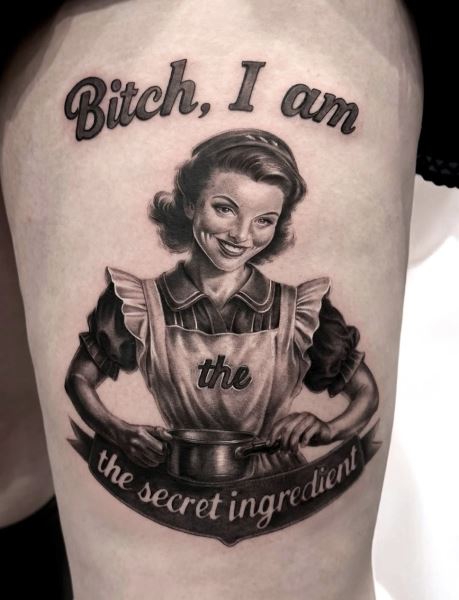
A: I’ve always loved old paintings and classical art, so most of the
tattoos on my body come from that world. I wanted the artists who
worked on me to bring those masterpieces onto my skin. They make me
feel connected to history and give me a good feeling every time I
look at them. When choosing a tattoo artist, my advice is simple:
pick someone whose art speaks to you and makes you feel comfortable.
A tattoo should carry meaning and emotion, not just decoration.
Q: Many people strive to maintain the vibrant appearance of
their new tattoos for as long as possible. What are some of the
primary factors that can negatively impact tattoo longevity and
proper healing?
A: The healing process is just as important as the tattoo session
itself. I always tell my clients to follow the artist’s advice
carefully and to use good products, because this makes all the
difference for the longevity of the tattoo. I work with high-quality
inks, but without proper care the details and depth can fade faster.
Sun exposure, scratching, or using the wrong creams are the main
risks. I also remind my clients that I am always available for them
during the healing period, if they have any questions or concerns,
they can reach out anytime. For me, client care doesn’t end when
they leave the studio, it’s part of the whole process.
Q: Can you share a memorable client story that highlights a
positive impact you made?
A: One of the most meaningful experiences I’ve had was with a client
who was in therapy to overcome an addiction. For every session of
therapy, they got a bee tattoo as a symbol of their journey. I had
the chance to do the last sessions with them, and the bond we built
was very special. Being part of their healing process and supporting
their journey made me feel truly grateful.
Q: What's the best way for potential clients to contact you
regarding consultations or appointments? Can you share your studio's
location and any relevant website or social media links?
A: The best way for clients to reach me is through Instagram, where
I regularly share my work and updates. I prefer direct messages for
consultations or appointments, as it allows me to connect personally
and discuss ideas in detail.
Q: With so many resources available today, from online
tutorials and workshops to conventions and guest spots, it seems
like there are more avenues than ever for aspiring tattoo artists.
Do you feel this increased accessibility has made it easier to break
into the field?
A: Yes, it has made starting out much easier, but not necessarily
succeeding. Today, new tattoo artists can access online tutorials,
workshops, and conventions that weren’t available years ago. This is
a great advantage, but it also means competition is stronger than
ever. I believe accessibility opens doors, but true success still
depends on discipline, creativity, and developing your own unique
style.
Q: What's your take on the local tattoo scene? Are you
seeing any exciting developments, like new artists, styles, or
events?
A: The tattoo scene is growing very fast, and I see more young
artists bringing fresh energy and new ideas. There is a lot of
experimentation happening, different styles mixing together, from
realism to abstract or fine line. I also think conventions and
events play a big role, because they give artists the chance to
learn from each other and push the scene forward. It’s exciting to
be part of a community that never stops evolving.
Q: How often do you attend tattoo conventions? In your
experience, how valuable are tattoo conventions for artistic growth
and building client relationships?
A: I try to attend conferences as often as possible because they
play a major role in my development as an artist. These include:
In 2024, I competed at the İzmir Tattoo Fest in Turkey, where I won
1st place in Best of Small Black and Grey and 2nd place in Best of
Friday. After that, I moved to the United States. The first festival
I attended there was the New York Empire State Tattoo Expo, not as a
competitor but to observe the organization and meet other artists.
It was an incredible experience where I connected with many talented
tattooists and saw amazing works.
My first competition in the U.S. was the 2025 Florida Gulf Coast
Tattoo Expo, where my piece won 1st place in Best Black and Grey and
then went on to earn Best in Show. Winning those awards was a truly
special and unforgettable moment for me.
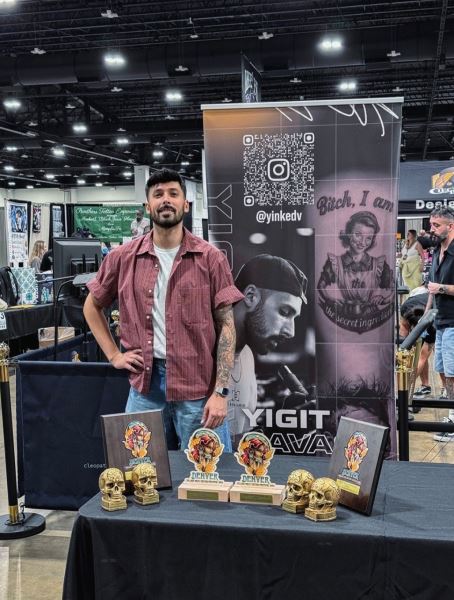
Right after that, I participated in the 2025 Denver Tattoo Arts
Festival, where I won 1st place in Best Small Black and Grey, 1st
place in Best of Day Sunday, 2nd place in Best Realism, and 3rd
place in Best of Saturday.
Most recently, I competed at the 2025 All American Tattoo
Convention, where my works won 1st place in Best Small Black and
Grey, 2nd place in Best Military Tattoo, and 2nd place in American
Pride Tattoo.
I now hold a total of 11 awards, and I truly believe that every
competition and convention has helped me become a better version of
myself.
Tattoo conventions are extremely valuable because they allow artists
to showcase their work, connect with new clients, and learn from
other talented artists. They create an environment of growth,
inspiration, and community that pushes the whole industry forward.
Q: What about guest spots?
A: Guest spots have been an important part of my journey as a tattoo
artist. Working in different studios, especially abroad, gave me the
chance to experience new environments, learn from other artists, and
connect with clients from different cultures. I believe choosing the
right studio and atmosphere is essential, because the energy around
you directly affects your creativity. One memorable experience was
working as a guest in another city where the clients shared very
personal stories behind their tattoos. It reminded me that no matter
where you are, tattooing is about building trust and creating
something meaningful together.
Q: Having traveled and experienced different cultures, where
do you believe is the best place for an artist to grow their career?
I'm curious about the impact of local laws, the cultural mindset,
and the overall environment.
A: From my experience, the United States is one of the best places
for an artist to grow because the tattoo culture is very strong and
respected here. Conventions, competitions, and a large community of
collectors give you constant opportunities to improve and be seen.
At the same time, Europe has its own charm, especially with its
history and artistic traditions that inspire many of my works. In
the end, the “best place” depends on where you feel challenged and
motivated to push your limits.
Q: What are your thoughts on the American tattoo scene, and
are there any specific aspects that interest you professionally?
A: The American tattoo scene is very inspiring, especially in New
York. Attending the Empire State Tattoo Expo as a visitor gave me a
lot, it was a chance to see top artists up close, learn new
approaches, and feel the strong energy of the community. Experiences
like this motivate me to grow and push my own work further.
Q: If you were to explore opportunities there, are there any
regions or cities that stand out to you?
A: New York stands out the most for me. The city has one of the
strongest tattoo cultures in the world, full of diversity and
inspiration. Being there allows me to connect with international
artists, meet clients who truly value the art, and constantly push
myself forward.
Q: Do you have any favorite American tattoo artists you
would like to work with in the future?
A: Yes, there are several American artists I truly admire. I would
love to collaborate with some of the top names in black and gray
realism, because their vision and technique inspire me. For me,
working side by side with artists I respect would be both an honor
and a great opportunity to grow.
Q: Favorite career highlight?
A: When I first came to America, New York truly impressed me. My
next stop was the Florida Gulf Coast Tattoo Expo, where I was
honored with the Best of Show award. That moment made me deeply
happy and gave me huge motivation to push myself even further.
Q: What impact do you aspire to have on the tattoo
community?
A: I want my impact on the tattoo community to be about growth and
inspiration. My focus is on pushing black and gray realism further,
experimenting with depth and detail, and showing what is possible in
this style. At the same time, I hope my journey can motivate younger
artists to stay disciplined and passionate, proving that with hard
work, you can turn this craft into a respected art form.
Q: For someone just starting out, what are the most
important things to focus on to build a career as a tattoo artist?
A: I think the most important thing for someone starting out is
respect for the craft, for the clients, and for the process. This
means being patient, investing time in learning, and never taking
shortcuts. Skills will grow over time, but the right attitude from
the beginning is what builds a real career.


