
Interview with Yllson Skenderas
Today, we are diving deep into the vibrant world
of Yllson Skenderas an artist whose work bridges the gap between
traditional craftsmanship and modern pop culture. Known for his
saturated colors, bold linework, and an uncanny ability to bring
fan-favorite characters to life with a 'Neo-Japan' twist, Yllson has
carved out a unique space in the international tattoo community.
From the streets of Athens to winning awards at global conventions,
his journey is a testament to what happens when raw talent meets
relentless evolution. Let's get into the mind behind the ink.
Q: Every artist has a “Day Zero.” What was that first spark
that made you realize a tattoo machine was the right tool for your
creativity?
A: When I was younger, I was already drawing characters and creating
my own designs. Around 18, I got my first tattoo, and seeing the
process up close made a strong impression on me. I remember thinking
how powerful it was to turn a drawing into something permanent on
skin. After that, I started experimenting on my own, looking into
tattoo machines and trying different setups. It felt like a natural
step from drawing to something more "real" and meaningful.
Q: Looking back at your very first tattoo not the ones in
your portfolio now, but the actual first one what is the biggest
lesson you learned from that experience?
A: I started young, so at the time, I didn’t fully understand how
important and demanding tattooing really is. What that first
experience taught me is just how difficult it is to do properly. I
realized that it takes a lot of control, patience, and especially
practice not just on skin, but also on paper. Building strong
fundamentals through drawing became essential for me after that.
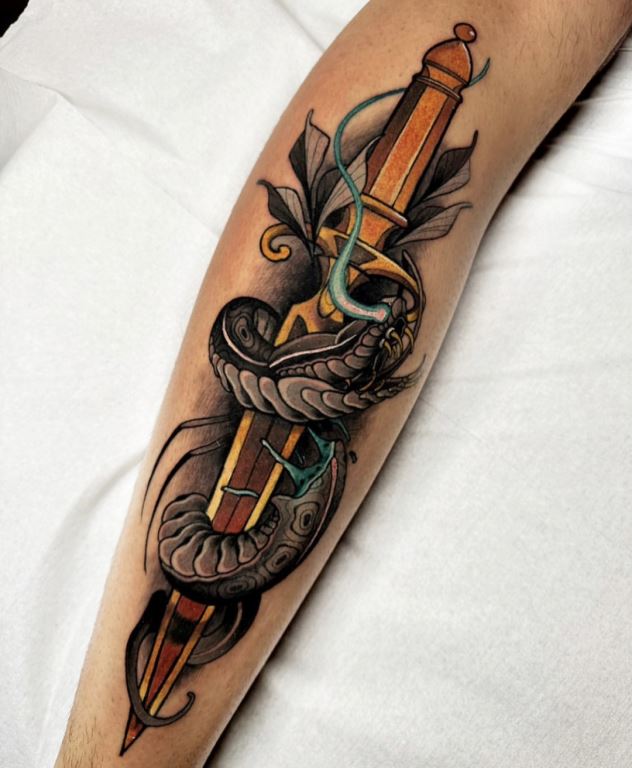
Q: How did the local culture in Athens
influence your perspective on art when you were just starting out?
A: Athens has a very strong and layered artistic identity, from
ancient history to modern street culture. Growing up surrounded by
that contrast from monuments like the Parthenon to graffiti across
the city and even in the metro—gave me a wide range of visual
influences. It made me appreciate both tradition and contemporary
expression, and that balance definitely shaped the way I see and
approach art today.
Q: Who were the mentors or artists that shaped your work
ethic during those early, “booth chaos” days?
A: Early on, one of the biggest influences for me was Hermit. I
first went to him as a client after seeing his work and being
impressed by how clean and unique it was. At the time, I had already
started tattooing a little, but I didn’t feel confident enough to
tell him. As I kept asking questions to understand the process, he
realized I was tattooing too. He advised me to study academic
drawing to build my fundamentals and eventually took me under his
wing. Simultaneously, I was studying academic drawing with my
teacher, Zacharias, which helped me develop my perception and
discipline. Later, I moved to the UK, where I met Jorge Trad, who
helped me improve the practical side of tattooing. All these
experiences shaped my work ethic and pushed me to keep evolving.

Q: Your work is a masterclass in
saturation and flow. How do you balance the rigid rules of
traditional tattooing with the more fluid, expressive nature of
anime and manga art?
A: For me, much of the foundation comes from Japanese tattooing; I
see Japanese artists as some of the greatest teachers of this craft.
I spent a lot of time studying their work through books, trying to
understand composition, flow, and color. At the same time, I wanted
to bring in my own influences. Growing up in the ’90s, I was heavily
into anime and video games, and those visuals stayed with me. The
colors, the energy, the characters all of that naturally became part
of how I express myself. I think the balance comes subconsciously.
The rules provide structure, but your personal influences shape the
final result without you even realizing it.
Q: When you sit down to design a custom piece, what is the
first element you focus on the character, the color palette, or the
anatomy of where it will sit?
A: The first thing I always focus on is the composition and how the
tattoo will age over time, not just how it looks in the moment. From
conversations with other experienced artists and my own
observations, I’ve come to see the body itself as a form of art with
its own natural flow. If you study and follow that flow, the tattoo
becomes part of the body rather than something just placed on it.
Color comes after that and helps build the mood. What I like about
color is that it allows you to define materials and give clarity to
the design, but in tattooing, you always have to translate it in a
way that will hold up over time even after many years.
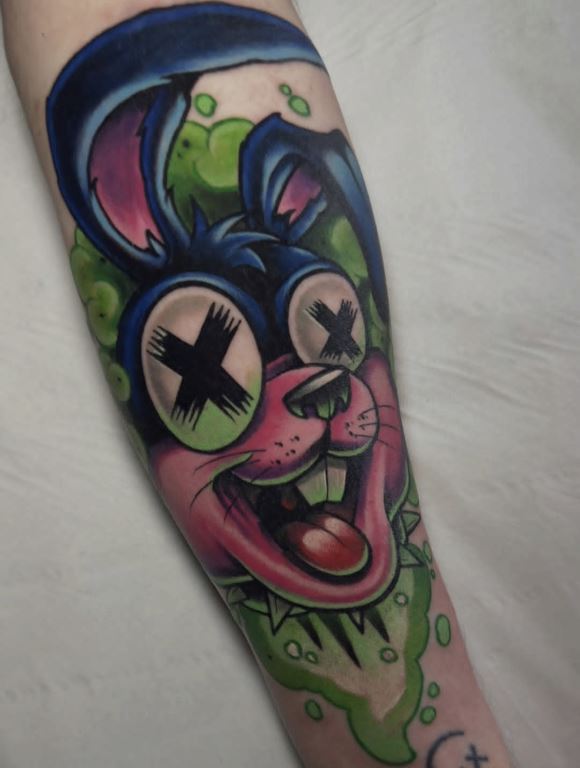
Q: You often mention “Neo-Japan” and
“Neo-Trad” energy. In your eyes, what defines the modern evolution
of these styles?
A: For me, it’s all about evolution through knowledge. When a strong
foundation in academic drawing meets the principles of traditional
tattooing, it creates something bold and technically powerful.
Traditional tattooing brings solid structure clean lines, strong
blacks, and bold, saturated colors. When you combine that with a
more realistic approach to drawing, including light, shadow, and
depth, the result becomes more detailed and dynamic. That balance
between structure and complexity defines the modern evolution of
these styles for me.
Q: Lighting and contrast are huge in your work. How do you
ensure a tattoo looks just as vibrant after it’s healed as it does
the moment it’s finished?
A lot of this came from my apprenticeship, where I had the chance to
see healed tattoos from different artists some even 5 or 10 years
old. I was always asking questions about techniques, needles, and
pigments to understand what really holds up over time. As I
developed my own work, I realized that longevity starts with the
design itself. Strong contrast plays a big role; it helps the tattoo
stay clear and readable, even from a distance. Early on, I tried to
include too much detail, but I learned that this can make a design
look crowded over time. Now I focus more on clarity and balance.
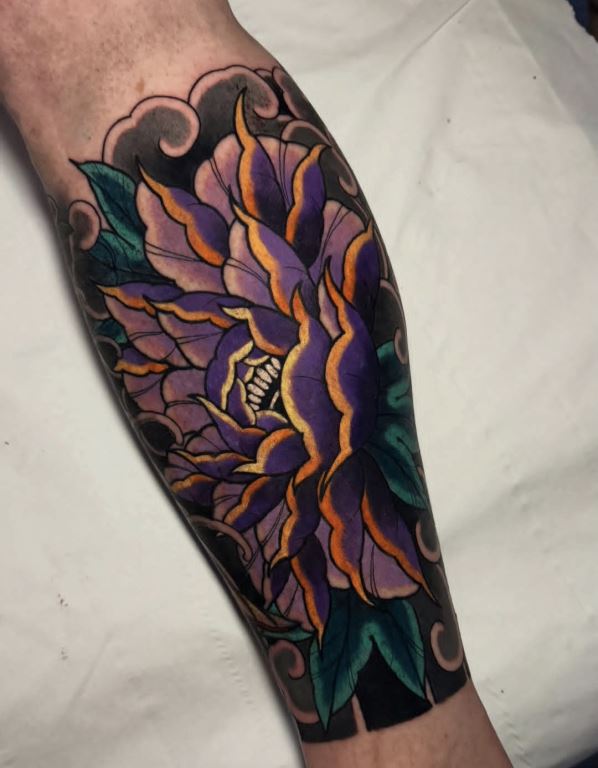
Q: Is there a specific medium outside of
tattooing that dictates how you use color?
A: Yes, definitely. Much of my influence comes from anime series and
films, especially sci-fi movies. They offer a wide range of color
palettes and atmospheres that really inspire me. Through them, I
pick up ideas not only for colors but also for lighting, mood, and
overall composition. I try to translate those elements into my work
in a way that fits tattooing while maintaining a strong visual
impact.
Q: You recently brought home more awards from the convention
circuit. How do you feel your “stage presence” as an artist has
evolved since your first convention?
A: The feeling is still incredible. The first time I won 1st place
for "Best Color Small" at the 15th Athens Tattoo Convention in 2023,
I honestly couldn’t believe it. When I went on stage, I had a huge
smile I thanked the judges and celebrated like I had just won a
championship. Since then, I’ve received more awards, and each has
its own meaning, but that feeling never really goes away. Winning
1st place for "Best Japanese" at the 7th Athens Tattoo Expo in 2023
was a big moment, especially with one of my first Neo-Japanese
pieces. Competing with strong artists and being recognized at that
level felt like a turning point.
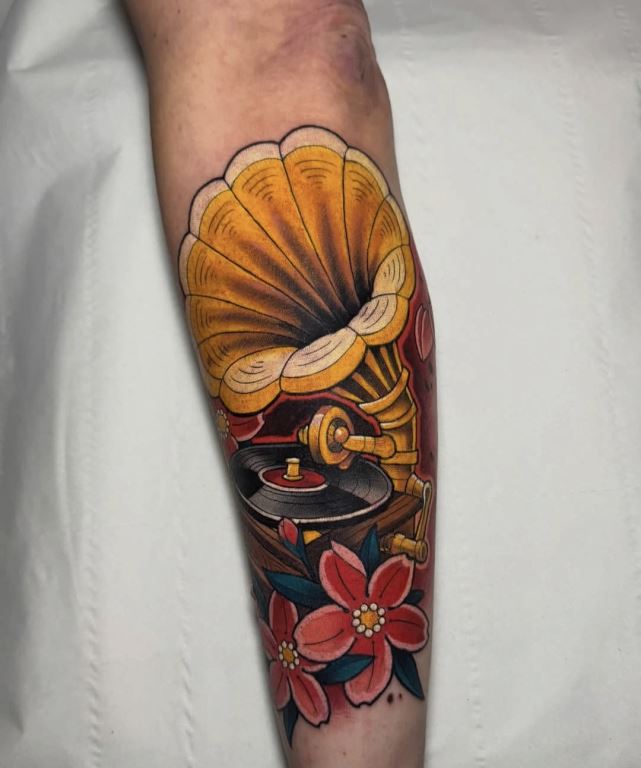
Q: What is the most challenging transition
you’ve made in your career so far moving from an apprentice to a
pro, or finding your specific “niche” style?
A: One of the biggest challenges was transitioning from small
tattoos to large-scale projects. In the beginning, I was mostly
doing smaller pieces, around A5 size. After my first award, more
clients started asking for bigger work like sleeves, and I had
doubts about whether I was ready. To improve, I studied Japanese
tattooing intensely, focusing on composition, proportions, and flow.
But studying wasn’t enough; I had to understand it in practice. With
small tattoos, you can rely on the stencil, but with large-scale
work like sleeves or back pieces, you often need to work freehand to
connect everything properly. Moving from single-session tattoos to
projects that take 60-80 hours was a major shift that helped me grow
the most.
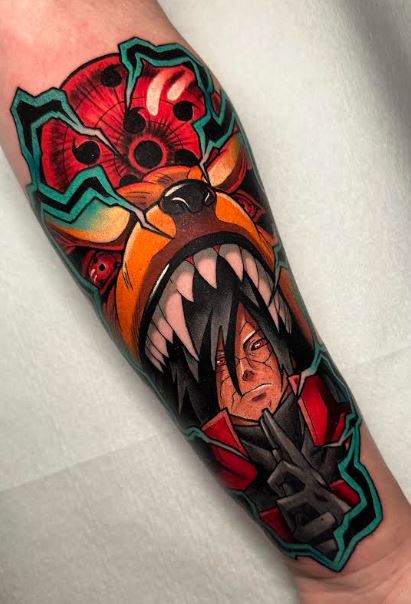
Q. How do you handle "creative block" when you’re expected
to be at 100% every single day for your clients?
A: When that happens, I rely on a method that has worked
consistently: I go back to studying. I look through books from
artists I admire or search for inspiration online. This helps me
reset and approach the design with a fresh perspective. At the same
time, I remind myself that consistency is part of the job. Even on
days when creativity feels low, you still have to deliver. Changing
my process also helps for example, stepping away from the iPad and
drawing on paper allows me to think more freely. I don’t expect the
first idea to be perfect; I develop the design step-by-step.
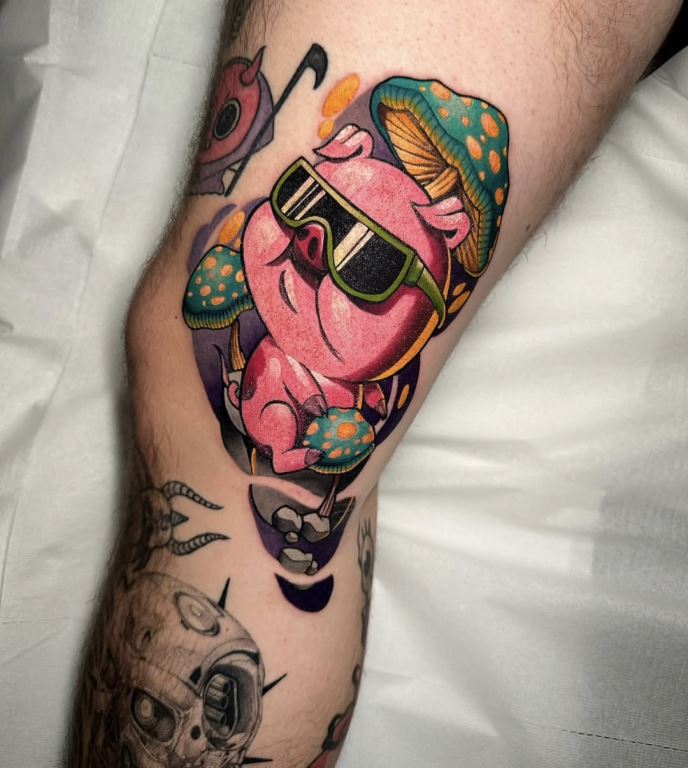
Q: Being part of pro-teams like
@inkin.official how has collaborating with other elite artists
changed the way you look at your own work?
A: Being part of a pro team pushes me to always show the best
version of myself. It feels like another kind of achievement because
I’m not only representing myself but also a group of strong artists.
Working alongside them creates constant motivation we inspire each
other to improve. At the same time, having access to high-quality
tools plays an important role. The needles I’ve used through the
team are some of the best I’ve ever worked with, and that quality
helps me stay consistent.
Q: How does the energy at a tattoo convention in Athens
compare to the vibe of international guest spots?
A: Athens has a very strong and familiar energy for me it feels
intense and personal because it’s home. At the same time, traveling
for guest spots or international conventions exposes you to
completely different cultures and ways of thinking. Seeing how other
artists approach tattooing, and even how people view tattoos in
different places, helps you grow and brings new ideas into your work
in a creative way.
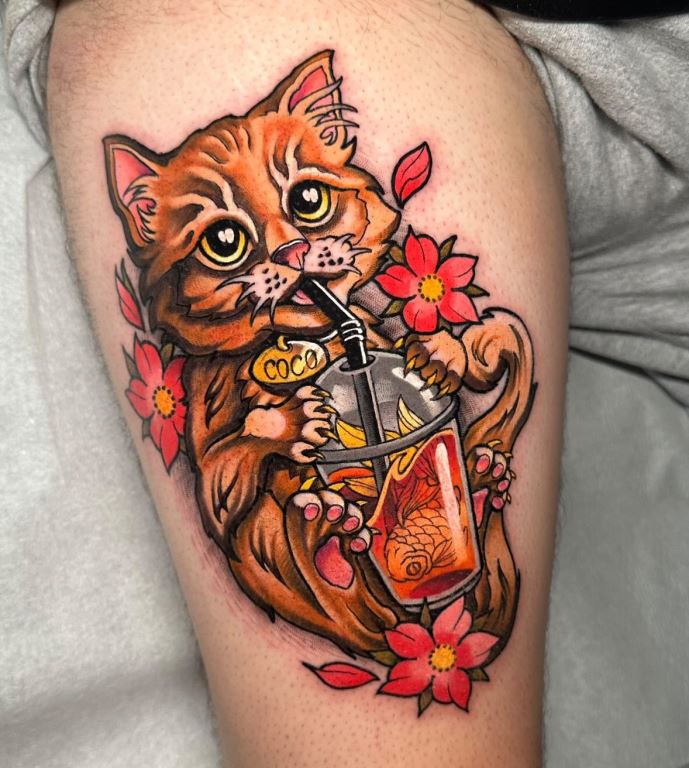
Q: In your opinion, what is the “next big
thing” coming to the global tattoo scene?
A: What I really enjoy seeing is how new artists and styles emerge
every year, each trying to leave their mark. There’s a constant
evolution that keeps the scene fresh. At the same time, I feel like
tattooing is gaining the respect it deserves not only as an art form
but as a craft. People are starting to understand the design and
execution process more deeply. I think the future is a combination
of innovation and respect for the foundations.
Q: How has social media changed the way you connect with
clients compared to when you first started?
A: Social media is a double-edged sword. On one hand, it’s a
powerful tool that helps me share my work and reach a wider
audience. On the other hand, it can feel a bit impersonal. In
reality, a simple in-person consultation creates a much stronger
connection than messages alone ever could. Also, everything now
depends on algorithms, which are constantly changing. Sometimes
people who want to follow my work don’t even see my posts. While
social media is important, real connection still matters most.
Q: If you could set up a guest spot
anywhere in the world tomorrow, where would it be and why?
A: Japan, without a second thought. I have deep respect for their
tattoo heritage and have always wanted to experience firsthand what
tattooing truly means in their culture. It’s not just about the art;
it’s about their unique perception and discipline. I would love to
observe their techniques in their own space. For me, a guest spot
there wouldn't just be about working; it would be a massive learning
experience.
Q: Do you think the 'standards' for what makes a great
tattoo are becoming more universal, or are regional styles still
very distinct?
A: Technical standards like application, solid saturation, and clean
lines are becoming more universal. These are the "fixed" rules that
ensure a piece lasts. However, artistic expression remains
incredibly diverse. Every region brings its own soul and aesthetic
to the craft. It’s an exciting time to be part of this industry
because we are pushing boundaries while still respecting the core
fundamentals.
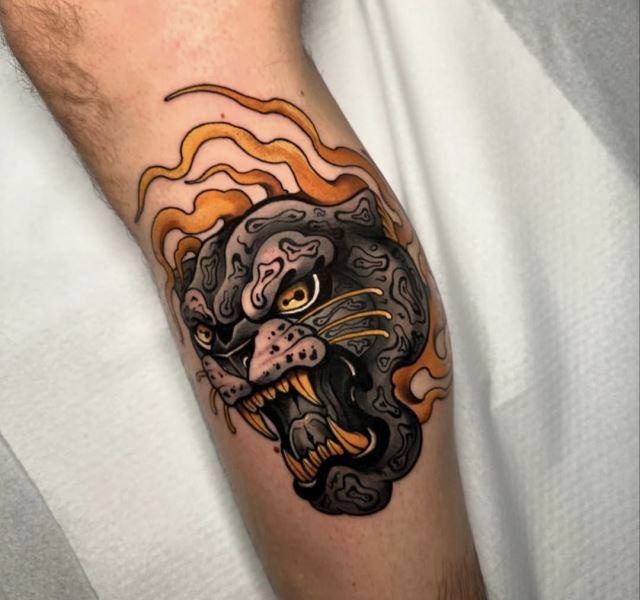
Q: If you had to tattoo one character or
motif for the rest of your life, what would it be?
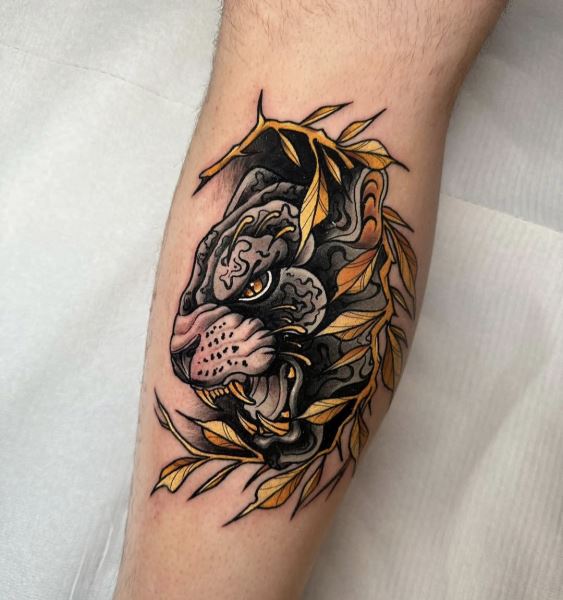
A: The Panther. That character has been a constant in my journey.
Over the years, I’ve taken this classic motif in so many directions:
from traditional black panthers to panther-butterfly hybrids and
even a panther with a Gengar pattern. The versatility is incredible,
and I never get bored of it.
Q: What is the most unusual or unexpected thing a client has
ever said to you while in the chair?
A: It wasn't what they said, but what they did! I had a client fall
so fast asleep during a long session that he ended up sleeping for
eight hours straight while I was tattooing him. Every time I checked
on him, he would barely stir. I felt almost bad waking him up when
we finished! He was the most peaceful client I’ve ever had.
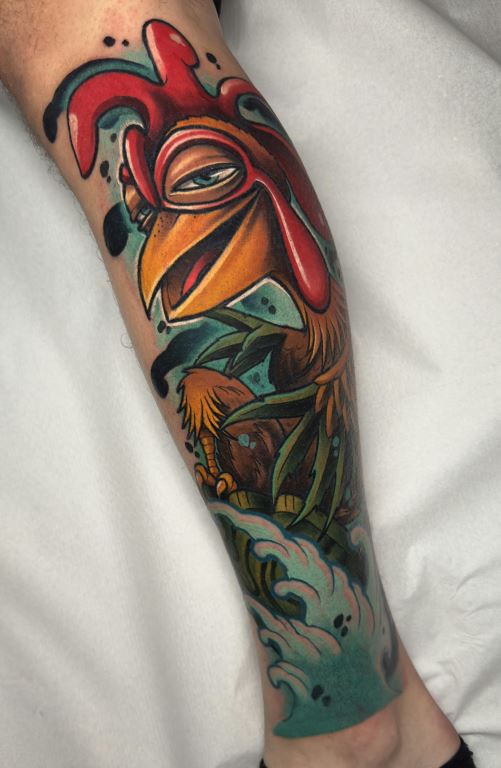
Q: What’s playing in your headphones when
you’re deep in the 'zone' during a long session?
A: I’m a '90s kid at heart. When I’m deep in the zone, I usually
turn to my favorites: 2Pac, Notorious B.I.G., Kendrick Lamar, J.
Cole, and 50 Cent. These artists don’t just fill the silence; they
give me the motivation and the rhythm I need to stay focused and
creative.
Q: If you could go back and give one piece of advice to
Yllson on his first day of tattooing, what would it be?
A: I would tell myself to trust my instincts more. When you’re
starting out, it’s easy to get overwhelmed by technical rules and
the fear of making a mistake. While fundamentals are essential, I’ve
realized that your gut feeling is one of your most valuable tools.
Your instinct usually knows the way before your mind does. I’d tell
my younger self to breathe, listen to that inner voice, and have
more confidence in his vision.
Q: What do you want your legacy in the tattoo world to be?
What should people think of when they hear the name Yllson
Skenderas?
A: I want my legacy to be about more than just ink. When people hear
my name, I want them to think of someone who was authentic,
passionate, and committed to the human side of this art. My goal is
simple: I want them to remember me and smile. If I can leave people
feeling better about themselves and their story, then I’ve achieved
everything I ever wanted.
Date: 08/05/2026
Interview: Fredrik Lindström


