
Interview with Yuliia Kostyrska
HelloI Yuliia Kostyrska! Thank you so much for taking the time to do this interview. Please start by telling us something about yourself and your background. When did you discover your talent for arts? I am from Ukraine. I have been drawing since childhood. I don't remember exactly how old I was, but I have a photo of me drawing, where I'm about 6 or 7 years old. I graduated from an art school and planned to enter the university for design, but fate decided otherwise. My grandfather drew well, probably this interest and a part of the talent were passed down from him. I follow Amanda Oleander, she is an contemporary artist, and she inspired me for many years. I like a lot the famous Ukrainian artist Oleksandr Marchuk. I also like many world famous impressionists like Van Gogh, Mark Shagall, Henri Matisse and others. I think that the foundations of impressionism are very similar to tattoos, especially when it comes to graphics.
Q: What sparked your interest in
tattooing?
A: I was very interested in the tattoo industry. I always liked
drawing with a pen or pencil more than with paints, it all started
just with sketches. When I got my second tattoo, I began to ask the
artist what she started with, whether it is a difficult process,
etc. My main fear was the fear the of responsibility for what I
would do to someone for the rest of their life. It took a lot of
effort to overcome it. When I decided to learn tattooing, my husband
supported me a lot. He probably believed in the idea more than I
did, for which I am very grateful. I finished a course with an
experienced artist. She showed me the basics, but when I started
working, it turned out that this was not enough. Then I started to
teach myself, trying to fill in the gaps. That was the hardest part.
When I saw magnificent tattoos by talented artists and couldn't
understand why I couldn't even come close that. I look up to Ulyana
Nesheva works, Kozo and some other Ukrainian artists and they
inspire and motivate me.
Q: How would you define your style?
A: I think I still haven't fully decided on my style. My story is
definitely about fine line, because I like the fragility and
femininity in tattoos. I really like decorating people's bodies,
therefore I like gentle abstraction and flowers. Because they are
not so much about meaning, but about beauty and the interaction
between the body and the drawing. I also like mini realism. This is
a challenge, because in my opinion it is much more difficult than
any botanical tattoo. I also really like exploring and analyzing
details, I love this process.
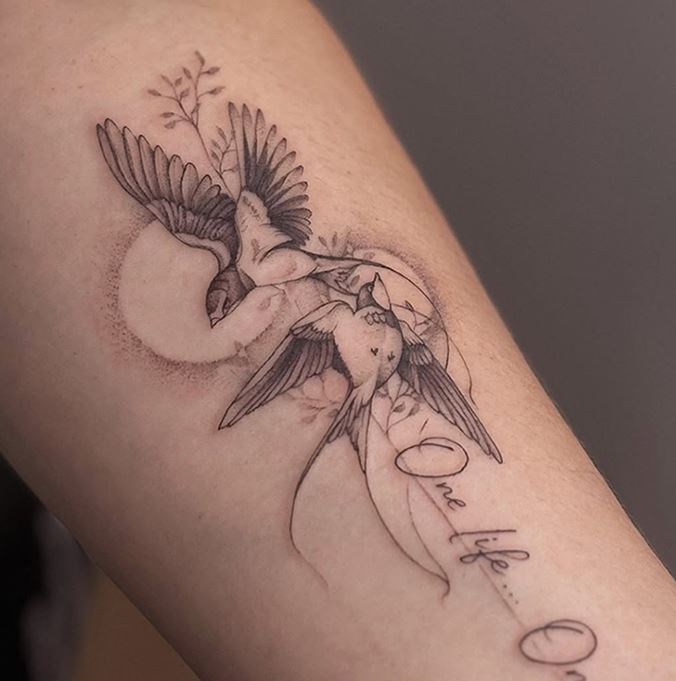
Q: I admire your style, it's so feminine
and understated. Your tattoos remind me of beautiful embellishments
on an antique book cover, and I always appreciate seeing them on
others. Do your clients ever share the stories behind their tattoos
with you?
A: Sure! Most of my clients talk about their tattoos, share stories
and meanings. Often this happens during we are discussing and
creating the sketch, because the person wants to immerse me in their
story as much as possible. This way I can convey it 100% in the
drawing. I always feel how open and ready a person is to talk,
sometimes I ask some abstract questions for this, but I never cross
the line. But when I see that a person is comfortable with me, we
communicate a lot and discuss about the tattoo ideas.
Q: I love how larger tattoos, like leg sleeves or full arm
pieces, can flow so naturally with the body's contours. Do you
collaborate with your clients on placement and design to ensure that
seamless integration?
A: Yes, in my opinion, communication is super important. Now I am at
the stage where I can even delicately refuse a person if I feel that
it is difficult for us to understand each other and reach a
compromise. I always have the option to talk offline - consultations
are available, where we can meet, discuss all the details of the
sketch and the session and even try the sketch on the body. This
helps a lot. In addition, I really like freehand, especially in
large-scale projects. It always allows me to reproduce the
composition as correctly as possible in terms of anatomy,
proportions and volume. I am very glad that my clients trust me.
They just come with references, I draw a very "raw" sketch on the
body, and they just know that it will turn out 100% beautiful.
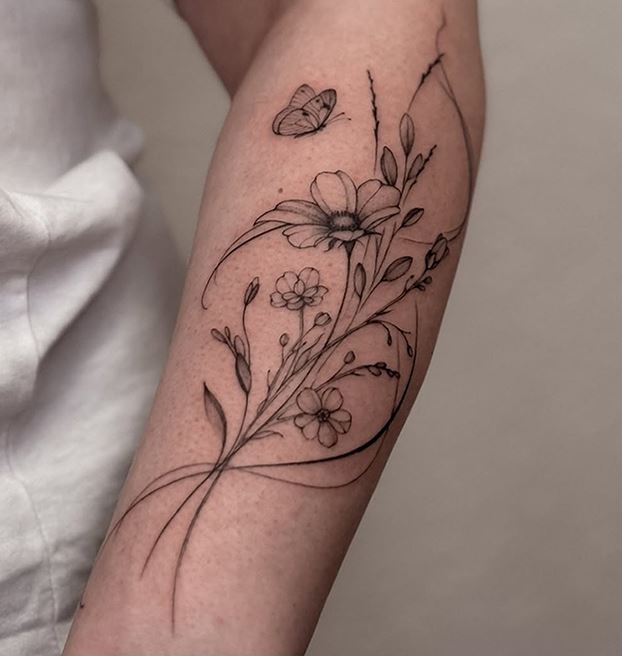
Q: Being a tattoo artist means
consistently delivering high-quality work, which I imagine can be
demanding. Do you have a recent piece you're particularly proud of?
On the other hand, what's been the most challenging tattoo you've
ever undertaken?
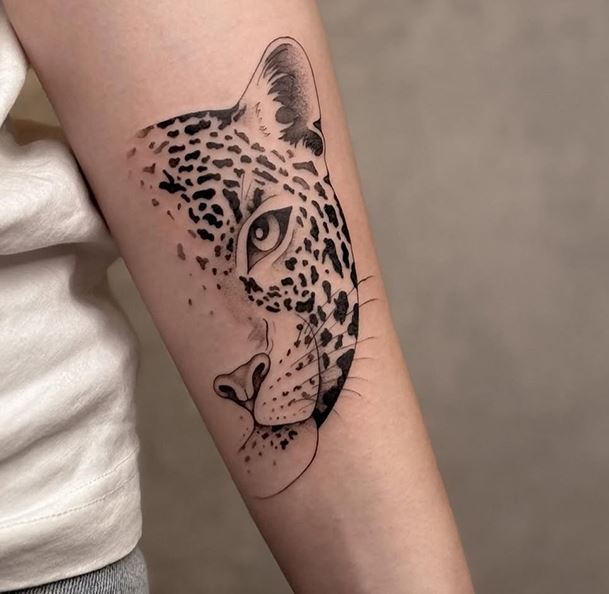
A: I am very rarely satisfied with my work, I always find mistakes
and moments that I could do better. If we consider, for example, the
last six months, this work is probably my favorite one. Everything
matches here: style, technique, composition. But of course, here I
also see moments for improvement.
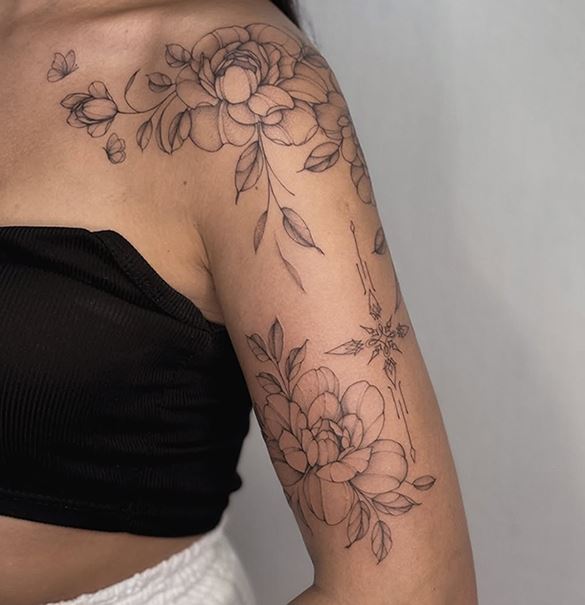
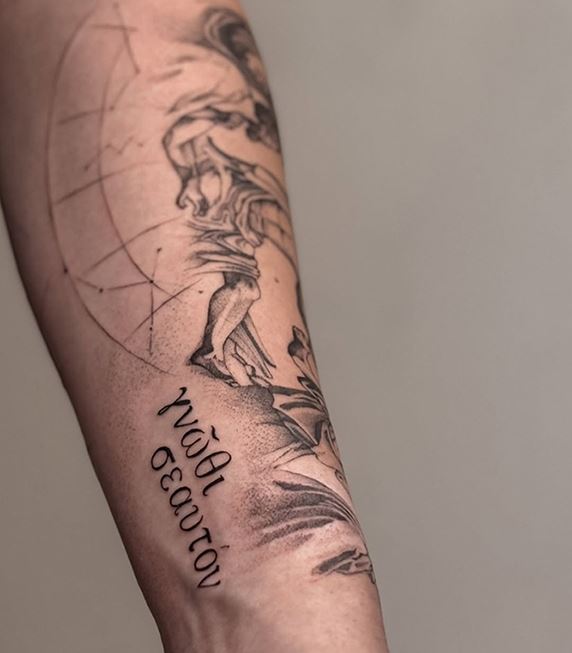
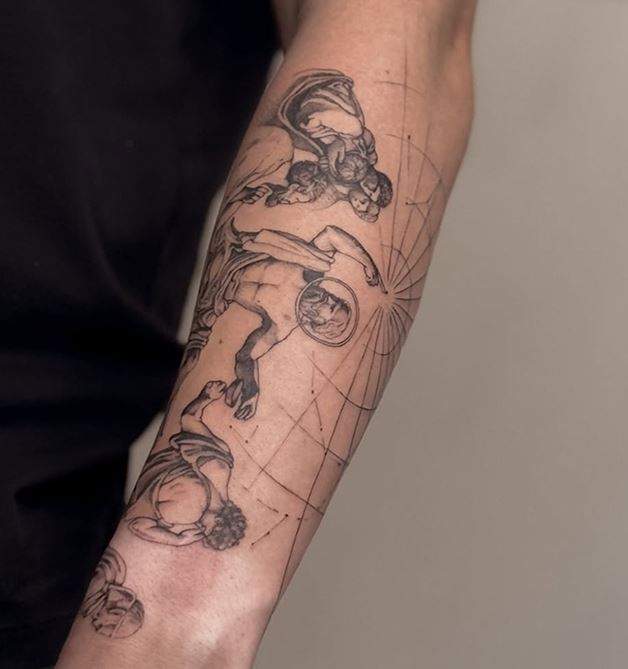
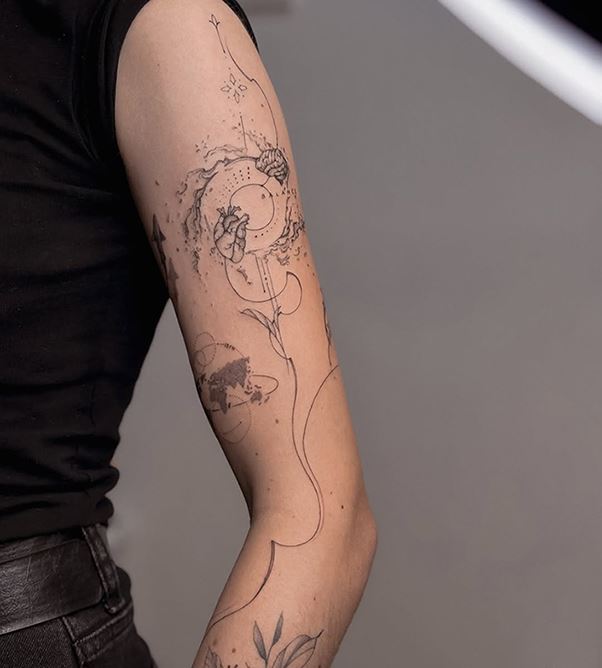
If we talk about the most difficult, then it is definitely this work. It is difficult to transfer the sketch and the process itself, because it is very painstaking and detailed work. And although this tattoo may look good, to be honest, I am not very satisfied with it.
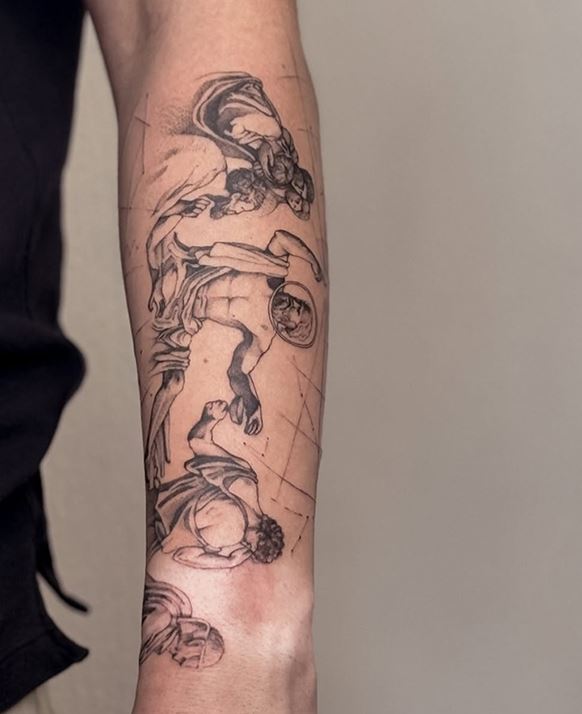
Q: Do you prefer to create entirely
original designs?
A: Unfortunately, in Ukraine the culture of unique tattoos is not
yet very developed. Therefore, more often people come with a picture
or photo and want "the same". In most cases, I manage to convince
them to make at least some changes to make the tattoo more original.
Q: How do you handle situations where a client changes their
mind about a design at the last minute? I imagine that requires
careful consideration to manage time and resources effectively.
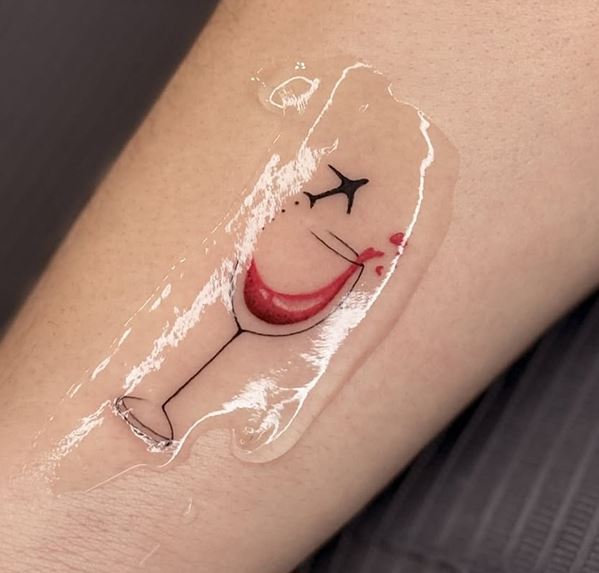
A: Such situations happen quite rarely, but of course, we are just a
human, and sometimes we can change our minds. I think that we just
have to accept it. Because for me, the most important thing is the
emotions that the client gets from the result. If I spent a lot of
time on a sketch, I can later put it up as a flash.
Q: You're very talented and creative. Have
you ever considered exploring other tattoo styles or perhaps working
with full color or maybe something completely different?
A: Oh yes. I like to set new challenges and “change of scenery”.
During my work I realized that some styles are extremely difficult
for me, even physically, they exhaust me a lot. Now I do not do much
of it. But within my capabilities I like to experiment, it's like a
breath of fresh air.
Q: Your work has a beautiful, clean aesthetic, often
focusing on line work rather than extensive shading or color
blending. While the style may appear simple, I imagine some designs
still require a significant time investment to l perfect. Is that
accurate?
A: Black and white classic graphics are certainly easier than
realism or full color works. But I am convinced that in most cases
it depends on the artist's skills. I know some who do impressive
works in realism, but they will not be able to do a thin, neat
inscription, or other thin and, perhaps, at first glance, simple
work as clearly and beautifully as I can. So yes, even if the tattoo
seems easy, it can actually take a lot of work, experience and skill
to do it well and precisely.
Q: Tattooing is indeed a unique blend of
talent, dedication, and artistry. And receiving a tattoo feels like
a special experience in itself. It's almost like an energetic
exchange between artist and client, wouldn't you agree?
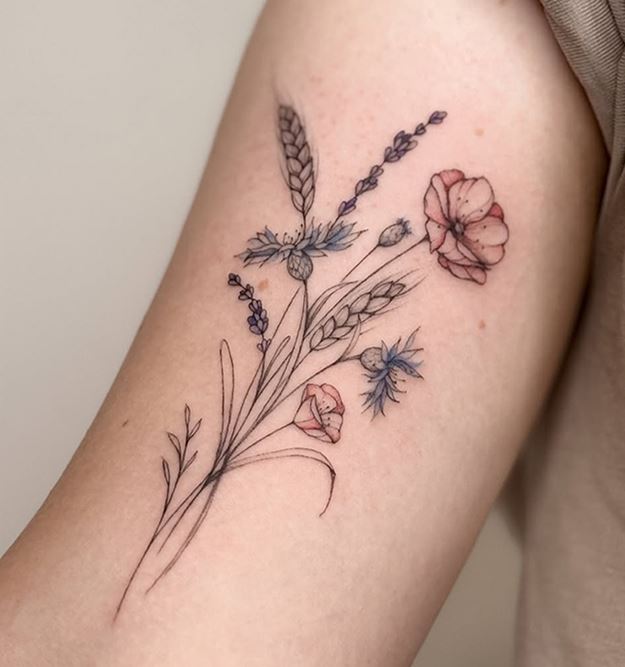
A: Yes, this is 100% true. That's why it's extremely important to me
what type of people come to me. Will they trust me as an artist, and
will this connection happen between us? In most cases now I really
feel that these are "energetically" my people. They see beauty in
the same place as I do. It's incredibly exciting, it is this energy
exchange that gives a lot of strength and inspiration. By the way
regular artists don’t have it, because they don't have direct
interaction with the people who buy their paintings.
Q: It's wonderful to see more and more
women succeeding in the tattoo industry, which has historically been
male dominated. How do you feel about being part of this shift and
seeing so many other talented female artists emerge?
A: I think that in the era of the heyday of feminism, this should
not even be a topic for discussion. Of course, there are more female
tattoo artists than there were even 15 years ago. But did you know,
for example, that the oldest tattoo artist in the world is a woman?
I think this is also connected with gender stereotypes, that tattoos
are not feminine, and tattoos for women have long been something
taboo. That's why I'm very happy that I can be involved in breaking
these stereotypes. To be a tattoo artist and do tattoos for women,
to show the world that tattoos can be feminine, and not "spoil the
pure virgin female body," as many people think, but on the contrary,
adorn it.
Q: With so many resources available today, from online
tutorials and workshops to conventions and guest spots, it seems
like there are more avenues than ever for aspiring tattoo artists.
Do you feel this increased accessibility has made it easier to break
into the field?
A: I think those who want something will always find an opportunity.
Yes, you are right, it has become very easy to break into the tattoo
industry, like any other sphere nowadays. But will all those who
studied on their own or with the help of online seminars be able to
succeed? This is not a simple question. The tattoo industry is very
selective. It accepts only truly talented and hardworking artists.
Those who have a unique vision and know how to execute it
technically well, but also present and sell it. Now being just
talented is not enough to become successful.
Q: Do you like the local tattoo scene? Do
you see progress?
A: Unfortunately, I'm not completely satisfied with the development
of tattoo art culture in my city, Berdychiv. Let's start with the
fact that I live in a small
town, and all trends come here later. Because if we talk about the
capital, Kyiv, and Ukraine at all, then over the past ten years the
tattoo industry has made a huge leap, and now there are many people
who appreciate quality and uniqueness. In the city where I live and
work, there is a much smaller percentage of people who feel the
value of a really good tattoo and are willing to pay for it. So
unfortunately, there is little potential for development here.
That's why I go to big cities and abroad from time to time to work.
But if we talk about artists, then the situation is the opposite. I
sincerely admire Ukrainian tattoo artists. World-class professionals
work here. Moreover, I see it in very different styles. Ukrainians
are incredibly talented, and I think Ukrainian artists should be
known all over the world. Not because I'm from here.
Q: How frequently do you participate in tattoo conventions,
and how do you leverage these events to enhance your professional
visibility, connect with clients and fellow artists, and potentially
expand your career opportunities?
A: I haven't participated in tattoo conventions yet. I guess I feel
like I'm not ready yet. Or maybe I don't need to. I haven't decided
yet, to be honest. What I see at festivals is usually classic
tattooing that has been around for decades, and I very rarely see
styles similar to mine at festivals. Maybe because of the stereotype
that it's incredibly easy to do. So if I were to participate, it
wouldn't be for the sake of winning, but rather to show my work and
meet other artists. Howe, I think it would be nice to try yourself
at a local festival, and only then go abroad.
Q: What was the experience to work as a guest artist?
A: From time to time I work as a guest artist. In Ukraine, I have
been to Kyiv a few times, only because I have many clients there,
some of whom have already become regulars. I have also been to
Poland, Germany and France. I can say that abroad, studios are much
more welcoming than here. Maybe, it was a coincidence. But honestly,
I love the attitude of people towards tattoos abroad. They are much
more open minded, they love individuality and uniqueness. As an
artist, I really like that.
Q: Given the vibrant and diverse nature of
the American tattoo scene, are you interested in exploring more
professional opportunities within the United States?
A: Sure! I have already traveled a little around Europe. So there
are still countries I would like to visit and work in, but I am
interested in exploring the tattoo industry further. I really like
meeting and exchanging the experience with other tattoo artists,
expanding my vision, and sharing my art in different parts of the
world. The United States is very attractive to me professionally.
Sometimes I look at the work of artists, how they work, and it is
somewhat different from what is in Europe. I would be interested in
exploring it. I am sure that I could bring something new and
interesting to U.S. tattoo culture.
Q: If you were to pursue a long-term career as a tattoo
artist in the United States, is there a specific region or city that
particularly interests you?
A: This is a difficult question. Because I know that the main tattoo
scene is in New York and Los Angeles. At least most of the cool
artists I know work there. But I also understand that at the
beginning, it will be difficult for me to compete and promote my
work in such big cities. So for now I'm considering Seattle, Chicago
or Miami for example. Then I’ll see how my career further develops.
Q: What kind of impact do you hope to make on the world of
tattoo art in the years to come?
A: I consider my mission as a tattoo artist to beautify people's
bodies. To show other people that a tattoo can be elegant and neat.
It can hide flaws and emphasize the beautiful anatomy of the body.
And of course, I specialize mostly in female tattoos, so I would
like to show the world how beautiful tattoos can look on women. In
addition, I hope that I can be useful to other tattoo artists.
Because I work with thin lines and aerial light shadows, that can be
interesting to other artists. I strive not only to spread my
creativity, but also my knowledge and skills to other artists.
Q: Do you have any favorite American tattoo artists you
would like to work?
A: I admire the work of Sashatattooing and Kozo the most. So, of
course, I dream of meeting and maybe even working with them. I also
know that Aleksandra is also from Ukraine, so that also motivates
and inspires me.
Q: What activities or interests help you
maintain a balanced lifestyle and foster personal growth outside of
your professional endeavors?
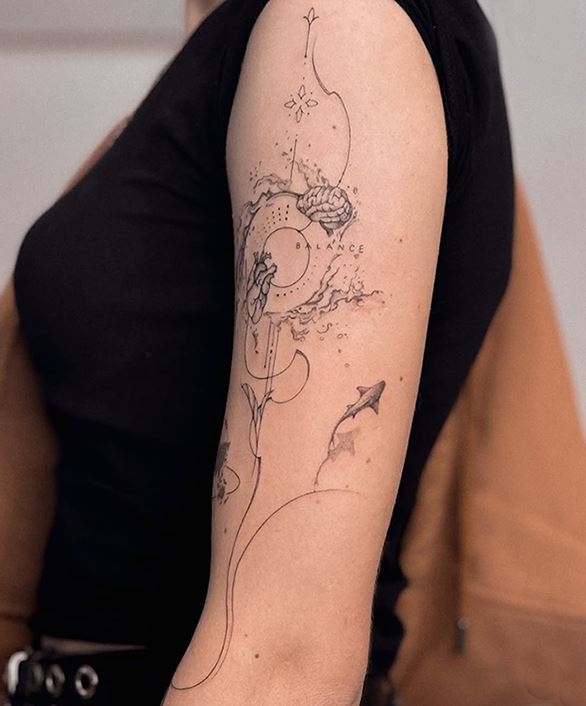
A: I love doing yoga. It helps me stay in shape both physically and
mentally. In general, I believe that tattoos are not just about
pictures, they are a special process and spiritually uplifting.
Sometimes I notice how visually similar sketches can be but executed
completely different, depending on the vibe of the person who has it
and what meaning they put into it. Therefore, I really like to
develop spiritually. And yoga practices help with this. I am also
interested in numerology and how it can affect the quality of a
person's life. I also like to read and paint on canvas. First of
all, it inspires me, and sometimes even a small change of activity
gives me an impetus to create new interesting designs.
Q: What are the most rewarding aspects of your career as a
tattoo artist?
A: I think it is a level which I achieved during a short time. In
3.5 years I have developed my skills to high level and gain a
certain audience. This helps me to be a "demand" artist in my city,
as well as work abroad. I also teach people how to do tattoos from
scratch, and organise coaching workshops for experienced artists.
For me, this is a great indicator of development. But I still
believe that the most significant moments in my career as a tattoo
artist are still ahead.
Q: What is the most valuable advice you can offer to someone
who is serious about becoming a professional tattoo artist?
A: Being a tattoo artist is a constant process of self-improvement
and exploration. If you want to be successful, you need to
constantly analyze your work and try to do better every time. You
will degrade the moment you are satisfied with everything in your
work. Besides, nowadays it's not enough to just be a professional.
You need to promote yourself in the media, present your work
creatively, and advertise your work in every possible way, it is
super important.


