
Interview with Zilfo Tattoo
It has been nearly three years since we first sat
down with Ziflo, a name that has quickly become synonymous with
breathtaking precision in the European tattoo scene. When we last
spoke in 2023, he was an artist deeply focused on the fundamentals,
mastering the "fatal" accuracy of human portraits and building a
reputation for clean, high-contrast black and grey work. Fast
forward to 2026, and the transformation is undeniable. While the
technical perfection remains, Ziflo has evolved from a portrait
specialist into a master of complex storytelling. His latest
portfolio is a masterclass in textures, from the soul-piercing gaze
of hyper-realistic wildlife to the delicate touch of fine-line
artistry. Now based in the heart of Geneva, his international
following has skyrocketed, yet his work ethic remains as grounded as
it was on day one. Today, we’re reuniting with Ziflo to discuss the
"next level," the longevity of his work, and the reality of the
modern tattoo industry. Welcome back Ziflo.
Q: In our first interview, you mentioned that the "slightest
mistakes in realism can be fatal." Looking at your 2026 portfolio,
your use of deep, saturated blacks against skin-tone highlights has
become much more dramatic. How has your understanding of contrast
evolved to make these pieces look even more three-dimensional than
before?
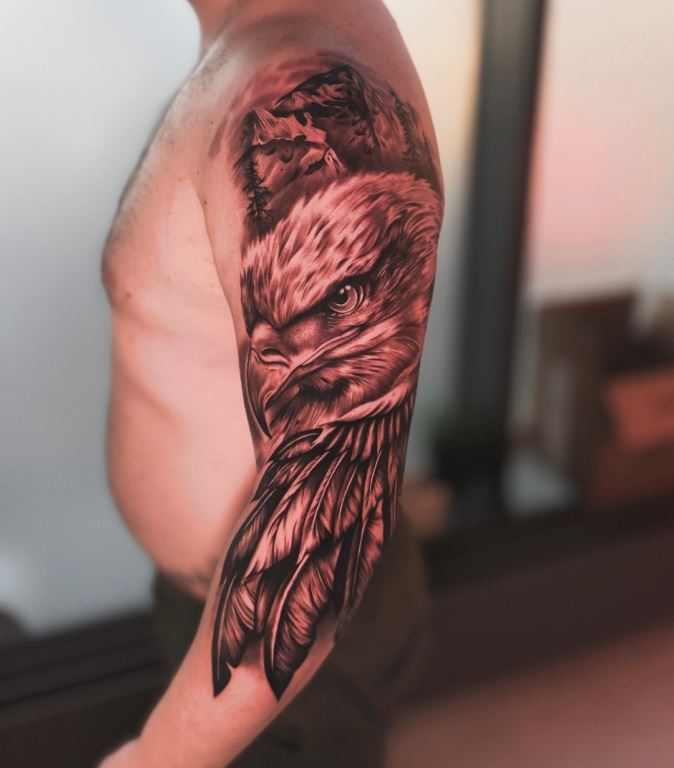
A: In realism, contrast is everything.
A few years ago, I was mainly focused on accuracy and making sure
every detail was technically correct. Over time, I realized that
contrast is what truly creates depth and longevity in a tattoo.
Today I push deeper blacks and preserve strong skin highlights to
build more dimension. When those elements are balanced correctly,
the tattoo becomes more three-dimensional and remains readable even
from a distance. I always say realism is not just about copying an
image, it’s about translating light onto the skin.
Q: Your recent work shows a beautiful
blend between heavy realism and extremely delicate fine-line work.
What is the biggest challenge when transitioning between a
high-pressure portrait and those soft, rhythmic fine lines in the
same session?
A: The biggest challenge is controlling pressure and rhythm. When
you move from a high-detail portrait to very delicate fine lines,
your hand and your mindset have to adjust instantly. Realism
requires patience, layering and controlled saturation, while
fine-line work is much more about softness, flow and precision. For
me it’s like switching between two different drawing languages. The
key is staying calm and keeping full control of the machine and the
movement. Both styles require discipline, but together they create a
beautiful balance.
Q: A few years ago, you were primarily focused on
single-subject portraits. Today, we see complex "storytelling"
pieces. How do you approach the design process differently when you
have to blend multiple narratives into one sleeve?
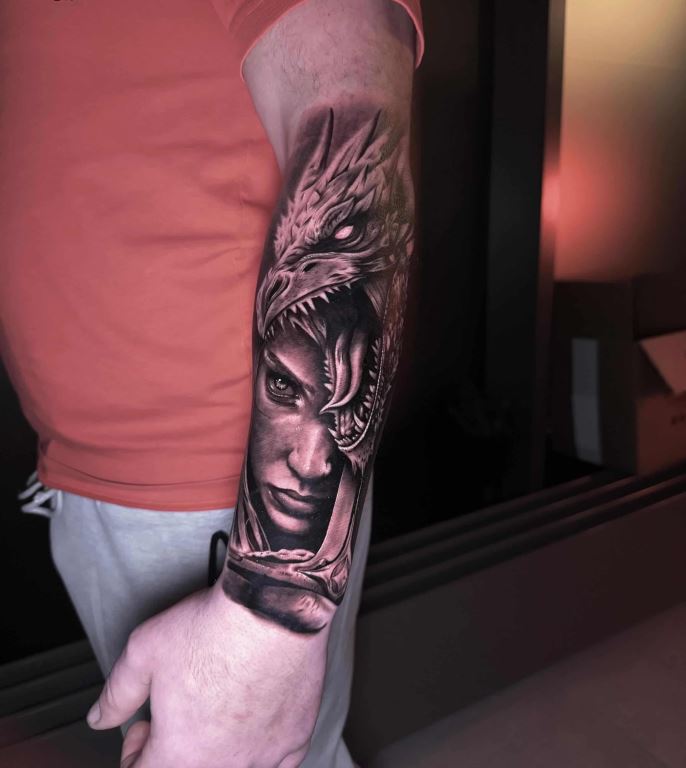
A: When I work on a sleeve today, I think much more about flow and
storytelling.
It’s no longer just about one strong image, but about how every
element connects together on the body. I spend more time on the
composition, making sure the different subjects interact naturally
and follow the anatomy of the arm or the leg. For me, the goal is to
create one unified piece rather than several separate tattoos. When
everything flows correctly, the whole sleeve becomes a single visual
story. I want the viewer’s eye to travel through the tattoo
naturally.
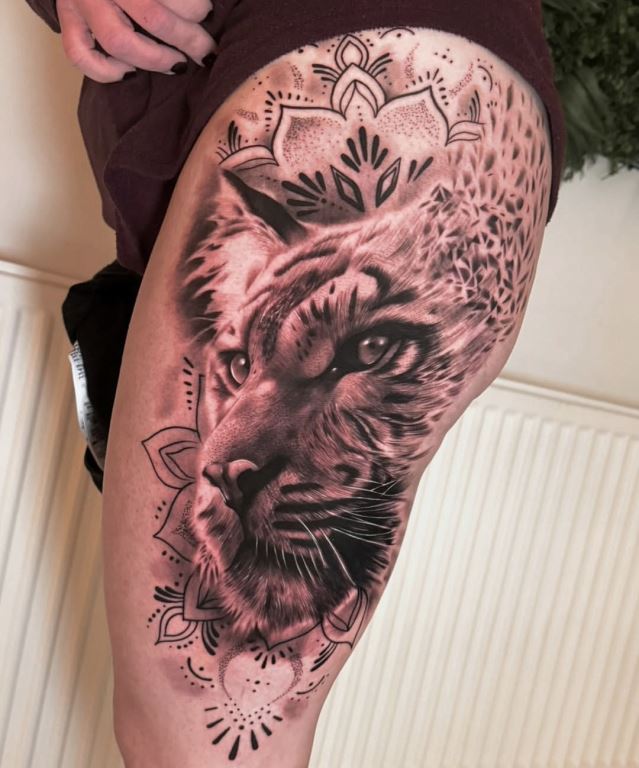
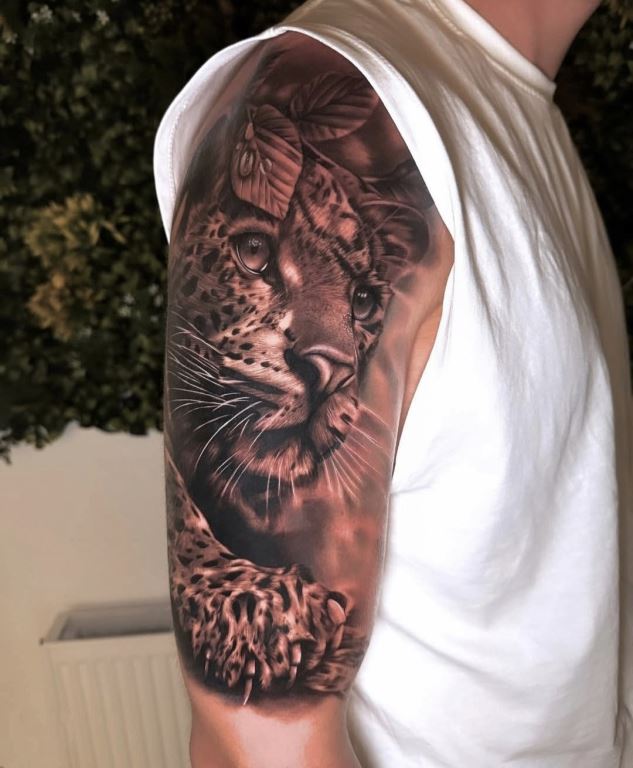
Q: You have become a specialist in
hyper-realistic wildlife, particularly lions and tigers. What is it
about the texture of fur and the "soul" in an animal’s eye that
keeps you inspired compared to the human portraits you focused on in
the past?
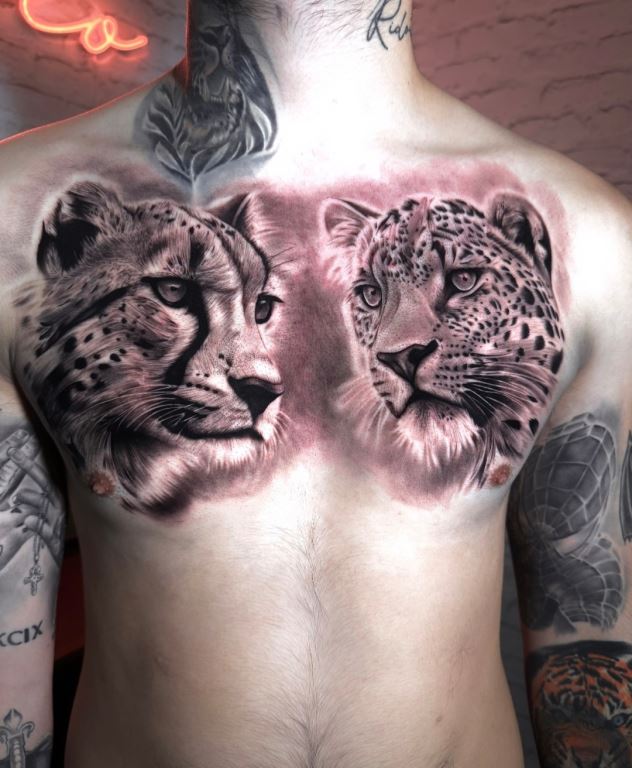
A: Animals have something very powerful in their presence and in
their eyes. When you look at a lion or a tiger, there is a sense of
strength, instinct and raw emotion that is fascinating to capture.
From a technical perspective, fur textures are also very interesting
because they allow me to play with depth, contrast and movement.
Compared to human portraits, wildlife gives me a different kind of
freedom. I can explore textures and energy in a way that feels very
alive on the skin. The eyes are always the most important part.
That’s where the soul of the tattoo lives.
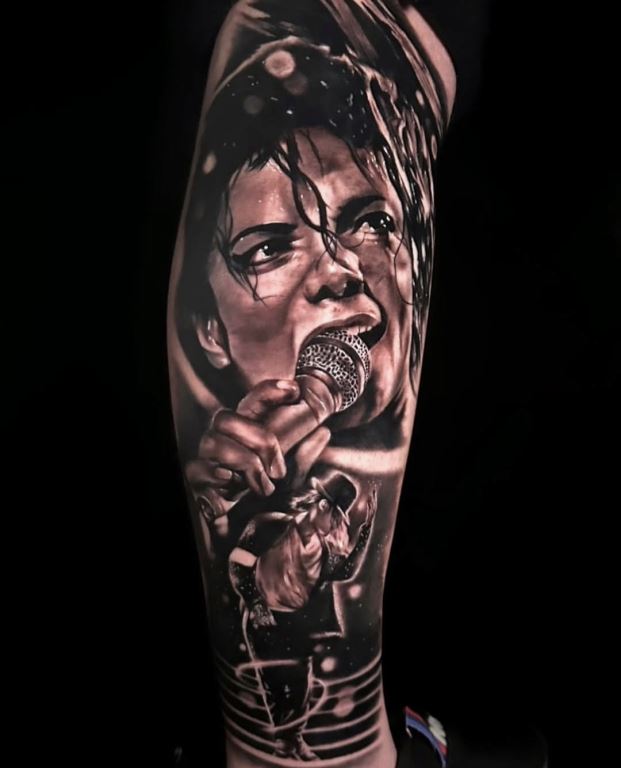
Q: From Harry Potter to Michael Jackson, you’ve been
tattooing a lot of iconic faces recently. When tattooing someone the
whole world knows, where do you find the most pressure, in getting
the exact likeness or in adding your own "Ziflo" artistic flair?
A: When tattooing iconic faces, the likeness is always the first
priority. People instantly recognize these figures, so even a small
mistake can change the entire expression. My goal is to capture the
essence of the person while keeping the tattoo strong and readable
on the skin. Once the likeness is there, I can add my own touch
through contrast, composition and the way the piece interacts with
the surrounding elements. That’s where the artistic identity really
comes in.
Q: Many realism artists get lost in tiny
details that blur over time. How do you decide which details to
"sacrifice" to ensure the tattoo stays readable from across the
room?
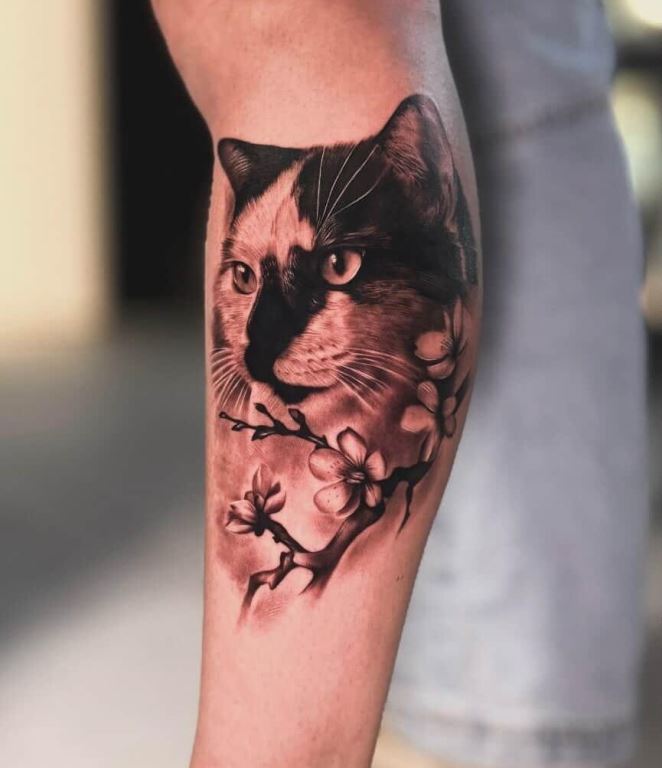
A: In realism, it’s very easy to get lost in small details. But a
strong tattoo is not only about details, it’s about structure. When
I design a piece, I always think about how it will look from a
distance, not just up close. Contrast, composition and clear values
are what keep a tattoo readable over time. Sometimes you have to
simplify certain textures or remove unnecessary elements. If
everything is detailed, nothing really stands out. The goal is to
keep the important elements strong so the tattoo will still look
powerful years later.
Q: I noticed you often use geometric diamonds or circles to
"frame" a portrait. What made you move away from "soft-edge" realism
into these sharp, graphic borders?
A: I like using geometric shapes because they help structure the
composition. When realism fades softly into the skin, it can
sometimes lose a bit of impact from a distance. By adding elements
like diamonds or circles, I can frame the subject and guide the
viewer’s eye directly to the focal point. It also creates an
interesting contrast between organic realism and graphic design.
That balance makes the piece feel both modern and timeless.
Q: Do you have any favorite piece you did
recently? What would be the "dream" piece if someone gave you
complete creative freedom?
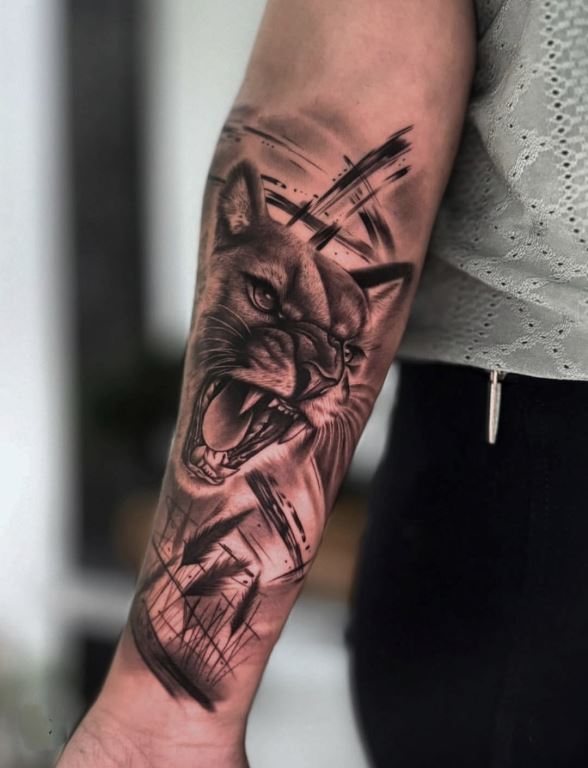
A: It’s always difficult to choose one favorite piece, because every
project has its own story. But I really enjoy working on large-scale
wildlife pieces, especially lions and tigers, where I can explore
textures, contrast and expression. My dream projects are always
large compositions that allow me to tell a full visual story across
the body, like a full sleeve, a leg sleeve or a back piece. When I
have creative freedom, I like to mix powerful subjects like
wildlife, dynamic elements and strong contrast to create something
unique for the client. The best tattoos are always collaborations
between the artist and the client.
Q: Given your precision, how has your digital design process
on the tablet evolved? Are you using more 3D mapping or AI-assisted
references to plan your placements now?
A: The tablet has become an essential tool in my design process. It
allows me to experiment quickly with composition, scale and
placement directly on the body. I sometimes use digital references
or AI-generated images as inspiration, especially when exploring
ideas or compositions. But for me, these tools are just starting
points. The real creative work still comes from drawing, adjusting
and refining the design so it fits the body perfectly. Technology
helps the process, but the artistic vision always comes first.
Q: You’ve been a proponent of using mobile
tech for design. Does being able to design "on the go" change the
way you brainstorm with clients during a consultation?
A: Being able to design on the tablet during consultations
definitely changed the way I work with clients. It allows me to
quickly sketch ideas, adjust placement and show different
possibilities directly on the body. This makes the discussion much
more visual and interactive. Instead of only explaining an idea, the
client can actually see the concept evolve in real time. It helps
build trust and makes the creative process more collaborative.
Q: Do you still have some of those "stubborn" clients you
have to negotiate with when it comes to design ideas?
A: Of course, it still happens sometimes. Tattooing is a
collaboration between the artist and the client, and everyone comes
with their own ideas and expectations. My role is to listen to what
the client wants, but also guide them with my experience to make
sure the tattoo will work well on the skin and age properly. Most of
the time, once I explain the artistic and technical reasons behind a
design choice, clients understand and trust the process.
Q: How has the tattoo culture in
Switzerland shifted since you first arrived? Is the "realism" style
as dominant there as it is globally?
A: Since arriving in Switzerland, I’ve noticed a very strong
appreciation for high-quality and detailed tattoo work. Clients here
are often very thoughtful about their projects and take time to
choose the right artist. Realism is definitely very popular, just
like in many parts of the world. But at the same time, there is a
lot of respect for different styles and artistic approaches. What I
really like about working here is that people are often looking for
meaningful, well-designed pieces rather than quick tattoos.
Q: You’ve traveled to Dubai and France. Is there a specific
city or studio in the world where the artistic energy completely
changed the way you work?
A: Traveling and working in different places always brings new
inspiration. Every city has its own artistic energy and tattoo
culture. France was where I built my foundations as an artist, while
places like Geneva exposed me to a very international clientele and
different artistic influences. Experiencing different environments
pushes you to grow, adapt and refine your style. It reminds you that
tattooing is part of a global artistic community.
Q: Where do you see the industry heading
in the next 10 years? Will it be more tech-driven or a return to
traditional roots?
A: I think the tattoo industry will continue to evolve with
technology, especially when it comes to design tools, references and
communication with clients. But at its core, tattooing will always
remain a very human and artistic craft. Machines and technology can
help the process, but the creativity and the hand of the artist will
always be the most important part. In the future, I believe we will
see more artists developing strong personal styles.
Q: We've seen consultations on your digital book. What is it
all about? Does it contain educational info for artists, or is it
purely for design inspiration?
A: My digital book is focused on teaching the fundamentals of
realistic drawing. It’s designed for artists who want to improve
their understanding of realism, especially when it comes to
structure, contrast and textures. In the book I explain my approach
to drawing realistic subjects step by step, sharing techniques that
helped me develop my style over the years. The goal is to help
artists train their eye and understand how realism works before even
touching the tattoo machine. People who are interested can contact
me directly through my Instagram. Based in Geneva, Switzerland
Instagram: @ziflotattoo
Q: Do you think young artists have it
easier these days with so much info available, or will the
competition beat them unless they show truly unique talent?
A: Young artists definitely have access to much more information
than before. Tutorials, references and online communities make it
easier to learn and improve quickly. But at the same time, the
competition is much stronger. There are many talented artists around
the world, and social media exposes everyone to a very high level of
work. In the end, what really makes the difference is dedication,
discipline and developing a unique artistic voice. Talent helps, but
consistency and hard work are what truly build a career.
Q: You've attended many conventions and won awards. How much
do these accolades keep you motivated, and what do you value most
from those experiences?
A: Tattoo conventions are always a very special experience. They
bring together artists from different countries, styles and
backgrounds. Winning awards is of course very motivating, because it
shows that your work is recognized by other artists and by the
community. But for me, the most valuable part of conventions is the
opportunity to meet other artists, exchange ideas and push yourself
creatively. Being surrounded by so much talent always inspires me to
keep improving and evolving.
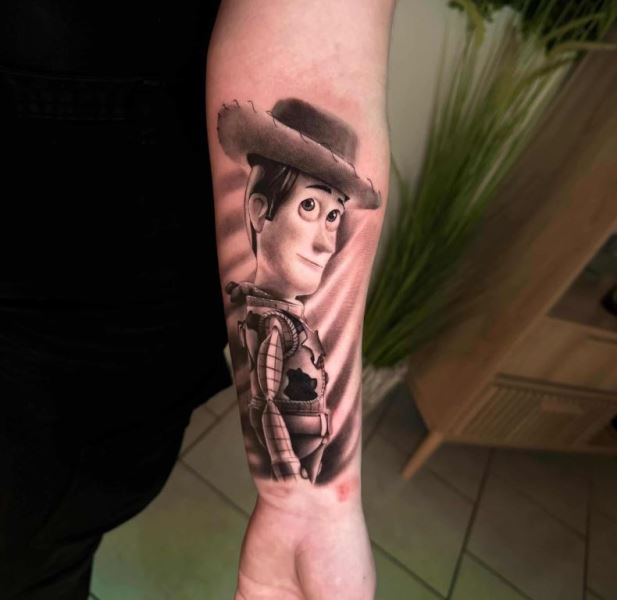
Q: Do you have any interesting hobbies for
your days off to help maintain that much-needed work-life balance?
A: Drawing has always been a big part of my life, even outside of
tattooing. I still enjoy spending time working on realistic drawings
on paper, especially wildlife subjects. It helps me relax while
continuing to train my eye and my technique. Outside of art, I also
enjoy spending time with friends and family and exploring new
places. Traveling and discovering different environments always
brings fresh inspiration.
Q: If it wasn't art under the skin, what career path do you
think you would have taken?
A: I think I would still be doing something related to art. Drawing
and creating have always been a big part of my life. Maybe I would
have focused more on illustration or realistic drawing, exploring
different mediums and projects. For me, creating images and
expressing ideas visually has always been natural. Tattooing simply
became the perfect way to bring that passion to life on the skin.
Q: You have been very active in the community lately, even
interviewing other artists. How has looking at the industry through
a "journalistic" lens influenced your own creative work?
A: Talking with other artists and learning about their journeys is
always inspiring. Every artist has a different story, different
techniques and a unique way of approaching tattooing. Listening to
these perspectives helps me reflect on my own work and stay open to
new ideas. It reminds me that tattooing is not just about technical
skill, but also about passion, creativity and constant evolution.
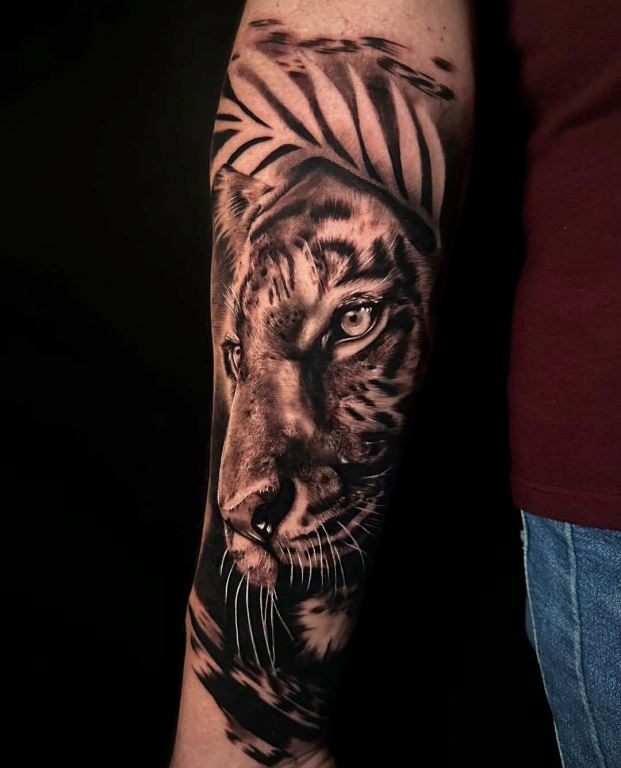
Q: When someone sees a tattoo on the
street, what specific detail do you hope makes them think, "That’s a
Ziflo piece"?
A: I think the combination of strong contrast, clean textures and
expressive eyes defines a lot of my work. I pay a lot of attention
to depth and to how light interacts with the subject, whether it’s a
portrait or a wildlife piece. Over time, I’ve had many people tell
me they can recognize one of my tattoos when they see it. That’s
probably one of the best compliments an artist can receive. If
someone looks at a tattoo and immediately feels the intensity in the
eyes or the realism in the textures, and thinks “that looks like a
Ziflo piece,” then I know I’m moving in the right direction.
Q: What is the one goal you haven't checked off your list
yet? Is it a specific award, a world tour, or perhaps opening a new
creative space?
A: I still have many goals I want to achieve. Tattooing is a journey
where you never really stop learning or evolving. Of course, winning
important awards and traveling to work with different artists around
the world would be amazing experiences. But one of my biggest goals
is to keep pushing my artistic level and continue creating large,
meaningful pieces that people will be proud to wear for the rest of
their lives. In the future, I would also love to create a creative
space where different forms of art and artists can meet, collaborate
and inspire each other.


