
Interview with Anastasiia Volkova
Hello Anastasiia Volkova! Thank you so much for taking the time to do this interview. It's always a pleasure having a female artist, I'm so glad that there are more of you every day, proving that tattooing isn't a "male" job. You are incredibly talented artist, I'm sure our interview will inspire many young artists out there, please start by telling us something about yourself and your background. I was born and raised in Russia, and since 2023 I have been living and working in Turkey. My path to art began in early childhood - I used to draw everywhere I could: on my skin, creating temporary tattoos, on walls, curtains, notebooks. My tools back then were gouache, watercolor, pencils, markers, and pens. Everything changed the moment my parents bought me my first drawing album. That was when a real immersion began - I could spend hours without looking up from the paper, completely absorbed in my inner world. And it also helped me escape from family drama. A turning point came when I got the book “The Art School” by Ray Smith, Mike Wright, and James Horton. It became my first mentor, and thanks to it, I realized that I wanted to become a real artist. This thought never left me, and when asked what I wanted to be, I always answered clearly and confidently: an artist! I eagerly studied the book on my own, discovering new materials, techniques, and the rules of visual art. Even as a little girl, I set up my own still lifes and painted them, teaching myself how to work with different mediums. Sometimes I would save money from school lunches to buy professional art supplies. But I felt it wasn’t enough, I wanted to take real lessons at an art school. I begged my mother so persistently with this idea that we eventually went to the best art school in the city and enrolled me in classes. That’s how I earned my diploma from the Central Children’s School of Art, and later I continued my studies at a college in the faculty of art restoration. I entered the world of tattooing in 2016, and it became a natural continuation of my artistic path. By that time, I already had a strong foundation: I was doing painting, studying anatomy, light and shadow, and composition. However, the real push came when I met my future husband in college - an experienced tattoo artist. He became my first mentor in this profession, and I became his student. We are still walking this path together - as partners in life and in creativity. From the very beginning, I understood that tattooing is where all my knowledge, emotions, and the desire to create meaningful art come together. My first clients came through recommendations, and each work was an important step for me. Today, I not only create artistic tattoos but also work with restoration - I cover scars, burns, and perform permanent makeup after surgeries. For me, tattooing is not just a way to decorate the body, but a way to help a person accept themselves again.
Q: What were some of the common tattoo
designs you practiced when you were first starting out? How long did
it take you to find and develop your signature style?
A: In the very beginning, I practiced everything that could develop
my skill, from simple ornaments and inscriptions to early attempts
at realism. I did a lot of copying of anatomical elements, eyes,
lips, fragments of portraits, anything that helped me feel the form,
light and shadow, and proportions. My goal from the very start was
to master complex techniques, so I wasn’t looking for easy paths. I
strived to work with volume, emotion, and depth and that’s exactly
what realism is. The path to my own style was gradual. Considering
my academic background and artistic education, I initially aimed for
clean lines and strokes, harmony of forms, and an accurate
representation of the subject. But over time, I realized that simply
copying reality was not enough. A personal style is formed when you
begin to infuse your work with your own vision and character. It
took me about two to three years of active practice to start
recognizing my own “handwriting” in my works - a recognizable
presentation, a certain palette, and a unique aesthetic. Today, my
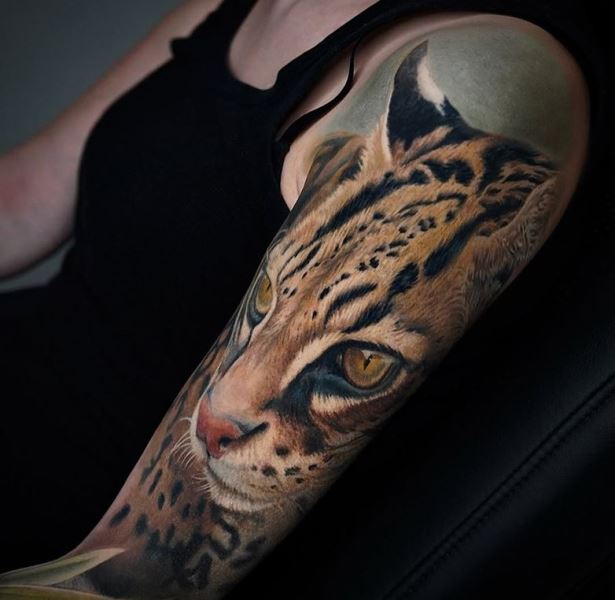
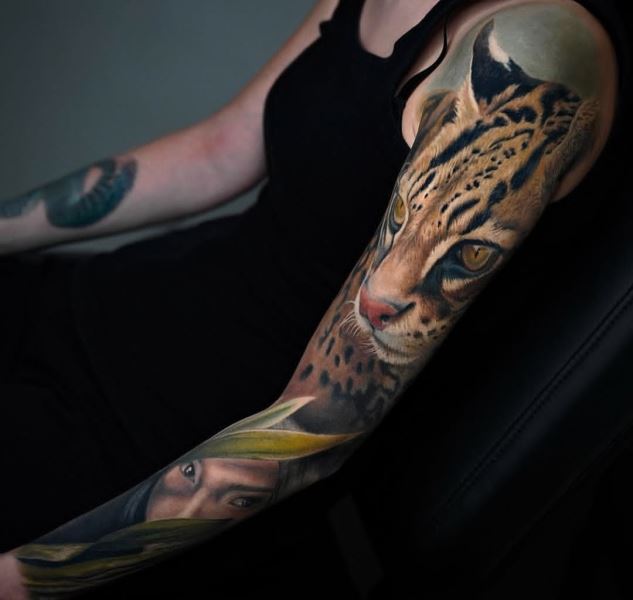
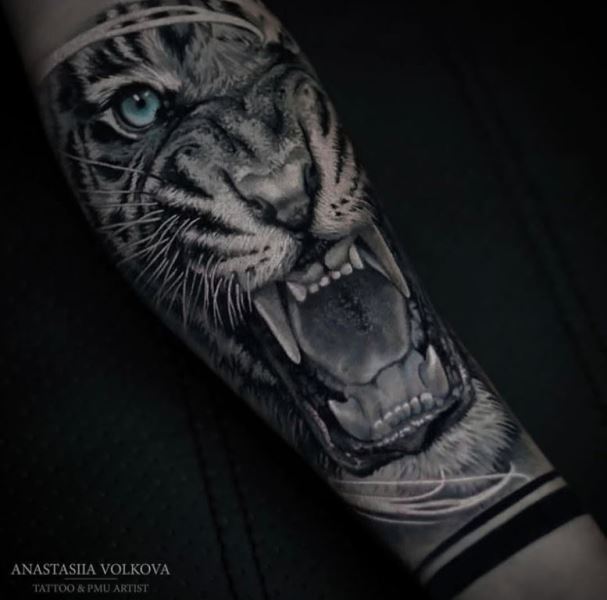
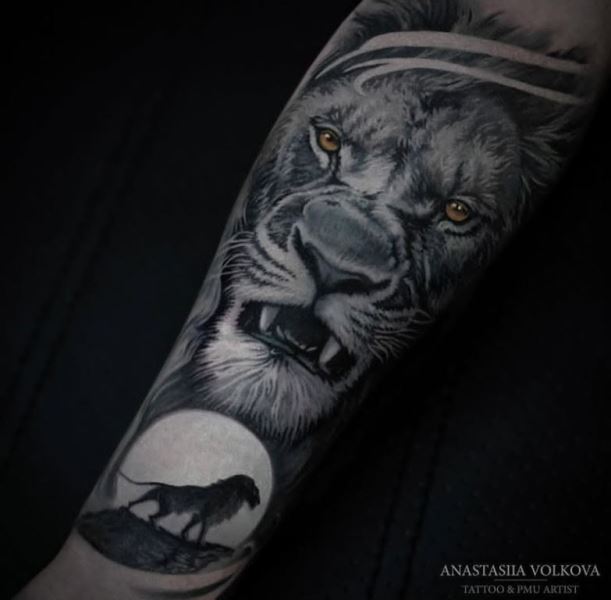
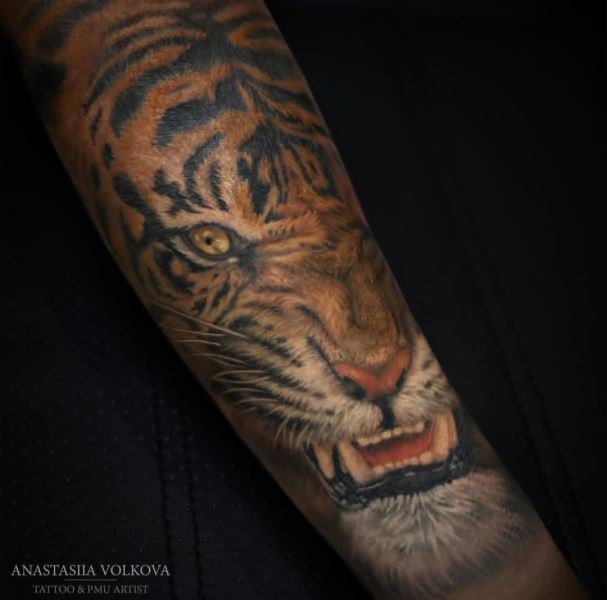
style is realism, in which artistic precision is combined with
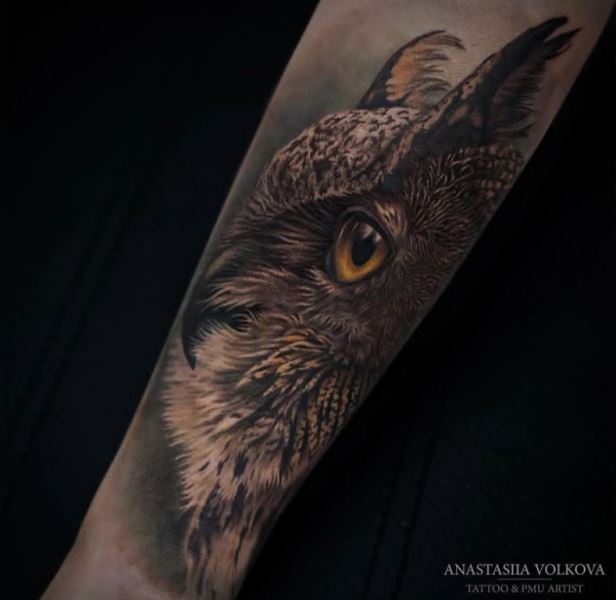
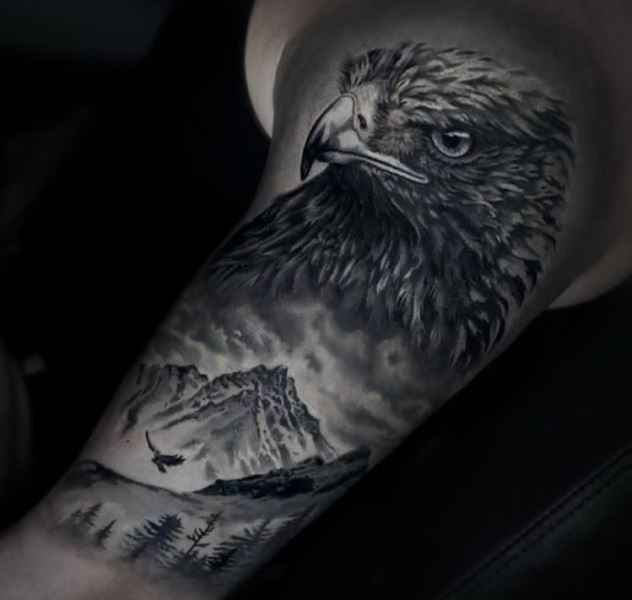
emotional expressiveness. I work both in color and in
black-and-grey, and I always strive to make each piece not just a
technical execution, but a story that reflects the personality of
the person.
Q: What were some of the difficulties you encountered when
you were starting out? Did you have the opportunity to learn from or
apprentice with a more experienced tattoo artist?
A: At the beginning of my journey, there were plenty of
difficulties. Like many others, I lacked confidence, practice, and
of course, resources quality equipment, pigments, and models. But
perhaps the biggest challenge was internal doubt. When you're just
starting out, you constantly compare yourself to others, criticize
every detail, and are afraid of making mistakes. There was a fear of
letting the client down, not meeting expectations, doing something
“wrong.” This pressure can get in the way, but it’s also what builds
resilience. A huge stroke of luck and support in the beginning was
my husband - an experienced tattoo artist. He was not only my first
mentor, but also the one who believed in me. Thanks to him, I
avoided many technical mistakes and received a foundation of
knowledge that many spend years trying to acquire. We would discuss
works together, analyze compositions, and practice techniques. His
experience and support allowed me to grow much faster. And although
I didn’t have a traditional apprenticeship in a studio, as is
customary for some, I went through my learning path through daily
practice, self-analysis, constant development, and hands-on
mentorship. I’m grateful for this, because it gave me not only
knowledge but also the confidence that even the most difficult tasks
can be solved, if you don’t give up.
Q: Your work demonstrates a strong
affinity for realism. What draws you to this particular style of
tattooing, and what aspects of it do you find most compelling?
A: I chose realism from the very beginning because it allows an
image to come alive on the skin to infuse the work not only with
form but also with meaning, to immerse the viewer in a story. Even
in childhood, I would spend long hours studying the canvases of the
old masters, reading books on anatomy, light and shadow, and
composition. I was fascinated by how, through the play of light and
precise forms, an artist could convey character, emotion, and an
inner world. Realism became for me not just a style, but a way of
speaking to the world without words. It is the highest form of
artistic expression in tattooing, it requires technical precision, a
deep understanding of body structure, light, and texture. There is
no room for randomness here: every stroke is intentional and
meaningful. This style demands maximum involvement and constant
development, but at the same time, it offers limitless
possibilities. In realism, I combine academic knowledge with
artistic intuition to create not just an image, but a living,
meaningful work with story, atmosphere, and soul.
Q: You're skilled in both black and gray and color
tattooing. Do you have a personal preference, and if so, which one
do you find offers greater potential for creative expression?
A: Color and black-and-gray are two different artistic languages,
and each of them offers its own unique possibilities. Color allows
you to play with mood, convey energy, and create accents. It is a
powerful tool when you want to express warmth, passion, freshness,
or drama. Every shade is like a musical note, and the artist’s task
is to compose a harmonious arrangement out of them. Black-and-gray,
on the other hand, is about depth, structure, and form. There are no
distractions, only light and shadow. These works require precision,
a perfect understanding of volume and anatomy. There is no room for
error every line must contribute to expressiveness. Both directions
are close to me. In color, I feel freedom and emotionality, in black
and gray tattoos, strength and restraint. I don’t separate them by
the level of self-expression, I choose the approach that best
reveals the idea, the mood, and the individuality of a particular
person.
Q: What's your approach to managing client
comfort and keeping their spirits up during long tattoo sessions,
especially when working on intricate color pieces?
A: During tattoo sessions, I always try to be not just a master, but
a person who is present and understanding. Especially during long or
technically complex procedures, when the client gets tired not only
physically but also emotionally, my attention to their condition
plays an important role. I observe their reactions, regularly ask
how they’re feeling, and take breaks so that both the client and I
can eat, this significantly affects the working process and the
client’s overall experience. We always have water, pillows, air
ventilation, and temperature control, as well as food delivery,
everything to ensure the person feels comfortable. I explain in
advance how the process will go, to ease unnecessary tension. I turn
on calm music or give them the option to watch something on a
tablet. It’s important that the person feels: they are in safe
hands. Before the session, I always give a briefing on how to
prepare for the procedure and recommend avoiding certain treatments,
medications, and foods to prevent any negative outcomes. For me,
each client is not just a canvas but a person with emotions,
experiences, fears. And if they feel calm, comfortable, if they
don’t have to stay tense, the work flows better. That’s why I create
not just a workspace, but a warm, trusting environment where people
want to be.
Q: Could you describe your design process, from initial
concept to final tattoo? Do you prefer to create preliminary
sketches beforehand, or do you find it more effective to design
collaboratively during the consultation or appointment?
A: My creative process always begins with communication. I immerse
myself deeply into the client’s idea: I listen to their story,
emotions, and associations. It’s important for me to understand what
exactly lies behind the desire to get a particular tattoo, because
every work must carry meaning, reflect the individual, not just be
an image on the skin. Once I clearly gather the full picture,
understanding whether the person wants something strictly specific
or, on the contrary, is ready to trust my vision, the real work
begins. Sometimes a client comes with a clear idea, and other times,
with feelings and a state of mind that need to be translated into an
image. In such cases, I rely on intuition and attentive listening,
as if pulling from the subconscious something the person doesn’t
fully realize themselves. It’s similar to the work of a
psychologist: I ask questions, observe reactions, listen closely to
intonations. The goal is to grasp the essence, the inner emotion
that the tattoo should express. Then I begin to gather and structure
ideas. I use various editors like Photoshop and Procreate. At the
first stage, I collect everything that visually resonates: photos,
elements, textures, details. Then I “layer” them, start mixing,
aligning, combining. I look at how the elements harmonize with each
other, how they work together in the overall composition. It must be
a complete image visually balanced and cohesive. In addition to
digital combining, I always add hand-drawn elements, directly over
the image. For me, photos are a foundation, a base, but I always
draw the final touches myself: I enhance the atmosphere, add
emotion, fluidity, dynamic lines, and meaningful details. That’s
what makes the work alive, unique, and expressive. When the picture
starts coming together, I create several design options so the
client can choose. Most often, everything is approved from the first
version but if needed, I make precise adjustments to perfect the
image. All of this happens before the session day. I don’t work “on
the go” - I prefer clear preparation. Before starting, I plan out
every step, analyze the upcoming palette, mentally “do” the tattoo,
as if rehearsing the process in my head. This helps me enter the
right state and stay fully focused. Of course, there are cases,
especially with restorative work, like on scars, burns, or stretch
marks, when the design needs to be adapted right on the spot. In
such situations, I can manually refine the lines directly on the
skin, make changes, improve placement, and make the tattoo more
aesthetic and accurate.
Q: I admire how you connect with your
followers on Instagram, emphasizing the unique stories and
significance behind each tattoo. Having heard so many of these
stories, are there any that have particularly resonated with you or
that you find especially moving?
A: My creative process always begins with communication. I immerse
myself deeply into the client’s idea: I listen to their story,
emotions, and associations. It’s important for me to understand what
exactly lies behind the desire to get a particular tattoo, because
every work must carry meaning, reflect the individual, not just be
an image on the skin. Once I clearly gather the full picture,
understanding whether the person wants something strictly specific
or, on the contrary, is ready to trust my vision the real work
begins. Sometimes a client comes with a clear idea, and other times
with feelings and a state of mind that need to be translated into an
image. In such cases, I rely on intuition and attentive listening,
as if pulling from the subconscious something the person doesn’t
fully realize themselves. It’s similar to the work of a
psychologist: I ask questions, observe reactions, listen closely to
intonations. The goal is to grasp the essence, the inner emotion
that the tattoo should express. Then I begin to gather and structure
ideas. I use various editors Photoshop, Procreate. At the first
stage, I collect everything that visually resonates: photos,
elements, textures, details. Then I “layer” them, start mixing,
aligning, combining. I look at how the elements harmonize with each
other, how they work together in the overall composition. It must be
a complete image visually balanced and cohesive. In addition to
digital combining, I always add hand-drawn elements directly over
the image. For me, photos are a foundation, a base, but I always
draw the final touches myself: I enhance the atmosphere, add
emotion, fluidity, dynamic lines, and meaningful details. That’s
what makes the work alive, unique, and expressive.
Q: If you had complete creative freedom
and could collaborate with any client, what kind of tattoo would you
be most excited to create, and what would make that project
particularly fulfilling?
A: If I had complete creative freedom, I would create a large-scale
tattoo in the style of realistic surrealism, with deep sacred
meaning and a strong visual component. I’m drawn to images of
women-goddesses, amazons, jungle motifs, ethnic ornaments, as well
as themes related to space, higher consciousness, spiritual states,
magic, and nature. I love combining images of animals in a symbolic
way, adding glowing elements, fantastical details as if conveying
not just a storyline, but energy and mystery. It would be a project
in which I could not only express all of my artistic experience but
also immerse the person in a special state a connection with
themselves, with their strength, with nature, with something
greater. For me, it would be an opportunity to reflect the
extraordinary world that lives inside me. Through such tattoos, I
can convey my vision subtle, imaginative, mystical. It’s important
to me that a part of my inner world is expressed on the bodies of
people who resonate with my energy, my style, my spirit. Then the
tattoo becomes a merging of two worlds mine and theirs, transforming
into something truly unique and alive.
Q: Tattooing is a demanding profession, requiring both
artistic skill and significant time commitment. How do you manage
the balance between the demands of your work and your personal life,
including family?
A: For me, the key to balance is mindfulness and honesty with
myself. I clearly know that I want to be not only a master, but also
a living, fulfilled person, someone who radiates warmth. Tattooing
requires full involvement, concentration, and emotional investment.
But if you give everything only to work all the time, you can burn
out and lose the very essence of creativity. My personal life and my
family are my resource, my home, my point of support. My husband and
I are both in the profession, and this doesn’t interfere on the
contrary, it helps. We inspire each other, discuss ideas, support
one another in difficult moments. Together we are not just partners,
but allies who respect each other’s boundaries and feel one another
deeply. I try to plan my schedule in a way that includes time for
rest, travel, silence, and inspiration. There are periods when work
demands everything, but I’ve learned to stop and recover in time.
For me, it’s important not just to do tattoos, but to live a life
from which true art is born. And it is exactly this life with all
its moments, people, and emotions that makes my work come alive.
Q: What are your impressions of the tattoo
culture and artistic styles you've encountered there?
A: I worked in Russia and Turkey, and I observed tattoo culture in
Poland, Thailand, Kazakhstan, and Dubai, during trips and travels.
In Russia, tattooing is perceived seriously: clients often come
consciously, with a personal story or an inner need for
transformation. Realism is especially valued, as well as attention
to quality and depth of execution. Artists there are technical,
often with an academic art background, and very demanding of
themselves and their level of work. This helped shape my own quality
standards. Turkey is completely different in mood. There are many
tourists here, and tattoos are often done spontaneously "as a
memory" or under the influence of the moment. However, clients are
very sincere and grateful, and it’s precisely here that I learned
how to better convey the value of original, authorial work. Local
artists often work in a more universal format, but the interest in
distinct styles and individual signatures is gradually growing. In
Poland, the atmosphere is closer to the European art scene. There, a
tattoo artist is primarily an artist. Artists confidently develop
their own signature styles, and graphic, neo-traditional, and
realism are popular. There’s clear respect for style, tattoo
culture, and a personal approach from both artists and clients.
Thailand struck me with its sacredness. Tattooing there often
carries a spiritual meaning, especially in the sak yant tradition.
It’s not just a drawing, but an amulet, a protection. Everything is
accompanied by ritual. This kind of attitude is inspiring and
reminds me that tattooing can go far deeper than aesthetics. In
Kazakhstan, tattoo culture is only beginning to develop. People are
curious, ask a lot of questions, and you can see a desire for
quality. The influence of the Russian school is noticeable, but
artists are trying to find their own uniqueness. The potential is
strong. In Dubai, things are different, there are no officially
licensed tattoo studios, so artists work underground. Restrictions
slow down the development of the culture, although people’s interest
is certainly present. But it’s still difficult to talk about a
full-fledged scene there. For me, observing tattoo culture in
different countries is a way to see not only differences in styles,
but also in attitudes. Somewhere tattooing is art, somewhere it’s
ritual, and somewhere it’s a spontaneous gesture. All of this
broadens perspective and inspires new facets of the profession and
rethinking.
Q: How frequently do you attend or
participate in tattoo conventions? What is your perspective on the
role of these events in the professional development of tattoo
artists and the advancement of the industry as a whole?
A: At tattoo conventions, for now, I mostly attend as an observer
and support for my husband, he actively participates, and we travel
together to different countries. I observe styles, techniques,
presentation, and communicate with other artists. It’s incredibly
enriching. However, I have personally taken part in other
professional events in the field of permanent makeup and also on
joint platforms that include both PMU and tattoo categories. In
2023, I became a winner in four categories at the Non Stop Permanent
Championship for areola, brows, lips, and I received the Grand Prix
in the Expert category. After that, a new chapter began: I started
getting invited as a judge. I judged at international championships
such as Perfect Look, Doré in Dubai, Kova Beauty, and Global Beauty
Legends. I also performed as a speaker at the Doré World Dubai
Beauty event. In addition, I received several professional awards
that became a confirmation for me that I am moving in the right
direction. These include: Top-10 Masters of PMU from the Perfect
Look Awards, Top Artist of Art Tattoo in Dubai, the Beauty
Achievement award at the Moda Topical Style Awards, and a special
nomination for high professionalism from the Profi Performance
Award. I was included among the TOP-15 masters of Turkey, and
received the Best Brows Artist award as well as the award for Best
Master in Art Tattoo and PMU at the international "Gracia" award.
Based on my experience, I am confident that participation in
professional events is not just about prestige it is growth. It’s
contact with the international community, it’s an exchange of
knowledge, it’s recognition. Conventions and championships shape the
level of the industry not only in terms of technique but also in
terms of awareness, professional culture, and ethics. And even if
you're not on stage you still grow. The main thing is to stay
involved. And participation, public speaking, and judging provide a
strong professional foundation and help you develop faster.
Q: The tattoo industry has seen
significant growth and change in recent years, with increased access
to education, media exposure, and various training opportunities.
What are your thoughts on the current trajectory of the tattoo
community, and how do you see these developments impacting the
overall quality and integrity of the art form?
A: The changes have been global: learning has become easier, there
is more information available, and equipment is more accessible.
This gave many talented people a chance to enter the profession
without having “connections” in the industry. But along with that
came a wave of superficial artists. The easy entry created the
illusion that the profession is simple. As a result countless
poor-quality tattoos, damaged skin, and disappointed clients. The
value of the profession has decreased in the eyes of society,
because there are now too many “random” people working without a
foundation: without understanding anatomy, composition, or hygiene
standards. Nevertheless, true professionals now have more tools for
growth: international competitions, seminars, collaborations, and
knowledge exchange. Those who truly develop become stronger. I
support progress, but I’m against the profanation of the craft. This
profession requires strong skills both technical and artistic as
well as responsibility and mindfulness from the artist. Otherwise,
it’s not art, but just a service on a price list, which contradicts
the very essence of tattooing.
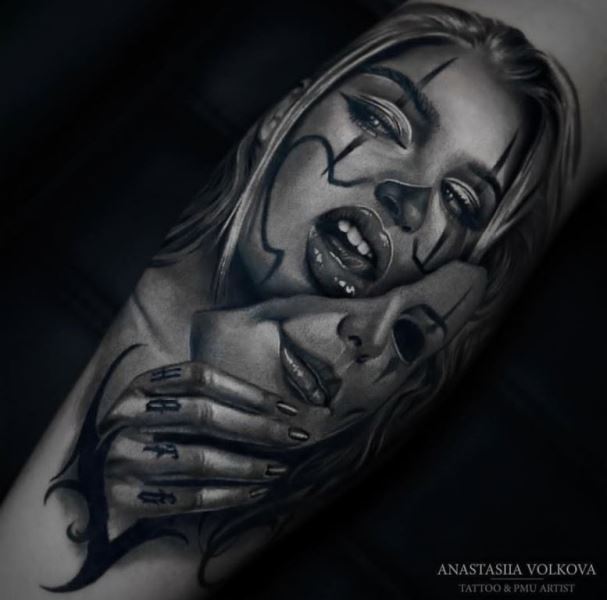
Q: Have you attended any tattoo seminars
or workshops for professional development?
A: Yes, of course, I have attended many seminars and master classes,
especially in the early years of my career. I believe that for a
beginner, this is absolutely essential. It is precisely in such
trainings that the foundation is laid: technique, hygiene,
understanding of the skin, proper pigment selection, and client
psychology. I have three diplomas from international schools and
training centers, and more than 200 certificates, from signature
courses by top masters in tattooing and permanent makeup. At every
training, I tried not just to gain knowledge, but to absorb the
approach, energy, and philosophy of the master. This helped me shape
my own style and professional vision. Often, to gain valuable
knowledge, you have to travel to the other side of the world for
example, once my husband and I flew to Krakow to attend a seminar by
Dmitriy Samohin. Fortunately, there are also online master classes,
like the one by Sergey Shan’ko, which I attended when I was still
living in Moscow. And even now, years later, I never stop learning
the world is changing, techniques are evolving, and I remain open to
new experience. I believe that a true master is always a student and
it is precisely this that prevents stagnation and allows growth.
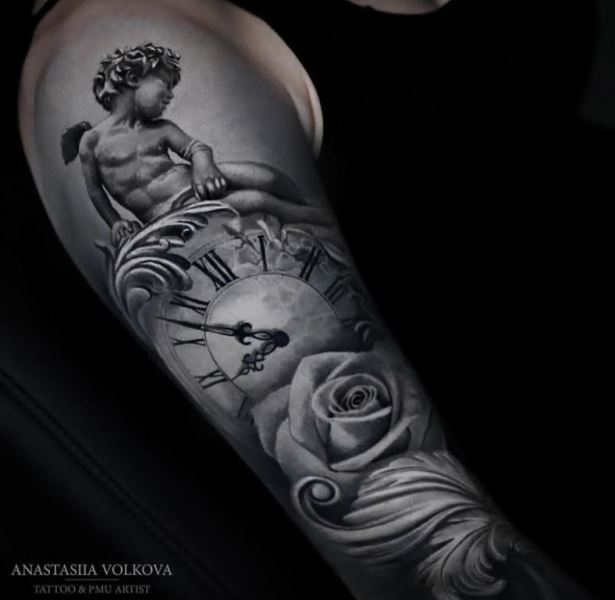
Q: Have you ever explored the possibility
of combining your artistic styles and working together on a
collaborative piece?
A: Yes, my husband and I truly share not only life, but also a
passion for tattooing and this is a big advantage. We have different
artistic styles, but the same high standards when it comes to
quality, approach, and aesthetics. And of course, we have discussed
joint projects more than once. Sometimes it happens naturally: one
of us develops the idea or the base, and the other adds details or
refines the composition. Especially when it comes to designing a
tattoo for a convention, working as a team in such cases can lead to
greater success. Even during regular workdays, there were clients
for whom we created a tattoo literally "with four hands" for
example, when a large-scale piece was needed, and it was important
to divide the tasks. But such projects are rather an exception than
a rule. We are both deeply individual as artists, and each brings
their own energy to the work. Nevertheless, the idea of creating a
full-fledged joint collection with a shared concept, meaning, and
style, has been in the air for a while now. I think we will soon
realize it as an art project: a series of tattoos or perhaps even
something interdisciplinary, an exhibition, merchandise, a
collaboration. Vyacheslav and I have a strong creative connection,
and such things don’t happen under pressure, they happen when the
right moment comes. And I feel like that moment is close. We have
also worked together not only on tattoo creation, and that was a
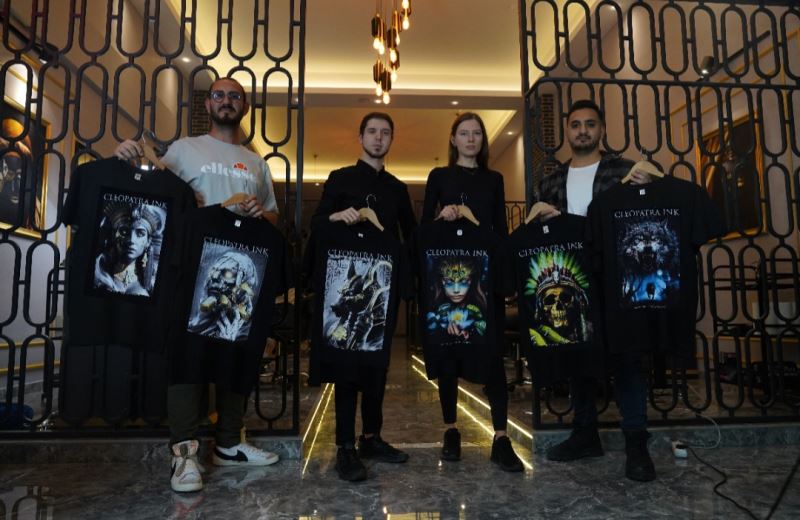
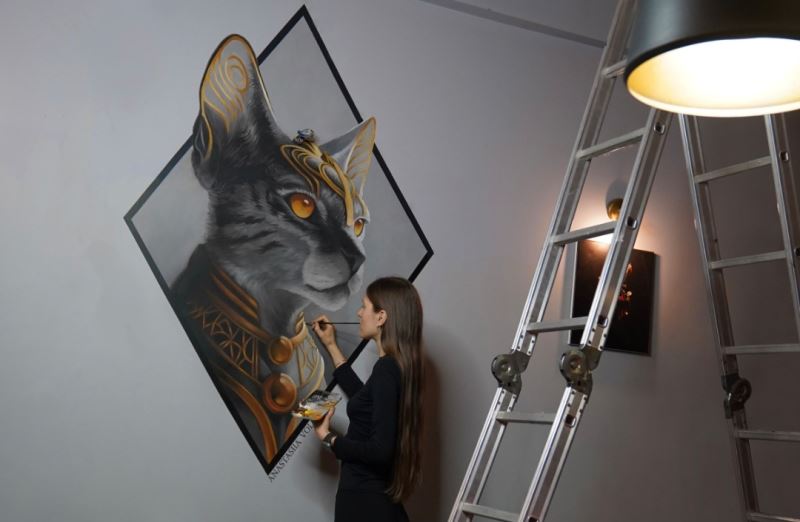
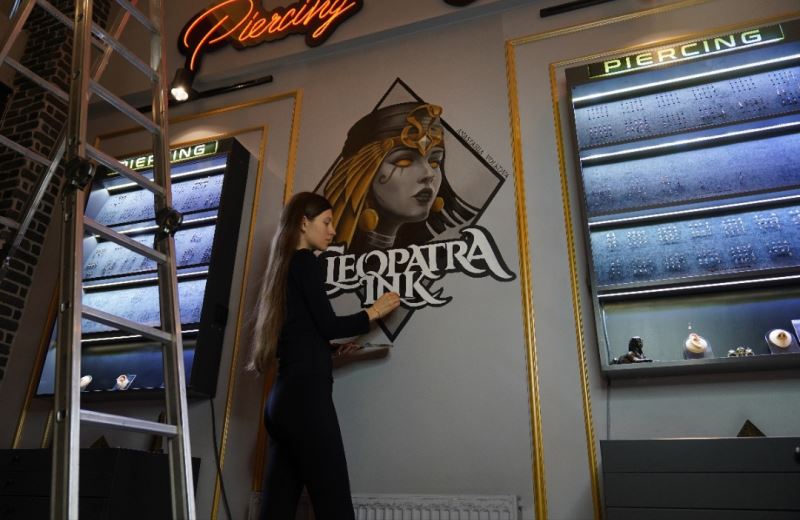
truly valuable experience. For example, the art project with the
international studio network Cleopatra Ink, a limited collection of
T-shirts with our original prints, where each piece carried its own
idea and meaning, as well as mural paintings for their studios in
the theme of Ancient Egypt. It wasn’t just about design, but a deep
immersion into atmosphere and culture, with an artistic approach,
historical imagery, and visual storytelling. Working in tandem
allowed us to combine our strengths and show how powerful the
synergy of two artists can be when they respect and inspire one
another.
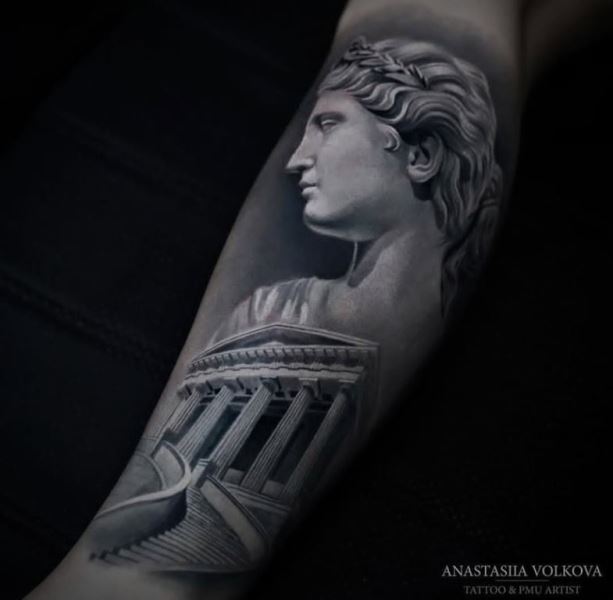
Q: The American tattoo scene is known for
its diversity and dynamism. What are your long-term career
aspirations, and do they include exploring opportunities within the
United States?
A: Yes, absolutely. Working in the USA is part of my long-term
professional goals. The American tattoo scene is truly one of the
most powerful and diverse in the world: it is home to major studios,
top-level artists, a culture of individual style, and a deep respect
for original creative approaches. All of this strongly resonates
with my inner commitment to quality and depth. I have already
received collaboration offers from several well-known studios in the
USA. My goal is to work officially in the United States as a
recognized artist. I relate to the American model of industry
development, where a tattoo artist can simultaneously be a creator,
a teacher, an author of educational programs, a participant in art
festivals, a studio resident, and essentially a cultural figure.
This is the kind of environment in which I want to express myself
not just as a technician, but as a creative individual with a strong
voice and personal philosophy. I believe that my experience, style,
portfolio, and vision are in demand and can be truly understood
there in a culture that values originality, professionalism, and
respect for the craft. So yes for me, the USA is not just an
opportunity, but a logical continuation of my journey.
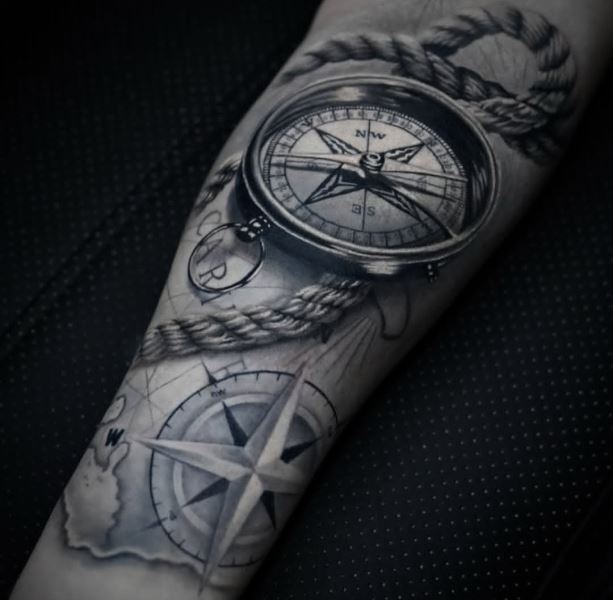
Q: Are there any particular areas known
for their artistic styles, clientele, or professional opportunities
that you would find especially attractive?
A: Yes, there are several countries that especially inspire me, both
professionally and personally. The USA definitely remains a
priority. There is strong competition, a high level of industry, and
a very diverse audience. It’s in the USA that you can find clients
who don’t just want “a picture,” but are ready to invest in true
artistic work with deep meaning. Authorial style, individuality, and
quality are valued there and that gives an artist space to grow. I’m
particularly drawn to cities like New York, Miami, and Los Angeles.
I also feel a connection with Europe, especially Germany, the
Netherlands, and France. In these countries, tattoo culture is
deeply integrated into society, and respect for the artist is at the
level of art. They love realism, graphics, and detail. In Europe
overall, there is a greater demand for meaning rather than trend.
This provides the opportunity to work consciously, with an idea and
concept. Among the less conventional destinations, Canada and
Australia. Both countries show a growing interest in unique tattoo
art and are actively developing festivals, exhibitions, and
international collaborations. In general, I’m interested in being
where meaning is valued, where the artist is respected, where there
is openness to experimentation, and where space is created for free
artistic expression. It’s important to me not just to work but to
grow as an artist and a person, to be part of cultural exchange.
Q: Do you have any favorite American
tattoo artists?
A: Yes, absolutely. In the American tattoo scene, there are many
artists whose work and approach I deeply respect both from a
technical and emotional perspective. There are quite a few of them.
I’m drawn to artists who are honest in their art, work thoughtfully,
respect the skin as a canvas, and assign meaning to each image. I
often study their interviews, techniques, and approach to working
with clients this helps not only with growth but also with shaping
my own philosophy as an artist.
Q: What aspects of your work as a tattoo artist do you find
most fulfilling or satisfying?
A: The greatest satisfaction for me comes in those moments when I
see how a person transforms not only externally but internally as
well. When a client gets up from the chair and there is relief,
pride, joy, and confidence in their eyes… it feels as though I
didn’t just create a tattoo, but helped the person reclaim a part of
themselves their strength, beauty, and dignity. This is especially
powerful in working with women after trauma and illness for example,
in the restoration of areolas after mastectomy or when working with
scars. These procedures become not just corrections they become a
turning point in returning to oneself, the conclusion of a long path
of struggle. And if I can contribute to that recovery that is my
true mission. I also get enormous pleasure from the process of
creating complex realistic tattoos when you have to delve into the
core idea, build a composition, think through light, shadow,
nuances… It demands maximum concentration and full dedication, but
in those moments, I feel truly in my element. And also the real
connection with people. In this profession, you constantly encounter
deeply personal stories. You become a part of another person’s life,
and that is always valuable. Every dialogue, every smile after a
finished piece, every message that comes later “thank you, you
changed my life” all of this gives a profound sense of
self-realization. Essentially, the greatest satisfaction I get is
not just from creating a beautiful image, but from creating meaning
through art. When the work becomes an anchor, a symbol, a talisman,
or the beginning of a new chapter that’s when I feel: I am doing
what I was truly born to do.
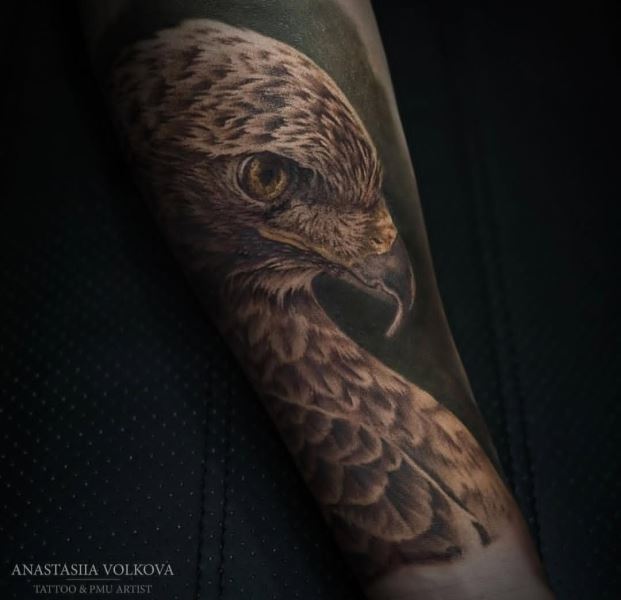
Q: How do you envision your artistic style
and influence evolving in the coming years, and what contribution do
you hope to make to the tattoo art community?
A: I feel that my artistic style will continue to deepen both
technically and emotionally. I want to focus even more on symbolism,
on realism with profound meaning, on tattoos that don’t just
decorate but tell stories and reflect a person’s inner
transformations. I’m drawn to the idea of uniting art, psychology,
and tattoo culture I’m increasingly striving to create intuitive,
therapeutic projects where, through artwork on the body, a person
can rewrite their pain, let go of the past, and regain strength.
Perhaps in the future, I will develop my own method, where the work
begins not with choosing an image, but with a dialogue about
feelings, past experiences, about what someone wants to hold onto
or, on the contrary, let go of. This is no longer just a tattoo,
it’s deep work with meaning. I also plan to continue my educational
work and share my experience with other artists, especially in areas
where tattooing becomes a means of healing after trauma: mastectomy,
burns, surgeries. This is a special category of work that requires
not only technical skill, but also empathy, understanding, and
gentleness. This is where I see my zone of strength and
responsibility. And I want to inspire artists not to be afraid to go
beyond boundaries, to develop their own signature style, to see
themselves not just as executors but as creators and bearers of
meaning. Because tattooing is more than a trend. It is a way to
speak the language of the soul and therefore it requires awareness,
culture, and depth. This is how I see my contribution: to support
meaningful, aesthetic, and human-centered tattoo art, where each
work is a true creation, a kind of anchor in a person’s life.
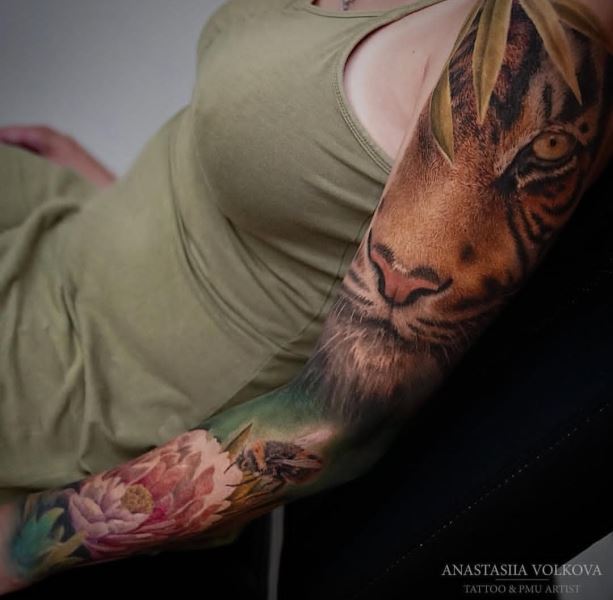
Q: What advice would you give to someone
aspiring to a career as a professional tattoo artist, considering
the artistic, technical, and business aspects of the profession?
A: My advice to those just starting their journey as a tattoo artist
will be sincere and honest without rose-colored glasses. First of
all, start with the basics. Not with the tattoo machine and not with
trendy designs, but with an artistic foundation: anatomy, light and
shadow, composition, color theory. If you don’t know how to draw and
learn. Tattooing starts on paper, not on skin. A good drawing is
half the success. The rest is technique and practice. Second, don’t
rush to make money. The first stage is about investment: time,
money, effort. You will have to go through many training sessions,
mistakes, disappointments. Learn how the technique works on skin:
different densities, sensitivities, pigmentation you can’t read
about this in a book, it only comes through your hands. And the more
carefully you approach your start, the faster you will grow. Third,
respect the client. This is a person who is trusting you with their
body. Don’t treat your work as just “ink application” treat it as
co-creation. Be able to listen, be delicate, explain nuances. And if
something can’t be done say so honestly. Honesty, ethics, and
respect for the skin are what distinguish a professional from a mere
craftsman. Fourth, learn business. The profession of a tattoo artist
is not only about creativity, but also about service, sales,
marketing, and finances. You must be able to properly present your
work, communicate, set your prices, work with returning clients.
It’s not enough to be talented you need to be organized and
consistent. And most importantly don’t copy. Search for yourself,
your style, your vision. The world has seen enough Pinterest
tattoos. People are looking for real, sincere, thoughtful artists.
This doesn’t come immediately. But if you work on yourself, grow,
and respect the path you will definitely become not just a
tattooist, but a creator. And may this path be filled with meaning,
light, and art.
You can read our interview with Viacheslav Volkov, on this link.


