
Interview with Viacheslav Volkov
Hello Viacheslav Volkov! Thank you so much
for taking the time to do this interview. Please start by telling us
something about yourself and your background. Greetings to
all readers! I’m glad to have the opportunity to share my story. In
this interview, I will try to answer all the questions in detail so
that readers can gain as much useful information as possible. So, I
was born in Russia, in a small military town called Noginsk-5, with
a population of about 3,000 people. There weren’t many opportunities
for self-realization, but that is precisely what pushed me to seek
creative paths. My passion for art began in childhood, I drew
everywhere I could, including in my school textbooks. As I grew
older, I started attending courses, studying programming and graphic
design, and later enrolled in the Art and Humanities College, where
I studied anatomy, perspective, and color theory. One of my biggest
interests was drawing on a tablet, bringing my ideas to life and
capturing everything that inspired me. However, after receiving my
diploma, I realized that graphic design was not my calling. I wanted
to be more of a painter, to create art rather than design projects.
I wanted my work to have real meaning for people. So, I began
searching for an art form that would allow me to express my
ambitions. In 2013, I took my first step into the tattoo industry,
and this choice shaped the course of my career. I have always been
inspired by talented tattoo artists working in the realism genre,
one of whom is Dmitry Samohin, his works were a great example. In
painting, I admire Ivan Aivazovsky, Norman Rockwell, Ivan Shishkin,
as well as other outstanding illustrators, hyperrealists, and
artists of the Baroque style. I am particularly fascinated by
ancient sculpture and architecture, which continue to inspire me to
this day.
Q: What sparked your interest in tattooing? What inspired
you to give it a try?
A: In tattooing, I was drawn to the idea that art can be not just a
painting hanging on a wall, but something that a person carries with
them, something that becomes part of their life and self-expression.
While drawing on paper, I often wondered: what if I transferred this
onto the skin? How would a painting look in motion? How would it
change over time? These questions fascinated me, and I began
studying tattooing. My first experience was a piece I did for my
father, the Tree of Life. It was a very significant moment because I
realized that a tattoo is not just a drawing but something that can
convey a story, values, and emotions.

Q: Your creative direction seem to be
tattoo realism with some nuances of other styles which I really
like. What do you like the most about this style?
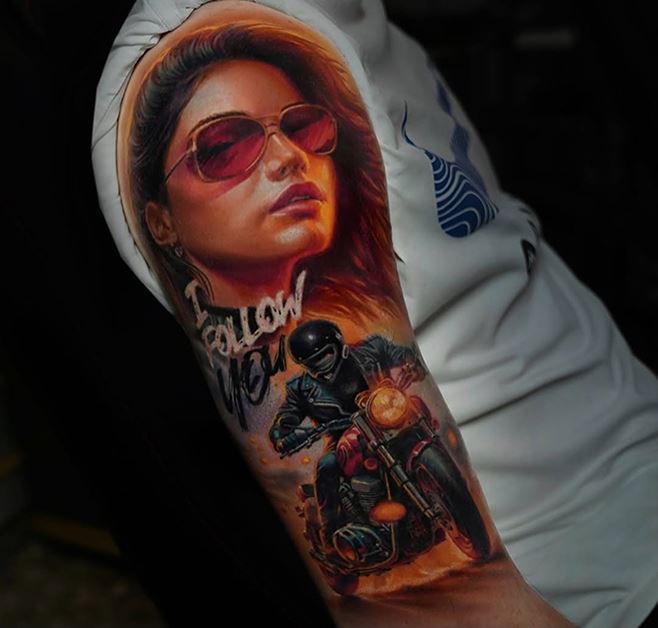
A: Realism is an incredibly complex yet at the same time captivating
style. It allows for the conveyance of the finest details, emotions,
textures, and the play of light and shadow. I like the opportunity
to create images on the skin that look alive. It is a special form
of art where the artist must consider not only artistic aspects but
also the features of the skin, body movements, and anatomy. In
realistic tattooing, there is no room for error, everything must be
thought out to the smallest detail, and it is precisely this
challenge that inspires me.
Q: Given the emphasis on precise replication in tattoo
realism, how do artists maintain their unique artistic voice and
express their individual creativity within the constraints of this
style?
A: This direction truly has limitless possibilities for
self-expression. Every artist brings their uniqueness to realism:
the play of light and shadow, the level of contrast, the depth of
the image, detailing, color palette, and application technique. Some
create soft gradients and muted shades, achieving a painting effect,
while others use sharp contrasts, making the works more dynamic and
expressive. Composition also plays a key role. Some prefer static,
detailed frames, while others convey movement, creating the illusion
of life in a tattoo. A unique style is revealed in how the image
interacts with the body: lines emphasize the musculature, the
character's gaze directs attention, important elements stand out in
the overall composition. True individuality lies not in copying
reality but in its interpretation. The artistic idea is just as
important as the technical level. A narrow specialization helps the
artist refine their style to perfection, become recognizable and in
demand. Some incorporate elements of other directions into realism,
surrealism, graphics, minimalism, forming their signature style.
When an artist chooses a particular direction and develops it, they
create art that cannot be confused with others.

Q: Tattooing involves constant client
interaction. How do you balance fulfilling client requests with
maintaining your unique artistic vision? Have you ever turned down
someone?
A: The work of a tattoo artist is not just about applying an image
but about interacting with a person, their ideas, emotions, and
story. The balance between the client’s wishes and my own artistic
vision is an important aspect of my work. I always try to understand
what exactly a person wants to express through a tattoo while using
my professional experience to make the design harmonious and
technically durable. Often, people come with a specific idea, but it
does not always fit well with anatomy, does not match the style, or
simply will not look the way they expect. In such cases, I explain
the possible options, offer alternative solutions, and adjust the
composition to the body so that the tattoo not only looks beautiful
but also retains its quality over the years. There have been cases
when I had to refuse. For example, if a client’s idea did not align
with my professional principles and moral views. I also do not take
on work if I believe that the chosen style or concept does not fit
my artistic approach. In such situations, honesty is more important
to me than the desire to please. I believe that the best tattoo is
created when the client trusts the artist, and the artist respects
the client’s wishes while remaining true to their style.

Q: You enjoy doing both black and gray
style and color tattoos. Between black andgray and color, which
style demands a higher level of technical precision and why?
A: These styles require different approaches, but each of them is
complex in its own way. Black and gray realism is built on the
finest gradations of shadows, smooth transitions, and the correct
depth of shades. Mistakes in contrast distribution can make the
image look flat or unreadable. Precision in working with volume and
anatomy is crucial here since, without color, the only tools of
expressiveness are light and shadow. Color realism requires not only
an understanding of light and shadow but also working with
saturation, warmth of shades and their interaction. Colors behave
differently on various skin types, and some pigments fade faster or
change tone. It is necessary to consider how they will look not only
immediately after application but also years later. If we talk about
pure technical precision, black and gray style requires greater
control in conveying volumes and details, as an unsuccessful
contrast cannot be compensated for with color. However, color
realism is more challenging in terms of palette selection and
maintaining color accuracy over the years. In the end, both
directions require mastery, but the complexity of each depends on
the specific task and the material you are working with.
Q: We understand that your time as a tattoo artist is
valuable. What is your general approach to design corrections and
revisions requested by clients?
A: If a client suggests changes, I always analyze whether they will
improve the composition or, on the contrary, weaken it. Sometimes
adjustments help make the tattoo even more individual and
expressive, but there are situations where the proposed changes
contradict the laws of composition, perspective, or make the image
unnatural. In such cases, I explain why it should not be done that
way and offer an alternative option that takes the client’s wishes
into account while remaining visually and technically correct. Any
modifications should not worsen but improve the tattoo, and in this,
I always strive to find a balance between the client’s wishes and my
professional approach.
Q: Can you share a memorable client story
that highlights a positive impact you made?
A: A client, a doctor by profession, came to me with burns left
after a fire. For a long time, she lived with these scars, but after
seeing my portfolio, she decided that instead of a reminder of the
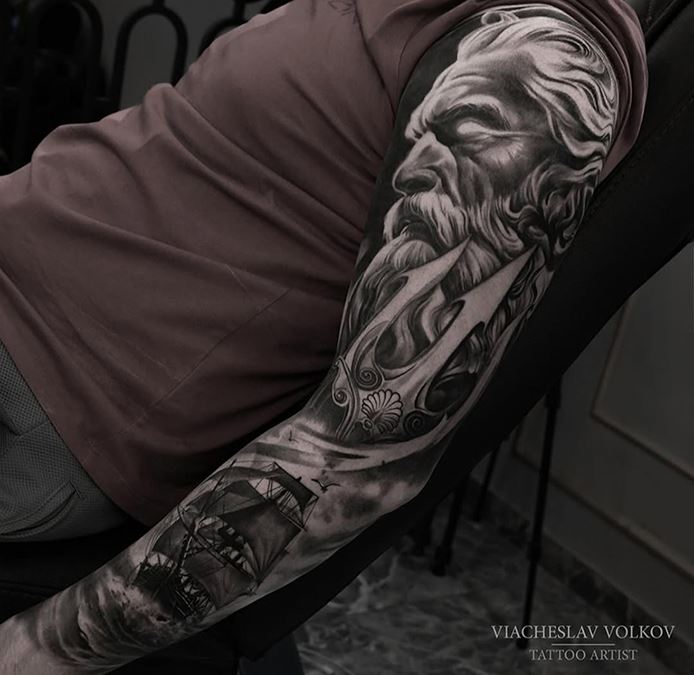
tragedy, she wanted to wear meaningful images on her skin. We chose
ancient Greek sculptures and deities symbolizing strength and
resilience and placed them on her thighs. During the process, she
talked about what she had been through and could not hold back her
tears. I saw how deeply it affected her and realized that my mission
went beyond art, it was an opportunity to help a person regain
confidence and let go of the past. With each session, she became
stronger and more at peace. At the end of the work, she expressed
her gratitude in the traditions of Turkish culture, she prepared a
vegetable salad for me, having learned in advance that I do not eat
meat. My wife and I, in turn, also prepared a dish for her, and this
exchange of sincere care remained a memorable moment for all of us.
When the tattoos were completed, she said that for the first time in
many years, she felt free and was no longer ashamed of her body. As
a token of appreciation, she gave me a gift bag with sportswear that
she had chosen especially for me, having noticed that I love
fitness, and wrote warm words on an A4 sheet. This case became yet
another confirmation for me that my work helps change a person’s
life for the better.
Q: With the rise of collaborative projects
in the tattoo world, have you considered collaborating with other
artists on a tattoo design? What are your thoughts on the potential
benefits and challenges of such a venture?
A: Collaborations in the tattoo industry are a great way to combine
different techniques, styles, and ideas in one piece. I am always
open to such projects if they provide the opportunity to create
something unique. Working together with another artist allows me to
look at the process from a new perspective, merge different
approaches to composition, color, and detailing. This is especially
interesting when styles differ but can still harmoniously complement
each other. However, such projects also come with challenges. The
main thing is synchronizing the technical level and vision of the
work. Each artist has their own application technique, their own
principles of shading and detailing. If they are too different, the
tattoo may look inconsistent. It is important that both artists are
on the same page and understand how their styles will blend on the
skin. I have long wanted to try a collaboration with my wife,
Anastasia, and I hope that such an opportunity will arise soon.
Q: How would you describe the current
state of the local tattoo scene? Do you observe any significant
growth or evolution in terms of emerging artists, new styles, and
community events like local conventions?
A: The Turkish tattoo industry is developing, but the skill level
among artists remains uneven. There are specialists with
international experience, but many artists still use outdated
techniques and deliver low-quality work, lacking an understanding of
anatomy, composition, color combinations, and perspective. Copying
other people’s tattoos and designs from Pinterest is often seen,
which should not be the norm for a professional. This issue is not
limited to artists, clients also often come with ready-made images
and demand an exact copy. Explaining the importance of an individual
approach takes time, but it is part of a tattoo artist’s job. The
demand for realism and custom styles is growing, but high-quality
work is still rare. Very few tattoo conventions are held, but when
they do take place, they are international events where high-level
artists can be found, and strong works can be seen. The industry
lacks structured professional training, changes in work approaches,
and an improvement in the quality of services.
Studio Address:
Altınşehir Mahallesi A.Taner Kışlalı Bulvarı Güleç Teras İş Merkezi
B/Blok 48a/d, 16000 Bursa, Turkey
Social Media & Portfolio:
https://www.instagram.com/slava.volkov.tattoo/
https://slava-volkov.com/
https://www.facebook.com/slavavolkov.tattoo/
https://www.tiktok.com/@slava.volkov.tattoo
wa.me/+79998508814

Q: How frequently do you participate in
tattoo conventions, and how do you leverage these events to enhance
your professional visibility, connect with clients and fellow
artists, and potentially expand your career opportunities?
A: Tattoo conventions for me are not just an opportunity to showcase
myself but a whole chapter in my career. They open doors to new
opportunities, introduce me to world-class artists, allow for the
exchange of experience, and provide a chance to learn from the best.
Participating in such events is a way to test my skills, step beyond
the familiar, and prove that I am capable of creating truly
outstanding works. I first felt recognized in my field when I was
invited to the Moda Topical Style Awards ceremony, where I received
the "Beauty Achievement" award. This event was attended by and
honored well-known and talented individuals, including artists,
businessmen, surgeons, and representatives of other professions.
That same year, I became a finalist in one of the largest
international competitions, Global Tattoo Awards 2023, where I won
first place in the "Realism" category. It was a moment when I
realized that my style and technique met the highest standards and
that I was ready for new challenges. I want to say that
participating in a convention is a special experience. For example,
Izmir Tattoo Fest 2024 was a landmark event for me. There, I won
three awards at once: 1st place in "Best of Large Color", 2nd place
in "Best of Color", 3rd place in "Best of Show" It was an incredible
moment. Additionally, in 2024, I competed at the Istanbul Tattoo
Convention, where my work took 2nd place in the "Color Tattoo"
category. I love this feeling when competition pushes me to further
development. Another important achievement was 1st place in the
"Versatile" category at the international DGN Tattoo Magazine 2024
competition. This victory is especially meaningful to me because it
highlights my ability to work in different techniques and adapt my
style to the unique requests of clients. I am sincerely grateful to
my wife for her strong support, she is always by my side,
encouraging me at every event. This year, I hope to participate in
tattoo conventions in the United States. This is a new level for me,
and I am eagerly looking forward to the opportunity to present my
work at such large-scale events.
Q: What are the typical challenges and
opportunities for artists seeking guest artist positions abroad?
A: The main challenges in the work of a guest artist are high
competition, the need for a strong portfolio, language proficiency,
and the ability to connect with different clients. It is important
not only to create high-quality work but also to have a recognizable
style that sets you apart from others. Another crucial aspect is the
legal nuances: obtaining work visas, contract conditions, and
understanding studio policies in different countries. However,
despite all the difficulties, the opportunities are immense. It is a
chance to reach a new level, expand the client base, exchange
experiences with top artists, participate in major international
events and work in studios with a global reputation. Professional
ethics play a significant role here, studios value reliable,
responsible artists who respect the rules, strictly follow hygiene
standards, and focus on quality. If you can work in a team, adapt
flexibly to different conditions while maintaining your unique
style, doors to the international industry open much faster.
Q: Any valuable insights gained from working in a different
cultural and professional environment?
A: Working abroad is always a valuable experience that allows for a
deeper understanding of people's culture, values, and worldview. One
of the most important lessons I have learned is flexibility and the
ability to adapt to different conditions. In Turkey, the attitude
toward tattoos is very different from that in Europe. Here, designs
that reflect life positions, family values, respect for traditions,
and history are especially valued. Tattoos often symbolize strength,
courage, devotion to family, love for spouses, children, and
parents. National identity and respect for leaders are also
significant for many people. For example, tattoos depicting Atatürk
are quite common and hold deep meaning for their owners. The
significance of this can be seen in everyday life, his images hang
from balconies, decorate shops and cars. People do not just remember
him but consciously demonstrate their respect for his legacy. This
experience has taught me to feel clients and their stories on a
deeper level. In Europe, tattoos are more often perceived as
aesthetics or a form of self-expression, whereas here, each piece is
a personal story tied to beliefs, family values, and important life
events. This has helped me develop the ability to work with
symbolism on a deeper level, pay closer attention to the meaning of
tattoos for the client, and understand which elements are important
not only visually but also emotionally. Such an approach does not
just expand professional horizons but makes the process of creating
a tattoo conscious, meaningful, and filled with significance.
Another important aspect is working in an international team. When
you find yourself in a new country, you meet artists from all over
the world, which leads to a powerful exchange of knowledge and new
techniques. You see different approaches to work, process
organization, and interaction with clients. This is incredibly
inspiring and helps in professional growth. However, beyond
professional development, working abroad serves as an important
lesson in patience and understanding. People have different
mentalities, perspectives, and habits and you need to find an
approach to each of them. It is important not just to execute a
tattoo technically but to feel the person, grasp their ideas, and
adapt to their cultural code. Overall, working in another country is
not just a change of location but a huge step in development as an
artist and as a person. It is an opportunity not only to improve
technique but also to see tattoo art on a global scale, look at the
profession from a broader perspective, and realize that tattooing is
truly a universal language that unites people worldwide. Beyond
working with clients, I have also gained valuable experience in
collaborations with major international studios. For example,
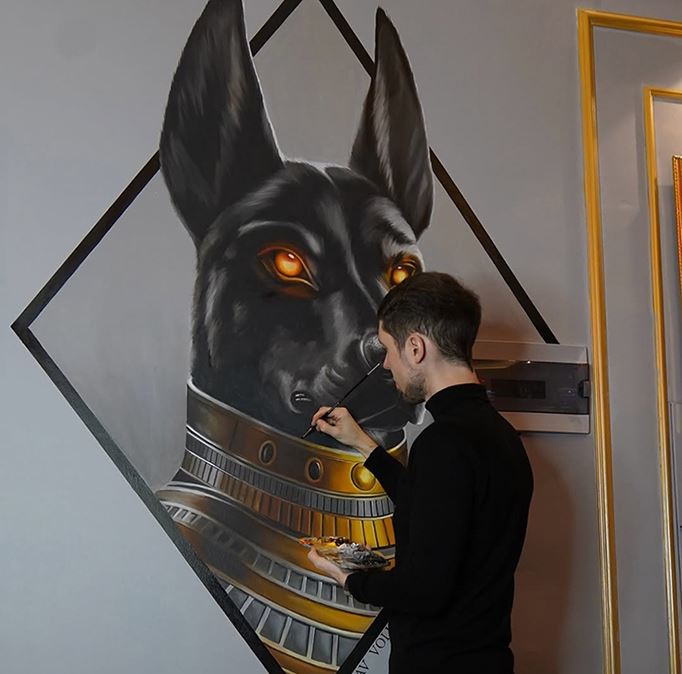
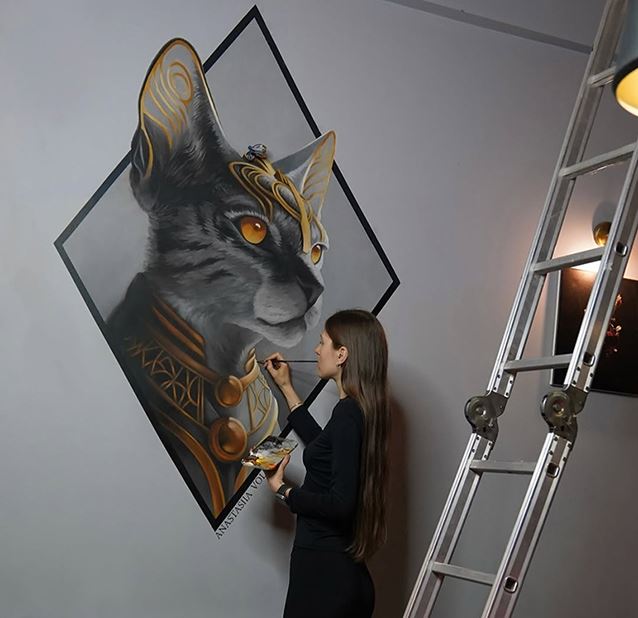
working with the global tattoo studio network Cleopatra Ink gave me
the opportunity to implement several significant art projects. One
of them was the creation of original artistic murals in the studios,
designed in the theme of Ancient Egypt, which became a unique
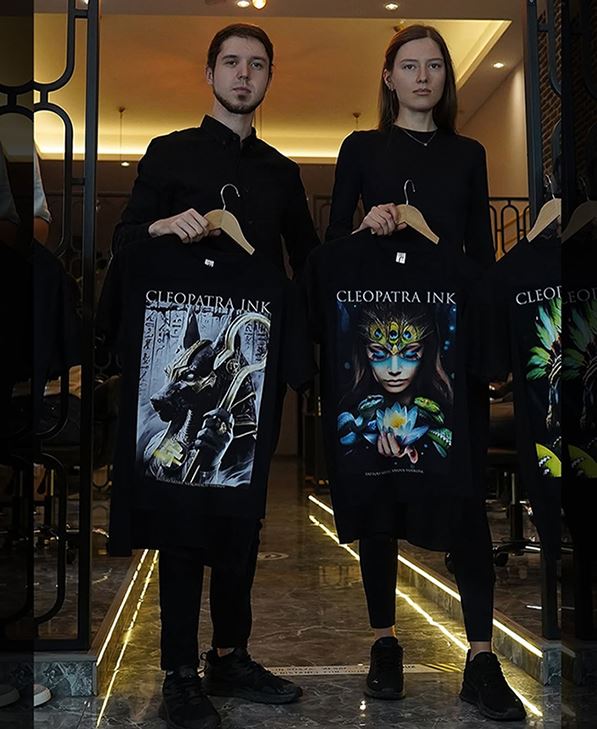
element of the studio’s signature style. Additionally, I worked on
the design of a limited-edition series of Cleopatra Ink branded
T-shirts, which were released in an exclusive run and became a
recognizable attribute among the studio’s clients.
Q: The rise of social media has
significantly impacted client expectations for tattoos. How do you
navigate the pressure of meeting high standards while maintaining
your own artistic integrity and avoiding unhealthy competition?
A: Social media has truly changed the perception of tattoos. Clients
have become more informed, but at the same time, their expectations
are sometimes far from reality. Often, people come with references
that are either overly edited or technically unfeasible in the long
term. Therefore, an important part of my work is educating clients,
explaining how a tattoo will look not only immediately after
application but also years later. I always maintain high quality,
regardless of trends. For me, it is important that a tattoo not only
looks impressive in photos but is also properly executed,
considering anatomy, skin structure, and healing characteristics.
This is a principle that allows me to maintain my reputation and
professionalism. As for competition, I do not see it as a negative
factor. It is important not to try to conform to others' standards
or copy popular styles but to develop one's technique, deepen
knowledge, and refine a unique style. Social media provides the
opportunity to showcase work to a larger audience, but in the end,
it is not likes that matter, it is real skill, a professional
approach, and client trust.
Q: Given the vibrant and diverse nature of the American
tattoo scene, are you interested in exploring professional
opportunities within the United States?
A: Yes, I am truly interested in developing in the United States
because the American tattoo industry is one of the most advanced and
influential in the world. Strong artists work here, new styles and
techniques are created, and the high level of competition constantly
pushes for professional growth. I like that in the U.S., the
individuality of the artist and their unique style are highly
valued. Clients are willing to invest in high-quality work and trust
the artist rather than just choosing standard designs. This provides
an opportunity not just to create tattoos but to develop unique
projects that truly reflect the personality of the client.
Additionally, there are a huge number of tattoo conventions in
America, where one can not only make a name for oneself but also
communicate with world-class professionals, gain experience, and
incorporate new ideas into their work. In 2025, I would like to
participate in the NY Empire State Tattoo Expo, Golden State Tattoo
Expo, and The All Stars Tattoo Convention, which will be an
important step in my career. I am confident that working in the
United States will open new opportunities for me, allow me to expand
my client base, and elevate my skills to an even higher level.

Q: What specific regions or cities would
beof particular interest to you, and why?
A: If we talk about the United States, I am particularly interested
in New York, Los Angeles, and Miami. Each of these cities offers
unique opportunities for a tattoo artist, and each has its own
atmosphere that influences the style of work. It seems to me that
New York has an intense rhythm, a high concentration of top studios,
a large number of clients ready for complex projects, and a strong
media influence. Events take place in this city where the best
artists from all over the world gather. It is an excellent platform
for professional growth, networking, and opportunities to showcase
oneself on an international level. Los Angeles attracts me with its
special atmosphere and well-developed tattoo culture. Realism is in
high demand here, which fully aligns with my style. The city has
many well-known studios, and clients are often connected to the
film, music, and sports industries. This is a place where tattooing
becomes part of an image. Miami, on the other hand, has even more
sun, freedom, and bright colors. Color tattoos, black and gray
realism, and Latin motifs are particularly popular there. This also
gives an artist the opportunity to experiment and bring something
new to life. Miami also hosts numerous festivals and international
events, making it an exciting location for a career. I am interested
in trying myself in different parts of the United States because
each of them offers unique opportunities for growth and development.

Q: What kind of impact do you hope to make
on the world of tattoo art in the years to come?
A: I have many plans for this life! I will share just a few of them.
First of all, I would like to open a network of studios with high
standards and service. I am also interested in developing the
educational direction in the tattoo industry. Many artists, even
talented ones, face a lack of systematic knowledge about technique,
color theory, anatomy, and the longevity of their work. I would like
to share my experience, help new generations of tattoo artists
refine their skills, avoid mistakes, and develop the right attitude
toward quality. Another important direction for me is working with
tattoos that serve not only an aesthetic but also a restorative
function. I do a lot of work covering unsuccessful tattoos, scars,
and burns, and I see how much this can change a person’s perception
of their own body. In the future, I would like to promote this
direction even more, helping people regain confidence in themselves
and be able to look at their reflection without regrets. I want my
contribution to the world of tattoo art to be associated with
creating art that has meaning, benefits people, and remains relevant
beyond time. And of course, I plan to attend more major tattoo
conventions!

Q: Best careers highlights so far?
A: First of all, this includes recognition at international awards
and tattoo conventions, which I have already mentioned earlier.
Participating in and winning these competitions not only confirmed
my professional level but also gave me the opportunity to meet the
best artists from around the world. One of the significant
milestones was collaboration with the global network Cleopatra Ink,
within which I implemented several large-scale art projects. This
experience allowed me to work in an international environment,
become part of a major company’s team, and participate in important
tattoo conventions in Turkey. Working in such a large-scale team is
an incredibly motivating experience that not only opens new
opportunities but also brings artists together. Another important
achievement is publications in leading tattoo magazines and
participation in prestigious editions, such as GTM 12th-Anniversary,
dedicated to the best artists in the world, and Top Tattoo Artists
of The World: Volume 12 by Inkedbooking. This is a milestone moment
for any artist because such publications confirm one’s place in the
industry at the international level. However, perhaps one of the
most significant milestones in my career was publishing my own book.
I am proud to have released "Art on Skin: Symbolism and
Combinations", where I compiled my knowledge about tattoo symbolism,
as well as ideas and unique combinations of elements. This book is
already available on Amazon and Apple Books, and it is a great honor
for me to see that it resonates with people who are passionate about
tattoo culture. I also actively share my experience through
interviews and expert articles in the media. It is important to me
that people receive reliable professional information, advice, and
recommendations that help them make informed choices and avoid
mistakes. As part of this, I run an author’s column in a major
Russian media outlet, where I discuss various aspects of tattooing
and share my knowledge. Another important milestone is my invitation
to the Pro Team of major international brands, which is a serious
recognition in the industry. Additionally, several well-known
studios in the United States have expressed interest in
collaborating with me, and this is a huge step forward for me. And
finally, one of the most honorable achievements was my acceptance
into the TattooArt Global Alliance, where my achievements in the
industry were carefully reviewed by the commission. This community
unites leading artists whose creativity and contributions to the
development of tattoo culture are recognized on an international
level. I am truly happy to see how my influence in the industry is
growing, and how my work and knowledge are gaining worldwide
recognition. This inspires me to move forward, create new projects,
teach, and help other artists grow.
Q: What activities or interests help you
maintain a balanced lifestyle and fosterpersonal growth outside of
your professional endeavors?
A: For me, the balance between work and personal life is a way to
maintain creative thinking, inspiration, and inner harmony. I
believe that tattooing requires constant development, so many of my
hobbies are related to seeking new ideas and improving skills. One
of the important parts of my life is oil painting and sculpting.
This helps me train eye measurement, a sense of form, volume, and
composition. When I work with clay or create illustrations, it helps
me better understand how light and shadow work in realistic images,
which directly reflects in my tattoo style. Another source of
inspiration is photography and videography. They help me look at
composition, perspective, and details differently, making my work
more meaningful. In addition, I love filming the tattoo creation
process, which not only allows me to capture the best moments but
also share them with my audience. I also try to explore new places,
cultures, and history because in every country or city, you can find
unique symbols and elements that can later be integrated into tattoo
designs. For example, my works are often inspired by architecture,
nature, and historical artifacts. And in general, traveling is the
best way to recharge and a powerful source of inspiration. It’s
worth mentioning that fitness and an active lifestyle hold a special
place in my life. Physical activity helps me maintain endurance, as
tattooing often requires concentration and long hours in one
position. Sports keep my body in shape, and walks in the fresh air
help me switch off and restore energy. I also focus on studying art,
history, and symbolism. The more you know about culture, mythology,
and different traditions, the deeper and more interesting your work
becomes. Another way to find inspiration is by studying photographs
on different platforms. I regularly browse websites and apps
dedicated to photography, art, and design to discover new ideas,
unusual compositions, color combinations, and textures. This helps
me develop visual perception, discover new visual solutions, and
integrate them into my tattoo designs. Two hours before sleep, I
enjoy watching series and movies. Sometimes, I allow myself some
gaming for relaxation, which, by the way, also has its benefits for
inspiration. And of course, my wife and I love extreme sports!
Paragliding, motorcycle riding, jet skiing, cycling, rollerblading,
and more bring strong emotions and unforgettable experiences.
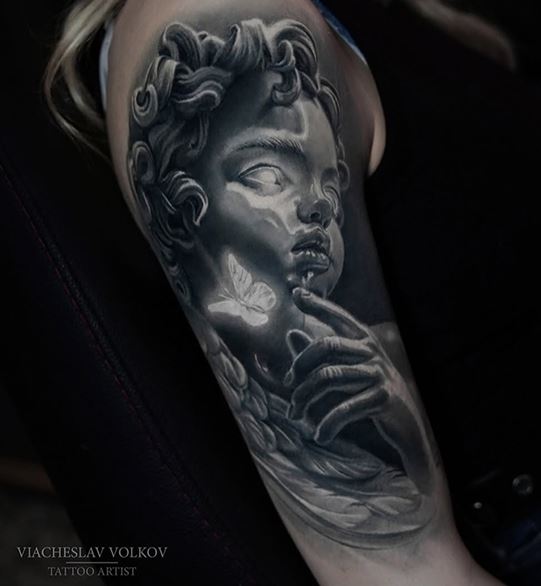
Q: What is the most valuable advice you
can offer to someone who is serious aboutbecoming a professional
tattoo artist?
A: Do not stop at basic skills, constantly grow and develop. Many
people think that the main thing is to learn how to hold the machine
and confidently lay down lines, but in reality, this is not enough.
It is important to develop artistic thinking. Without an
understanding of form, volume, light, and shadow, it is impossible
to create a truly high-quality tattoo. If you do not have an art
education, learn to draw. It is not necessary to become an academic
artist, but you will have to understand anatomy, perspective, and
composition. A good tattoo artist is, first and foremost, an artist.
Another very important aspect is visual experience. Look at the
works of not only tattoo artists but also classical painters,
sculptors, and photographers. Follow different styles, study
details, and analyze what makes a piece harmonious. Regular exposure
to art will help you find your own style, rather than just copying
other people’s ideas. And most importantly do not try to take the
easy path. Long-lasting, high-quality tattoos require time,
attention to detail, and self-improvement. If you want to be not
just a tattoo artist but a true professional, be ready to invest in
learning, technique, equipment, and your growth. Only this way can
you become someone respected in the industry.
You can read our interview with Anastasiia Volkova, on this link.


