
Interview with Eva Ronnova
To commemorate eighteen years of documenting the
finest artistry in the industry, Skin Artists Tattoo Magazine is
turning its focus toward the delicate precision and modern elegance
of fine-line work. Eva Ronnova joins our milestone celebration as a
definitive master of this specialized craft, recognized for her
ability to weave intricate narratives with breathtaking subtlety.
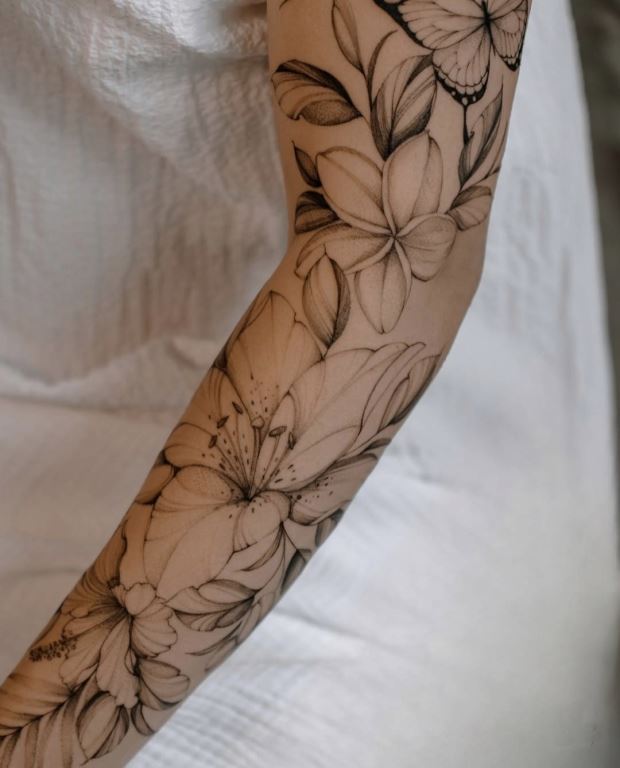
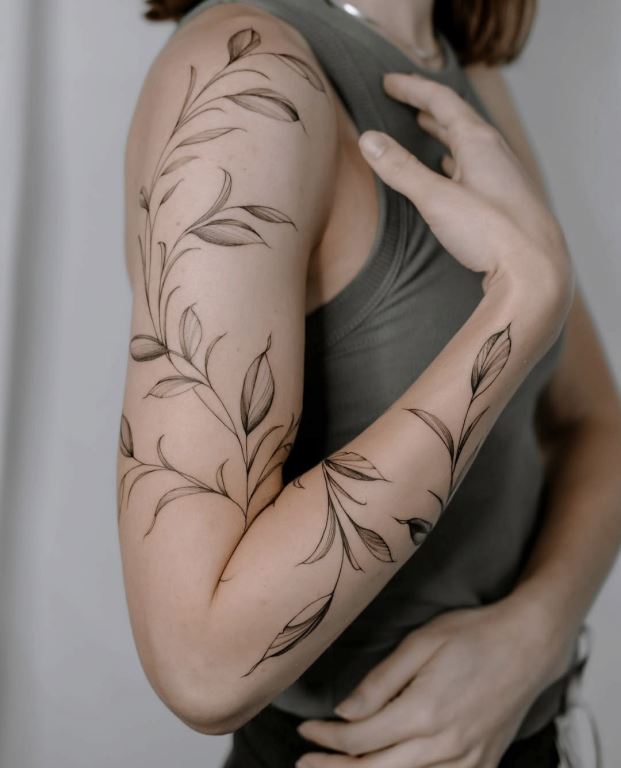
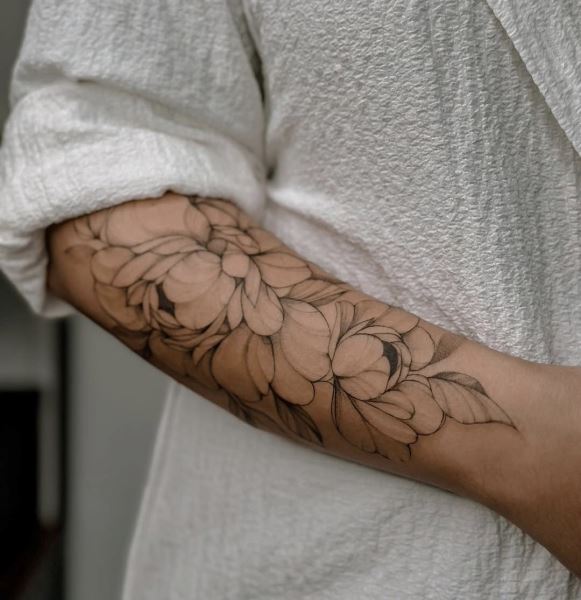
Eva’s work represents a sophisticated evolution in tattooing, where
the power of a piece lies in its grace rather than its aggression.
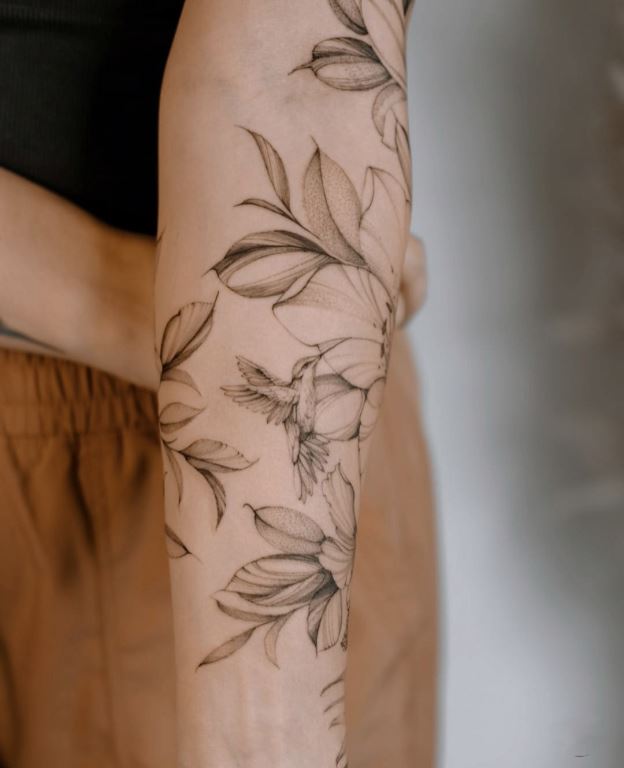
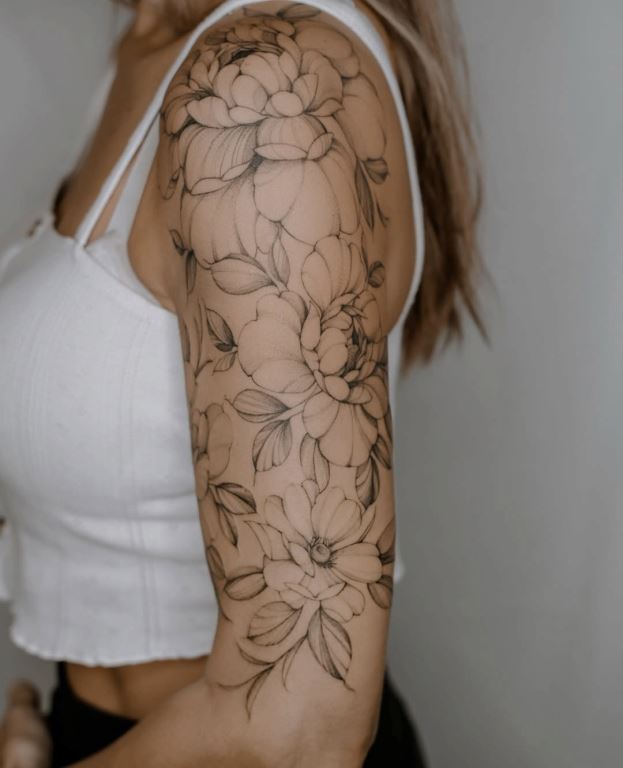
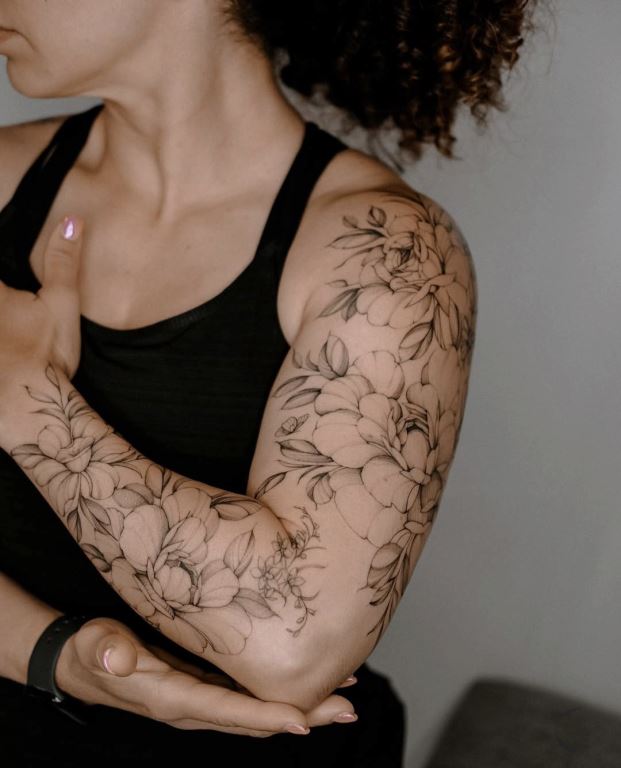
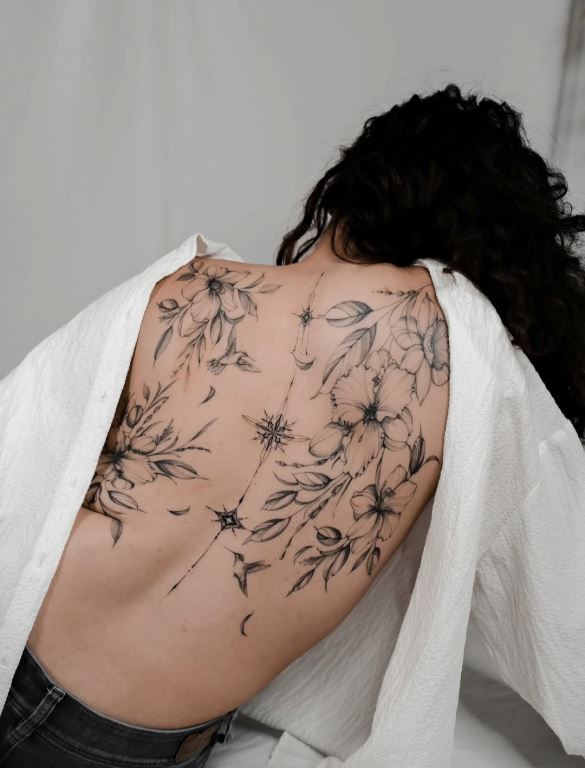
Her portfolio is a testament to the "less is more" philosophy,
characterized by razor-sharp linework, ethereal shading, and a
profound respect for the natural flow of the human body. By focusing
on botanical elements and minimalist compositions, she creates
timeless adornments that feel like a seamless extension of the skin
itself.
The following interview is centered on our anniversary theme:
exploring the future of tattooing. We discuss the technical
discipline required to maintain the integrity of ultra-fine lines
over time, the rising demand for delicate, high-end aesthetics, and
Eva’s perspective on how this minimalist movement is shaping the
next era of global tattoo culture.
Q: The industry has exploded in the last few years. As both
a founder and an artist, do you feel we are in a "Golden Age" of
creativity, or is the market reaching a saturation point where the
"soul" of the craft is being diluted?
A: As a tattoo artist who has been actively working in the industry
for five years, I truly believe we are at a point where artists have
more opportunities than ever to be seen, heard, and to express
themselves freely. People say that there are now “too many” tattoo
artists and that competition is extremely high. But in my opinion,
strong competition is a powerful driver for growth, much more than
its absence.
Q: You are a prominent figure in the California fine-line
scene. How do you see the "California Aesthetic" evolving as
tattooing becomes a more globalized, borderless market?
A: California, to me, is exactly about high-level competition. Some
of the strongest fine-line tattoo artists in the world work here,
and clients are truly spoiled with choice compared to many other
states. Because of that, you really have to stand out and clearly
understand who your audience is in order to be in demand. I see the
California aesthetic becoming more refined, more personal and more
concept-driven, less about copying trends and more about building a
recognizable style. And honestly, I love high-level challenges.
Q: Your work often targets "women who love
aesthetics." How has the client's relationship with their body
changed in 2026? Are they seeking tattoos as fashion, or as a deeper
form of identity?
A: My clients are all about conscious choice, both in tattooing and
in choosing their artist. Many of them spend years searching for
“their” tattoo artist before booking, but when they come to me, they
usually have a very clear understanding of what they want and why. I
am definitely for individuality over trends. That’s why I approach
every project as a unique collaboration, built around the client’s
story, body, and vision rather than what’s popular at the moment.
Q: With the rise of "budget" studios and unlicensed artists,
how do you justify the "Visionary Premium" to a new generation of
collectors who are used to the "fast-fashion" speed of the modern
world?
A: The explanation is actually very simple: there is a product and a
price point for every type of consumer. You can buy clothes and
accessories from fast fashion, inexpensive, trendy, mass-produced.
Or you can invest in one high-quality piece that lasts a lifetime.
Tattooing works the same way. You can choose a cheap, fast tattoo
with little attention to detail. Or you can choose an artist (a
creator)who designs a one-of-a-kind project specifically for you,
with intention, precision, and long-term thinking. That difference
is what defines the premium.
Q: In our 18th year, we’ve seen many
definitions of success. For you, is success measured by your booking
waitlist, your technical growth, or the impact you have on the
artists coming after you?
A: For me, success is about finding my people. People who genuinely
value my work and my art. People who are willing to drive for hours
or fly across states to get tattooed by me. That level of trust and
connection means more to me than numbers and that’s how I personally
measure success.
Q: Social media rewards "viral" snapshots over healed,
long-term mastery. How do you navigate the pressure to create
"scroll-stopping" content without compromising the integrity of the
actual tattoo?
A: This is probably one of the hardest parts of being a tattoo
artist today. Almost every artist feels the pressure to create
content that is viral rather than meaningful. I approach this very
rationally: likes and views are not indicators of quality, and they
are definitely not equal to bookings. Collectors who choose
consciously will spend hours studying your portfolio, zooming in,
comparing healed work, line quality, and consistency, not counting
likes. That’s why I believe in creating only what reflects who you
truly are as an artist. Showing work you are proud of. Staying
honest to yourself regardless of pressure or trends.
Q: In 2026, the artist is often a "content creator" as much
as a technician. How do you prevent your personal brand from
overshadowing the permanent art you leave behind?
A: Balance is everything. You must always remember what comes first,
the art. Personal branding should exist only as a support system for
your portfolio, never as something that overshadows it. The
personality should amplify the work, not replace it.
Q: In an era where AI can synthesize a
"perfect" composition in seconds, why will a collector always choose
a human-led original? What is that irreplaceable element of the
human touch that no algorithm can simulate?
A: I have never seen an AI-generated tattoo design that truly works
on the skin. Especially in my practice, where freehand drawing is
essential, AI simply cannot replace the human hand. A good sketch
alone is not enough. You must understand how to translate it into
skin, how it flows with anatomy, how it heals, and how it ages.
Individuality is what people value more than ever, and only an
experienced artist with a developed personal style can truly offer
that.
Q: We are seeing the birth of "smart inks" that monitor
health or change color. Do you see your fine-line aesthetic merging
with this technology, where the tattoo becomes a functional part of
the human "hardware"?
A: I am absolutely open to these technologies. Where aesthetics meet
functionality - that’s exciting. I would definitely be curious to
explore and potentially integrate smart inks into my work in the
future.
Q: Do you envision a future where your
delicate botanical designs might interact with the body through AR
(Augmented Reality) or light-reactive pigments?
A: It sounds futuristic and why not?
I don’t think humans will ever stop wanting to decorate their
bodies. We may evolve into new materials and new types of pigments,
just like we once moved from bamboo sticks to wireless tattoo
machines. But the essence will remain the same.
Q: We are seeing a surge in 6-month intensive online
academies versus traditional 3-year apprenticeships. Can "physical
intuition" like needle depth and skin trauma management truly be
mastered through a screen?
A: I would never recommend starting a tattoo career through online
courses alone.Tattooing is deeply physical. So much depends on
sensation, resistance, pressure, depth, things that are extremely
difficult to transmit through a screen. Online education can be
valuable for artists who already have experience and want to refine
their skills. But for beginners, only in-person learning and
apprenticeship truly build a solid foundation.
Q: As VR and haptic feedback technology
advance, do you see a future where apprentices "tattoo" in a digital
simulation before touching skin? Would you trust a student trained
in a 1:1 digital replica of your studio?
A: If the training focuses on mechanical hand movements, similar to
drawing on paper, iPad, or skin, then yes, it can be useful for
developing basic control, linework, and consistency. The most
important thing is training the hand. So I’m open to the idea. It
could become a strong supplemental tool.
Q: If you were to design a "Visionary's Curriculum" for
2026, what non-tattooing subjects (like psychology, light physics,
or marketing) would you make mandatory?
A: Client service & communication, psychology and basics of
photography and video for tattoo artists. I personally still work on
this area and truly wish I had more education focused specifically
on photographing my work and filming tattoos correctly.
Q: Beyond the needle, what is the one "invisible skill"
(business, psychology, or anatomy) that you feel is most lacking in
modern tattoo education?
A: The most lacking invisible skill, business mindset. From day one,
I treated tattooing as my profession, not a hobby. And I communicate
that clearly to clients. Without structure, organization, and a
serious approach, long-term growth is extremely difficult. And
honestly… the amount of tattoo artists who don’t draw at all still
surprises me.
Q: In a world where "how-to" videos are everywhere, has the
role of a mentor shifted from teaching how to tattoo to teaching why
we tattoo?
A: Once an artist knows how to tattoo, the next level is
understanding why they tattoo. That answer becomes the foundation
for branding, positioning, and marketing. I always include this
layer in my education, because it’s essential for those who want to
be artists, not just people who apply ink.
Q: What is your advice for artists on
navigating the business side moving from "freelance artist" to
"sustainable brand" without losing their creative soul?
A: I would recommend next steps: Choose one direction. Focus on one
style. Master it deeply. Create a clear portrait of your ideal
client: who they are, what they care about, what problems they want
solved. Then build your work and communication around serving that
exact audience. This approach always creates stability.
Q: In 2026, people aren't just buying a tattoo; they are
buying an "experience." How much of your success do you attribute to
the environment of your studio versus the actual ink?
A: I designed my workflow around understanding what often worries
women before and during a tattoo session - fear, discomfort,
uncertainty. So I created a space where they feel safe, respected,
and cared for. Every detail is intentional. That environment is a
huge part of my success.
Q: How do you build a lasting legacy in a
market that is constantly chasing the next "viral" trend?
A: I built my social media and portfolio as one cohesive system -
one aesthetic, one message, one emotional tone. Something timeless.
Trends move fast, but people still crave stability. I focus on
building a foundation that people return to again and again.
Q: If you could send a message back to yourself 18 years
ago, when the industry was much smaller and more private, what would
you say about the artist you have become?
A: We did it. Even more than we ever imagined. You freehand tattoos
without stencil and it looks amazing.
Q: When the digital noise of 2026 fades and only the ink
remains, what is the one truth about your work that you hope stands
the test of time?
A: Art is timeless. I hope that when my clients look at their
tattoos years from now, they remember not only the image, but the
positive experience, the feeling, and the moment in their life when
they chose that piece.
Read our first interview with Eva Ronnova.


