
Interview with Roman Plankevych
Hello Roman Plankevych! Thank you so much
for taking the time to do this interview. Please start by telling us
something about yourself and your background. When did you discover
your talent for arts? My name is Roman Plankevych. I am 35
years old. I am from Ukraine , Mariupol. I started drawing as a
child in school. During my childhood I had many different hobbies
that helped me in starting tattoing. I started tattooing in 2012.
For me, at first, it was just a hobby that eventually grew into a
profession. The first few years, I only tattooed my friends. My
friends and I liked it. I was inspired by artisits like Nikko
Hurtado, Bob Tyrrell, Dmitry
Samohin, Den
Yakovlev, Denis Sivak,
Valentina Ryabova.
The works of these masters made a great impression on me.
Q: What was the initial spark that ignited your interest in
tattooing, and how has your motivation evolved over time?
A: I was always interested in trying to get a tattoo. At first I
decided to get a tattoo. I found a tattoo artist in my hometown and
got my first tattoo. This gave me an even greater desire to do
tattoos and I started to get interested in this topic. After some
time, my girlfriend gave me my first tattoo kit. It was a cheap kit
for beginners. I tried to find some information on how to make
tattoos. It was a hard road. Because there was little information in
the public domain. And the artists from my city did not share it.
But I didn't give up and gained experience through trial and error.
So to speak, I set a goal and didn't see any obstacles. I took my
nickname Azovsky at my first convention back in 2013 in Donetsk. It
was a fun time. My friend and I went to see how others tattooed and
decided to take part in this event. This is how I got my first
experience of participating in conventions. After that, I decided
for myself that I wanted to do tattooing as a professional tattoo
artist. After that, there was a difficult path in the search for
knowledge, acquisition and improve of my skills. I took part in
various tattoo festivals, master classes and webinars. In 2017, I
got my first experience working abroad as a guest artist in various
studios in Europe. During the last few years I have been working in
Germany. In the city of Dorsten, in the shop "Lucky tattoo by Pascal
".
Q: You demonstrate impressive versatility
across tattoo styles. Which do you find the most enjoyable or
personally rewarding to create?
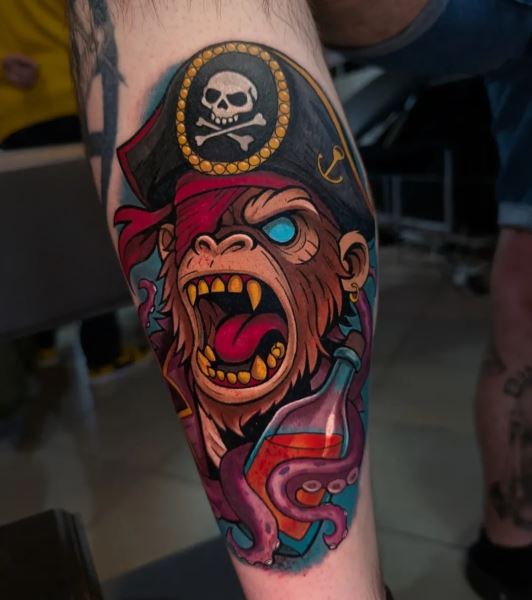
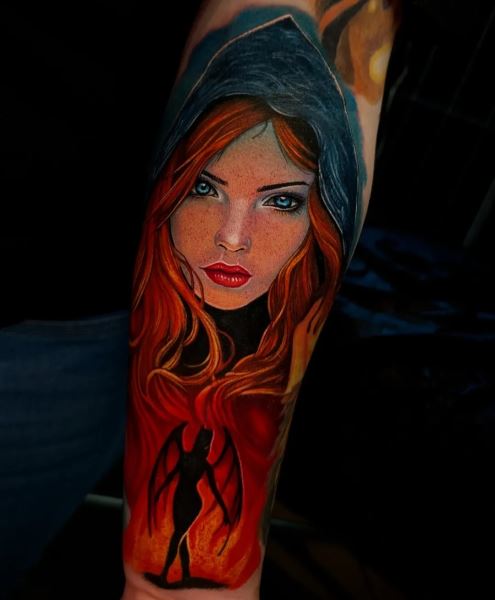
A: I am a tattoo artist who loves his work. I try to make every
sketch that I do as high quality as possible. I like to work in
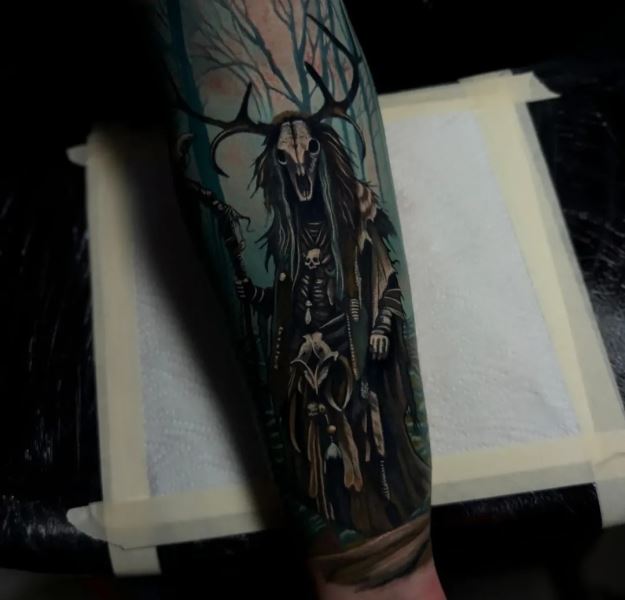
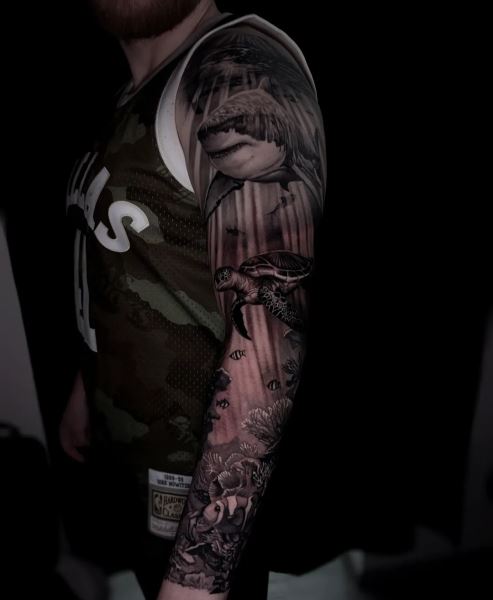
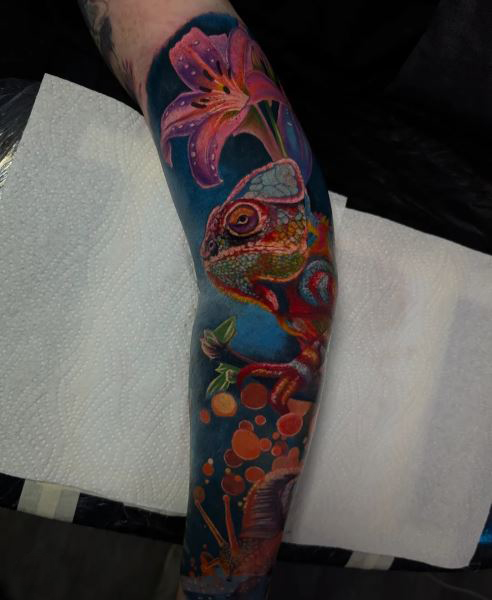
different styles such as color and black and white realism. But I
also like to do tattoos in neo-traditional and old school styles. I
also work in neo-Japanese and blackwork. The variation of styles
helps me in creating interesting designs and their execution. The
openness of styles also prevents boredom in work. You can create
what you like without being limited by any framework.
Q: Your proficiency in both color and black and gray
tattooing is evident. Are there particular nuances or complexities
within either style that you find more demanding or intriguing?
A: A good tattoo, like any work, takes time. Any design requires
time for preparation. During preparation, you study the drawing and
plan your actions in the future. My opinion is that black and white
tattoos, like color ones, require preparation. During work, the
skills acquired during drawing training at drawing school are very
helpful. You use your knowledge to transfer the design onto the
skin. Special attention is paid to the quality of painting,
contours, contrast and cleanliness of the work. All these skills
come with experience.
Q: The art of tattooing demands continuous refinement. How
do you approach ongoing artistic development, and are there any
styles or techniques you're currently exploring or considering
incorporating into your work?
A: Knowledge gained from drawing on paper or canvas will help in
tattooing in the future. I am currently studying academic drawing on
private courses. Which helps a lot in tattooing. Also, analyzing the
works of other artists and communicating with them. They help in
forming new ideas for cool tattoos. I also attended master classes
from tattoo tops. The knowledge I received is also very popular and
useful. Tattoo culture requires constant development and I try to
keep up and be aware of everything new.
Q: What trends or recurring themes do you
observe in the tattoo designs your clients request?
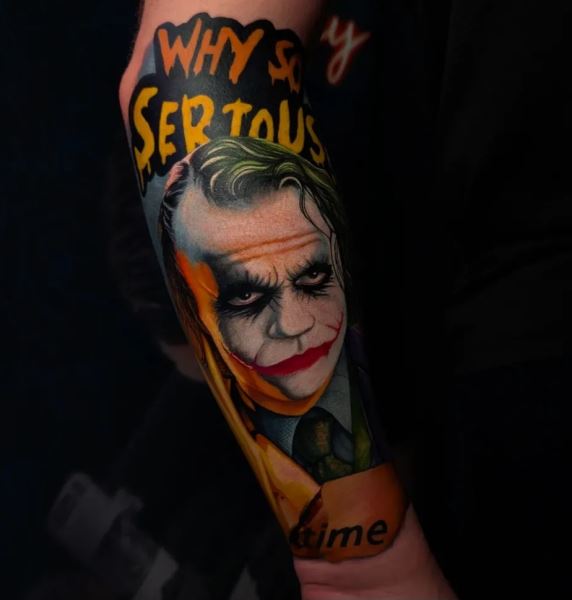
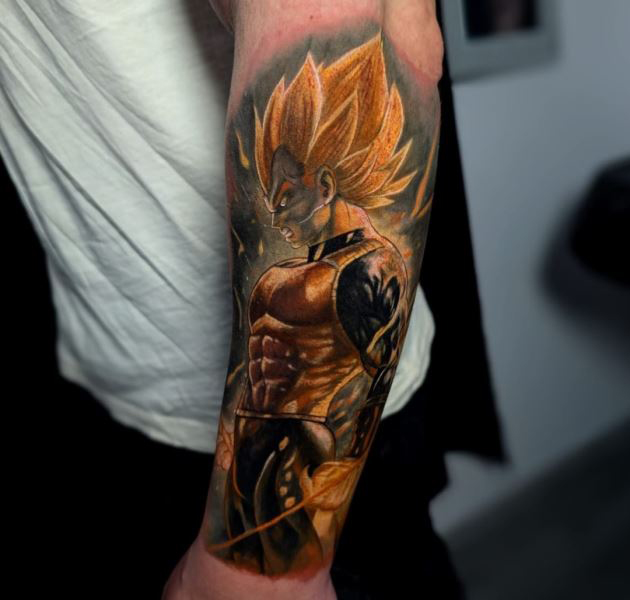
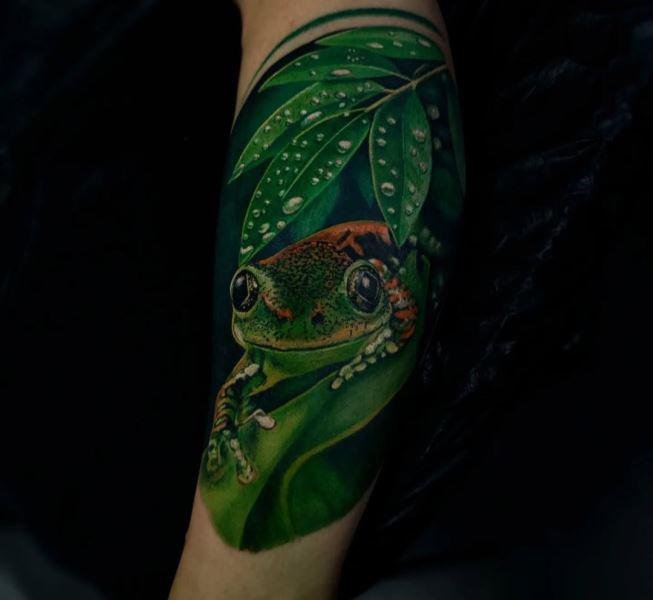
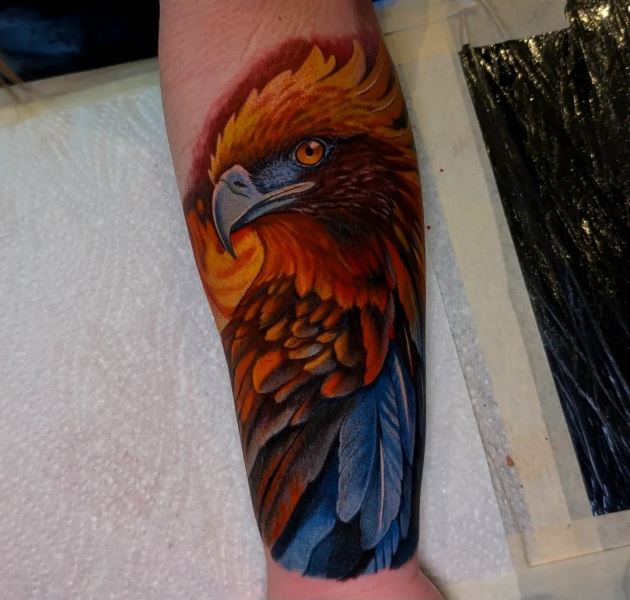
A: I often do tattoos of animal portraits, as well as various
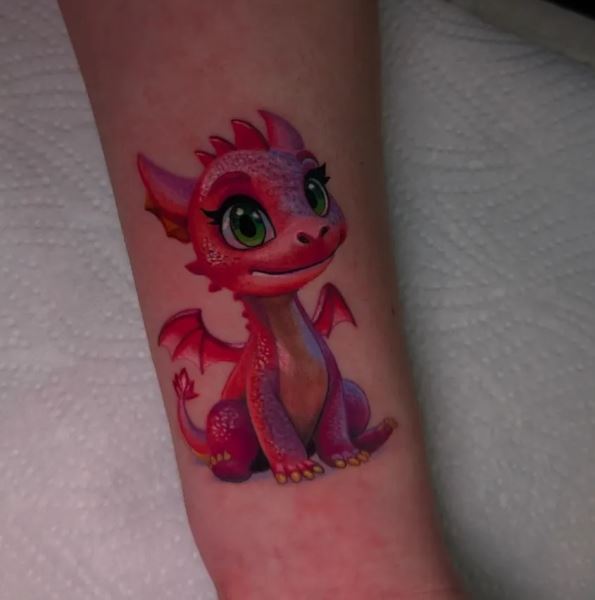
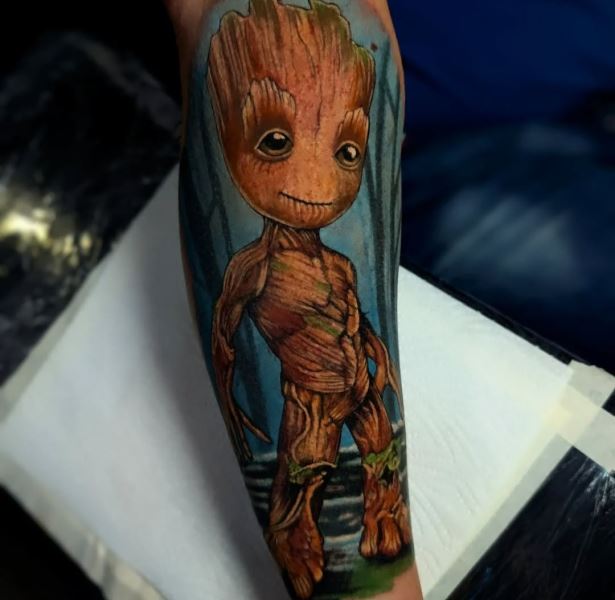
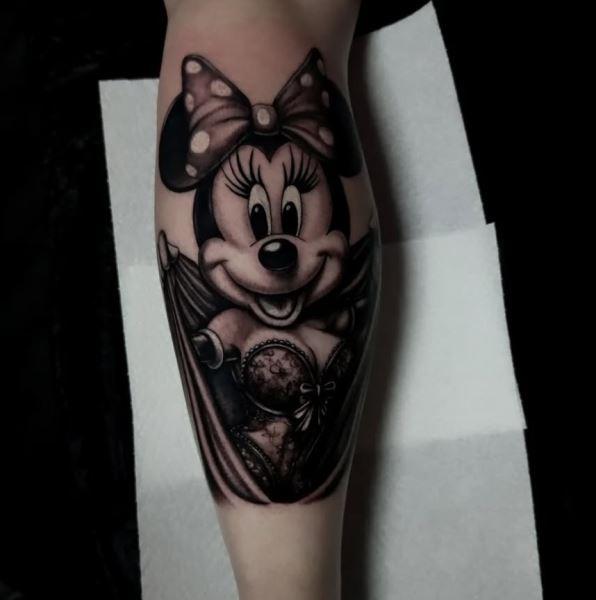
elements of realism. I also note the love of clients for cartoon
design, anime and new school. Clients also like tattoos of various
famous people and heroes.
Q: How do you approach the collaborative process when a
client brings you their design ideas?
A: When a client brings their design ideas, I approach the
collaborative process with enthusiasm and a focus on achieving the
best possible outcome for them. I am always willing to help clients
choose the best design and body placement. I listen carefully to
their ideas and am open to compromise to ensure they feel heard and
that their vision is considered. At the same time, I also value my
artistic vision and integrity. If a client's request is something I
feel strongly isn't aligned with my expertise or aesthetic, I will
respectfully recommend another artist who might be a better fit for
their specific needs. My goal is to create a design that the client
loves and that I can be proud to execute, while also maintaining
clear and respectful boundaries.
Q: What tattoo pushed you the most, either creatively or
technically, and what did you learn from the experience?
A: One tattoo that really pushed me both creatively and technically
was a large-scale piece depicting a swirling galaxy interwoven with
realistic botanical elements. Creatively, the challenge was
harmoniously blending the abstract nature of a galaxy with the
defined forms of plants. I spent a lot of time sketching and
experimenting with different ways to make these two seemingly
disparate themes flow together visually. I wanted to capture the
vastness and mystery of space while grounding it with the intricate
details of the natural world. Technically, the piece required a wide
range of skills. Achieving smooth gradients and the luminous quality
of the galaxy demanded careful layering and blending techniques. The
botanical elements, with their fine lines and subtle shading,
required precision and control. It was a lengthy session with a lot
of detail work. From this experience, I learned the importance of
pushing through creative blocks. There were moments when I felt
unsure how to proceed, but by continuing to sketch, research
references, and experiment with different approaches, I eventually
found solutions that I was excited about. It reinforced the idea
that sometimes the most rewarding results come from overcoming the
most challenging hurdles. When I face creative blocks or feel
overwhelmed, I often find inspiration by looking at other forms of
art, spending time in nature, or simply taking a break to clear my
head. Sometimes, stepping away from the work for a while allows
fresh perspectives to emerge.
Q: In your experience, what client
demographics or personality types tend to be most open to exploring
unique or unconventional tattoo designs?
A: From my experience, clients who are most open to exploring unique
or unconventional tattoo designs often share certain
characteristics: Personality Types: Open-minded and curious
individuals: Those who appreciate art in various forms and are not
afraid to deviate from mainstream trends tend to be more receptive
to unique concepts. Those who value individuality and
self-expression: People who see tattoos as a form of personal
storytelling or a way to express their unique identity are often
drawn to more unconventional designs. Creative and artistic
individuals: Clients who have their own artistic inclinations often
appreciate and are excited by more imaginative and less traditional
tattoo ideas. Those with a strong sense of personal style:
Individuals who have a distinct and perhaps alternative fashion
sense are often more willing to explore tattoo designs that reflect
that uniqueness. Demographics (though less definitive): While not a
strict rule, younger adults are often more open to unconventional
styles as societal norms around tattoos continue to evolve.
Individuals within artistic or creative fields may also be more
inclined to seek out unique designs. It's less about a specific
demographic and more about a mindset. Clients who are comfortable
being different and who value personal expression through art are
usually the most enthusiastic about exploring unique and
unconventional tattoo designs.
Q: Building and maintaining client trust is paramount in the
tattoo industry, requiring both artistic excellence and ethical
practice. In your experience, what core principles are most
essential for cultivating and preserving a strong reputation?
A: Building and maintaining client trust is indeed paramount. In my
experience, the following core principles are most essential for
cultivating and preserving a strong reputation: Honest and
Transparent Communication: This includes clear communication about
pricing, the tattooing process, aftercare, and realistic
expectations regarding the outcome. Being upfront and honest builds
confidence. Prioritizing Hygiene and Safety: Adhering to the highest
standards of sanitation and safety protocols is non-negotiable.
Clients need to feel secure and know their health is a top priority.
Respect and Professionalism: Treating every client with respect,
listening to their ideas, and maintaining a professional demeanor
throughout the entire interaction is crucial for building a rapport.
Integrity in Artistic Practice: Being honest about my abilities and
recommending another artist if a client's vision falls outside my
expertise demonstrates integrity and prioritizes the client's best
interest. Consistency in Quality: Striving for artistic excellence
in every tattoo I create helps build a reputation for quality and
reliability. I am deeply grateful for the trust my clients place in
me. Their support and positive feedback are incredibly motivating
and drive me to continually improve and evolve as an artist.
Building that trust through consistent effort and a commitment to
these principles is what I believe truly fosters a strong and
lasting reputation in this industry.
Q: The tattoo industry has seen a
significant shift in educational accessibility. How do you perceive
the impact of these changes on the current landscape for emerging
artists?
A: The increased accessibility of tattoo education has brought about
significant changes for emerging artists, with both positive and
potentially challenging aspects. Positive Impacts: Democratization
of Learning: Online courses, workshops, and more readily available
resources have made it possible for a wider range of individuals to
access foundational knowledge and techniques without necessarily
relying solely on traditional apprenticeships. This can lower the
barrier to entry into the industry. Diverse Learning Styles:
Emerging artists can now learn at their own pace and choose
educational formats that suit them best, whether it's online
tutorials, in-person workshops, or structured academy programs.
Exposure to a Wider Range of Styles and Techniques: Online platforms
allow aspiring artists to learn from and be inspired by tattooers
from around the world, potentially leading to greater stylistic
diversity among newcomers. Faster Skill Development (potentially):
Structured courses can offer a more direct and focused approach to
learning core skills compared to potentially unstructured
apprenticeships. Potential Challenges: Quality Control and
Standardization: With more avenues for learning, the quality and
comprehensiveness of education can vary greatly. It might be harder
for emerging artists (and clients) to discern reliable sources of
training. Oversaturation of Beginners: Easier access to education
could lead to a larger number of new artists entering the field,
potentially increasing competition for apprenticeships and
entry-level positions. Lack of Hands-on Mentorship: While online
resources are valuable, the nuanced guidance and practical
experience gained from a close mentorship with an experienced artist
might be missed. This hands-on guidance is crucial for developing
practical skills and understanding the professional ethics of the
industry. Building a Portfolio and Reputation: Even with more
accessible education, emerging artists still face the challenge of
building a strong portfolio and establishing a reputable presence in
a competitive industry. Overall, the increased educational
accessibility can be a positive force by making tattoo artistry more
inclusive. However, it also places greater emphasis on the
individual's ability to discern quality education and to supplement
theoretical learning with practical experience and mentorship to
truly excel. Emerging artists may need to be more proactive in
seeking out reputable training and building their professional
networks.
Q: Your work has been recognized in
prominent tattoo publications. How significant is this
acknowledgment to your artistic journey and professional
development?
A: Being recognized in prominent tattoo publications has been a
significant milestone in my artistic journey and professional
development. It's incredibly validating to have my work acknowledged
by respected voices within the industry. I have published in various
tattoo magazines such as Global, Legends Inc, Stello Store, etc.
Validation and Motivation: It serves as a powerful form of
validation, confirming that my artistic efforts are resonating with
others in the field. This recognition fuels my motivation to
continue pushing my creative boundaries and refining my skills.
Increased Visibility: Being featured in a reputable publication
exposes my work to a wider audience, which can lead to new
opportunities and connections within the tattoo community and with
potential clients. Professional Credibility: It adds to my
professional credibility, demonstrating a level of artistic
achievement that can build trust with clients and peers alike.
Reflection and Growth: The process of having my work reviewed and
presented often encourages me to reflect on my techniques, style,
and overall artistic vision, contributing to my growth as an artist.
Ultimately, while the act of creating is its own reward, this kind
of acknowledgment is deeply appreciated and serves as an inspiring
reminder that I'm on the right path. It encourages me to keep
learning, experimenting, and striving for artistic excellence.
Q: With your experience and perspective,
what are your thoughts on the current trajectory of the global
tattoo scene?
A: From my perspective, the global tattoo scene is currently on a
fascinating and dynamic trajectory. Here are some of my thoughts:
Continued Mainstreaming and Acceptance: Tattoos are becoming
increasingly integrated into mainstream culture globally. What was
once seen as counter-cultural is now widely accepted across various
demographics and professions. This growing acceptance is fueling the
industry's expansion. Artistic Innovation and Diversification: We
are seeing incredible artistic innovation. Tattoo artists are
pushing boundaries with new styles, techniques, and concepts. From
hyper-realism and intricate fine-line work to bold abstract and
experimental approaches, the diversity of tattoo art is expanding
rapidly. Technological Advancements: Technology is beginning to play
a more significant role. This includes advancements in tattoo
machines for greater precision and comfort, the use of digital
design tools, and even explorations into "smart tattoos" with
potential health-monitoring capabilities in the future. Focus on
Safety and Quality: There's a growing emphasis on safety, hygiene,
the quality of inks and aftercare. Both artists and clients are
becoming more educated about best practices, leading to a more
professionalized industry. Influence of Social Media: Social media
platforms continue to be a powerful force, allowing artists to
showcase their work to a global audience, connect with clients, and
for trends to spread rapidly. Personalization and Storytelling:
Clients are increasingly seeking tattoos that are deeply personal
and tell a story. Custom designs that reflect individual
experiences, beliefs, and aesthetics are highly valued. Growth in
Specific Styles: We're seeing a rise in popularity of certain styles
like minimalist tattoos, blackwork, neo-traditional, and intricate
botanical designs. These trends often reflect broader aesthetic
movements in art and design. Overall, the global tattoo scene
appears to be heading towards greater artistic sophistication,
broader cultural acceptance, and integration of technology, all
while maintaining the deeply personal connection between the art,
the artist, and the wearer. It's an exciting time to be a part of
this evolving art form.
Q: What's your take on the local tattoo
scene? Do you see progress?
A: Here in NRW, I definitely see progress! There's a growing
appreciation for diverse styles and a rise in the number of talented
artists pushing their creative boundaries. I've noticed: Increased
Artistic Variety: More studios and independent artists are
specializing in niche styles, offering clients a wider range of
options beyond traditional tattooing. A More Educated Clientele:
Clients seem more informed about different techniques and are often
seeking out artists whose specific style resonates with them. This
pushes artists to hone their craft. A Strong Sense of Community:
While everyone has their own style and clientele, there's a sense of
community among many artists here. We often share knowledge and
support each other. Growing Professionalism: I've observed a greater
emphasis on hygiene standards, client consultation, and overall
professionalism across the local studios. Of course, like any
artistic community, it's constantly evolving. But from my
perspective here at Eternal Ink Düsseldorf, the local scene is
vibrant, dynamic, and definitely moving in a positive direction,
with more artists striving for quality and artistic innovation.
- Write your studio location and website/social media links.
My studio, Lucky tattoo by Pascal , is located right here
in Dorsten, North Rhine-Westphalia, Germany. You can see more of my
work and get in touch through my Instagram page at
http://www.instagram.com/ta2toman, Tiktok page
http://www.tiktok.com/@ta2roman and website at
http://www.lucky-tattoo-pascal.de
Q: Your talent has clearly garnered international
recognition, leading to guest artist residencies in various
countries. Could you elaborate on your experiences working in these
foreign studios, and are there any specific locations you'd be
particularly interested in returning to?
A: Yes, I've been fortunate to have some incredible experiences
working as a guest artist in various countries. I worked in Germany,
Netherlalnds, Denmark, Poland etc. These residencies have been
invaluable for my growth, both personally and professionally.
Working in foreign studios offers a unique perspective. You get to
see how other artists operate, the different styles that are popular
in those regions, and the overall culture of tattooing. Each
experience has been distinct: In Netherlands, Rotterdam , I was
struck by the emphasis on a specific style, Maory tattoo. It was
fascinating to see how their cultural aesthetic influenced tattoo
design. Another shop in Poland, Warsaw exposed me to different
technical approaches, particularly in a technique, achieving
hyperrealism. I learned a lot by observing and collaborating with
the artists there. These experiences have broadened my artistic
horizons, exposed me to new techniques, and allowed me to connect
with a diverse range of clients and artists. It's also humbling to
see how the art of tattooing connects people across different
cultures. Each guest spot leaves a lasting impression, and I'm
always open to new opportunities to work in different parts of the
world. It's a fantastic way to keep learning and growing as an
artist. If the opportunity for an international guest residency were
to come up, I would be particularly interested in experiencing the
tattoo scenes in places known for their unique styles and rich
artistic traditions, such as Japan with its Irezumi, or perhaps
exploring the contemporary styles emerging in South Korea. I am
eager to broaden my horizons and believe that working in foreign
studios would be an invaluable step in my artistic journey. I'm
always open to such opportunities and look forward to the potential
for future collaborations internationally.
Q: How often do you attend tattoo
conventions? In your experience, how valuable are tattoo conventions
for artistic growth and building client relationships?
A: I try to attend a few tattoo conventions each year. In my
experience, they are incredibly valuable for both artistic growth
and building client relationships. For artistic growth, conventions
are like a concentrated dose of inspiration. You're surrounded by
incredibly talented artists showcasing their best work. It's a
fantastic opportunity to see different styles up close, observe
various techniques, and even have conversations with artists whose
work you admire. I always come back feeling creatively recharged and
often with new ideas to explore in my own work. For building client
relationships, conventions offer a more direct and personal
interaction than online platforms. People who attend tattoo
conventions are generally very enthusiastic about getting tattooed.
It's a great chance to meet potential clients face-to-face, discuss
their ideas, and even do on-the-spot tattoos. These interactions can
lead to lasting client relationships. I've had the pleasure of
participating in a few conventions where my work has been
recognized, which is always a humbling and motivating experience.
It's rewarding to connect with people who appreciate your art in
person. I have awards in various tattoo conventions in Europe and
Ukraine. I have repeatedly won prizes at conventions. For example,
this year I won 1st place in the color tattoo nomination at the
Antwerp International Convention, also won first place in the
non-traditional nomination and second place in the color tattoo
nomination at the Electric.Ink convention in Belgium. I was also
invited to be one of the judges at the international convention in
Tirana, Albania. I also have awards from the Waltrop convention in
Germany. And this is only part of my awards. I have many prizes at
conventions. Overall, I find tattoo conventions to be a vital part
of being a tattoo artist. They foster a sense of community, drive
artistic development, and provide valuable opportunities to connect
with clients.
Q: How has your passion for tattooing
evolved since you first started? Are you just as enthusiastic, or
even more so now?
A: My passion for tattooing has definitely evolved since I first
started, and if anything, it's grown even stronger. In the
beginning, my enthusiasm was perhaps more focused on the sheer
excitement of learning a new craft and the novelty of inking skin.
There was a thrill in mastering the basics and seeing my initial
designs come to life. Now, while that foundational excitement is
still there, my passion has deepened and become more nuanced. I find
myself increasingly fascinated by: The artistic possibilities: As my
skills have developed, I've become more aware of the incredible
range of artistic expression achievable through tattooing. Exploring
new styles, pushing technical boundaries, and creating truly unique
pieces is incredibly rewarding. The connection with clients: Over
time, I've come to deeply appreciate the collaborative aspect of
tattooing. Helping someone realize their personal vision on their
skin and the trust they place in me is a privilege. The stories
behind the tattoos and the connection formed during the process add
a profound layer to my work. The continuous learning: The tattoo
industry is constantly evolving, with new techniques, styles, and
technologies emerging. This ongoing opportunity to learn and grow
keeps things fresh and exciting. So, to answer your question, yes, I
am even more enthusiastic now. My initial spark has matured into a
deeper, more profound passion for the art form, the process, and the
people it connects me with. Each tattoo is still a learning
experience and an opportunity to create something meaningful, which
keeps that fire burning brightly. I like my job just as much as I
did at the beginning of my journey. It seems to me that my flame is
only growing. I still have the motivation to develop, with a bit of
self-criticism. But I still have many goals that I will achieve.
Q: Three favorite career highlights?
A: That's a great question! It's tough to narrow it down, but here
are three career highlights that come to mind: The first one a cover
up, a particularly challenging custom piece that exceeded the
client's expectations: I once worked on a very intricate cover-up
that the client had been self-conscious about for years. Developing
a design that not only effectively concealed the old tattoo but also
resonated deeply with their personal story was incredibly rewarding.
Seeing their emotional reaction to the finished piece - the relief
and joy - was a powerful reminder of the impact tattooing can have.
The second being recognized in Global magazine. While I mentioned
this earlier, the actual experience of having my work featured in a
publication I respect within the tattoo community felt like a
significant validation of my artistic journey. It was a moment where
I felt like my dedication and effort were truly being seen. The
third was when I first participated in a tattoo festival in Donetsk.
Q: The American tattoo scene offers a wide range of styles
and influences. Do you see any potential benefits or opportunities
for artistic growth in exploring that environment?
A: Yes, absolutely! I see significant potential benefits and
opportunities for artistic growth in exploring the American tattoo
scene. The American tattoo landscape is incredibly diverse, boasting
a rich history and a wide array of influential styles, from the
iconic American Traditional to cutting-edge contemporary approaches.
Here are some potential benefits: Exposure to Different Styles and
Techniques: The US scene is home to pioneers and innovators in
various styles, including realism, neo-traditional, illustrative,
and more. Immersing oneself in this environment could expose me to
new techniques, color palettes, and design philosophies that could
enrich my own artistic approach. Understanding Cultural Influences:
American tattooing has deep roots in maritime history, military
culture, and various subcultures. Exploring this context could
provide a broader understanding of how cultural narratives shape
tattoo art, which could inform my own storytelling through tattoos.
Networking and Collaboration: The US has a vibrant convention
circuit and a strong sense of community among tattoo artists.
Spending time there could offer valuable networking opportunities
and potential collaborations with artists whose work I admire.
Client Diversity: The American population is incredibly diverse,
which likely translates to a wide range of client preferences and
design requests. This could push me creatively to adapt to different
visions and expand my portfolio. Learning Business Practices:
Observing how successful American studios operate could offer
insights into different business models, marketing strategies, and
client management approaches. Even if a full residency isn't
immediately feasible, attending conventions or connecting with
American artists online could be a great way to tap into this
dynamic environment. I'm definitely open to exploring opportunities
to engage with the American tattoo scene for the sake of artistic
growth. For me, the American tattoo scene is one of the best tattoo
scenes in the world. Which gives great opportunities for
development. I would like to do more work and sketches with American
athletes, movie and TV actors, popular personalities. I also like
the US culture, comics and its history. Which can be coolly embodied
in cool tattoos.
Q: Do you have any favorite American
tattoo artists you would like to work with in the future?
A: Yes, of course. I would like to work with some American artists.
For example, like Nikko Hurtado, Paul Acker, Yomico Moreno and Steve
Butcher. I would like to work in a studio with such tattoo gurus. Or
better yet, do a tattoo collaboration. For me, it would be a cool
experience and new acquaintances. Which is very cool. And I would
like to get a tattoo from some of them.
Q: Knowing the diversity of the US tattoo landscape, are
there any areas that particularly resonate with your artistic style
or that you feel would be a good fit for your work?
A: Of course. Knowing the popularity of color tattoos in the US I
would like to focus on color realism with elements of new school.
And contribute to the development of this tattoo trend in the US.
Blending the realism aspect, which emphasizes accurate depiction and
detail, with the stylistic freedom, bold lines, and vibrant color
palettes often found in new school could create some truly dynamic
and eye-catching pieces.
Q: What impact do you aspire to have on the tattoo
community?
A: I would like to start teaching young tattoo artists. Pass on my
experience and style to them. It is also important for me to be
recognized by the gurus of the tattoo industry. I aspire to
contribute to the tattoo community by fostering a greater
appreciation for detailed, thoughtfully crafted tattoos. I'd like to
be known for work that not only looks visually appealing but also
tells a story or connects with the person on a deeper level. Beyond
my own tattooing, I hope to be someone who encourages continuous
learning and the pursuit of artistic growth within the community. If
opportunities arise, I'd be keen to share my knowledge and
experiences with emerging artists, helping them to develop their own
unique styles and navigate the industry with integrity. Ultimately,
I'd like to leave a mark by creating tattoos that inspire both
clients and other artists, pushing the boundaries of what's possible
while maintaining a strong focus on quality and craftsmanship. I
hope to contribute to an environment where artistic excellence and
mutual respect thrive.
Q: If you could go back and give your
younger self advice about pursuing tattooing, what would it be?
A: Buy Bitcoin in 2012. This is a joke:) Start working in a team of
tattoo artists. My opinion is that in a team you develop faster.
Especially if the team includes artists who are better than you. And
more time to draw, with paints, pencils, on a tablet. Start going to
guest spots and tattoo festivals in Europe earlier. Move to work in
the USA. Focus even more intently on foundational art skills early
on. While passion and enthusiasm are crucial, a strong understanding
of drawing, composition, color theory, and anatomy will serve as an
invaluable foundation for everything you do in tattooing. Don't rush
this stage. Seek out mentorship from experienced artists as soon as
possible. Learning from someone who has navigated the industry and
honed their craft can accelerate your growth exponentially and help
you avoid common pitfalls. Be humble, be eager to learn, and value
their guidance. Be patient and persistent. Building a successful
career in tattooing takes time, dedication, and a lot of practice.
There will be challenges and moments of doubt, but don't get
discouraged. Keep honing your skills, building your portfolio, and
putting yourself out there. Develop your own artistic voice. While
learning from others is important, strive to find your unique style
and what makes your work stand out. Experiment, explore different
techniques, and don't be afraid to be yourself in your art.
Prioritize hygiene and safety from day one. This is non-negotiable.
Understand and practice the highest standards of sanitation to
protect yourself and your clients. Essentially, I'd tell my younger
self to be more deliberate about the foundational art skills,
actively seek mentorship, be patient and persistent, cultivate
individuality, and always prioritize safety.


