
Interview with Sandra Daukshta
Welcome back, Sandra Daukshta! It's truly
a pleasure to have you with us again. We've been consistently
impressed by your remarkable growth and the evolution of your work
since our last interview. There's so much to delve into, and we're
thrilled to catch up. To start, Sandra, what would you say has been
the most significant shift or turning point in your work since we
last spoke? Since we last spoke I’ve dedicated more time to
refining my skills and evolving my signature style. I’ve been
actively traveling and participating in international tattoo
conventions, which has broadened my artistic vision. I feel more
confident in my creative and technical abilities right now, but I’m
always eager to learn and push my boundaries even further. I have
made online and live seminars for tattoo artists, that made me grow
as an artist even more.
Q: Your dedication to your distinct style tattoo realism
with vibrant contrasts and a bold aesthetic – is truly admirable. In
your opinion, how essential is it for an artist to cultivate a
signature style to achieve recognition and stand out in a
competitive field?
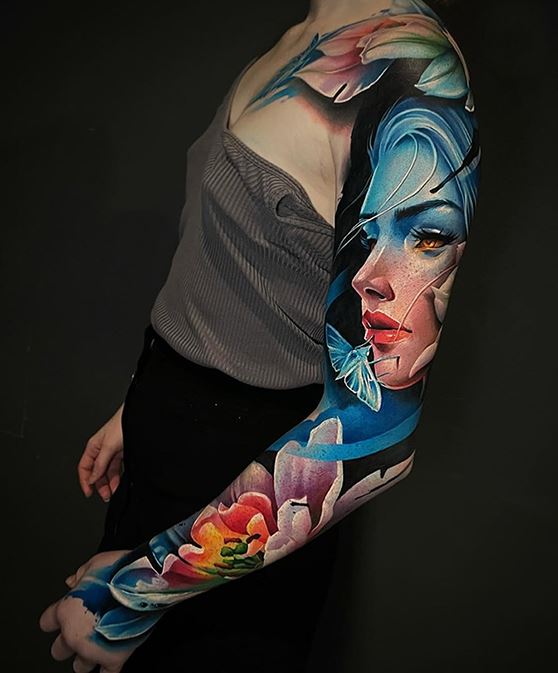
A: For me, it seems like signature style comes to an artist by
itself, you just need to master it and polish like a jewel, till
it’s recognizable. It’s what makes your art stand out. By staying
true to your artistic vision, it not only grows you artistically but
as well technically, you master not only the drawing but the
application itself, that gives you your specific tattoo techniques.
This authenticity is key to standing out and continuously evolving
as an artist.
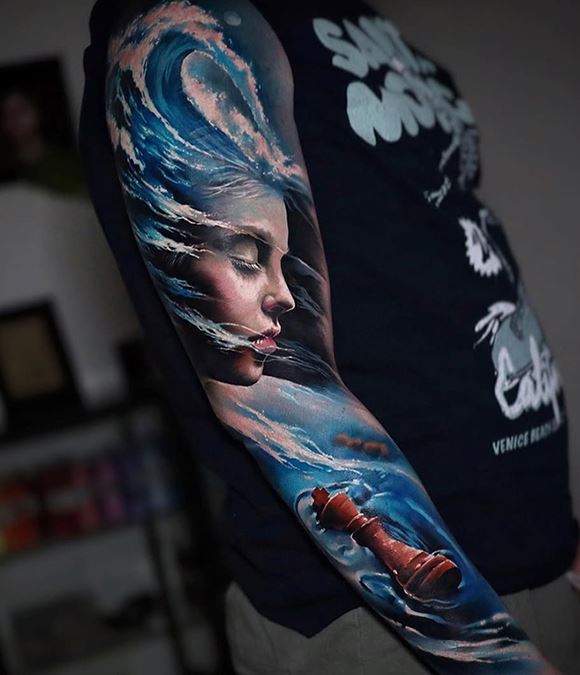
Q: It’s more than just technical
precision; it’s the artistry woven into each piece. Could you
elaborate on your color selection process? How do you achieve that
painterly depth and harmony in your tattoos?
A: My color selection process is very much like that of a painter
choosing a palette. I begin by understanding the interplay between
different pigments and how they complement each other. I use
contrast colors in my pieces. This allows me to create tattoos that
not only stand out vibrantly but also maintain their beauty as they
heal, thanks to the contrast and simplicity of design.
Q: When developing a new tattoo design, how do you approach
the collaborative process with your clients?
A: My creative process always starts with a conversation. I
encourage my clients to share their ideas and bring reference images
so I can fully grasp their vision. From there, I blend their input
with my artistic expression, negotiating elements along the way
while ensuring I stay true to my artistic and technical vision. This
collaboration guarantees that every design reflects both the
client’s dreams and my expertise. Sometimes clients give me full
freedom, and that's my favorite pieces where I can express fully.
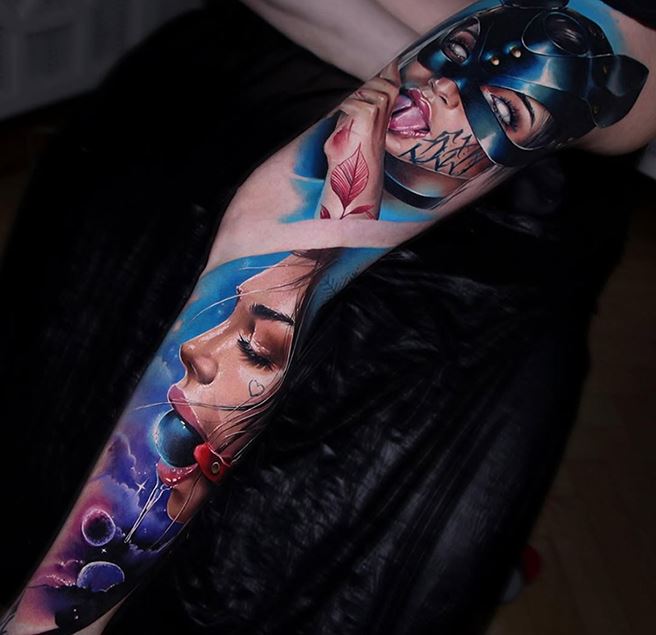
Q: I’m wondering if you do cover-up
tattoos, and if so, how you navigate the unique artistic and
technical aspects of transforming existing tattoos?
A: Yes, I sometimes do work on cover-ups. Transforming an existing
tattoo is a challenge that requires both technical precision and
creative problem solving. I carefully assess the existing piece, its
colors, lines, and placement and then decide is it possible to cover
it in my style. Usually client needs to be open minded for the
design, as we need to adapt the new design on old tattoo and it can
be very tricky.
Q: Both your color and black and gray work are exceptional.
What unique aspects of each style do you find most demanding or
creatively engaging?
A: Each style offers its own challenges and rewards. With color
work, the challenge lies in ensuring the vibrancy lasts over time,
that is not only my hands, but clients responsibility as well. As
color tattoos hate sun exposure, you need to always keep them away
from sun or put sunblock, so the pigments stay bright for longer
time. With black and gray it’s a constant experiment in layering and
shading to achieve that perfect depth. In contrast, black and gray
tattoos require a refined control over contrast and gradients, where
subtle shifts in shading can make all the difference in creating
realism and mood. Both styles keep me creatively engaged as they
demand precision and offer endless opportunities for artistic
expression.

Q: Mastering color realism in tattooing
demands a deep understanding of ink properties, including precise
mixing for harmonious palettes and predicting how colors will heal
over time. Do you find that this style of tattooing allows for
greater creative exploration and experimentation?
A: Absolutely. Color realism not only challenges me technically but
also opens up a vast playground for creative experimentation. My
realism is still quite illustrative, as I like to use higher
contrast and brighter colors than there is in classical realism art.
I enjoy bold palettes, always striving to choose the right colors so
the final piece remains bright long after it heals. Understanding
how different skin types interact with various colours is crucial,
so I always select high contrast pigments.
Q: Given the dynamic nature of tattooing, what intentional
steps do you take for artistic refinement, and are there specific
styles or techniques you’re currently researching or planning to
incorporate?
A: I’m a lifelong learner when it comes to art. Even though I have
already chosen my style of tattooing, I constantly seek out new
techniques and styles. Lately, I’ve have always been drawn to
Japanese art and classic paintings. But I still haven’t tried to
incorporate it in my style, maybe with time I will do that.
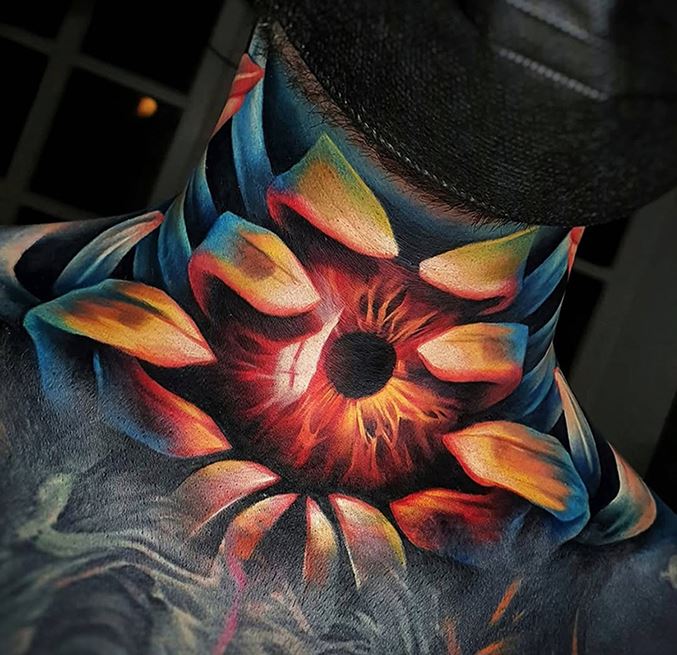
Q: I’m curious, have you ever had a client
who entrusted you with complete creative control over their tattoo?
A: Yes, I’ve had the honor of working with clients who have given me
complete creative control. These experiences are incredibly
rewarding because they allow me to fully immerse myself in the
design process and express my artistic vision without limitations.
But on the other hand, it can be quite stressful, because there is
no limitations and I have too many ideas. Even if client gives me
full freedom, I try to find out what themes my client likes, or at
least favorite colors, so the piece would fit my client and he would
be even happier with the results.
Q: Do you have a favorite tattoo that presented unique
creative and technical challenges, but resulted in a piece you’re
particularly proud of?
A: Last years, I'm excited about every project I make, because most
of my clients are very open minded about the compositions. But there
is one client who’s name is Garry, I have tattooed for many years.
He is from Ireland and has flew to different countries to get
tattooed by me. He always gives me full freedom. One of my favorite
projects on him is chest piece done at convention Gods of Ink. It’s
a tattoo featuring craw holding burning key. It’s one of the biggest
tattoos I ever managed to finish two days in a row. I'm proud of
Garry, because he was so patient and dedicated to finish, even
though it is a tough spot to handle. The end result was a piece that
not only pushed my technical abilities but also became a cherished
work of art for both the client and me. It’s projects like these
that remind me why I’m so passionate about tattooing.

Q: Collaborative tattooing is becoming
increasingly prevalent. Your stunning backpiece with your husband is
a testament to that. Could you describe the collaborative process,
particularly how you both contributed to the design and execution?
A: Collaborating on the backpiece with my husband Mihails Neverovs
was a truly special experience. Each of us brought our strengths to
the project, completing different parts of the tattoo where we can
use our best technical abilities. We could merge our styles so it
looks like one complete piece. This design represents Mother Nature,
embodying the balance between life and death, creation and
destruction.

Tattoo Artists: Sandra Daukshta and Mihails Neverovs
Q: Recognizing the value of team-based
projects, are there any future collaborative opportunities with
other tattoo artists that you’re currently considering?
A: I’m always excited about the possibility of collaborating with
other talented artists. I’m actively exploring opportunities for
collaborations at conventions or through special guest projects, and
I look forward to sharing new creative experiences with peers from
around the globe. This year I'm planning to visit USA and hope I can
collaborate there with one of my favorite artists.
Q: Building and maintaining client trust is paramount in the
tattoo industry, requiring both artistic excellence and ethical
practice. In your experience, what core principles are most
essential for cultivating and preserving a strong reputation?
A: For me, mutual respect is very important. I respect my clients
and take care of them. It’s important to be technically professional
tattoo artist and a nice person too. I’ve had clients return years
later, sharing how much their tattoos mean to them, and those
moments of gratitude remind me why I do what I do.

Q: The tattoo industry has seen a
significant shift in educational accessibility. How do you perceive
the impact of these changes on the current landscape for emerging
artists?
A: The increased accessibility of tattoo education through social
media, seminars, and books has been a game changer. New artists now
have much more possibility to learn, than artists even 10 years ago.
Of course nothing beats hands-on mentorship and real practice. It’s
positive that tattooing is getting more popular and acceptable in
society, but at the same time some people get in to tattooing
without the right purpose. It’s not just a job, it’s art on human
skin. You need to have passion for art and understanding how to
create something unique for each individual person.
Q: Your work has been recognized in prominent tattoo
publications. How significant is this acknowledgment to your
artistic journey and professional development?
A: Being featured in different publications has been incredibly
affirming. These acknowledgments validate the hard work and passion
I pour into every tattoo, and they serve as a constant reminder of
the impact my art has on others.
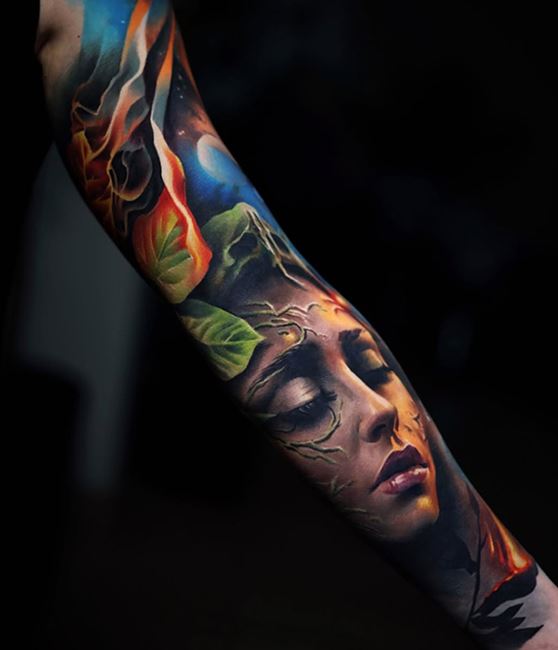
Q: Congratulations on becoming an
ambassador for the World of Ink Tattoo Convention in Poland. Tell me
more please!
A: Thank you so much! Being chosen as an ambassador for the World of
Ink Tattoo Convention in Poland was an honour, as it’s one of the
biggest conventions in Europe. In this role, I represent the
convention by engaging with artists and enthusiasts, promoting the
event.
Q: Given the current landscape of the tattoo industry, how
crucial are strong sponsorships for artists seeking to advance their
careers?
A: Sponsorships give access to high-quality products, bigger
visibility in social media and possibly to work under big names at
conventions. I think it gives a lot of advantages for artists, as
well it’s inspiring to receive appreciation from big companies from
the tattoo industry.
Q: Your distinctive style and status as a leading female
tattoo artist are widely recognized. Do you have any favorite awards
so far?
A: Hah I always feel like I'm still on my way to leading artists
role. In this industry you should never stop learning and improving.
Over the years, I’ve had the privilege of receiving several awards
that have marked important milestones in my career. I cherish every
award, but my favourite is from London Tattoo Convention held in
tobacco docks, as it was one of the greatest shows, and now it
changed location and name. So I feel honored I could take part at
the last event in London and receive prize there.
Q: What’s your take on the local tattoo
scene? Do you see progress?
A: The tattoo scene in Riga, Latvia, is evolving. There’s a growing
appreciation for tattoos, and more people are recognizing tattooing
as a true art form. Years ago I couldn’t imagine people here would
be so interested in tattoos. Nowadays I see more tattooed people on
the streets. Still there is a conservative part of the society, that
dont’t like this kind of art, but I guess you can find people like
that in any country.
Q: The benefits of working abroad as a guest artist offer
unique opportunities for cultural immersion, exposure to diverse
tattoo trends, and artistic growth. What are your perspectives on
these experiences?
A: Working as a guest artist abroad has been one of the biggest
pushes in my career. It’s given me the chance to learn from
different artists with different techniques and styles. These
experiences broaden my technical and artistic perspective and bring
fresh ideas back to my work.
Q: How has your passion for tattooing evolved since you
first started? Are you just as enthusiastic, or even more so now?
A: My passion for tattooing has only grown stronger over the years.
Every new project, every client interaction, and every challenge
fuels my creativity and enthusiasm. I feel like it’s never ending
study of art, tattoo techniques and social interaction. And I love
it!

Q: The American tattoo scene presents a
rich tapestry of styles and influences. Do you perceive potential
opportunities for artistic development and expansion within that
context?
A: Absolutely. The American tattoo scene is incredibly dynamic with
diverse range of styles and very passionate artists. This makes it
an ideal environment for artistic development. I see many
opportunities, to learn, collaborate, and expand my own style within
this tattoo scene.
Q: Do you have any favorite American tattoo artists you
would like to work with in the future?
A: There are so many incredibly talented American tattoo artists
whose work I admire. While it’s hard to name just one, I would love
the opportunity to collaborate with artists who specialize in
pushing the boundaries of color realism and neo traditional. Their
creativity inspires me, and I believe that any future collaboration
would be a fantastic opportunity for mutual growth.

Q: Knowing the diversity of the US tattoo
landscape, are there any areas that particularly resonate with your
artistic style or that you feel would be a good fit for your work?
A: I couldn’t name any specific areas. I think after traveling
around US and exploring different states and cities, I could give
you an exact answer.
Q: What impact do you aspire to have on the tattoo
community?
A: My aspiration is to inspire and be inspired. I hope my work
encourages other artists to push their boundaries and continuously
innovate. As I feel many artists in this industry give me this
endless fuel to create and be better each day.
Q: If you could go back and give your younger self advice
about pursuing tattooing, what would it be?
A: I’d tell my younger self to embrace every challenge as a valuable
lesson. Patience is the key. I’d also remind myself to cherish the
relationships built along the way, those connections are just as
important as the art. Every experience, whether a success or a
setback, helps shape you into the artist you’re meant to be.


